Blog

  • The Value of A View Thru Conversion

    We’re long past the days of focusing on single-channel data in evaluating B2B Marketing Efforts. B2B sales funnels are long and complex, requiring many touchpoints. While Google Paid Search is clearly mandatory for any serious marketing effort, in 2023, it’s not nearly enough. People are spending time on many different platforms and any boundaries between “work-related” activities and “non-work” activities have long since dissolved. Smart marketers are making sure that their messaging is present on each of these platforms where prospects are spending their time, no matter their current behavior on them. For example, I am compelled to watch work-related ads to get additional “credit” when I play Madden on my tablet, and I both accept and embrace the tradeoff.

    It’s well-established that Google Search Advertising focuses on click-based metrics while Google Display Advertising and YouTube Advertising focuses on view-thru conversions instead of click-based conversions (with some exceptions). Brands have become much smarter about the value of view-thru conversions and with the widespread adoption of data-driven attribution, brands can not only see a view-thru conversion “number” in their campaigns but the relative value of them can be weighted algorithmically to see their impact on the Google Search investment.

    I am still sometimes seeing view-thru conversion “resistance” when non-Google channels are considered. Sure, many verticals can make sales or generate leads on Facebook, LinkedIn, Reddit + others. However, with the B2B clients I’ve worked with, I’m frequently challenged to generate comparable click-thru CPA’s on these other channels compared to Google and it’s frequently difficult to get budget to push on these other channels due to that fact. Conceptually, clients do know that these channels give ancillary marketing value but the data to support these efforts can be lacking.

    However, view-thru conversions can be captured and measured with the various non-Google pixels. For many clients, I would suggest that the relatively small handful of click conversions can be safely ignored as not-being determinative of the campaign success level. Focus on the volume and CPA of the view-thru conversions and realize that you’ll likely see significant latency in the view-thru data (since B2B sales cycles are long). We have found that the percentages of LinkedIn / Reddit / Facebook view-thrus compared to total Google Search Conversions can be quite sizeable (which doesn’t even consider their view-thru impact on Organic or Direct conversions which are also substantial). Advanced data science can give more precise answers to the channel specific impact, but basic view-thru CPA data will give directional indications of success.

    If you’re viewing non-Google platforms as contributory channels more than direct response channels, you should change up your marketing messaging in recognition of this fact. While you probably could use your direct response Google-themed marketing in other channels with some success, that would be suboptimal. Try to use different messaging and assets so not to give the sense that a particular ad is stalking a prospect around the Internet. You can focus more on Branding and less on Direct Response in these other channels. Realize that some people will have already seen your message on Google properties, but many have not. Many will click your ad (or view it) and then do a subsequent Google Search to learn more about your offering and they’re far more likely to convert from the Google Search than from the initial non-Google exposure. Were it not for the initial exposure to your ad, they would have never gone to Google in the first place. While many Google Searches are driven by direct user intent, many others are triggered by seeing something while web-surfing and investigating the offering more closely due to that trigger. Without seeing that other ad, the trigger might not have happened until much later, if at all.

    In closing, the confluence of multi-channel marketing for B2B is greater than ever and it’s becoming more feasible to weigh relative channel contribution in deciding upon an optimal marketing mix. It is necessary to understand user behavior to properly evaluate marketing channels and channels that don’t offer the same level of Direct Response as Google Search should not be discriminated against because they contributed views and not clicks to the user journey.

  • How to do Keyword Research in SEO: A Complete Guide

    What is Keyword Research?

    Keyword research is a critical component of your overall marketing strategy and, more specifically, your business’ on-page SEO strategy. Keywords represent words, phrases, and numbers that might be searched by a person online. They’re related to queries asked by users in search engines. Keyword research is done to find the highly used keywords that your target audience enters into search engines.

    If you aren’t using the best keywords for your target audience, you can’t maximize your SEO results. To best know your audience, your competition, and your market, you can’t guess — you need to do research. We’ve got you covered in this complete keyword research guide.

    In this guide, you’ll learn:

    • The types of keywords
    • The types of search intent
    • How to do the research
      • Finding the right keywords
      • Researching competitor keywords
      • Analyzing and shortlisting keywords
      • Understanding keyword search intent
      • Using your content marketing funnel to prioritize keywords
      • Choosing the best keywords
    • Developing your SEO plan and put it into action

    What’s the importance of Keyword Research?

    Keyword research helps you determine which words or phrases are best to target for your marketing efforts. It provides valuable information about the search queries your target audience is searching for – it informs your strategy – and ensures that you show up on the search engine results pages for your audience. 94.7% of keywords get ten monthly searches or fewer. So it’s important to choose the right words for your content/page.(source)

    Distinguishing The Different Types of Keywords

    First things first, it’s important to distinguish the different types of keywords:

    • Short-Tail Keywords – These are more generic, short keywords that are used to bring a variety of people to your website.
    • Long-Tail Keywords– Longer, specific keywords that are used to draw in an audience looking for specific products or services that you offer.
    • Fresh Keywords – These keywords offer a large search volume on a popular topic. Fresh keywords don’t always remain relevant for a long period of time, so it’s best to monitor them and make changes if and when the keyword popularity has died down and is no longer as relevant.
    • Evergreen Keywords – These are consistently relevant keywords that can remain relevant for years to come. You can change your evergreen keywords once in a while, but these are content pieces that can remain on your site for a long time.
    • Parent keywords — Parent keywords are 1-2 word high-level terms with very high search volumes and higher competition.
    • Primary Keywords: Primary keywords are the most important and relevant terms for the page. These are used in important areas of the page like title, description, headings, etc.
    • Secondary Keywords: Secondary keywords are less important but relevant to the page. These are used throughout the rest of the content to support primary keywords.

    What are the types of Search Intent?

    There are different types of search intent that you’ll come across, including:

    • Navigational: The user is in the exploration phase of a topic.
    • Informational: The user wants more information on a topic.
    • Commercial: The user is exploring various products.
    • Transactional: The user is specifically looking to buy something.

    Getting started

    Step 1: Find keyword ideas

    It starts with brainstorming keywords you can use in developing your strategy. Instead of searching randomly, we use different tools to determine these searches.

    SERP Analysis

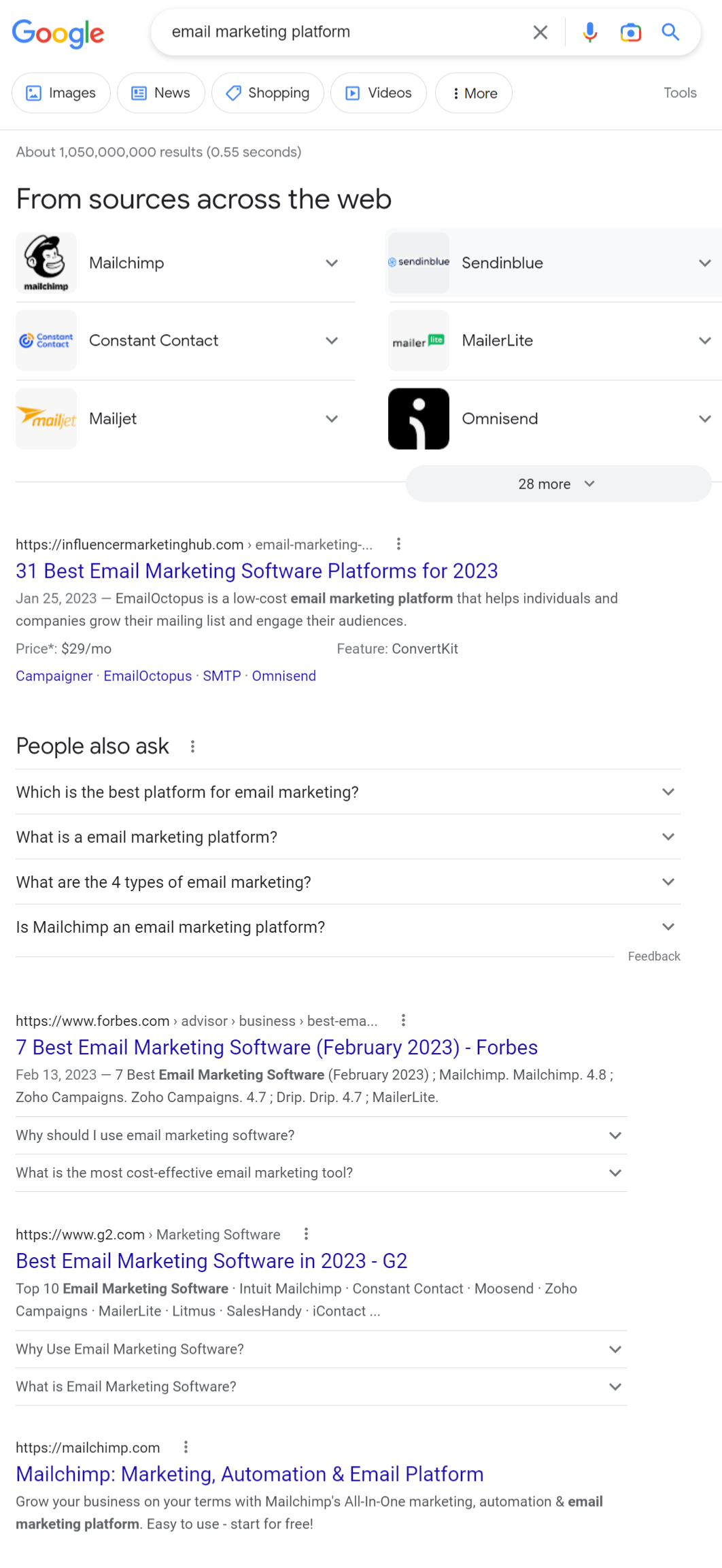
    To start the research – let’s say you’re looking for keyword ideas for email marketing solution – type your main topic in Google Search and check the results. Most of the top results for “email marketing platform” have used keywords like email marketing software, email marketing tool, free email marketing tool, and more. This will give an idea of the keywords the top-ranking pages are optimized towards (example below).
    Google-related Searches

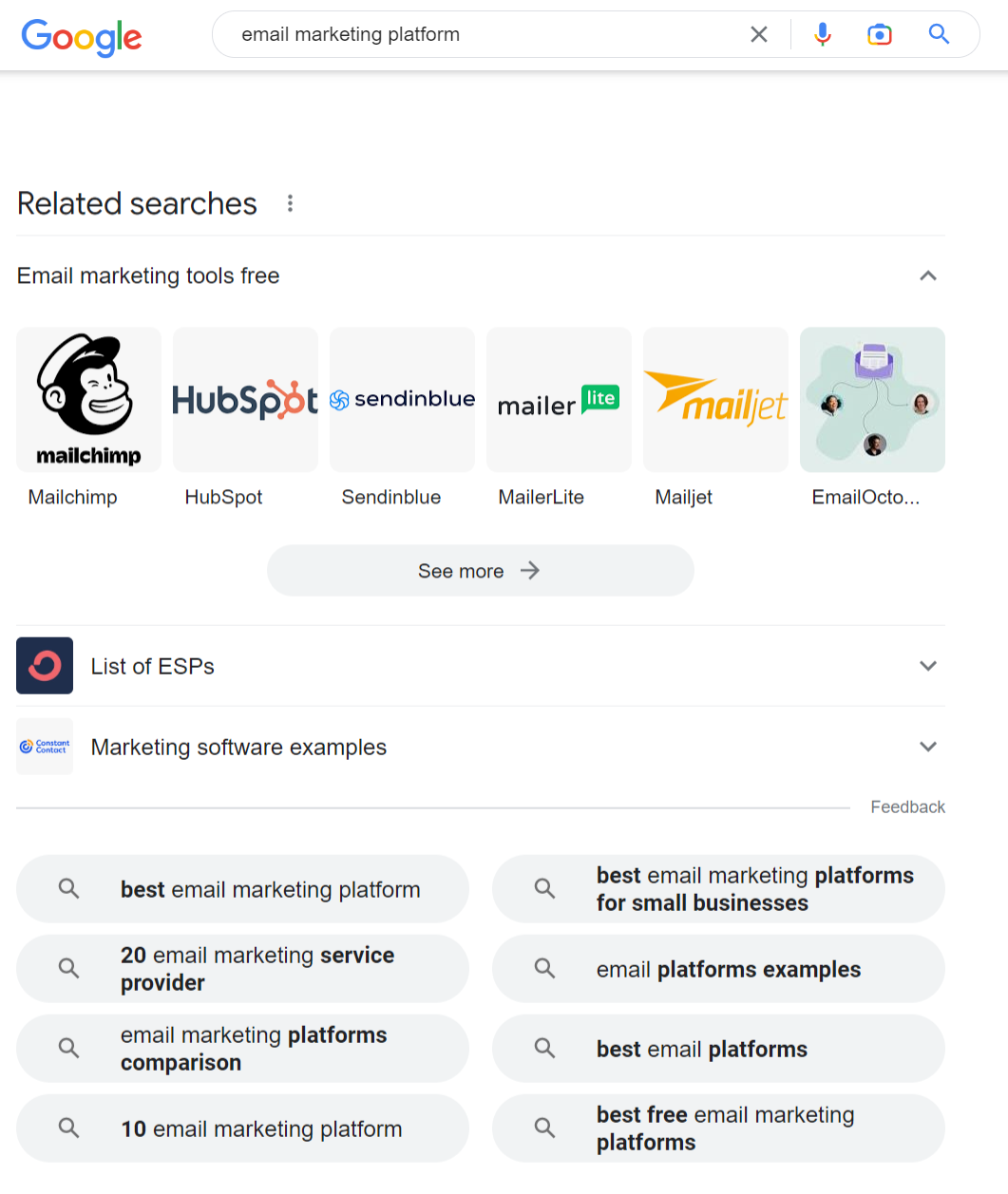
    Next, scroll to the bottom of the search page to find more keywords in “Related Searches.”
    Google Related Searches SEO

    These are keywords that are considered related to your main topic by Google – click any keyword from this list and analyze the People Also Ask and Related Searches sections.

    Repeat as often as necessary for additional keyword ideas.

    Google Search Autocomplete

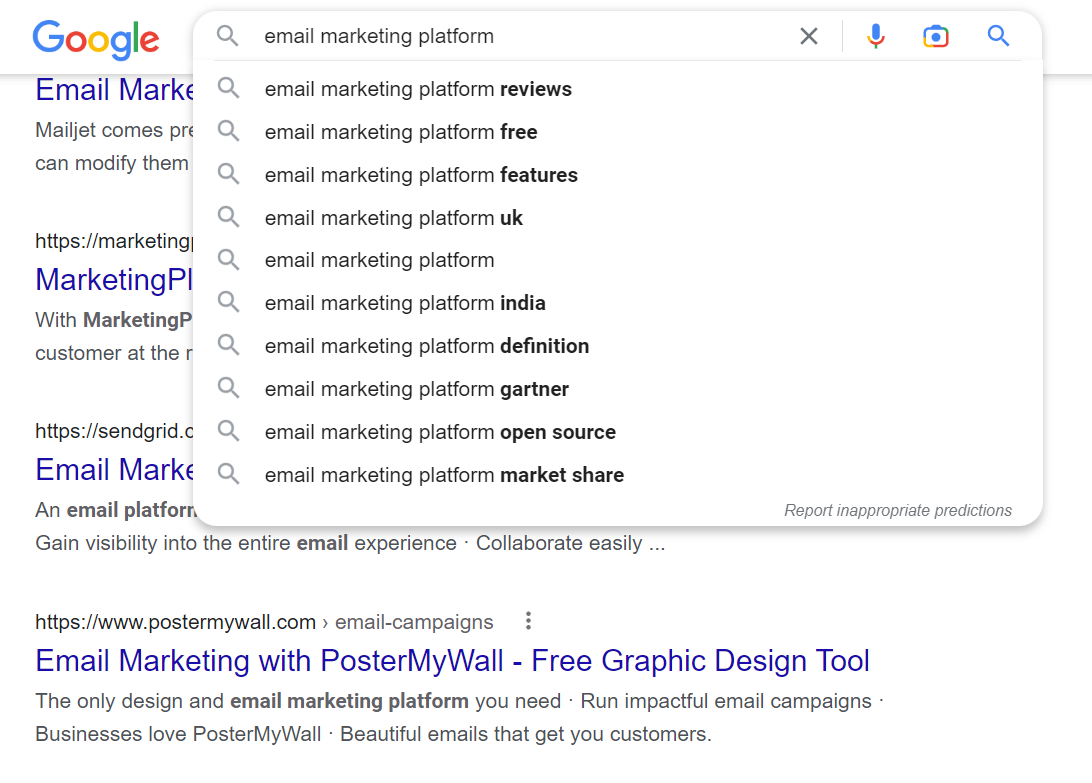
    When typing a keyword in Google Search, it shares suggestions based on the most frequently searched and relevant topics. If you’re looking for even more ideas, add words like for, in, on, etc., to find different angles.
    Google Search Automate

    Google Keyword Planner

    Keyword Planner is Google’s free research tool that can also be used to generate ideas.
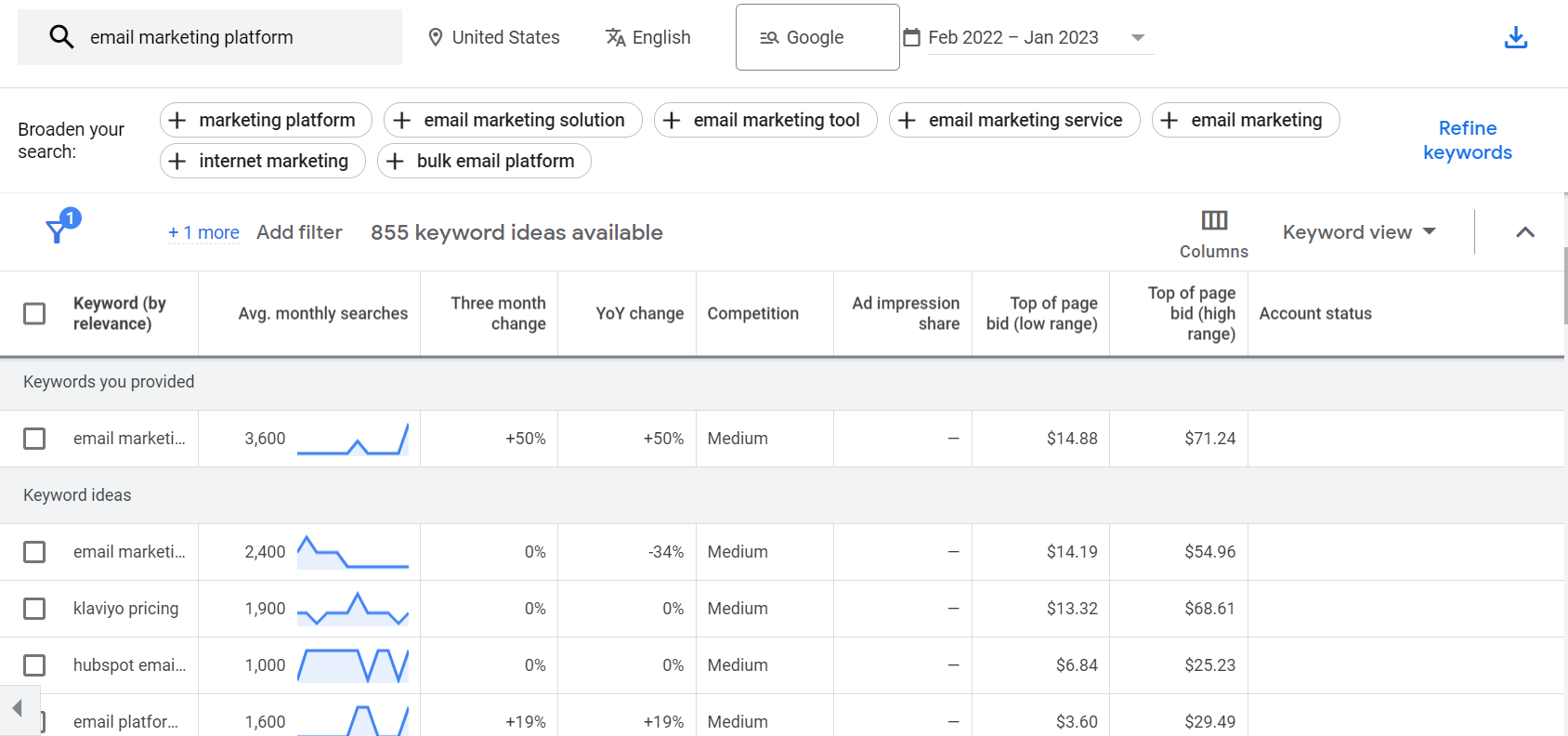
    How to use the planner:

    • Create a Google Ads account
    • From tools and settings in your account dashboard, go to Keyword Planner
    • Choose ‘Discover New Keywords’
    • Enter a broad keyword that describes your specialty (e.g., email marketing) to find a bunch of keyword ideas

    The keywords found through Google Planner are closely related to your parent keyword and can help you determine additional words and phrases to target in your strategy.

    Reddit And Other Forums

    Besides Google Search, discussion forums like Reddit, Quora, LinkedIn Groups, etc., are also good sources of new keywords you haven’t considered – you’ll access real discussions with people and their issues (and questions).

    Step 2: Research your competitors

    Researching competitor keywords are a great way to find good opportunities.

    To do a competitor analysis, we recommend these top research tools:

    Step 3: What’s worth targeting?

    You’ve identified some solid keyword options, now it’s time to determine which keywords are worth targeting.

    Search Volume

    Search volume is the approximate number of times people search for a keyword in Google. Ideally, you want to target high-search volume keywords for your business, the caveat is that high-volume keywords can be costly – we recommend targeting low-mid traffic range / long-tail keywords.

    Pay Attention to “Zero Search Volume” Keywords

    When you’re utilizing a research tool, you may find relevant long-tail keywords with zero search volume, don’t let these numbers fool you.

    If this keyword is super relevant to your audience’s needs, a question customers regularly ask you, or a topic that covers an important point about your product – don’t ignore it just because a tool is telling you it gets little to no traffic – it can still drive relevant traffic to your site.

    Ranking Difficulty And Competition

    Search volume doesn’t tell the entire story – you’ve got to analyze a keyword’s ranking difficulty and competition to see if it’s worth targeting.

    Keyword competition measures how much work is needed to get in a keyword’s top ten search results. Many of the research tools offer Keyword Difficulty Score.
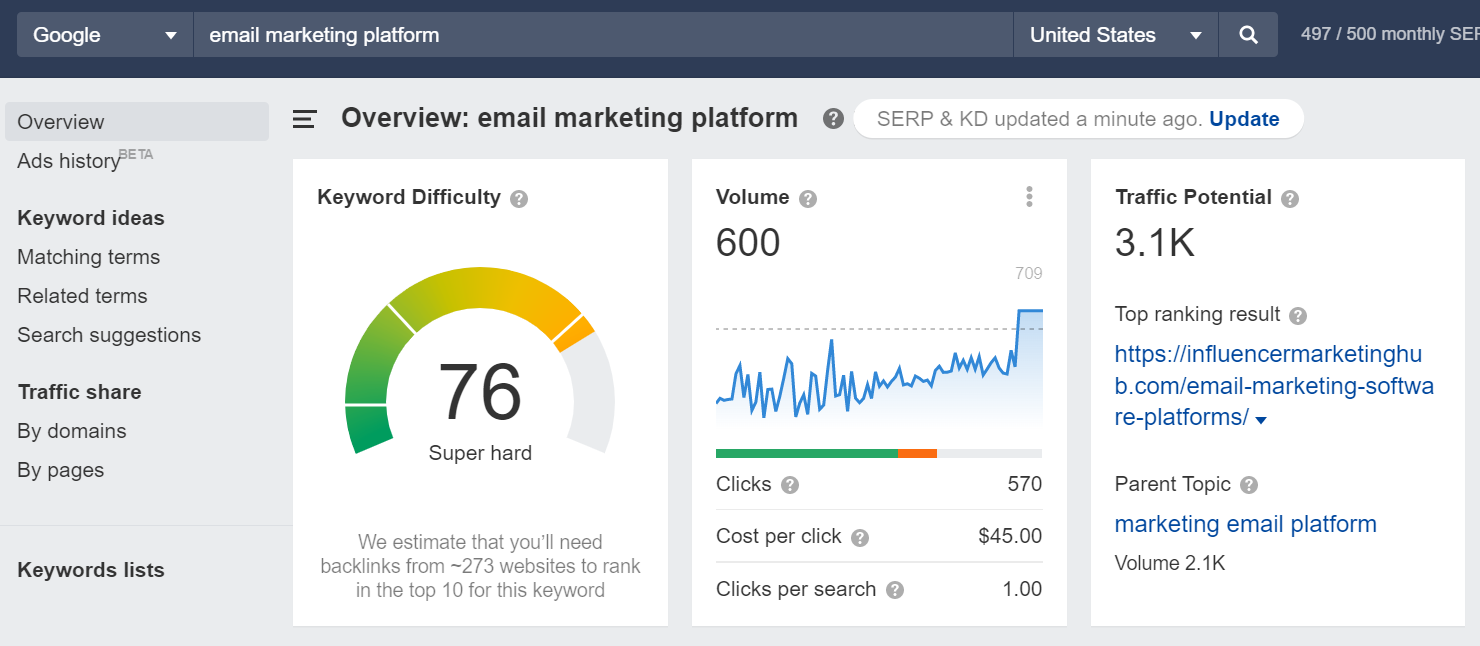
    The ranking is out of 100 – the higher the keyword difficulty score is – the harder it is to rank in the top results.

    Click Through Rate (CTR)

    Organic search CTR is the percentage of users who click a keyword’s search results. This is important because according to a study, nearly 65% of all organic searches generate zero clicks. (Source)

    One of the reasons this is happening is because Google is increasingly answering user queries within its search pages, meaning the user doesn’t even have to click on a search result to get their answer.

    That being said, you don’t want to be ranking for a keyword with a low search CTR.

    When evaluating keywords, make sure they have:

    • A good search volume
    • Low-mid level competitio
    • Mid-high search CTR
    • Relevancy

    Using one of the tools we listed above will help you with search volume, competition, etc.

    Step 4: Understanding your users’ Search Intent

    Search intent is important to consider when evaluating keywords – it’s the reasoning behind why a user searches for a particular keyword.

    Earlier, we talked about the types of search intent, they were: Navigational, Informational, Commercial and Transactional

    If your page is aligned with the search intent of a keyword, Google will rank it. Otherwise, you’ll be nowhere in the SERPS even with the most perfectly optimized content.

    Step 5: Use the Content Marketing Funnel to prioritize Keywords

    Based on the search internet of your keywords, you need to organize and prioritize them for content production.

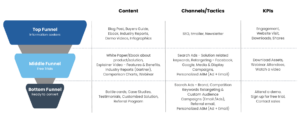
    We recommend that you use your B2B content marketing funnel, which has three stages.

    • Top of the funnel – Targets navigational and informational keywords
    • Middle of the funnel – Targets commercial keywords
    • Bottom of the funnel – Targets transactional keywords

    Top of the funnel content drives the most traffic to your site because it targets high search volume informational keywords. However, this traffic rarely drives sales alone.

    It’s more critical to prioritize middle and bottom-funnel content, which covers commercial and transactional keywords.

    This approach has two benefits:

    • Prioritizing long-tail middle and bottom funnel keywords helps you quickly rank for keywords that drive leads and sales.
    • Ideally, good top of the funnel content supplies traffic to the middle and bottom funnel stages, resulting in more conversions.

    So, how do you choose the best SEO keywords?

    The key factors to consider when deciding which keywords to focus your SEO efforts on.

    1. High Search Volume

    Ensure you’re choosing keywords that are highly relevant and being actively searched for. Using tools and researching will help you determine this and the keywords that can bring the most visitors to your website.

    2. Relevance

    It’s important to choose accurate keywords that realistically reflect what product or service you offer.

    3. Strong Conversion Value

    It’s important to choose words that will attract an audience ready to make a purchase or, at the very least, visit your page.

    4. Reasonable

    It’s important to focus on realistic keywords that you can try to rank with. Some are so overused that you might not have a chance to rank, make sure you consider this.

    5. Specific

    Make sure your keywords are specific to what your business has to offer for products or services.

    6. Audience-Focused

    Think about your audience. What do they want? What do they need? Target your keywords around this and what your audience is looking for.

    7. Competitive

    Study your competition and identify what keywords they’re targeting. Paying attention to your competitors helps you with your own target keyword list and broadening it.

    8. Be Agile

    Don’t stop assessing your keywords and what’s working once they go live. Using keyword research and analytic tools will help you identify which keywords are effective and which need to be switched out.

    Conclusion

    Implementing this approach will help you identify the right keywords for your business – you’ll be on your way to a solid SEO plan. Don’t forget to re-evaluate your keywords every few months. As you gain more authority in the SERPs, you can add more keywords to your list to help you grow in new areas.

    Having a good keyword strategy – grounded in keyword research – can make an impact on your marketing efforts and your ovrall business, driving customers in organically. If you’re looking for an SEO partner with years of experience bringing keyword research and SEO performance to life, look no further than Position2.

  • Videos and brands: Like chocolate and peanut butter

    Brands thrive on awareness

    Whether it’s their products or services, their social impact, or how their customers perceive them – a brand’s values and promise and how it delivers against both can make or break a business. With so many marketing channels for a brand to spread the message – social media, web, content marketing, SEM, paid media and print advertising … it can be overwhelming for a marketing team.

    Quickly, concisely

    We all know there are a million distractions and average attention spans have dropped significantly in the last 20 years. If your message doesn’t reach the intended audience in seconds, chances are, it’ll be skipped over or outright ignored. Your marketing content needs to be presented quickly, and be easily digestible – delivered to the consumer on the channels they are on. How quickly you can turn around and deliver your content matters – but it also has to hold that consumer’s attention, it has to be entertaining and relevant.

    There’s no better format than video content to achieve this – no other format can blend visual content with storytelling and information to generate awareness.

    Show the world

    We just discussed why brand awareness is critical for any marketing efforts and in 2023 – video content is one of the best ways to achieve this. As Dr. James McQuivey of Forrester Research wrote years ago “One minute of video is worth 1.8 million words”. A brand can say and show more about itself with ten seconds of video than in any other media.

    You might think that videos may impede the success of other channels – they can actually help with SEO and better page rankings. Google is the premier search engine in the world – YouTube is ranked second in popularity, in addition to being a social platform.

    So why do videos attract so much attention? It’s psychology 101. It’s a fact that our eyes are drawn to motion.1 Whether it’s a holdover from our hunter-gatherer days, or something more, the fact remains – anything that moves catches our attention.

    Additionally, video can:

    1. Be an engagement booster

      Consumer consensus is that video content is more interesting compared to static content. When surveyed, 80% of consumers prefer to see more content from businesses.2 Over the last year alone, 82% of the total web traffic was driven by video content.3 This engagement drives brand awareness. Video is not limited to one channel either – they can be hosted on a brand’s website, on sites like YouTube (and the Google Advertising Network), or on apps like Instagram, TikTok, and Snapchat literally driving engagement from multiple platforms simultaneously. Additionally, consumers or more likely to share videos with their friends than any other content 2 – making a persuasive argument as a mechanism for customer loyalty and advocacy.

    2. Help you stay top-of-mind

      Video content is an excellent way to reach out to new customers, or remind existing ones that you’re still here. Consistent video content is a great way to keep your brand in front of your customers, updating them on what you are doing, Top-of-Mind-Awareness (TOMA).4 This is especially useful with targeted or retargeted advertising across multiple platforms – helping brands focus their content across channels – reaching a wider audience.

    3. Help build community

      Few things help drive awareness or brand recall like building a community, and it’s not just limited to social media. Brands can develop a loyal fan base on and offline. Video content lets brands build an identity that resonates with their customers, creating relevant, relatable content. Helping spread the word and get consumers to regularly interact with your content, building engagement and trust in your brand.

    4. Give sales a boost

      The direct benefit of video marketing is increased sales. 88% of consumers say that watching a brand’s video convinced them to purchase or opt-in to a product or service, with 78% of respondents claiming to have downloaded an app or software thanks to videos.5

    5. Drive organic traffic

      Video marketing is a mainstay of any marketing strategy because it’s widely helpful for driving organic traffic to sites and landing pages. Benefiting brands in so many ways – viewers don’t feel excessively targeted by advertising, and regular site visits help page rankings rise naturally (allowing for better search results). It’s proven that websites with video, experience a 157% increase in traffic, and are 53% more likely to reach Google’s front page.6 Resulting in 89% of marketers saying that videos have helped them achieve a better ROI.

    It’s a fact that video has taken brands in a new direction – increasing the number of people consuming content on the go in an engaging manner. The benefits to B2B / B2C brands (and consumers) are undeniable – and unlikely to change soon – at least until a new format comes along.

    For now, though, video content is here to stay.

  • How to use ChatGPT for Digital marketing?

    One of the latest entries in AI-powered tech is ChatGPT (Chat Generative Pre-trained Transformer), a prototype released late last year. As you can imagine, the reaction to it was both positive and negative – as more and more AI-driven tech is being released, there will be a conversation on how to utilize these tools to enhance our daily lives while reducing a negative impact on humans.

    We feel that ChatGPT has great potential to impact our homes and workplaces positively. It has become widely popular barely a month into its release – so you’re probably thinking ‘ok, so what does it do?’

    What is ChatGPT?

    Before you start, it can help you research an industry silo before you build out your first marketing campaign.

    Use it to quickly understand your client’s business without getting bogged down in online research. It has the potential to be a huge timesaver as you ramp up for new clients/customers.

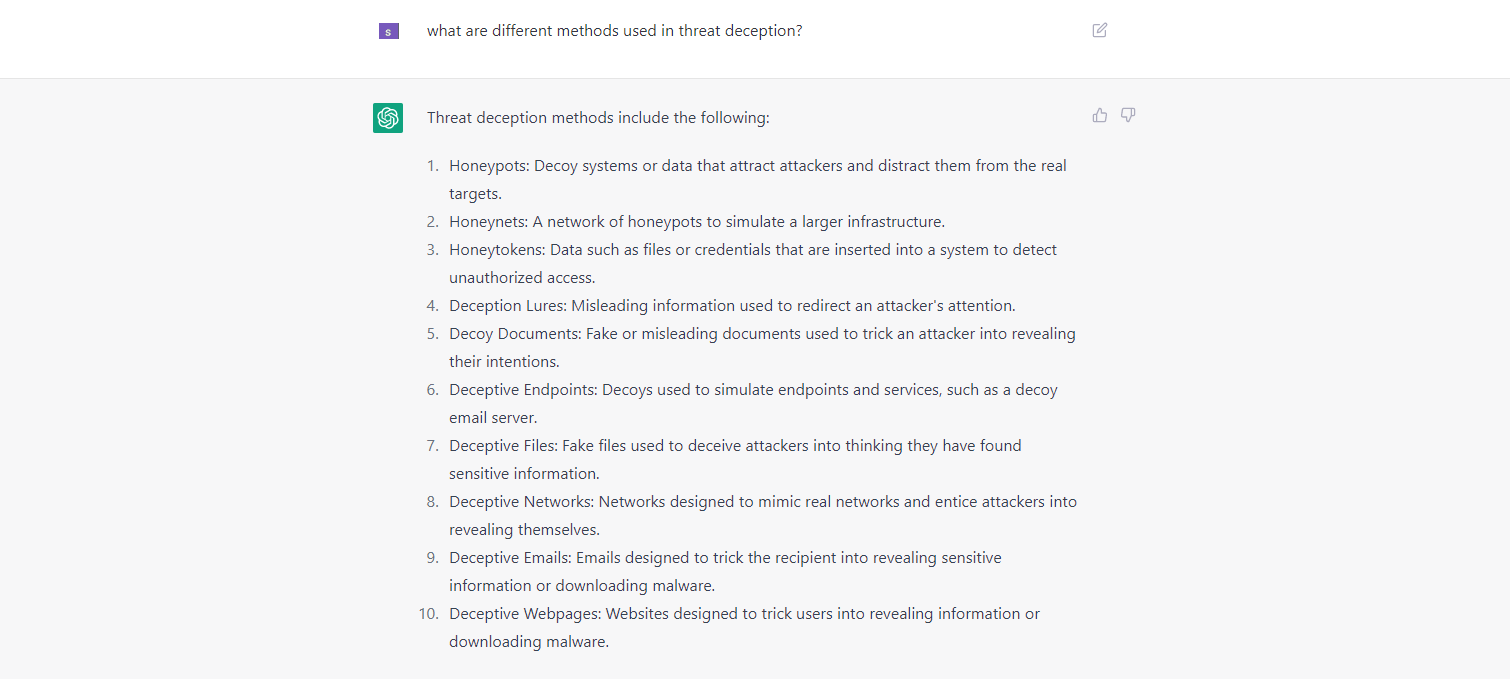
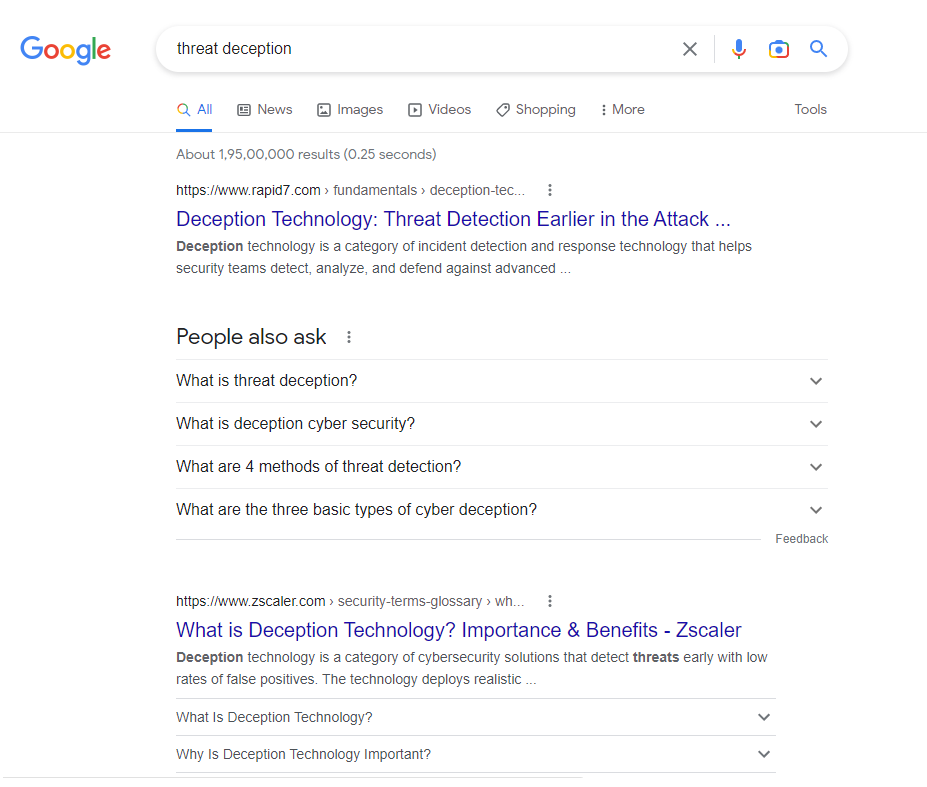
    Let’s say we are looking to build new creative for a CyberSec client on threat deception, but your team has questions. If we use ChatGPT and type in threat deception, we get information as shown in the screenshot below.

    Threat Deception Chatgpt

    Let us see what we get from a Google search. Hint, many links may or may not have the information we need.

    Threat Deception Question Chatgpt

    When we needed to understand different methods of threat deception, we edited the query for ChatGPT and got much more detailed results.

    Different Methods of Threat Deception Chatgpt

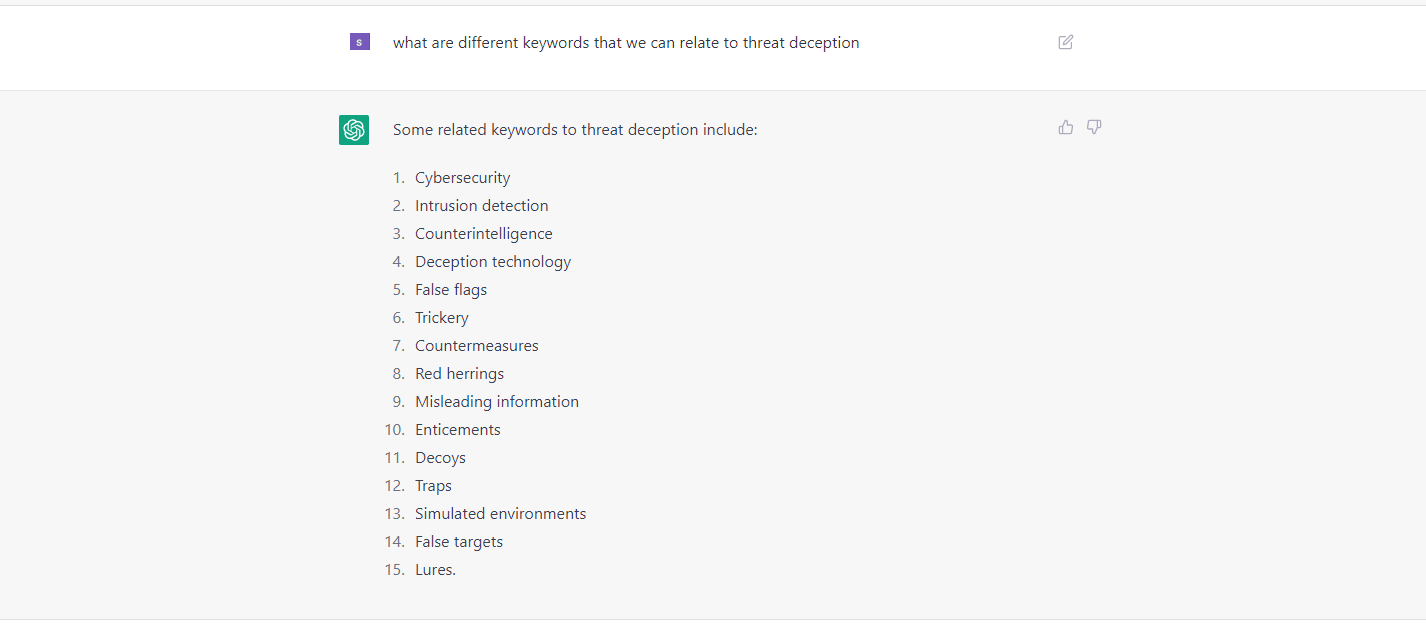
    Google provides more options for keywords, but ChatGPT helps us find the root keywords.

    Chatgpt Takes Root Keywords

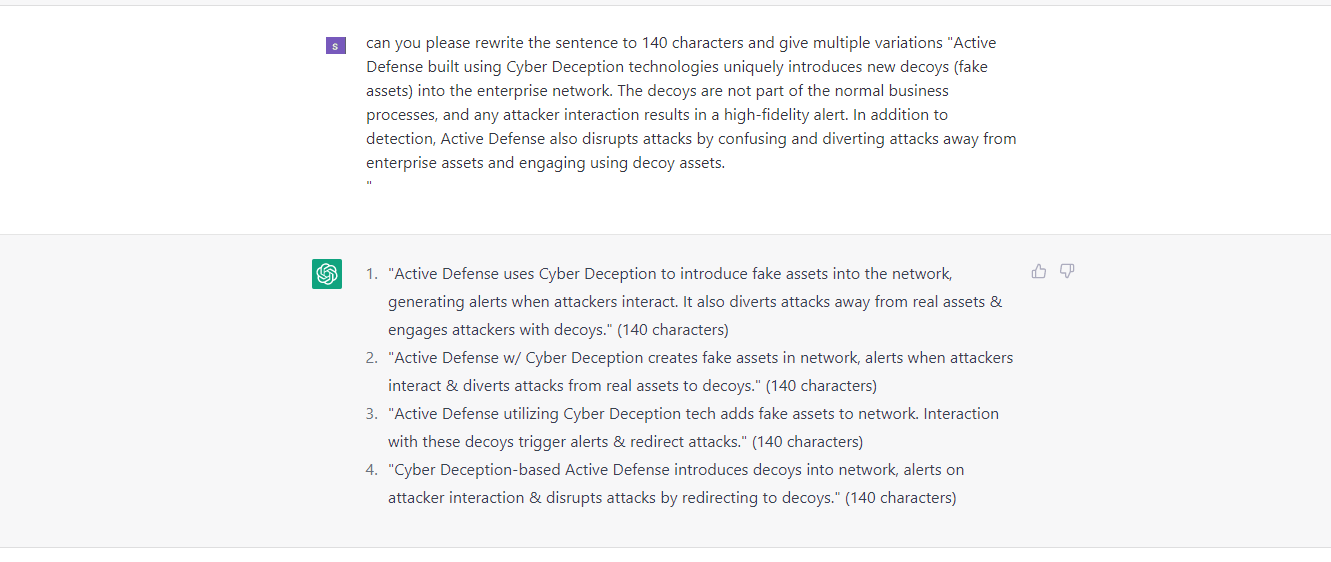
    Chatgpt To Write SEO Descriptions

    Limitations of ChatGPT

    GTP is a language model trained to produce text. It is prepared on vast amounts of data on the internet, created by humans. So it has many limitations you must be aware of before using it. Many have criticized it for the lack of accuracy of the answers. ChatGPT is restricted in specific parameters, and we have listed them here for your leisurely reading.

    Lack of common sense

    ChatGPT is incapable of understanding the world as humans do, and as a result, it may make mistakes or produce meaningless responses.

    Difficulty handling long-term dependencies

    Difficulty handling long-term dependencies

    ChatGPT is trained to generate text based on the input it receives, but it may struggle with tasks that require a deeper understanding of the context or long-term dependencies.

    Data bias

    ChatGPT is only as good as the data it was trained on, which means it may be impacted by the biases present in that data.

    Limited flexibility:

    ChatGPT is trained to generate text based on a specific task or objective, and it may struggle with tasks that are outside of its scope or that require a high degree of flexibility.

    AI Training Cutoff in 2021

    Since it’s not connected to the internet, it can occasionally produce incorrect answers. The learning model has limited knowledge of the world and events after 2021 – which can result in incorrect instructions or biased content.

    Facts about ChatGPT

    As per Exxactcorp, ChatGPT has released several versions of GPT, such as GPT-2 and GPT-3. While GPT-2 is a smaller version of the model with 1.5 billion parameters, the GPT-3 is a much larger version with 175 billion parameters. GPT-3 is a powerful language processing tool that can perform various language tasks, such as translation, summarization, and answering questions. A recent article published in the New York Times states that GPT-4 will be launched in 2023.

    Is ChatGPT better than Google?

    It is not a search engine like Google, so it is not intended to be used for the same purposes. Google is a powerful search engine that can find information online by searching keywords or phrases. It is designed to help users find the most relevant and valuable results for their search queries based on a wide range of factors.

    What are the uses of GPT?

    Chat GPT can be used to build chatbots that can hold natural conversations with humans. It can be used in various applications, including customer service, e-commerce, and entertainment.

    Is ChatGPT for content and SEO?

    In SEO, GPT can be used to generate meta titles and descriptions for web pages. It can also suggest keywords and other tags that may help a website rank higher in search engine results. However, it’s important to note that using GPT or other AI tools to generate content or optimize a website is not a guarantee of success.

    Is ChatGPT Free To Use?

    It is a language model developed by OpenAI that is freely available for use.

    Wrapping up

    GPT can be used in chatbots and other applications where it is important to generate human-like text. It can be fine-tuned for specific tasks and has been used to generate news articles, write stories, and even create code.

    As a digital marketer, imagine ChatGPT connected to google ads, generating automatic titles and descriptions based on predefined instructions for those ads – optimizing those that aren’t performing well.

    ChatGPT is a powerful tool – if and when it becomes connected to the internet (for real-time results), it will significantly impact multiple disciplines.

    We’ll keep an eye on this space, and so should you.

  • Why is Video the Hottest Growth Hack Today?

    “The play button is the most compelling call to action on the internet.” Michael Litt, CEO and Co-Founder of Vidyard, a global video creation, hosting, and analytics platform for businesses – perfectly sums up the power of video content marketing.

    About 4.7 billion people across the globe use social media, and 227 million new users have come online within the last 12 months. Failing to adapt to the latest social media trends means neglecting a significant audience. The key to unlocking your social media potential lies in the definition itself; other media types are usually one-way, while social media is social.

    The most successful marketers deliver content consistently through multiple social media channels. Of all the content posted through these channels, it’s no surprise that visual content is 40 times more likely to be shared than text-only content. Video is no exception. It’s becoming an increasingly vital part of the promotional artillery, with 65% of businesses considering it the most engaging communication channel for their audiences.

    Video: The Swiss Army Knife of Social Media Marketing

    With online videos accounting for more than 82% of all consumer internet traffic by 2022– you need to consider your options as we advance. The question is, are you making the most of your video assets across social media? Here are just a few reasons why video is currently topping the charts as the focus for social media marketers presents a huge opportunity.

    Helps you reach a broad audience

    One of the most significant contributors to bounce rates is when someone comes to your website, and it’s unclear what product or service you’re offering. This is where the use of video can be very beneficial. Video can present information in a more interactive, visual, and enjoyable way. It is an effective tool to generate website traffic and keep visitors on your website longer. Video content marketing gives your brand a voice, authenticity, and credibility. It’s visually appealing and can be used as an essential resource, making a big difference in your marketing and sales success.

    Video content improves search optimization

    Suppose you’re looking for just one reason to recommend creating video content for your business or brand: it’s Search Engine Optimization. Videos are valuable metrics that search engines consider for ranking. Two of the most critical metrics for SEO are the time users spend on your page or website and the number of backlinks to your domain. Videos improve both numbers in most cases. The more video content you create, the more quality traffic you can drive to your page, which will enhance your overall SEO in the long run.

    A sure-fire way to boost your ROI

    Audiences are watching the video like never before, so there’s no question why social media channels like Facebook, Instagram, YouTube, and LinkedIn prioritize video so highly. Videos not only increase brand messaging and awareness, but they also help businesses worldwide generate leads and increase sales. Social media channels tend to outperform static posts, so continue to favor video by making it more visible in your feed. This allows businesses to be creative and find new ways to differentiate themselves digitally. To get you even more excited, 83% of companies say video delivers a high return on investment.

    Helps you build effective relationships and trust with customers

    Trust is the foundation of conversions and sales. Building trust with your customers makes them more likely to commit to your product or service. Trust is one of the factors that influences nearly every purchase decision a customer makes, regardless of the product. Videos are a great way to build brand loyalty. By creating videos that inspire trust and add value to your brand, you can keep growing your loyal customer base for the long term. Including some or all these videos in the client’s marketing funnel can provide a richer and more positive experience for the client’s customers, increase brand loyalty, and increase the likelihood of converting customers into brand ambassadors.

    Provides data and actionable insights

    When brands use video on social channels, they have immediate access to robust data. Enthusiastic viewers can participate in the user’s journey, driven by video viewing habits. For example, you can send your viewers targeted information or a call to action midway through your video. Viewers who have watched the entire video can be marketed accordingly, and viewers who previously quit the video can be given specific information to target them. Video allows audiences to test different narratives, tones, and styles to find the most effective communication for each target market.

    Video appeals more to mobile users

    Video and mobile phones go hand in hand. Most consumers watch videos on their mobile phones. People love to watch videos on the go, and as the number of smartphone users grows, so does the video audience. Research shows that smartphone users are twice as likely as TV viewers and 1.4 times as likely as desktop viewers to feel a personal connection with brands that display video content and ads on their devices. The growth of mobile video means brands need to pay attention to their customers’ personal experiences on smartphones.

    Wrapping Up

    In the age of YouTube, Facebook, live streams, Instagram Reels, and webinars, it’s clear that video is the number one priority. One of the revolutionary additions to your advertising toolbox. Creating a marketing video for your business requires creativity and an understanding of human psychology. These components allow you to make proper marketing miracles with minimal effort. Inspirational and creative videos go viral on the Internet in days, receiving millions of views and shares.

    Social Media Video Marketing is undoubtedly king today. It’s time to lead, not lag.

  • How to use the valuation rules to improve your Google ads performance

    Google’s new Valuation Rules are the most impactful addition to the Google Ads arsenal since the launch of Retargeting. However, I’ve yet to see anyone write about this topic and I’m not entirely sure why. Hopefully, I can explain how extremely valuable this addition to the Google Ads arsenal is.

    In recent years, Google Ads has become more audience-driven, and less keyword-driven. Marketers know that they can look for audiences that are relevant (or not) to their product/service offering – bidding them up or down (or excluding them entirely).

    When I audit accounts from other agencies, I frequently see such setups that are implemented because they “feel” right but it’s often difficult to determine any factual underpinning for these choices. This kind of setup becomes irrelevant when you employ Smart Bidding Strategies. If your audience bidding strategies only change the bids – you’re still using a manual bidding strategy – which means you’re not delivering optimum performance for your clients.

    If you’re running an eCommerce Google Ads Account, you definitely need to run Target ROAS Campaigns to maximize sales performance. That type of campaign allows Google Ads fully automate and manage your bids in any shopping campaign.

    For any Lead Generation Account (B2B or B2C), we recommend implementing Source to Close Tracking – assigning relative values for each funnel stage, utilizing your CRM to capture the updated lead status, and passing back to Google relative values representative of how likely the lead is to close.

    So… how can you fully utilize Google Valuation Rules to help your client’s Google Ads performance?

    Google has about 900 In-Market / Affinity audiences that can be added to any Search Campaigns in Observation Mode – you need to do this for each of your Search Campaigns.

    How do you get started?

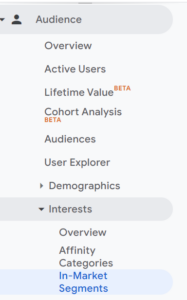
    First, go to your Google Analytics instance and look for the following interest categories: Affinity categories and In-Market segments (refer to the image below)

    Affinity categories and In-Market segments

    Next, do a long lookback and download the complete list of audiences available to you. After a little bit of format manipulation, upload the complete audience list in observation mode to Google Ads (with no bid adjustments) to each Search Campaign in Google Ads Editor (excluding Performance Max where this tactic is not permitted).

    It’ll take from 2 to 12 weeks while Google Ads compiles enough data on all of the audiences in your campaigns – allowing statistically significant differentiations between the audiences to become apparent.

    We’re making an assumption that you, the reader already know how to run a Target ROAS Bidding Strategy for your clients – maybe you’ve achieved some success with it. Here’s how we can make Target ROAS even more effective.

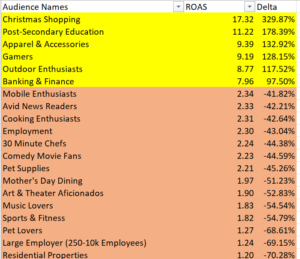
    Within those 900+ audiences, Google has been tracking on your behalf – a series of outlier audiences that will perform either much better or much worse than the account average. In the image below – you’ll see sample data from an account that has an account-wide ROAS of 4, but as you can see from the image there is a subset of audiences where the ROAS diverges greatly from the average:

    Subset of Audiences

    Target ROAS is working well for this account, but there is still a group of audiences that are either being underrepresented (with higher-than-average ROAS) or overrepresented (with lower-than-average ROAS) in the traffic that Google is sending over.

    How can we optimize for these outlier audiences?

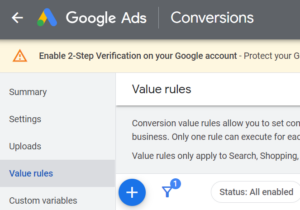
    Go to the Conversions Tab and click on “Value Rules”.

    Value Rules

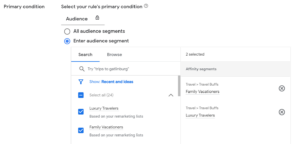
    Add the relevant audience segments:

    Rlevant Audience Segments

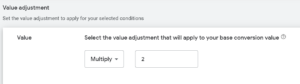
    You need to choose a value adjustment. For these audience segments, the top audiences have achieved a ROAS of 2x the Account Average. So it’s logical to 2x the value associated with conversions in these audiences.

    Taking an action like that will help ‘seed’ Google’s algorithm to be more aggressive in bidding for future people who are part of these “favored” audiences. Conversely, the audiences that have generated a much lower ROAS than the account average – you can reduce the multiple to as low as .5x.

    Base Conversation Value

    As this is scaled and over time, Google will be more aggressive in pushing bids higher for people in “profitable” audiences and lower for people in “less profitable” audiences which will make your Target ROAS Bidding strategy much more efficient. Depending on the account, I review audience data every 2-4 weeks and adjust these numbers because audience performance isn’t consistent over time.

    You can also run a similar strategy with Geographical Segments.

    The U.S. contains 210 distinct DMAs (Designated Market Areas) – you can run a similar setup comparing ROAS data at the DMA level, making the same types of adjustments as you can with Google’s Audiences.

    Personally, I’ve found that using Google’s Audiences as my Value Rules foundation is more impactful to my clients than just using DMAs, your situation might vary. I hope you found this helpful – feel free to leave comments below!

  • Tips & tricks for location-based paid search – one marketer’s perspective

    I’ve managed all types of paid search campaigns (Google Ads)… from eCommerce to Consumer Lead Gen, but I had never managed a campaign for a multi-location business before I joined Position2.

    Over the last few years, multi-location PPC has quickly become one of our “in-house specialties” that we offer our clients.

    In this post, I’ll share some tips and tricks that I’ve learned over the last few years that’ll benefit those who are managing marketing efforts in a multi-location business.

    Hours of Operation

    Save your budget for when you have staff to answer the phone – be mindful and turn your campaigns off when your office is closed.

    Call Tracking

    Third-party call tracking is mandatory to measure results from phone calls. CallRail is one of our favorite providers of choice. It’s incredibly powerful, reasonably priced, and user-friendly in both setup/execution.

    You’ll be tracking two types of calls: People who call your extensions right from the search results page and people who visit your site and then call from there. We recommend your business set up full source-to-close tracking where all inbound calls (and all form fills, if relevant) get recorded in your CRM and are tied to a unique GCLID tag.

    These “leads” will be tracked through the funnel and data from each stage gets pushed back into Google Ads. When the leads “close”, those closes will also be pushed into Google. When your CRM shares data with Google, it trains the algorithm to find prospects that are more likely to become leads and closed sales.

    We know that not every business is set up to do full source to close tracking, however, if your company can at least track all inbound leads and tie them to paid search it will generate an accurate cost per lead and the investment in a call-tracking solution will be justified.

    Performance Max / Smart Campaigns

    For each office location, we typically run unique Branded and Non-Branded Search Campaigns along with an office-specific Performance Max Campaign. We don’t recommend creating Performance Max Campaigns to cover multiple offices because it can lead to an increased likelihood of showing an inaccurate office location to a prospect. Office ads overlapping each other can happen but that is fairly normal and not a negative.

    Display Campaigns

    Although generating direct lead volume is never guaranteed, Google Display Network Traffic is affordable and if targeted aggressively within a small local area you can attain great brand recognition that will help generate interest from other marketing channels. We recommend that you allocate between 5-10% of each locale’s marketing budget for Google Ads on the Google Display Network.

    Response time

    During business hours, your prospective customers expect quick responses to their inquiries (or within a reasonable time during off-hours). Not responding promptly, could drive those prospects to choose a competitor. We’re recommending you set and commit to a service level agreement (SLA) for all inquiries – and ensure it’s executed in every communication/engagement. It will help prevent a loss of down-funnel revenue.

    We hope you found these tips useful, we think Google Ads is an essential tool for keeping your multi-location businesses visible and profitable. Following these steps, will help your business will get more business.

  • Content Mapping – Why is it Important?

    When developing marketing content – how do you start the conversation and where do you engage with your prospects and clients?

    For the consumer, your solution can easily get lost in a sea of SEO keywords, landing pages that all look alike and social channels with sporadic episodes of content. You need to position your solution in the right context for your business. Most companies know the prerequisite marketing for your website, product brief, and contact form-fill pages but not many go beyond that to tailor the bespoke experience for your audience. The extra step of content mapping your collateral can deliver a full-funnel experience for easy access to information and enough due diligence for next steps.

    Content Mapping Featured Image

    First, for top-of-funnel content, make sure you are building your narrative and positioning your value prop in a clear and concise way. Begin your content by telling the audience what question you’re going to answer, what problem you’re going to solve, and how you’re going to help them achieve a specific goal. This will save time and keep the audience engaged.

    For the rollout of content, make sure there is an up-to-date blog post, topical podcast, and or youtube video showcasing your solution for the audience. Awareness content can have a huge impact on the customer who is screening multiple solution providers for base-level domain expertise. If your content is topical, posted on a regular schedule, and provides enough of a comprehensive approach to the subject matter then it is perceived as authoritative and trustworthy. SEO best practices would also entail making sure that backlinks, such as PR/news, are up to date and optimized.

    During the middle of the funnel, stakeholders are comparing and shopping solutions. In this phase the highest impact content is video. Explainer videos, customer success story videos, and recorded webinars bring to life the solution, product, or service your organization focuses on. In this phase of the discovery process, the audience wants to see color both literally and metaphorically. The solution benefits and story should be on full display to highlight why your value prop is the leader in your industry. Clear, defined features and success outcomes should put even the most jaded stakeholder at ease with wanting to learn more and or make contact.

    For example, if your product or service has made a significant impact on a client – make sure to showcase this by getting customer testimonials, quotes, and perhaps even a video interview from the satisfied customer. There is nothing that compares in the consideration phase more than real examples of your solution shining.

    Finally, at the bottom of the funnel, make sure your content is summarizing your solution benefits with actionable next steps. The CTA should feel like the logical continuation of the conversation to move the needle forward. For instance, the next step of contacting your company should be an easy one. Both simple form-fill pages and additional gated content like case studies could serve two objectives. The first, getting the contact information of the now very interested prospect, and secondly, giving one last example of a success story that your solution achieved. Here, contact is not only expected by the prospective customer but welcomed.

    At this stage, your solution is probably one of two or three, and FAQs are top of mind. Internally, make sure all your representatives have battle cards and energized talking points to devour the competition with your solution facts! If your solution has a proprietary algorithm and or uses AI to solve complex business challenges – make sure you are speaking to that differentiator.

    Likewise, just as it’s important to map the right content according to the buyers’ journey; it’s equally noteworthy to have an overarching multi-touch approach to content distribution. Mapping the right collateral to SEO, the company website, and social channels are commonplace. In fact, an argument can be made that if you are not continuing the conversation on more than one device and channel then you’re leaving an opportunity on the table. My favorite platform for granular targeting in the conversion phase is Linkedin in general. The preferred medium is video.

    As your audience finds value in your content, they should be encouraged to be a part of your community. Advocacy and evangelism are sometimes left as an afterthought for content. Instead, plan for community-building opportunities to consistently engage with your loyal audience. Ultimately, it is vital to guide both new and returning leads through the journey while employing the right plan, channel mix, and commitment at every step.

  • Qualitative Strategic Content Audit Guidelines

    When was the last time your team did a content audit on your marketing assets ?

    A qualitative assessment of your content is a best practice – it’ll help identify messaging that’s out of date, improve relevancy for new audiences as well as overall organization for your content.

    What qualifies as content?

    Everything from your website (and landing pages), blogs, social media channels/pages, posts, and third-party content/event is a good start for a content audit. Don’t stop there, there’s value in extending the audit to product briefs, whitepapers, use cases, customer success stories, ebooks, webinars, videos, and recorded live streams.

    Do you know how your content measures up against your business goals? And why is that important? If you’ve never done a content audit, it can be overwhelming to get it started, try focusing and prioritizing on what content needs action, then start identifying low-quality content to clean up or remove.

    Quick questions to ask when you’re considering an audit:

    Does your content meet your audience’s needs?

    Is your content findable?

    Is your content easy to digest?

    Is your content actionable?

    Strategic Content Assessment Factors

    Time to get started evaluating content quality and value:

    Is the content relevant? Yes or No

    What’s the purpose of the content? Is it Informative or Actionable? Does the content educate or influence the audience? Or is the content meant to move the reader to take action (fill out a form)?

    What is the value of the content? Is it critical to the goals and strategy of the business and or does it support your brand?

    How valuable is your content to your audience? In order to identify the value, you have to measure audience engagement (web visits, time on page, clicks). If you don’t measure engagement, you’re just speculating.

    What’s the tone of your content? Does it support the brand voice, persona(s), and buyer’s journey? Does it represent the voice of the company or the product team?

    How accurate is your content? Does it represent the current view of messaging or product information?

    Expertise, Authority and Trust (EAT)

    One of the more important aspects of content/content marketing that you’ll have to address is EAT. It’ll be difficult to measure in your organization but it’s important to Google – since they represent a large part of US search – it’s also critical for your business.

    Expertise in content is demonstrating that you (or your company) have the domain expertise. Being an Authority is the natural progression of that expertise. Trust, howsoever, is built over time – think of your favorite ‘trusted’ brands, they took years to build.

    There’s no quick way to build up EAT, if you haven’t started – there’s no time like now to start.

    Content Marketing checklist

    Use this list as an audit checklist and a foundation of a scoring system.

    Audience: Identify the relevant audience and match it to the right content asset. Your audiences will include customers, prospects, internal, press/media etc.

    Industry: If your content is developed for a particular industry – be sure to identify it by industry. Some of your content will have broad appeal – list it as general or multi.

    Service / Product: Your company could offer services, a product(s), or both – identify your content accordingly.

    Key topic: When reviewing content that is editorial in nature (blogs, case studies, eBooks, etc) identify each asset for its key topic for easier categorization and access

    Funnel: Is your sales and marketing content applicable to the stages of your prospect/customer journey? You’ll want to identify and categorize the content asset by TOFU, MOFU, and BOFU (top, middle, bottom of the funnel).

    Objective: What’s this content purpose/objective? Brand awareness, sales, lead generation, etc.

    Map Your Content

    Map your content to your audience persona’s buyers’ journeys. (TOFU, MOFU, BOFU)
    (use a comprehensive multi-touch attribution approach i.e. website, social, third-party)

    1. What is the current audience mindset?
    2. What do we want them to think and feel regarding our offering?
    3. What are our key message(s) and messaging frameworks?
    4. What are the appropriate content types(video, short-form, long-form?)
    5. What content is available and low effort/high effort?
    6. Determine the appropriate KPIs?
    7. Find your gaps? What is missing?
    8. Make appropriate content recommendations for net new.

    Results

    Once the audit is completed you’ll have the confidence that your content is positioned to perform, on-brand, current, and valuable to your audience.

    • Outdated content is refreshed and updated
    • The digital experience for customers and prospects is improved
    • Your brand message is clear and concise
    • Content is more relevant to the audiences it was developed for
    • Traffic and site stickiness improves
    • Redundant or outdated messaging is removed
    • You’ve de-cluttered the CMS
    • The client has actionable insights and next steps
  • Google Finally Updates an Unwritten Rule for Indexing Web Pages

    Google published an update to the Googlebot help documentation notifying that it’ll stop crawling a web page after reaching the first 15MB of an HTML file. It’s a hard limit, and any code / content after which will not be accounted for in ranking calculations.

    Google goes on to state: “Any resources referenced in the HTML such as images, videos, CSS and JavaScript are fetched separately. After the first 15MB, the Googlebot stops crawling and only considers the first 15MB of the file for indexing. The file size limit is only applied on the uncompressed data.”*

    When building your page, you’ll have to recognize what’s essential for your users / customers. Omit the information that’s unnecessary to your target audience and make sure your focus is on what that audience needs – there’s an opportunity here to map specific content to the user / customer personas you’ve developed as a guide.

    There’s an easy way to identify the file size of an HTML asset built into Google Chrome, if you’re looking at doing an initial assessment of file size across your site. If you’ve identified any HTML files over 15MB, we recommend that you do a content audit on those pages to ensure your messaging / content is crawled and indexed.

    The recent amendment to Googlebot’s help documentation has brought awareness to the significance of the page layout and reminds us of the criteria vital to search engine result pages (SERP). Use of the right content focused on the right users, crawlable, and accessible to bots are all critical in getting the best placement for your content in search results.

    Although Google has only recently documented this update, they clarified that this policy was not new – it’s been in effect for years.

    High SERP performance is critical to increasing web traffic and exposure. Our team of SEO experts will dig into your business, understanding your goals, challenges, intentions, and target audience. We bring the right combination of technical knowledge and services (like content marketing), and our approach is geared to delivering the results that your business needs to drive growth.

    * Googlebot help document, learn more about the limits’ full details visit the Google Search Central Blog