Blog

  • Instagram – Yet Another Platform For Advertisers


    Instagram has 300 million monthly active users and plans to open up the platform for advertisers. Jim Squires, director of market operations at Instagram, speaking with eMarketer’s Debra Aho Williamson, talked about how advertisers will be able to use Facebook data for targeting and how the ad buying process will change on Instagram.

    What can marketers and advertisers expect going forward?

    • Instagram will introduce direct-response ads, the ability to buy ads via an API (application programming interface) and enhance its specific targeting capabilities
    • In addition to the video, photo and carousel ad formats, the new Action-oriented ad formats will allow users to take an action directly from an ad to sign up on a website or buy a product or download an app
    • Instagram will maintain advertisement quality and creativity with a complex system using negative feedback rates, ad engagement rates and comments on those ads as input parameters
    • Advertisers will be able to use ‘Custom Audiences’ to mix their information with the Instagram and Facebook platforms to get a holistic picture of their ad campaigns

    Let us know your thoughts on how to fold Instagram into your social marketing strategy.

  • Best of the Week | 8 Tips to Leverage Facebook for Business, and much more…

    This week’s hot news, events and videos from the online marketing and social media world.
    Tips to Leverage Facebook for Business
    From the Position2 Blog This Week:
    Tips to Leverage Facebook for Business | Position2 Blog
    Looking to promote your business, enlarge your brand audience? With a constantly diversifying array of internet users signing up for Facebook, a showcase on Facebook for a brand, business, company or entity has become as critical as having a website. Read this blog for 8 ways to boost the visibility of your business page.
    Top Stories this Week: Social Media
    Top Stories this Week: SEO, PPC and Digital Media
    What are the biggest challenges for digital marketers in 2015? Best of the Week Video
    What are the biggest challenges facing the digital marketing industry over the next few years? Watch this video where the speakers from Future of Digital Marketing conference share their views.
    Persona Based Lead Scoring: The Mystery and the Method
    Download this White Paper and learn:


    • Classify leads based on behavior and demographic details
    • Develop a consistent methodology to proffer quality leads to sales
    • Employ data integrity and tracking
    • Deploy marketing automation to improve efficiency and cut costs.?

    Download the complimentary persona Based Lead Scoring White Paper now

    Lead_scoring_Whitepaper
    If you are reading this blog post via a RSS reader, please click here to subscribe.
  • 5 Updates from Google for Mobile Devices


    The nature of digital marketing will not stand still, not with Google constantly creating new ripples for marketers all over the world. Here’s a look at what’s in the pipeline:

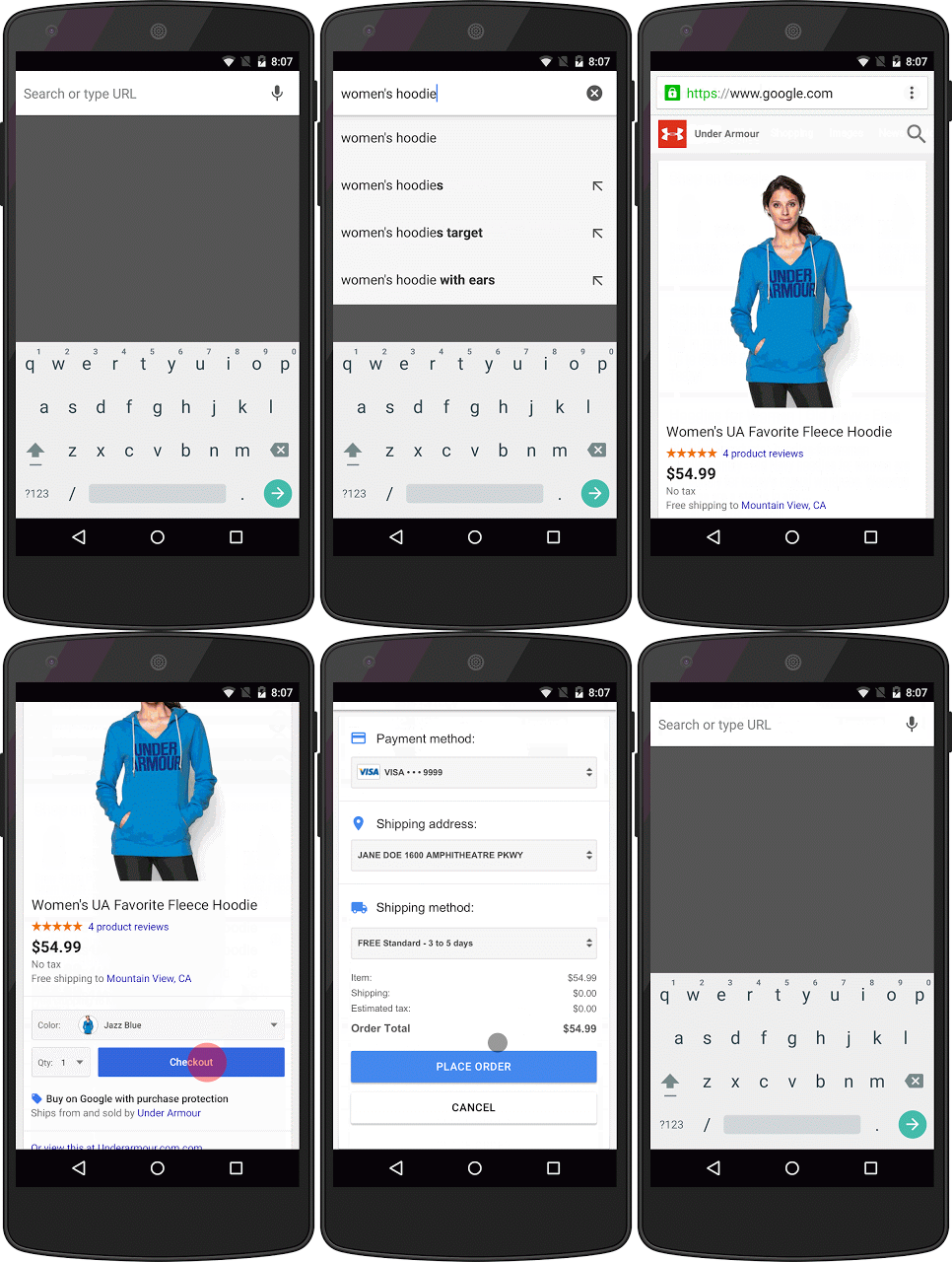
    Purchases On Google

    The much-anticipated “buy button” in Google search ads is here but it’s not really a button. Called ‘Purchases On Google’ mobile users will be able to click on search ad results and go directly to the dozen or so retailers currently participating in the test. Response thus far has been enthusiastic and positive.

    “Purchases on Google will simplify our customers’ ability to search for items on Google and then buy with Staples.” said Faisal Masud, Executive Vice President of Global E-Commerce, Staples, Inc.

    “Customers increasingly want to shop on their own terms. Purchases on Google facilitates that flexibility while maintaining the merchant’s ability to own the customer relationship.” says, Peter Cobb, eBags Marketing EVP and Shop.org Chairman.

    By clicking anywhere on the ad the user is taken to a merchant-branded gateway landing page hosted by Google. The consumer can buy the product immediately using his mobile device.

    Purchases-on-google

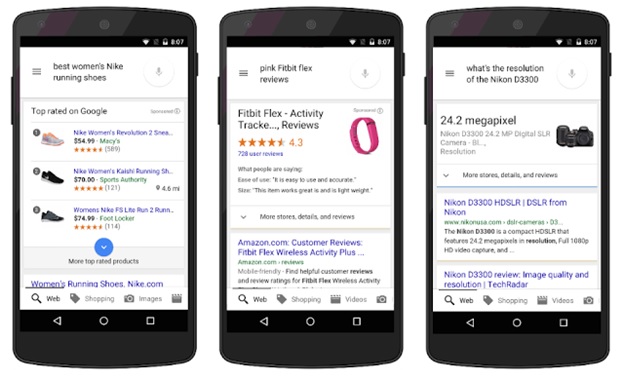
    New Mobile Shopping Ad Formats For Voice Search

    Google has started to show new ad formats that include rankings and ratings when consumers search using voice. In this example rankings 1 to 3 have been displayed in the search results for the image on the left after making as voice search.

     New Mobile Shopping Ad Formats For Voice Search

    Expanded Product Listing Ads (PLAs) When Viewing The Carousel On Mobile

    When users swipe to see more in the PLAs on their smartphones, Google will now expand the ads to show the full product title as well as extensions like product ratings and nearby availability. This functionality will roll out to Chrome for Android this month, and iOS in the coming months.

    Google Now In-store Cards

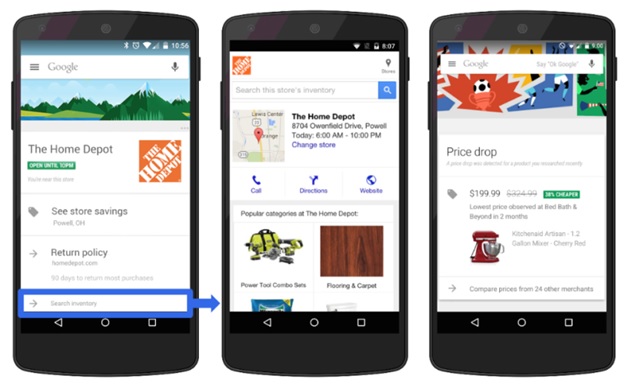
    Local Inventory Ads have been performing well so a lot more of them will begin showing up in mobile search results. Also coming online, the Google Now in-store card that appears when a user is near a store. It will show sales, closing hours, loyalty card information and more. Also, look for the Google Now price drop card. It will showcase significant price decreases on products the user has previously browsed.

    Google Now In-store Cards

    PLA Deep Linking To Shopping Apps

    Google is running a pilot test with a small group of global retailers including eBay, Flipkart and Zalando to deep link their product listing ads to product pages in their apps rather than their websites. More retailers will participate in the test in the coming months.

  • Tips to Leverage Facebook for Business | Position² Blog


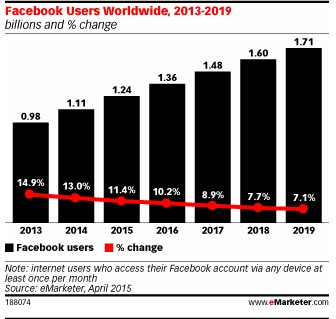
    Looking to promote your business, enlarge your brand audience? Look no further than Facebook. With a constantly diversifying array of internet users signing up for Facebook, having  a showcase on Facebook for a brand, organization, business, company or entity has become as critical as having a website.

    Eight Ways to Boost the Visibility of Your Business Page on Facebook
    facebook users1. Business Overview

    Make sure all the information about your business in the following checklist has been included on your Facebook Business page.

    In General

    • Description(short & long)
    • E-mail ID
    • Phone number
    • Address
    • Map
    • Ratings & reviews
    • Vanity URL

    For a Local Business

    • Working hours
    • Product price
    • Parking
    • Public transit
    • Payment methods
    • Specialties

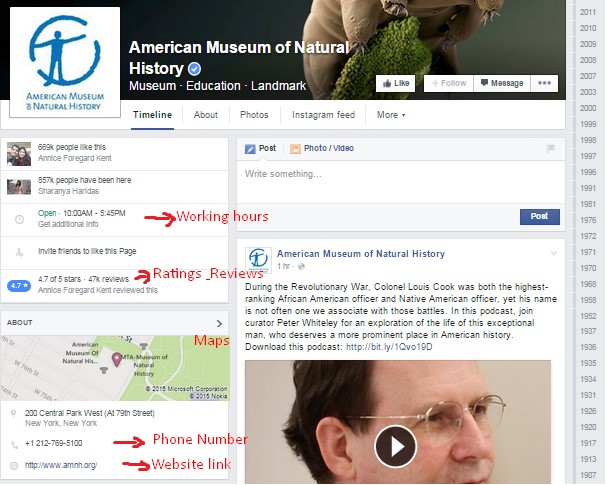
    facebook search-american-museum

    In this example The American Museum of National History improves their Local Business Visibility by providing Facebook users planning their visit with relevant information.

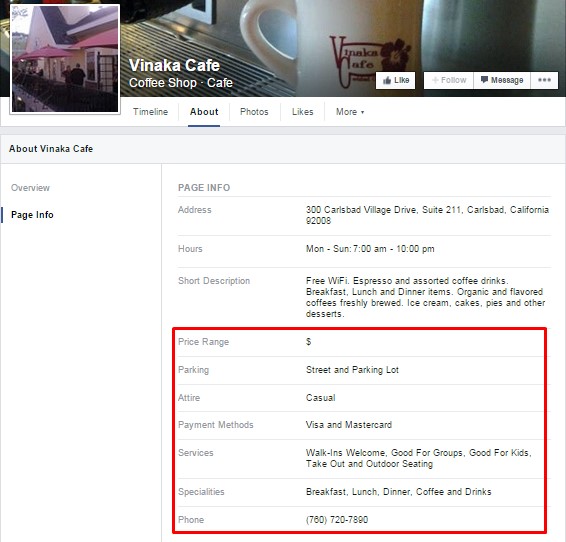
    In another example, Vinaka Cafe makes it easier for consumers to access this Local Business by posting information about their specialties, price range, their services and parking availability.
    facebook search-vinaka cafe

    For B2B Business:

    • Year Founded
    • Awards
    • Company Mission

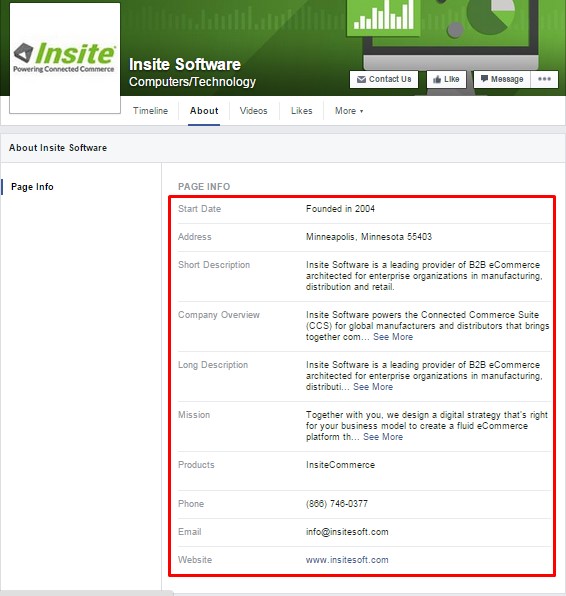
    facebook search-insite software

    Insite Software added all the basic information that describes their business: the year the company was founded, the address, a short and long description, the products offered and contact information.

    2. Call-to-Action Feature

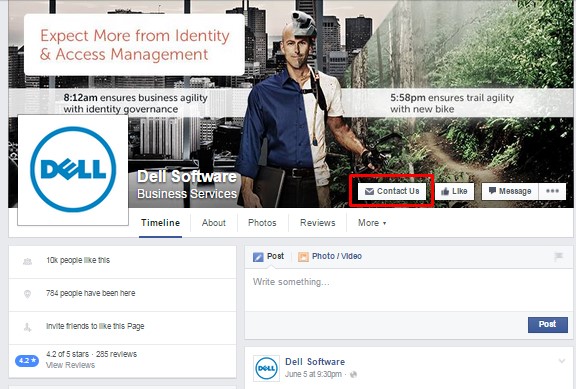
    Facebook has added a CTA feature that helps users take actions important to the business. CTA buttons include such basics as Sign Up, Contact Us, Book Now, Shop Now, Play Game, View App, Watch Videos, etc. Businesses leveraging this CTA feature easily drive traffic to their website.
    facebook call to action-dell

    You can track the number of people who have clicked on your Page’s call-to-action button in two ways:

    1. Hover over your Page’s Create Call to Action button and then hover over View Insights to see how many clicks have been received in the past seven days.
    2. Go to This Week on the right side of your Page and hover over the box that shows the name of your call to action to see how many people have clicked that week.

    3. Tabs and Apps

    Tabs and Apps can be found below your Page’s cover photo. You can display up to 5 tabs below your Page’s cover photo, and up to 3 apps on the left side of your Page’s Timeline.

    1. Tabs come with your Page when you create it and direct people to specific parts of your Page, like Photos and Events.
    2. You can add apps made by third-party developers to your Page, build your own, or work with one of Facebook’s Marketing Partners to create a unique app experience on your Page.
    facebook apps-dell

    You can customize your tab on Facebook.

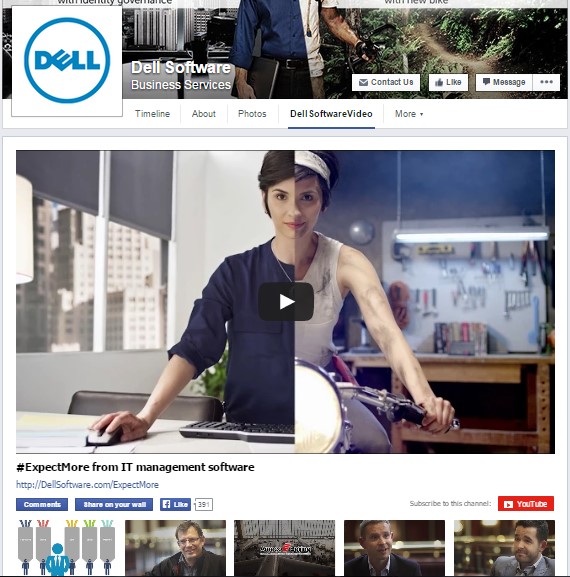
    In this example Dell Software has added a custom tab displaying all the relevant YouTube videos. This keeps the user within the Facebook channel.

    4. Image Optimization

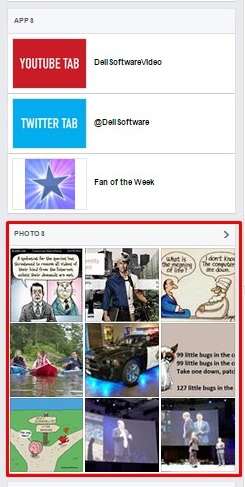
    In order to optimize the images that are featured on the Page you first need to select the top 9 photos you want on the Page. It’s important to select images that best represent your brand because they are automatically chosen from the Business Page’s default photo album. facebook apps
    5. Featured Video

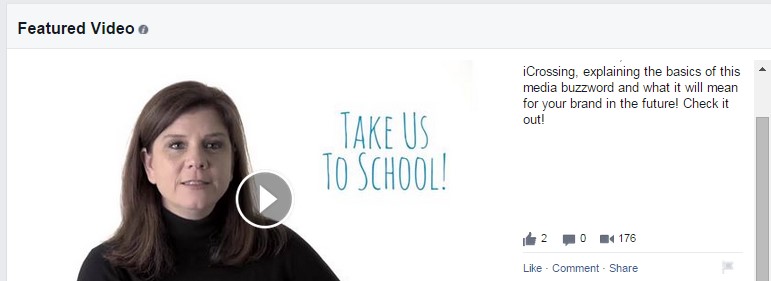
    One of Facebook’s latest update encourages Pages to upload a featured video and show it prominently to people selecting your Video tab. This will also be featured in the About Us section.
    featured video

    6. Video Cards

    Create and share personalized Facebook Video Cards.

    1. Job Well Done
    2. Goodbye
    3. You Can Do it
    4. Recommend a Client

    To check out this feature, log into Facebook and go to the Say Thanks page.

    7. Reviews and Feedback

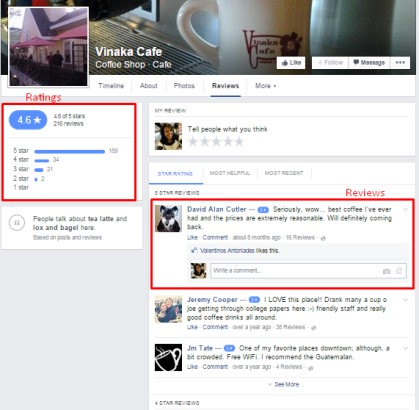
    This feature applies only to Local Business pages and will appear below the About Us section. By activating this feature users will be able to read other users’ experiences and ratings of the business.  To have a better view of the comments click on the review session in the About Us section.
    facebook reviews

    8. Posting Schedule & Target Audience

    To achieve maximum engagement find the ideal time your fans are online and schedule posts accordingly.

    Check your Facebook Insights to see when your fans are online. You’ll see data for each day of the week. Ideally, post half an hour before they are online so your post will appear on their news feed by the time they arrive.

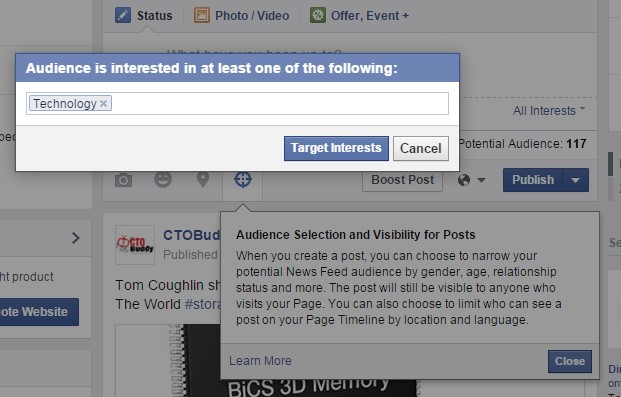
    Facebook recently added two new targeting options for page posts: Target Interests & Post End Date.

    Use Target Interests to direct your updates to a narrowly defined group. You’ll receive greater engagement. Target them by their interests, gender, age,  location, behavior, etc. Once you set this up, the Facebook Business Page will appear on users’ newsfeed as per the targeted interest.

    Note: This feature needs to be enabled under the general settings at “News feed audience and visibility for posts”.
    facebook target audience

    When you use the Post End Date option, you predetermine your post’s lifespan in the news feed. When the end date passes, the post will no longer appear in a news feed even though it remains on your page. This is an effective way to promote events and other time-specific posts.

    These tips can be easily implemented on Your Facebook Business Page and there’s no fee attached to any action.

    Stay tuned for the next segment.  We’ll talk about how to improve your business with Facebook Ads.

  • Cortex: Twitter Ramps Up Its Artificial Intelligence Efforts


    The hunt is on at Twitter for engineers to ramp up the company’s artificial intelligence efforts. It calls the new team “Cortex.” After acquiring DeepMind in 2014 Google has been doing a lot of work with artificial neural networks. And Facebook CEO Mark Zuckerberg has flagged artificial intelligence as one of the company’s key initiatives. So it’s no wonder that Twitter wants to enlist architecture and systems software engineers to work on “Deep Learning”,

    Wikipedia tells us that “one of the promises of deep learning is replacing handcrafted features with efficient algorithms for unsupervised or semi-supervised feature learning and hierarchical feature extraction.” Twitter’s Cortex team will mine this specialized branch of artificial intelligence to help the company better personalize its service for its 300 million users, and keep up with Google and Facebook in the industry’s real-time personalization race.

    Twitter’s job listing explains why it needs artificial intelligence and how it views the new Cortex team:

    “Twitter is a unique source of real-time information, offering amazing opportunities for automatic content understanding. The format of this content is diverse (tweets, photos, videos, music, hyperlinks, follow graph …), the distribution of topics ever-changing (on a weekly, daily, or sometimes hourly basis), and the volume ever-growing; making it very challenging to automatically and continuously expose relevant content. Manually defining features to represent this data is showing its limits.

    “Our team, Twitter Cortex, is responsible for building the representation layer for all this content. As an architecture engineer at Twitter Cortex, you will help us build, scale and maintain the backbone of our online learning systems, and directly impact the lives of our users and the success of our business.”

    Twitter may not have the resources of Google or Facebook, but the Cortex group demonstrates that Twitter is a serious AI contender. For Twitter, AI capabilities could translate into new products and features and breathe life into stalling user growth. If the flood of content generated on Twitter every hour can by presented as a personalized feed to each user based on their interests then Twitter might just strike gold.

    Let us know your thoughts about how artificial intelligence can revolutionize the digital social media world.

  • Best of the Week | Do You Have A Content Marketing Strategy, and much more…

    This week’s hot news, events and videos from the online marketing and social media world.
    Do You Have A Content Marketing Strategy?
    From the Position² Blog This Week:
    Do You Have A Content Marketing Strategy?
    If you think content marketing isn’t easy, you are not alone. For an entire annual marketing plan to be a success, you need a focused content strategy. Read this blog to build a winning content strategy!
    Top Stories this Week: Social Media
    Top Stories this Week: SEO, PPC and Digital Media
    Big Change in Video Ad Format with the Rise of Vertical Best of the Week Video
    You might expect that vertically-oriented video would present a challenge to advertisers, who, traditionally, have redeployed ad first designed for TV’s landscape screen. Watch this video for GroupM chief digital officer Rob Norman’s take on the problem – don’t think TV, think bus stop ads.
    White Paper: Increase Visibility for Your Content by 4x
    Today’s traditional SEO is inadequate: Ignite your search results by accelerating visibility in more places than ever before.Download this White Paper and learn:


    • SEO, why the way we know it is not enough
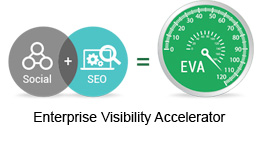
    • Introducing and implementing Enterprise Visibility Accelerator (EVA)
    • Using multi-channel tracking tools for effective monitoring
    • How EVA benefits businesses.

    Download the complimentary EVA White Paper now

    Enterprise Visibility Accelerator-EVA
    If you are reading this blog post via a RSS reader, please click here to subscribe.
  • Facebook Updates Cost Per Click Measurement


    On Wednesday the folks at Facebook announced that they have modified the way they calculate cost per click. It’s part of their new marketing API. From now on, Cost-Per-Click (CPC) will no longer be measured as likes and shares, but measured as link clicks to websites and apps. Bottom line: advertisers will no longer have to pay for likes, shares or comments.

    The New CPC?

    Cost of the Click will shift from engagement only ‘likes’ and ‘shares’ to a specific ad objective. Some examples of the new CPC include:

    • Clicks to visit another website
    • Call-to-action clicks that go to another website (i.e., “Shop Now”)
    • Clicks to install an app
    • Clicks to Facebook canvas apps
    • Clicks to view a video on another website

    The new definition serves ad objectives that Facebook believes are more closely aligned with the business objectives of advertisers.

    What Does This Mean?

    With the new CPC calculation in play advertisers are likely to enjoy a better ROI on their ad spends, because the outcome of driving traffic to their website will yield greater value. As certain campaign reporting metrics related to clicks change advertisers will have to bear a higher cost per clicks. But in the long run marketers will end up paying only for valuable clicks.

    “If you think back, a lot of advertisers thought of Facebook only as a social platform and were strictly engagement focused,” Richard Sim, Facebook’s head of ads product marketing, told Marketing Land. “Over the past few years we’ve really been focused on driving business results. The transition to clicks being only link clicks is a big step in this transition.”

    What Happens to Likes, Comments and Shares?

    Advertisers will still be able to bid for the engagement clicks (including Likes, Comments and Shares) but under the new CPC definition this will not be tracked. A high number of engagement clicks will continue to be an indicator of valuable and engaging content.

    What Next?

    According to Facebook, it could be one of three things:

    • If you buy Ads through a Facebook interface (like Ads Manager or Power Editor), sit tight and wait for the changes to be rolled out in the interface
    • If you buy through a Facebook Marketing Partner, find out how they intend to implement these changes
    • If you buy through the API, you can begin buying ads with the updated CPC starting July 8, 2015 in v2.4 of the Ads API. If need be, you can continue using the existing CPC definition through October 7.  But after that date, only the updated CPC will be available

    Is this the beginning of the end for Cost Per Engagement model? Let us know what you think about this change?

  • Do You Have A Content Marketing Strategy?


    You will find a good piece of content at the core of a successful email campaign. But that’s only one cog in the wheel. For an entire annual marketing plan to be a success you need a focused content strategy, something along the lines of what Michael Brenner has in mind in ‘What is Content Strategy and Why Do You Need it?’ on Forbes.com: “A content strategy flips the tables on traditional linear marketing by defining the process and then securing the right resources for producing a consistent stream of content mapped to buyer needs across all phases of the buying cycle. This is done for each buyer type or “buyer persona” that is involved in the B2B decision-making process.”

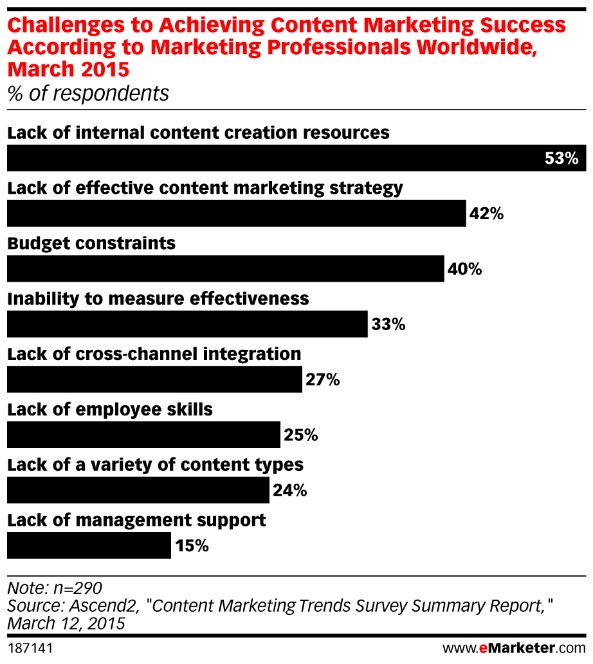
    If you think content marketing isn’t easy, you are not alone (see below). Marketers assume they face unpredictable challenges designing a sustainable content marketing strategy. And then they have to implement it. But it may not be all that daunting.

    Challenges in achieving content marketing success

    Beyond verbal: Why you need a documented content marketing strategy?

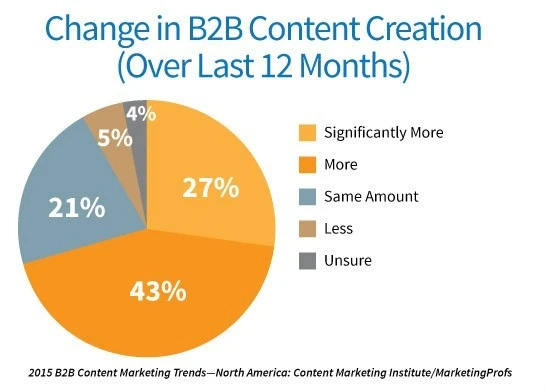
    Seventy percent of marketers say they are creating more content today than they did one year ago. That’s a quantum leap in both content creation and distribution. Marketers are learning how essential it is to have the right content, in the right channel, at the right time – every time a potential customer goes looking for an answer. Having a method to match the content creation madness helps marketers aim their energy, their money and, most crucially, their time in the right direction.

    2015 B2B Content creation trends for North America


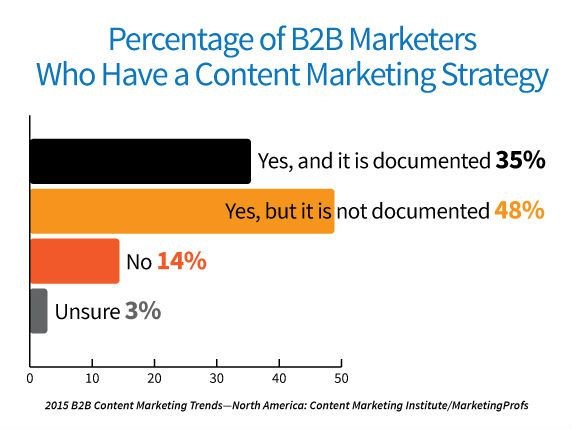
    Content Marketing Institute’s research shows that marketers with a documented content strategy:

    • Are far more likely to consider themselves effective at content marketing
    • Feel significantly less challenged with every aspect of content marketing
    • Generally consider themselves more effective in their use of all content marketing tactics and social media channels
    • Can justify spending a higher percentage of their marketing budget on content marketing

    Percentage of B2B marketers using content marketing strategy

    How to build a winning content strategy?

    You need to ask yourself a few questions before you start a deep-dive into the elements of your strategy:

    • Define your ultimate goals (traffic, sales, retention, awareness, etc.)
    • Define the target group that will help achieve your goals
    • Pinpoint where is the target group and who or what influences it
    • Establish the metric to judge the success of your efforts (links, shares, engagements, conversions, etc.)
    • Compare ROI with other marketing activities

    Once you have filled in those blanks, follow these simple steps for a well-rounded content strategy.

    Step 1: Do a content inventory

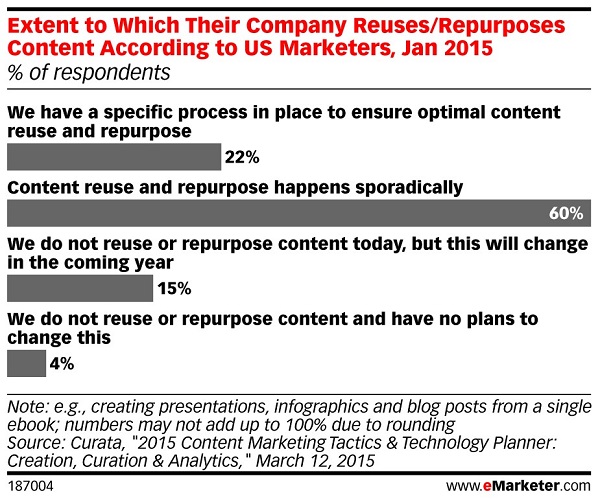
    More often than not, marketers are sitting on a gold mine of unused content. A documented content inventory gives you a clear picture of where your existing content can be found, how well it performs, and what gaps remain unfilled.

    Content reuse/repurpose trends


    Step 2: Start building a content calendar to fill identified gaps

    The content calendar helps you nail down the content type, tone, audience and publishing schedule. For example, a retail solutions firm, not only wants to produce great content for potential customers interested in, say, retail operation optimization but also for potential new employees who want to know how good a company they are to work for

    Step 3: Content is ‘King’; content promotion is ‘Queen’

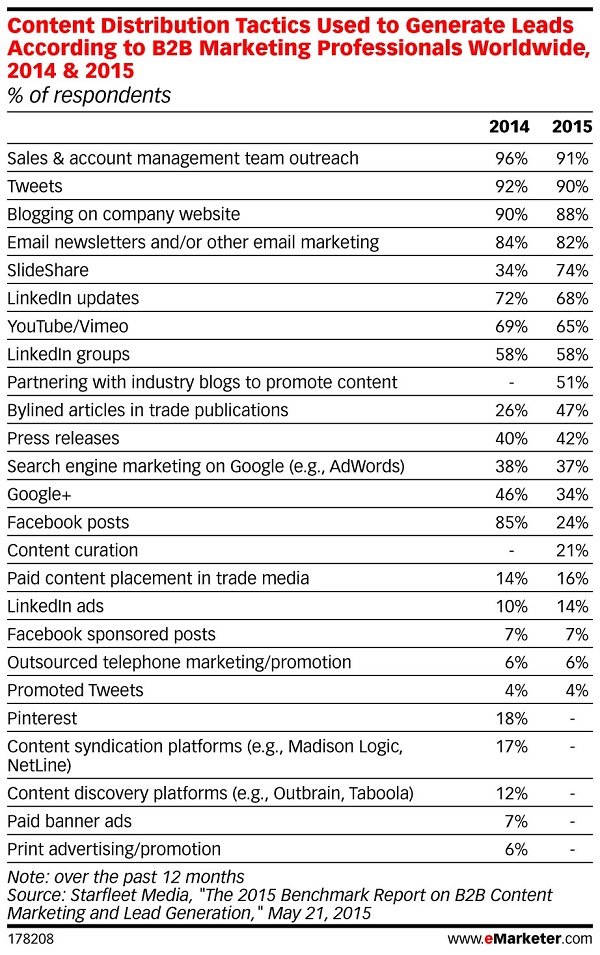
    Decide how to distribute and promote your content. How long — duration — will you keep it published (limited time, indefinitely)? What’s the reusability across channels? Planning this will help you publish and promote the right content to the right channels.

    Usage of content distribution tactics

    Step 4: Track and Tweak

    Track how your content performs across the distribution channels and which promotions pay off. Optimize your content with an analytic approach based on agreed upon metrics.

    Building and implementing a content strategy can be as easy as taking stock of existing content, filling in the gaps and then looking at the numbers coming in to tweak the content for the next round.

    We would love to hear your thoughts on content marketing strategy and execution. What are your pain points? What really works for you?

  • Twitter’s Audience Insights


    Audience Insights, a valuable and powerful tool from Twitter delivers a lot of useful information about your audience and how best to connect with them.

    How to Access Twitter’s Audience Insights

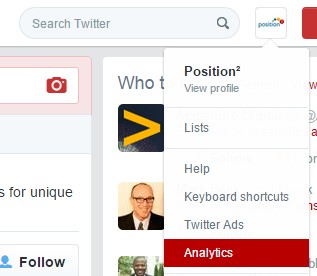
    To access Audience Insights, click on the profile picture displayed in the top right corner, which opens a drop-down menu. Click on “Analytics”.

    audience insights

    Once in the Analytics section, click on the “Followers” tab..

    Analytics section of Twitter

    The Insights

    Twitter slices and dices your audience into different categories, showing what percentage of audience fits into which category. To do this, Twitter uses information it gleans from users’ onsite usage, as well as off-site information provided by Datalogix.

    The overview at the top of the page tells you the most common interest of a user category, what type of lifestyle they follow, what type of buying style is most common, and their most commonly used wireless carrier.

    Audience insights categories

    Other statistics Twitter provides about your audience include:

    • Interests
    • Consumer buying styles
    • Wireless carrier
    • Education (highest level completed)
    • Marital status
    • Net worth
    • Household income categories
    • Gender

    In its blog Twitter provides an overview of the potential power of the Audience Insight tool. “With audience insights, you can easily discover valuable information about your followers and the people who have engaged with your organic Tweets. You can also identify new, relevant audiences to target for an upcoming campaign. Your audience insights dashboard provides aggregate information about user demographics, interests, purchasing behavior and more.”

    Audience Insights is now available to all Twitter advertisers and analytics users. Marketers may think that have the appropriate target audience ‘following’ them. Audience Insights can tell them if that is true. Twitter’s Audience Insights helps marketers analyze their audience and its response to their messaging. It gives them important nuggets of information to realign content and messaging strategy as per the current trends and information needs of their audience.

    Are you using Twitter’s Audience Insights? Has it helped you learn anything about how to better connect with your audience? Share your thoughts in a comment below.

  • Best of the Week | Optimizing Knowledge Graph for B2B Brands, and much more…

    This week’s hot news, events and videos from the online marketing and social media world.
    Optimizing Knowledge Graph for B2B Brands
    From the Position² Blog This Week:
    Optimizing Knowledge Graph for B2B Brands
    For users, Google’s Knowledge Graph showcases structured and detailed information about a topic based on their search. Read this blog to understand how to highlight relevant information about your brand in ways best understood by Google crawlers and algorithms.
    Top Stories this Week: Social Media
    Top Stories this Week: SEO, PPC and Digital Media
    Email Benchmarks Where do you stand? Best of the Week Video
    Email performance across 3,000+ Marketo customers was tracked and the results are in! Tune in to see how you stack up against your peers. Watch this video for some best practices on how to improve your email performance!
    White Paper: The Rapidly Changing World of SEO
    Get a head start in your quest for search engine optimization by going through this insightful white paper. Download this White Paper to know:


    • How important SEO is & why it should concern you?
    • Various ways in which you can deploy SEO
    • How to combine Social Media with SEO?
    • SEO best practices and a road map to getting there

    Download the complimentary SEO White Paper now

    Search-Engine-Optimization-White-Paper-position2
    If you are reading this blog post via a RSS reader, please click here to subscribe.