Blog
-
Creative Guidelines For Marketing
You know your target audience. You know the response you want to stimulate. And you know the kinds of metrics you hope to see as a result. These best practices will help you get there:
Copy
- Keep the message simple and strong. Use an active voice.
- Keep your target market in mind while writing the copy
- Use short and punchy headlines
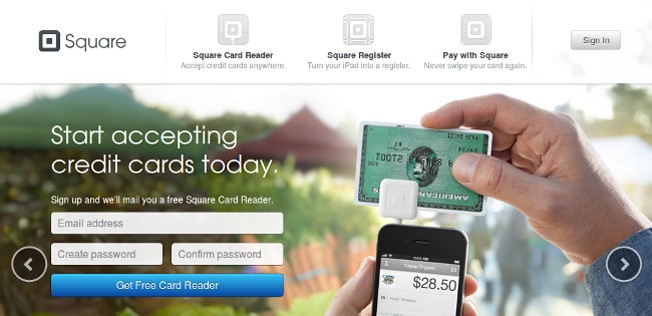
- Don’t overuse exclamation marks, uppercase, bold letters and emoticons. Have a specific reason for using them

- Make your message scanable. Don’t overwhelm readers with long paragraphs and lots of copy
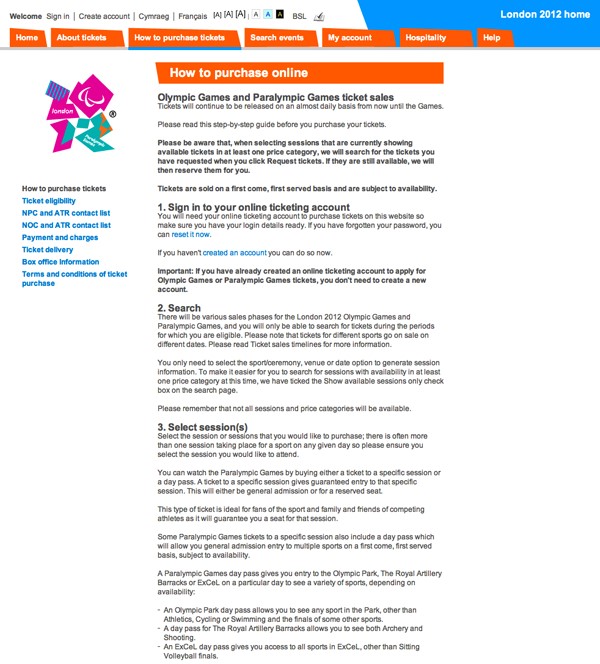
- Body font should be 12 point or higher (and if you’re using a Sans Serif font, increase leading)
- Use a punchy call to action
Graphics
Images and visuals are a critical part of marketing your product or service.
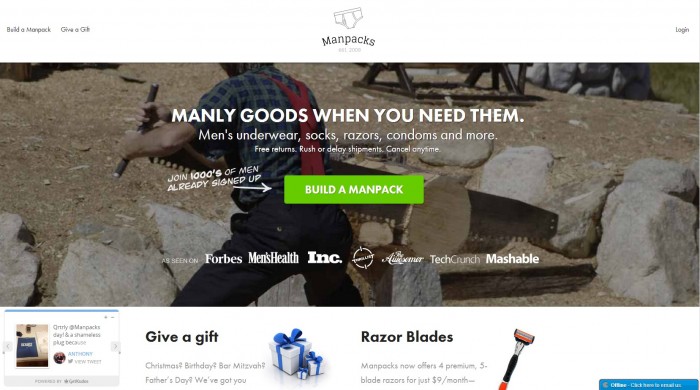
- Always use shots of people using the product/service instead of product shots alone. It makes an emotional connection with the target audience

- The larger the illustration, the better. They get more “sight time”

- Warm colors (yellow, red, orange, pink) pull more views than cool colors (green, blue, gray, beige)
- Use colors with care. Subtlety is your friend

Layout
Layout is critical. It can make or break direct marketing content.
- For magazine ads and postcard type mailings, the eye goes from right upper, to left middle, and ends at right lower. Design your piece with this flow in mind.

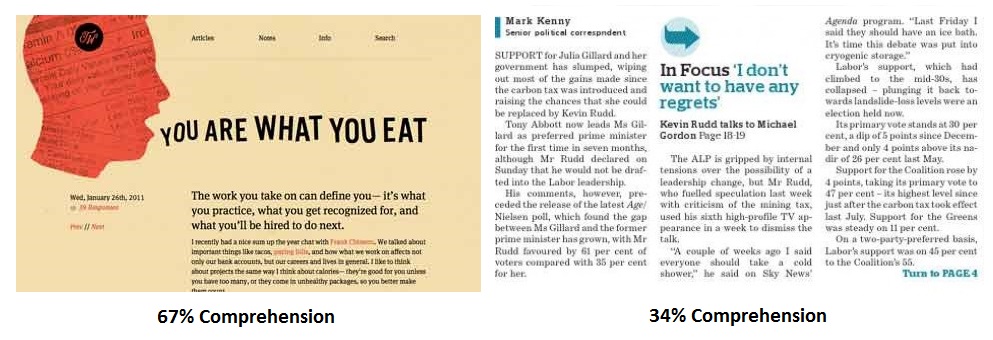
- It is best to follow a Picture, Headline, Body Text format (67% comprehension) over placing the Headline and/or Picture under or alongside the Body Copy (34% comprehension)
- For letters the eye starts upper left and zigzags to end at lower left. This is why a P.S. in a letter is so important

The devil is in the details. But details lead to marketing success.
Share your comments and experiences in the box below!
-
How Marketing Automation Can Transform Your Business
If you haven’t looked at marketing automation technology recently, you may not recognize the place. There are now over 215 marketing automation solutions on the market and the rate of marketing automation solution and innovation adoption shows no sign of slackening. The question for marketers isn’t so much will marketing automation technology have an impact on your business as it is which trend is the best fit?
Consider these statistics:
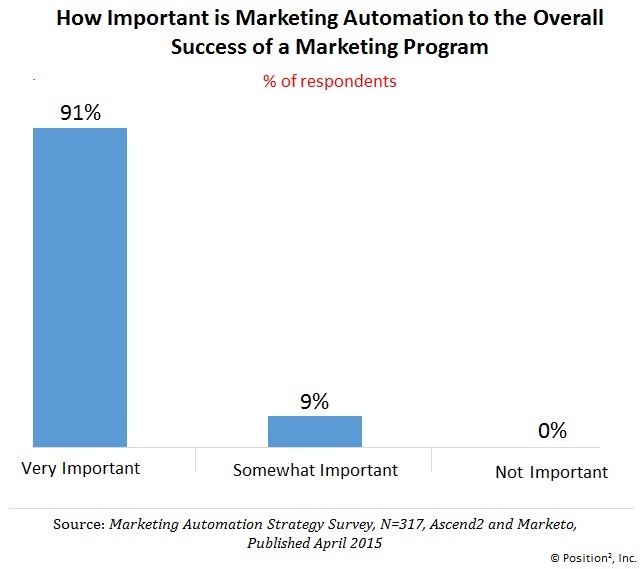
- 91% of users believe that marketing automation is “very important” to the overall success of their marketing across channels. Marketo
- 41% of marketers say that marketing automation is “Very effective/effective” at creating a cohesive customer journey. Salesforce
- 85% of B2B marketers felt they were not using their marketing automation software to their full potential last year. SiriusDecisions
- Nurtured leads make 47% larger purchases than those who were not nurtured. HubSpot
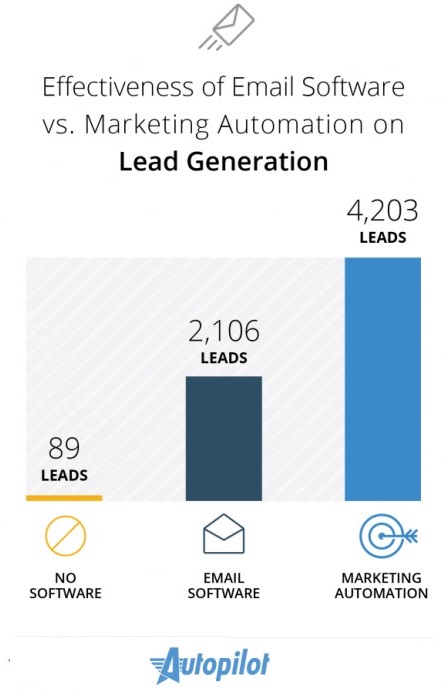
- Companies using marketing automation generate twice as many leads as those using just email software. AutoPilot
Not all solutions are the same. Learn the basics of marketing automation, then choose your route.
Predictive Analytics
In “The Hype Cycle for Business Intelligence and Analytics, 2013” Gartner reported that predictive analytics was poised to reach mainstream adoption in 0-2 years, or about right now. Here in 2015 we believe that insight-oriented diagnostic analytics and foresight-oriented predictive analytics will ensure marketer success.
Robust, predictive models help marketers eliminate guess work based on trends they identified using data. Eliminate guess work by answering questions like these:
- What is the optimum frequency of sending emails in a lead nurturing sequence?
- Which content (blogs, infographic, whitepapers, videos, etc.) should you send to a certain lead persona?
- Do you need to revisit your personas? Lead scoring?
- How should you score a lead from a particular marketing channel?
Data driven decisions help marketers launch and execute winning campaigns.
Let us know the best practices you follow when using data driven decisions.
Multi-channel Marketing
Multi-channel Marketing is the ability to interact and engage potential consumers across platforms in real-time — website, Facebook, etc. Marketing automation tools make it possible to personalize this interaction, the ultimate expression of “reach out and touch someone”.
Here’s an example. A company sells laptop computers for home and office use and Karen, a prospect, visits their website, adds a mainstream laptop with a high end graphics card to her cart, gets as far as billing and shipping details, but does not complete the order.
In a situation like this multi-channel marketing could:
- Send Karen a personalized email urging her to complete her order. The email would show the details of Karen’s cart, her shipping and billing details and a link she can click to complete her order
- Leverage Facebook so Karen sees an ad — “Karen, are you looking for a new laptop?” — when she logs on. This comes from an integration of the marketing automation platform with Facebook for retargeting.
- Send, after a day of Karen not responding, a personalized email from Sales Support Executive Brian asking if he can help with any questions Karen may have?
- Automatically activate after a few days a separate email nurture or Facebook retargeting campaign
This sequence of events can be customized based on the persona “Karen” is associated with in the marketing automation platform.
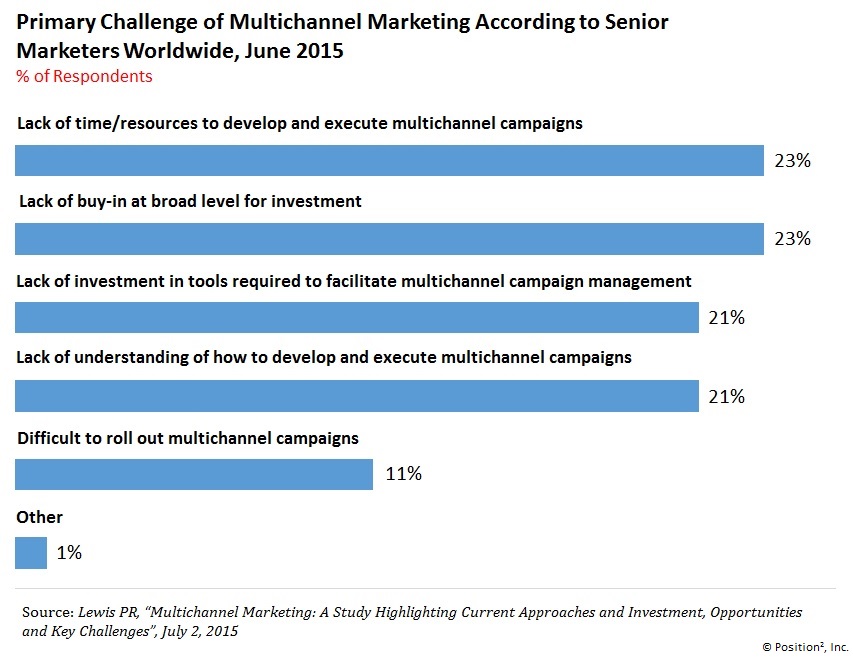
While highly effective, multi – channel nurturing is woefully underutilized. Here are some of the challenges marketers face when it comes to developing and executing these campaigns.
Multichannel marketing makes it virtually impossible to lose a customer due to their distraction or a technical glitch just before a purchase. This is a powerful concept that helps marketers target the right personas with personalized content at every step of their buyer’s journey.
Do you think this trend will help you improve conversions and target your prospects better?
Marketing Qualified Leads
Lead Quality. It’s typically where sales and marketing have their falling out.
- What is the rate of acceptance of your Marketing Qualified Leads into Sales Accepted Leads?
- Are sales and marketing on the same page when it comes to defining a “Qualified Lead”?
When implemented correctly marketing automation platforms change the ways sales and marketing teams perceive each other. Well-structured, well-documented lead scoring for various personas, channels, etc. help bring marketing and sales to the same conversation.
A constructive dialogue between the teams ensures “qualified” leads are converted, there is no leakage and leads that are not “sales ready” go back for a tailor made nurture andr future qualification.
Are you plagued with disconnect between your sales and marketing teams when it comes to lead qualification?
All our data points in one direction – marketing automation is becoming smarter, more personalized, and more accessible. It’s going way beyond the basic batch-and-blast email tool of yore.
Use the comment box below and let us know your thoughts on how marketing automation can transform business.
-
Best of the Week | Strategies For Optimizing Your Website, and much more…
-
6 Website Design Pitfalls To Avoid
“Design is the method of putting form and content together. Design, just as art, has multiple definitions; there is no single definition. Design can be art. Design can be aesthetics. Design is so simple, that’s why it is so complicated.”
Paul Rand
Last year’s ‘hip and cool’ website features look dowdy today. You have to stay ahead of the curve, and the curve isn’t sitting still. A well designed website – in terms of features, functionality, user experience, navigation and content — is an absolute must have.
- 48% of people queried cited website design as the number one factor in deciding business credibility
- 95% of those queried agree with the statement: “good user experience just makes sense” (Econsultancy)
- 6% of mobile users report having difficulty interacting with a web page, and 44% complain that navigation was difficult (Source: Keynote)
- When a page takes 4 seconds or more to load, the change in a website bounce rate spikes 100%. At 8 seconds or more to load it jumps to 150%. (Source: Mobile Joomla)
These 6 design trends are way obsolete:
1. Ancient Relics
The Big No-No’s: Page hit counters, animated gifs, flashing banners, scrolling marquees, flash intros, auto-play videos, background music, images opening in new windows, multiple font faces, styles and colors.
2. Lack of Whitespace
When the trend is minimalistic design with crisp content, you have to use whitespace correctly. If you don’t, your content will appear to be cluttered and unorganized. Whitespace strikes a balance between positive (or non-white) and negative space, which is key to aesthetic composition. Beware of inexpert use of white space. It can make a page look incomplete.
3. Overflowing Text Content
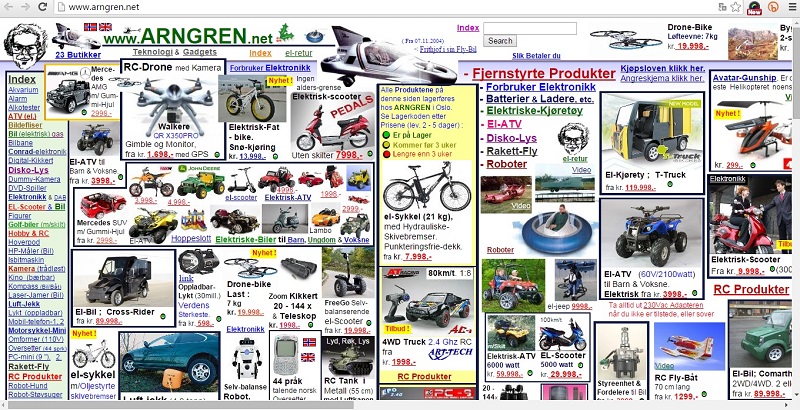
Think snackable content. Bite size is best. Break up any long text content into relevant photos and graphics, titles, bullets and paragraphs consisting of no more than 3 or 4 well-written sentences.
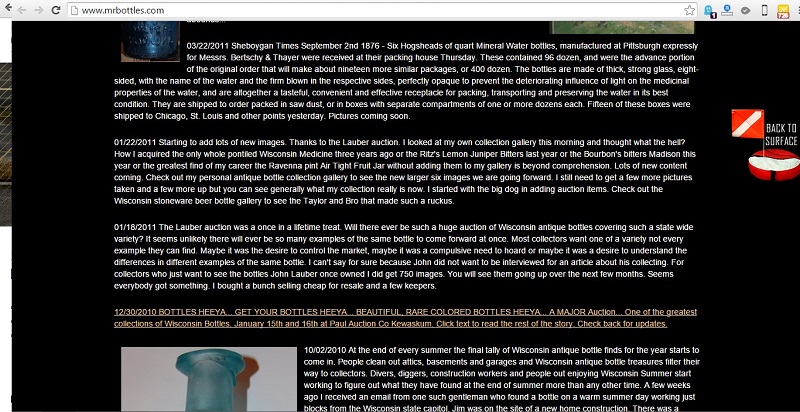
4. VIBGYOR Color Scheme
If your website is using more than 2 primary colors it is time for a redesign. A simple color scheme that’s pleasing to the eye is the new norm. Color increases web recognition by 80%. Sites with dark color schemes increase growth by 2%; sites with lighter color schemes experience 1.3% growth.
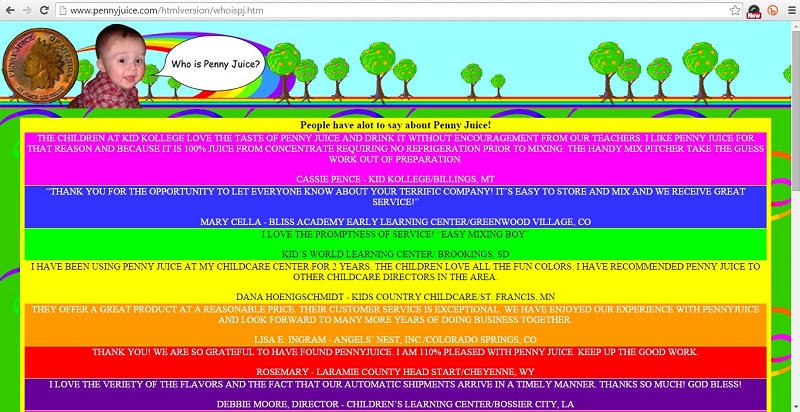
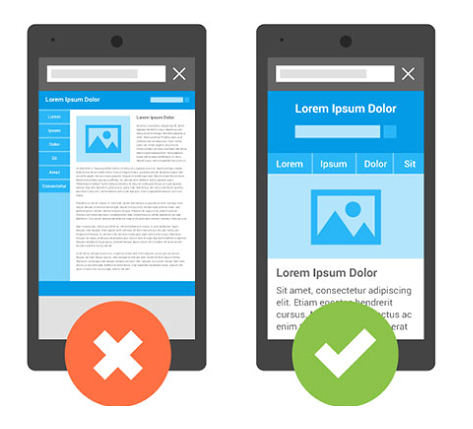
5. Non – Responsive Websites
User devices range from hand-held smartphones and tablets to large widescreen PC or laptop displays. A responsive website is an essential part of a seamless user experience across all devices. Fixing your website page width at 600px, 800px, 960px , etc. will kill any user interest.
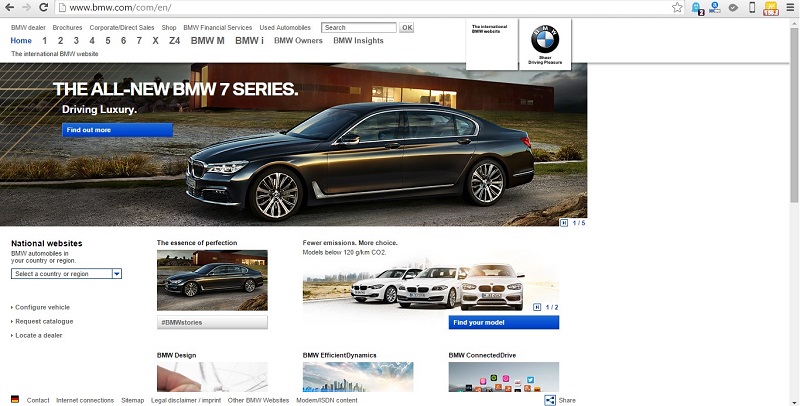
6. Bad Stock Photos
While using visuals in your marketing materials attracts and engages your viewers, unrealistic, cheesy and obviously fake stock photos will cause more harm than good. Avoid using stock images that are a clear disconnect from the values of the website and do nothing more than occupy space.

If your website isn’t designed for the future, it’s not designed for today. It may be past time to reconsider the look of your digital calling card.
Use the comment box below to share your thoughts on modern, hip and uber-cool website design trends and best practices.
-
Strategies For Optimizing Your Website
A website can be the ideal platform for businesses to make their services and products available online at their customer’s and potential customer’s convenience. In other words, a website is your best bet for being available to customers everywhere, all the time.
Websites vary according to business goals. The B2B website isn’t going to function like the B2C, C2C or even C2B websites. Website optimization begins with a clear business strategy.
What actions do you want people to take?
What do you want your website to accomplish? Which business goals must it fulfill? What actions do you want website visitor’s to take? Answer these questions then determine which of three website optimization strategies leads to success.
- Search engine ranking
- User experience
- Lead conversions
1. Search engine ranking
The goal here is to occupy the highest rank on search engine result pages for selected target keywords. High ranking search results are more likely to be clicked by customers.
To optimize your website for search engine ranking, research your close competitors’ content. You’ll be able to figure out which relevant keywords should be optimized for content updates on the website. Relevant keywords are the ‘base’ of the web content that users will be looking at. This content should be relevant to the user’s search query intent — relevant to the topic of the search query — and should provide value to the searcher.
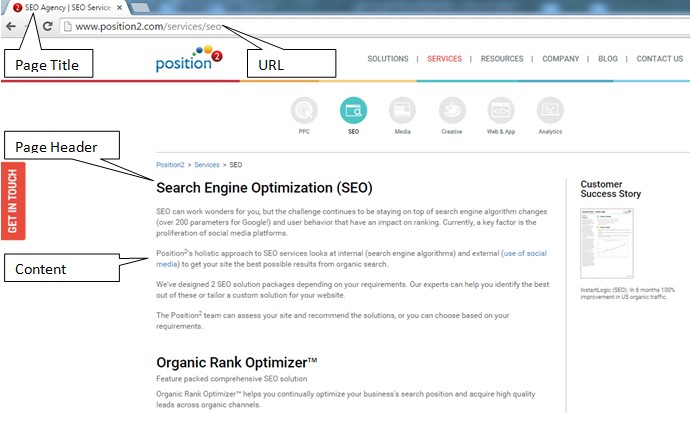
Optimize by inserting defined keywords at Page Titles, URLs, Page Headers, into the main body content, meta descriptions and on the meta keywords. These sections of the page are crawled by search engine bots looking for keywords and using them as a ranking factor. You maintain rank position by continually monitoring and refreshing web content.
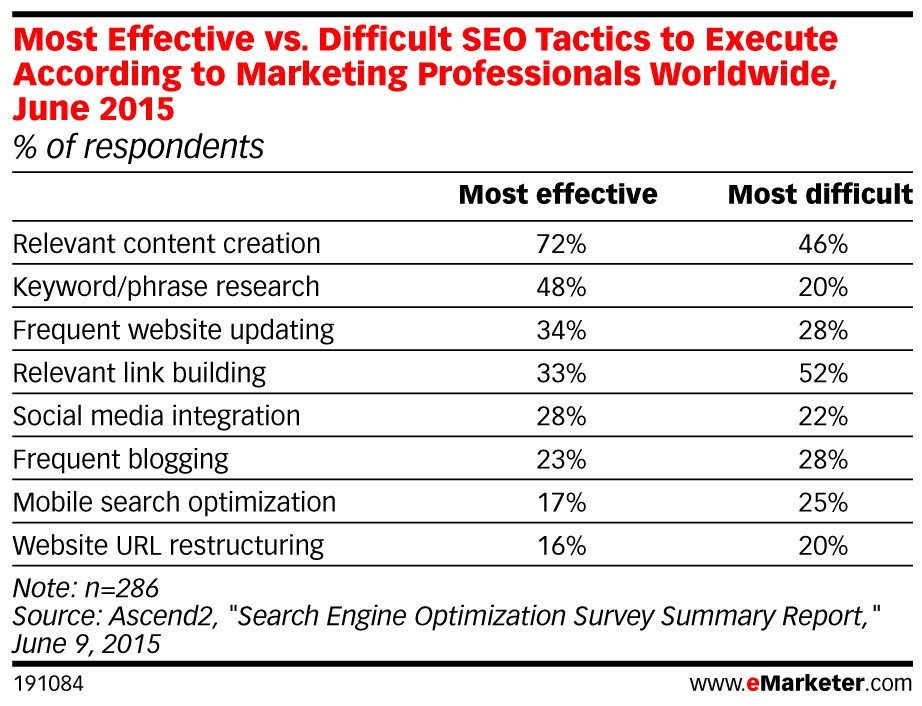
Double check this list for search engine ranking optimization:
- Right keywords or content topic
- Content relevance
- Page title
- URL restructuring
- Page headers
- Social media integration
- Meta Description and meta keywords
2. User experience
Optimize your website by focusing on design. Where some websites are too simple and lack appropriate content others are visually complex to the point of distraction. Users make these kinds of quick judgments on their first interactions. Consider these statistics:
- 40% of people will abandon a web page if it takes more than three seconds to load (Source:Econsultancy)
- 6% of mobile users report having difficulty interacting with a web page, and 44% complain that navigation was difficult (Source: Keynote)
- When a page takes 4 seconds or more to load the change in a website bounce rate spikes 100%. At 8 seconds or more to load it jumps to 150%. (Source: Mobile Joomla)
- 95% of those queried agree with the statement: “good user experience just makes sense” (Econsultancy)
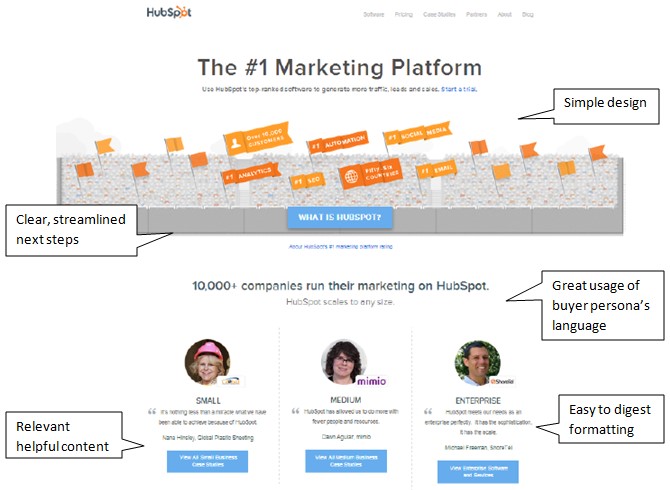
Websites should not be static. They should continually evolve over time. Keep these points in mind to make a website attractive and appealing for quality user experience:
- Maintain font hierarchy
- Include pictures
- Use short sentences and paragraphs written in an active voice
- Use bullets appropriately
- Leverage bolding, italics and hyperlinked content
Web content should be easy to understand for visitors, and easy to crawl for major search engines.
Brief relevant content on the website should not be sacrificed for the sake of simplicity. Coordinate between the various components like title, URL, body content, descriptions and keywords. For example, if the page topic is fitness equipment, the same message should be conveyed in the URL, title of the page, brief content, meta description and meta keywords. This is like a welcome mat for users, making them feel that they have landed on the page with the answers they are looking for.
Source: Hubspot
3. Lead conversions
For some businesses, acquiring quality leads may the primary purpose of their online presence. In that case, optimize your website to acquire lead information from visitors.
Oddly enough, a lot of businesses don’t bother:
- 56% of B2B small business websites don’t use meta descriptions that show up in search results and could help draw visitors into the website
- 87% don’t do anything to make their “Contact Us” option stand out
- 82% don’t bother to even list their social media profiles
- 68% do not show an email address on the home page
- 70% of business B2B websites lack a Call to Action
So if you just do that much, you are way ahead of the game. Your design should be based on click-through action buttons that are visually engaging. Here are some basic click-through rules of the road:
- Base your design on click-through action
- Place CTA buttons above the fold of the page
- Use visually prominent colors for CTA buttons
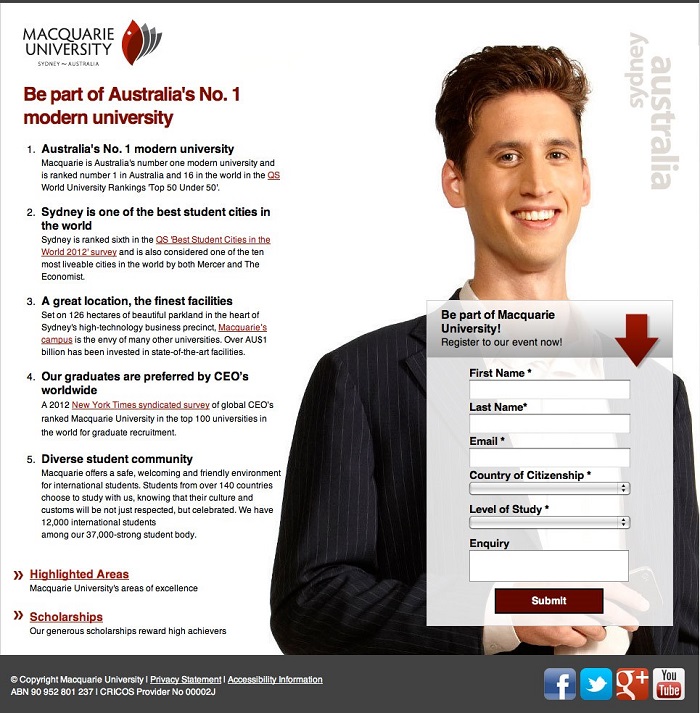
- Landing pages from CTA buttons should be simple form fills
Once users have clicked through to a landing page, don’t befuddle them with complexities. Simple design is good design. Complex form fills requiring too much information don’t get completed, and the viable lead bounces away. See image below for lead gen form:
Source: Landing Page Course
Your business needs will determine the best optimization strategy. Websites should be easy to understand and to crawl. They should satisfy search engines and searchers alike. Website optimization is more than just search engine optimization. With quality content that answers your users’ search questions you will always rank at the top of search engines and attract, convert, acquire and delight customers.
-
A Is For Alphabet, G Is For Google
Google announced on Monday that it would rebrand itself as Alphabet – a new holding company whose largest wholly owned subsidiary will be Google. Larry Page and Sergey Brin, Google’s co-founders, announced a radical shake-up of the company’s corporate structure and management. Sundar Pichai will control the core search engine business.
The new holding entity, Alphabet, will preside over various subsidiaries, the largest of which is Google. All shares of Google will automatically convert into corresponding shares of Alphabet, which will continue to trade under the stock ticker symbols GOOG and GOOGL.
Page will become Alphabet’s CEO, Brin will be its president, and Eric Schmidt will be the executive chairman of Alphabet. Ruth Porat will be its CFO, and David C. Drummond will be the chief legal officer and secretary. The company’s chief business officer, Omid Kordistani, will step down and become “an advisor to Alphabet and Google”, according to the company’s SEC filing. Page, Brin, Schmidt and Drummond will leave Google, whereas Porat will keep her CFO role there and Pichai will take over as CEO.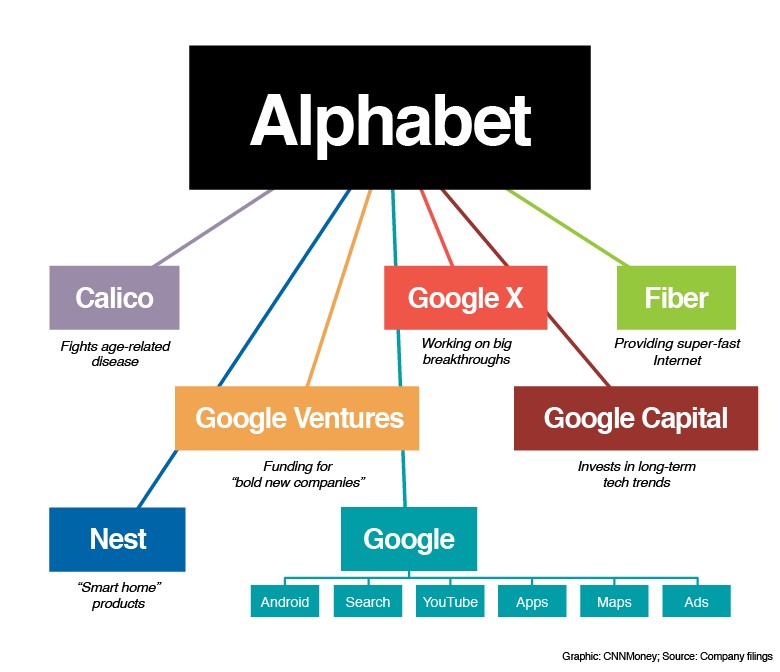
Neither Google nor Alphabet owns the domain alphabet.com — BMW does. Alphabet is part of the BMW group and a business mobility solution with a focus on fleet management and financing. BMW’s Alphabet was founded in 1997, so it’s unlikely that the company will give up its long-established domain name.
Alphabet’s new address https://abc.xyz/ also eschews convention.
And on a lighter note…
guys guys “google” is still the verb, “alphabet” is now the noun you curse for co-opting your entire livelihood
— Casey Johnston (@caseyjohnston) August 10, 2015
I can’t wait for other tech companies to create tech companies that own their tech companies. #itwillhappen
— Jessica Lessin (@Jessicalessin) August 10, 2015
I made a logo for Alphabet. pic.twitter.com/iM120DlFZK
— Andy Baio (@waxpancake) August 10, 2015
Google: “Don’t be evil” Alphabet: “Evil is just one of our businesses”
— Tim Carmody (@tcarmody) August 10, 2015
In one press release Larry Page just created a company that is so big it actually owns Google.
— issie lapowsky (@issielapowsky) August 10, 2015
-
Best of the Week | Leverage The Untapped Potential Of SlideShare, and much more…
This week’s hot news, events and videos from the online marketing and social media world. 
From the Position² Blog This Week: Leverage The Untapped Potential Of SlideShare
Marketers often overlook leveraging the untapped potential of SlideShare, thinking of it as just a place to upload presentations and webinars. SlideShare is a content marketing social site and a perfect place to generate leads. Here’s how to turn SlideShare into an effective lead generation engine.


Best of the Week Video
Digital advertising is expected to become the No. 1 media category in 2016, according to a comScore report released exclusively to CNBC on Thursday. Watch this video where Gian Fulgoni, ComScore Co-Founder gives his views on the subject.Persona Based Lead Scoring: The Mystery and the Method Download this White Paper and learn: - Classify leads based on behavior and demographic details
- Develop a consistent methodology to proffer quality leads to sales
- Employ data integrity and tracking
- Deploy marketing automation to improve efficiency and cut costs.?
Download the complimentary persona Based Lead Scoring White Paper now

If you are reading this blog post via a RSS reader, please click here to subscribe. -
Top PPC Tools for Keyword and Competitor Analysis
Pay Per Click (PPC) evolves on a regular basis. New phrases are born every day in an ever changing landscape of keywords. Day in and day out digital marketers struggle to create the perfect PPC campaign that delivers consistent results and stays ahead of the competition. Success lies in a thorough analysis of a competitor’s PPC keywords and ads, extracting their data and discovering how it influences conversions. From that, analyze your own ads to see what is missing.
To do this you’ll need to:
- Find out who your competitors are
- 2 Assess their effectiveness
- Determine how they sell
- Determine what to extract from their data
- Define the size of the opportunity
- Estimate how much your competitors invest in paid search
- Assess whether you are investing enough in paid search
- Optimize your campaigns based on the analysis
Fortunately, there are a lot of third-party tools to help you with your PPC ad campaigns and issues related to keywords, ad copy, profit, budget, competitor analysis and other parameters.
To dig deeper into your competitor’s strategies consider some of these top search marketing tools:
KeywordCompetitor provides something that Google does not – the ability to access your competitors’ paid keywords, ads and landing pages. Updates are available on a daily basis.

Use this PPC tool to gain insights into your competitor’s most effective keywords, ad copy and ad budgets.

Find your PPC competitors based on the keywords you plan to target. You can also access the ad copy used by the competition, and determine who tops paid search results.

Uncover the competitive landscape and discover a competitor’s PPC campaign strategies with KeywordSpy. Pinpoint profitable keywords targeted by the competition and the successful ad copy in which they are used. There is also a unique ROI indicator you can use to judge the value of keywords.

SpyFu maps every place a competitor’s ad has shown up on Google as well as all ad variations used by that competitor.

Browse top ads and ads by format with Adbeat. It includes an ability to uncover competitor strategies and spy on ad copies with split testing. Adbeat also lists the number of days an ad was live, and the exact dates when it was first and last seen.
-
Food For Thought: 14 Inspiring Quotes on Digital Marketing
As marketers, we pride ourselves on developing unique solutions for business challenges. Creativity is the key to our success. Our inspiration comes from a variety of sources. These quotes we have assembled apply to marketers in almost all industry segments. May you find them as inspiring as we have.
“People shop and learn in a whole new way compared to just a few years ago, so marketers need to adapt or risk extinction.”
Brian Halligan, HubSpot (TWEET THIS!)“Measurement is like laundry. It piles up the longer you wait to do it.”
Amber Naslund, Sysomos (TWEET THIS!)“Good marketing makes the company look smart. Great marketing makes the customer feel smart.”
Joe Chernov, HubSpot (TWEET THIS!)“As you go about creating new customer engagement programs and direct marketing packages for your brand, look for opportunities to give rather than to get. Whoever makes the first kind gesture, as studies show, tends to gain the most.”
Jeanette McMurtry (TWEET THIS!)We want to know what consumers are looking for, what their values are, and how can we meet their needs. It’s not just about Big Data; it’s about translating that into the truth.”
Gayle Fuguitt, The ARF (TWEET THIS!)“We must move from numbers keeping score to numbers that drive better actions.”
David Walmsley, Marks & Spencer Digital (TWEET THIS!)“The best marketing doesn’t feel like marketing.”
Tom Fishburne, Marketoon Studios (TWEET THIS!)“Content is anything that adds value to the reader’s life.”
Avinash Kaushik, Market Motive (TWEET THIS!)“There are three objectives for content marketing: reach engagement conversion. Define key metrics for each.”
Michael Brenner (TWEET THIS!)“SEO is a marketing function for sure, but it needs to be baked into a product, not slapped on like icing after the cake is baked.”
Duane Forrester (TWEET THIS!)“In 2004, good SEO made you remarkable on the web. In 2014, good SEO is a result of being remarkable on the web.”
Rand Fishkin, Moz (TWEET THIS!)“SEO is a noun, verb and adjective.”
Todd Malicoat (TWEET THIS!)“Sometimes when you innovate, you make mistakes. It is best to admit them quickly, and get on with improving your other innovations.”
Steve Jobs (TWEET THIS!)“Without actionable data and clear metrics driven strategy, the marketing organization is being paid to guess.”
Team Position2 (TWEET THIS!)We hope you enjoyed this selection of quotes. Kindly use the comment box below to share your favorite digital marketing quote.