Category: SEO

  • Google Phantom 2 Algorithm Update

     ‘What does it mean to the businesses and search marketers?’

    Google’s on a roll. From the “Mobilegeddon” update last month to its recent secretive “Phantom 2” algorithm update, it’s delivering the best possible search results to users. And then going back for more. Google silently tweaks its algorithm much frequently than most marketers imagine.

    While the Mobilegeddon algorithm update was designed to boost the rankings of mobile friendly sites on mobile devices, Google’s Phantom 2 update will penalize sites with low quality content, specifically impacting “how-to” style content. Additionally, the impact will be felt by the entire domain not just standalone low quality website pages.

    What “Phantom” should mean for Search marketer?

    It’s a swift silent punisher of sites with thin content. They will lose the bulk of their rankings, traffic and conversions overnight.

     google phantom 2 update

    Image Source

    What does Phantom do to the actual business?

    • Your entire website is punished or sand-boxed
    • You rapidly lose a lot of traffic
    • You can’t see your high traffic ranking keywords on Google search results pages (SERPs)
    • Traffic conversions drop faster than you think
    • Your Return on Investment (ROI) disintegrates

    Essentially, you lose almost everything online you were working on the site (whether intentional or unintentional).

    It sounds scary, right?

    Reasons why a website is hit by Google Phantom 2 algorithm

    1. Sites with Low Quality Content

    Google has been cautioning everyone for quite some time now with Panda algorithm updates. Sites that add very little or no value to the audience are hit with the Phantom 2 algorithm update. This includes poor representation and lack of uniqueness in the content to the users.

    2. Engagement

    If your website content is not able to provide value to the audience, the engagement level is bound to be low on the website. The Phantom update emphasizes this fact. And the current Phantom 2 updates are a lot more strict than Panda updates

    3. User Experience (UX)

    • While content is one major aspect, others include the website load time, 404 errors, user flow, page architecture (design), color combinations, user navigation all of which should be taken very seriously by the webmasters. Make sure the website functions perfectly without distracting your audience and the search engines
    • Supplement, template content or using auto generate content tools slanders the uniqueness and the usefulness of the content for users. Marketers should be very careful and should maintain the relevance of the content for the users
    • Use of distractive and/or sponsored ads: Ads are meant to help users make the right decisions or provide information they intend to use during the buying process. Many businesses overdo by forcing users to click on these ads
    • Affiliate networks, which keep on bombarding and showcasing users with irrelevant ads
    • Sometimes ad links and content are in the same flow & color and users can’t determine the difference. Applying these tactics hurts the sites rather than helping. Remember, Google has already included human bots in deciphering these tactics
    • Pop-up’s annoy the audience if not used judiciously. Google algorithm has been optimized to identify these
    • Pages only containing images and videos without considering the theme of the webpage or over exposing the aspect of rich media are a negative impact
    • Pages with just links that point to subdomains or other websites with less/no content, are of little help. No more old school link farm techniques

    4. No Corrective Action Taken

    If your website has been hit by Google Panda or had elements hit by the update earlier, and you have done nothing to make content more appealing, fresh, and unique to the users, Phantom 2 will definitely have an impact.

    5. Duplicate Content and Canonical issues

    Happens frequently but often ignored by webmasters. Make sure you remove duplicate pages/content. Just remove them or block duplicate content from search engine indexing. Use proper canonical tags to make sure that one version of pages exist.

    6. Doorway Pages

    Doorway pages–Don’t try to deceive Search Engines and create similar pages to gain multiple rankings on SERPs. Google is smart enough to identify these and punish websites accordingly. Read here

    7. User Generated (spam content)

    Make sure user-generated conversations are relevant and checked for spam. Lots of low quality and thin ineffective user generated content raises an alarm and will be hit by the Phantom update. Ensure that community/forums are not used as junkyards for link and ad promotions. Have guidelines for the users to comment. Do periodic checks and edit/remove comments, which have negative user experiences.

    More to consider

    • Understand Your Target Audience/Personas before you write content. Attribute content across the funnel of the buyer’s journey
    • Have in place a content marketing strategy and plan. Make sure you generate genuine and unique content for the users, not for search engines
    • Try to develop a mix of content/asset types to keep users engaged. Distribute your content to relevant channels where your target audience generally visits. Content is King, but Distribution is ‘Queen’
    • Start with small. If you have constraints generating content, take small steps. Use Social Media to interact with your audience
    • Optimize your online channels Facebook, Google+, LinkedIn, etc., and reach out to your audience
    • Generate small content pieces. The traditional rule for audience engagement is 80/20. Eighty percent of your content should be for your audience, and 20% should be for your business (sales, marketing, self-promotion, etc.)
    • Have a social calendar in place to communicate with your audience
    • Regular Website Health Check up – Make sure all the technical aspects of the website are taken care of like page load time, design, navigation, etc. Regular checks on website hygiene ensures removing any major issues and creates better user and search engine experience
    • Make sure you track your content performance using analytical tools
    • Conduct regular analytics audits to make sure you are on top of your user engagement metrics. Understand what your audience needs and generate content accordingly

    At Position2 we utilize an Integrated Digital Marketing Approach to make sure our clients achieve premium results. Our proprietary Website Calibrator™ technology, a 41-point technical SEO audit, keeps our client websites equipped for any Search Engine algorithm updates.

  • A Shoe Manufacturer’s Success Story

    ‘How Local SEO helps small retailers and manufacturers survive and thrive in a competitive world.’

    Shoe manufacturers success story-Local seo

    Image Source

    David and Goliath: the victory of small over big, the triumph of the nimble entity over the ponderous entity. In his time David did it with a well-chosen stone. Today, the Davids of the world turn to SEO.

    Despite the potential generated by one of the largest and fastest growing economies in the world, small businesses in India struggle to keep up with sales and are often overwhelmed with the cost of running traditional businesses. The wonders of the Internet, the way it can boost business at breakneck speed, has barely penetrated this market. It’s not totally the fault of small business and manufacturing entities in India. There has been scant strategic support from associations or regulatory bodies to raise awareness of all things digital, and the first steps taken by by local bodies to educate small businesses have yet to bear fruit.

    But there are Davids in the Indian e-commerce industry to point out, demonstrating the potential and success that’s possible by utilizing the immense power of the Internet and its all-encompassing nature. How else to explain Flipkart rising dramatically in a world dominated by the Goliath Amazon?

    The small players in the world of Indian manufacturing will either have to embrace change and start harnessing the power of the Internet or remain just another player satisfied with what it has while not wanting much change.

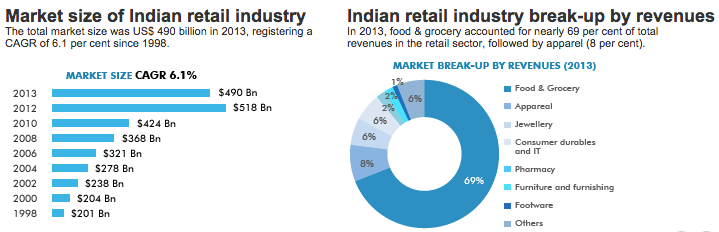
    Some Stats

    Retail Industry in India

    retail industry in india

    Image Source

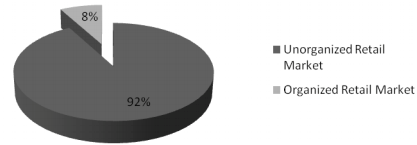
    Unorganized Retail vs. Organized Retail Market in India

    unorganized vs organized retail market in india

    Image Source

    A Short and Simple Story

    Lalu Dass Shoe Maker, a small shoe manufacturer located in the heart of Bangalore on Brigade Road, specializes in custom made leather shoes for men and women. While Mr. Lalu Dass has been in business for the past 60 years, very little has been known about him online until very recently. In the brick and mortar world, however, his reputation is monumental. Customers speak at length about the quality, comfort, and price of his shoes as well as the humility of this great artisan.

    I have known Mr. Lalu Dass for quite some time, and for all the right reasons. Despite our relationship, I have found it very difficult to help this shoe manufacturer (generally what we refer to as a ‘cobbler’) understand the world of online business and the potential it represents to elevate the fortunes of small business enterprises. No matter how hard I tried I could not persuade him to use his brand ‘Name’ for his own merchandise online. His rigidity in thought, his desire to maintain status quo, simply would not give way.

    Then I used another tactic. It’s one that works with almost everyone. I proposed that if he allowed me to use his brand ‘Name’ online, I would double his business. “Money talks and nobody walks,” as the saying goes. I can say I won at least the preliminary round.

    Results within 2-3 weeks

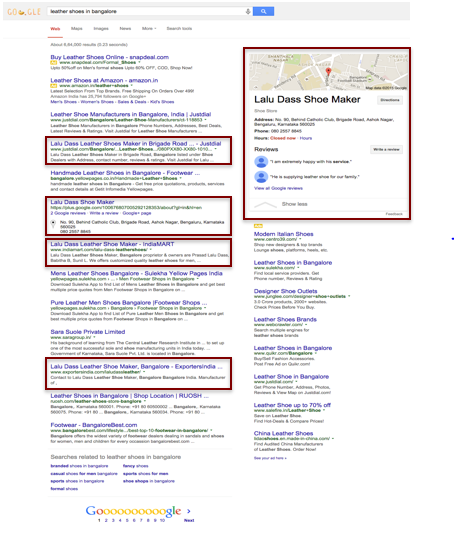
    1. Google Page 1 Take Over

    google page takeover

    seo

    1. Conversion Rate: More business enquiries from online, almost 10X customer enquiries (than the offline customer footfalls), out of which 3X more customers placed orders. This is a whopping 30% Conversion Rate.
    1. Branding & Awareness: Lalu Dass Shoes has become a brand name by itself online. Search for it and you will get all the relevant details.

    Just by doing a bit of Local SEO in whatever time I had

    1. Researched Conversion Keywords:

    It is important that you quickly check what your online audience is looking for. How they will find you is the question needing an answer. Google AdWords helped me cut through the Keywords with moderately high search, comparatively low competition and high conversions.

    2. Research on Competition and Relevant Directories:

    While keywords are important, it is crucial to know where your competition is. I quickly Googled a few directories with relevant categories and included the shoe business and descriptions.

    • Create email Ids, Title, Business/Product Descriptions, Phone Numbers, Address, Keywords, Product Specifications
    • Make sure the directories you include your business in are Mobile Friendly. Quite a large number of your audience search through mobile devices. So do not ignore them at any cost.

    local seo

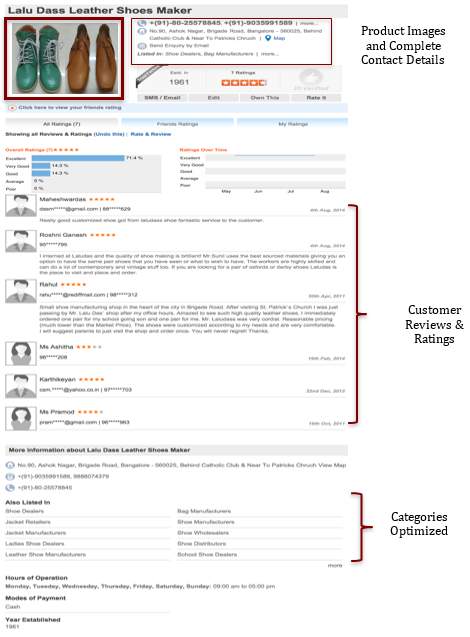
    3. Created Image Gallery of the shoes:

    Took pictures of the shoes with my Android phone and uploaded them on directories. A few of them rank on Google image search

    local seo

    Screen grab of an Optimized Directory Listing

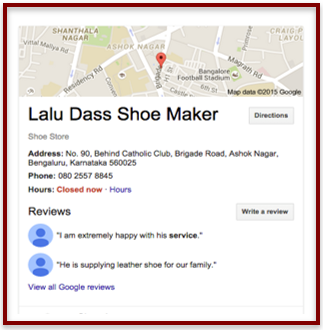
    4. Created Google Business Page and verified details:

    Google Business Page

    5. Initiated Facebook Page and conversation with audience:

    Started conversation with 80/20 rule. 80% content of what audience needed, 20% about the products/services/promotions

    6. Market Research for 2 Weekends:

    • Went to the shop and mingled with customers. Quite a few of them were from the elite class and I asked them to write reviews for the Shoe Maker
    • Learned about different styles/types of leather shoes – this helped me write about different shoe features
    • Watched shoe making techniques/tools – It’s interesting to see how shoes are crafted. It’s a totally different art altogether.

    Offline Activities, which also attributed to sales

    • Got business Cards and small Hoarding done for the shop with contact details (mobile, email ids, etc.) and Google business page URL
    • Land-line Connection in working condition – This was done mainly for customer follow-ups and tracking online customer requirements. Quite a few prospective customers call the business directly when they find contact details online.

    There is lot more to do. There are many Local SEO white hat techniques to easily increase your sales online.

    BTW, Mr. Lalu Dass is my Father-in-Law and I am happy to see the big smile on his face every time I meet him. Ironically, Mr. Lalu Dass still owes me a pair of Oxford Leather Shoes which he promised as a part of the deal. But that’s another story, the one about the cobbler’s children.


  • Deep Dive Into Google’s App Indexing

    What is App Indexing?

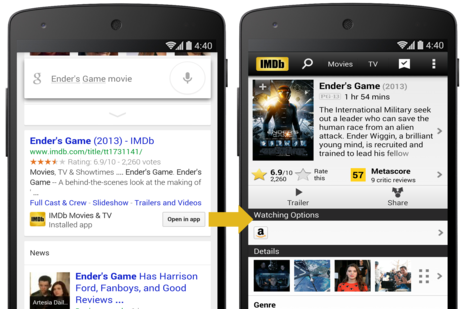
    Google’s App indexing allows webmasters to connect pages from web sites to specific content within Android apps. An Android smartphone user with a company app installed will be able to open it directly from mobile search results in Google.

    App indexing

    Image Source

    How it Works?

    “The App Indexing API provides a way for developers to notify Google about deep links in their native apps and allows the Google app to drive re-engagement through Google Search query auto completions, providing fast and easy access to inner pages in apps. The deep links reported using the App Indexing API are also used by Google to index app content and are surfaced in Google Search results.”  From Google’s App Indexing API site.

    Make It So

    • To connect company app to website enable deep linking of app from the Developers Console. Make sure the app is set up to work with Google Play Store
    • Developers must set up actions called “intent filters” that tell Google when a user is viewing a section of content, what the content’s title is, and if there is a Web page on your site that has the same content
    • When a user views content in app, Google will be notified via their app indexing API that the content exists in the app
    • By querying Google search for the corresponding content on the website a user is offered an option of viewing content in the app
    • Currently, Google doesn’t analyze any content that keeps track of content location in website and app

    Where Are We Today?

    Google’s Mobile App Indexing API helps users navigate to content located deep inside an app. The API also helps Google discover and analyze new content.

    Google has a hard time determining whether or not the app’s content outranks the competitor’s webpage content. But if Google already knows that the content on your site outranks a competitor’s content it will direct a user to read the content on your app rather than on your own site because it’s a better experience.

    And so begins a major shift in search. Apps will now start competing with traditional websites for rankings and traffic. Brands need to understand the importance of optimizing their app content so it shows higher in Google’s search results.

    Here are a few factors to consider right now:

    1. While Google can point a user to content within an app, the ranking itself is primarily based off the Web version of the content. There’s no hard proof as yet that elements like whether the user has already downloaded the app and how much time he/she spends in the app factor into the ranking as well.
    2. While unlikely at this point it is possible that content inside an app doesn’t have a corresponding Web page, in which case the app content could outrank other Web pages.
    3. Google can determine if Web content is high-quality and worthy of a number one ranking by looking at links, user behavior, social activity, page structure, site themes, and many other indicators. With apps, a lot of those same signals don’t yet exist.
    4. Currently App SEO is less about optimizing the app and more about optimizing the Web-based version of the content, and linking that to the identical content within the app. This helps Google  determine which version of the content to show to the user/searcher, depending on the device and user behavior.

    Let us know what you think of App Indexing, a new generation of SEO. Contact us to get your App Store Optimized.

  • SEO: It Gets Personal

    Google launched Personal Search in early 2005, initiating a new search paradigm that didn’t depend on the user being signed on or not. Going forward, search results would be weighted on the user’s search history, not just keywords. Algorithm updates followed, one after the other, like the Venice update in 2012 and the introduction of Google Now in 2012. At this juncture it’s safe to say Personalization is more than a major factor among many. It will dominate Search in the near future.

    SEO

    Image Source

    Most Internet users don’t have a clue that their Search results are being personalized. Where Personalization initially made use of context and relevancy, localization now heavily influences the behavior of Search. Google’s algorithmic changes to Search over the years have locked in Personalization. With the Humming Bird update in 2013, we saw how search results could be tailored to individual needs by judging and understanding the entire context of search terms, not just individual words.

    Eric Schmidt, CEO of Google, has said, ”Google search will continue to become more personalized, getting away from the ‘10 link’ approach that we see in search results today.”

    How Does Personalization Affect SEO?

    1. Web-pages/websites focused only on keywords and intended only at improving links will no longer gain prominence
    2. User-centric content with a high “like” factor and greater probability of being shared among users will elevate in search results
    3. Branding will be significant enough that businesses need to build brands and not just websites
    4. Relevancy of content underscored by proper social relevance, asset optimization and syndication is vital

    Factors that affect the personalization of search results

    1. Users’ location

    Google — or any other search engine — knows exactly where a search query originates. With logged in users add age, sex, places travelled recently, et al. to the list of retrievable personal data. The increased use of smartphones has substantially increased the personal data flow into Google’s servers.

    1. Search & Web History

    User’s behavior on the web, the type of search queries made, the websites visited can be mapped to the kind of search results a user experiences on Google.  Google collects data about logged in users to understand the kinds of websites a user favors and browses. Another key factor is the user’s profile on Google+. Likes and ratings to web-pages, product reviews, etc. all factor into the search results. And so do links a user likes that get pushed to people in his Google+ circles who then make a Google search.

    Position2′s PoV

    Three things you can do to win at the Personalization game

    1. Relevant & Fresh Content

    Don’t just write for Search engines. Make your site content relevant to users. Fulfill a need. Continually update web pages to cater to users’ search behaviors.

    1. Social Sharing

    Regularize social posting and sharing activity. Utilize all social channels, but focus on Google+, Google Local and YouTube.

    1. Focus on Content Syndication

    Users reliably click on videos, infographics, and other rich-media assets much more than they click on editorial-heavy web-pages. So leverage your rich-media assets for content distribution.

    The Personalization of Search: that’s the future of SEO. Let us know what you think.

  • How to List Your Events on Google’s Knowledge Graph?


    More and more entities like videos, travel reservations, events, concerts, conferences are being included to the Knowledge Graph on an ongoing basis for an enhanced search experience. This has got the marketers scrambling to provide the most relevant information in order to get listed in the knowledge graph. Google will pick the structured data markup for events from website into the Knowledge graph and would use it for display on Google search

    Display of Google events.

    We describe in detail how event sites should mark up their events in order to be eligible for Google’s event features.

    Markup the Site using JSON-LD syntax

    Google recommends JSON-LD over other markup formats since JSON-LD doesn’t require the marketer/developer to interweave the structured data with the HTML displayed content unlike schema markup.

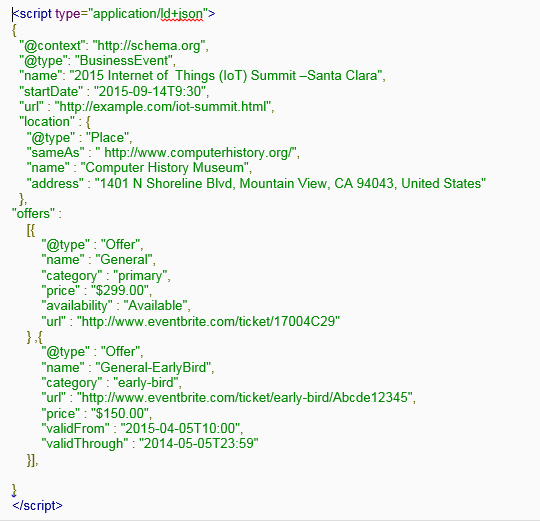
    The following example describes some basic information about an IoT (Internet of Things) Summit, including the name, date and time, location, tickets and URL for more information

    Google events code

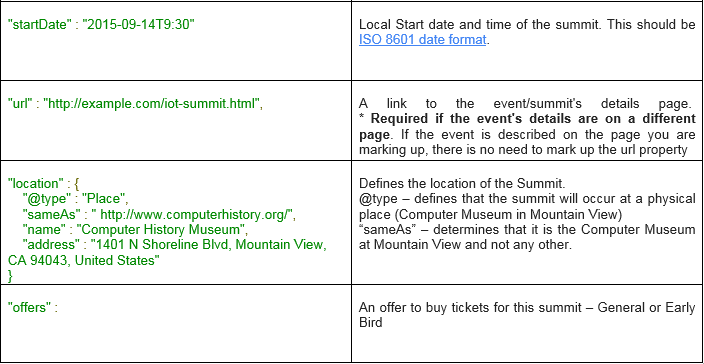
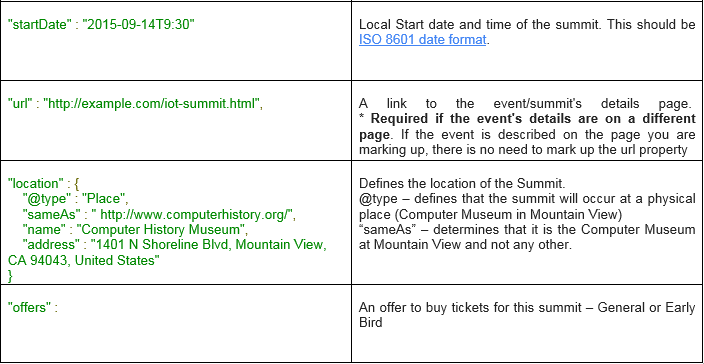
    What the above code means? Markup the Site using JSON-LD syntax JSON-LD syntax for Knowledge graph.

    Check if the markup is correct using Google Structured Data Tester

    Event Markup – Must Know:

    • Events from the past will not be shown as a rich snippet on Google Search. Leaving them marked up is still recommended
    • Event rich snippets are not meant for advertising purposes. Event name should not contain promotional elements such as the price of the event, a call to purchase, or an indication of a sale or temporary discount, etc.
  • Enterprise SEO Platforms in 2015

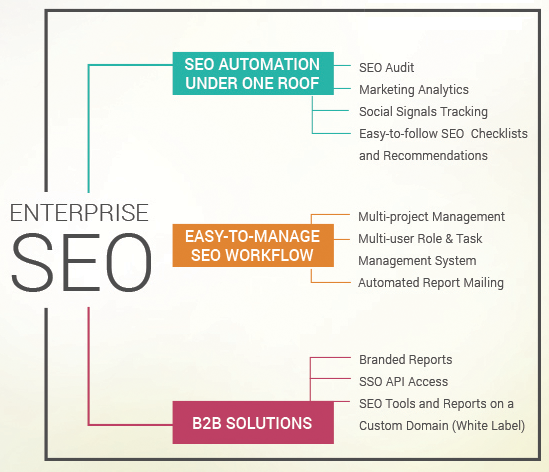
    Google plays no small part in SEO becoming an ever increasingly complex marketing discipline. Just look at their parade of near-constant algorithmic updates –– Hummingbird, Panda, Penguin. The impact on SEO practices is nothing short of demanding. To succeed in this rapidly changing SEO landscape, search marketers and agencies have turned to automated tools to manage campaigns across search engines, geographies and devices.

    Enterprise SEO Platforms in 2015 - Position2

    Image Source: WebCEO Blog 

    Enterprise SEO refers to SEO campaigns implemented and maintained by a business enterprise. At the enterprise level multilingual websites with 1000+ landing pages organized in a thoughtful URL hierarchy are the norm. So too are frequent content creation, focused digital marketing strategy, content management, strong reputation management, all serving a dynamic online community. Marketers and agencies looking for automated tools face an array of choices in an SEO tools market that, while fairly mature, is also highly fragmented.

    SEO Platforms Market Trends

    Trends driving the Enterprise SEO platforms market include:

    1. Integration between SEO and content marketing impacts SEO tools, and the enterprises using them.
    2. SEO strategies adapt to search engine algorithmic changes; the focus on hyper local optimization increases.
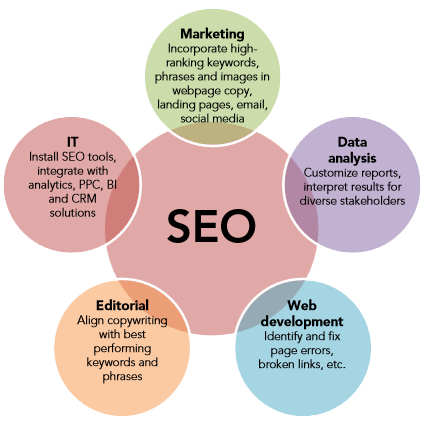
    3. SEO reaches across the enterprise to engage both marketing and technical professionals.

    SEO Platforms Market Trends

    Image Source: Third Door Media

    Enterprise SEO Platform Capabilities

    SEO software ranges from rank-checking tools and keyword research toolsets up to full-service platforms managing keywords, rankings, backlinks, competitive intelligence, social integration and workflow.

    Most SEO solutions offer the following core capabilities:

    • Website audit and recommendations
    • Keyword research and rankings
    • Backlink analysis
    • Social signal analysis

    Enterprise-level platforms may also provide more extensive link and site analytics that include predictive scoring systems to identify opportunities for improving page performance or link authority.

    Other advanced capabilities and key considerations to consider in choosing an Enterprise SEO platform are:

    • Content marketing
    • Competitor analysis
    • Predictive analytics
    • Third party data integration

    Benefits of Using an Enterprise SEO Platform

    Enterprise SEO has become increasingly complicated and time consuming. It involves the management and optimization of hundreds, thousands, even millions of pages, no small feat. Using an Enterprise SEO platform increases efficiency and productivity while reducing the time and likely errors involved in managing organic search campaigns.

    Managing SEO through an enterprise toolset provides the following benefits:

    • Performing multiple tasks with a single interface
    • Efficient management of global operations
    • Staying on top of search engine algorithm updates
    • Automated & customized reporting


  • Google Rolls Out Mobile Friendly Usability and App Indexing Factors

    In case you still wonder about the relevancy of a mobile strategy, the search giant Google just announced two major changes to its search algorithm for ranking mobile sites. These factors will be rolled into mobile search results starting April 21, 2015.

    Here’s what’s coming:

    1. Mobile friendly sites to rank better on mobile search results

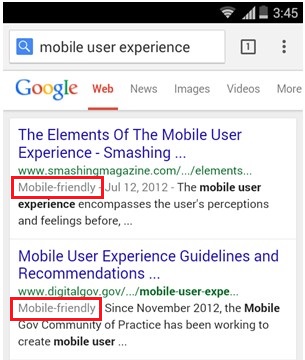
    In a major algorithmic change impacting mobile search results across all languages, Google will now label mobile friendly sites and determine if websites should rank on top of search. The intent is to provide users with the best possible and most relevant search results. Google advises businesses to make their sites mobile-friendly.

    Google guidelines for mobile sites.

    Image Source

    Check out Google’s guidelines for mobile sites.

    2. Google indexed mobile apps get prominence on mobile search

    App indexing enables apps to rank on Google web search results just like websites. This will apply to Android apps and will work for signed-in users using the app. Content from indexed apps and deep links will begin surfacing on search results.

    Google indexed mobile apps get prominence on mobile search

    Image Source

    The major implications of this update for businesses are, 1. have mobile-friendly sites in the first place, and 2. develop user-friendly apps – all of which helps businesses better align with the mobile audience.

    Here at Position2 we recommend that clients:

    • Start with a Mobile-friendly test
    • Adopt Responsive Site design – a single URL to access the site across all devices only needs a single Googlebot user agent to crawl rather than multiple user agents
    • Deploy app store optimization techniques to get the highest visibility for apps

    Be sure to check out our Website & App services

    Time to Go Mobile!

  • Google Algorithm Update: Say Goodbye to Doorway Pages!

    One of the most annoying search results will now be blocked by Google. We can all cheer a collective “hooray”!

    What are Doorway pages? In short, they are web spam. Designed to game the system, these pages rank high in search results, click baiting the searcher to an irrelevant page or site. Google described examples of doorway pages on their blog for clarity:

    • Having multiple domain names or pages targeted at specific regions or cities that funnel users to one page
    • Pages generated to funnel visitors into the actual usable or relevant portion of your site(s)
    • Substantially similar pages that are closer to search results than a clearly defined, browseable hierarchy

    Google has not officially announced a release date for the doorway page penalty algorithm update, but they did state they are “continually working on ways in which to minimize the impact of webspam on users”.

    SEO Managers and/or Webmasters are advised to review the Google questionnaire to make sure your website does not qualify as a doorway page. Check them out below:

    • Is the purpose to optimize for search engines and funnel visitors into the actual usable or relevant portion of your site, or are they an integral part of your site’s user experience?
    • Are the pages intended to rank on generic terms yet the content presented on the page is very specific?
    • Do the pages duplicate useful aggregations of items (locations, products, etc.) that already exist on the site for the purpose of capturing more search traffic?
    • Are these pages made solely for drawing affiliate traffic and sending users along without creating unique value in content or functionality?
    • Do these pages exist as an “island?” Are they difficult or impossible to navigate to from other parts of your site? Are links to such pages from other pages within the site or network of sites created just for search engines?

    If you find yourself answering “yes” to one or more of these questions, take action before Google penalizes your website.

    If you have any questions about doorway pages, Contact Position².

  • New from Google: ‘Mobile-Friendly’ Labels in Mobile Search Results

    To help mobile users improve their search experience, Google officially launched the mobile friendly label on its search snippet. It lets users know whether or not a website is mobile friendly. Not only will this feature enhance user experience on mobile devices, it suggests that Google may soon include mobile friendliness as one of the criteria for ranking sites.

    Is Google Experimenting with Mobile Friendly Ranking Factors

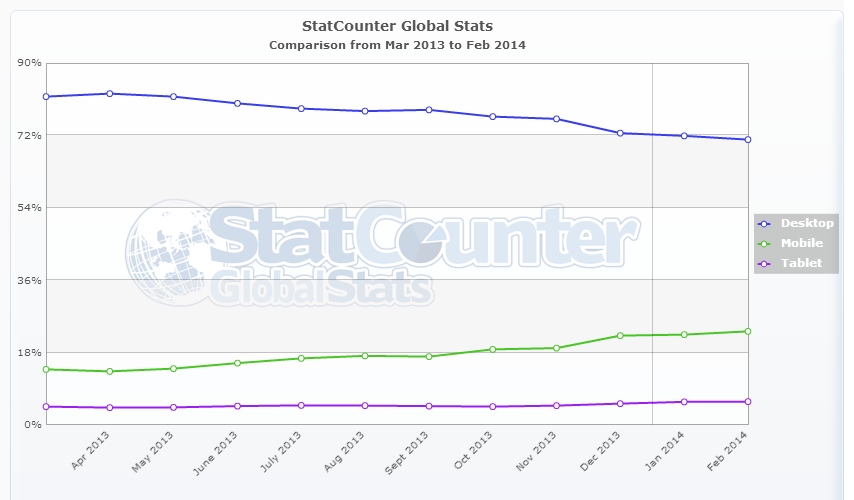
    We keep track of changes in Google’s approach on various metrics for mobile experience and it shows that Google is testing mobile friendly ranking factors to give a better search result for mobile users. In a recent survey conducted by Google, mobile search queries have found to grow faster whereas desktop search queries have begun to slowly decrease. So mobile adaptability is now highly relevant for optimal search results.

    platform-usage-mobile

    Image Source

    Why Mobile-friendly Labels?mobile-friendly-label

    The Google mobile friendly label tells users whether the website they click on is mobile friendly or not.  The mobile-friendly label is right there on the search snippet in the mobile SERP and it signals whether or not the website they are looking for is responsive to their mobile device. This saves time and eliminates the annoyance factor when a user discovers a web page isn’t mobile friendly.

    How does Google decide to add mobile-friendly labels on the search snippet on mobile SERP? There are guidelines to help websites conform in order to get the mobile friendly label. It is  highly likely that this new feature shows Google’s intent to make ease of usability on mobile devices, a major factor in deciding search engine rankings for websites.

     Contact us now to create mobile friendly websites to optimize your mobile prospects!


  • Google Maps, Yelp & Local SEO Insights

    Start the New Year with a new search engine marketing strategy that looks beyond your business website. If you think local SEO, Google Maps and directory sites like Yelp can push you to the top of search engine listings then go for it.

    The July 2014 Google Penguin algorithm update, provides greater relevance to local maps and directory services like Yelp. This way you get useful, relevant and accurate local search results that are tied more closely to traditional web search ranking signals. That means in many cases Local Maps and Yelp listings now rank above the regular business website listing.

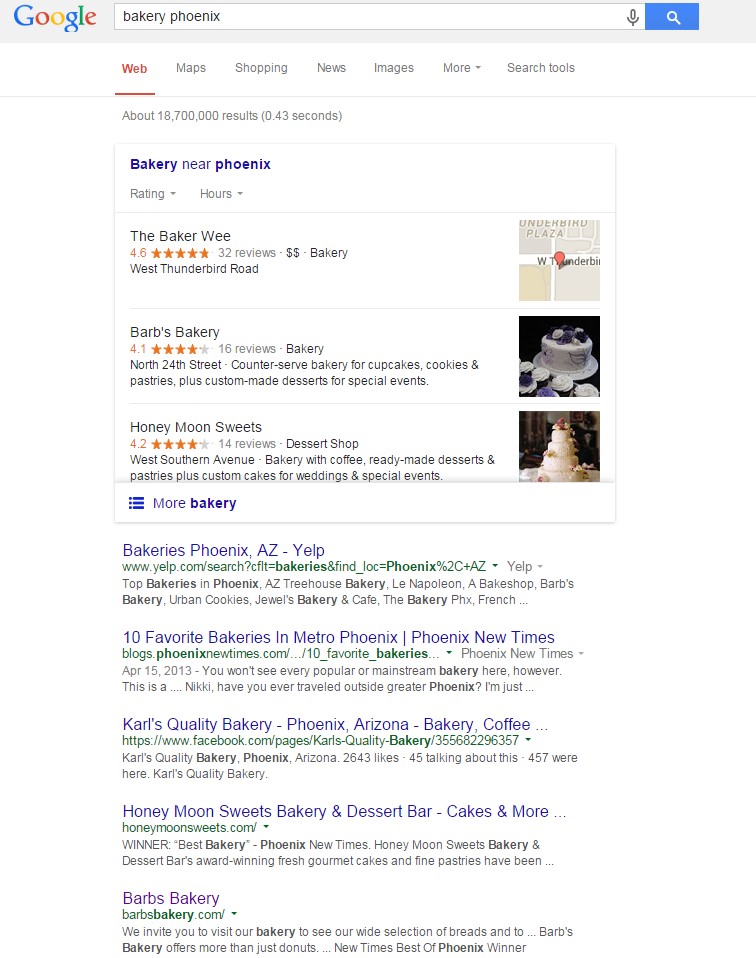
    Check out this Google screenshot, the top results for the search query ‘bakery phoenix’.

    serach_engine_optimization_2015

    As you can see the top three results are Google map listings. And there are three more organic listings before you see the actual local business website. Thus, it is imperative that you pay attention to these listings on a regular basis and optimize your presence on Google Maps and directory sites.

    These are the steps you need to follow to optimize your business website:

    • Set up a Google My Business account

    By creating and verifying your local business with Google My Business, you get your business listed on Google for free. All your business information will be shown on Google Maps, on the search engine results page, and in Google+. Your customers will be able to post reviews. And, as a Google My Business account holder, you will be able to reply to reviews posted on Google+ directly from your dashboard.

    You’ll find that under Yelp for Business Owners. And if there are no matches, simply add your business to Yelp. You can get your Yelp business pages to rank on search engines just like your website. Google’s Pigeon algorithm is now paying close attention to local SEO. So users searching for facts on local businesses can now easily find Yelp reviews.

    • Optimize Your Listings

    Once your business is listed and your contact information verified, optimize your business information. Adding photos, contact business information, website URL, and such other information goes a long way to optimize. Your business can also offer good deals and you can respond to reviews more often.

    • Online Customer engagement

    When reviews appear, responding to them shows all your customers that you care. It’s how you build trust. Yelp allows businesses to respond to user reviews either publically or privately. But Yelp frowns on soliciting reviews. Also, not all reviews will be good. But if you respond and work toward a solution in an amicable way, 40% of negative reviews turn positive. Whether good or bad, be upbeat when you engage and reply.

    Making Google My Business part of your SEO strategy for 2015 and getting your business listed on Google Maps and Yelp and the like will align you with prospective customers and keep you ahead of competition on the digital playing field. But keep in mind that this is not a onetime effort. It’s more of a continuing process that you need to build in to your search engine marketing strategy for 2015 and beyond.

    Contact us to deploy Local SEO for your business website now!