Category: Digital Marketing

  • What I Learned by Teaching at Universities

    I had the opportunity and privilege of teaching three classes at two universities. The first of these was at the Santa Clara University on October 2nd – a group of young students considering various career options – including digital marketing.

    The second and third were at the University of Chicago Booth School of Business, on Oct 18 and 19. The students in these classes ranged from working professionals looking to familiarize themselves with online marketing to students learning digital marketing to be future marketers themselves.

    After over two decades as a professional marketer, the opportunity to teach came as both a refreshing change and an opportunity to learn. I was supposed to be the teacher in these classes. However, I believe I walked away with as much learning – if not more – as the students. Here are a few of my take-aways from revisiting a vocation that’s close to my heart – one that I believe is the highest of all – teaching.

    What I Learned by Teaching at Universities

    1. Taking nothing for granted:
      As I started preparing for my classes, one of the first things I realized is do not take things for granted. Working in the online marketing industry, we tend to take at least a basic familiarity of various channels of marketing for granted. With clients and colleagues alike, we interact with these assumptions in place. While preparing to address students I had to be extra careful to not assume the students know what terms like SEO or PPC mean.
      At the same time, I couldn’t let the class be so basic that the savvier among the students did not takeaway some new insight, learning or perspective. Striking a balance between the two was arguably more pressure than a demanding client or a problematic marketing situation.
    2. Revisiting the basics:
      I had to revisit the very basics, and I was surprised at how much research it required. As I re-familiarized myself, I realized how little the basics of search engine optimization, paid advertising, email marketing, etc., have changed. I actually found possible solutions to a few complex situations for a few of our clients. The best solutions are usually quite simple and may lie in what we often dismiss as being too basic or simple. Sometimes we have to step back and remember what we were first taught before we can solve complex problems and this experience was a good reminder of that.
    3. Stepping away from jargon:
      Another trap many professionals get into is the use of jargon. In some cases, it just becomes part of the language – like WHO, UN, FBI, etc. It is also possible that some feel that not using jargon may make them come across as less informed. That speaking in simple terms may be perceived as being less knowledgeable. But when you are interacting with someone who may not be familiar with terminology we take for granted, you can unintentionally make them feel ignorant. Language can break barriers but can just as easily create a wall and close the doors of communication. Taking extra pains to ensure a jargon-free class taught me the value of simplicity and how it can break communication barriers.
    4. Storytelling:
      I sprinkled a few experiences from my career in each of my classes. These were what seemed to make the best connection, got the most reaction, and even provoked questions. We often forget the power of story-telling in everyday professional life. And yet, everyone — from students to colleagues and clients — humans react to personal experiences, and the three classes reconfirmed for me the value and power of a story.
    5. The pressure:
      I would be lying if I said I didn’t feel nervous walking into each class. The responsibility of influencing students and the unknown variables of how they would react to me would have been pressure enough. I also had the pressure of being on unfamiliar ground. Speaking at conferences, participating in meetings with clients and making professional presentations aren’t new to me, but addressing a class of students was. Truth be told, I was petrified walking into each of the classes, and I have no idea whether I managed to hide the fears well enough or not.
    6. Being surprised:
      I had told myself to be ready for a few surprises – I was prepared to be challenged, to deal with questions ranging from the elementary to the outlandish, and not to be fazed by bored expressions. Still, I was surprised at how similar the groups of students were to clients and colleagues. Their questions were sharp, well thought out, and refreshingly curious. I found myself responding to the infectious energy and curiosity in each of the classes. I walked away surprised at how much I felt like the student while I was supposed to have been teaching.
    7. The protégé effect:
      In hindsight, I shouldn’t have been surprised. I had read about the protégé effect where you learn when you teach. The learning started when I started preparing for the classes and continued even while I was teaching. It’s as humbling an experience as it is enriching.
    8. Communication:
      Teaching is an excellent opportunity to test out your communication skills. It is said that if you cannot explain your subject to a six-year-old, you do not know your subject well enough. While I was teaching university students and not six-year-olds, it taught me to consider every word I used in class, every slide I created, and every question I answered. I believe teaching is a great way to continually improve your communication skills because only when you can communicate effectively with someone who may have no idea about a topic can you claim to communicate well.
    9. Humility:
      Last, but perhaps the biggest takeaway for me was that I left the classes humbled. Everything about the experience was humbling – from the wide-eyed curiosity of students, the open interactions and debates, the discussions, questions and reactions to my answers, and of course, to the new connections and acquaintances made.
      At the end of the day, a teacher is a reflection of what the students take away. In that, I would feel accomplished if even just one of the students from these classes chose online marketing as a career and if the class I taught had a role to play in the decision.
      As I was returning home from the last class, I realized how many of these learnings apply to my everyday life as a marketer working with peers, juniors, clients, and other professionals in the industry.
      Finally, I also realized just how much there is to learn – not only in online marketing but also about various aspects of learning, human nature, simplicity, and more. I do believe teaching is a great way to educate yourself and I hope to carry my learnings in my everyday life and interactions.

  • Emojis in Advertising: Do’s and Don’ts

    With World Emoji Day coming in just around the corner on July 17th, let’s take a look at one of the most pressing questions in advertising – Should brands use emojis as part of their marketing strategy? The short answer would be “yes.” The longer answer needs more details.

    Here Are 4 Reasons Brands Should Use Emojis in Advertising

    1. Emojis Scale Past Language Barriers
    It’s no secret that emojis are universally understood by people everywhere in the world. So, if your brand is interested in expanding into a new state or country, using emojis as part of the initial marketing strategy could be a great way to gain the attention of the local folks.

    2. They Improve the Rate of Engagement
    Text can quickly get boring. And given the volume of wordy advertising campaigns being churned out every day, using emojis can be a refreshing change for the end user. In fact, using emojis can improve engagement by nearly 48% on platforms like Instagram.

    3. They’re Easily Processed by The Human Brain
    The human brain processes visuals several times faster than text. Scientists from MIT have found that we can process entire images in as few as 13 milliseconds. Brands can use this to their advantage and convey a lot more with a single emoji than they could with a string of words.

    4. Emojis Offer Opportunity for Innovation
    Unlike text, which can only be manipulated to a certain extent, emojis offer greater scope for creativity and innovation. There are around 3,000 emojis in use today, and brands can even create their own emojis to convey their unique message to the end users and consumers. The possibilities are endless.

    Emojis in Advertising: Do’s and Don’ts

    Practical Tips for Using Emojis in Your Marketing Campaign
    The next important question is – How do you go about using emojis in your advertising strategy? While there aren’t any rules set in stone, you can benefit a great deal from these three practical tips we’ve listed here.

    1. Know How Much Is Too Much
    Don’t make the mistake of being too lavish with your emojis. Often, brands tend to err on the side of generosity and use too many emojis when just one would have sufficed. For instance, using a simple party emoticon when you’re announcing a sale or a discount on Twitter can get the message across more effectively than using multiple emojis.

    2. Stay Loyal to Your Brand
    Many marketing heads worry that using emojis can dampen the seriousness of their brand. While that’s not entirely true, the nature of your brand certainly influences the kind of emojis you can use. For instance, if your company offers financial consultation services, it’s best to stay loyal to your core theme and use smiley faces, the applauding emojis, and the thumbs-up icon.

    3. Use Emojis in Multiple Channels of Communication
    Most brands tend to limit the use of emojis to social media channels like Instagram, Twitter, and Facebook. Given the informal nature of these platforms, this trend is quite understandable. But did you know that you could also use these little visuals in the subject of an email? Using the right smileys around Valentine’s Day, Christmas, and St. Patrick’s Day improves the open rate for emails.

    The Bottomline – to Emoji or not to Emoji?
    As is the answer to most questions, it’s best to emoji with moderation. Using them too much can make the novelty wear off, while not using them at all can make your message come across as stoic and unfriendly. The trick is to use emojis sparsely, in the right places, and in the right manner.

  • Tips for Successful Video Marketing Campaigns

    “I am so poor … I cannot pay attention!” Yup, this is a popular comedic one-liner. Not any more. The tables have turned. In a world evolving through all things digital and networking through social media, it is time to create rich videos that grab and hold attention. ‘Attention’ is a precious commodity, and brand marketers are vying for it. In the Game of Consumer Acquisition, the mother of all battles takes place in the visual domain.

    It is a well-known fact that in today’s world of digital saturation, human attention span is getting shorter. A Microsoft study estimated that between the years 2000 and 2016, the human attention span shortened from roughly 20 seconds to eight seconds on average. Therefore, it is paramount to front-load the first few seconds of your video with the most engaging content, hook in the target audience and continue to keep them glued through the rest of your video. The most creative and engaging videos have the most likely to go viral on social media – whether it is a video ad or informational video asset – earning you brand visibility, earning links and growing your authority for better SEO performance.

    Video content supports many business objectives such as customer acquisition, education, retention, extended loyalty and further growth through consumer advocacy. The overarching goal of the video is to promote a narrative, product, service or brand awareness, and recall.

    The overarching goal of the video is to promote a narrative, product, service or brand awareness. It is no wonder then that video is becoming an integral part of an effective content marketing strategy.

    Here are 10 tips to create a successful video marketing campaign:

    • Simplify – Avoid complex and heavy content as it causes cognitive overload.
    • Visuals – Use relatable visuals to convey your message and tell your story.
    • Storytelling – Informational videos are better recalled through storytelling.
    • Duration – Assess the right duration for the video without unnecessarily stretching it out. Shorter videos are consumed more readily. Less than 30 seconds is ideal for a video ad, up to 3 minutes ideal for ungated videos featured in your blog or resources section. Gated video asset can be much longer, and the length is determined by the topics covered.
    • Use Subtitles or Captions – This is a good way to accommodate people watching in a noisy environment who may not be able to hear the audio on mobile devices.
    • Front-load Content – It is important to hook people in during the first few seconds of the video with impactful content to increase engagement and make it more viral.
    • Live Video – If you have an audience list via email marketing or other digital marketing campaigns, inform them and try to broadcast live during webinars and events as people are more drawn to real-time content.
    • Variations – Experimentation can be a learning methodology to truly understand your audience. Try different captions, messages, duration, copy, platform and colors to hone-in on your ideal video. You could also try an animated video. This can be particularly effective if you want to create a brand association with a mascot or visual element.
    • Share – Make your video share-friendly to encourage sharing to extend the viral reach through social media platforms. Syndication on relevant video sites and platforms can also increase video views, brand visibility and recall.
    • Analytics – It’s critical to measure ROI as well as to leverage any information you garner for future video campaigns.

    This is how a marketer can augment visual consumption in an attention economy. Videos that are consumed the most are fun and entertaining, thoroughly engaging via visual storytelling, and innately inspiring to connect with the deeper human emotions. For effective use of video, you don’t always need specialist video marketers. Ideas for a creative video can come from within your marketing team.

    Maximize the SEO and Inbound Marketing Potential of Your Video

    Take your video marketing strategy one step further. While the tips above can improve the quality of your video and the engagement it gets, optimizing your video for search engines can and take the returns from your marketing efforts to the next level.

    • Enable embedding on your video. This will allow others to share it and possibly grow your inbound links.
    • Implement video sitemaps and submit them for indexing through Google Search Console and Bing Webmaster Tools.
    • Use enticing descriptions to encourage clicks and also to help Google understand what your video is about.
    • Add a caption that summarizes what the video contains to set the context for visitors and tell search engines what the video is about.
    • Add a video transcript where possible to add relevant content to the page. This helps visitors who prefer to read vs. watch or listen, and also provides indexable content to search engines that can help the video get more views.
    • Use relevant keywords in the title and description.

    These are just a few of SEO best practices for optimizing a video. By sharing your video on your own domain before sharing on social media and implementing these tips, can help search engines find your video, send the right traffic, increase the chances of click-through rates, and overall conversions.

    Video Marketing Trends

    It is also a known fact that we are all tuned in to the world of instantaneous satisfaction with binge-watching, where you get to eliminate the long anxious gaps between episodes. According to a Deloitte survey, nearly 73% of Americans binge watch. This goes to prove that if the audience can relate to the content or likes the content, they do pay attention and watch.

    Although short attention spans and binge watching are two ends of the spectrum, it is clear that a fun engaging video has risen to the top of the effective marketing campaign tool list.

    Hubspot surveys validate the rising effectiveness of videos:

    • Nearly 50% of internet users look for videos related to a product or service before visiting a store1.
    • 97% of marketers say video has helped users gain a better understanding of their products and services2.
    • 52% of marketers say video is the type of content with the best ROI3.
    • Adding video to your emails can increase click rates by 300%4.
    • 85% of consumers want to see more video content from brands2.

    LinkedIn recommends inserting a simple form fill for lead generation about 1/3 of the way into the video-watching experience. While there’s a risk that the form fill could cause somebody to stop watching the video, LinkedIn says that if lead generation is an important goal, a form fill is needed.

    It is recommended that you replace your video with a newer optimized version that incorporates learnings from audience engagement analytics such as what percent of the video was watched and where did the audience drop off.

    It does not matter if you are B2B or B2C, your potential customers and target audience are watching a video of some sort, work related or otherwise. This opens up a huge opportunity for you to engage your audience with videos that increase engagement, reviews, ratings, and comments. Videos can lead to rich user-generated content, in the form of reviews, ratings, comments, and feedback. This can help you build authority and increase ROI from your online marketing strategy. Bottom line is, create a video that will get a tweet, a share, and engagement.

    Video Is Here to Stay, Let Your Story Play

    I’d love to hear your stories about how you’ve used video content marketing strategy to grow your business.

    References
    1 https://www.hubspot.com/marketing-statistics
    2 https://blog.hubspot.com/marketing/state-of-video-marketing-new-data
    3 https://blog.hubspot.com/marketing/video-marketing
    4 https://blog.hubspot.com/sales/subject-line-stats-open-rates-slideshare

  • Position2 Academy Launched

    Position2 Academy is an open-learning initiative that aims to provide learning and career advancement opportunities for young digital-marketing aspirants. Our training programs are offered as instructor-led online training, web-based training, and private classroom training. Apart from the topic specific to the program, we also provide Microsoft Office and soft-skills training, which are fundamental to any profession.

    As an award-winning demand-acceleration agency with a global footprint, we are committed to delivering consistent results for our clients’ all-round progress. We carry the same attitude and commitment to our training program. To deliver the best for our clients, we are looking to strengthen our team with the best kick-starters in the digital industry; ones who would be pioneers of the next generation of integrative and innovative digital marketers.

    We are a driven, progressive, fast-paced, and successful agency first and a training academy second. The training offered by us is not to give you just a certificate but a career foundation that is second to none. We are here to build your digital career.

    Why Position2 Academy?

    • The courses are designed in a way that you are not only aware of the current best practices but become equipped to quickly adapt to any changes that come in the future.
    • Our trainers are domain experts for our agency who help multiple clients achieve accelerated success results.
    • Our focus is to enhance every individual’s natural skill set and inclination for mapping a successful career in digital marketing.
    • As the training progresses, you will be able to work on live projects to test your learning and enhance your experience.
    • You directly get hired by Position2 at the end of your training, if you qualify in the assessment.
    • The focus is on building your career in digital marketing, which means in addition to the knowledge of digital marketing, you would get trained in Excel, Communication skills and more.
    • In addition to knowing the strategic nuances of digital marketing, the faculty at Position2 is approachable and communicative. You are encouraged to ask questions, as many and as often as you like.

    Call us at 080 42416040 or mail to training@position2.com for more details.

  • 2018: Influencer Marketing for B2B

    Influencer Marketing picked up a lot of pace in 2017 and has stayed strong throughout 2018; a trend that is here to stay. In simple terms, Influencer Marketing is having someone advocate marketer’s story for them, like a blogger reviewing their product or someone on twitter sharing his or her opinion about the brand.

    Using Influencer Marketing for B2B companies for demand generation is a lot different than B2C due to the different mindsets among audiences. But is it really effective to use influencers in B2B marketing as well?

    Well, there are a lot of good reasons to invest in influencers and here are some:

    1. An influencer may have their own platforms and audiences on it that a B2B marketer can reach out to by connecting with the influencer.
    2. Influencers’ opinion is considered by their audiences as independent, unbiased and trustworthy.
    3. Often a popular influencer could help a marketer reach not only the digital world but also the traditional media, which is a win-win for the business.

    Over the years, the digitization of the media and marketing world has not only fueled the era of Influencers but also encouraged them to come up with their own set of platforms. This helps create more opportunities for the marketers to reach out to their audiences through the influencers.

    In 2018, B2B brands have increasingly used Influencers as their secret marketing technique. Consumers are more informed these days as they are very well connected and have more media inputs than ever. With the growing social media influence on consumers, Influencers play a crucial role for businesses to not only get their attention but to also, convert them into potential customers. According to a study conducted by NCS, Influencer Marketing can contribute to 11x higher return on investment than traditional marketing.

    There is no denying that Influencers could be very effective and work marketing miracles for B2B if done correctly, however, choosing the right influencer could be complex. The big question though is how can B2B marketers find the right influencers for their businesses.

    The most common mistake that’s made by the brands is going after popular influencers just because of the reach – the total number of people they can reach. Going after influencers that may have smaller but more targeted audience can help B2B business create a higher engagement. Larger reach doesn’t necessarily translate into better influence.

    However, it’s important for the marketer to clearly understand and define what they would want to achieve through influence marketing. If the aim is to just create awareness, going after the popular influencers is fine. But if the goal is to make the audience engage with the brand, then it’s important to identify the right influencer with the targeted audience. Influencers could be categorized as:

    1. Opinion Makers/Experts- Even though they may have a large number of followers as well, what makes them come out and be different is they are subject matter experts in their areas and simply exude the confidence while sharing their opinions which people trust. Trust can easily translate into buying decisions for their audiences.
    2. Advocates/Ambassadors- They are the ones who share their interests, opinion and the passion for a brand or product on a regular basis with their audiences on public platforms. They may not have a large audience but are very influential within their small groups of audiences and this translates to niche targeting for the brands. B2B companies may not consider these influencers as their best bet at influencer marketing, but it helps a great deal to connect with these advocates.

    An example of the above was the strategy of employee advocacy used by the company – Landis+Gyr, a global provider of energy management solutions across 5 continents and a pioneer in the energy industry. They shared content about their focus on customer needs, innovation, and core values through their employees’ social network. It worked really well for them as their campaigns accrued more than 1800 content shares and an estimated earned media value of over $10,800.

    IBM, a market leader in technology, on the other hand, promoted their IBM Watson platform by enabling a fashion designer to create the world’s first AI-inspired garment (Saree). This was unveiled at a awards ceremony for a large audience of women. It was very unique for IBM to market their AI platform using a celebrity fashion designer as an influencer.

    Cisco, a leader in networking and communication technology, has their community of IT advocates which they refer to as “Cisco Champions.” They have created a marketing program around them and use various incentives and awards to get these advocates to share their opinions and expertise on Cisco’s products on social media.

    It’s true that B2B influencer marketing is complex and choosing the right influencers could still be a work in progress for the industry. However, it might help a brand to have a good social media presence and keeping in touch with their customers. This may not only help to create opportunities for repeat business as a short-term impact but also create a way for successful influencer marketing in the long run.

    References:

    Nielsen Study Case Study

    Bringing Social Media to Life in the Energy Industry

  • Big Wins in Web Design at the WMA Awards 2018

    The Web Marketing Association holds its 17th annual WebAward Competition. This is the longest running annual website award competition that recognizes the best websites in over 96 industries and sets the standard of excellence for all website development.

    Out of thousands of entries, we exceeded industry standards and received the Standard of Excellence award in two categories – Information Services and Investor Relations.

    In the category of Information Services, we received our award for designing a winning customer interface for a Customer Identity Management Company.

    Here’s a comment from the judges.
    “Nicely architected. Easily navigable. Information is readily available as are stats as to company’s effectiveness and testimonials (or quotes from Forrester).”

    Our second win was for the digital rebranding of a venture capital firm.

    To quote the judges:

    “Site design is quite ‘tight’. Most modern websites these days have pages that scroll forever. Homepage and several subpages here are organized with all content ‘above the fold’, using modern rotators to introduce new ideas. This is an unconventional layout but shows that a lot of thought was put into distilling the information to be presented to the visitor.”

    2018 has been a great year for Position2. We were silver and bronze winners at the International Design Awards (IDA). We also made it to the #13 spot in Top San Jose Companies and stood at #598 in the Inc 5000 listing.

    Click here to know more about our IDA win.

  • IDA Winners!

    Started in 2007, the International Design Awards (IDA) is an organization that recognizes smart and sustainable design in five disciplines, one of which is graphic design. Every year, IDA looks to celebrate graphic designs that not only push boundaries but also use unique elements collectively to create a lasting impression.

    On the 10th Annual IDA Awards, Position2 won Silver for the Multimedia and Interface Design Category and Bronze for the Multimedia and Website Design Category. Both awards were based on Position2’s thinking behind the Artiman Ventures website.

    Artiman Ventures, is a sector-agnostic Venture Capital firm that invests in white space companies. Artiman identifies and backs entrepreneurs that have an unfair advantage in creating or disrupting large markets. White space opportunities occur infrequently and typically at the intersection of multiple disciplines, markets, and geographies.

    Position2 created their new branding, logo, and website to reflect their contemporary thought process, new-age advancement of recognizing great white space ideas, infusing the investment they require and then facilitating the network and ecosystem to thrive in.

    The Artiman logo is designed around their three-pronged approach, which is represented with a triangle. The central concept of the triangle plays on the letter “A” of Artiman. The three vertices are anchored with: Invention; Investment; Network. It puts the entrepreneur in the center, signifying Artiman’s focus, which is, to ensure that each investment is spearheaded by an energized entrepreneur who has all the key ingredients required to propel the idea forward, successfully. Led by a team of highly experienced former entrepreneurs, their website recognizes their ground-breaking portfolio companies, and celebrates their B.E.T.A. Members (Biology, Economics, Technology, and Arts), nominated by a panel of academic advisors and opinion leaders, across multiple disciplines. Artiman catalyzes the injection of new white space ideas to give rise to a plethora of inventions that hold promise of true disruption.

    At Position2, we like turning a client’s brand story into a unique Customer Experience (CX). Through CreaMeleon, our creative group, we deliver an engaging brand experience for web and mobile platforms. With our 3D methodology – Discover, Define, Design – we give clients’ brand a holistic makeover. Our thorough structure ensures that the process is seamless and effective while the clients get maximum value. In our 3D methodology, the Discover phase primarily involves review, research, and brainstorming. Once the Discovery phase is complete, the UX expert develops the first draft of concepts with mood boards. Upon reviewing these mood boards, adjustments are made, if necessary. During the Define phase, the site structure, navigation, scope, flow, and site experience are defined. During the Design phase, the visual designer develops concepts showing how wireframes look with graphics.

    With an infectious spirit of painstaking craftsmanship and layers of brilliant creativity, CreaMeleon is a client’s perfect partner to create a great digital environment for the brand to live, adapt, and grow in. With a focused vision and a great depth perception, CreaMeleon is extremely accurate in covering the tiniest details. Staying updated on the latest news and industry best practices, CreaMeleon is constantly alert to new, disruptive ways to interpret a great design, user experience, and storytelling.

    Reference:

    https://idesignawards.com/

    https://idesignawards.com/winners/index.php?compNum=IDA+17

  • Bursting the Blockchain Bubble

    Blockchain, cryptocurrency, bitcoin, and ethereum are a few terms we often come across while flipping over a tech magazine or surfing the Internet when looking for the latest technology trends. However, blockchain isn’t the new kid on the block — it’s been around for a decade. The global market worth for blockchain was $708 million in 2017, which is now anticipated to reach $60.7 billion in 2024*.

    First off, what exactly is blockchain?

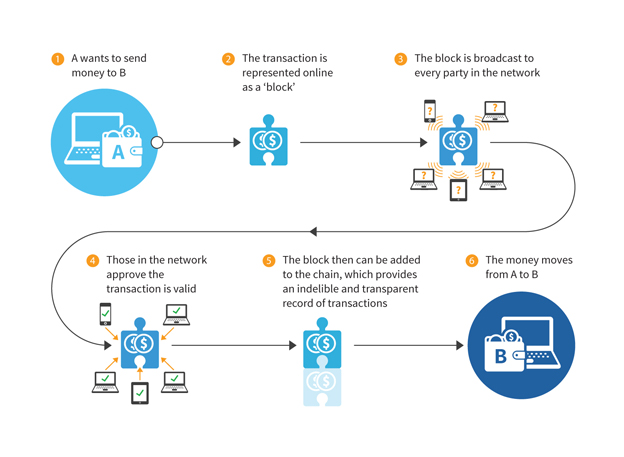
    Blockchain is a secure chain of blocks that plays the role of a ledger recording every transaction between two parties.

    Here’s a visual representation of how blockchain works.

    According to Bill Tai, venture capitalist, entrepreneur, and co-creator of the Blockchain Summit, blockchain is defined as “A distributed ledger where the recording of all those transactions isn’t just happening in one place. It’s written in thousands and thousands and thousands of places. It can’t go down, and it’s always transparent. You can always look it up. So it’s hard to hack because to try to replace or erase and change the information, you’d essentially either have to take over every single one of those computers around the world, writing it down at the same time, or you’d have to double the whole network all at once, which [is] really kind of impossible at the scale it is today.”

    So how will adapting blockchain technology be profitable for your business?

    Blockchain is set to change the way brands interact with customers. This standardization of data will not only give customers transparency of data but also motivate brands to come up with ideas that enhance their interaction with customers.

    Here are some areas where blockchain will improve business:

    1. Security
      Digital marketing has enabled interaction between the customers and brands, giving customers the power to choose what they want to do with a particular brand. This freedom, in turn, makes security a considerable concern for both marketers and customers. Data breaches are rising every second. With GDPR stepping in, marketers are in a tough spot. As if building confidence with customers wasn’t enough, but now, marketers have to do it at the cost of a security issue. If you’re a marketer looking for a solution that abides by the laws and keeps the data secure, make way for blockchain encryption. Blockchain’s security takes the trophy due to its decentralized data storage structure, meaning you can finally say goodbye to the middlemen and their fees. To hack into the data, one would have to break into each and every block the data has been stored in. Voila! There you have it — enhanced cybersecurity with blockchain.
    2. Innovations
      Remember when there were ledgers to store all business data until cloud services took over? Many of us avoided using cloud platforms for a long time, but now it’s something that we cannot imagine our businesses without. The same kind of innovation is happening with blockchain technology. Technology giants like Microsoft, IBM, and Amazon are already ahead of the curve by taking up ‘Blockchain as a Service’(BaaS). Imagine what more can evolve!
    3. Seamless Payment
      Did you know that retailers can create their own blockchain currency for their customers? They can even have the same currency for multiple retailers to build up loyalty programs. Therefore, every time you shop from a particular brand, you will be rewarded with points that you can cash at other retail stores that have the same points as their currency. This will not only increase customer participation but also be an added benefit to the customer while allowing a seamless payment process.
    4. Better Results
      Blockchain will help digital marketers measure the results better than before. Blockchain can serve as a record to solve how many people are actually looking at your content — one of the most significant grey areas in marketing. With Blockchain, a brand can verify if the ad was delivered and viewed by a real person. This will give accurate results and optimize the frequency of ads to ensure a brand does not deliver more than what is required.
    5. One-to-one Personalization
      How often have you come across targeting a whole segment whereas only a niche of that segment actually responded to your ad? Think about all the capital spent on targeting products/services to those who were not even interested in it the first place. With blockchain technology, marketers can utilize the details of each and every customer for a personalized one-to-one marketing experience, delivering exactly what customers want.
    6. Verification
      No more dealing with bots — blockchain technology will improve the verification process of social media accounts, followers, influencers, as well as email deliverability. Combining the decentralized principle of blockchain with identity verification, a digital ID can be produced that would act as a digital watermark for every online transaction. This can help organizations eliminate fraud by checking identity on every transaction in real time. Blockchain technology will also improve the verification process of social media accounts, followers, influencers, and email deliverability. BlockVerify, Guardtime, and ShoCard are a few companies that are leveraging blockchain technology to provide identification and authentication services.

    Believe it or not, blockchain is here to stay. We’re excited and are already looking for our thinking hats to transform our business with blockchain. Are you ready?

    *https://marketreportscenter.com/

    Research Material:

    https://marketreportscenter.com/

    https://www.inc.com/alisa-cohn/blockchain-is-here-to-stay-here-are-3-ways-you-can-use-it-in-your-business.html

    https://citrusbits.com/blockchain-stay-bitcoin-might-not-glimpse-future-decentralized-apps/

  • Is Your Business GDPR Compliant?

    With the General Data Protection Regulation (GDPR) just around the corner, businesses and marketers in Europe and across the globe are gearing up to be compliant with the new set of rules. Though GDPR was adopted in April 2016, the EU Parliament and Council has given a two-year preparation or transition period for businesses to prepare for these changes. With the deadline approaching, GDPR has now become a hot topic among agencies and marketers today. So, what impact will this have on businesses and their marketing teams?

    What is GDPR?

    The EU Parliament and Council believed that the current Data Protection (1995) Act was aptly suited for technology that existed in 1995. However, rapid changes in more recent years have made it easy for marketers to collect more data than ever before. The EU Council therefore decided to adopt GDPR to make privacy laws adaptable to current evolving technology, and these new GDPR rules will go into effect on May 25th, 2018. Though it sounds a bit harsh to businesses and other data handlers, the key idea behind the policy is to build trust between the technology providers and the users. GDPR remarkably broadens the privacy rights granted to the EU citizens, and it places many new restrictions on organizations that handle personal information.

    Need more information on some key GDPR terms? Here are some basic definitions from GDPR – Article 4.

    Does GDPR affect Non-EU Businesses and Marketers?

    GDPR will affect any organization that processes or accesses EU citizen’s data. Regardless of where the organization is located, marketers worldwide will need to prepare for the GDPR compliance if they manage any EU data.

    How Does This Impact B2B Marketing/Sales?

    There are several things that marketers should consider, including:

    Opt-In/Opt-Out

    Organizations must be able to provide proof that a data subject chose to opt-in for marketing communications, such as checking an unchecked ‘opt-in’ box on a form, and did not enter the list by default. “Double opt-in” (where opt-in is followed up with a “click to confirm”) is also a best practice.

    Legitimate Interest

    If marketers use legitimate interest for direct marketing, then they will be able to send emails on an opt-out (unsubscribe) basis. However, this is not compliant with GDPR. There are several other rules of GDPR that must be met, and if appealed, proving ‘legitimate interest’ may be harder to do it legally.

    Fields and Forms

    Marketers must ensure their forms are made compliant, with a mandatory opt-in requirement. Forms must be designed in a way that complies with GDPR.

    Events

    Marketers will not be able to use event attendee lists for campaigns anymore. They should consider gathering evidence for opt-in, such as an opt-in from event stands, or a follow-up email post-event.

    CRM

    Consider managing your CRM effectively. Under the “Right to Erasure,” everyone has the right to opt out from your list. These unsubscribed members must be removed or deleted from your records and any other databases.

    ABM and GDPR

    Consent

    Every organization must prove that the subject has consented to the processing of his/her personal data.

    Relevance

    B2B marketing communications, regardless of the medium, must be about products and/or services that are relevant to recipient’s job title. The content should be made relevant to the individual, not just to an account.

    Email Marketing

    We have an ambiguous situation for email marketing in regarding whether to consider a corporate email ID as a personal email and to communicate on an opt-in basis, or to consider the email ID as a corporate subscriber, meaning no no opt-in required. Therefore, B2B marketers will need to make a choice between consent and legitimate interest when sending emails.

    Penalties for Non-Compliance

    Organizations will face heavy penalties in the case of non-compliance with GDPR. Fines could be up to €20 million or 4% of organization’s annual turnover, whichever is greater.

    Checklist to Prepare for GDPR

    The ICO (Information Commissioner’s Office) advises following their checklist to prepare for GDPR compliance. Check out their checklist here.

    Conclusion

    Though GDPR may create complexities for a few businesses, we can take a positive stance on it. Ultimately, GDPR is about creating transparency between businesses and the customers, which builds more relevant and valued relationships between both the parties whilst ensuring the customers’ data is protected.

    Disclaimer: Please do not use this post as a guide to GDPR policy and consult your legal team for any clarifications about your company’s GDPR compliance. This blog is for informative purpose only.

    Resources

    https://gdpr-info.eu/
    http://www.wired.co.uk/article/what-is-gdpr-uk-eu-legislation-compliance-summary-fines-2018
    http://blog.strategic-ic.co.uk/gdpr-digital-marketing-what-do-you-need-to-know
    https://digitalmarketinginstitute.com/blog/03-03-2018-gdpr-and-digital-marketing-how-your-company-will-be-affected
    http://www.privacy-regulation.eu/en/article-4-definitions-GDPR.htm
    https://trailhead.salesforce.com/modules/european-union-privacy-law-basics/units/get-to-know-eu-privacy-law
    https://www.slideshare.net/kwanzoo/abm-display-advertising-success-in-the-world-of-gdpr-ppt
    https://www.aliaspartners.com/gdpr-recommendations-abm/
    https://www.slideshare.net/kwanzoo/abm-pov-episode-16-gdpr-and-its-impact-on-abm-advertising

  • 2018 Digital Marketing Trends

    Welcome to 2018, a new year where only the strongest fads and marketing techniques will survive. Many successful marketing techniques of the past year have proven their usefulness and will continue to grow and be implemented in 2018. As we enter this new year, let’s take a look at the fads that are here to stay.

    1. Targeted Ads and Personalization

    A long-standing marketing technique, targeted ads have gotten even more advanced and more focused. With new ways to break down your target market and find new potential customers, speaking to each individual audience has never been easier. Personalization in all aspects of your campaigns will lead to building greater personal connections with your prospects. The array of target ads and personalization options with specified messaging in marketing campaigns is endless. For example, you can target teachers, healthcare professionals, and IT administrators, all within the same campaign.

    2. Video Marketing

    On-demand and live webinars are paving the way for curated content when it comes to video marketing. These webinars often have experts presenting hot topics within their industries, which is a very enticing viewing opportunity. The way in which information can be presented and explained in these formats is quite unique – if you are hosting a live webinar, direct interaction with your viewers is a positive for you and the viewer. The data collected from these activities is top-notch.

    3. Continuously Engage Throughout the Customer Journey

    Taking the above into account, connecting with customers during one or two specific stages of the customer journey is not enough anymore. Picking the right content and right channel to engage with your customer depends heavily on your knowledge of the customer’s buying stage. This opens more doors to connect and engage with your customers, which in turn will provide more leads and data for your team.

    By incorporating these key digital marketing trends into your marketing activities this year, you are sure to see some vast improvements in lead quality, engagement, and data collected. Using these trends and improvements gives you an advantage over your competition and will help your business be more successful.

    Reference Material

    How Digital Marketing Will Change In 2018: 15 Top Trends. (2017, December 18)

    Click here

    10 Marketing Trends to act on in 2018. (2018, January 03)

    Click here