Category: Digital Marketing

  • It’s Time for Marketing to Own the Customer Experience (CX)

    The role of marketing has changed dramatically in recent years. Marketers’ scope of work has expanded from just running ads and generating leads. In my recent posts, I discussed how CMOs and their marketing teams own organizational growth and are expected to manage customer churn. The marketing tech stack is now owned and run by marketers and not the IT team. These are just a few ways in which marketing’s avatar is evolving.

    The lines are blurred…

    The line between Customer Experience (CX) and marketing is already blurring. CX is no longer a siloed function. For companies to grow, their CX strategy needs to be deeply intertwined with everything the organization plans and executes across functional areas, including marketing. But of all the departments, CX has a special place in marketing.

    Historically, marketers have always cared about customer behavior for their campaigns. But now more than ever, the marketing function is in the process of understanding, influencing, and changing the customer perceptions, which traditionally was seen as a CX responsibility.

    So, what’s changing?

    The difference now is that CMOs and their teams’ scope has expanded from lead generation to delivering a consistent and seamless experience, from acquisition to conversion to growth to advocacy. Marketers are beginning to support customer journeys, similar to what CX used to do. This new reality shift means that marketers need to have the right message ready for customers, no matter the channel and no matter the time. And, customer needs are changing fast too. This means that marketing needs to capture, analyze and deliver against these new expectations.

    How Can Marketing Own CX?

    It’s crucial for marketers to be mindful of the customer experience, and be active in helping improve it. Here’s what marketing can do to optimize the CX.

    1. Start with the Customer: The Persona and The Journey

      The first step in owning CX is to start with a deep understanding of the customer profile.

      This has two key parts:

      • Start by understanding who your ideal customer persona is and what their needs are. When organizations understand their target persona they can leverage the needs of these personas to drive best-in-class messaging, content, and campaigns.
      • Once marketing understands these personas in-depth, the next step is to identify all the touch-points customers have with your brand. This is the journey a customer, prospect, or ex-customer takes with your service, brand, or product. Imagine these touch points as a visual storyline of every engagement with the brand. For example, a journey map may include how the customer first heard of you through social media or brand advertising, interactions with the product in a store, their behavior on the website, sales interactions, after-sales support over a period of time, and so on.
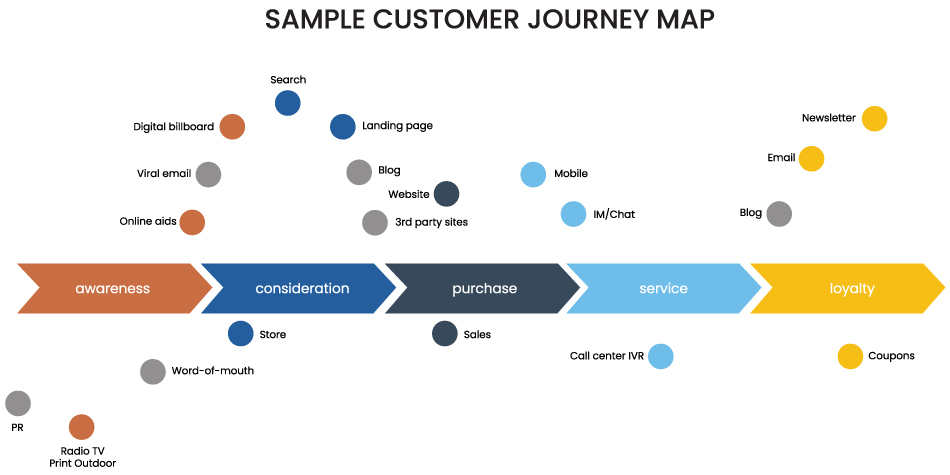
      Outlining your current steps, touchpoints or processes helps to visualize what the customer is experiencing in real-time and may unveil common pain points that need to be addressed. The ability to establish empathy for your customers and identify how they’re feeling at every turn is what makes customer journey mapping powerful.

      Through this exercise, you’ll also be able to connect with new buyers, existing customers, and past ones. Marketers can engage with all of them at every stage with the relevant messaging to reduce friction and provide relevant and personalized content. This not only improves customer experience, but it also helps move more customers or prospects down the funnel to sales, repeat sales, and advocacy.

    2. Build Trust with a Robust Content Strategy

      Once the journey is mapped, marketers need to build a thorough and deliberate content strategy that addresses all the good and bad points across the journey. This strategy should be persona and touch point specific, not a one size fits all.

      Start with a content strategy that is grounded in the very purpose of content marketing – creating and adding value to customers. Don’t hard sell. Rather provide a solution to a problem or offer value in the form of information. If you put out the most relevant content for your new, current and past customers depending on the persona and the touch points, it builds relevance and trust. This trust then creates repeat visits, be it in-store or online. This triggers repeat purchases and loyalty.

    3. Double Down on Your Biggest Asset: Social Media

      Social Media is an interesting channel that functions as a marketing platform and a customer service medium. But, social media accounts are owned by marketing in most companies. So why cannot CX become part of marketing’s ownership?

      When marketers own CX on social media, they can enhance the customer experience by responding quickly to questions and starting the conversation. They can use it promote content, communicate service enhancements, new products or product features, and loyalty rewards to eligible users. When done right your customers become defacto promotors who rave about your brand. This success then gets noticed by your prospects and is likely to increase your overall customer base.

      Marketers can also run integrated campaigns between email, search, and social. These can be designed in such a way that markets layout a series of personalized connects with each persona and their specific journey touch points. Using this approach marketers can share the right content and engage with the right prospects on the right channel at the right time. This strategy is a great way to move prospects and customers down the funnel to closure.

    Wrapping up

    When marketers own the CX, they have an opportunity to create a new customer base, increase stickiness with current customers – moving them towards loyalty and advocacy.

    With the connected digital ecosystem, there’s no better time than now for CMOs and their marketing teams to own customer experience. This is the golden era where marketing can own the end-to-end customer journey, from acquisition to repeat customer to a loyal advocate.


  • Marketers Can Manage Churn to Show Growth

    This article is a continuation of the one I wrote on how CMOs and their marketing team can drive organizational growth.

    As Marketing takes charge of growth, an important aspect of the business to understand and manage is your client churn.

    A common question here is: why should marketers care about churn, isn’t it customer service or leadership’s responsibility? – Wrong!

    Don’t Keep Filling a Leaky Bucket

    Lost customers impact business sustainability, and result in multifold cost incurred to get new ones. While this increases marketing budget, just covering the gap is not growth.

    Thus, it is only fair that when Marketing is tasked with bringing in new customers, they should have a say in retention too. At the very least, Marketing should influence retention along with other groups such as customer-facing teams and Sales.

    Types of Churn

    Generally, churn can be of two types- customer churn and revenue churn.

    Assume you have two customers: Customer A generates $1,000/mo. revenue and Customer B produces $5,000/mo. Your total revenue is $6,000/mo. Assume you lose Customer A. Your customer churn is high at 50%. But if you look at the dollar/revenue churn, you are at 17%, a fairly small number. You still have $5k MRR (monthly recurring revenue) from Customer B. Congratulations!

    Now, if you lose Customer B, your customer churn is still 50%, but the dollar churn is 83%. This number is big enough to give you sleepless nights.

    Imagine if you did lose Customer A (at $1k/mo. revenue), but you grew Customer B by $2,000/mo. – the total revenue now is $7k/mo. In this scenario, the revenue churn is actually negative. This is good news.

    Negative Churn Formula

    Negative churn is a powerful metric to measure your success despite the loss. A negative churn is a positive thing, and for this to happen, your additional revenue from any existing customer should be greater than the revenue lost from churn.

    Expansion

    Marketing can Control Churn

    Marketing has a lot of control over churn reduction and on expanding revenue from current customers. In fact, Marketing can help the customer-facing team and the leadership reduces churn. What is required is a deliberate strategy.

    Appropriate short and long-term nurture strategies such as content marketing and ABM (Account-Based Marketing) can help reduce churn. Marketing teams can plan and implement custom programs to the key accounts and promote the benefits of the products/services they signed up for – in a way influence why they should stay with you. Marketing can promote product features and how the product is different from competition to attract new customers. Assets such as case studies, white papers, product videos, testimonials from current customers, and other thought leadership content can help build a positive image with your current and future customers. Who does not want to be associated with a company that is making other firms in their industry successful, right?

    Other strategic initiatives could include webinars, social media, Q&As, blogs, meet-the-expert events, etc. In the post-pandemic business world, all these can be executed virtually with lower costs than large scale off-line events. You can now spending your marketing budget on customer retention and revenue growth effectively.

    Conclusion

    Your customers want to know that they have made the right decision in hiring you to help them grow. Marketing as the growth driver and one with customer insights have all the ammunition to manage churn. Thus, marketing should contribute towards and run churn management programs in conjunction with other teams such as Customer Care, Sales, and Account Management. The collective customer insights from all these teams are priceless and can help build a robust churn management strategy.

  • Chief Marketing Officers, You Own Organizational Growth

    According to Mckinsey, 83% of Global CEOs say that marketing can be a significant growth driver in their organization. This is great news for the Chief Marketing Officers (CMOs).

    But don’t pop the champagne bottle just yet! Only 23% of CEOs feel that marketing is delivering on that plan. Ouch!

    Like it or not, the responsibility to fix this is squarely on us marketers.

    So how do marketers drive growth?

    It starts by (1) recognizing that the role of marketing has indeed changed and (2) taking on accountability for the entire customer journey.

    Let’s deep dive into these two areas.

    Consumers Have Redefined Marketers’ Role

    During the pandemic, offline interactions and transactions moved to digital touchpoints at a shocking pace. And there are no signs of this abating.

    As a result, we are in the midst of a new era of consumer expectations. To cater to this demand, large and small companies have already moved, or are fast-moving, to digital experiences for their customers.

    This change is forced upon us by consumer behavior. Given marketing’s close proximity to the consumer, the impact on it is also most widely felt. As a result, the role of Chief Marketing Officers (CMOs) and their teams is changing fast.

    80% of respondents to the 2021 CMO Spend Survey by Gartner indicated that they are solely responsible or play a leading role in their company’s digital business transformation strategy. According to another report from Capgemini Research Institute, CMOs’ responsibilities are shifting. Approximately 76% are now responsible for contributing to business growth and 74% for data and technology.

    These new-age demands of a CMO and her team are a far cry from the traditional roles. A CMO needs to get into the driver’s seat and orchestrate the change, many times with the risk of ruffling feathers of other C-suite leaders.

    Additionally, to deliver to the consumer expectations in an always-connected world, marketers need to own the end-to-end consumer journey, from the first touch to loyalty and advocacy. Thus, CMO and her teams’ concerns need to shift from just marketing to the challenges of orchestrating customer-centric complex journeys.

    This brings me to my second point about what marketing needs to own and is accountable for.

    Accountability: Kill “Lead-Gratification”

    To be successful, CMOs need to go to the heart of the organization to expand the role marketing plays. To do so, they need to free the organization and the marketing department of what I call the “lead-gratification” culture.

    In this culture, marketing thrives on the lead volume from in-bound and out-bound tactics. Marketing hits its lead targets based on some qualifying criteria like industry type, title, or some other parameters. From here on out sales chases these leads. The CRM systems get updated regularly with the lead or contact status.

    On the surface, the performance looks great. But a look under the hood will show that despite the hefty marketing spends and the volume of leads, there isn’t enough revenue coming in to keep the business afloat in the long run, i.e. the lead-to-customer rates are not optimal.

    Unfortunately, this culture not only plagues the marketing and sales teams, but also the leadership. When the growth conversations about revenue, profits, customer satisfaction, and retention are missing in the leadership meetings or in the boardroom, it is an organizational issue. This culture has to change.

    Why Should CMO’s be Accountable for this Cultural Change?

    In the digital ecosystem that consumers now buy-in, marketing has become less about empowering sales with leads and some collateral to chase these leads. Marketing, now more than ever, is about working together with sales, product, finance, customer success, and offline teams to define the consumer journey touchpoints and tackle real customer pain points. Marketing can now own and demonstrate success to help educate, guide, and navigate the consumer through the entire buying process.

    To be the growth drivers, the CMO and her team need to go beyond just marketing-related metrics such as branding, engagement and leads. Marketing needs to own business metrics that offer insights into the company’s performance and marketing’s impact on the overall business. All KPIs—such as customer experience, churn, customer lifetime value, recurring revenue, and customer retention—need to be the metrics that marketing owns. This is the only way marketers can meet the demands of the CEO and become the growth drivers.

    Conclusion:

    The pandemic-driven behaviors changed customers’ engagement with brands. This forced firms to relook at how each function added value to the customer and the organization. Marketing was no exception.

    To adapt to the new reality and be agile, CEOs and the rest of the C-suite need to accept that the scope of marketing has already expanded. Marketing can no longer be a cost center but needs to be treated as a growth driver.

    These times offer great opportunities to CMOs and marketers to grab the reins and drive organizational growth. This is not going to be easy as it starts with changing the core culture within the firm and the marketing teams. It is incumbent upon marketers to ensure that the growth conversations keep happening in the leadership meetings and the boardroom and it is marketing that leads from the front.

    1. https://www.mckinsey.com/business-functions/marketing-and-sales/our-insights/marketings-moment-is-now-the-c-suite-partnership-to-deliver-on-growth

    2. https://marketingtechnews.net/news/2021/oct/12/three-quarters-of-cmos-are-contributing-to-business-growth/

  • What You Need to Know About Google’s Changes to Match Types

    Google is constantly making improvements to the way they display and disseminate info on their platform. Their changes are done largely to improve the experience of everyday users. The latest updates place an important focus on the “meaning and intent” of a search more than the absolute words themselves. In combination with Smart Bidding, Google believes these changes will drive performance, making it possible for companies to better reach prospective customers.

    What’s Changing?

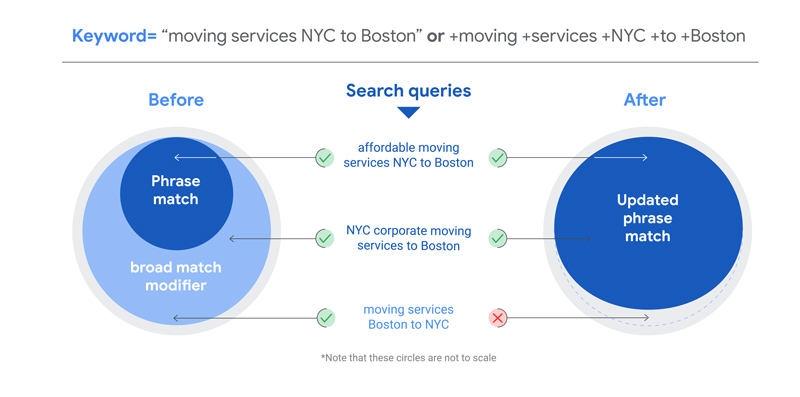
    Google is updating its phrase matching to cover new queries, essentially making broad match modifiers redundant. This new standard of phrase matching will look at the context and meaning of the search query, and the phrase match keyword will qualify relevant search queries as it sees fit.

    When Will This Happen?

    The new phrase matching will go live on Feb 18, 2021.

    So What Happens to Broad Match Modifiers (BMMs)?

    While ads will continue to run for BMM keywords, BMM keywords will simply function as a new phrase match. You won’t be able to add new BMM keywords beginning in July 2021.
    Broad Match Modifiers

    How Will This Impact Your Campaigns?

    This change shouldn’t impact your campaign performance. However, if you use two match types, there will be a shift in traffic from BMM to phrase. If you use only BMM, then BMM will continue to drive the traffic, of course minus irrelevant traffic.

    Position2 Outlook:

    To take full advantage of the new phrase approach:

    • Ensure phrase campaigns have enough in their budget to accommodate this change.
    • Don’t add BMM keywords to new campaigns. Use only exact and phrase match keywords going forward.
    • Monitor search queries at regular intervals and review the quality of traffic from phrase match keywords.

    Anything else you need to know?

    Over the last year, Google says it has been making more small improvements and updates to keyword and match types to help improve performance of campaigns.

    For example, BMM also looks at additional signals, making searches more relevant. They say when paired with Smart Bidding, BMM signals can mean never-before realized opportunities are now within reach.

    While keywords that are an exact match to search queries are preferred, they need to fall within certain eligibility criteria.* More control is handed to you with regards to which keywords match searches as well, simplifying keyword selection.

    To learn more about the impact of Google’s changes on your campaigns, please read Google’s release.

    *Identical queries account for spelling corrections. Reasons a keyword may not be eligible include being budget constrained, being marked “low search volume”, disapproved creatives, or other criteria are not satisfied (such as device or location). From Google release, ”Making it easier to reach the right customers on Search”

  • Marketing 2021: Three Trends That Will Define The Year

    Marketers, are you ready for marketing’s new normal?

    COVID-19 has had an unprecedented impact on marketing globally. As businesses rebound, marketers are required to know the pulse of their consumers. Marketers will need to think differently from the past to respond to the new demands of the consumer.

    What follows are the three macro trends that will impact marketing worldwide. Marketing Tips provided can be a great starting point to tackle these challenges. Geographic, economic, and cultural micro trends may evolve, and influence marketing as the world comes out of COVID. But the trends discussed here will continue to be some of the main influencers. Thus, their implications for marketers warrant careful consideration and thoughtful action.

    Trend #1: Digital Adoption

    COVID-19 fast tracked digital adoption across the world and across industries. People in unprecedented proportions shifted to digital channels.

    Digital Adoption

    Overnight, the traditional model of in-office work went online. Face-to-face meetings became Google Meet or Zoom meetings. Kids were catapulted from in-class learning to online. Traditionally off-line events and conferences, from SMX to MarTech to Adobe to Forrester, went virtual. Shoppers chose online ordering to an in-shop experience.

    As consumers went online in record proportions, companies and industries responded. Many firms leveraged digital platforms and tools to efficiently manage their business and internal processes. Slack and Microsoft Teams saw a significant jump in usage. At Position2, our internal communication and campaign management platform Arena helped with mass communication, project management and digital campaign performance management. Arena bridged the gap between our global clients and teams.

    Many companies created digital and digitally-enabled offerings in 2020 to support their service and product portfolio. According to one Mckinsey report, globally there is an average of a seven- to 10-year jump in the rate at which companies were developing these products and services.

    The ease of use of digital platforms, the efficiencies driven, and the collaboration enabled will only evolve. As a result, digital adoption will only increase in the future. Therefore, it is fair to say that the digital or digitally driven ecosystem of interconnected technologies is here to stay. Companies and their leaders need to adapt to this phenomenon to stay ahead and thrive.

    Marketing 2021 Tip

    As marketers, you will need to identify platforms and technologies that will help you build digitally-enabled client experiences and workplace ecosystems. You will need to start moving some, if not all, of your offline experiences online.

    The questions to answer are: How can I engage my customers, partners, and vendors digitally for the next six to nine months as the world slowly limps back to normal? Think about all the touchpoints that can go digital. Which touchpoints are impactful and easy to implement digitally? What are the measurable and scalable digital initiatives I can conquer quickly? Your answers to these questions will pave the way to a digitally enabled experience that supports your organization and your goals.

    Trend #2: Shifting Consumer Behavior

    The pandemic has disrupted old consumer behaviors. Loyalty towards brands was quickly replaced with the economics of shopping and ease of access. Essentials and value are now driving consumer buying. Consumption on digital devices offered a fast and safe alternative buying that could be accessed from the comfort of homes. These new shopping behaviors are here to stay. Similarly, the adoption of video chat and messaging apps, and Social Media has gone up. A study by PWC shows that greater than 75% of those surveyed said that they would continue with these behaviors in the future.

    Shifting Consumer Behavior

    Thanks to the ubiquitousness of mobile phones, wifi, and mobile data, post-COVID consumers dictate the what, how, and when of purchases or interactions. Micro-events and in-the-moment interface with a brand will help increase affiliation and loyalty. But brands are no longer in the driver’s seat.

    The rise of apps, the ease of ordering online, and the simplicity of digital content interaction will make online consumption the norm. To cater to this behavioral shift, companies will need to increase their presence online and offer a much better experience.

    In the technology driven hyper connected consumer world, the desire to buy from you is directly proportional to positive reviews and influencers’ recommendations.

    The desire to buy from you is directly proportional to positive reviews and influencers recommendations

    Brands that can connect their product or service to a consumer’s need will win. If consumers have had a bad experience with your brand, the news will spread like wildfire, impacting a large chunk of your sales.

    Marketing 2021 Tip

    To ensure consumer centricity, brands will need to personalize the experience or product. Experiential and personalized marketing will be very powerful in 2021. This type of marketing can be delivered via your website, social channels, or even through an app. It can also leverage AR. For example, you can offer the consumer a product experience without even having them to step into the store. This is what L’Oréal and Timberland did with their make-up and accessories respectively. You can also use AR or VR in B2B to train your sales or clients with interactive products. This technology can help conduct virtual immersive events.

    Personalized experiences can also be delivered via email. By combining first-party and third-party data you can build an ideal customer profile (ICP) with detailed behaviors, interests, and in-market needs. You then build an online engagement strategy with a series of emails, custom content or targeted ads relevant to them. You can also deliver a highly personal, 1 on 1 experience to consumers via online chat.

    The bottom line: personalized experience is a prerequisite. Organizations need to shift from brand centricity (self-obsessed) to customer centricity.

    Trend #3: Marketing Technology

    No surprise that technology is playing a huge role in marketing today. The rise of marketing technology is going to be exponentially greater in the future.

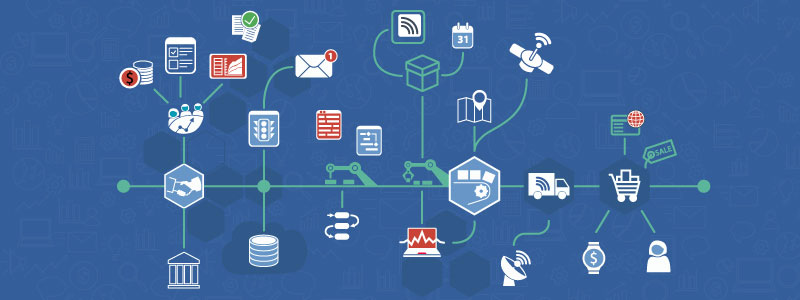
    Marketing Technology

    With cloud and computing power becoming easily accessible and cost-effective by the day, technology will be an efficient and effective way to run marketing, be it online or offline. The fact that there are over 8,000 marketing solutions available is a testament to that.

    With technology, companies can now accelerate and optimize every consumer touch point. These range from e-commerce purchases to online-brand interactions to simple content consumption. Furthermore, complex multi-channel and multi-dimensional customer relationships are becoming easier to manage.

    Marketing 2021 Tip

    As you look at the many ways to add to your marketing technologies, your tech stack can become complex and difficult to manage. But the manageability of the stack is what will help marketers thrive. By focusing on tech stack governance, you will increase interconnectedness and decrease redundancy-driven wastage.

    Along with the tech stack governance, marketers need to think of accurate data integration and insights. Connecting various data pipes can be daunting. But accomplishing this enables you to run synchronized activities across channels. This can propel the brand and consumer loyalty forward. Strong interactive data visuals enable you to dig right into the problem. Thus, integration and solid data science that can feed intelligence into this data are critical for a marketing manager or a CMO to win.

    In Conclusion

    2021 will be the year of transformation. For marketers, the changes to consumer behavior have already been set in motion with large-scale digital adoption. Thus, it is safe to say that consumers are already on the fast track towards a digital-led lifestyle.

    The resulting changes in consumer behaviors will only evolve and are here to stay. The trends discussed here will continue to shape the next normal and will impact marketing for years. With foresight, innovation, and consumer centricity, brands and marketers can find enduring success.

  • Your Ultimate Guide to Webinar Promotion

    Webinars and online events are increasing at an exponential rate, thanks to the new normal. According to this Forbes article, virtual events are up 1,000% since the start of the COVID-19 pandemic. But not all of them are getting the visibility they deserve. Even after spending so much time and money preparing for the event, most webinars don’t get enough attendees or the right audience.

    No need to worry anymore! Here is a simple and effective nine-step guide to make your event or webinar promotion a success!

    1. Start with a Catchy Title

    The title plays a major role for your webinar promotion. You need a memorable and catchy title that grabs attention and gets people to sign up. Make sure it connects with your target audience and relates to current issues in the sector. Don’t get too technical; keep it simple!

    2. Plan the Promotion Interval

    • Send an email to your target email list from your database three weeks before the webinar, and send reminder emails one week, two days, and one hour before the event.
    • Start yourLinkedIn Inmail (now called Message Ads) three weeks prior to the event.
    • Linkedin sends Inmail only once a month, so you can’t reach your entire audience use this service every week.
    • Make sure that the sender of the Inmail is an influential person in the company (e.g., C-level and directors).

    3. Take Advantage of a Known Audience

    • If you have target-audience details, you can custom match campaigns on LinkedIn, Facebook, and Google to boost registration.
    • If you have conducted a similar webinar or event earlier, promote the new one to your existing users. If they registered earlier, there is a good chance they will do so again.
    • Retarget all of your website visitors. They know your brand and are more likely to register.

    4. Target Your New Relevant Audience

    • Get intent data for your industry from intent providers like Bombora, DiscoverOrg, etc, and target them through LinkedIn and Facebook.
    • Third-party content syndication platforms like Netline can help get leads within a given budget. Such platforms also have a ‘pay-per-registration model.’
    • Target using ‘Job Titles,’ ‘Industry,’ and ‘Skills’ on LinkedIn for better results.

    5. Build Urgency and Leverage Scarcity

    • How many registrations are you planning for the webinar? Mention the seats that are still available.
    • One week before the webinar, start to rotate ads on all platforms with messaging that is clear and creates urgency. For example: ‘Hurry! Only two days left to register.’ ‘Five days to register’

    6. Let the Creatives Speak for You

    Creatives play a huge role in promoting your webinar. Based on our extensive experience, here are some of the best practices:

    • State the date and time of the event clearly on all the banners.
    • Use professional photographs of the speakers and avoid promoting your webinar without photographs. It’s a waste of time, money, and effort!
    • What’s the credibility of the speakers? State the company, designation, and achievements clearly.
    • Mention the partnering company if they are big in the industry.
    • Keep separate creatives for each speaker and promote them separately to appeal to different members of the audience.
    • Rotate the ads for a while and, if required, allocate more budget to the speakers that get more registrations.

    7. Landing Page

    Once you have awesome creatives, a catchy title, and a clear target audience, what’s next?

    You create your landing page highlighting all the details of your webinar and creating some excitement around registration. Follow these guidelines to help ensure better registrations:

    • Make sure the LP is clean and simple. Don’t overdo it.
    • No more big forms! Make sure the registration is a simple process. Don’t ask for too many details. If your webinar is good, they’ll get to know about you and will reach out to you if they need you. If you ask for more details, fewer people will sign up.
    • Call out the speakers with their proper professional picture, their role and experience.
    • Make sure the agenda is clearly laid out.
    • Clearly label the content of the webinar and let the users know what will be the key takeaways.
    • Call out the duration and topic that each speaker will cover.
    • If you already did a webinar on a similar topic, have a one-minute highlight video of it below the registration to give a glimpse of how impactful the topic is..

    8. Extend your Reach with Employee Advocacy

    People!

    Don’t take this for granted. When a trusted friend shares an event or blog that is even slightly related to you, it’s likely that you will register and attend the event.

    Ask all your employees, friends, and trusted connections to share the information on their social media platforms. But get them excited about it, so they don’t just share it but they add their own views and expectations while making their post. This makes the sharing more authentic.

    Social Media Channels

    Share the webinar details on all your social media handles, including Facebook, LinkedIn, Twitter, Instagram, and Youtube. Your followers are your loyal fans, and they won’t disappoint you!

    Signatures

    Update the signature of all your company’s outgoing messages with the webinar details and a link to the blog or registration page. By doing this, more people will learn about the webinar.

    Tools like Signature Satori can help you customize your signature. They offer many templates, allowing you to personalize based on your style.

    9. There Is Always Room for Improvement!

    Even if your webinar was great, it can always be better. Here are some tips to help you for your next webinar:

    • Keep a feedback session or poll at the end of the webinar. Be open to feedback and respond to the feedback providers.
    • Remember one thing: anyone who gives feedback is more likely to attend your next webinar. So, acknowledge their query on the webinar openly and take their feedback positively. After a good experience, they are likely to become your ambassador in the future.
    • Make sure to address all the feedback in your next webinar.

    10. Webinars don’t end; they evolve!

    Don’t forget to record the webinar! The best part of webinars is that they aren’t just one-time content. Recorded webinars can be consumed by more audiences after the live event.

    Add the webinar to your asset list and use it for the following promotions:

    • Add the link to your nurture leads, designed to move people down the funnel.
    • Send the recorded version to all the registrants without fail and add a thank-you note.
    • Promote the recorded version through paid channels for higher audience engagement.
    • As you’re getting ready for your next webinar, promote this one ungated to your audience one month earlier to give them a glimpse of what they can expect. This will encourage the users to join your new webinar.

    The above checklist will help you take your webinar promotion to the next level. Remember that any business is successful with repeat customers. Having a strong webinar series will result in repeat participants, which is likely to result in repeat customers. Remember that content Is King. You need to have the best content ever. Once you do, you need to intelligently promote your event.

    All the best for your next webinar promotions! Please do leave your thoughts and experiences on implementing the above ideas in the comments and share any tested and verified methods that worked for you!

  • Adopting Local Store Marketing in your multi-location marketing strategy| Position2

    Managing local marketing strategies for multiple-location companies can be challenging, even for experienced marketers. Let’s say you’re running a 30-location grocery store on the West Coast of the United States. Your store managers are begging you to do a better job of marketing to their local audiences. Here are just a sampling of their complaints:

    • A manager of the flower department at one store feels like she can’t compete with the truly local florist who gets intimately involved with the high school at prom time and works with the local card store for Mother’s Day.
    • A manager of the produce department at another store doesn’t like the fact that their Asian produce isn’t getting promoted to their substantial Asian population.
    • A manager of the pharmacy department at a senior-rich store feels like he’s not effectively promoting senior-friendly products to his local market.

    How do you solve these problems? By adopting local store marketing (LSM).

    Local store marketing (LSM) is all of the marketing activities you do to help your business be locally relevant to customers within a 1- to 5-mile radius. LSM requires a lot of effort, but the payoff can be great. It’s all about building relationships, giving back to the community and serving the needs of local customers.

    Nine Steps to Take for Local Store Marketing

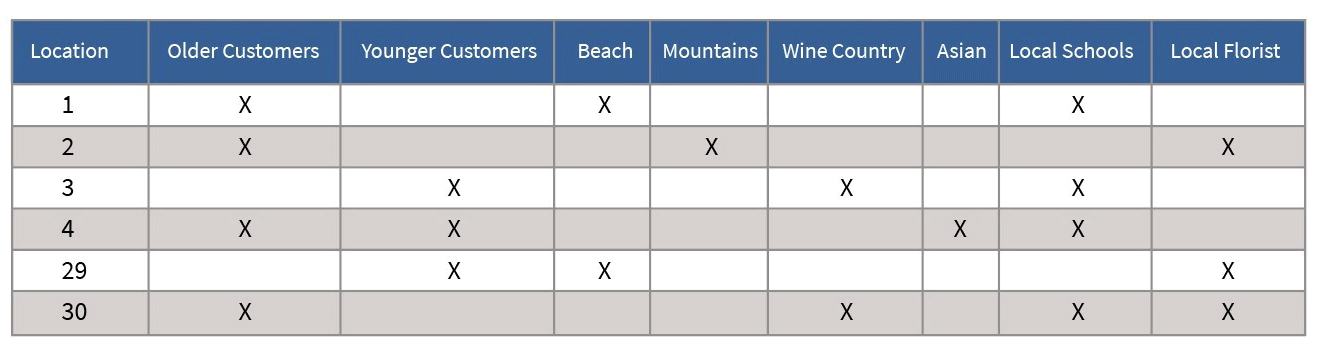
    1) Develop Location-based Buyer Personas

    Think about the unique characteristics of each of your locations. Essentially you want to come up with a location-based buyer persona (or multiple) for each of your stores. Here is an example to help you get started.

    Adopting Local Store Marketing in your multi-location marketing strategy| Position2

    2) Create a Location-specific Database

    Having a location-specific database and good engagement platform will make LSM much easier and more efficient. If you have a store-wide database, you can’t promote Asian produce selectively to your Asian audience.

    3) Leverage Google My Business (GMB) for Each Location

    Assuming you’ve set up Google My Business (GMB) for all of your locations1:

    • Create posts that are particular to each location-based buyer persona. For example, promote sunscreen products for the beach stores, meal kits and other senior-friendly products for the elderly stores, Asian fare for the Asian stores, and to-die-for flower offerings for the stores with local florists.
    • Highlight a local employee each month, letting people know that if they come to the store that month and find the promoted employee, they will receive a special gift. This is all about making your local store feel like a living, breathing entity who cares for them and is worthy of being cared for. Think about how you feel about most corporations. They’re big. They’re unfeeling. They only care about their bottom line. Creating relationships locally goes a long way in building loyalty and trust.
    • Promote a local school and/or a local vendor. Again, the local relationship is huge. A big corporation isn’t going to take the time to care about a local school. But your local store cares deeply.
    • Sponsor a local activity, ideally with other local companies. Perhaps you will support a Little League team or a concert at one of the local wineries. And of course, as part of the sponsorship, include some of your favorite products that you are eager to sell more heavily.

    4) Further Localize Your Digital Marketing Presence Across Multiple Locations

    Create location-specific web pages (company name/location) and social media personas to further help connect local customers with a specific site.

    5) Use Customized Emails

    Use email marketing to reach out to each location-based persona. Ideally, have the local emails signed by the local store manager.

    6) Text Messages Are Even Better

    With smart phones all the rage, text messages are even more effective than emails for connecting with local community members, especially if you’re encouraging people to visit the store. Consider using an automated system to make texting even easier. Invite your customers back, thank them for coming in, send birthday messages and much more. Offer your customers a treat and give them 7 days to come in to redeem it.

    7) Personalize Assets with Location Information

    At a minimum, replace the corporate address information with the local address information. You can do this for online assets as well as for physical assets.

    8) Practice Geotargeting for Multi-Location Marketing

    When you use geotargeting in your online communications, not only do you make local customers feel warm and fuzzy by highlighting favorite watering holes (e.g., popular restaurants, bars, companies and shops), but you also influence the owners of those favorite places to think about partnering with you. This gives you the opportunity down the road to do some joint marketing, which can be very powerful.

    9) Manage Reviews Locally

    We all love great reviews. But we know that with great reviews come some not-so-great reviews. Truth be told, the bad reviews aren’t the end of the world. People trust companies much more when they don’t look absolutely perfect. For example, let’s say you’re looking for an area rug on Overstock, and you see that they have some bad reviews. But when you dig deeper, you notice that most of the bad reviews were due to the wrong product being sent, and the reviewers said that the company handled the mistakes smoothly.

    Whether the reviews are bad or good, it’s important for the store manager to respond to all of them (the local person is key here). Corporate should write up positive and negative templates that they use on behalf of their store managers (making sure their store managers see everything) or their store managers use.

    We hope this article has given you good ideas for how to adopt LSM if you are marketing for a company or franchise with multiple locations.

    Happy Local Store Marketing!

    1Please visit to learn how to do bulk verification in GMB.

  • Post Event Video Marketing for Virtual Events

    This article is a quick snapshot of how to re-use virtual event videos produced in your post-event marketing efforts. Take me to the template.

    Today virtual events are experiencing a corona virus-related boom. It’s accessibility, flexibility, a time-saving benefit for the audience, cost-effectiveness, and most important of all – the social distancing compliance element of it all, is making them the new marketing normal! The very obvious channel of presenting a virtual event is through live streaming or on-demand video through the various tools/resources available today. What’s a less known fact is that videos created at these virtual events have great content that can also be rehashed and used again as an intriguing video asset to continue the conversation with your clients, prospects, or even new logos! While ‘video marketing’ is a trend that is considered essential to the marketing mix, effective re-application of the videos has been an effort that’s yet to be deployed effectively. So, how do we go about it?

    The typical challenges that we commonly hear are;

    1. Is there any content that was produced during the event which can be used again?

    2. We are out of assets. It was all used during the event… Now we need more for post-event promotions

    3. Can we create some snackable assets from the content used at the event?

    Solution:

    Below is a 6 step process on how this can be done.

    STEP 1: AVOID THE PLAN THAT STARTS 2 WEEKS BEFORE THE EVENT

    Start well-in-advance. Based on the event agenda, understand the kind of videos that can be captured. Make a listicle of type of videos. A sample set of videos could be:

    1. Testimonial videos

    2. 2-way interview videos

    3. Break out room session videos

    4. Recap videos (quick recap of the event with or without a moderator talking into the camera), otherwise called Sizzle Reel videos

    While we understand that filming and editing such videos well-in-advance could be an uphill battle, there are easier ways around it. Take a look.!

    STEP 2: BE CLEAR ON THE FORMAT OF THE VIDEOS

    A) Pen down the description of each of the video types so that we (advertiser/marketer) and our clients are on the same page as to what each one of them means. Some examples:

    Demo Video – Product/offering/service showcase video

    Recap Videos – Host talking into the camera on the recap or it could be:

    a. Host and a prominent speaker/guest together summarizing the video

    b. Collage of snapshots from the event – with a VO (will need to be edited)

    B) Be clear on the length of the video. This will be important while planning the usage of the same.

    STEP 3: PIN DOWN THE AUDIENCE ITS MEANT FOR

    It’s important to be clear on the audience it’s meant for. This will help further plan out the possible channels we will use it in, to reach a specific audience. It may also impact the format of the video.

    For example:
    Demo Videos – IT Architects, Developers, Data Scientists

    STEP 4: SLOT THE STAGE OF THE JOURNEY WHERE THE VIDEO FITS INTO

    Split the videos into the different stages of the customer journey. Basically slotting it into stages of the journey where you believe the content would work best. It could go right across from Discover, Early Learn, Late Learn, Try, Buy and so on…

    For example:
    Fireside chat video – where a moderator having a discussion with an expert / Senior leader could be something used in the Discover or Early Learn stage.

    STEP 5: DECIDE THE INTENT

    Now it’s time to decide the ‘intent’ that can be met with the video. Basically, what is the intended action expected from the audience you are targeting when they see this video? Answering this question will also drive a stronger orientation of the content planned for the same.

    For example:
    A Demo – could be used to encourage a trial

    STEP 6: DECIDING THE MARKETING CONDUIT

    Last, but not least, we are to decide which channels would work best for the video we intent to produce.

    For example:
    POV video on existing trends of technology – could be used in:

    • Within articles/blogs written on publisher channels
    • Landing Pages
    • Within Webinars
    • LinkedIn
    Deciding the Marketing Conduit

    Some pre-requisites are essential during this process:

    1. Sign off on the ‘video chart (see template)’ planned from client

    2. Sign off on the plan for future use of the video from the client (which is part of the template)

    3. Assignment of spocs from the client’s end to aid – in video usage post-event56t
    a. Get talent/rights forms signed off- so that they can be used across channels

    4. Detailed list at least a week before the event – of possible clients who would be attending the virtual event and whom we intend to have audience/video interviews.
    a. Get the questions in place for the interviews with approvals from the client’s internal marketing teams and if required client’s client and legal teams
    b. Get as many of videos pre-recorded

    5. Specify the need for a distinguished moderator during the interview if required

    6. Sign off on editing time (If required for uploads in real-time).

    7. Buying and testing with tools to make the videos interactive

    8. Good audio equipment in place for effective audio/videos recordings to be done

    9. Sign off on budgets for appropriate PO releases to be done

    While shifting lead gen from traditional to digital, why don’t you take a look at how Position2 can you put your marketing to work.

    Happy Video-ing! And plan ahead in time. To get you started off, here is a template you can download.

  • Top digital marketing trends for 2020

    2020 is here – the start of a new year and a new decade. Over the course of the last decade, digital marketing grew from sea level to the mountains and emerged as an essential part of any business. With the beginning of a new decade, several marketing experts have predicted how the innovations in digital media, platforms, and technology will shape marketing in 2020.

    In this article, let’s take a look at the digital marketing trends that the experts believe will be the most beneficial to your business.

    Treat personalized marketing as the key to success

    This is undoubtedly the most exciting digital marketing trend. Studies have shown that customers feel more attracted to a certain brand when they get personalized marketing messages from them. Brands should look for ways to make every customer feel special, and this should be more than just typing the first name into an email greeting. They should dig deep into the customer’s mind and find out about their liking and what they look for when buying online. Getting personalized messages,offers and alerts on a certain product that your customer may have been looking for can make them buy it instantly. But keep in mind that users do not want to be bombarded with content, especially if it isn’t relevant, so keep your content concise and easily understandable.

    Use interactive emails to engage your customers

    No matter how much we move forward with technology, the undeniable fact is that Content is still King. Several reports from 2019 suggest that most B2B content is educational, with the intent of fostering leads and building audience trust, two things that are essential for inbound marketing. The latest digital marketing trends show a downfall in text emails and newsletters, and digital marketers are looking to replace these with emails that look and function like web pages, designed with clickable buttons and other interactions. These gleaming designs are doing much more than just creating impressions. They are improving conversions.

    Utilize creatives as a serious performance driver

    Platforms like Google and Facebook are now capable of understanding which ad images and ad copies will drive the best traction and the best click-through and conversion rates. Given these new capabilities, you should make your creative emerge as a performance driver,carrying equal weight to other key drivers such as audience targeting and placement selection.

    Implement product tags to increase eCommerce sales

    A few years back, businesses were struggling to direct their social media traffic to their e-commerce stores. But thankfully, they have found an answer to this issue. With social commerce, buying a product directly from social media posts and ads is now possible, and this can be done without even leaving the app or the site. The shoppable posts may not be exactly new but, since the launch of Instagram’s checkout option, this digital marketing trend has become very popular. By giving customers a hassle-free shopping experience directly on social media, you can increase the chances of successful sales conversion.

    Update your old content with new keywords

    Your site may have old articles that have previously ranked well and have attracted backlinks, but search traffic for those old write-ups may presently not be high. So to maintain your SEO rank, you need to update your old content with new keywords, which will help you to hold your rank. This is one of the most inexpensive and effective digital marketing trends that you should consider.

    Invest in a video blog (vlog) and influencers

    With the growing success of YouTube, Instagram and Snapchat, the popularity of video blogs has skyrocketed. Findingmicro-influencers who have a targeted group of followers and are popular enough to be influential can be very beneficial.They will promote your product with video blogs and help you easily reach more potential customers within your vicinity. Small- and medium-sized businesses are opting to work with small- and medium-sized influencers instead of competing with globally-leading organizations for the top-tier influencers.

    We can see that the upcoming trends in digital marketing ask for both more of a human touch and better utilization of technologies. The emphasis is on giving a more personal relationship with extra targeted niches and making better connections using new technologies. The objective still remains the same – getting people everything they want at the same place – with technology making it easier to reach there.

  • Need More Traffic? Learn How to Optimize Google’s Featured Snippets

    The goal of all content is to attract new audiences, generate more traffic and reach the business’s overall goals. With Google’s algorithms and practices constantly evolving, it pays to adapt to the changes coming your way. One such new development in recent years is the use of featured snippets on the search results page. If you succeed in optimizing your content for Google’s featured snippets, you can increase the traffic to your site and even become recognized as a trusted source on the subject in question.

    To help you do this, here are four infallible ideas to optimize your content for Google’s featured snippets.

    What Exactly Are Google’s Featured Snippets?

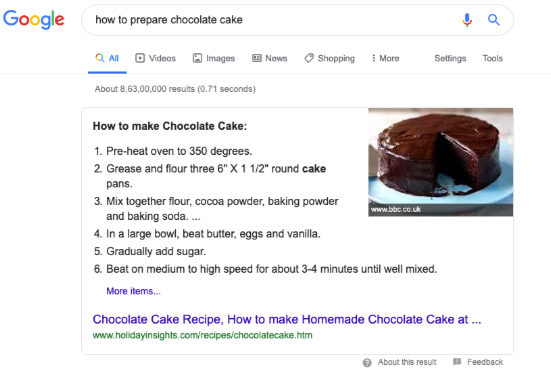
    Also known informally as answer boxes, Google’s featured snippets are exactly what they sound like – they’re featured pieces of content that appear in a distinct box right at the top of the search-results page. They precede the organic search results and come in second only to advertisements. Here’s an example of a featured snippet.

    You see that recipe in the box? That’s a featured snippet. Featured snippets are generally in the form of paragraphs, lists, or tables, and typically show up when people search for specific things like questions, recipes, statistics, and lists.

    How to Optimize Your Content for These Snippets?

    Optimizing your content for Google’s featured snippets may seem daunting until you do it. Following are a few pointers to get you started with the best practices to hop on to the featured snippets bandwagon:

    1. Research Your Keywords Thoroughly

    Keyword research forms the basis of creating content that shows up as a featured snippet. Why you ask? Because Google’s featured snippets are most often triggered by long-tail keywords. Begin by using trusted research tools to identify keywords which contain question words in them, such as “what,” “where,” “when,” and “how.” Google’s Keyword Planner can help you pick and use the right keywords to get your content noticed. Serpstat is another tool that helps with both keyword research as well as featured snippet research.

    2. Create Content That Answers the Right Questions

    Your content needs to be useful and informative. Only then can it qualify for the searches that trigger Google’s featured snippets. So, identify the topic you want to write about, and find a unique angle that people are actually interested in. Use public forums or social media to find out what people are asking and create content that’s relevant to what’s in demand. Or better yet, create a poll and ask your followers what they’d like to read about, or what they’d like to know the answer to. These tips can help you write about things that people want to read.

    3. Structure Your Content Well

    Once you’ve zeroed in on the right keywords, you need to ensure that you create content that’s easily scannable. For instance, if your content can be done up in the “how-to” format, it’s best to opt for this style. You could also opt for long-form content that’s at least 1,500 to 2,000 words wherever possible. It’s no secret that Google rewards long and informative posts, but don’t just stop with the word count. Mix it up by adding relevant images, infographics, and videos. Also, remember to make your titles descriptive and to format your title tags well.

    Learn How to Optimize Google's Featured Snippets

    4. SEO – An Important Piece of The Puzzle

    No matter what you hear, SEO is not going away anytime soon. It’s always relevant. This is why you need to keep your SEO game on point if you want to make it into the big leagues and have your content featured in a snippet. If you’re new to SEO, here are some of the best practices you need to focus on.

    • Easy-to-read content
    • Meta descriptions and keywords
    • Title tags
    • Link-building
    • Elimination of duplicate content

    A Final Word of Advice: Build on Your Strengths

    Here’s a quick tip before you get started: Get better at what you’re good at. Identify the topics where you already rank high on search results and build on the dimensions of those subjects. For instance, if you rank high on search results for “best ways to lose weight,” optimize the relevant content pieces for the answer boxes. This way, your chances to have your content show up as a featured snippet get improved.