Category: Digital Marketing

  • Mastering Marketing Automation Platform Evaluation, Selection and Migration: What you need to know

    In today’s marketing landscape, marketing automation has become indispensable for businesses seeking to optimize their marketing efforts and boost efficiency. As your company’s needs evolve, you may need to migrate to a more advanced platform. This guide will walk you through the critical steps to ensure a successful migration, maximize your investment, and minimize any disruptions.

    Why Migration Matters

    Platform migrations are not for the faint of heart. They usually start with an assessment of your needs. As you assess those needs, you understand what capabilities, and processes need to be maintained and what functionality needs to be added to your tech stack.

    What are your areas of focus in the assessment? There will probably be more than one—it could be improvements in productivity, analytics, targeting, integrations, cost-savings, or modernization.

    Once the assessment is complete, the next step is an RFP for vendors that meet your changing needs.

    So, how do you set your team up for success?

    Get the basics done first. Depending on your company’s size and the complexity of your marketing operations, you may have to engage finance, procurement, and IT infrastructure before any work starts.

    It starts with the team. Identify the team members and stakeholders that will be integral to the entire process – including those that would lead any migration effort. After the team is identified – define their roles and responsibilities for the entire process. As your team starts the assessment and the RFP:

    Know what you have. Understand your tech stack (including data sources). If you are looking for another solution, make sure you understand the current setup you have and how your team uses it. What are the pros and cons of your current solution?

    • What are the connections, dependencies, and processes tied to the current solution?

    Define clear objectives. It all starts with identifying your objectives and goals and making sure the platform that you are reviewing aligns with your overall strategy.

    • What enhanced features does your team need?
    • Is scalability important for a new solution?
    • Are you focused on cost reduction, efficiency gains or both?

    Buy for the future. As you develop your RFP, you start from what you know of your current tool and setup (strengths and opportunities). What functionality do you need to maintain? What capabilities need to be added? Are there any upcoming tech stack changes that need to be factored in?

    Scrutinize potential new platforms for: 

    • Feature set and functionality
    • Vendor support and ecosystem
    • Integration capabilities
    • Data management
    • User experience and interface
    • Scalability and future-proofing

    When is the right time to discuss migration?

    When meeting with prospective vendors, ask what they offer in migration support and what their timelines for migration are—that is critical, their answers will influence your team’s decision.

    Timing

    There’s a lot of pre-work to be done before you submit an RFP to a select group of vendors. Identifying your team, and laying out clear roles and responsibilities is the first step. Followed by knowing your existing setup and data sources – as well as identifying the functionality you need to maintain and the new capabilities your strategy will need.

    It’s likely you’ll have already collected a shortlist of vendors/solutions that you’re interested in evaluating. If you don’t, that’s fine too. We recommend using sites like G2 to compare various solutions and get access to customer reviews.

    That’s already a sizable book of work that could take several weeks to complete — there are still critical tasks that will demand your team’s attention.

    Next steps

    Your team should develop a comprehensive migration plan in parallel with other activities. They know your infrastructure and systems better than anyone, and you want to use that knowledge to create a preliminary plan before signing with a new vendor. That migration plan can be finalized after vendor selection. Here’s a short list of things to consider.

    • Timelines: Establish a realistic timeline for data, asset, and workflow migration. You’ll also need to have a launch date in mind.
    • Alignment: Your migration plans need to align with your broader business strategy.
    • Identify your resources: Since you’ve already identified the team members and stakeholders for vendor selection, that could be your starting point for selecting the team for migration.
    • Plan for training: In your vendor conversations, identify what they offer to train your team on the new system.
    • Integration plans: You’ll need to plan for integration with your existing systems (CRM, CMS, DAM, etc.). Your internal resources can also be members of those teams. They can help with recommendations on other team members to include and serve as a central point for internal communications.
    • Data and Data Security: Ensuring data protection during the transfer process or at rest, as well as factoring in compliance with data protection and privacy regulations (e.g., GDPR).
    • Processes: A successful migration depends on identifying every internal process you have in place to manage your operations. If you haven’t documented them already, now is the time to start.
    • Testing is critical: As your team migrates solutions – you need to test every aspect of the migration, so start working on test plans early on.

    Depending on who and what your team is evaluating, it could take weeks or a couple of months to get to a final selection. Once a vendor/solution is selected, the work begins. You will need to manage the vendor engagement and migration like you handled the RFP and selection process – with the right stakeholders and plan. After conferring with your broader team – have a date in mind for the completion of the migration activities and plan accordingly. Once the plan is set – you need to realize any delay – or failure pushes that date out.

    Are you overwhelmed yet? This entire process can be daunting – your team needs to anticipate and plan for these challenges. The right planning, project management, communication, and leadership – can make the difference in vendor selection and migration.

  • How to Market Your Multi-Location Business with Facebook Ads

    Introduction

    Use Facebook Ads to market your multi-location business on social media effectively. By utilizing Facebook Business Manager and location pages, you can increase traffic to your website, drive sales, and reach your target audience. This blog post covers the importance of demographic analysis, geographical distribution, interests, and behaviors to create a successful ad campaign. Topics such as setting objectives, budgeting, targeting, custom audiences/lookalike audiences, ad formats, and Facebook Pixel are discussed. With this guide, you can leverage Facebook Ads and location pages to promote your business and engage with your target audience.

    Multi Location

    Understanding Your Target Audience For Multiple Businesses

    The target audience’s interests and needs in each location should be considered to have a successful Facebook ad campaign. Use location targeting and Facebook’s Lookalike Audiences to expand reach. Analyze ad performance with Facebook’s analytics tools and experiment with ad formats and messaging—preview ad performance using simple steps to find what resonates best with each target audience. Use your Facebook account to leverage these tools for the most effective campaign.

    Demographic Analysis

    For small & large businesses with multiple physical locations, understanding your target audience’s demographics is critical to effective Facebook ad campaigns. Marketers can utilize Facebook Ads Manager to access detailed insights on age, gender, location, interests, and behaviors. Marketers can increase engagement rates and ROI by tailoring ad creative and messaging to each location’s demographic profile. This approach helps small & large businesses make the most of their Facebook ads.

    Geographical Distribution

    To optimize Facebook advertising for multi-location businesses, use Facebook’s location targeting options to reach specific regions or zip codes where your target audience is located. Analyze Facebook Insights data to optimize each location’s ad strategy and budget allocation. Exclude areas where your business cannot serve customers effectively. Precise geographic targeting tools in Facebook ad accounts can improve campaign effectiveness and ROI.

    Interests and Behaviors

    To create a successful ad campaign for your multi-location business, it’s essential to understand the interests and behaviors of your target audience. By targeting users based on their hobbies or favorite brands, you can create ad content that resonates with them. Additionally, targeting users based on behaviors such as frequent travelers or online shoppers can help you reach the right audience. Understanding these critical aspects of your target audience will improve your overall Facebook advertising strategy and increase engagement rates for your multi-location business.

    Designing your Facebook Ad Campaign

    Crafting a successful Facebook ad campaign requires defining your target audience by demographics, interests, and location. Once identified, create compelling ad copy and visuals. Use location targeting to reach customers near your business. Choose the right call-to-action for conversions. Continually test ad formats and targeting options to optimize performance. Monitor and analyze ad data to make informed decisions. Allocate your ad budget effectively for multi-location businesses.

    To optimize your Facebook ad campaign, assign page roles and access levels to admins in the drop-down menu. This ensures the right people have the necessary permissions to manage and monitor your ads. You can delegate tasks and streamline your ad campaign management process by giving specific page roles.

    Setting your Advertising Objective

    Setting a relevant advertising objective is essential to create a fruitful Facebook Ad campaign for your multi-location business. Align it with your marketing goals and target audience. Pick the apt ad format and targeting options, using a cover photo, company logo, and personal profile to enhance brand awareness, website traffic, and leads or conversions. Continuously monitor and adjust the campaign to optimize performance based on the objective.

    Choosing the Correct Format for your Ad (image, video, carousel, etc.)

    Selecting the correct format from various options can be daunting when creating a Facebook ad. Images are great for showcasing products, videos can tell a story or provide demonstrations, and carousel ads are ideal for displaying multiple products. For e-commerce businesses, collection ads are perfect as they allow users to browse and buy products without leaving the facebook. Keep campaign goals and target audience preferences in mind. Also, ensure your profile picture and images have the correct pixel size per Facebook’s templates.

    Crafting Compelling Ad Copy

    Writing compelling Facebook Ad copy is essential for success. Be concise and attention-grabbing, and communicate your business value. Use persuasive language to entice your audience to take action. Incorporate social proof, such as testimonials or reviews, to build trust. Experiment with different variations and monitor their performance to optimize effectiveness.

    Selecting Appropriate Images and Videos

    Choose eye-catching and relevant visuals for your multi-location business’s Facebook ads. High-quality, consistent visuals build credibility and trust with potential customers. Authentic images help convey authenticity and differentiate you from competitors. Align your visuals with campaign goals and target audience to increase conversions.

    Choosing the Right Call-To-Action

    Picking the right call-to-action (CTA) in Facebook Ads is crucial. A clear and persuasive CTA guides your audience to the desired action, boosting conversions. Aligning CTA with ad messaging and business goals is crucial. Testing various CTAs can help find the most effective one for better results.

    Facebook Marketing in 2023

    • Facebook’s family of services (Facebook, WhatsApp, Instagram, and Messenger) boasts a whopping 2.45 billion-plus worldwide active users.
    • An estimated 79 percent of the U.S. population is on Facebook—74 percent of that log in every day, and two out of three consumers visit a Local Business Page at least once per week.
    • For 53.2% of internet users ages 16-24, social media is their primary source of brand research. And 66% of all Facebook users check out a local business Page at least once weekly.

    How To Manage Facebook Business Page
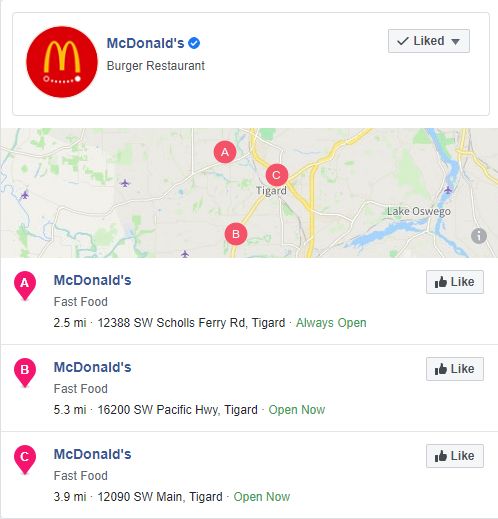
    How To Manage Facebook Business Page

    Every business is a prospective Facebook advertiser, and multi-location businesses are no exception. However, special care must be taken in the Facebook Ads campaign setup to prevent location overlap and overreach. This post will review the campaign setup process for an advertiser targeting a local marketplace with multiple locations. Note that we will not talk through every possible campaign setting here. Facebook campaigns can get wonderfully complex, and advanced campaign setup is beyond the scope of this article.

    Campaign Choice
    How to Market Your Multi-Location Business on Facebook with Facebook Ads

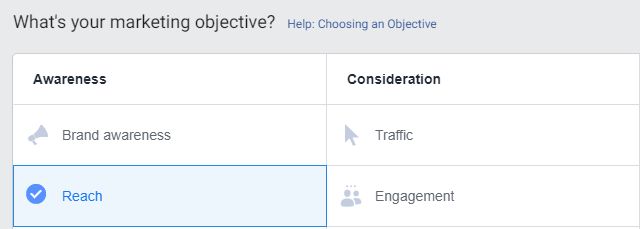
    When entering the Facebook Ads UI, an advertiser is faced with quite a few campaign setup choices. People in charge of a Multi-Location Facebook Ads Setup should choose 1 of these 4 marketing paths.

    1. “Reach” Ads will show the ads to as many people as possible within the given budget. This should be the default choice for less-experienced Facebook Advertisers.

    2. If it is a priority to get people to the website instead of having the visitor act within the Facebook Universe, “Traffic” would be the choice.

    3. “Engagement” will sacrifice some reach for commentary and feedback on the ad itself. Suppose your business is comfortable with engaging potential customers (as well as some trolls) on Facebook. In that case, this might also be a good choice since if your ads generate more than expected Facebook Engagement, their frequency in the auction will increase.

    4. “Brand Awareness” will sacrifice some reach to target people that Facebook thinks to have an enhanced interest in your advertising.

    Campaign Budget

    Start small and realize you must create a separate campaign for each location. Once you set your budget, you will be asked to choose a “Campaign Bid Strategy,” We recommend “Lowest Cost,” which is the optimal choice for most people reading this article.

    Facebook Page

    Every location that you plan to advertise separately needs its own Facebook Page. No exceptions. If, for some reason, you have not created a Facebook Page for each business location that you plan to market, please do so ASAP. Each Campaign created will be for one unique location (though it is perfectly OK to have nearly identical campaigns for each location you are marketing).

    Location Targeting

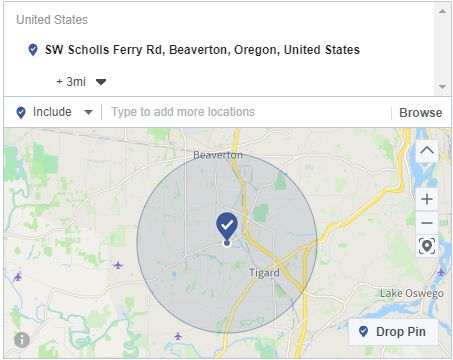
    You should know roughly how far your customers will visit each business location. Is it 3 Miles? 10 Miles? 50 Miles? For some businesses, putting the location in the circle and choosing a radius for the circle is all you would need to do for location targeting.
    Location Targeting

    However, with multiple locations, what can quickly happen is that the circles will overlap. You will have multiple locations serving ads to the same people, which wastes money and might cause consumer confusion. Instead of doing radius circles, targeting your locations at the Zip Code, City, or Metro Area level might be more efficient.

    Demographic Targeting

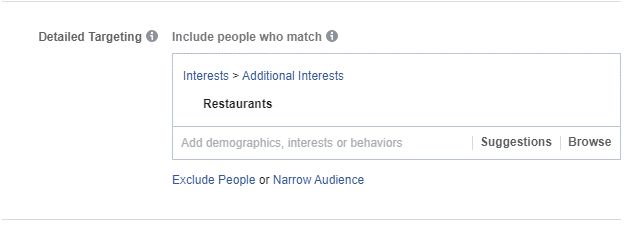
    Adding some extremely basic demographic targeting will help narrow the size of your target audience and increase your ad’s relevance.
    Demographic Targeting

    What does your business sell or offer? Drop those terms into the detailed targeting box to see what matches Facebook comes up with. Add those as part of your Detailed Targeting to increase the relevance of your targeted audience and decrease the amount of money you spend on people that likely have no interest in your business.

    Custom Audiences / Lookalike Audiences

    Here is one targeting wrinkles that could be highly effective. Have you developed an in-house email list for your business? If yes, you can target those email addresses tied to Facebook Accounts in conjunction with your geographical targeting or on its own.

    Even but also be a good choice since your ads like ” Audience” from your in-house email list will allow you to target people who are demographically like the people on your in-house list.

    Facebook Lookalike Audiences are exceptionally large and will allow you to target 1-10% of the country’s population. For our purposes here, you should stick to 1%, which will still leave you a massive list. However, when you apply your geographic and demographic overlays to the Similar Audience, you will be left with many people who should be interested in your business that also reside in your local area and who you don’t know about.

    We have found that companies who have developed comprehensive in-house email lists have done exceptionally well in Facebook Ads because Similar Audiences are so influential for their marketing efforts.

    Ad Format

    Facebook Campaign Ads consist of images and text. Sure, we could use videos or immersive screen experiences, but investing in these assets does not make sense if you are running multi-location brick-and-mortar businesses. For each location, upload a high-quality representative image for use in your Facebook Ads, which is quite adequate.
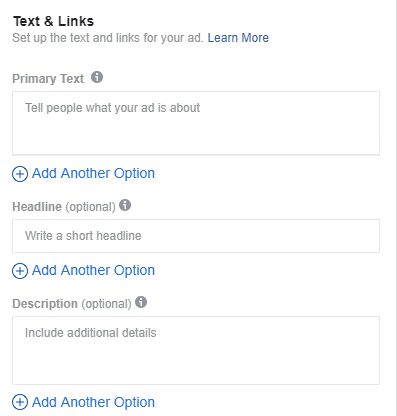
    Ad Format

    For your ad text, these are the 3 fields you must focus on. The “Primary Text” appears above the ad image and is what people will focus on when they see your ad in the feed. Here is where you let people know what service your business performs and why somebody should consider stopping by. Be succinct in what you write here. A few sentences are fine but keep them short and snappy.

    The Headline is “Optional,” but you should not treat it that way. Put your Business CTA here, or mention your Business Name again (since it will also appear at the top of the ad).

    The Description is “Optional,” but you should use this space to share salient information such as hours open or a promotion that you might be running.

    You can also add a Call to Action button to your ad; we strongly recommend that. “Learn More” or “Contact Us” are the two choices that make the most sense for multi-location businesses.

    Facebook Pixel

    Ensure your webmaster has properly implemented the Facebook Pixel on your website(s). It will not only give you unbelievably valuable information about the people who have visited your website, but it will allow you to retarget these people in the future.

    Conclusion

    The Facebook Ads UI can be very intimidating for somebody who has never seen it before and has no experience with Paid Advertising. However, for the uninitiated, the following general advice should help you adjust to this new process.

    1) Start Small. Keep your budgets low while you are learning. Spending just $5-$10 daily is OK until you understand the process better.

    2) Start Nearby. Facebook will almost always spend the entire budget you are giving it. So, when you start, focus on the audience closest to each location. Some people may drive 30 minutes to your place of business. Most will not, however. Generate your learnings with people close to your location.

    3) Start Simple. Your first Facebook Campaign is not where you launch a multi-step multimedia ad experience. Plenty of advertisers do well with a single-sentence message, a simple CTA, and a particular image. Stick to that until you have become comfortable with the platform and are comfortable with the results from your ad investments-Location Businesses with Facebook Ads

    FAQs on Multi-Location Businesses with Facebook Ads

    How can I measure the success of my Facebook Ad campaigns for multiple locations?

    To measure the success of your Facebook Ad campaigns for multiple locations, you can start by setting specific goals and KPIs for each location. Then, use Facebook Ads Manager to track metrics such as reach, engagement, conversions, and ROI for each location.

    What are the best types of Facebook Ads for a multi-location business?

    For a multi-location business, the best types of Facebook Ads are local awareness ads, which can be customized for each location and targeted to users in specific geographic areas. Carousel ads are also effective, as they can showcase multiple locations in one ad.

    How do I ensure my Facebook Ad campaigns are consistent across multiple locations?

    To ensure consistency in Facebook Ad campaigns across multiple locations, you should use the same ad creative, targeting, and messaging across all campaigns. Utilize Facebook’s ad sets feature to create unique campaigns for each location, but ensure they have the same overall message and branding.

    How do I optimize my Facebook Ad campaigns for maximum ROI for my multi-location business?

    To optimize your Facebook Ad campaigns for maximum ROI for your multi-location business, you should start by defining your target audience and creating location-specific campaigns. Use relevant images and videos, compelling ad copy, and clear calls to action. Use Facebook’s targeting options to reach the right people and monitor your campaigns regularly to make data-driven adjustments to improve performance.

    Can I use Facebook Ads to promote multiple locations at once, or do I need separate campaigns for each location?

    You can use Facebook Ads to promote multiple locations by creating a single campaign with multiple ad sets, each targeting a different location. However, it’s essential to customize your ad creative and messaging for each location to ensure relevance and effectiveness. Alternatively, you can create separate campaigns for each location to have more control over targeting and budget allocation.

  • The Rise of Voice Search Marketing

    In this ever-evolving digital marketing era, it’s crucial to stay ahead of the curve for businesses that aim to capture the attention of their target audience. Voice Search Marketing is one trend that has been making waves and is set to reshape the landscape — the era of typing queries into search engines is gradually giving way to a more natural and conversational approach.

    The Voice Search Revolution

    Consumers are increasingly using voice search to streamline their online experiences. Voice-enabled devices like smart speakers, smart TVs, virtual assistants, and smartphones with voice recognition technology have become ubiquitous.

    Traditional SEO strategies evolve as users shift from typed searches to vocalized queries. Long-tail keywords are becoming more critical as people use natural language when speaking to voice-activated devices.

    Optimizing for Voice Search

    i) Conversational Content is Key:

    Crafting content in a conversational tone is crucial for voice search optimization. Users tend to phrase voice queries in a more natural and spoken manner, so businesses need to adapt their content accordingly.

    ii) Local SEO and Voice Search:

    Voice searches often have a local intent. Optimizing for local SEO is paramount, ensuring that businesses appear in relevant voice search results, especially for queries like “near me” or location-specific requests.

    Emerging Technologies

    i) AI and Natural Language Processing (NLP):

    Integrating AI and natural language processing (NLP) enhances the accuracy and understanding of voice search platforms. Businesses are leveraging these technologies to provide more personalized and relevant results.

    ii) Visual and Voice Integration:

    Voice search is not limited to verbal interactions. Visual and voice integration is gaining traction, allowing users to initiate searches through images and continue the interaction through voice commands.

    Adapting Analytics for Voice

    Traditional analytic tools may struggle to attribute voice searches accurately, leading to challenges in understanding which interactions originated from voice commands. This limitation can hinder marketers’ ability to evaluate the benefits of their voice search optimization efforts. Additionally, users often initiate a voice search on one device and continue the interaction on another. Traditional analytics may not be able to connect these multi-platform journeys, leading to fragmented data and incomplete user profiles.

    Investing in analytics tools designed for voice interactions can provide more accurate insights. These tools can track and attribute voice searches, offering a clearer picture of user behavior and the effectiveness of voice search optimization strategies. Also, integrating cross-device tracking capabilities will allow marketers to follow users seamlessly across different platforms. This holistic view of user journeys enables more accurate attribution and a better understanding of the overall customer experience.

    Privacy Concerns:

    As with any data collection, voice search analytics raise privacy concerns. Users may hesitate to interact in voice if they feel their privacy is compromised. Marketers should prioritize transparency in data collection by clearly communicating how voice data is used, stored, and protected. Adhering to privacy regulations and obtaining explicit user consent can build trust and encourage more users to embrace voice interactions. By addressing these challenges and implementing tailored solutions, businesses can unlock the full potential of voice search marketing and gain a competitive edge in the evolving digital landscape.

    The Future of Voice Search Marketing

    As we look to the future, it’s evident that voice search is not just a current trend but a transformative force in digital marketing. Businesses that embrace this shift early on by optimizing their content for natural language and staying abreast of emerging technologies will have an advantage in being at the forefront of connecting with their target audience more naturally in 2024 and beyond.

  • Google Ads For Fintech Companies

    Fintech is its own unique niche in Paid Search and has aspects that straddle the line between diverse campaign setups. Fintech campaigns can be lead generation, and some are B2B, B2SMB, or B2C. They can be broadly focused, and some are narrowly focused. However, within all these different permutations, commonalities exist across the various choices, and it is these commonalities that I would like to focus on in this piece.

    One product or product group per Google Ads account

    Focusing on one product is the ideal account structure for ease of use. Although we have seen multiple product lines per account—while it’s certainly viable—such a setup increases the chances of errors occurring. One product group should have a unified targeting setup and one set of conversion events that are being targeted. Within this one account, at the campaign level, you can then create your unique segmentation (with real-world attributes like geography or campaign-type elements like campaign type).

    Define campaign objectives

    Each initiative will have a conversion funnel of some sort. Some funnel steps will be tied to Google Ads, and some will be offline. Some offline elements (like source-to-close tracking) can be imported back to Google Ads as long as they happen within 30 days of the initial click. Some cannot. One of the decisions that needs to be made is which funnel stage Google will optimize towards.

    We have optimized towards “top of funnel,” “middle of funnel” and “bottom of funnel.” As a rule of thumb, we recommend optimizing to the lowest funnel stage possible where 50+ conversions happen within the first 30 days (the more, the better). There are Fintech products where leads take much longer than 30 days to close. In that situation, it’s important that mid-funnel conversions are “built-in” to the process to best inform Google. These mid-funnel conversions don’t need to take place on the website, they can be something like a successful client call (which will be noted by the Account executive / Sales Rep in the CRM) or a proposal creation.

    Source to close tracking

    Source to close tracking is what enables Google Ads to track each funnel step. If you haven’t implemented it yet, here’s how you set it up:

    • Tag each landing page URL. You can use auto-tagging or appending gclid={gclid} to it. When the visitor lands on the landing page, a unique gclid is assigned to that visitor.
    • The gclid information needs to be passed into your CRM where it gets tied to a unique prospect record.
    • When a prospect passes certain stages in the funnel, the CRM is updated with that information, and each relevant funnel stage conversion is passed back to Google.
    • Google sets the funnel stages being targeted for conversions to “Primary” (with the remaining conversion types set to “Secondary”). Thus, one can create a bidding strategy targeting these primary conversions.

    Profitable optimization

    There are two types of bidding strategies for Google Ads that are typically put into play for Fintech firms. The first is deciding how much the company is willing to pay for a “funnel conversion.” Once that is decided, then a Target CPA bidding strategy is set up, telling Google to get as many leads as possible within the client budget for that Target CPA.

    The second type involves targeted leads that could have variable values that get passed back into Google Ads. In this case, the company can bid for a certain Target ROAS (Return on Ad Spend). In this scenario, one decides how much they are willing to pay for an “average” conversion and sets up the bidding strategy to target a 1 ROAS – where the revenue earned equals the amount spent in Google Ads.

    Keyword optimization

    I’m pretty certain that anyone reading this article works at a company that has run Google Ads in some form. Campaigns have been set up with keywords in them that map to the company’s offering, even if they are not set up in an optimal fashion. My strongest recommendation for doing keyword research involves reviewing the search queries that Google served against (which differs from the keywords that the account is bidding on).

    If you are currently tracking conversions, first examine the queries that generated conversions for you. If their Target CPA is acceptable, that is a term you should specifically target (if you are not targeting it already). If the Target CPA is too high, you might want to either exclude it or bid much more conservatively in the future. You should focus on terms that have generated conversions for you but are not currently present in your setup. Those should be added to your campaign. Similarly, if you have spent an sizable amount of money on queries that have not converted for you, they should be excluded from your campaign.

    Once you have your keyword list, you should consider the match types you are using. Google is telling people that you can bid on broad match only or if you insist on using other match types, you can put them all in the same campaign. I’ve yet to see any instance with my Fintech clients where broad match terms performed as well as exact match terms – although I have seen similar performance to phrase match terms. For now, we recommend segmenting campaigns by match type (I recognize that future evidence might change that view).

    I recommend doing separate Exact Match, Phrase Match, and Broad Match Campaigns, with the exact match terms negated in the phrase match campaigns and the phrase match terms negated in the broad match campaigns. With rare exceptions, I would bid on all targeted terms in all match types, though I would be incredibly careful in setting a tight bidding target for Broad Match.

    Ad copywriting

    Every Fintech company we have worked with has a mandatory ad approval process…some more extensive than others. We’ve identified 4 core rules to help you get the most out of your ad copy and creative assets.

    • The first rule of Google Ads copywriting is understanding what the internal ad reviewers are going to accept and what they are going to reject.
    • The second rule is because approval processes can be slow, ensure you get a large amount of ad headlines and ad description lines approved in each go around, to allow for testing and tweaking.
    • The third rule is to make sure you utilize the maximum number of ad headlines and description line alternatives available to you for each ad type. Yes, some of your ad text will be better than others but giving Google the maximum number of choices to work with will increase the likelihood of getting the prospect to enter your funnel. For Google Display Network Ads and Discovery Ads, utilize the maximum number of image assets and (if possible) video assets that the ad type allows. If certain ad text performs poorly, Google will let you know, and you can make a substitution at that time.
    • The fourth rule is to ensure that your core targeted keywords appear in your ad text variants. If a prospect sees the term that they are searching for appear in your ad text, your ability to earn the prospect a visit goes up.

    Landing pages

    Landing pages are critically important for the success of Paid Search. In an ideal world, Fintech companies should follow the same best practices as other industries, like:

    • Utilize specific landing pages for Paid Search that follow best practices
    • Eliminating extraneous page navigation
    • No redundant marketing copy – like one would find on an SEO-focused landing page
    • Quick load times, especially on mobile, etc.

    Not every client has given us the ability to influence their landing page experience. Much of the time, we have been limited to working with the website landing page that is designed to serve all marketing, and have been created and approved without any input from our team. The pages may perform, but any change/update processes are slow or non-existent.

    One workaround (if available) is to use a program like Optimizely to run Landing page tests that allow page variance without making changes to the page itself. While these page tests undoubtedly need to get approved by the client, at least there is not an engineering hurdle that must be overcome for testing purposes.

    Fintech companies should be focused on making funnel entry and conversion as seamless as possible. We have seen large Fintech firms lose sight of some of these issues, and if they are a well-known brand, sometimes a sub-optimal funnel experience can be overcome. However, if a big brand can act nimbly like a small brand, the larger brand’s scope and scale can add a huge amount of revenue to the effort.

    Compliance

    Fintech is an industry that is heavily regulated and can have extensive compliance procedures that need to be followed. It’s not an industry where someone can create an ad and immediately roll it out live – without approval and oversight.

    Every aspect of the Google Ads Experience that is seen by the public must be reviewed and approved. Each client we have worked with has done compliance a little differently. Compliance review can range from “one person reviewing the ads in an Excel Spreadsheet” to very formal meetings involving multiple stakeholders including the legal department going over every variant of ad text plus all visual campaign elements.

    It’s important for the Google Ads stakeholders to get intimately familiar with what their compliance team will and will not approve to get new ads into the marketplace in a timely manner.

    Compliance rejection and revision can add weeks to the timeline. Disclosures are important. Some disclosures must go in the ad text itself which will reduce the available ad space for the “advertising.” Videos require asterisks appended to the advertising text with small legal print at the bottom of the video. Landing pages are full of required disclosures. The Google Ads team will not know what disclosures need to be added to the various parts of the campaigns, but they absolutely need to know the cases where disclosure is required and flag it for the appropriate compliance team to decide.

    In support of their brand values, it’s not uncommon for Fintech companies to restrict where they are comfortable having their ads shown. Twitter and TikTok are “over the line” for many brands. They may also require internal (within Google Ads) or external (e.g., DoubleVerify) content screening systems that keep the ads from showing on the same page as “questionable content.” Within Google, we have produced a list of Topics that we block automatically for Fintech clients are specifically in the areas of politics, news, live video, and children-focused websites.

    Sales assisted

    For Fintechs, any Google Ads initiative involving a contact/meeting with Sales adds a human element that must be actioned in the same methodical manner as the automated parts of the sales funnel. Google’s algorithm can’t factor in somebody not updating the CRM in a timely manner.

    If the CRM is not updated, to Google, it means that no activity has taken place. Funnel “breaks” are not understood as “breaks”, Google perceives them as periods of no sales activity which push Google to change its bidding strategy to account for the lack of sales activity. We worked with one sales-assisted client (not in Fintech) who had their entire Paid Search initiative crash and burn because they couldn’t methodically get Google the information it needed to bid appropriately even though the sales team took the initiatives that “should” have pushed the leads down the funnel towards a successful close.

    If the Sales team is diligent about entering the data, those nuances only known by the sales team can be effectively communicated to Google and acted upon for the benefit of the business. For example, a business opportunity that is worth $100K but only has a 40% chance of closing can be pushed back to Google as having a value of $40K. Businesses can use any schema they wish to value the leads, but the key is communicating the information as quickly as possible. Since CRM updates to Google Ads are usually automated and happen (at least) daily, all the Sales team needs to do is to update the CRM with the correct information and the automation does the rest.

    Closing

    Fintech is a unique Google Ads niche. It’s heavily regulated, so certain aspects of marketing creativity and out-of-the-box implementations are not available for those account managers. However, it’s also a very profitable niche that has the ability to scale given the depth of the marketplace.

    Position2 has deep, high-value Google Ads experience for all shapes and sizes of Fintech clients. Our Fintech client experience can be applied to any new client engagement.

  • Why is it important to optimize your landing pages?

    Let’s start off by quickly defining what a landing page is

    A landing page is designed for a specific conversion goal and they’re temporary page(s) that are not part of your website architecture. Consider them a standalone destination for customers or prospects that are tied to a specific marketing campaign(s).

    Your website is the comprehensive online presence for your brand – it’s considered owned media and isn’t dependent on individual marketing campaigns. It’s an asset that your team manages, updates and optimizes depending on new features, products, and services for your company.

    The need for optimization of your landing pages

    It’s important to look at the performance of your campaign landing pages and make the necessary changes or enhancements so they can continue to drive conversions for the marketing campaigns they support. These are some of the methods that our team works through to optimize our clients’ landing pages.

    • Alignment with campaign goals

      Make sure that your landing page content and messaging are still aligned with the goals of the marketing campaign this alignment will improve the chances of conversion.

    • User-friendly and responsive

      It almost goes without saying that your landing pages need to be intuitive and user-friendly. Reducing friction makes it easier for visitors to navigate, interact with content, and take the desired action. This means that the pages need to be consistent regardless of the device your visitor or prospect is using.

      We recommend a responsive page that adjusts the layout, font sizes, and images to fit the screen, eliminating the need for users to zoom in or scroll horizontally. A positive user experience leads to higher engagement and increased chances of conversion.

    • Clear and concise content

      Since your landing page is tied to a marketing campaign and not your website – the content needs to be simple and relevant to the campaign objective. Having a strong headline that grabs attention and content that clearly communicates the value proposition of your offer. Content should be compelling and relevant to your target audience.

      Informative and relevant content establishes credibility and builds trust with the audience. When the message is clear, visitors are more likely to stay on the page and engage, increasing the chances of conversion.

    • Call-to-Action

      Your call-to-action (CTA) should clearly communicate the action that the visitor is expected to do. A clear CTA on the landing page sets the right expectation and has a direct impact on conversion.

    • A/B testing

      Test, test, test … we recommend testing different elements of your landing page to optimize its performance. Test different headlines, CTAs, form placements, colors, or layouts. A/B testing allows you to gather data and insights on what resonates best with your audience, enabling you to make data-driven improvements.

    • Forms

      If your landing page has a form fill – identify the information that your campaign or Marketers are prioritizing – keeping your forms as simple and streamlined as possible. Long and complicated forms can deter visitors from converting – consider using progressive profiling to gather additional information over time.

    • Testimonials

      Consider adding customer reviews, badges, or other positive 3rd party content that can support your value proposition. You’ve got their attention – make the most of the opportunity.

    • Integration with your marketing automation system

      Leverage your marketing automation system by integrating your landing page with that platform. You can set up lead tracking, nurture campaigns, and personalized follow-ups to engage with your leads effectively.

    • Load speed

      By its nature, a landing page needs to load quickly. Using compressed images, and minimizing server requests will help in improving load speed.

    • Analytics and tracking

      As with any marketing initiative, prioritize data-driven revisions to your landing page and make the right modifications to drive conversion.

    So… what’s a good conversion rate for a landing page?

    As Hubspot shared last year, the average conversion rate for landing pages is 5.89% across all industries. A good conversion (across all industries) rate is around 10%.

    There are multiple factors that can influence the conversion rate, some of these include:

    • Campaign goals and objectives – and how well they’re executed
    • The type of content (video, images, content)
    • The type of CTA included on the page
    • Content/message relevance to the audience
    • Channels driving traffic to the landing page
    • Your target list or audience targeting

    We hope this article has helped highlight some of the tactics that can help boost conversion rates on your marketing landing pages. It’s more important than ever to work with the right agency team to get the very most out of your campaign landing pages – if you’re not getting what you need from your current agency – please reach out to our team at Position2.

  • Digital Attribution Modeling in 2023-24

    In today’s tech-savvy marketing environment, there’s a prominent digital topic to delve into – how to trace the digital steps leading to an online purchase. Among the multiple strategies available, three principal models of attribution emerge: First-Click, Last-Click, and Data-Driven.

    First-Click Attribution

    Imagine, that you’re walking by a café where the combination of coffee aroma and classic jazz lures you into the establishment. This model can be likened to remembering the alluring mix of smell and sound that lured you into the business. It zeroes in on the initial draw.

    Pros:

    The First-Click method emphasizes the inaugural impression. By focusing on the primary channels, businesses discern what originally piqued the customer’s curiosity. It’s direct and unambiguous, presenting a lucid view of the onset of the customer’s journey.

    Cons:

    On the downside, it’s analogous to valuing only the combination of coffee aroma and classic jazz while disregarding the overall ambiance or quality of service. This method completely ignores the ensuing interactions that culminate in a sale.

    Last-Click Attribution

    Picture being in that café, wanting to make a purchase but not being clear on what you wanted. Then, you see the sign: “Today’s Special: A Triple Espresso for the price of a Double Espresso”. You see the sign and immediately order the special. This method cherishes that concluding impression.

    Pros:

    The Last-Click strategy hones in on the ultimate persuasion. It elucidates what finally swayed the customer towards a purchase. Numerous digital platforms prefer this model due to its simplicity in chronicling the final interaction.

    Cons:

    Yet, this method might bypass the complete array of experiences that shaped the mood. It stands the risk of downplaying earlier influential interactions (coffee aroma, classic jazz) in the purchasing process. The person wouldn’t have entered the café but for the initial alluring stimuli.

    Data-Driven Attribution

    Think of this as an in-depth analysis of each aspect of your interaction with the cafe, grasping the relative contribution of each stimulus to your overall experience. It advocates a comprehensive understanding.

    Pros:

    The Data-Driven technique is exhaustive. It leverages algorithms and machine learning to ascertain the weight of every interaction. By examining the whole journey, enterprises obtain a refined perspective on the strengths and weaknesses of their approach.

    Cons:

    However, immersing oneself in such granularity necessitates proficiency. This method requires ample data and sophisticated tools for interpretation. For some, this could be an overwhelming endeavor, akin to analyzing every beat rather than simply relishing the rhythm.

    Comparing The Methods:

    Basics:

    First-Click and Last-Click:

    These methods epitomize simplicity. They furnish precise insights, reminiscent of closely inspecting a photograph to discern a singular detail. One reveals the journey’s commencement, the other its conclusion. They are like prismatic lenses, each illuminating a unique phase of the journey.

    Data-Driven:

    Conversely, the Data-Driven method offers an encompassing viewpoint. Analogous to admiring a sweeping vista, this method narrates a complete story. It sketches an expansive illustration, delineating the complex interplay of interactions throughout the purchase process.

    Best For:

    First-Click:

    Tailored for those who value first impressions, this method resonates with businesses that want to amplify their initial allure. If a brand’s strength lies in captivating audiences right off the bat, this method provides the insights they crave. It’s perfect for companies aiming to enhance their welcoming gestures, making their entry points more enticing.

    Last-Click:

    On the other hand, the Last-Click is for those who recognize the power of parting shots. It’s custom-made for entities that wish to understand and fine-tune their final persuasions, those moments that transform considerations into conversions. For those who believe in the significance of the last word, this model offers a deep dive.

    Data-Driven:

    As for the Data-Driven method, it’s not just a call but a siren song for organizations flush with data. It beckons those ready to embark on an intricate journey of exploration, eager to chart the terrains of their customer’s journey. It’s ideal for businesses that yearn to uncover the subtle and nuanced interplay of engagements, revealing the overt and covert influences on a customer’s decision-making process.

    In conclusion, the digital marketing landscape of 2023-24 pushes businesses toward a strategic choice among the First-Click, Last-Click, or Data-Driven attribution models. Each offers insights tailored to different business objectives and customer touchpoints. To optimize strategies and foster meaningful customer relationships, organizations must align their model choice with their unique strengths and goals.

  • Segmentation in Marketing Automation

    Segmentation in marketing automation is dividing a target audience into distinct groups or segments based on specific characteristics, behaviors, or preferences. These segments are then used to design strategies around them and offer them more personalized and targeted marketing messages, offers, or experiences.

    Marketing Automation (MA) tools will allow marketers to segment users based on their attributes. It provides segmentation capabilities to help marketers better understand their audience and provide them predictive insights as well as to tailor their communication strategies accordingly.

    Four types of segmentation are:

    1. Demographic – Segmenting the data based on the person’s attributions such as Age, Gender, Job Title, Job level, Job Function, Industry, etc.
    2. Behavioral – Segmenting the data based on the person’s activity such as email opens, email clicks, form fills, page visits. Largely based on interest in certain products.
    3. Psychographic – Enables marketers to learn to position their products so that compatible customers can “discover” them. Matching the right customer based on customer attitudes and lifestyles. It’s largely a market research method that MA tools can help target interests – designing strategies around that.
    4. Geographic – This segmentation divides the audience based on geographic location, such as country, region, city, or postal code.

    How AI can help in segmentation

    Given the amount of data used in effective segmentation, it can be somewhat laborious and time-consuming – with the potential for error

    AI can improve both speed, efficiency and quality (if your data is properly structured), it can gather information and refine data from multiple sources and put it together to generate targeted segments.

    Features to consider when selecting AI-based segmentation tool

    • A focus on data unification
    • Visualization and report distribution
    • Customization
    • Scalability

    Some Tools that can be handy for AI-based segmentation :

    In addition

    Utilizing various ABM tools that captures user behavior and expands the target account list with relevant engaged accounts utilizing various signals and sources. Ultimately this allows us to reach out to more relevant leads with more accurate messaging.

    Benefits of segmentation:

    • Improving campaign performance – Segmentation will improve the performance of marketing campaigns by helping to target the right people at the right time. Learn more about your audience and better tailor the messaging to their preferences and needs.
    • Improved personaliztion: Optimized segments can help you develop personalized messaging to support your overall marketing and communication strategy.
    • Optimized cadence: Optimizing send frequency utilizing behaviorial segmentation helps you identify which users are most engaged – you can target the most engaged without sacrificing the rest of your list.

    In conclusion

    Per The State of Marketing 2023 released by Hubspot, email open rates have gone down by 12% across the various industries – personalization can help stop the decline of basic engagement metrics like the open rate.

    It’s important to remember, 83% of users are willing to share their data to get personalized engagement and Brands using segmentation and personalization are generating higher ROI compared to those who are not using it.

  • How digital marketers can drive growth in a changing privacy landscape

    What the future holds: Digital marketing and changing privacy

    Privacy is becoming more and more critical in the world of digital marketing. As companies collect more user data, many worry about how it’s being used and who has access to it. We explore the changing landscape of privacy in digital marketing and what it means for businesses and consumers. We’ll cover new regulations and changing attitudes and discuss how these developments could affect the future of privacy and marketing.

    As online privacy concerns continue to grow, marketing is shifting towards a cookieless approach. With the increasing popularity of privacy-focused web browsers and regulations like GDPR and CCPA, companies recognize the importance of respecting user privacy and finding new ways to reach their target audience. This cookieless future will require marketers to get creative and utilize alternative methods such as contextual advertising and first-party data. Overall, the global online privacy landscape is evolving, and it’s essential for businesses to adapt and prioritize user privacy in their marketing strategies.

    A lot of individual data can be found online, as evidenced below, raising serious questions about data privacy.

    1. Personal information such as name, address, phone number, date of birth, social security number, and email address.
    2. Financial information includes credit card numbers, bank account details, and transaction history.
    3. Employment information such as job titles, salaries, and work history.
    4. Educational information such as school attended, graduation dates, and degrees earned.
    5. Social media activity, including posts, comments, and likes.
    6. Online shopping history and preferences.
    7. Medical information such as health conditions, medications, and insurance details.
    8. Search history and browsing habits.
    9. IP address and device information.
    10. Geolocation data.

    Anything online can help clue others in about your identity and prove a threat. Knowing where, how, and for what your information is used is vital. Growing concerns over privacy have helped raise awareness. However, this does impact marketing activities. So, learning to be responsible with collected data is a must for marketers.

    Privacy in marketing has become a critical issue for consumers and businesses in today’s digital age. With regular data breaches and the increasing use of personal information for advertising and marketing purposes, consumers are increasingly concerned about their privacy. In fact, according to a recent survey by Pew Research Center, 64% of Americans believe that the government should do more to regulate the collection and use of personal data by companies.

    Companies are now taking a more transparent approach to data collection and use to build trust with consumers. For example, many companies now provide clear and concise privacy policies explaining how they collect and use personal data. They also give consumers more control over their data, such as the ability to opt out of data collection altogether.

    They also recognize the importance of data security. According to a recent study by IBM, the average data breach cost is now $3.86 million, up from $3.5 million in 2014. This has led to increased investment in cybersecurity measures, such as encryption and multi-factor authentication.

    Despite these efforts, however, there is still a long way to go in terms of privacy awareness and digital marketing. For example, a recent study by the Pew Research Center found that 75% of Americans are unaware that social media companies collect and use their personal data for advertising purposes. This highlights the need for more education and awareness-raising efforts around privacy issues.

    It’s not all bleak – there are solutions and practices that marketers can implement to safeguard consumer privacy without negatively impacting their marketing efforts.

    1. Transparent Data Collection Policies: Being transparent about your data collection policies is essential. According to a survey conducted by Pew Research Center, 79% of American adults are concerned about how companies use their data. Clearly communicate what data you collect, how it’s used, and how it’s protected. Customers should also have the option to opt out of data collection if they choose to do so. Being transparent about your data collection policies is the first step towards building customer trust.
    2. Use Anonymized Data: Instead of collecting personal data, consider using anonymized data to create targeted marketing campaigns. Anonymized data protects customer privacy while still providing valuable insights to the business. A study by Accenture found that 73% of consumers are willing to share their data if they trust the company and believe their information is kept safe. You can create personalized marketing campaigns using anonymized data without compromising customer privacy.
    3. Implement Privacy by Design: Incorporating privacy into the design of your products and services from the beginning is crucial. This means following privacy-by-design principles, such as minimizing data collection, using strong encryption, and implementing security measures. According to a report by Cisco, companies prioritizing privacy have seen a 2.7x return on investment. By implementing privacy-by-design principles, you can ensure customer data is always protected.
    4. Provide Personalized Experiences: Personalization is essential to effective marketing. However, it’s crucial to provide personalized experiences without compromising customer privacy. Use non-personalized data, such as location, to create personalized customer experiences. According to a study by SmarterHQ, 72% of consumers only engage with personalized messaging. Using non-personalized data can provide personalized experiences while protecting customer privacy.
    5. Offer Opt-In Opportunities: Instead of assuming that customers want to receive marketing communications, give them the option to opt in. This shows that businesses respect their privacy and are not bombarding them with unwanted messages. According to a survey by Epsilon, 80% of consumers are more likely to do business with a company that offers personalized experiences. Offering opt-in opportunities is an excellent way to build trust with customers and ensure they feel in control of their data.
    6. Educate Customers: It is crucial to educate customers about how you use their data and the steps you take to protect their privacy. It builds trust and shows that you value their privacy. According to a survey by IBM, 81% of consumers say they have become more concerned about how companies use their data. By educating customers, you can ensure they feel comfortable sharing their data with your business and trust you to protect it.

    By implementing just a few of these solutions, businesses and marketers can be proactive to safeguard consumer privacy, build trust with their customers, and still benefit from effective marketing strategies to build a loyal customer base that trusts the business.

    Marketing data privacy is a growing need without which consumers lose trust in businesses. As computing evolves, new avenues and opportunities exist to help marketers without impacting consumer privacy.

    Artificial intelligence (AI) is also playing a significant role in the development of privacy-focused marketing tools. Machine learning algorithms can analyze customer behavior and purchase history to make personalized product recommendations, without accessing personally identifiable information. This allows marketers to develop a deep understanding of their customers’ preferences without infringing on their privacy.

    Moreover, marketers are using transparency as an opportunity to build trust with their customers. Customers feel that their data is handled carefully by maintaining data transparency and usage, with clear and easy-to-understand privacy policies. This fosters a sense of trust between the brand and the customer, which can lead to a long-term relationship.

    Finally, marketing tools that respect consumer privacy explore new ways to reach customers through chatbots, voice assistants, and augmented reality experiences. These tools provide personalized, real-time assistance to customers without collecting sensitive data. By leveraging these new technologies, marketers can create immersive brand experiences that respect consumer privacy.

    As technology advances, privacy laws and expectations will need to evolve, too. Some experts predict that individuals may have more control over their personal data in the future, with the ability to selectively share certain information with different entities. Using blockchain technology would allow for secure and transparent data sharing. Additionally, there could be greater regulation on how companies collect and use data, with stricter penalties for breaches or unethical practices. As individuals become more aware of their digital footprint, the concept of privacy will continue to be discussed and debated.

  • Efficiency Unleashed: AI’s Role in Expedited Marketing Agency Workflows

    Introduction:

    In today’s fast-paced digital landscape, marketing agencies strive for excellence while maintaining efficiency and outpacing competitors. Artificial Intelligence (AI) is a transformative force that empowers marketing agencies to streamline operations and drive exceptional client outcomes.

    This guide explores AI’s revolutionary impact on marketing agencies, from task automation to data-driven insights, unveiling the future of AI-powered marketing agencies.

    AI for Marketing Agencies

    A transformative revolution to grasp AI’s significance for marketing agencies, consider these compelling statistics:

    • The global AI market is projected to reach $1,591.03 billion by 2030 with a compound annual growth rate (CAGR) of 38.1% (Precedence Research).
    • AI is expected to be the most significant technology trend, with a market value of $400 billion (Gartner, 2023).
    • AI-driven automation boosts business process efficiency by 20%, leading to substantial time and cost savings (McKinsey & Company).
    • AI adoption in marketing and sales could increase leads by over 50% while reducing costs by 30% (Forbes)

    These statistics underscore AI’s pivotal role in shaping marketing agencies’ operations.

    AI Workflow Automation: The Engine of Efficiency

    Traditional marketing processes often involve time-consuming manual tasks. AI emerges as the solution, transforming marketing agencies through workflow automation, allowing agencies to:

    • Automate Repetitive Tasks: AI can handle routine tasks such as data entry, email marketing, and social media posting, freeing time for creative and strategic work.
    • Enhance Personalization: AI algorithms can analyze customer data to deliver personalized marketing campaigns, boosting engagement and increasing conversion rates.
    • Optimize Ad Campaigns: Real-time monitoring and adjustment of campaigns ensure efficient budget allocation and maximum ROI.
    • Predict Customer Behavior: AI can predict future customer behavior by analyzing historical data and guiding data-driven decision-making.
    • Improve Content Creation: AI tools can generate content based on predefined criteria, such as product descriptions or social media posts, accelerating content production without compromising quality.
    • Automate Reporting: AI automates client reporting by extracting data from multiple sources, saving hours of manual effort.

    Benefits of AI in Businesses: Transformative Impact

    AI is creating a transformative impact on marketing agencies, extending benefits beyond efficiency gains.

    • Enhanced Efficiency: AI-driven automation allows agencies to handle more clients simultaneously, increasing revenue and client satisfaction.
    • Data-driven Insights: AI analyzes vast data to provide actionable insights for informed decision-making and superior results.
    • Improved Decision-Making: AI evaluates marketing strategies based on real-time data, ensuring agencies implement the most effective tactics.
    • Cost Savings: Automation and campaign optimization reduce operational costs, allowing resource allocation to high-impact activities.
    • Scalability: AI-powered workflows scale quickly to meet growing client demands without increasing labor costs.
    • Competitive Advantage: Agencies embracing AI gain a competitive edge, delivering superior results and attracting more clients.

    AI for Marketing Real-World Applications

    AI offers diverse real-world applications in marketing, including:

    • Content Creation: AI tools like Jasper, Copy.ai, and ChatGPT generate high-quality content based on input, accelerating production while maintaining consistency.
    • Chatbots and Customer Support: AI-powered chatbots provide 24/7 customer support, answering inquiries and facilitating sales.
    • Social Media Management: AI schedules posts, analyzes engagement metrics, recommends content strategies, and identifies trending topics.
    • Predictive Analytics: AI forecasts trends, customer behavior, and market changes, enabling proactive strategy adjustments.
    • Email Marketing: AI personalizes email campaigns, segments audiences, recommends content, and optimizes send times for improved results.

    The Future of AI for Agencies

    AI’s potential remains limitless with exciting developments on the horizon, including:

    • Voice Search Optimization: AI strategies for optimizing content for voice-activated devices.
    • AI-Generated Video Content: AI-powered tools efficiently produce video content, reducing costs and time.
    • AI-Enhanced Creativity: AI augments creative processes, aiding artists and designers in generating visual elements.
    • Hyper-Personalization: AI refines customer profiling, enhancing conversion rates and customer retention.
    • Predictive Customer Service: AI predicts customer issues, enabling proactive support and improved client relationships.
    • AI in Market Research: AI analyzes market trends and consumer sentiment in real-time, enabling informed strategic decisions. AI tools such as Conversica help do just that.

    Conclusion: The AI-Powered Agency of Tomorrow

    As AI revolutionizes marketing agencies, providing practical solutions to challenges in a competitive, data-driven industry. Beyond efficiency, it offers benefits such as data-driven insights, cost savings, and a competitive edge. As it advances, agencies will push boundaries and achieve remarkable results for clients. Embrace AI, and your agency can become the AI-powered agency of tomorrow, prepared to conquer the evolving landscape.

    In a world where time is essential and data reigns supreme, AI is the key to unlocking unprecedented success for marketing agencies. It’s not just a tool; it’s a partner in innovation, a guide in decision-making, and a catalyst for growth. Embrace AI now to stay ahead in a rapidly evolving industry.

  • AI impact on marketing: how optimized is your strategy for AI’s influence

    In the dynamic realm of marketing, where innovation propels progress, there’s an undeniable force that’s driving this evolution – Artificial Intelligence (AI). It’s not a sci-fi concept anymore – AI has stealthily and decisively taken its place at the heart of modern marketing, and the results are nothing short of remarkable.

    Imagine a scenario where you could predict your customer’s next move before they realize it themselves. That’s the essence AI brings to the table. By crunching mountains of data with lightning speed, AI uncovers insights that make even the savviest marketer raise an eyebrow. HubSpot’s recent research indicates that 63% of marketers believe AI is crucial for their data strategy to deliver personalized content and experiences.

    As AI continues to etch its journey, businesses that integrate AI in marketing strategies stand to thrive. So, if you’ve ever wondered whether your marketing game has what it takes to conquer the AI realm, join us as we unravel the essentials of AI marketing. We’ll dive into the nuts and bolts and decode the challenges that come along with this revolutionary technology.

    Use of AI in marketing?

    AI in marketing uses artificial intelligence technologies to enhance and optimize various aspects of marketing strategies and campaigns. It involves the application of machine learning, data analysis, and automation, leading to informed decisions and improving overall efficiency. Applications of AI in marketing include:

    • Analyzing large datasets and providing deep insights into consumer behavior, preferences, and trends
    • Tailoring content based on individual user preferences, enhancing user experience and engagement
    • Predicting future trends and outcomes, aiding in better decision-making and resource allocation
    • Providing real-time customer support and assistance, enhancing user satisfaction
    • Generating relevant and engaging content, streamlining content creation processes
    • Suggesting products or services to users based on their past behavior and preferences
    • Identifying and preventing fraudulent activities

    AI and marketing: knowing the complexities is important

    Adopting AI in marketing strategy presents both challenges and opportunities for businesses. While it can lead to enhanced personalization, targeted campaigns, and improved customer experiences, integrating AI requires overcoming technological complexity, data privacy concerns, and the need for skilled personnel.

    To cope with the complexity of AI integration, marketers are collaborating with data scientists and AI experts to develop customized solutions tailored to their specific business needs. This collaboration ensures that the AI technologies align with their marketing objectives and provide actionable insights. Companies are now investing in employee training and upskilling programs to equip their teams with the necessary skills to harness AI’s potential effectively.

    AI in marketing: key areas to prioritize for success

    As we traverse the transformative digital terrain, the question that looms large is, how optimized is your strategy for AI’s influence? The answer lies in embracing the possibilities that AI presents and in deciphering the key areas that demand unwavering focus. By prioritizing key areas, marketers can navigate the complexities of AI adoption to drive business growth and achieve marketing success.

    1. Define specific goals and objectives

    Adobe states that 64% of the business map for the entire AI integration process is guiding marketers on how to leverage AI effectively to achieve specific goals. These objectives help align the efforts of various teams, ensuring everyone is working toward a common purpose and facilitating accurate evaluation of AI’s impact on marketing performance.

    To establish clear objectives for AI adoption in marketing, companies should follow a structured approach. Conducting a thorough assessment of the current marketing strategies helps identify areas that can benefit from AI integration. The specific and measurable goals should be aligned with broader business goals, ensuring AI-driven marketing initiatives contribute to overall organizational success.

    2. Ensure data accuracy, quality, and accessibility

    Accurate data is the foundation for effective decision-making, allowing businesses to personalize marketing efforts. High-quality data ensures that AI algorithms generate reliable insights and predictions. Accessibility of data guarantees that relevant stakeholders can access and interpret information, aligning marketing efforts with business objectives.

    Businesses should establish robust data collection processes, employing validation techniques to eliminate errors and inconsistencies to ensure data accuracy and quality. Regular data cleansing and validation procedures, along with data governance, are essential to maintain the integrity of the information.

    3. Invest in training and upskilling

    Harnessing the power of AI in marketing efforts has become necessary to maintain a competitive edge. However, the successful implementation of AI in marketing hinges on a company’s ability to invest in continuous training and upskilling. Equipping marketing teams with the expertise to leverage AI tools is the cornerstone of achieving optimal results.

    About 63% of marketers say the lack of AI education is the biggest barrier to embracing technology. This statistic underscores the complexity of AI technologies. AI adoption demands a workforce equipped with specialized skills. By investing in comprehensive training programs that include AI fundamentals, businesses can empower their marketing personnel to make informed decisions, create personalized experiences, and deliver targeted messaging that resonates with customers on a deeper level.

    In essence, the convergence of AI and marketing is not just about adopting cutting-edge tools; it’s about fostering a culture of continuous learning and adaptation that propels brands ahead in a digitally dynamic landscape.

    4. Foster collaboration between marketing and IT teams

    Marketing teams possess domain expertise and an understanding of customer behaviors and market trends, while IT teams bring technical expertise to implement and maintain AI solutions. For effective AI integration, close collaboration between marketing and IT departments is crucial. A close partnership ensures seamless integration of AI solutions and alignment with business objectives.

    To successfully integrate AI into marketing strategies, both teams need to engage in a comprehensive understanding of the business objectives. They must also work together to select suitable AI technologies, considering factors such as data security, scalability, and compatibility with existing systems. Regular communication and cross-training can foster a shared understanding of each team’s requirements, leading to smoother implementation and ongoing optimization of AI marketing strategies.

    5. Prioritize data privacy and ethical use of AI

    As customer data is collected and analyzed for targeting, marketers must uphold stringent data protection measures to prevent breaches and unauthorized access. According to a survey, 73% of consumers stated they would cease engaging with a brand if it suffered a data breach. Failure to prioritize data privacy can lead to severe consequences, including loss of consumer trust, legal ramifications, and damage to brand reputation.

    Ethical considerations in AI marketing involve avoiding manipulative tactics and respecting customer autonomy. Transparent communication about AI utilization helps customers make informed decisions. Brands that prioritize these principles foster strong customer relationships, leading to increased loyalty and repeat business. This approach safeguards against reputational damage and legal complications, ultimately contributing to sustainable growth and success in the dynamic landscape of AI-driven marketing.

    6. Implement rigorous testing and optimization

    Implementing rigorous testing and optimization is crucial when integrating AI in marketing for several reasons. Rigorous testing ensures that the AI model functions accurately and helps identify and rectify errors early, reducing the potential costs associated with deploying a flawed AI marketing campaign. Rigorous testing and optimization allow AI models to adapt to changing trends, consumer preferences, and market dynamics.

    Continuous monitoring and refinement of AI algorithms ensure they are delivering the desired results and achieving the set objectives. To implement these practices effectively, you should:

    • Outline specific goals
    • Start with high-quality, diverse training data
    • Conduct tests throughout the development process
    • Compare AI-driven campaigns with traditional approaches
    • Regularly evaluate the model for biases
    • Establish a feedback mechanism
    • Collaborate interdisciplinarily

    7. Establish key performance indicators (KPIs) to measure the impact

    Establishing Key Performance Indicators (KPIs) is crucial for measuring the impact of an AI-driven marketing strategy because they provide quantifiable metrics to assess the effectiveness and success of the strategy. KPIs help in several ways:

    • Objective evaluation
    • Data-driven decision making
    • Aligning with goals
    • Tracking progress
    • Performance comparison
    • ROI calculation
    • Optimization and iteration
    • Adaptation to changing environment

    In summary, setting KPIs for measuring the impact of an AI-driven marketing strategy is vital for quantifying success, making informed decisions, optimizing efforts, and demonstrating the value of AI in achieving business objectives.

    8. Stay updated on AI trends and innovations

    Staying updated on AI trends and innovations in the marketing landscape is crucial because it enables you to leverage the latest tools and techniques to enhance your marketing strategy. By staying informed, you can identify opportunities to streamline processes, personalize customer experiences, and make data-driven decisions. This, in turn, helps you stay competitive, reach your target audience more effectively, and ultimately improve the ROI of your marketing efforts through smarter and more efficient implementations of AI.

    Charting the future

    The optimized strategy for AI’s influence emerges as an intricate tapestry woven from threads of personalization, automation, data-driven insights, and ethical mindfulness. It beckons marketers to transcend the boundaries of convention and embrace the unknown with a curious spirit. The journey is not without its challenges, yet it is through these challenges that the true mettle of innovation shines.

    So, as you reflect upon the path that lies ahead, remember that the optimization of your strategy for AI’s influence is not a mere endeavor; it’s a clarion call to forge ahead, seek the uncharted territories of possibility, and weave the threads of technology and strategy into a tapestry of unparalleled success. In this landscape of perpetual transformation, it’s the bold and visionary who will harness AI’s influence, shaping not only the future of marketing but also the future of how we connect, engage, and thrive.

    By prioritizing these areas, marketers can navigate the complexities of AI adoption and unlock its full potential to drive business growth and achieve marketing success.

    FAQs

    1. What are the common applications of AI in marketing?

    With proactive marketing automation powered by AI, marketers can map the customers’ journey by analyzing their interests and behavior. They can then serve them with the most relevant content, deliver appropriate messaging at the right time, and inform them about products and services’ benefits.

    2. Why AI is a modern approach to marketing?

    AI allows marketing teams to quickly analyze vast amounts of customer data to predict a customer’s needs and improve the customer experience. Advanced AI systems allow a brand to understand their customers better and understand how to better communicate with them.

    3. What are the benefits of using AI in marketing?

    There are several benefits of using AI in marketing. They are improved targeting, increased efficiency, enhanced customer experience, better analytics, and cost savings. Overall, AI has the potential to revolutionize the way marketers reach and engage with customers, making marketing more personalized, efficient, and effective.

    4. How AI has changed marketing?

    By learning from what people are searching, viewing, and buying online, AI can create a big database about consumer behavior for marketers. With AI and its automatic learning ability, marketers’ understanding of consumer behavior will be more precise than through their observations and investigations.