Author: Team Position Squared

  • Google Trends: A Real Time Window On The World

    Google-trends

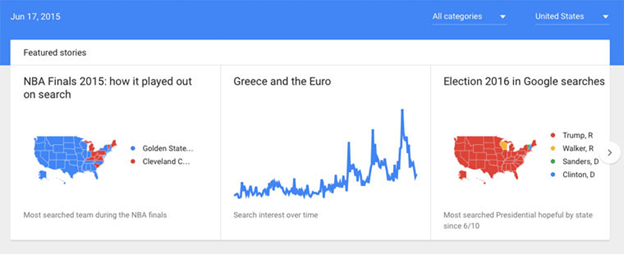
    Google Trends. It’s all about real-time minute-by-minute data on trending searches. On average Google processes over 40,000 search queries every second. That’s over 3.5 billion searches per day and 1.2 trillion searches per year worldwide. Google’s recent changes ensure that users get:

    1. Real-time data
    2. Story-centric Homepage
    3. Better coverage for deeper insights
    4. Curated data sets

    Real-Time Data

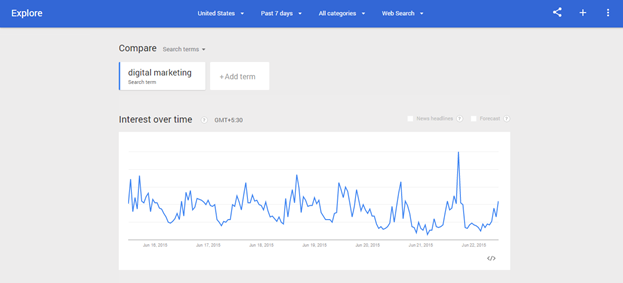
    Marketers can explore minute-by-minute, real-time data behind the billions of searches that take place on Google every month. Go to Google Trends and explore this data by selecting any time range in the last week from the date picker.

    Story-Centric Homepage

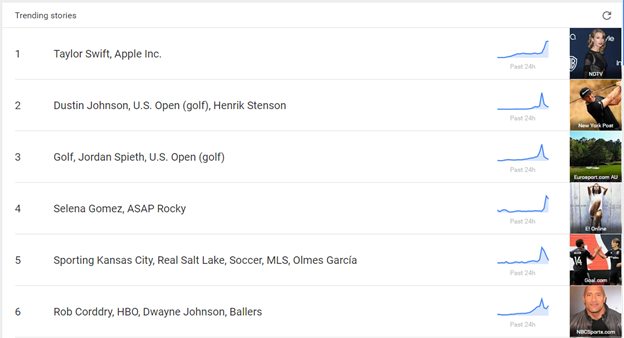
    Google now combines Search with YouTube and Google News to better understand what topics and stories are trending across the web right now. The Google Trends homepage ranks lists of trending stories that are gaining traction across Google, real-time.

    Trending-stories

    Better coverage for deeper insights

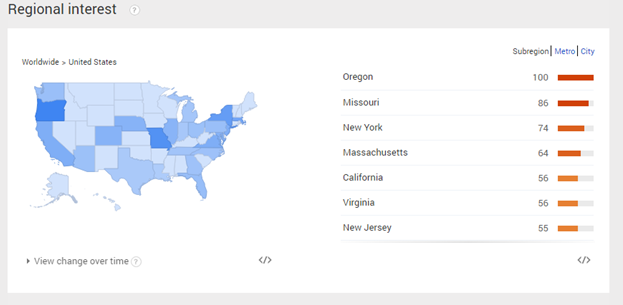
    Google has increased the breadth and coverage of Google Trends data to allow for in-depth research on more niche topics in smaller geographies.

    trends-data

    regional-interest

    Curated data sets

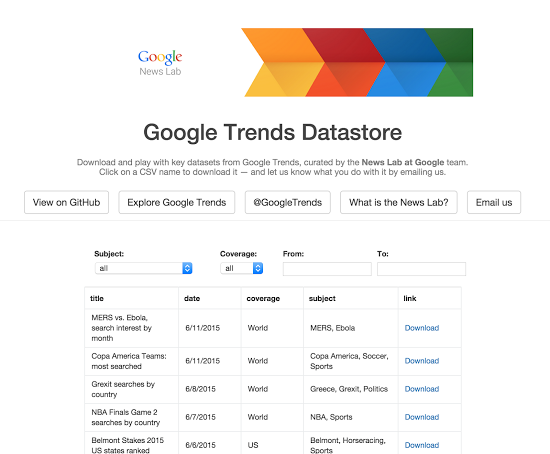
    Google News Lab team examines trending topics every day to figure out which pieces of data brings to life a headline or story. This helps marketers understand what’s likely to work when telling stories using data.

    google-trends-datastore

  • Best of the Week | Should You Go Mobile First Or Mobile Only, and much more…

    This week’s hot news, events and videos from the online marketing and social media world.
    Should You Go Mobile First Or Mobile Only?
    From the Position² Blog This Week:
    Should You Go Mobile First Or Mobile Only?
    Last year mobile took over the internet. Industry projections for both the number of users and overall web users show that smartphones have overtaken the desktop for good. Should You Go Mobile First or Mobile Only? Read this blog to understand what it really means to go mobile.
    Top Stories this Week: Social Media
    Top Stories this Week: SEO, PPC and Digital Media
    Should You Go Mobile First Or Mobile Only? Best of the Week Video
    Check out this digital marketing bootcamp with Marketo’s Michael Berger for a deep dive into marketing automation and the tools you’ll need to make the evaluation process easier!
    White Paper: Increase Visibility for Your Content by 4x
    Today’s traditional SEO is inadequate: Ignite your search results by accelerating visibility in more places than ever before.Download this White Paper and learn:


    • SEO, why the way we know it is not enough
    • Introducing and implementing Enterprise Visibility Accelerator (EVA)
    • Using multi-channel tracking tools for effective monitoring
    • How EVA benefits businesses.

    Download the complimentary EVA White Paper now

    Enterprise Visibility Accelerator-EVA
    If you are reading this blog post via a RSS reader, please click here to subscribe.
  • Should You Go Mobile First Or Mobile Only?


    Flipkart, India’s answer to Amazon, bid adieu to its mobile website with the Big App Shopping Sale in March, 2015. From here on out, Flipkart shopping is all about the mobile app. Myntra, India’s foremost e-commerce fashion site, has shut down its mobile website, and may ditch browser-based shopping altogether. Such is the rising power of mobile.

    With e-commerce firms actively pushing consumers to their apps and leveraging attractive discounts and deals to encourage consumers to buy through the apps, having a mobile app in place is now all but essential. From Amazon’s Happiness Day sale in November 2014 to Myntra’s Binge Weekend Sale and Snapdeal’s App Fest in February 2015, the offers on mobile apps just keep on coming.

    “There is a business reason behind promoting apps,” says Mr. Rajiv Srivastsa, founder and chief operating officer of Urban Ladder. “It leads to higher conversion and engagement. If you build only an app platform, it is cheaper as you don’t have to invest in two-sets of codes – both mobile website and app.  However, in the long run, one has to engage the user enough, so she doesn’t uninstall the app.”

    Mobile App or Mobile Website for e-commerce Business

    Experience is the Key

    Though apps offer an attractive way for e-commerce players to interact with their consumers, it is neither easy nor advisable to force apps on customers. According to a study conducted by ICM Research in UK, a majority of customers prefer to interact with retailers through their mobile websites and only download an app if they are incentivized to do so, or if they are regular shoppers. And yet the same consumers are far more likely to complete transactions through the retailer’s mobile app than through the mobile website.

    “Going app-only makes sense if you can provide an experience not otherwise possible on the mobile web platform,” says Shamik Sharma, chief product and technology officer at Myntra.

    Consumer Experience on Mobile App

    Merits / Demerits of Mobile App

    There are crucial differences in the ways mobile websites and mobile apps help customers navigate and experience their shopping journeys. Mobile apps function a lot like mobile websites. They have certain operational and functional benefits and they have downsides as well. Customers can interact with the app 24/7 no matter where they may be. The IT advantage for business is having their own corner on a customer’s device. Mobile apps promote a customized experience because they work in the background, allowing e-retailers to collect user-specific data such as recurring purchases, duration of browsing, preferred platform to share information, geo-location and so on. The downside involves convincing customers it’s in their interest to install the app and give up permissions.

    Some businesses simply prefer both mobile websites and mobile apps. For example, India’s MakeMyTrip mobile site is an acquisition platform while the app is a loyalty and retention platform complementing its desktop presence. According to Pranav Basin, head of online products for Makemytrip.com, “The desktop plus mobile app is a great combo. They complement each other perfectly”. Ankit Khanna, Senior VP for product development at Snapdeal cautions, “We do not want to force consumers to download our app. If they want to browse first and buy later, we enable them to do that”.Website Vs. Mobile App – Position2 Blog

    While an app install “cost” is high, once you get the consumer on board the marketing cost could shrink.

    While mobile apps enable better targeting of customers, the major draw back is the extra step introduced into the shopping journey – at least the first time around. As one e-marketer pointed out, with e-commerce you click and buy. With an app, you click, you download and install, and then you buy.

  • Evolution of Mobile: The Future of Mobile SEO


    Expanding the theme, Evolution of Mobile SEO : Is Your Website Mobile Friendly?, we ask: Are You Ready for What’s Coming?

    Google is never likely to sit still. The company wants to enhance their competitiveness while giving users the best solutions. Here are a few tips on how you can gear up for the ever unfolding future:

    1. Getting the ‘Mobile Friendly’ Designation in Mobile SERPs has affected search rankings on smartphones. Unblocking CSS and JavaScript plays a vital part in nailing the Mobile Friendly designation, according to Google Webmaster. Googlebot needs to see your site like an average user. By always allowing Googlebot access to the JavaScript, CSS, and image files used by your website you achieve optimal rendering and indexing,
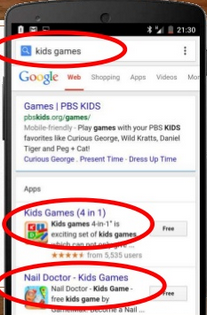
    2. Deep linking has become one of the key signals for positive web rankings and to drive traffic to the Apps. They appear in the Google SERP individually or as part of a mobile App Pack. An “App Pack” is a group of related apps that rank together for a given query. It’s shown together in a box separated from the inline organic search results.

    Mobile Search Results with App Packs

    Screenshot from Cindy Krum and Linkdex webinar

    1. Demystifying ASO: Keep your App Store Optimization title tags short and descriptive. It’s to your benefit to have exact match keywords in the title and description tag. There are advantages as well as disadvantages to having a mobile app rather than a web page. For queries that are almost similar to the app name, mobile websites get pushed down below the fold.
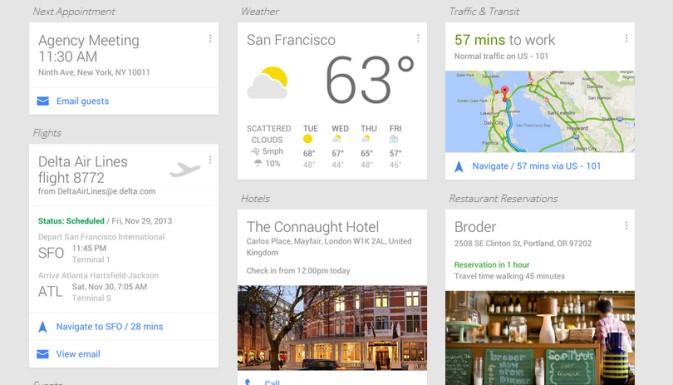
    2. Google NOW has evolved into the user’s personal knowledge graph. Users are adding data and increasing content to their big data mix with info cards as the most ideal and personalized result format for users. Google gives the right information at just the right time assisting you around the clock with relevant suggestions.

    Personalized Info Cards - Google NOW Google Products that affects Mobile SEO

    Image source

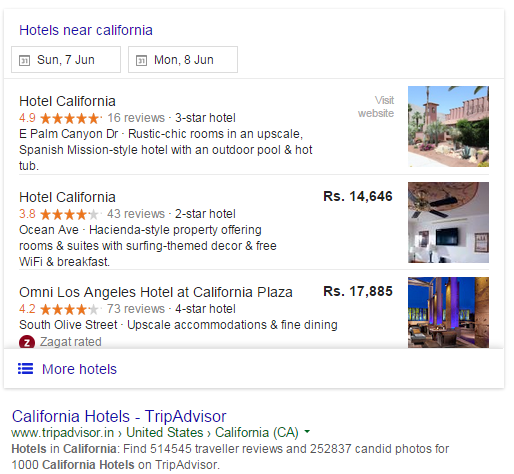
    1. Mobile Results going full screen on Page #1:Music info cards, hotel booking search, flight booking search, TV info cards, map queries, restaurants and menus, etc. take up the top fold of the search results.

    In this example, for a search query “hotels”, Sheraton Denver Downtown Hotel  takes up the first fold.

    Full Screen Mobile Search Results – Position2 Blog

    Image source

    1. Google avoids blue links or websites from showing above the fold on Mobile. Results that are likely to come up for search are Info cards, Answer boxes, Knowledge Graph results and other cards.

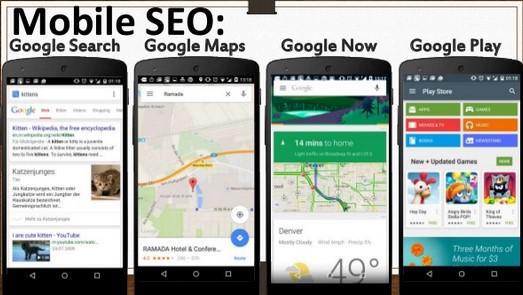
    Your task:  Optimize for mobile search and Google Now.  Apps, Images, Videos and Google+ for business need to be optimized for placement at the top of the Mobile search results.

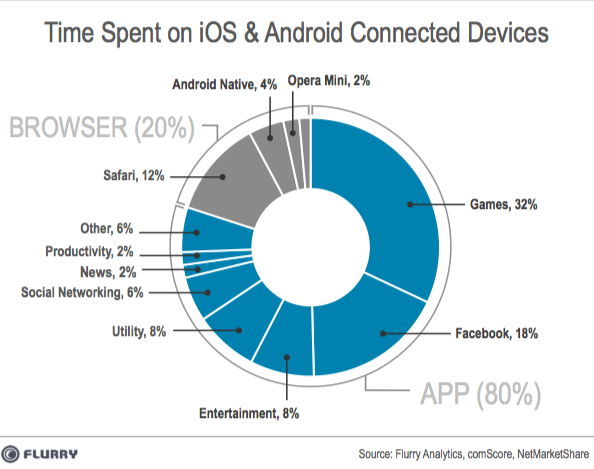
    1. App like sites, instead of mobile websites: The numbers speak. Users spent 80% of their time on Apps and 20% of their time on Website. Mobile App visits Vs. Website visits
    2. Personalized Info Cards are generated by different Apps: Google integrates with different Apps to generate info cards, for example adding transcripts and lyrics to videos and music, displaying them in answer boxes. Google makes these changes to deliver the best mobile experience for searchers, giving them exactly what they want at the right time.
  • Evolution of Mobile SEO: Is Your Website Mobile Friendly?

    Evolution of Mobile SEO

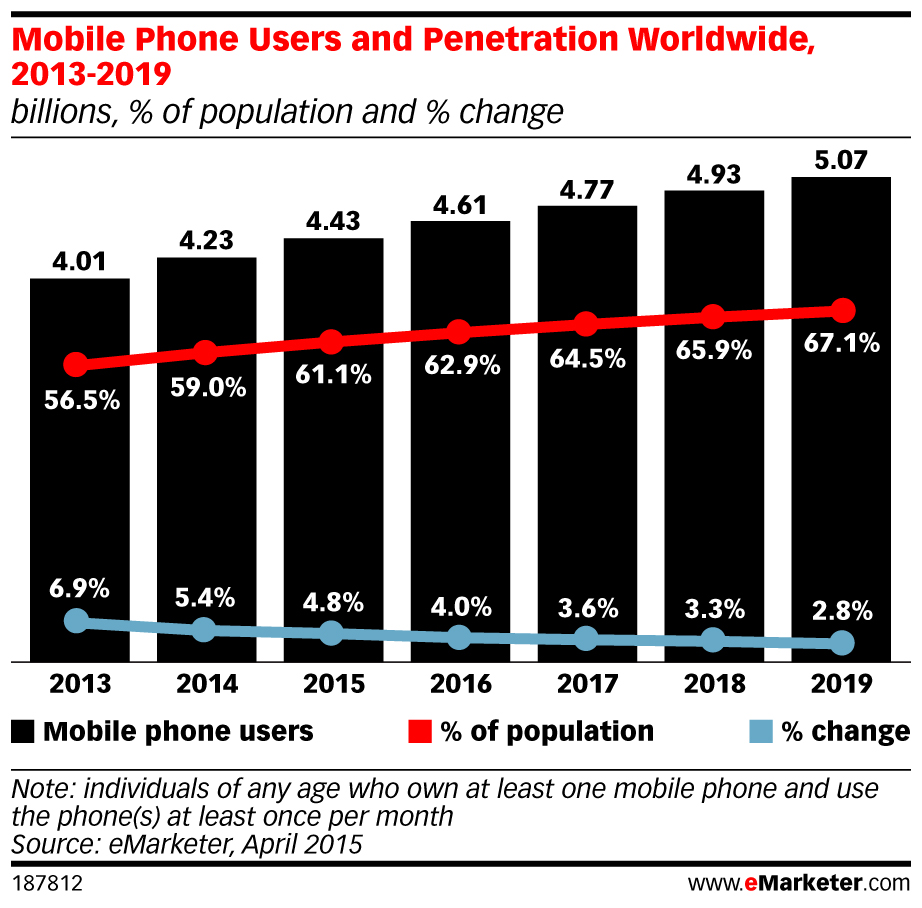
    With 4.43 billion individuals using mobile phones world wide — 1.84 billion of them smart phones –  and with half of all local searches carried out on mobile devices, it’s no wonder Google has become determined to deliver the best possible mobile user experience on search. With continuous algorithm updates the company’s message is clear: improve your mobile web development practices or suffer the consequences.

    Mobile Phone Users and Penetration Worldwide - 2013 -2019

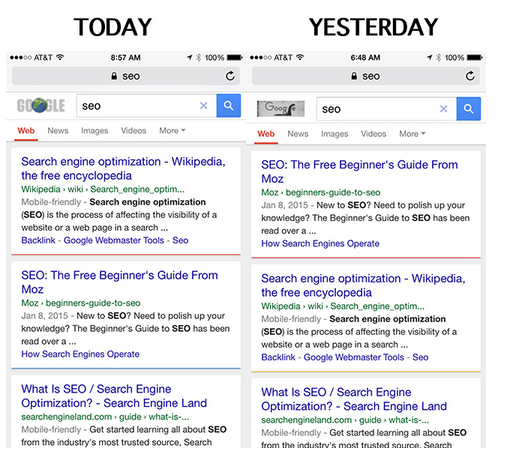
    The April 21st Mobile-friendly Ranking Algorithm rollout – Mobbilegeddon —  has had a significant impact on mobile search results, with websites not quite mobile friendly dropping in rankings overnight.

    Moz discovered as much when their rank on mobile search for search query “SEO” dropped a notch in favor of a mobile-friendly source.  Read our previous blog on Mobilegeddon to learn how it has affected search rankings on smartphones.

    Mobilegeddon's affect on Mobile Search

    Your task going forward:

    • learn to configure your website for mobile
    • help search engines understand the website configuration
    • avoid common mistakes along the way

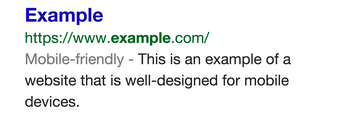
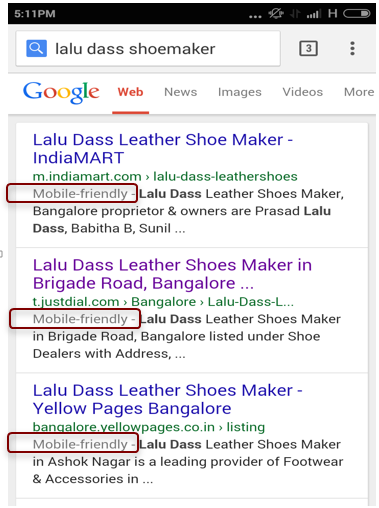
    To this end, Google has developed a mobile SEO guide to get you started. And take this test to see if your website has a mobile-friendly URL. What you are shooting for is the Google “mobile-friendly” label that appears in search results

    A search result with the mobile-friendly tag looks like this:

    Search Results with Mobile Friendly Tag

    Mobile SEO Best Practices

    Mobile Site Configuration

    Three ways to make a website mobile friendly:

    1. Responsive web design has Google’s stamp of approval. It’s the least risky course of action with the fewest opportunities for errors. Websites built using this design modality have a single URL for a piece of content. This allows users to share, like and link to the site. Getting a device optimized view requires no redirection. And that reduces page load time, saving resources for both your site and Google’s crawlers. This improvement in crawling efficiency helps Google index more of the site’s content and keep it appropriately fresh.
    2. Dynamic serving gets a grudging nod from Google. A server, relying on the user asking for a targeted page, reacts with distinctive HTML (and CSS) on the same URL. This server-side approach uses server-side plugins and custom user agent detection to decide how the website can be delivered to mobile devices. JavaScript detects the user’s device type when queried and adapts the code base so only the right layout is sent. It responds to desktops, smartphones and everything in between on the same URL but with different HTML and CSS.
    3. Separate mobile URLs – Every desktop URL has an equivalent URL serving mobile-optimized content with a separate set of HTML. And another equivalent URL serving tablet-optimized content with yet another set of HTML. These Separate mobile sites have the following configurations:
      • Separate URLs for desktop, mobile, tablet, etc. (m-dot, t-dot, etc.).
      • Different HTML is served for each site.

    Web Design

    1. Design your website for the best mobile user experience. Use HTML5 for special effects rather than flash. Lose the pop ups. They irritate mobile users and result in high bounce rates. Design the website for fat fingers — seriously. Make clicking easy.
    2. Don’t block CSS, JavaScript and Images – The most recent guide from Google focuses on ‘exposing of JavaScript, CSS and Images’.
    3. Page Speed Test – Mobile searchers want results fast, so Google tests for it. Slow load times lead to higher bounce rates. Images, codes, browser caching and redirects affect page speed optimization. More information can be found on Google Page Speed insights. Bottom line: Google prefers faster websites.
    4. Optimize Title and Descriptions: Keep titles and descriptions as tight as possible. With less screen space, go for quality.
    5. Optimize for local search – Think local since one in three searches is for something nearby. For local businesses include Name, Address and Phone Number (city as well) in the site’s meta data.

    Companies and designers that take the mobile friendly initiative to heart will come out on top, like the best ever search result. Those that don’t are bound to sink.


  • Google In The “Micro” Moment

    Mobile has changed consumer behavior forever more. It’s now the primary channel used by people to interact with media. What were once predictable, daily online sessions seated before desktop or laptop PCs have been superseded by frequent, unpredictable, instantaneous, on the run, need-based interactions with smartphones – palm up, face down. “We’ve hit an inflection point,” says Jerry Dischler, Vice President of Product Management for AdWords, “where more Google searches are taking place in mobile than desktop in 10 countries, including US and Japan. We think it’s a real turning point in digital adverting and we have been investing in mobile-focused initiatives,”.

    What were once conventional “moments of truth” in a consumer journey have since fragmented into hundreds of micro-moments, those intent-driven moments of decision-making and preference-shaping, where today’s battle is waged for a share of the hearts, minds, and wallets of consumers.

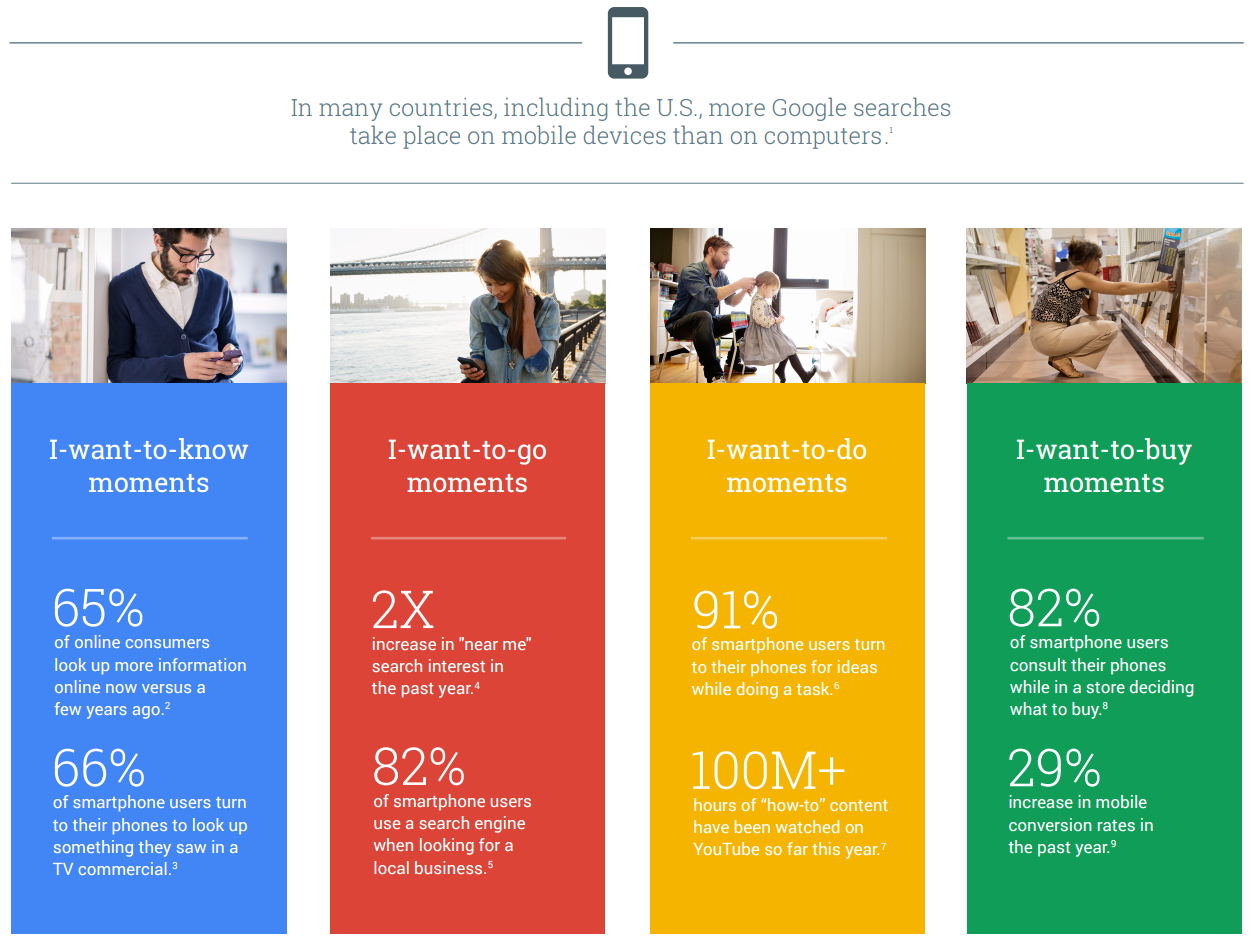
    google micro moments

    It’s a micro-moments when you turn to your smartphone to fulfill a need or answer an “I want…” question, such as:

    I want to learn…

    I want to buy…

    I want to know…

    I want to go…

    I want to do…

    I want to make…

    Recent Google research shows how micro-moments have changed the Rules of the Game:

    • Of leisure travelers using smartphone, 69% search for travel ideas during spare moments, like standing in line or waiting for the subway. Nearly half go on to book their choices through an entirely separate channel.
    • Of smartphone users, 91% look up information on their smartphones in the middle of a task.
    • Of smartphone users, 82% consult their phones while they’re in a store deciding which product to buy. One in 10 of those consumers ends up buying a different product than planned.
    • Of online consumers, 69% agree that the quality, timing, or relevance of a company’s message influences their perception of a brand. (This is a critical finding.)

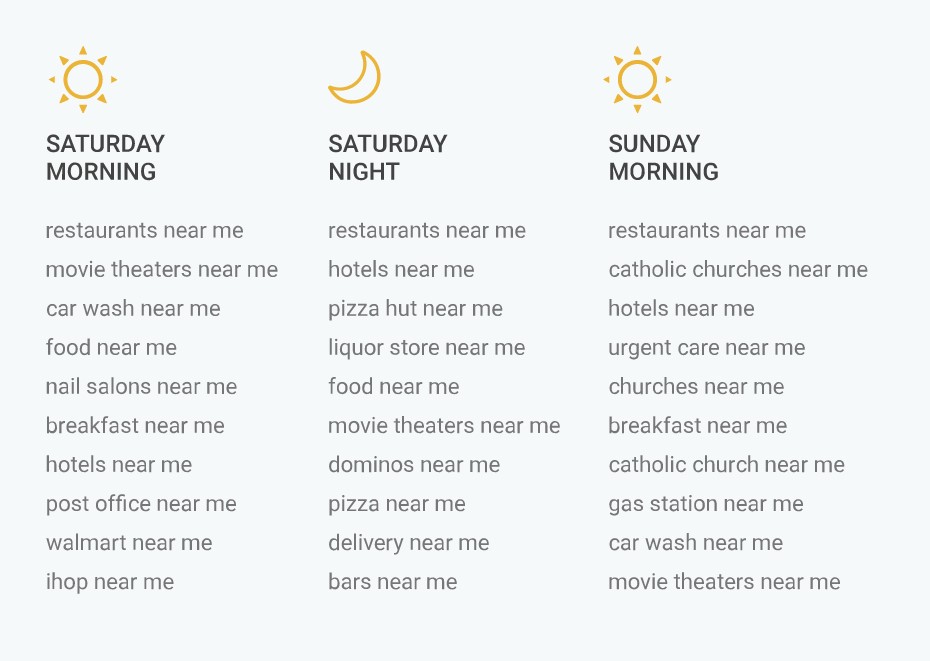
    FACT: “Near me” searches are sky-rocketing: Google search interest in “near me” has increased 34X since 2011* and nearly doubled since last year. The vast majority come from mobile—80% in Q4 2014. **

    Source: *Google Trends, Data pulled March 30, 2015. **Google Data, Q4 2014

    google data

    Image Source

    The Multi-Billion Dollar Question

    How to capitalize on these micro-moments?

    Identify your target audiences’ micro-moments: Engage with your consumers at points of sale, forums, social media, through surveys and focus groups to understand when and how they research and make purchase decisions. Understand the why, the where and the how of a consumer’s search for information. And don’t overlook the why not.

    Deliver the right product or service at the right moment: Research and identify unique patterns of intent. Use search insights to uncover new trends. Then, incorporate search, social, video and display in your marketing strategy to reach consumers at home, in stores, in offices and anywhere in between – any time of day — based on your research.

    Deliver context appropriate messaging: This cannot be overstated. Create ads and content that provide custom solutions and answers for the questions people ask. Personalized ads have 10x higher CTR compared to traditional display ads. No one wants to look at or hear conventional, generic advertising on their smartphones. Or, put another way, don’t make smartphones dumb.

    Make purchasing easy: Make seamless the transition from research to purchase. Give the consumer multiple ways to buy. Examples: Facebook CTA buttons on ads, Twitter or Pinterest buy buttons or link to a local store “Near You”.

    Measure every moment that matters: It’s no longer enough to simply measure the online conversion. With the mobile fragmented path to purchase advertisers need to measure results online, across devices, in apps, and even in stores. Audit your current efforts then test and iterate using new approaches, KPIs and methodologies.

  • SMX Advanced 2015

    We attended SMX Advanced. We learned a lot. We met lots of interesting people.  And we had a whole lot of fun.

    Here are some of the “latest and greatest” highlights from this year’s edition of SMX Advanced

    • Google Webmaster Trends Analyst Gary Illyes announced at SMX Advanced that the next Panda update will roll out in the upcoming weeks. Illyes characterized this change as a data refresh, not an algorithm update.
    • Tips and Tricks to Survive Mobilegeddon was fascinating. This session broke down Google’s mobile friendly algorithm upgrade and shed light on what you need to pay attention to in order to drive maximum mobile traffic from Google.
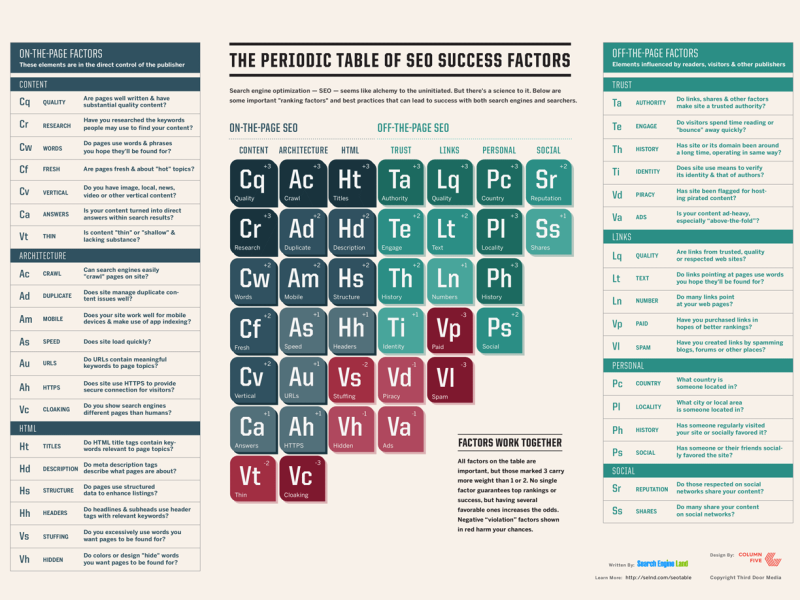
    • The Periodic Table of SEO Ranking Factors summarizes the major factors to focus on for search engine ranking success. It’s a cool, innovative way of explaining SEO factors and educating marketers re which type of content creates the right “signals” to be better ranked by search engines.

    seo-success factors-periodic table

    Image Source

    SMX After Dark 2015 was the place to unwind after a long day at the conference. And unwind is exactly what we did!

    p2 at SMX advanced

  • Working the Local Side of SEO

    In a recent blog post we showed how working local SEO made for some big benefits for a custom shoe manufacturer. But there’s more to cover re: what to focus on when optimizing for local search.

    The past few years have seen big changes in Local SEO on Google, and not just Google Local morphing into My Business.  Google has consistently endeavored to improve the quality of search results and as a consequence they are now more informative, providing details about what people say about a particular place, the working hours, the ratings assigned by other users – all of this driven by Googles algorithm updates. The Pigeon update, in particular, has had the biggest impact on the way optimization for local search works.

    To turbocharge local SEO, focus on the following:

    1. Search queries
    2. Social media
    3. Web Directories
    4. Websites & News sites

    Search Queries

    The Penguin update introduced the use of geolocation, breaking up cities and regions into geographical entities. As a consequence, the way target keywords are used changes. Emphasis now needs to be on targeting neighborhood related searches rather than city wide search queries.

    Your job: research neighborhood related search terms and incorporate them into your strategy.

    local seo search

    Social Media

    Google search-Position2 blogTo reach target audiences quickly watch out for neighborhood related groups on Facebook. Consider all social channels as optimum for content syndication.
    Your job: build a network of businesses and residents from the neighborhood. If everyone in the “neighborhood” shares content (yours, theirs), visibility on Search results rises.

    Web Directories

    Limit yourself to TOP directories only. That’s the rule of thumb in this case. The old days of just building links for SEO are history. The focus is now on syndicating content and providing users with rich information. So post on quality sites rather than each and every directory.

    Your job: leverage directories like Yelp, Trip Advisor, Urban Spoon, depending on the kind of industry you cater to.

    Related Websites and News sites

    Do not ignore local news websites. They come up on search with location based search queries. Maintain a presence on these websites and continually update your press releases (they double as fresh content).

    Investigate industry specific forums, aggregator sites where lots of local businesses list, and maintain a presence to continually  spread the word.

    The majority of local search queries originate from mobile devices. These are users on the move, in your neighborhood. If your website isn’t maxed out with mobile friendliness you are all but wasting your time.

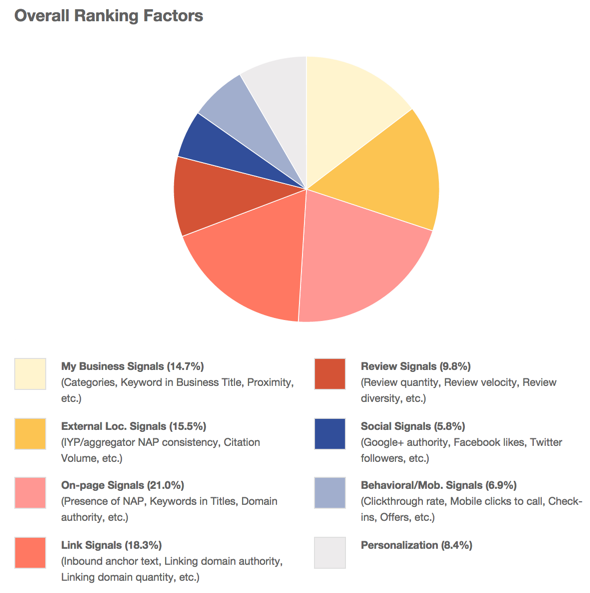
    Your job: read about the ranking factors for Local SEO clearly explained in this report from Moz. The winning combination in Local SEO includes website, Local Business, Social Media and user-generated content.

    seo-overall ranking factors

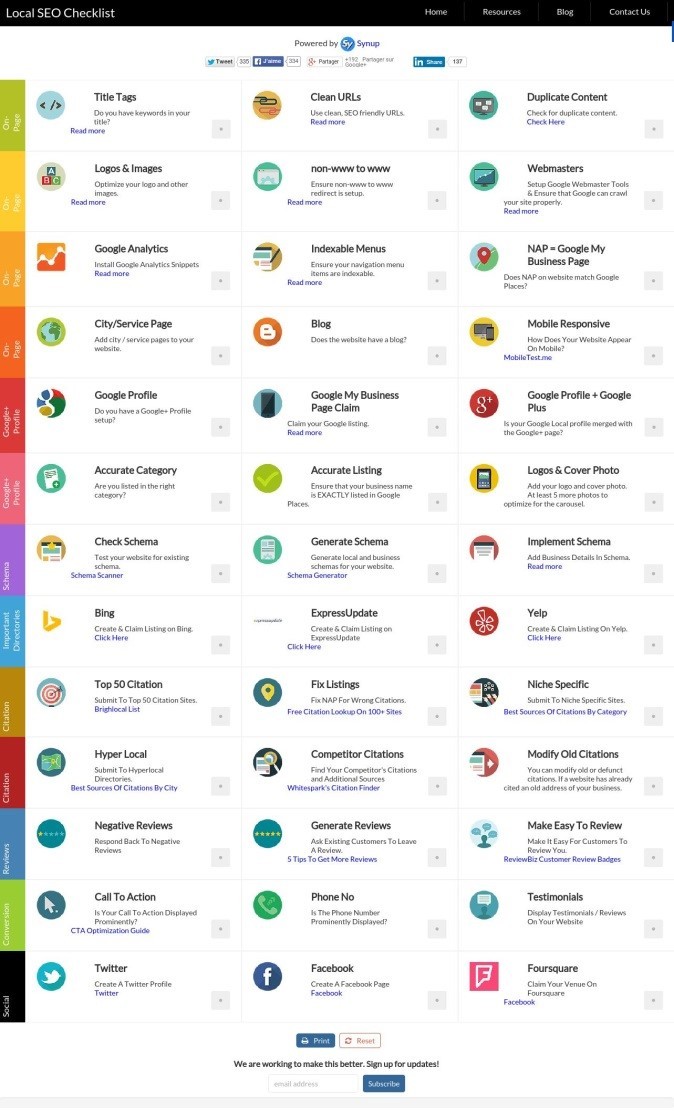
    Another good resource — www.localseochecklist.org  —  has some nice insights into where you should concentrate while optimizing for local search.

    local seo checklist

    If you are B2C marketer and have seen beneficial changes over the last couple of months, share details in the comments section below.

  • Google I/O 2015: Some Highlights

    Google I/O, the annual event for developers – those creative coders busy building what’s next – unveils the latest in tech, mobile & beyond, a la Google.

    Keynote

    The keynote address at Google I/O by Senior Vice-President of Products, Sundar Pichai

    Project Jacquard

    project-jacquard

    Paul Dillinger of Levi Strauss on stage at Google I/O 2015 talks about Project Jacquard and the association between Google and Levi’s. Image: levistrauss.com

    Google Advanced Technology and Projects (ATAP) has come up with touch-sensitive fabric. It’s a combination of conductive fibers woven into fabric that enables the embedding of sensors in your clothes.

    Project Ara

    Project Ara makes smartphones modular — you build the smartphone you want by adding modules such as display, camera, processor, battery, etc. No more obsolescence every few years. On day 2 of the conference, at the ATAP keynote, Google engineer Rafa Camargo assembled a Project Ara phone in real time, and the phone went live, running on Android 5.0 Lollipop. While the phone was switched on, Camargo added a new camera module to the assembly, no rebooting required.

    project-ara

    Project Vault

    How to guard secure data while accessing it? That’s where The Vault comes in, a mix of cryptographic tools and a custom real-time operating system on the memory stick.

    We barely scratched the surface of Google’s vast range of product concepts and prototypes unveiled and demonstrated at Google I/O by Google ATAP. We’ll be carefully watching for the entire year ahead.