Author: Team Position Squared

  • Best of the Week | Facebook: Where There Is No Outside, and much more…

    This week’s hot news, events and videos from the online marketing and social media world.
    Facebook-Where-There-Is-No-Outside-cover
    From the Position² Blog This Week:
    Facebook: Where There Is No Outside
    Facebook identifies all those digital opportunities that take users out of its sphere of influence, and then recreates them inside the blue walled Facebook ecosystem. Read on to discover the world Facebook has created, where there is no outside!
    Top Stories this Week: Social Media
    Top Stories this Week: SEO, PPC and Digital Media
    A Universal SEO Strategy Audit in 5 Steps - Whiteboard Friday Best of the Week Video
    David Edelman, the McKinsey partner and global co-leader of digital marketing strategy shares his thoughts on how digital is changing brands’ marketing approach to the consumer experience.
    White Paper: Increase Visibility for Your Content by 4x
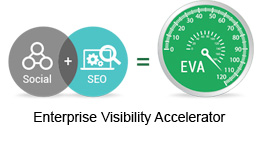
    Today’s traditional SEO is inadequate: Ignite your search results by accelerating visibility in more places than ever before.Download this White Paper and learn:


    • SEO, why the way we know it is not enough
    • Introducing and implementing Enterprise Visibility Accelerator (EVA)
    • Using multi-channel tracking tools for effective monitoring
    • How EVA benefits businesses.

    Download the complimentary EVA White Paper now

    Enterprise Visibility Accelerator-EVA


    If you are reading this blog post via a RSS reader, please click here to subscribe.
  • Bing It On

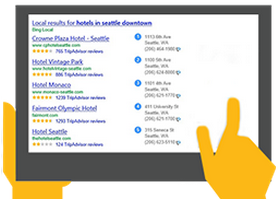
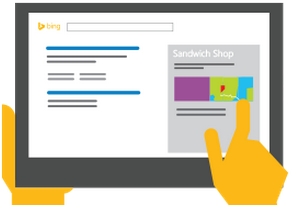
    Have you seen the latest addition to Bing Ads, Bing Places for Business? It connects businesses with local customers. This new offering from the Bing stable has options for local businesses with a storefront, chain businesses with multiple locations and businesses offering services at customer locations. Marketers claim their listing on Bing and then add details.

    Add your business to Bing in 3 easy steps

    1. Claim your listing

    Chances are Bing already has a listing for your business. Claim an existing listing or add a new one. If your business has multiple locations add them in one go using the bulk upload tool.

    claim your listing

    Image Source

    2. Complete your listing profile

    Adding complete information about your business helps you tell the best story. You can add photos as well as describe services, hours of operation and contact information.

    bing places-complete yourlisting profile

    Image Source

    3. Verify your listing

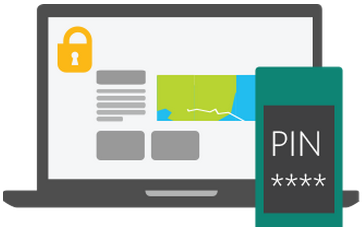
    Protect your listing from unauthorized changes by verifying it. You can verify your listings by receiving a PIN at your business address, phone or email. All businesses must provide a valid address, but some types of businesses can hide their address in search results.

    bing places-verify your listing

    Image Source

  • A Guide to Make Your Website Mobile Friendly [Infographic]

    Is your site mobile-friendly yet? If not, there’s no time like the present! Our infographic shows you exactly how to optimize your site to make Google and searchers happy. With 80% of all Internet users now owning a smartphone, there’s really no excuse not to optimize for the mobile web.

    position2-infographics-Mobile-Friendly

  • Google Rebrands Webmaster Tools as Google Search Console

    First things first. Remember Google Webmaster Tools? That’s now called Google Search Console. And Google has just announced two new features in Google Search Console for webmasters using App Indexing: Search Analytics and Fetch As Google for Apps.These new features provide data and reports that show how searchers find content housed within native Android apps by using Google search.

    To use these new features:

    1. Open Search Console and enter your app name: android-app://com.example
    2. In the console, the app must be associated to a website
    3. Submit the XML feed. Then you can extract value from the new features.

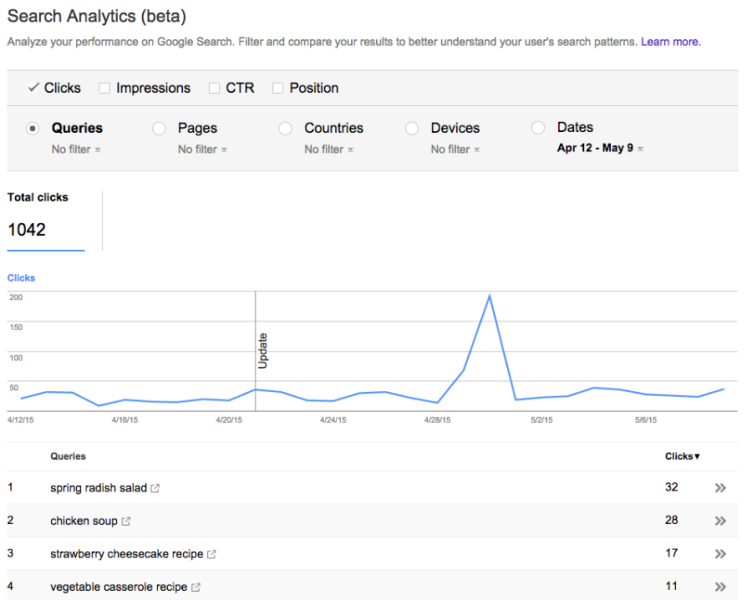
    Search Analytics For Apps

    The Search Analytics Report provides detailed information about top queries, top app pages, and traffic by country for the app. Marketers can filter by specific query type or region, or sort by clicks, impressions, CTR, and positions.

    Search Analytics For Apps

    Image Source

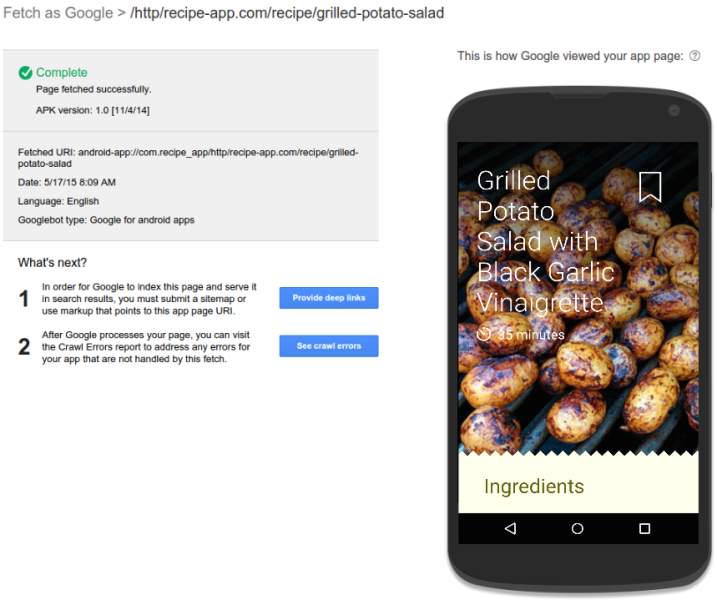
    Fetch As Google For Apps

    Fetch As Google For Apps

    Image Source

    Google’s beta version of Fetch As Google for Apps gives App developers insights into how Google sees content within Android Apps. It shows Marketers how Google renders the App uniform resource identifier (URI).

    For more details on App Indexing, check out our blog here.

  • Pinterest Launches Motion-based Ads

    Pinterest expanded its ad products on Tuesday with video ads called Cinematic Pins. They work much like Pinterest’s Promoted Pins, which are designed to blend in with other items in your home feed, but are motion-based. Brands like Gap, L’Oreal, Target, Unilever, Visa, Walgreens and Wendy’s are among the first paid advertisers.

    Not to be confused with Facebook or Twitter style videos where the action begins when you pause over them and stops when you move away, Cinematic Pins are first encountered in motion as you scroll down, then stop when you cease scrolling.

    Pinterest’s General Manager of Monetization, Tim Kendall, said, “Our view is that auto-play is interruptive. Users want to feel like they’re in control, and we’ve done a bunch of user testing—users are delighted by this experience. They wind up scrolling back and forth. They love controlling the motion.”

    Pinterest to launch upgraded advertising solutions for digital marketers

    1. Audience Targeting Based What Users Plan To Do

    Taking intent based marketing to a whole new level, marketers will be able to target audiences with Promoted Pins based on what users want in the future. Advertisers will engage people as they plan future purchases, as opposed to, say, searching for concert tickets to purchase in the moment. “People,” according to Pinterest, “do tons of different things on Pinterest, but most simply, it’s about discovering, saving and planning what to do next.”

    2. Ad Engagement Pricing

    With cost per engagement (CPE) pricing, advertisers pay only when users take an action on a Promoted Pin, including repinning, clicking to see a pin close up or clicking through to an advertiser’s site. This model will help marketers track future intent.

    Pinterest is already a map for a consumer’s journey. The new eye-catching Cinematic Pins will grab their share of attention, and provide more intent-driven data to marketers.

    Watch this blog for more updates from Pinterest.

  • Google Phantom 2 Algorithm Update

     ‘What does it mean to the businesses and search marketers?’

    Google’s on a roll. From the “Mobilegeddon” update last month to its recent secretive “Phantom 2” algorithm update, it’s delivering the best possible search results to users. And then going back for more. Google silently tweaks its algorithm much frequently than most marketers imagine.

    While the Mobilegeddon algorithm update was designed to boost the rankings of mobile friendly sites on mobile devices, Google’s Phantom 2 update will penalize sites with low quality content, specifically impacting “how-to” style content. Additionally, the impact will be felt by the entire domain not just standalone low quality website pages.

    What “Phantom” should mean for Search marketer?

    It’s a swift silent punisher of sites with thin content. They will lose the bulk of their rankings, traffic and conversions overnight.

     google phantom 2 update

    Image Source

    What does Phantom do to the actual business?

    • Your entire website is punished or sand-boxed
    • You rapidly lose a lot of traffic
    • You can’t see your high traffic ranking keywords on Google search results pages (SERPs)
    • Traffic conversions drop faster than you think
    • Your Return on Investment (ROI) disintegrates

    Essentially, you lose almost everything online you were working on the site (whether intentional or unintentional).

    It sounds scary, right?

    Reasons why a website is hit by Google Phantom 2 algorithm

    1. Sites with Low Quality Content

    Google has been cautioning everyone for quite some time now with Panda algorithm updates. Sites that add very little or no value to the audience are hit with the Phantom 2 algorithm update. This includes poor representation and lack of uniqueness in the content to the users.

    2. Engagement

    If your website content is not able to provide value to the audience, the engagement level is bound to be low on the website. The Phantom update emphasizes this fact. And the current Phantom 2 updates are a lot more strict than Panda updates

    3. User Experience (UX)

    • While content is one major aspect, others include the website load time, 404 errors, user flow, page architecture (design), color combinations, user navigation all of which should be taken very seriously by the webmasters. Make sure the website functions perfectly without distracting your audience and the search engines
    • Supplement, template content or using auto generate content tools slanders the uniqueness and the usefulness of the content for users. Marketers should be very careful and should maintain the relevance of the content for the users
    • Use of distractive and/or sponsored ads: Ads are meant to help users make the right decisions or provide information they intend to use during the buying process. Many businesses overdo by forcing users to click on these ads
    • Affiliate networks, which keep on bombarding and showcasing users with irrelevant ads
    • Sometimes ad links and content are in the same flow & color and users can’t determine the difference. Applying these tactics hurts the sites rather than helping. Remember, Google has already included human bots in deciphering these tactics
    • Pop-up’s annoy the audience if not used judiciously. Google algorithm has been optimized to identify these
    • Pages only containing images and videos without considering the theme of the webpage or over exposing the aspect of rich media are a negative impact
    • Pages with just links that point to subdomains or other websites with less/no content, are of little help. No more old school link farm techniques

    4. No Corrective Action Taken

    If your website has been hit by Google Panda or had elements hit by the update earlier, and you have done nothing to make content more appealing, fresh, and unique to the users, Phantom 2 will definitely have an impact.

    5. Duplicate Content and Canonical issues

    Happens frequently but often ignored by webmasters. Make sure you remove duplicate pages/content. Just remove them or block duplicate content from search engine indexing. Use proper canonical tags to make sure that one version of pages exist.

    6. Doorway Pages

    Doorway pages–Don’t try to deceive Search Engines and create similar pages to gain multiple rankings on SERPs. Google is smart enough to identify these and punish websites accordingly. Read here

    7. User Generated (spam content)

    Make sure user-generated conversations are relevant and checked for spam. Lots of low quality and thin ineffective user generated content raises an alarm and will be hit by the Phantom update. Ensure that community/forums are not used as junkyards for link and ad promotions. Have guidelines for the users to comment. Do periodic checks and edit/remove comments, which have negative user experiences.

    More to consider

    • Understand Your Target Audience/Personas before you write content. Attribute content across the funnel of the buyer’s journey
    • Have in place a content marketing strategy and plan. Make sure you generate genuine and unique content for the users, not for search engines
    • Try to develop a mix of content/asset types to keep users engaged. Distribute your content to relevant channels where your target audience generally visits. Content is King, but Distribution is ‘Queen’
    • Start with small. If you have constraints generating content, take small steps. Use Social Media to interact with your audience
    • Optimize your online channels Facebook, Google+, LinkedIn, etc., and reach out to your audience
    • Generate small content pieces. The traditional rule for audience engagement is 80/20. Eighty percent of your content should be for your audience, and 20% should be for your business (sales, marketing, self-promotion, etc.)
    • Have a social calendar in place to communicate with your audience
    • Regular Website Health Check up – Make sure all the technical aspects of the website are taken care of like page load time, design, navigation, etc. Regular checks on website hygiene ensures removing any major issues and creates better user and search engine experience
    • Make sure you track your content performance using analytical tools
    • Conduct regular analytics audits to make sure you are on top of your user engagement metrics. Understand what your audience needs and generate content accordingly

    At Position2 we utilize an Integrated Digital Marketing Approach to make sure our clients achieve premium results. Our proprietary Website Calibrator™ technology, a 41-point technical SEO audit, keeps our client websites equipped for any Search Engine algorithm updates.

  • A Shoe Manufacturer’s Success Story

    ‘How Local SEO helps small retailers and manufacturers survive and thrive in a competitive world.’

    Shoe manufacturers success story-Local seo

    Image Source

    David and Goliath: the victory of small over big, the triumph of the nimble entity over the ponderous entity. In his time David did it with a well-chosen stone. Today, the Davids of the world turn to SEO.

    Despite the potential generated by one of the largest and fastest growing economies in the world, small businesses in India struggle to keep up with sales and are often overwhelmed with the cost of running traditional businesses. The wonders of the Internet, the way it can boost business at breakneck speed, has barely penetrated this market. It’s not totally the fault of small business and manufacturing entities in India. There has been scant strategic support from associations or regulatory bodies to raise awareness of all things digital, and the first steps taken by by local bodies to educate small businesses have yet to bear fruit.

    But there are Davids in the Indian e-commerce industry to point out, demonstrating the potential and success that’s possible by utilizing the immense power of the Internet and its all-encompassing nature. How else to explain Flipkart rising dramatically in a world dominated by the Goliath Amazon?

    The small players in the world of Indian manufacturing will either have to embrace change and start harnessing the power of the Internet or remain just another player satisfied with what it has while not wanting much change.

    Some Stats

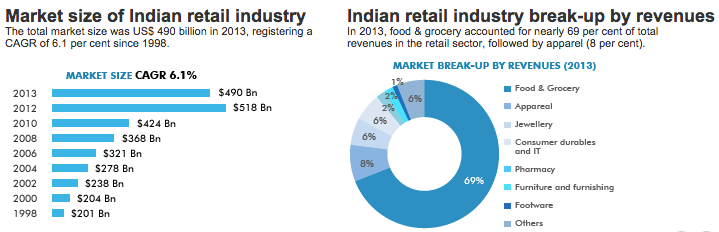
    Retail Industry in India
    retail industry in india

    Image Source

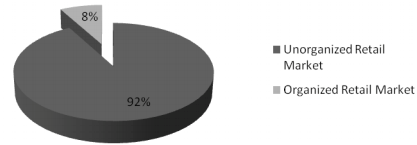
    Unorganized Retail vs. Organized Retail Market in India
    unorganized vs organized retail market in india

    Image Source

    A Short and Simple Story

    Lalu Dass Shoe Maker, a small shoe manufacturer located in the heart of Bangalore on Brigade Road, specializes in custom made leather shoes for men and women. While Mr. Lalu Dass has been in business for the past 60 years, very little has been known about him online until very recently. In the brick and mortar world, however, his reputation is monumental. Customers speak at length about the quality, comfort, and price of his shoes as well as the humility of this great artisan.

    I have known Mr. Lalu Dass for quite some time, and for all the right reasons. Despite our relationship, I have found it very difficult to help this shoe manufacturer (generally what we refer to as a ‘cobbler’) understand the world of online business and the potential it represents to elevate the fortunes of small business enterprises. No matter how hard I tried I could not persuade him to use his brand ‘Name’ for his own merchandise online. His rigidity in thought, his desire to maintain status quo, simply would not give way.

    Then I used another tactic. It’s one that works with almost everyone. I proposed that if he allowed me to use his brand ‘Name’ online, I would double his business. “Money talks and nobody walks,” as the saying goes. I can say I won at least the preliminary round.

    Results within 2-3 weeks

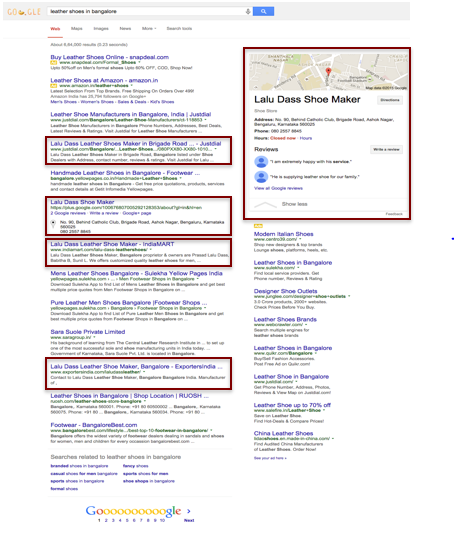
    1. Google Page 1 Take Over

    google page takeover

    seo

    1. Conversion Rate: More business enquiries from online, almost 10X customer enquiries (than the offline customer footfalls), out of which 3X more customers placed orders. This is a whopping 30% Conversion Rate.
    1. Branding & Awareness: Lalu Dass Shoes has become a brand name by itself online. Search for it and you will get all the relevant details.

    Just by doing a bit of Local SEO in whatever time I had

    1. Researched Conversion Keywords:

    It is important that you quickly check what your online audience is looking for. How they will find you is the question needing an answer. Google AdWords helped me cut through the Keywords with moderately high search, comparatively low competition and high conversions.

    2. Research on Competition and Relevant Directories:

    While keywords are important, it is crucial to know where your competition is. I quickly Googled a few directories with relevant categories and included the shoe business and descriptions.

    • Create email Ids, Title, Business/Product Descriptions, Phone Numbers, Address, Keywords, Product Specifications
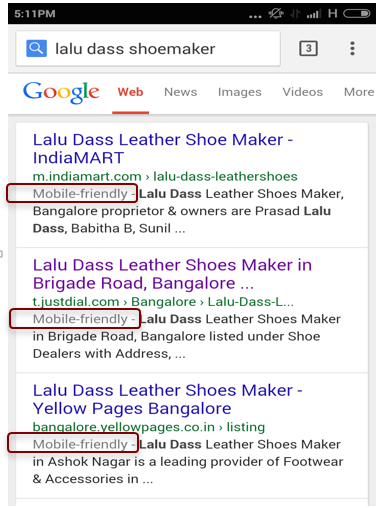
    • Make sure the directories you include your business in are Mobile Friendly. Quite a large number of your audience search through mobile devices. So do not ignore them at any cost.
    local seo

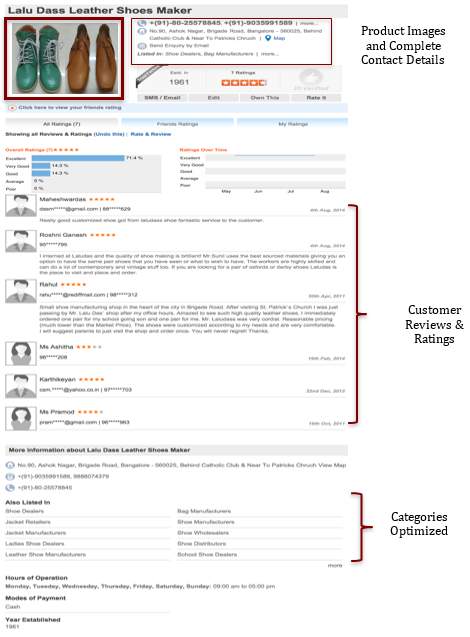
    3. Created Image Gallery of the shoes:

    Took pictures of the shoes with my Android phone and uploaded them on directories. A few of them rank on Google image search
    local seo

    Screen grab of an Optimized Directory Listing

    4. Created Google Business Page and verified details:
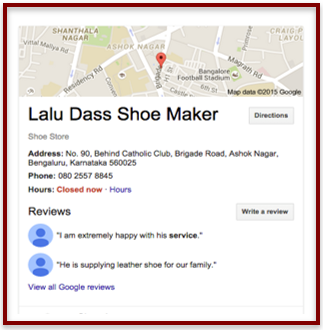
    Google Business Page

    5. Initiated Facebook Page and conversation with audience:

    Started conversation with 80/20 rule. 80% content of what audience needed, 20% about the products/services/promotions

    6. Market Research for 2 Weekends:

    • Went to the shop and mingled with customers. Quite a few of them were from the elite class and I asked them to write reviews for the Shoe Maker
    • Learned about different styles/types of leather shoes – this helped me write about different shoe features
    • Watched shoe making techniques/tools – It’s interesting to see how shoes are crafted. It’s a totally different art altogether.

    Offline Activities, which also attributed to sales

    • Got business Cards and small Hoarding done for the shop with contact details (mobile, email ids, etc.) and Google business page URL
    • Land-line Connection in working condition – This was done mainly for customer follow-ups and tracking online customer requirements. Quite a few prospective customers call the business directly when they find contact details online.

    There is lot more to do. There are many Local SEO white hat techniques to easily increase your sales online.

    BTW, Mr. Lalu Dass is my Father-in-Law and I am happy to see the big smile on his face every time I meet him. Ironically, Mr. Lalu Dass still owes me a pair of Oxford Leather Shoes which he promised as a part of the deal. But that’s another story, the one about the cobbler’s children.
     

  • Facebook: Where There Is No Outside

    Facebook wants its 1.44 billion active users to stay put. It sees each link out as a potential loss that undermines Facebook’s business model. To keep its users inside Facebook identifies all the likely content and experiences that users seek or pay for, those digital opportunities that take users out of its sphere of influence, and then recreates them inside the blue walled Facebook ecosystem.

    Consider Pages

    Facebook introduced Pages in 2007 with the intention of replacing business websites which were seen as inconsistent silos trumpeting incomplete information. In time Pages overwhelmed websites with cover photos, Timeline, maps, reviews, business hours, messaging channels, and many more rich features. Pages created a wealth of content for Facebook. Thousands of digital marketing professionals jumped in to build strategies, create content, media and links to maximize utility and engagement value. Facebook became a destination, a one stop shop for information on any brand. Nike.com might provide information about the latest shoes, but by visiting the Nike Page in Facebook a user got that information and, with News Feed amassing user targeted information in one endless scroll, exposure to much more — a band’s tour dates, the latest movie in a nearby theater, etc.

    Plugging the Leak

    When a users click on a News Feed preview, the link takes them outside the gates of Facebook. And they may not come back. Facebook responded by moving down the stack, from subsuming the authors to subsuming their content.

    Clicking on a YouTube video in Facebook took the user out to You Tube where upon completion of the video the user was encouraged to watch more non-Facebook content. Adding injury to insult, these videos would also display Google Ads. No revenue there. Facebook responded in December 2013 with Auto-play Videos. You could upload clips directly to Facebook and users could watch them without pre-roll ads or pop-overs. Six months later, between May and July 2014, auto-play video views grew 50%. By September, Facebook hit 1 billion video views per day. By January, it was 3 billion. And it’s over 4 billion today. Who’s to notice video ads appearing among all those organic clips?

    facebook

    Image Source

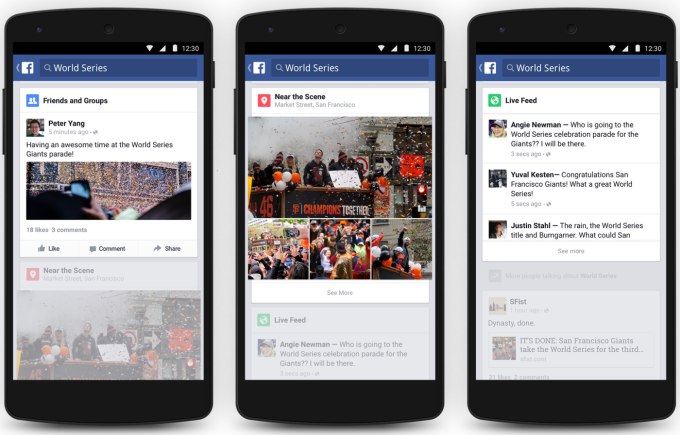
    Reader reactions and posts by the people involved on the latest news: Facebook’s Trends pages

    Got the message?

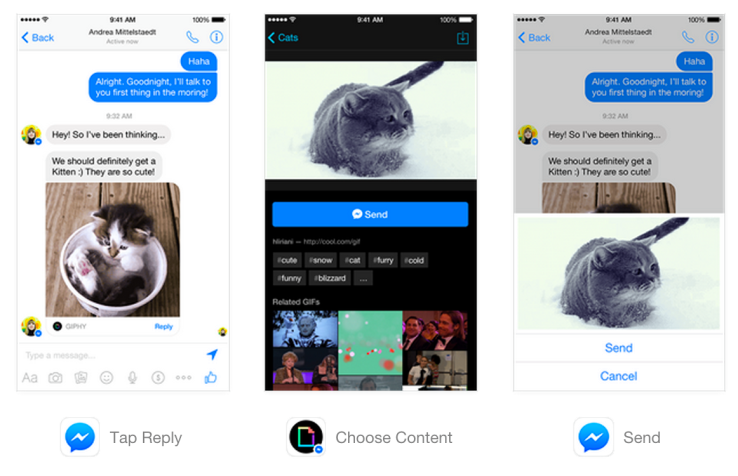
    Who needs email when there’s Facebook Message? At the March 2015 F8 conference, Facebook announced its new Messenger Platform. Users will be able to create and share content with third-party tools, and communicate directly with businesses rather than calling or emailing them.

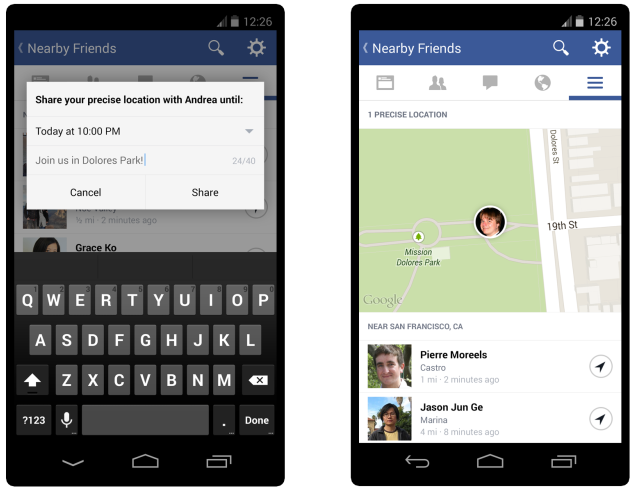
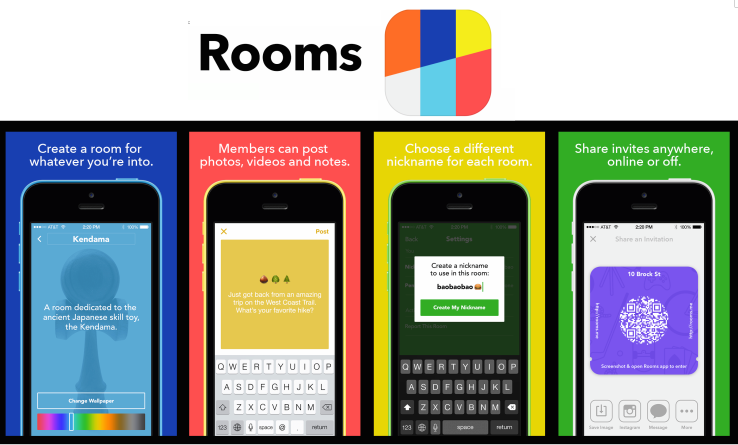
    Facebook targets other popular apps:

    facebook

    Image Source

    facebook rooms

    Image Source

    facebook messenger

    Image Source

    One Click Instant Purchase

    To counter being whisked off by ecommerce ads to an outside website where a user keys in payment and delivery details Facebook provided the Buy Button, a particular boon to anyone using a mobile device (which is pretty much everyone). Rather than clicking away to a merchant’s site, the Buy button lets the user complete the entire purchase flow within Facebook, which could boost conversion rates and further endear retailers to the social network.

    facebook

    Image Source

    App install ads, Facebook’s cash cow, accounted for a major part of the $2.4 billion it made on mobile ads last quarter. Here, Facebook has tried pop-up App Store windows in-hopes of letting users download without moving out of the realm of Facebook.

    Facebook’s Instant Articles

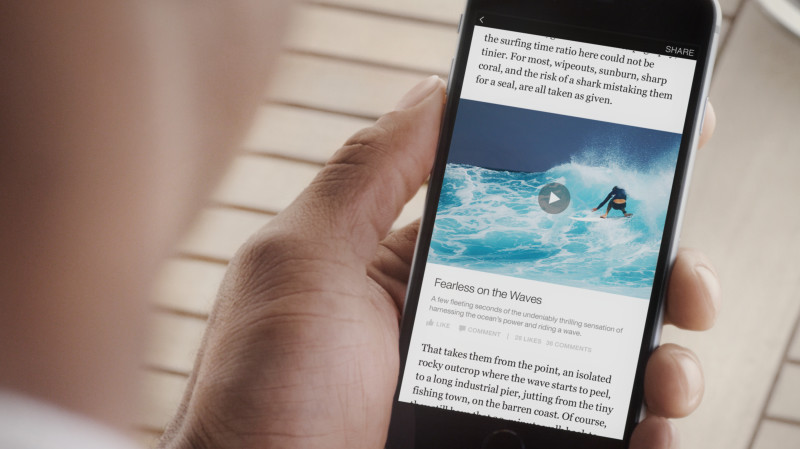
    Why wait for eight seconds for an external page to load when you can read the article with a single tap within the comfort of Facebook? Rich media tools within Instant Articles allow marketers to add audio captions and zoomable videos to their copy. Publishers keep 100% of the revenue if they sell the ads that appear within Instant Articles, while Facebook keeps 30% if it sells the ads.

    fb-instant-articles

    Image Source

    Best to Keep Facebook in Mind

    While these features appear to make life easier for Facebook users, they also keep them inside the blue zone. Which is the point, after all. Some features have been controversial, but controversy comes and goes. Commerce is forever. If one out of 1.44 billion Facebook users buys something, or books a room somewhere, or the flight to get there, best they do that business within Facebook than somewhere, well, outside. With Messenger and Group products remaining totally free for over 500 million users, advertisers have begun to rethink their global strategies, presumably with Facebook in mind.