Author: Team Position Squared

  • Cortex: Twitter Ramps Up Its Artificial Intelligence Efforts


    The hunt is on at Twitter for engineers to ramp up the company’s artificial intelligence efforts. It calls the new team “Cortex.” After acquiring DeepMind in 2014 Google has been doing a lot of work with artificial neural networks. And Facebook CEO Mark Zuckerberg has flagged artificial intelligence as one of the company’s key initiatives. So it’s no wonder that Twitter wants to enlist architecture and systems software engineers to work on “Deep Learning”,

    Wikipedia tells us that “one of the promises of deep learning is replacing handcrafted features with efficient algorithms for unsupervised or semi-supervised feature learning and hierarchical feature extraction.” Twitter’s Cortex team will mine this specialized branch of artificial intelligence to help the company better personalize its service for its 300 million users, and keep up with Google and Facebook in the industry’s real-time personalization race.

    Twitter’s job listing explains why it needs artificial intelligence and how it views the new Cortex team:

    “Twitter is a unique source of real-time information, offering amazing opportunities for automatic content understanding. The format of this content is diverse (tweets, photos, videos, music, hyperlinks, follow graph …), the distribution of topics ever-changing (on a weekly, daily, or sometimes hourly basis), and the volume ever-growing; making it very challenging to automatically and continuously expose relevant content. Manually defining features to represent this data is showing its limits.

    “Our team, Twitter Cortex, is responsible for building the representation layer for all this content. As an architecture engineer at Twitter Cortex, you will help us build, scale and maintain the backbone of our online learning systems, and directly impact the lives of our users and the success of our business.”

    Twitter may not have the resources of Google or Facebook, but the Cortex group demonstrates that Twitter is a serious AI contender. For Twitter, AI capabilities could translate into new products and features and breathe life into stalling user growth. If the flood of content generated on Twitter every hour can by presented as a personalized feed to each user based on their interests then Twitter might just strike gold.

    Let us know your thoughts about how artificial intelligence can revolutionize the digital social media world.

  • Facebook Updates Cost Per Click Measurement


    On Wednesday the folks at Facebook announced that they have modified the way they calculate cost per click. It’s part of their new marketing API. From now on, Cost-Per-Click (CPC) will no longer be measured as likes and shares, but measured as link clicks to websites and apps. Bottom line: advertisers will no longer have to pay for likes, shares or comments.

    The New CPC?

    Cost of the Click will shift from engagement only ‘likes’ and ‘shares’ to a specific ad objective. Some examples of the new CPC include:

    • Clicks to visit another website
    • Call-to-action clicks that go to another website (i.e., “Shop Now”)
    • Clicks to install an app
    • Clicks to Facebook canvas apps
    • Clicks to view a video on another website

    The new definition serves ad objectives that Facebook believes are more closely aligned with the business objectives of advertisers.

    What Does This Mean?

    With the new CPC calculation in play advertisers are likely to enjoy a better ROI on their ad spends, because the outcome of driving traffic to their website will yield greater value. As certain campaign reporting metrics related to clicks change advertisers will have to bear a higher cost per clicks. But in the long run marketers will end up paying only for valuable clicks.

    “If you think back, a lot of advertisers thought of Facebook only as a social platform and were strictly engagement focused,” Richard Sim, Facebook’s head of ads product marketing, told Marketing Land. “Over the past few years we’ve really been focused on driving business results. The transition to clicks being only link clicks is a big step in this transition.”

    What Happens to Likes, Comments and Shares?

    Advertisers will still be able to bid for the engagement clicks (including Likes, Comments and Shares) but under the new CPC definition this will not be tracked. A high number of engagement clicks will continue to be an indicator of valuable and engaging content.

    What Next?

    According to Facebook, it could be one of three things:

    • If you buy Ads through a Facebook interface (like Ads Manager or Power Editor), sit tight and wait for the changes to be rolled out in the interface
    • If you buy through a Facebook Marketing Partner, find out how they intend to implement these changes
    • If you buy through the API, you can begin buying ads with the updated CPC starting July 8, 2015 in v2.4 of the Ads API. If need be, you can continue using the existing CPC definition through October 7.  But after that date, only the updated CPC will be available

    Is this the beginning of the end for Cost Per Engagement model? Let us know what you think about this change?

  • Best of the Week | Do You Have A Content Marketing Strategy, and much more…

    This week’s hot news, events and videos from the online marketing and social media world.
    Do You Have A Content Marketing Strategy?
    From the Position² Blog This Week:
    Do You Have A Content Marketing Strategy?
    If you think content marketing isn’t easy, you are not alone. For an entire annual marketing plan to be a success, you need a focused content strategy. Read this blog to build a winning content strategy!
    Top Stories this Week: Social Media
    Top Stories this Week: SEO, PPC and Digital Media
    Big Change in Video Ad Format with the Rise of Vertical Best of the Week Video
    You might expect that vertically-oriented video would present a challenge to advertisers, who, traditionally, have redeployed ad first designed for TV’s landscape screen. Watch this video for GroupM chief digital officer Rob Norman’s take on the problem – don’t think TV, think bus stop ads.
    White Paper: Increase Visibility for Your Content by 4x
    Today’s traditional SEO is inadequate: Ignite your search results by accelerating visibility in more places than ever before.Download this White Paper and learn:


    • SEO, why the way we know it is not enough
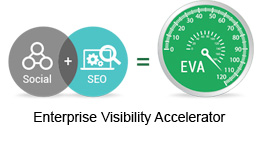
    • Introducing and implementing Enterprise Visibility Accelerator (EVA)
    • Using multi-channel tracking tools for effective monitoring
    • How EVA benefits businesses.

    Download the complimentary EVA White Paper now

    Enterprise Visibility Accelerator-EVA
    If you are reading this blog post via a RSS reader, please click here to subscribe.
  • Do You Have A Content Marketing Strategy?


    You will find a good piece of content at the core of a successful email campaign. But that’s only one cog in the wheel. For an entire annual marketing plan to be a success you need a focused content strategy, something along the lines of what Michael Brenner has in mind in ‘What is Content Strategy and Why Do You Need it?’ on Forbes.com: “A content strategy flips the tables on traditional linear marketing by defining the process and then securing the right resources for producing a consistent stream of content mapped to buyer needs across all phases of the buying cycle. This is done for each buyer type or “buyer persona” that is involved in the B2B decision-making process.”

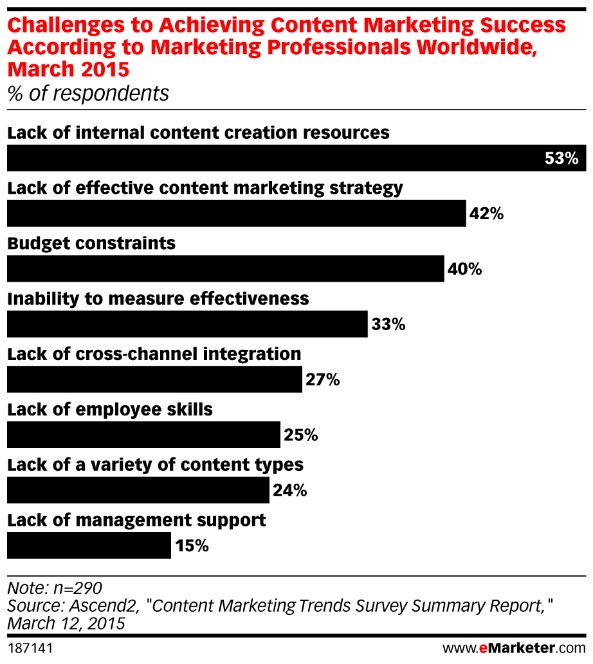
    If you think content marketing isn’t easy, you are not alone (see below). Marketers assume they face unpredictable challenges designing a sustainable content marketing strategy. And then they have to implement it. But it may not be all that daunting.

    Challenges in achieving content marketing success

    Beyond verbal: Why you need a documented content marketing strategy?

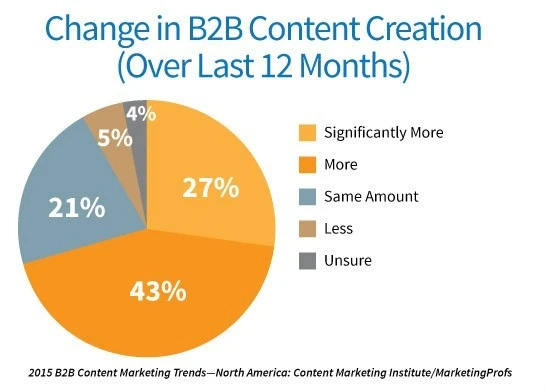
    Seventy percent of marketers say they are creating more content today than they did one year ago. That’s a quantum leap in both content creation and distribution. Marketers are learning how essential it is to have the right content, in the right channel, at the right time – every time a potential customer goes looking for an answer. Having a method to match the content creation madness helps marketers aim their energy, their money and, most crucially, their time in the right direction.

    2015 B2B Content creation trends for North America


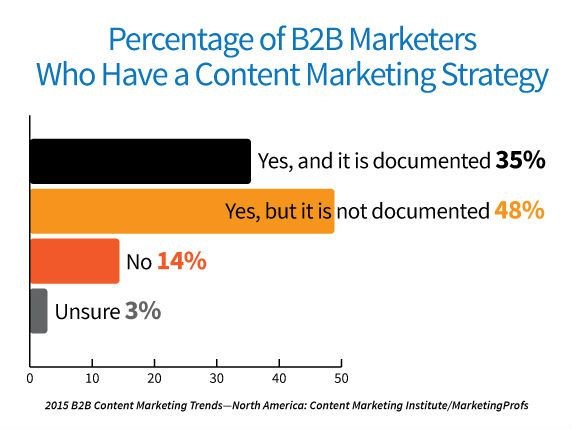
    Content Marketing Institute’s research shows that marketers with a documented content strategy:

    • Are far more likely to consider themselves effective at content marketing
    • Feel significantly less challenged with every aspect of content marketing
    • Generally consider themselves more effective in their use of all content marketing tactics and social media channels
    • Can justify spending a higher percentage of their marketing budget on content marketing

    Percentage of B2B marketers using content marketing strategy

    How to build a winning content strategy?

    You need to ask yourself a few questions before you start a deep-dive into the elements of your strategy:

    • Define your ultimate goals (traffic, sales, retention, awareness, etc.)
    • Define the target group that will help achieve your goals
    • Pinpoint where is the target group and who or what influences it
    • Establish the metric to judge the success of your efforts (links, shares, engagements, conversions, etc.)
    • Compare ROI with other marketing activities

    Once you have filled in those blanks, follow these simple steps for a well-rounded content strategy.

    Step 1: Do a content inventory

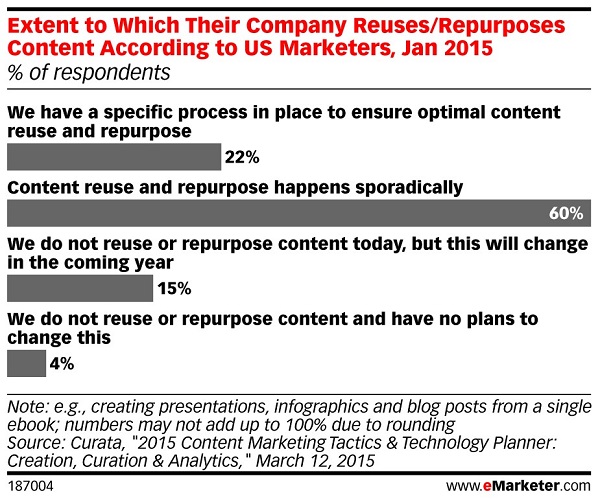
    More often than not, marketers are sitting on a gold mine of unused content. A documented content inventory gives you a clear picture of where your existing content can be found, how well it performs, and what gaps remain unfilled.

    Content reuse/repurpose trends


    Step 2: Start building a content calendar to fill identified gaps

    The content calendar helps you nail down the content type, tone, audience and publishing schedule. For example, a retail solutions firm, not only wants to produce great content for potential customers interested in, say, retail operation optimization but also for potential new employees who want to know how good a company they are to work for

    Step 3: Content is ‘King’; content promotion is ‘Queen’

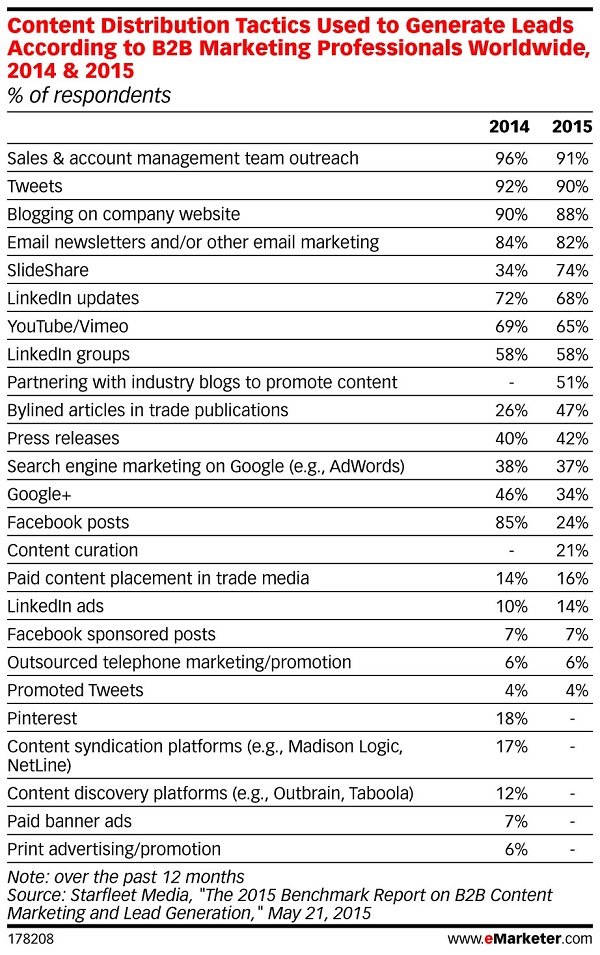
    Decide how to distribute and promote your content. How long — duration — will you keep it published (limited time, indefinitely)? What’s the reusability across channels? Planning this will help you publish and promote the right content to the right channels.

    Usage of content distribution tactics

    Step 4: Track and Tweak

    Track how your content performs across the distribution channels and which promotions pay off. Optimize your content with an analytic approach based on agreed upon metrics.

    Building and implementing a content strategy can be as easy as taking stock of existing content, filling in the gaps and then looking at the numbers coming in to tweak the content for the next round.

    We would love to hear your thoughts on content marketing strategy and execution. What are your pain points? What really works for you?

  • Twitter’s Audience Insights


    Audience Insights, a valuable and powerful tool from Twitter delivers a lot of useful information about your audience and how best to connect with them.

    How to Access Twitter’s Audience Insights

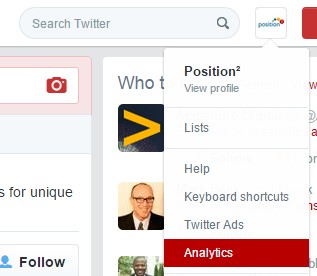
    To access Audience Insights, click on the profile picture displayed in the top right corner, which opens a drop-down menu. Click on “Analytics”.

    audience insights

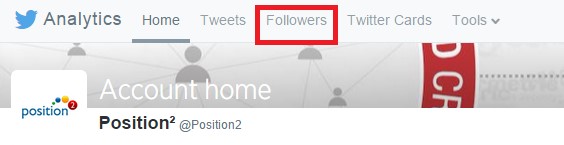
    Once in the Analytics section, click on the “Followers” tab..

    Analytics section of Twitter

    The Insights

    Twitter slices and dices your audience into different categories, showing what percentage of audience fits into which category. To do this, Twitter uses information it gleans from users’ onsite usage, as well as off-site information provided by Datalogix.

    The overview at the top of the page tells you the most common interest of a user category, what type of lifestyle they follow, what type of buying style is most common, and their most commonly used wireless carrier.

    Audience insights categories

    Other statistics Twitter provides about your audience include:

    • Interests
    • Consumer buying styles
    • Wireless carrier
    • Education (highest level completed)
    • Marital status
    • Net worth
    • Household income categories
    • Gender

    In its blog Twitter provides an overview of the potential power of the Audience Insight tool. “With audience insights, you can easily discover valuable information about your followers and the people who have engaged with your organic Tweets. You can also identify new, relevant audiences to target for an upcoming campaign. Your audience insights dashboard provides aggregate information about user demographics, interests, purchasing behavior and more.”

    Audience Insights is now available to all Twitter advertisers and analytics users. Marketers may think that have the appropriate target audience ‘following’ them. Audience Insights can tell them if that is true. Twitter’s Audience Insights helps marketers analyze their audience and its response to their messaging. It gives them important nuggets of information to realign content and messaging strategy as per the current trends and information needs of their audience.

    Are you using Twitter’s Audience Insights? Has it helped you learn anything about how to better connect with your audience? Share your thoughts in a comment below.

  • Best of the Week | Optimizing Knowledge Graph for B2B Brands, and much more…

    This week’s hot news, events and videos from the online marketing and social media world.
    Optimizing Knowledge Graph for B2B Brands
    From the Position² Blog This Week:
    Optimizing Knowledge Graph for B2B Brands
    For users, Google’s Knowledge Graph showcases structured and detailed information about a topic based on their search. Read this blog to understand how to highlight relevant information about your brand in ways best understood by Google crawlers and algorithms.
    Top Stories this Week: Social Media
    Top Stories this Week: SEO, PPC and Digital Media
    Email Benchmarks Where do you stand? Best of the Week Video
    Email performance across 3,000+ Marketo customers was tracked and the results are in! Tune in to see how you stack up against your peers. Watch this video for some best practices on how to improve your email performance!
    White Paper: The Rapidly Changing World of SEO
    Get a head start in your quest for search engine optimization by going through this insightful white paper. Download this White Paper to know:


    • How important SEO is & why it should concern you?
    • Various ways in which you can deploy SEO
    • How to combine Social Media with SEO?
    • SEO best practices and a road map to getting there

    Download the complimentary SEO White Paper now

    Search-Engine-Optimization-White-Paper-position2
    If you are reading this blog post via a RSS reader, please click here to subscribe.
  • Optimizing Knowledge Graph for B2B Brands


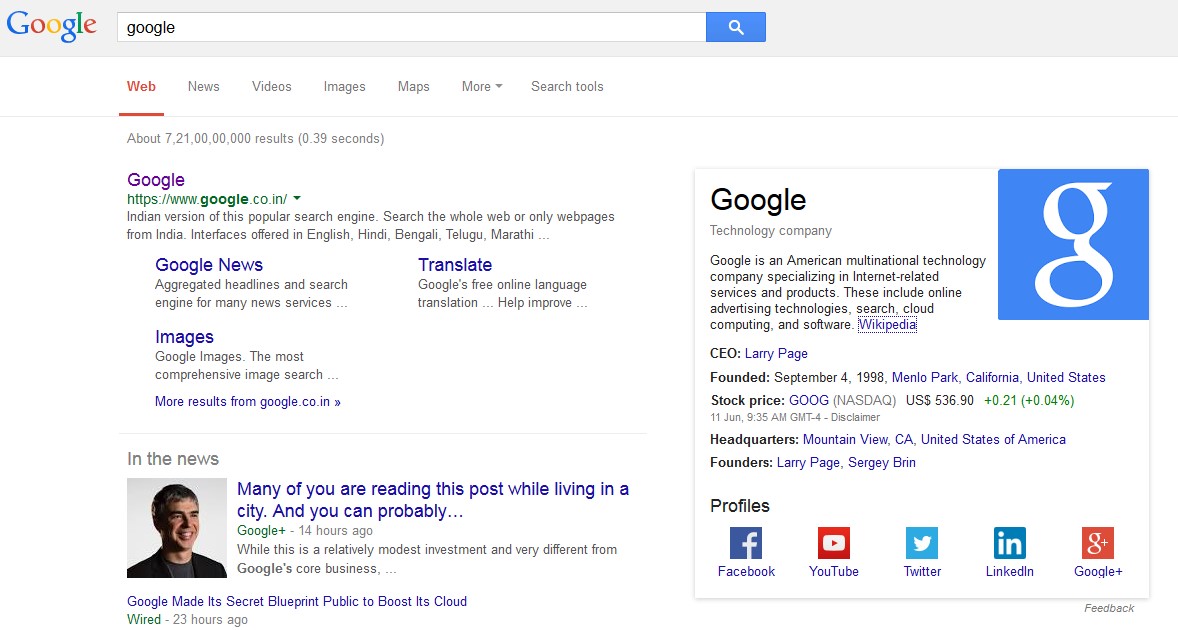
    Google’s Knowledge Graph showcases for a user structured and detailed information about a topic based on their search. The goal is that users would be able to use this information to resolve their query without having to navigate to other sites and assemble the information themselves.

    Marketers who understand the sources from which Knowledge Graph information is retrieved can highlight relevant information about their brand in ways best understood by Google crawlers and algorithms.

    google search results

    Components of a Brand’s Knowledge Graph:

    1. Logo: derived from the logo markup using JSON-LD
    2. Company Description: derived from the Wikipedia page of the brand (if there is no Wikipedia page this won’t appear)
    3. Profiles: derived from the social profile markup using JSON-LD

    How to Make your Brand Eligible for Google’s Knowledge Graph

    Markup the Site Using JSON-LD Syntax

    Google recommends JSON-LD because, unlike schema markup, JSON-LD doesn’t require the marketer/developer to interweave the structured data with the HTML displayed content.

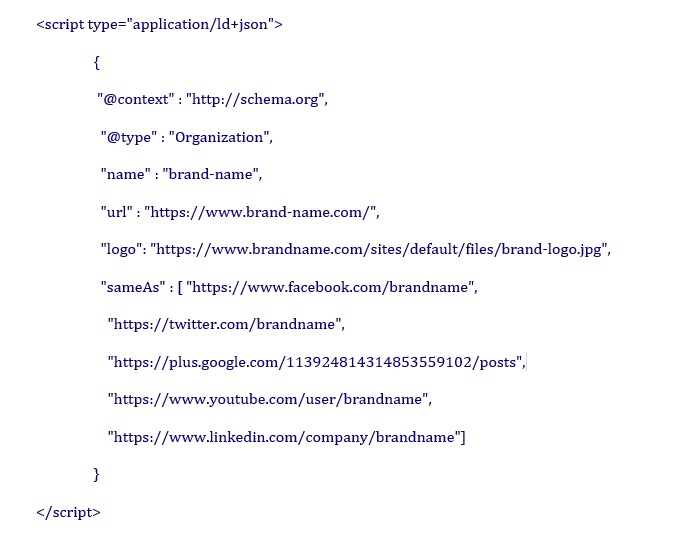
    The following code shows how to highlight a company logo to Google, and how to link the social profiles of the brand with the website:

    google knowledge graph

    To check if the markup is correct, use Google Structured Data Tester.

    The next time Google crawls the page, its indexing algorithms will process the profiles from your markup, making them eligible for use in search results. It can take up to a week to kick in.

    What you Need to Know About Organization Markup

    1. Place the JSON-LD markup code on the Home page of your brand
    2. Pages with markup should be allowed for search engines to index and follow
    3. For sites that have a verification process, Google only shows verified profiles
    4. Insert the SCRIPT block anywhere on the page — either the head or body of the page


  • Fool-proofing Fat Fingers


    Updates to address accidental ad clicks

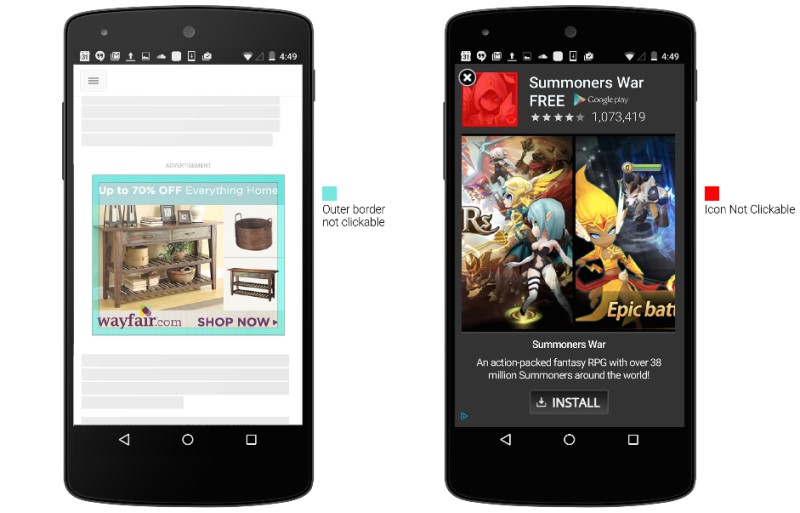
    Making accidental ad clicks on your mobile phone just got harder. Google has announced several new changes to reduce accidental clicks on mobile display ads, addressing fat finger ad clicks on mobile where a swipe for scrolling gets treated like a ‘tap’ to open the advertisement.

    1. Having identified the border area (see above, left) as particularly prone to accidental clicks during scrolling, Google now makes certain that taps close to the edge of an image ad won’t register as clicks.
    2. For in-app install ads and interstitial ads (see above, right) users won’t be able to click on the app icon because the close button is overlaid on that image. Users will need to click the call-to-action button.
    3. Finally, ads will only become clickable when they’ve been onscreen for “a short period of time”. This gives users time to scan through the display ad.

    If you are running Google display ads, you might want to note the timing of these changes when reporting clicks and click-through rates.

    On the Facebook Front

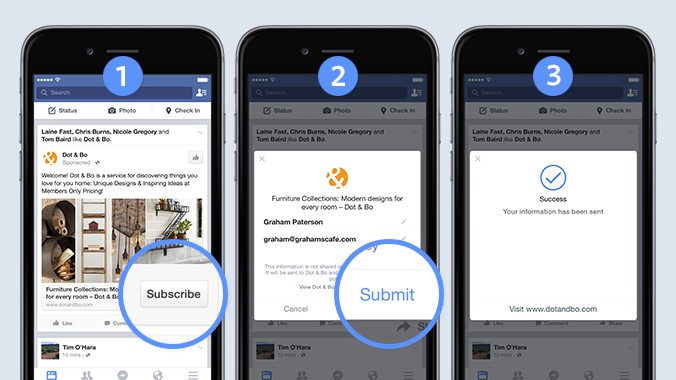
    Facebook announced this week that it’s testing a lead ad unit to make filling out forms on mobile devices easier for individuals,  and easier for businesses to gather that data. The new ad format auto populates contact information when the user is signed into Facebook.

    Facebook form filling to get easier

    As Facebook explained in a post on its business blog:

    “The lead ads that we’re testing use a native signup flow within Facebook. This helps avoid a lot of the pain points usually associated with filling out forms, like having to leave one app and start a form in another app, and having to enter all of their information from scratch. Just a few taps and people are done.

    “Like our other ad formats, we’ve built this ad type with privacy in mind. People can edit their contact information, and information isn’t sent to the business until a person clicks the ‘submit’ button. Advertisers may only use this information in accordance with their privacy policies, which we make available in the lead ad before people click submit. Advertisers are also restricted from re-selling lead information to third parties.”

  • Best of the Week | Crafting An Effective Call To Action, and much more…

    This week’s hot news, events and videos from the online marketing and social media world.
    Crafting An Effective Call To Action
    From the Position² Blog This Week:
    Crafting An Effective Call To Action
    Highly successful websites, landing pages, email campaigns and PPC ads all have an effective call to action in common. That’s a fact. Read this blog for a few best practices to help you improve on your CTA efforts.
    Top Stories this Week: Social Media
    Top Stories this Week: SEO, PPC and Digital Media
    SMX Advanced 2015 - AMA with Google Search Best of the Week Video
    One of the highlights of SMX Advanced was the AMA session with Webmaster Trends Analyst, Gary Illyes. Watch on as Danny Sullivan of Search Engine Land asks the hard hitting questions about Google’s latest developments!
    Persona Based Lead Scoring: The Mystery and the Method
    Download this White Paper and learn:


    • Classify leads based on behavior and demographic details
    • Develop a consistent methodology to proffer quality leads to sales
    • Employ data integrity and tracking
    • Deploy marketing automation to improve efficiency and cut costs.?

    Download the complimentary persona Based Lead Scoring White Paper now

    Lead_scoring_Whitepaper
    If you are reading this blog post via a RSS reader, please click here to subscribe.
  • Crafting An Effective Call To Action


    Highly successful websites, landing pages, email campaigns and PPC ads all have an effective call to action in common. That’s a fact. It’s the CTA (call to action) button on your landing page that guides the users to goal conversion.  An effective CTA urges visitors to buy, subscribe, register, apply, download, vote, share, play and learn more.

    Here are a few best practices to help you improve on your CTA efforts.

    1. The CTA has to be aligned to the campaign objective

    Whether you are running a PPC campaign or an email marketing campaign, the CTA has to be perfectly aligned to your core objective.  Using the right text makes all the difference.

    One study showed that using first person increased conversion rates by 90%.  A simple “My free trial“ instead of “Your free trial” made all the difference.

    Use action oriented text, not the usual “Download here” or “Get Started Here”. If it’s an invitation to visit a video page, limit the CTA to Watch Now, not Learn More. If it’s a loan application, use Apply Now.

    2. It pays to tell them—clearly & loudly!

    Not every visitor to your landing page will a button presser be.  Those inclined to press the button need a clear cut call to action telling them to “just do it”.  The study quoted above found that simply adding “now” to the copy resulted in a nearly 30% improvement in conversion rates. “Now” – Buy Now. Subscribe Now.

    A good example of using “Now” in the CTA:

    CTA

    3. Make choices clear

    Emailer buttons are meant to be clicked.  So it is imperative that CTAs are clear and compulsive.  Do not clutter the copy with a maze of options. Simply show the way. If there are multiple objectives and communication assets, create more than one campaign or landing page, each with its own CTA.

    The perfect example of what not to do to a customer:

    CTA2


    4. Value delivery or click triggers

    Not many visitors will click on a PPC ad or banner stating the obvious or obviously exaggerating “facts”.  A CTA like Try It Free For 7 Days will always sound more credible than You Need To Try It To Believe It.  Show value by stating facts and focusing on user benefits. A confident visitor will take immediate action, so encourage that. Additional information — called a click trigger — provided near the clickable CTA button or text can be beneficial. Click triggers include:

    • Customer testimonials
    • Product benefits
    • Recognition
    • Short term incentives

    5. Placing it right and making it visible

    Websites, landing pages and e-mailers have different ways of presenting calls to action. Many effective communication assets present CTAs above the fold where almost 80% of visitors spend time. Color and design are of equal importance.  Maximize the use of white space around the button to highlight it. Use contrast and flow to good effect.

    Good button design is imperative. “In your face design” is not to anyone’s advantage, depending on the product and target audience. Placement and prominence are the keys to high call to action conversion rates. The bottom line is engagement.

    An example of flow, design and contrast:

    CTA3

    6. The look and feel matters

    Design a call to action button that’s both interesting and inviting. It should stand out and grab the visitor’s attention. Try some relevant embellishments (like an arrow pointing to the button) or animations (CTA and click trigger on the same button). More breathing space and button text in large fonts attract attention. Never forget to place alt tags for email buttons, or convert them into complete text, so the call to action never gets missed even if the images don’t load.

    CTA4

    Last but not least, run tests to understand what works or does not.  Do A/B testing and retain what works.

    Here’s wishing that your CTAs keep converting! If you want to know how we integrate calls to action to create high converting marketing assets at Position2, drop us a line.
    And if you have any new CTA ideas, please share them here for the benefit of our readers.