Author: Team Position Squared
-
Paradigm Shifts – From TV to Digital, From Desktop to Mobile
The numbers are in. The verdict has been delivered. The paradigm shift is official. According to new research from Standard Media Index, digital media siphoned off more than $1 billion in advertising revenue from the US TV market, with 87% of those dollars drained out of the Big Four networks – NBC, ABC, CBS and Fox. SMI tracked agency investments over a nine-month period spanning October 2014 to June 2015, an interval that corresponds with the broadcast calendar.
New segments like the digital video market are growing at a blistering rate. With spend on pace, it is poised to hit $7.77 billion by year’s end which is a little over 10% of the $70.6 billion TV market.
Not Convinced? Let Facebook Be Your Guide…
Three years after Facebook started running ads on its mobile properties, mobile advertising accounted for 76% of Facebook’s $3.8 billion in second-quarter advertising revenue, which was up 43% year-over-year.
Facebook’s mobile user base saw even steeper growth, with mobile monthly active users up 22% and mobile daily active users up 29%
In the second quarter, the average price of an ad on Facebook rose by 220% while the number of ad impressions Facebook served dropped by 55%.
Is your business strategy in line with the digital and mobility revolution? Use the comment box to share your thoughts.
-
Let’s Get Personal
I’m a regular at my neighborhood café, so every morning Jinny the barista greets me with a smile and a hot ‘Skinny Cappuccino’. She knows exactly what I am looking for. And she knows much the same for a couple of dozen other regulars. It’s called personalized service. It makes me feel good, and I keep coming back. So think about the last time you opened your web browser and went to Amazon.com to buy a book. You may have had one title in mind, but you came across a few more recommendations from Amazon, all suited to your taste. Again, it’s called personalized service and it gets your attention. Amazon is doing the same thing Jinny does, but for 76.2 million users per month.
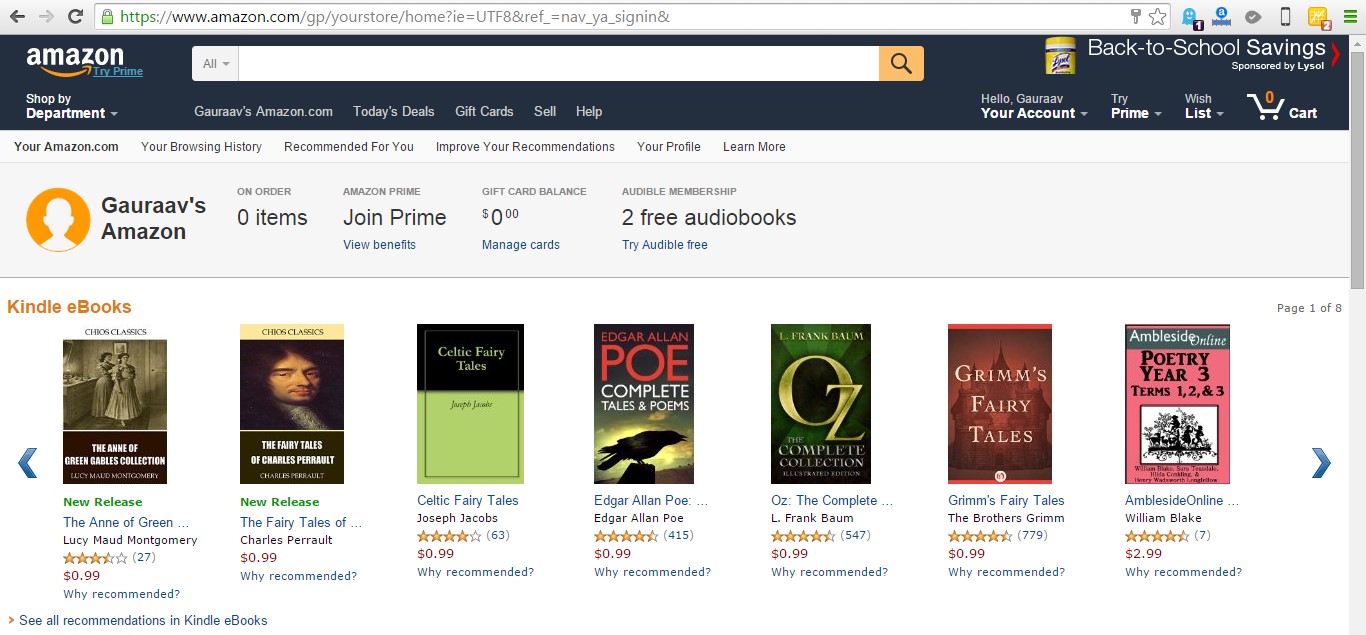
Personalization comes in many shapes
Offline Personalization
Motorola could have rolled out the Moto X customization experience – or personalization experience – in a conventional way, but instead published the world’s first interactive print ad in WIRED.
Offline Personalization
How to attract a millennial audience? Try using bright shiny things with many, many moving parts. Forever 21 and Breakfast teamed up to bring Instagram pictures to life using a giant, digitally synced adjustable billboard, a contraption that includes some 200,000 parts.
The machine renders versions of Instagram photos hashtagged ‘#F21ThreadScreen’ and cameras stream the process live at f21threadscreen.com—and send users auto-edited clips of their photos being rendered.
Online Personalization: Emails
Pinterest, Twitter, Facebook and other social media networks suggest Friends, Posts and Interest Groups to ‘Pin’, ‘Tweet’, ‘Follow’ or ‘Post’, as the case may be. The vast volumes of data gathered in the process epitomizes what’s personal.
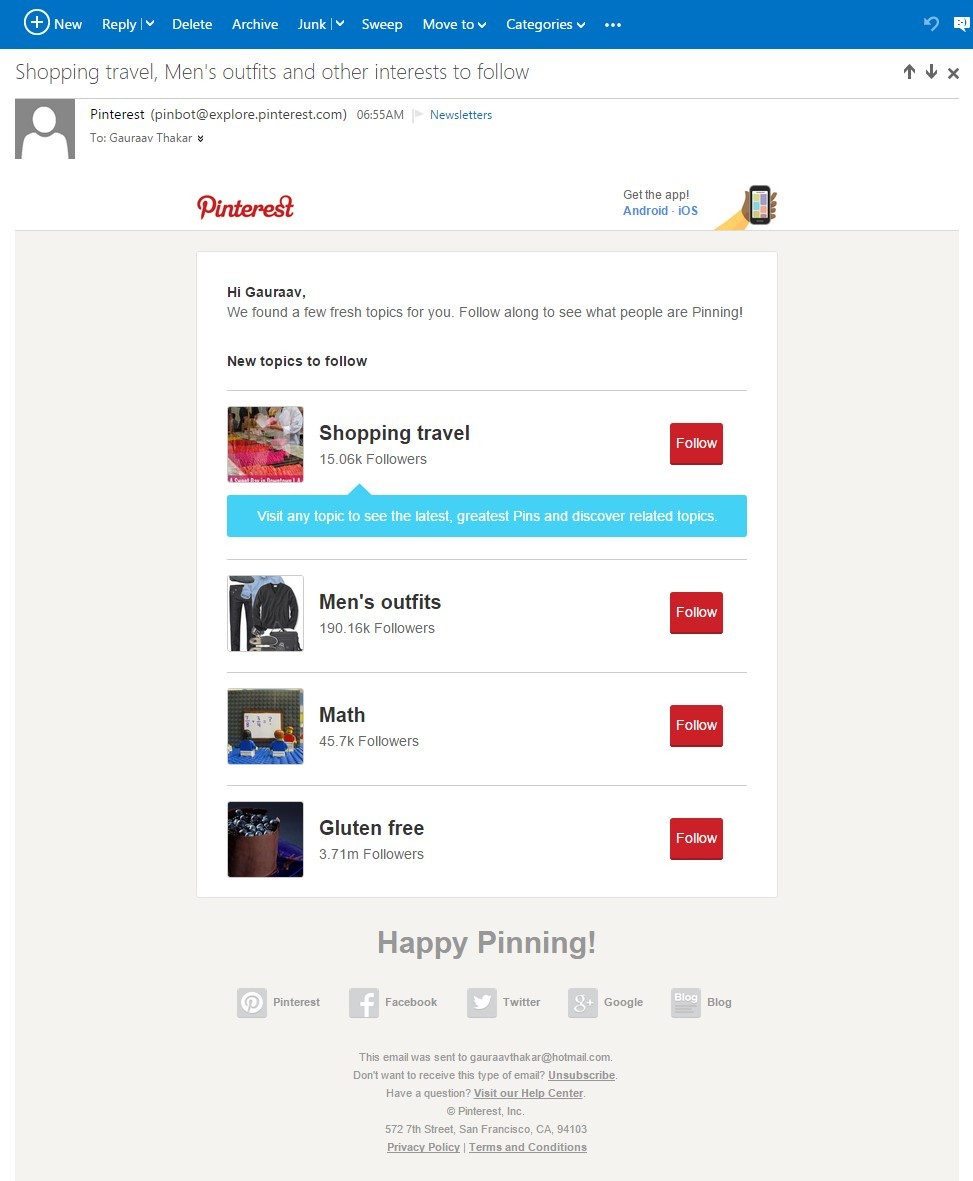
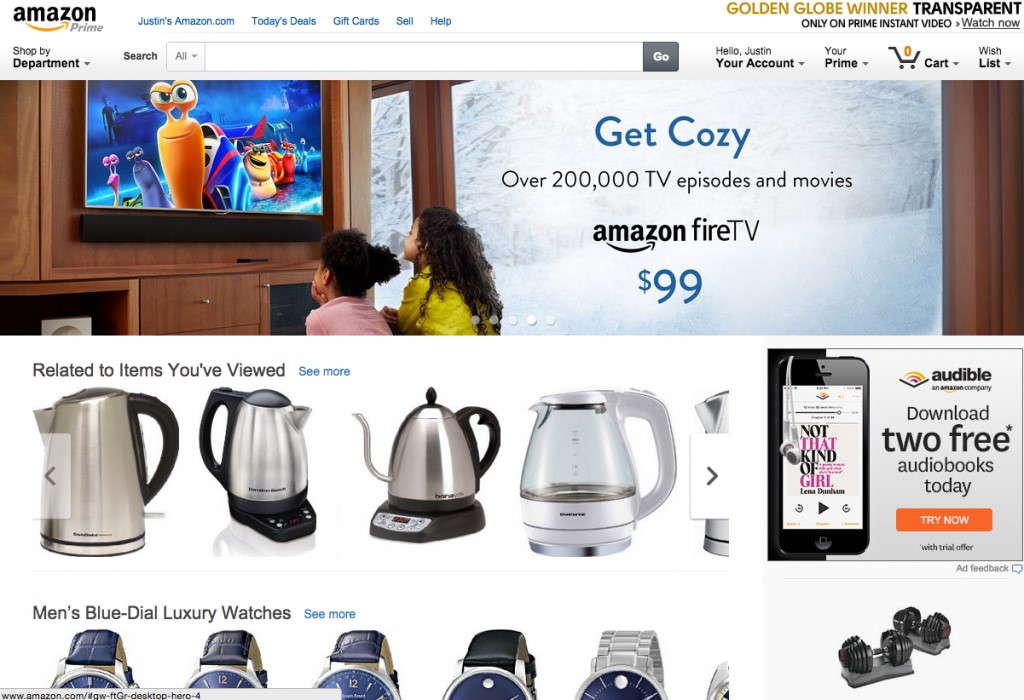
Online Personalization: Website
Amazon USA offers 200 million products in 35 categories. How to find what you want? Amazon simplifies the process with website personalization. By analyzing your previous behavior Amazon promotes products and makes informed suggestions according to what it “thinks” you may want.
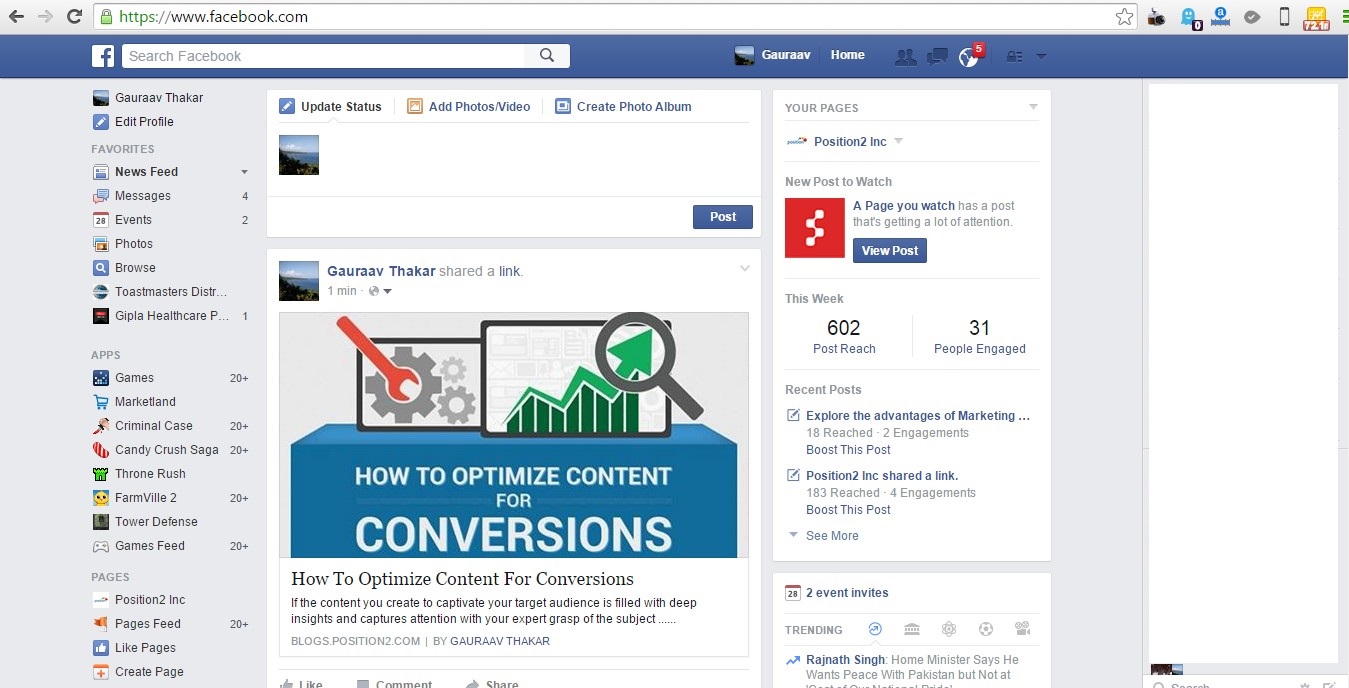
Online Personalization: Social Media Networks
We’re all on Facebook all the time. It gives us a personalized newsfeed of what’s happening with our friends and groups. At the same time we are generating data that gives shape and meaning to out digital personality. LinkedIn does much the same while giving us personalized updates from our professional network.
Online Personalization: Retargeted Advertisements
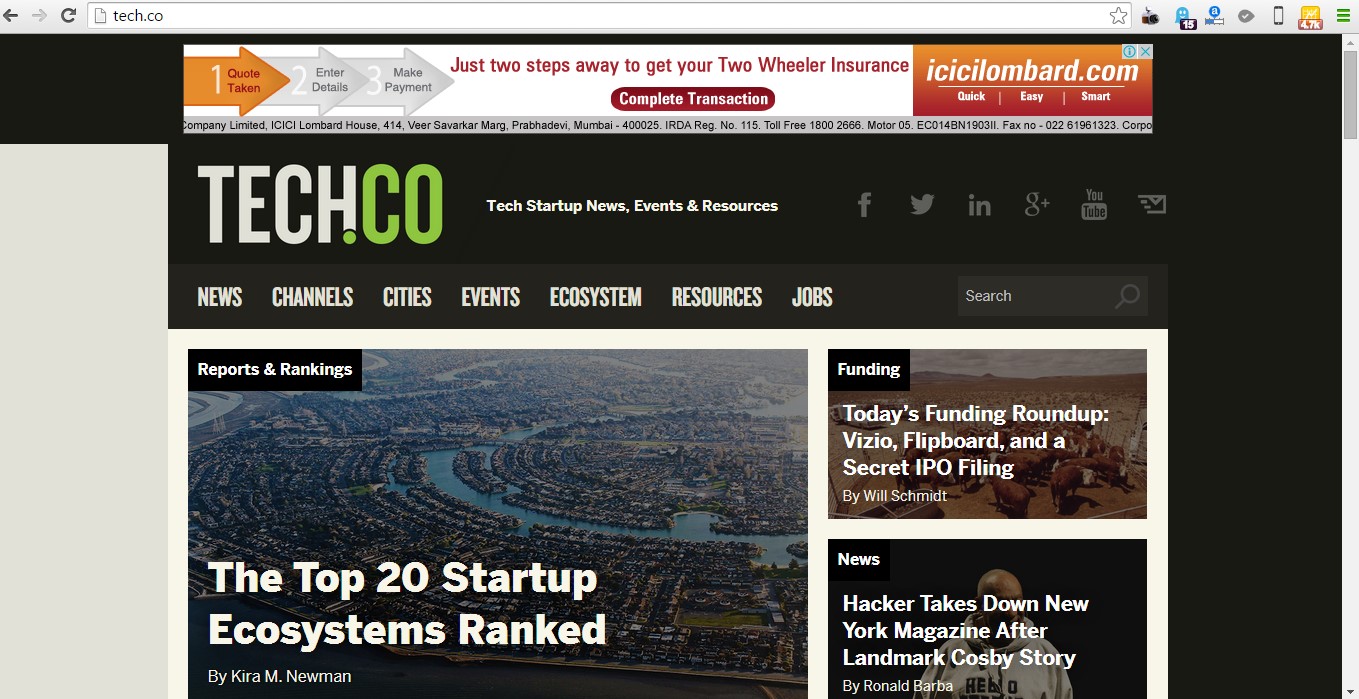
Here’s an example of an ad for a motorcycle insurance company, ICICI Lombard. I had recently been on their site, but this is the Tech Cocktail website. As you can see I have been re-targeted with an ad for ICICI Lombard’s policy.
Given all that, you would think that personalization and marketing would be a natural fit. But it has yet to work out that way.
Personalized marketing is a sadly underutilized strategy even though it’s highly effective.
- Businesses that personalize web experiences see an average 19% increase in sales. (MarketingProfs)
- 71% of companies fail to personalize their websites. (Dynamic Yield)
- Personalized marketing emails receive 29% higher open rates and 41% higher click-through rates. (Experian)
- 70% of companies don’t personalize marketing emails. (Experian)
So much to do, so little time… budget…?
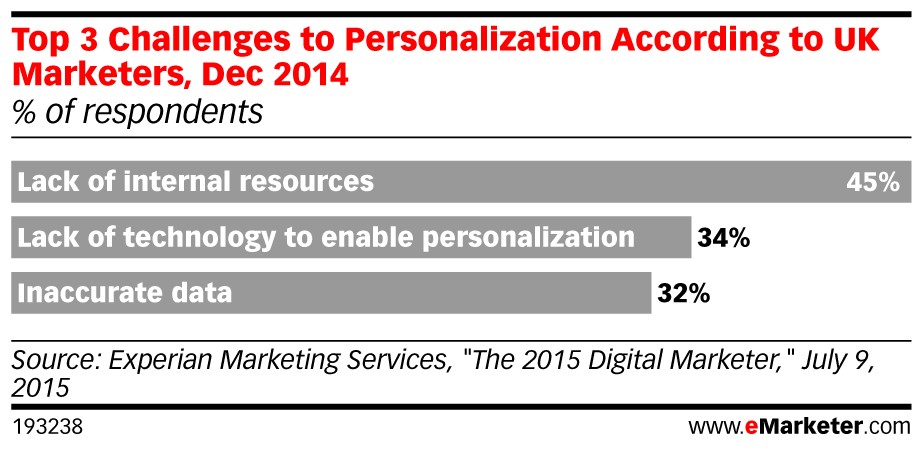
Mobile, of course, has brought with it a greater push for personalization and marketers are responding, particularly with real-time efforts. April 2015 polling by Researchscape for Evergage found that 58% of marketers worldwide used real-time personalization—defined as data-driven personalization completed in less than 1 second. Among the 42% not using it, nearly eight in 10 intended to do so within the next year.
Personalization – Tips and Tricks
Personalization versus privacy
Each geography, market and target audience is different. Be mindful that what resonates in one market might not be received the same way in another.
Language and Culture
Think globally but act locally. Campaign messages and content assets must be translated and localized. Message tone, brand positioning and even colours (oops, I mean colors) must be appropriate to the language and culture of the market.
Audience Data
To execute large scale personalization identify the relevant data. A combination of explicit (demographic and/or firmagraphic) and implicit (activity-based) data sourced from multiple systems may need to be reconciled or integrated.
Data Audit
Once the relevant data for personalization is identified, it needs to be synthesized in the primary marketing database and analyzed for hygiene and completeness. Complex personalization is executed through data-driven rules that cannot function at an impactful level without a high degree of standardization and completeness at the database field level.
Technology
Evaluate the marketing technologies needed to support the level of personalization that programs or tactics require. Marketing automation platforms (MAPs) contain features such as field merges and the ability to render modular content based on data-driven rules to produce email and landing page personalization at scale. Additionally, programmatic site retargeting, social and mobile retargeting, reverse-IP and cookie lookup, and third-party data vendors provide options for rendering a personalized experience based on explicit and implicit data points that can exist outside the marketing database. Web conversion optimization tools can execute rules-based personalization on an organization’s Web properties to engage and qualify site visitors with a more relevant browsing experience. Finally, automated contextual call guides for tele prospecting teams can deliver personalized interactions during the tele qualification phase of the marketing and sales process.
Testing
Make a culture of testing operational in any modern marketing organization. It’s critical. Don’t assume that personalization is making content, assets, and messaging resonate better with audience microsegments. Personalization initiatives should be tempered with an organization’s ability to plan and conduct meaningful testing to verify personalization’s contribution to a measurable increase in awareness, engagement and response.
What’s your favorite example of personalization that you use on a daily basis? Drop it in the comments. Would love to hear from you.
-
Twitter Launches Event Targeting
Marketers will be able to leverage real-time strategies to reach people engaged with major live events by using Twitter’s new event targeting feature. With this three-stage tool at the ready, brands and marketers can more accurately map new event-based campaigns
Think real-time events and trends like Super Bowl, Grammys, the FIFA World Cup, or Wimbledon. Marketers have relied on manual efforts and guesswork to figure out hashtags, keywords and accounts. With event targeting you can now activate around live moments. It’s quick and easy.
We’ll help you discover and plan for these highlighted moments, learn more about the participating audiences through valuable insights and, with one click, create a campaign that delivers the right message to just the right users as the event unfolds.
How It Works?
Event Calendar
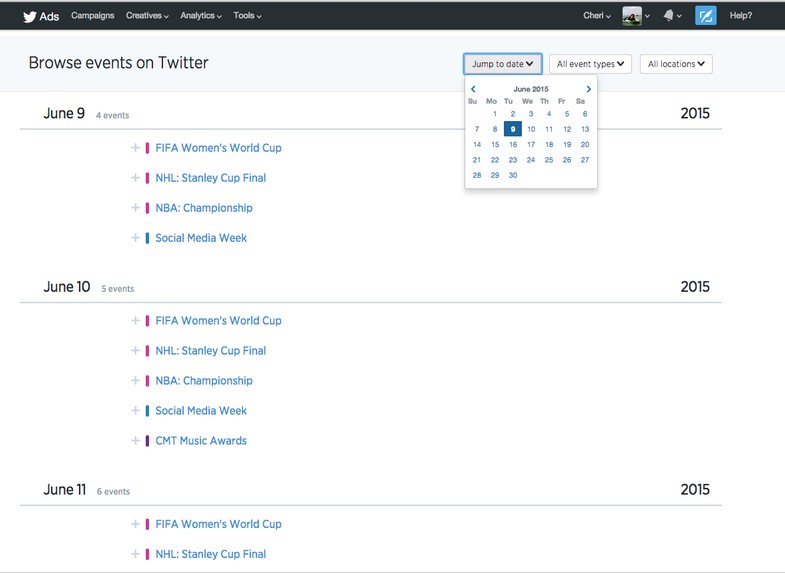
Visit ads.twitter.com and navigate to the Tools tab. Select “Event calendar” from the dropdown menu. Choose the live events that match your brand’s marketing strategy and goals. For help drilling down to the right selection you’ll find filters by location, date or type of event. Marketers can explore all events months in advance.
Event Insights
To see more information about an event, click on the event and select View More Details.
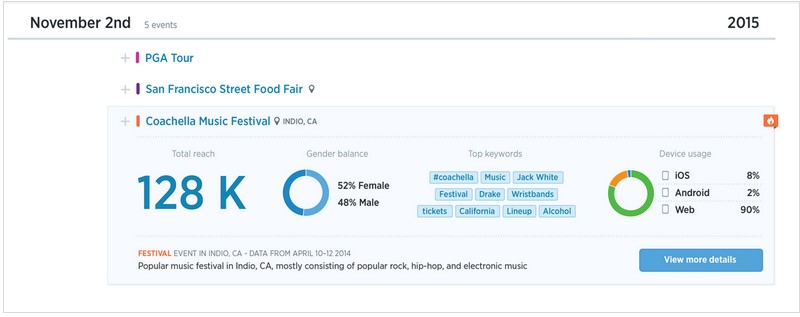
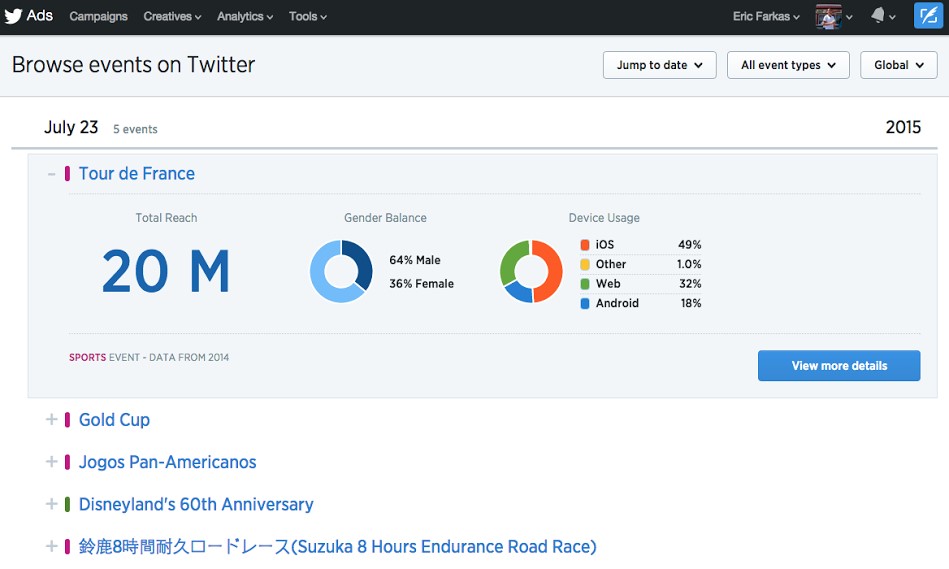
After identifying events to target, drill down into each event and learn more about the audience based on the previous year’s data — total audience reach, device breakdown, gender. You can also view the highest engaging Tweets from the previous year to get a sense of how the event conversation played out on Twitter.
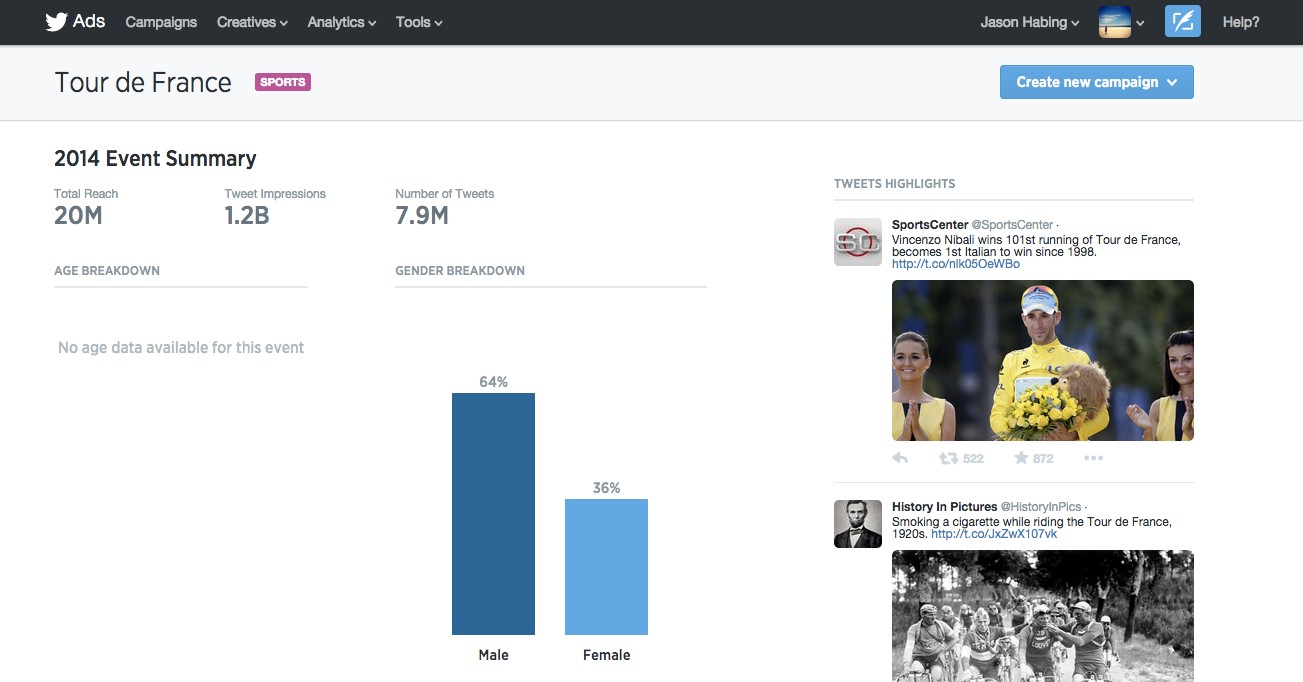
Event Activation
Click on the Create Campaign link to choose a campaign-based objective and launch a campaign that targets the event.
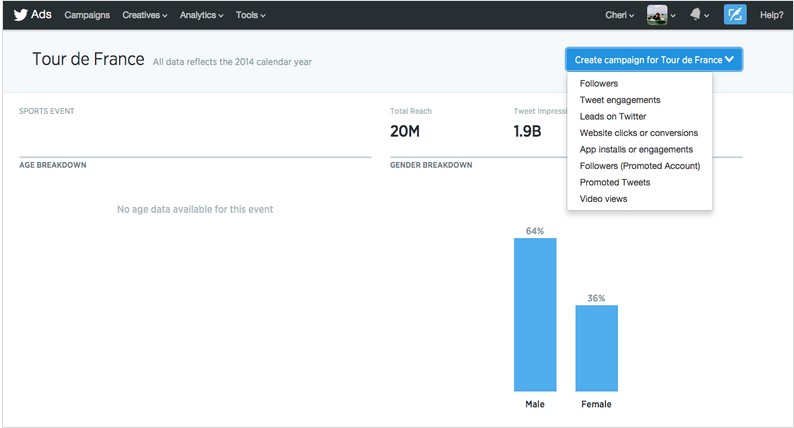
Target events of your choice with one click campaign creation. Event Targeting may be combined with other key targeting types like gender, language and device so you can reach the right segment of an event audience.
Let us know how you plan to leverage Twitter’s Event Targeting as a part of your marketing strategy?
-
Final Verdict: Programmatic Is Here To Stay
The Interactive Advertising Bureau (IAB) recently issued its first revenue report on programmatic display ad revenues in the US. The bottom line: Programmatic buying and selling accounted for more than half of the display advertising revenues generated in 2014.
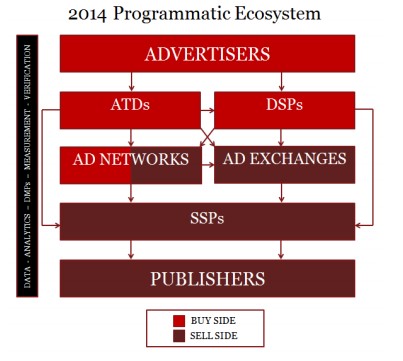
Highlights of the Report
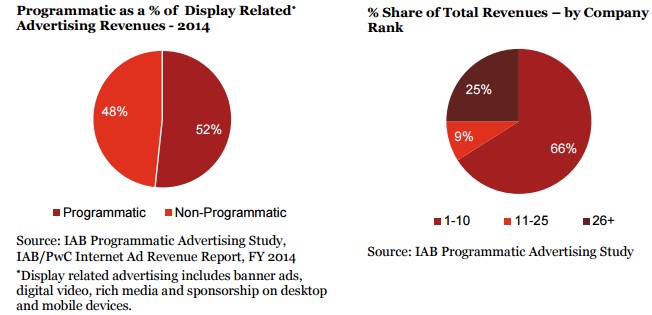
- Online programmatic display with $10.1 billion in revenues in the US in 2014 accounted for a little over 20% of overall ad revenues of $49.5 billion and 52 percent of the $19.6 billion display market
- Banner ads generated roughly 80 percent of the display programmatic revenues
- 2015 will see more inventory and spends for mobile and video formats
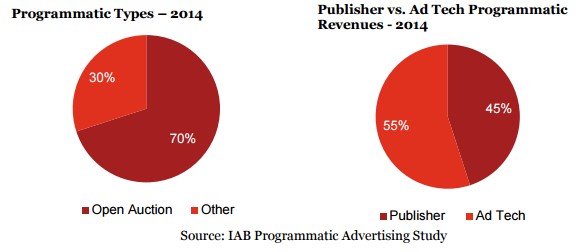
- 70 percent of the programmatic revenue came through open auctions
- Ad tech firms and publishers took in programmatic revenues in a 55-45 percentage split
“Sizing the programmatic market has proven both challenging and illuminating, as we learned more about how that sector moves ads and money. Once we garner deeper understanding of how things work and where standard definitions and best practices are needed, we will also gain insights into where greater opportunities exist for publishers and advertisers to capitalize on programmatic channels.”
— Sherrill Mane, Senior Vice President, Research, Analytics and Measurement, IAB
Key Takeaways from the Report
- Standardization and adoption of programmatic definitions for a robust sizing of programmatic revenues
- Increased dollar transparency to justify stronger overall revenues from programmatic as compared to traditional direct sales
- Increase quality of premium inventory
- Striking a balance between cross device and cross platform targeting and addressing concerns around user privacy and data collection
- Standardization of viewability metrics, greater control over brand safety, ad verification and performance measurement solutions to build advertiser trust in the programmatic eco-system
Are you part of this fast evolving programmatic eco-system? Let us know the challenges you face and the benefits you receive using programmatic over traditional direct sales model.
-
Best of the Week | How To Optimize Content For Conversions, and much more…
-
How To Optimize Content For Conversions
If the content you create to captivate your target audience is filled with deep insights and captures attention with your expert grasp of the subject matter you will convert your audience to clients who willingly advocate your brand or organization by sharing your content – infographics, blogs, and social media posts. Follow the step-by-step formula in this blog to optimize your content for conversions.
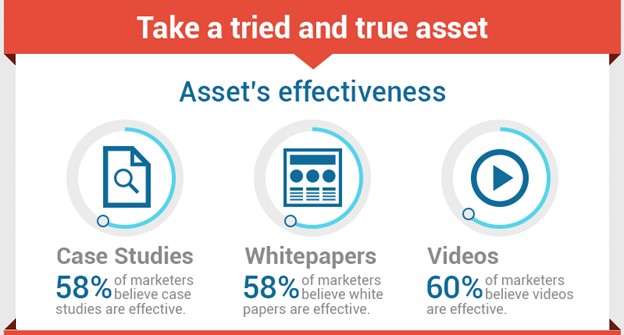
Step 1: Take a Tried and True Asset
Just 22% of US marketers have a specific process in place to reuse and repurpose their content. More often than not, marketers are sitting on a gold mine of unused content. A content inventory will help you get started. It gives you a clear picture of where existing content can be found, how well it performs, and what gaps remain unfilled.
For example: A 20 page whitepaper created three months ago, can be repurposed into an infographic, PDF, a video with voice-over and a 10-slide powerpoint (TWEET THIS!).
P.S. This blog is a repurposed infographic.
Step 2: Create Multiple Compelling and Cool Looking Formats
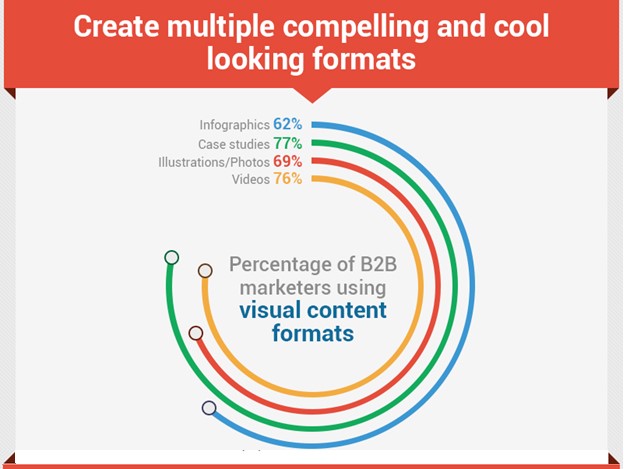
Great content can make a significant impact when repurposed across multiple delivery methods. Relevant portions from an eBook or whitepaper can be used both as blog and social media posts. Convert webinars into videos; create a blog post from the slide show.
People respond to visual information better than plain text. A picture is worth a thousand words because everyone is naturally wired to remember images far longer than they will ever recall a clever tag line.
Posters are one of the most effective types of visual content. Make sure to use a poster maker to create visually compelling posters that will leave a long-lasting effect on people.
Step 3: Syndicate and Link Back to Your Website
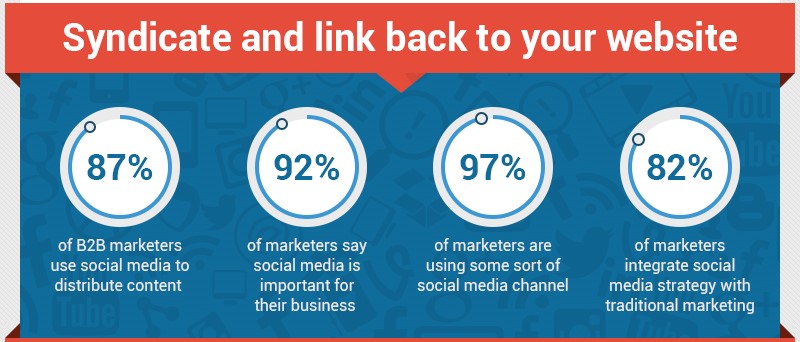
Even though you have created stellar content that is relevant to the needs of your audience, there’s so much competition and content it’s easy to get lost in the crowd. So double down. Submit your content everywhere: social media, blog directories, online PR websites, niche communities, forums and user groups for your products or solutions.
Over a period of time you will see:
- Increase in website traffic
- Upward boost in sign-ups (newsletter, gated resources, contact us, etc.)
Step 4: Build Lead Capturing Landing Pages
Kudos! You are just over the hump and you are seeing a significant rise in your website traffic. But where is all this traffic going?
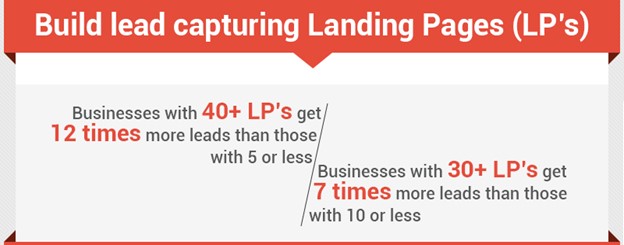
According to MarketingSherpa’s Landing Page Handbook (2nd edition), 44% of clicks for B2B companies are directed to the business’ homepage, not a special landing page. Furthermore, of the B2B companies that are using landing pages, 62% have six or fewer total landing pages.
MarketingSherpa cites the number one reason for landing page failure is a marketing department that doesn’t know how to set one up or a marketing department that’s too overloaded to get the job done. (TWEET THIS!).
Ideally, every offer should have its own landing page. The user who clicks a specific post or link and gets to your landing page remains engaged with the same messaging, and that leads him to your call to action (CTA). The advantages of landing pages are multi-fold:
- Landing pages help generate more leads
- One offer = One Landing page: Gated offers are a crucial lead generation source in your marketing efforts
- Capture information about your prospects and understand your audience better
- Thank You Pages and Email Responders will help you close the loop with your leads in real-time
Our verdict: The More Landing Pages You Have, The Merrier Your Numbers Shall Be!
Step 5: Don’t Forget Your Tracking Codes
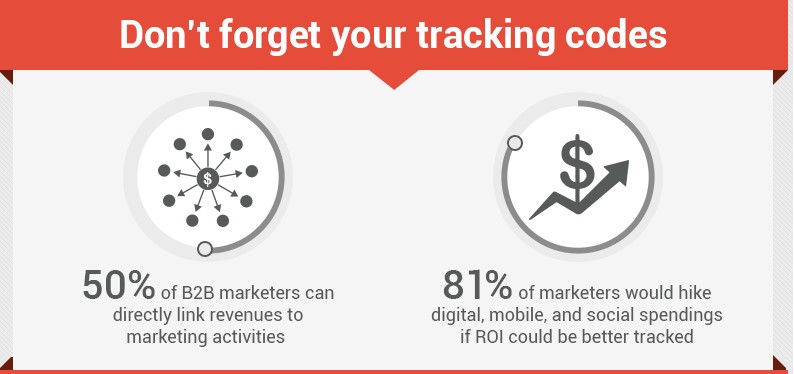
If you cannot measure content, you cannot manage content. Decide on your KPIs and then measure all your content efforts against the baseline KPI numbers. Broad KPI areas to track for different types of content are:
- Consumption metrics
- Sharing metrics
- Lead metrics
- Sales metrics
The process of content creation, distribution, tracking and analysis is an iterative cycle. You learn each cycle what your audience likes, and improve the process. The continual improvement results in enhanced lead quality, brand advocacy, happier prospects and loyal customers.
Bravo, if your numbers are off the charts! If not, continue reading…
Challenges Marketers Face
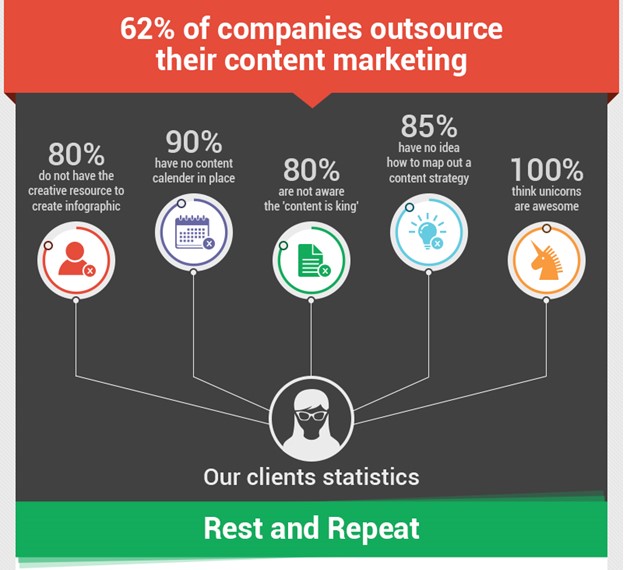
Marketers face serious challenges when creating and implementing in-house a sustainable content marketing strategy. The 2015 B2B Content Marketing Trends—North America highlights the major challenges that B2B Marketers face:
- Producing engaging content 54%
- Producing content consistently 50%
- Measuring content effectiveness 49%
- Producing a variety of content 42%
- Gaps in Knowledge and Skills of Internal Team, Lack of Integration Across Marketing and Budget were a few other challenges
I Can’t Do It All – Outsource Content Marketing
Creating a culture of capturing expertise within the organization and converting it into engaging content takes consistent time and effort. Bringing in an agency can help you fill some or all of the gaps in content strategy, content creation and distribution – right now.
An agency partnership provides:
- a different perspective
- variety and diversity in skills
- functional expertise
- industry specific expertise
“Marketing has changed more in the last two years than in the previous fifty.” – John Watton, EMEA Marketing Director, Adobe Marketing Cloud.
Is your marketing organization equipped to take advantage of every opportunity and overcome these challenges? Let us know your thoughts on content marketing, the pain points, the best practices or how unicorns are awesome!
-
Best of the Week | 8 Tips to Leverage Facebook for Business, and much more…
This week’s hot news, events and videos from the online marketing and social media world. 
From the Position2 Blog This Week: Tips to Leverage Facebook for Business | Position2 Blog
Looking to promote your business, enlarge your brand audience? With a constantly diversifying array of internet users signing up for Facebook, a showcase on Facebook for a brand, business, company or entity has become as critical as having a website. Read this blog for 8 ways to boost the visibility of your business page.


Best of the Week Video
What are the biggest challenges facing the digital marketing industry over the next few years? Watch this video where the speakers from Future of Digital Marketing conference share their views.Persona Based Lead Scoring: The Mystery and the Method Download this White Paper and learn: - Classify leads based on behavior and demographic details
- Develop a consistent methodology to proffer quality leads to sales
- Employ data integrity and tracking
- Deploy marketing automation to improve efficiency and cut costs.?
Download the complimentary persona Based Lead Scoring White Paper now

If you are reading this blog post via a RSS reader, please click here to subscribe. -
5 Updates from Google for Mobile Devices
The nature of digital marketing will not stand still, not with Google constantly creating new ripples for marketers all over the world. Here’s a look at what’s in the pipeline:
Purchases On Google
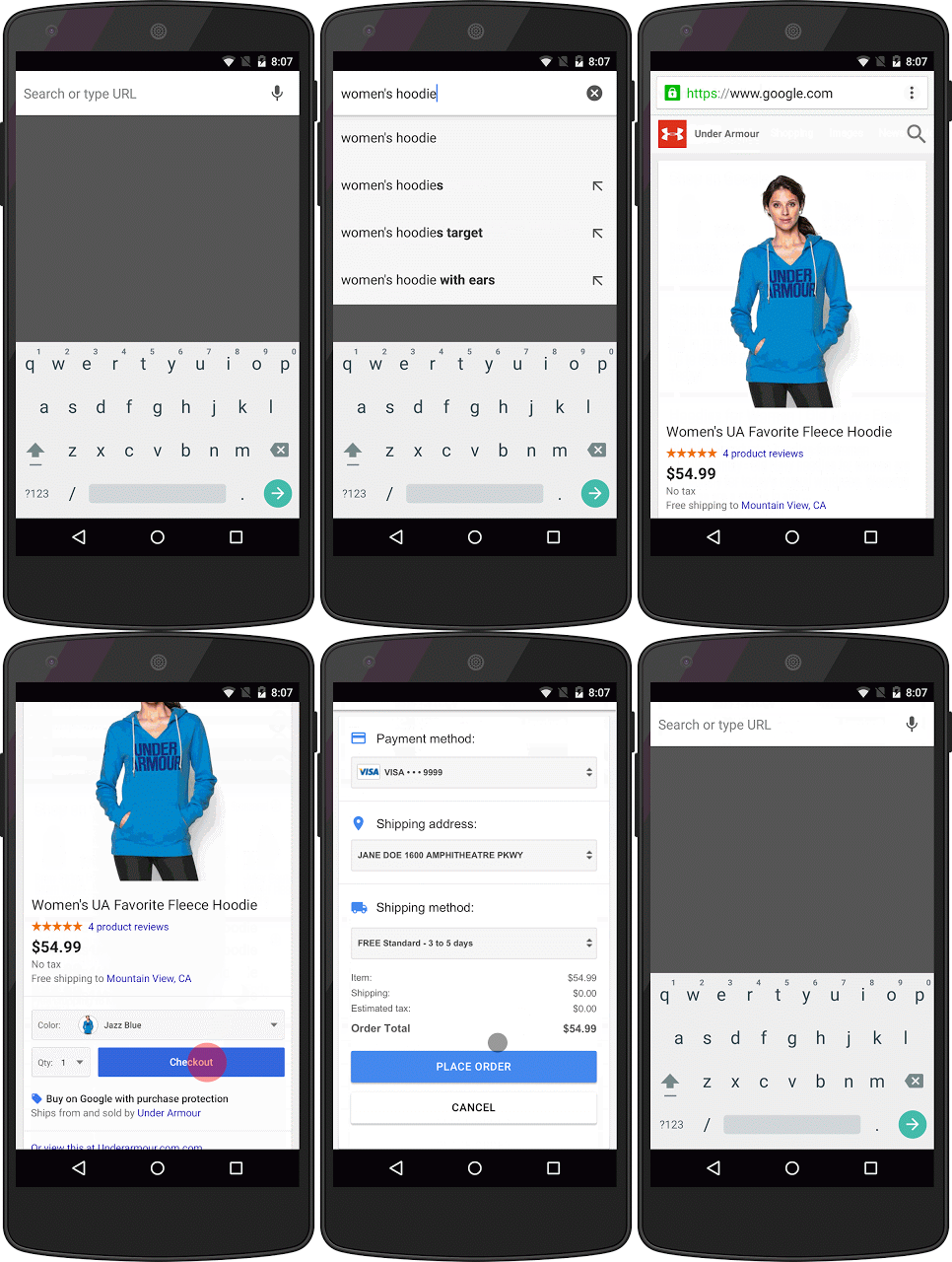
The much-anticipated “buy button” in Google search ads is here but it’s not really a button. Called ‘Purchases On Google’ mobile users will be able to click on search ad results and go directly to the dozen or so retailers currently participating in the test. Response thus far has been enthusiastic and positive.
“Purchases on Google will simplify our customers’ ability to search for items on Google and then buy with Staples.” said Faisal Masud, Executive Vice President of Global E-Commerce, Staples, Inc.
“Customers increasingly want to shop on their own terms. Purchases on Google facilitates that flexibility while maintaining the merchant’s ability to own the customer relationship.” says, Peter Cobb, eBags Marketing EVP and Shop.org Chairman.
By clicking anywhere on the ad the user is taken to a merchant-branded gateway landing page hosted by Google. The consumer can buy the product immediately using his mobile device.
New Mobile Shopping Ad Formats For Voice Search
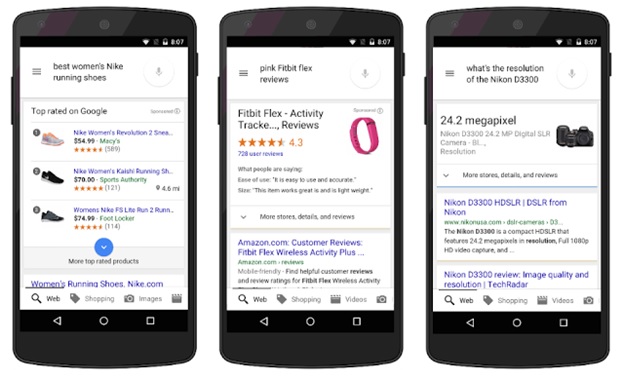
Google has started to show new ad formats that include rankings and ratings when consumers search using voice. In this example rankings 1 to 3 have been displayed in the search results for the image on the left after making as voice search.
Expanded Product Listing Ads (PLAs) When Viewing The Carousel On Mobile
When users swipe to see more in the PLAs on their smartphones, Google will now expand the ads to show the full product title as well as extensions like product ratings and nearby availability. This functionality will roll out to Chrome for Android this month, and iOS in the coming months.
Google Now In-store Cards
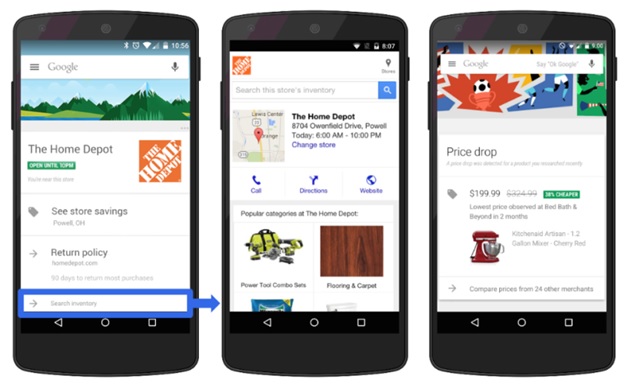
Local Inventory Ads have been performing well so a lot more of them will begin showing up in mobile search results. Also coming online, the Google Now in-store card that appears when a user is near a store. It will show sales, closing hours, loyalty card information and more. Also, look for the Google Now price drop card. It will showcase significant price decreases on products the user has previously browsed.
PLA Deep Linking To Shopping Apps
Google is running a pilot test with a small group of global retailers including eBay, Flipkart and Zalando to deep link their product listing ads to product pages in their apps rather than their websites. More retailers will participate in the test in the coming months.