Blog

  • What We Learned at HIMMS 2016 in Las Vegas

    Position2 attended this year’s HIMSS Annual Conference and Exhibition, which was held in Las Vegas in early March. The conference attracts more than 40,000 people each year, with 1,300 vendors exhibiting. Through the course of the event, attendees have the chance to take in keynote speeches from thought leaders in healthcare IT, and take part in discussions, webinars and workshops to drive innovation in this space.

    HIMMS is an important event, and it showcases myriad products and solutions in cutting edge healthcare markets. It also provides a snapshot of the market as it is today, and showcases new opportunities that IT providers can exploit. Our team came away with fresh insights into the opportunities this unique market presents, as well as a new understanding of the importance of our work in delivering engaging content to patients and businesses.

    Key Takeaways from HIMMS 2016

    At Position2, we came away from the event with four valuable takeaways that describe the state of healthcare IT right now. Across all of the products that were exhibited, these principles stood out.

    1. A Need for Efficiency

    Users engaged with healthcare IT are increasingly looking for efficiency in the solutions they select. And it’s not just the healthcare providers that are seeking cost and resource savings. Increasingly, we’re seeing consumers looking for healthcare IT solutions, and they are also likely to be interested in cost-effective answers to their questions. We’re seeing both B2B and B2C products growing in parallel, which presents an interesting evolution of the market compared with traditional medical companies.

    2. Patients Are the Focus

    As the market has evolved, we’re seeing more service users engaging with the IT solutions that provide healthcare information. This is particularly prevalent in the US, where it’s the patient that engages directly with the care provider in many cases. Patients are the focus of the work we do at Position2, and it’s important to maintain this focus.

    3. Mobile is a Growth Area

    Right now, figures suggest that 70 per cent of patients are using mobile devices to log on to service portals. This is an increase on last year, and it ties in with the opportunities of mobile retargeting, which can be used to reengage consumers on their journey. At HIMMS 2016, we saw a strong interest in video ads that are clear, digestible and engaging.

    4. Position2 is excited to be part of this industry

    Position2 had a prominent spot in one of the key vendor’s booth at HIMMS 2016, both on the posters and the video screens displayed to delegates. We continue to support and inspire healthcare companies in delivering effective solutions, contributing to their ongoing growth. As the market continues to boom, Position2 will continue to deliver value to the most important people: a community of patients worldwide.

    The Future of Healthcare IT

    Again and again, IT proves itself as a transformational force. Healthcare is no different. As patients become more in tune with their own care, they will be more interested in using mobile technology to quickly access the services they need. Position2 is at the forefront of this rapidly evolving market. Get in touch to find out more.


  • Position² Introduces Campaign Hub! Also, What To Look For In A B2B Marketing Agency

    This week’s hot news, events and videos from the online marketing and social media world.

    From the Position2 Blog This Week:

    Top Stories of the week

    Join Position2 at the Marketo Summit 2016 at the MGM Grand in Las Vegas

    The Summit theme is “Tomorrow’s Marketer”, and will feature over 100 sessions including Keynotes, Educational Sessions and interactions with industry leaders. Team Position2 will be there to share our insights on how to get the best results out of your Marketo suite.

    Lets Connect

    Lets Connect

    If you are reading this blog post via a RSS reader, please click here to subscribe.

  • Campaign Hub – Position²’s Solution for Effective B2B Marketing

    Content is King, but what good is a king without his queen, advisors and officials?

    Creating great content is just the start. There are several additional things that we have to do right to stand out in today’s crowded marketplace. While we employ time-tested strategies to ensure that the content is reaching its intended audience, it is also critical to experiment and try new things, so that the audience spends more time on your site.

    Much has already been written about the importance of marketing effectively to ensure that the right audiences are targeted at the right time to ensure a successful lead gen campaign. Today, we will focus on the presentation and the technological aspects of a campaign, and their importance in the scheme of things.

    Once you have the right content in place, you want to implement the most effective marketing strategies to ensure that the most relevant audience has been targeted. Once you have the user exactly where you want him to be, the layout, presentation and arrangement of the content are of utmost importance. It is absolutely essential that we do not lose the user after all the effort that has gone in thus far.

    Enter Campaign Hub

    This is where a technology solution like Campaign Hub can prove to be a valuable asset by helping you create the vibrant, unique, and engaging landing page experience that you require to enhance the effectiveness of your content—and ensure that more visitors enter your company’s marketing funnel.

    Position²’s Campaign Hub seamlessly integrates with your company’s existing Marketing Automation software to ensure that all the information entered by your visitors directly reaches your marketing database. You also have the option of personalized targeting where, depending on the profile of the visitor, the type of content being served changes to best suit what they are looking for, and also creates value for your target audience.

    To maximize the effectiveness of your landing page, you can choose from a wide range of theater/ social conversation/ banner modules, form fills, or have custom modules developed to suit your requirements. The Hub’s A/B testing feature helps you test multiple designs and freeze on the one that works best and gives you the most visibility.

    Campaign Hub also has a Content Management System (CMS) option that allows you to launch campaigns with User Generated Content. This feature improves the quality of engagement with the target audience, and allows you to easily moderate the submitted content.

    In conclusion, there is certainly no substitute for good content. However, merely creating good content does not ensure success and visibility in today’s digital marketplace. A solid marketing strategy, as well as the right technology, go a long way in ensuring the success of an online campaign.

  • B2B Marketing Requires the Right Agency Expertise

    For B2B marketers, digital has evolved to become a major driver of success. One-third of businesses are planning to introduce a digital transformation program, while thirty per cent of businesses have already taken that route.

    There are huge opportunities in organic search, and a growing need to focus on paid ads. According to Webbiquity, 71 percent of companies plan to increase their digital marketing spend this year. This is good news, given the number of platforms putting the spotlight on sponsored content. There’s also a more pressing need to invest in high-quality content, particularly in increasingly competitive B2B markets.

    Digital marketing services are essential

    There are two key reasons why businesses must have digital marketing support.

    First, digital marketing gives you the insight you need to customize your content and deliver a meaningful message. We’ve always known that understanding your customers is the most important aspect of marketing to them, and tailoring content is one of the best ways to speak to a customer in a timely and relevant way. You need support to track customers’ journeys and step in at the appropriate time.

    The second reason is equally important. When it comes to any form of marketing, businesses need to see ROI. And with digital marketing, we can provide proof. We can set goals, measure results, and drill down to figure out where more work is needed. We can look at each channel in turn and figure out how it’s contributing to the success of the overall strategy.

    Key components you need to consider

    When you’re looking ahead to digital transformation, or consulting a digital marketing provider, an integrated approach is very important. Selecting the right elements is critical, but so is meshing them together effectively.

    • For time-pressed businesses, automation is an obvious route to consider. Marketing automation has moved away from being heavy-handed and potentially spammy, and is now very good at targeting customers based on trigger actions, supporting near-instant delivery of focused content.
    • Keeping the brand top of mind is still very important, and this is where content supports lead generation and drives increased sales. Digital marketing is ideal for increasing brand awareness and developing tests that can be used for continual content optimization.
    • Finally, don’t forget social media. It’s evolving, but it’s still essential. Likes and shares may be less important, but it’s still critical in developing a dialog with customers and nurturing a relationship over time. According to Social Media Today, just 20 percent of social media content should be geared towards brand awareness. The other 80 percent should generate the conversations and shares you need to connect personally with an audience.

    Choosing the right digital marketing partner

    Now, you understand the need for digital marketing. You can see the components you’ll have to implement. The last piece in the puzzle is choosing the right partner to deliver results.

    We have three specific recommendations.

    • A good marketing agency should understand your goals for growth and provide a unique strategy. You may want to increase sales; equally, you may want to raise brand image. Each set of priorities requires a different approach to achieve that upwards trend, and your agency needs to be fully on board with it.
    • You’re also going to need an agency that can show you the ROI we mentioned earlier. It’s great to get verbal feedback, but hard figures are the only way to measure success. That means getting data about the cost of digital marketing across your chosen channels, data about how activities are converting, and data that clearly shows where your money is best spent. Can your agency produce these reports, and provide evidence to back up its claims?
    • Finally, your agency needs to be honest with you. They need to be a true partner, provide feedback and make suggestions. A really good agency will stop you in your tracks if they have a better suggestion. Remember: this might mean you have to flex your ideas about what digital marketing entails, or be prepared to tweak your budget allocations to support the ways of working the agency suggests.

    Position² Can Deliver

    Position² is a trustworthy digital marketing agency with a proven track record of results across its entire service catalog. If it’s time to implement your digital transformation project, or re-launch your digital marketing strategy, Position² is ideally placed to provide the results your business expects.

  • Types Of Marketing Content—And How To Create Evergreen Content

    This week’s hot news, events and videos from the online marketing and social media world.

    From the Position2 Blog This Week:

    Create Enduring Content for Users and Search Engines

    We show you how to develop durable content that stays relevant, drives traffic, engages viewers, and provides value long after it is published.

    White Paper: The Rapidly Changing World of SEO

    Get a head start in your quest for search engine optimization through this insightful white paper.

    Download this White Paper to know:

    • How important SEO is & why it should concern you
    • Various ways in which you can deploy SEO
    • How to combine Social Media with SEO
    • SEO best practices and a road map to get there

    Download the complimentary SEO White Paper now

    Search-Engine-Optimization-White-Paper-position2
  • Create Enduring Content for Users and Search Engines

    Fresh content can initially drive a lot of traffic, but as it gets old, it can lose its relevance, become stale, and drop down in search results. This makes it less likely to be found—and even if it is, it may have little or no usefulness to those looking for fresh information.

    Well, online content is not meant to last forever, but that does not mean that its relevance lies only in the short term. Web content that is properly optimized will continue to attract search traffic and users long after it has been published.

    Content

    So how do you make your web content last longer to drive traffic and better serve users? Developing evergreen content seems tough, but there are a couple of things that can be done to make web pages perform better.

    How to Create Enduring Content


    1. Create content for search engines and readers

    Content needs to be created not only for readers, but also for search engines to index it, else it will not show up in search results for people to find. Content cannot last long if search engines are not indexing it and displaying it in their results.

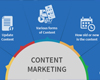
    2. Update your content regularly to make it more relevant and useful

    Content that was published over a year ago may not have the same relevance today. When new topics are trending, look at where your content can fit into current trends and revise accordingly.

    3. Use various forms of content

    Content does not mean only published articles. It can be of any form, and in fact, videos, PowerPoint presentations, PDFs, and infographics are good ways to make content last longer.

    It’s also a good idea to periodically optimize content meta tags such as the title of the asset, its meta description and meta keywords. If published content is still relevant after a long period of time, meta tags can be updated to suit the best trending searches related to the content.

    4. Let users know how old or new the content is

    For published articles and blogs, it is wise to display when it was published and let users know how old the content is. Without a publishing date, readers may not be certain if the content is still useful.

    Not displaying the date of publication may put readers at risk if the provided information is stale or no longer applicable. Displaying the date lets readers decide whether or not to use the content. Otherwise, readers may be confronted with a dilemma, and abandon otherwise useful content only to avoid the risk of using outdated information.

    5. Notify readers when you update content

    Content that deals with particular subjects is likely to change frequently. If you update time-sensitive content to keep it relevant, it’s good practice to let readers know about such changes by mentioning it at the beginning.

    Sometimes it may not be possible to change published content to keep it fresh or relevant to current requirements. In such cases, let readers know that the content deals with old information, and then provide a link to a new page. This will help readers get the fresh information they are looking for, and is an excellent method to drive user engagement.

    Creating durable content for users and search engine requires continuous effort. It is not a one-time activity, and it requires regular updates to published content. To do this, you may also want to monitor your ranking results and traffic to know how your content is holding up over time.

  • How Marketers Can Leverage Social Media To Engage Their Audience

    This week’s hot news, events and videos from the online marketing and social media world.

    From the Position2 Blog This Week:

    Top Stories of the week

    White Paper: The Rapidly Changing World of SEO

    Get a head start in your quest for search engine optimization through this insightful white paper.

    Download this White Paper to know:

    • How important SEO is & why it should concern you
    • Various ways in which you can deploy SEO
    • How to combine Social Media with SEO
    • SEO best practices and a road map to getting there

    Download the complimentary SEO White Paper now

    Search-Engine-Optimization-White-Paper-position2

    If you are reading this blog post via a RSS reader, please click here to subscribe.

  • Which Social Media Sites are B2B Buyers Using?

    Social media has had a huge influence on the way we live and work. For marketers, social media has allowed brands to start conversations practically in real time. It allows any business to engage with its audience in ways that were simply not possible 10 years ago. The ripple effect is felt across both B2C and B2B marketing.

    The social landscape is continuously evolving, and different platforms offer different—and changing—opportunities. But regardless of which platforms brands choose to use in their campaigns, social media will be one of the most affordable and effective methods at their disposal.

    Whatever the size of your business, you can tap into its potential and achieve impressive results—and social media’s influence on B2B purchases should not be underestimated.

    Who’s on social media in 2016?

    Social networks attract users of all ages, from all demographics across the globe.

    The number of young adults on social media has increased massively over the last decade. In 2005, around 12 per cent of this age group used social channels. Today, the figure is 90 per cent. When we talk about ‘young adults’, we’re essentially talking about tomorrow’s IT leaders. While some of these individuals are graduates, many are already making important brand decisions.

    The figures are significant for older internet users too. In the US, around two-thirds of the adult population uses one or more social networking sites, compared to 5 per cent 10 years ago.

    This cross-generational change has sent shock-waves through practically every sector. We all get our breaking news from Twitter, share memories on Instagram, and keep in touch with family through Facebook. In order to communicate with customers and service users, businesses have had to modernize their approach and get involved in this socially connected world.

    Why businesses must take note of social media

    Facebook is arguably the world’s best-known social network, with more than 1.4 billion active monthly users. 70 per cent of marketers use Facebook to generate more customers, and success is particularly pronounced in B2C marketing campaigns.

    Let’s not forget LinkedIn, which is responsible for more than 80 per cent of social media leads in business. Twitter is used by just over one-third of marketers, while Pinterest and Instagram have 20 million and 150 million active monthly users respectively, and offer great potential in the creative sectors, from home wares to fashion and beyond.

    So, what do businesses actually stand to gain?

    Increased brand awareness

    Social media is important in keeping a brand top-of-mind for a consumer. 37 per cent of internet users follow their favorite brands on social media, while 30 per cent use social networks when researching a purchase.

    Better consumer targeting

    Social media opens up two-way conversations, and gives you insight into the things your customers care about.

    Enhanced customer service

    Your customers are increasingly savvy, and they expect a great experience when they shop with you. Social media lets them get in touch directly, and that provides opportunities to offer rapid responses to support enquiries.

    Timely feedback

    Need to judge the reaction to a new campaign idea? Want to roll out a trial product and gauge the response? With social media, you have a direct connection to your audience.

    More leads

    Social media is a cornerstone of any inbound marketing campaign. Having a presence on key social channels lets you publish content, get your brand noticed, and create more leads.

    Increased sales

    There’s no magic formula for increasing sales through social media, but if you improve awareness, targeting and customer service, increased sales will follow.

    Social media is a fantastic tool for B2B marketing; 54 per cent of B2B marketers are already using it to generate new leads. As we head towards 2017, it’s estimated that US marketers will spend more than $100 billion on social media advertising.

    Ignore the trends at your peril

    We’ve reached a stage where the impact of social media can’t be denied. Since the mid-2000s, it has been a growing influence in the way we all live, work and shop. For businesses, it’s critical to have an active presence on social media, and to take interactions with customers seriously in order to drive profits and sales.

    Looking specifically at buyers in the IT sector, we know that 86 per cent use social media when making a purchase decision. These buyers tend to be the young adults that are also using social media for fun.

    We also know where these influential decision-makers tend to hang out:

    • 83 per cent research on LinkedIn
    • 80 per cent check out Twitter
    • 80 per cent look at Facebook business Pages
    • 61 per cent review YouTube videos
    • 39 per cent use Google+

    Social media is critical, not just because of the research angle, but because so many of these buyers will not contact a supplier until they’re more than half way to a decision.

    Social media can’t do your marketing for you, but it’s one of the key ways to reach the end of the marketing funnel. As such, marketers ignore it at their peril, and the consequences of neglecting social media could have a tangible impact on a business’ bottom line.

  • Google To Stop Showing Ads On Right Side Of Desktop Search Results

    Position² Point of View

    This new Google policy will result in many advertisers seeing a big drop in traffic, as their ads will appear at the 14th position on search result pages instead of at the fourth position.

    This will also have an impact on Cost Per Click, as more advertisers will compete for the top three slots—similar to Google display ads that appear above organic results on mobile devices. In our experience, the top three positions produce the best results on mobile, and it looks like this will now apply to desktop searches as well. Advertisements in fourth position will now have reduced impact, as they will appear at the bottom of the page, which may result in low CTR and low traffic.

    QS is King

    Quality Score is going to play a key role with this change, as only high quality ads can appear on top of the page, irrespective of bid price. So keywords with low quality scores will see a huge drop in traffic. This means that we will be seeing fewer high quality ads on Google.

    Long Tail Keywords

    Traditionally, most advertisers largely ignored long tail keywords, or didn’t focus as strongly on improving their QS. These keywords will play a key role now—if we can establish good quality scores for them with relevant ads and landing pages.

    Product Listing Ads

    PLAs will get more visibility now, as the number of text ads will be reduced, and PLA advertisers will see an increase in CTR. Advertisers who run PLAs must review their results as a consequence of Google’s new policy.

    How Will This Impact Your Advertising?

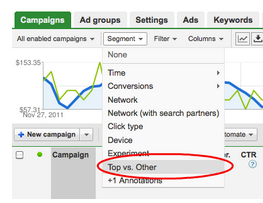
    If you’re a marketer, you need to run a simple Adwords report comparing “Top vs. Other” segments and see what kind of traffic you’re getting. If your maximum traffic is for “Top” you will see an increase in CPC, so you will want to increase your budget outlay. If you’re getting most of your traffic from “Others” you must work on improving positions and QS for your keywords to avoid large drops in your traffic.
    google

    Positives

    Companies that can afford to advertise in top positions will see an increase in competition, so we can expect higher quality results. In general, the quality of ads goes down in the lower positions, as they are dominated by affiliates and often feature lower production values.

    Fewer premium advertisers will result in less complexity, and this will probably reduce the importance of bid management platforms. If we find out that low ranking keywords are not performing, we can eliminate them as they will not get much traffic in the future. This will result in a smaller number of keywords to use in campaigns, and further simplify account management.

    Negatives

    So far, Google advertising has been the most affordable and easy to test channel for small advertisers with limited budgets. Such advertisers will now need to increase their spending to get good results from the Adwords platform.

    Watch this space for more updates!

    By Sudheer Dayanand@Team Position2