Blog

  • Glocalization Helps Small Businesses Compete

    Often, smaller businesses are wary of competing with a reputed brand, assuming that the bigger enterprises are more resourceful with an added advantage of an established brand value and reputation in the market. However, that’s not always how it works in the ‘www’ world. In fact, as a local business, you know more about your customers and their requirements than a bigger brand. So, you should always leverage this knowledge to become a local expert on the industry. This brings me to the concept of glocalization, the practice of conducting business according to both local and global considerations.

    Glocalization is the adaptation of globally marketed products and services to local markets. “Think globally, act locally,” is one of the most effective “mantras” for small and medium-sized business who are ‘all set’ to compete with a big brand in your domain.

    With the current digital-growth explosion, where people are connected online 24×7, you can thrive in the market with a well optimized website and an effective content marketing strategy. In fact, “content” is a key buzzword in the online space. According to WordStream, while the catchphrase “content is king” has been used plenty in the past couple of years, we shouldn’t expect it to go away any time soon. “Content is key, having a content strategy is essential, you need quality content if you want to succeed in today’s digital marketing landscape.”

    In addition to having strong content, we recommend following these simple glocalization steps:

    • Get listed on Google Places to gain visibility in the local market. People tend to trust someone from their own area, so this is a great opportunity to build on that trust factor.
    • Add images, videos, and customer testimonials on your website to make your business appear more genuine and trustworthy to potential customers.
    • Use tools to add “review ratings” that show up on the organic search results.
    • Add some resource links on your website to provide good content to your customers. After all, Google appreciates sites with authentic, useful information.
    • Provide local and relevant content on your website that your potential customers can easily relate to.
    • Know your customers’ likes and interests and provide content that they will feel compelled to share with others.
    • Connect well with your customers and get “personal,” making them feel that you are speaking with them. It is widely accepted that people connect with and trust other people more than they connect with trusted brands. Become the face of your business to forge a tie with your customers, foster a lasting relationship, and eventually turn them into loyal advocates of your business.

    Yahoo! is an example of a company that practices glocalization. It markets a portal that is viewed worldwide and offers different versions of its website (and related services) for different users.

    Therefore, the biggest weapons to win the online game are “Local-focused” content and personalization. Make sure you follow glocalization guidelines on an ongoing basis to stall a competitor from becoming a threat!

    Sources:

    1. https://en.wikipedia.org/wiki/Glocalization
    2. http://www.wordstream.com/blog/ws/2015/02/23/marketing-buzzwords
    3. http://www.investopedia.com/terms/g/glocalization.asp
  • Content Marketing for B2B vs. B2C Audience

    Let’s start with similarities between the B2B and B2C content marketing strategy:

    1. Principles that apply to most digital marketing channels apply for content marketing too, namely- appeal, precision, look, relevance and revenue.
    2. Both B2B and B2C businesses need a robust client retention management program to be on top of their customer’s mind.

    Interestingly this is where the similarities between B2B and B2C content marketing end.

    Expectations from Content Marketing:

    Content Marketing for B2B and B2C

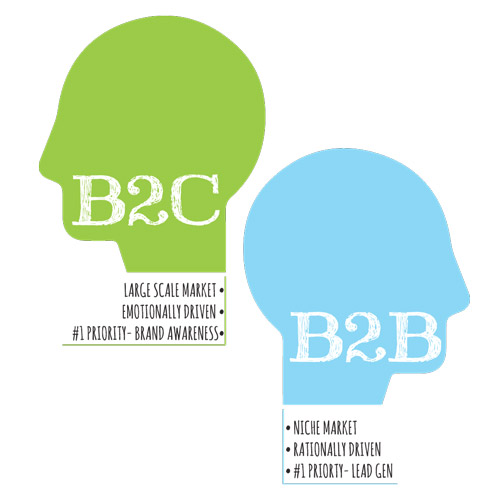
    In a typical B2B environment leads (form fills, e-mails submissions etc.) define success. It is expected that these leads will close and generate revenue down the road.

    For a marketer in B2C success is typically about the “buzz” a piece of content generates. So we get to hear words like – brand awareness, likes, retweets, YouTube views and so on.

    Given the different expectations, it only makes sense that the content marketing strategy is also different for B2B and B2C firms.

    Here are some prominent ways in which content marketing for B2B and B2C companies differs.

    Intent

    In a B2C industry a buyer is driven by motives that lead to specific thought process – will I look good in this dress, how cool will I be with this smartphone, do my friends own it, is the product available at a discount, is this site safe for me to buy, I need instant gratification etc. Innate needs and desires drive a B2C purchase decision. Therefore, the intent is to find something they like, that is also voted positively by others. As part of this process perhaps the buyer will read a review, look for user ratings, view a video and check out what others are saying on Facebook. He/she will then get comfortable with the price and buy!

    B2B audience on the other hand need a lot of information about a product before they can buy or even influence a buying decision. Yes, reviews hold good here too. But the key difference is the depth of information sought, multiple stakeholders and the entire selection process with these stakeholders. A firm trying to sell to other businesses needs to establish itself as a leader in the industry. Therefore, thought leadership and a content strategy that helps you promote this leadership is critical.

    The intent of the user in B2B scenario is to learn about a product, gather information and gain knowledge. He/she seeks out content that will help them do this.

    Content Type and Channels

    In B2C a purchase (or consideration leading to a purchase) is more personal. Therefore, how owning the product makes one feel, affordability and what others would think of them if they owned the product become paramount in decision making.

    As a result, B2C companies should have content marketing strategies that includes – UGC (user generated content), brand videos, discount promotions via banners or e-mails, Facebook posts and pages, real-time updates about products- SMS/ text messages or e-mails, tweets, Instagram and Pinterest. Being in front of the audience for top of the mind consideration is the key to success.

    Because B2B audience need much more detail about a product, content such as a whitepaper, infographic or a powerpoint detailing the benefits of the products and differentiators from competition will influence a prospect.

    Similarly, a video showing ease of use or a demo will help. Likewise, an ad on LinkedIn (sponsored updates) will help reach the right audience. Blogs and product specification sheets also do the trick.

    B2C Marketers on Facebook

    Customer Retention

    Once a prospect becomes a customer you want to retain them for a long time. It is only logical that you need to make more money than you spent on acquiring them. Therefore, loyalty or simply put retention programs are important. B2C brands should consider increasing retention by interacting with customers through multiple channels and with a range of content.

    Brands should engage their customers with – enticing new products or enhancements to existing via social platforms, promotions, stories, user generated content, social cause (CSR) and request for participation, solutions to product issues and co-creation of future products. For an effective retention strategy B2C companies should integrate their all-powerful CRM systems with content marketing strategy.

    This means a timed e-mail program and social media engagement via platforms like Facebook, Pinterest, Twitter and Instagram will be important. It is likely that B2C audience will tolerate such touch points and your customers might even want these touch points. Though there is CRM and content marketing interplay even with B2B customers, they need to be managed differently.

    Once the product is bought, typically after a long consideration cycle and multiple rounds of convincing others, the touch points to build loyalty and increase retention need to be precise and thought through. These touches have to be about the product bought or an obvious extension to the product. Therefore, messages about changes, fixes, enhancements, logical add-ons etc. will be important. This is a great way to retain and up-sell or even cross-sell to customers.

    Social media retention strategy might work in B2B too, but it is too wide a net to cast. You need a more segmented CRM approach based on purchase and customer history. CRM and content marketing strategy integration must lead to a “one-on-one” integration with your B2B customer.

    Therefore, an e-mail based approach works best. If the customer sees your strategy is throwing irrelevant content at them, they might stop noticing you. So a customized e-mail touch point is important.

    Conclusion

    Regardless of your business type you need to know your audience really well and make sure you segment them based on intent.

    So, in your upbeat desire to show your content strategy to your boss don’t just spray a bunch of content out there and pray that your business will grow. Approach your audience with a well thought out content marketing strategy. Start with intent, think about the type of content and finally retention.
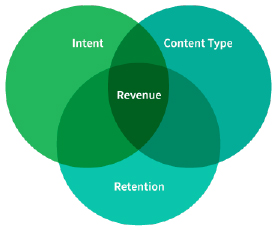
    Content Marketing Strategy Mix

    Don’t be one of those content marketing professionals who end up not having an effective content strategy.

    Good luck!

    Content Marketing Strategy Mix

  • Are You Directing Your Visitors To The Right Channel?

    A visitor today can be your prospect tomorrow with personalization!

    The importance of knowing your visitors, be it unknown, and their behavior is now a priority across industries, organizations, and individuals. It doesn’t matter if they are personal (visitors at home), professional (clients) or online visitors (web visitors). They are always important and expect that special and personalized attention.

    Attention to visitors on personal and professional front has always been there but what about your online visitors? Who are they? What is their line of business: B2B, or B2C? Do you give them that personal attention and experience as well? Do they get what they want, when they visit your website? Are you giving them your personalized messaging so they feel unique and important? Are you directing them through the right channel by understanding their intent and interests?

    These are some of the many questions that need to be addressed. The more the marketers are aware about their web visitors’ needs, behavior, persona and demographics, the easier it is to educate or engage with them to make a personalized buyer journey.

    So, what’s this web personalization in digital marketing all about?

    To answer – It’s all about personalization and not just personalization but Real Time Personalization (RTP) and that’s the digital mantra and strategy for today’s marketers.

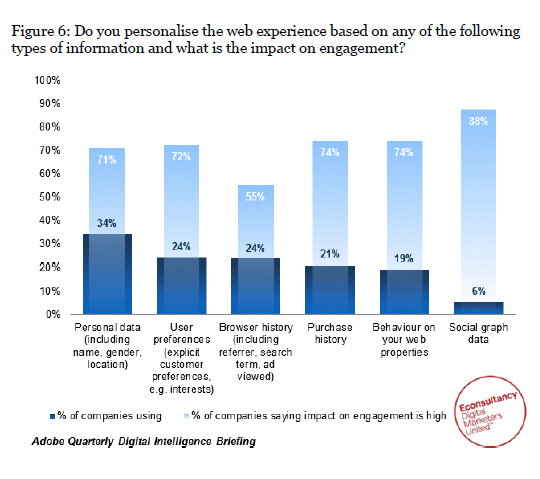
    Welcome to the world of Real Time Personalization – that creates a unique and personalized experience for your web visitors. Real time personalization gives organizations the power to create individualized experience for their website visitors, based upon various factors such as search terms, demographics and industry. This experience helps to boost their movement through the sales funnel.

    “If the user experience is good, the reputation of the website will be even better”

    Real Time Personalization uses behavioral data collected from web visitors. Using this, marketers can segment and modify messaging and content in real time to boost engagement with prospects.

    Marketers are catching on!

    According to Forrester Research, 92% of marketers say their interest in personalization has increased and 83% say it is critical to their company’s success.

    There are numerous ways to implement real-time personalization. Let’s take a look at few of them:

    • In-depth identification of buyer personas
    • Developing content that appeals to each type of buyer persona
    • Using big data processes to understand who the visitor is, and what they are looking for
    • Building a site that responds to the broad categories the visitor falls into (such as “region” or the “source” they arrived from)
    • Using machine learning techniques to customize, as per the individual
    • Customization beyond the website

    Impact on Return on Investment (RoI)

    With real-time personalization, marketers can now concentrate on being found, and establish relationships with buyers. With so much valuable information about visitors, marketers can understand their audience better, present much more relevant content and hence drive more sales.

    By Swet Kshitiz

  • Content Marketing: What Not To Do

    There’s no shortage of content marketing guides on the internet. They cover all the tactics you should be using. But unless you understand the things you should not do, you don’t have a complete content marketing strategy. And for true success, you need to be flexible and continually adapt your approach.

    Here are key points to avoid developing a content marketing strategy.

    1. Don’t be too general when building a strategy: To build a successful content marketing strategy, you need firm foundations. Defining goals from day one is essential. A strategy that worked for one business may prove to be a failure for another, even if the two businesses are part of the same industry. Content needs to be specific to your target audience, and it needs to target that audience precisely. This is applicable to global businesses, but it is equally important for local businesses. A local audience can have cultural differences, so similar content strategies may not have a similar impact.
    2. Don’t confine your content: Content should not be confined to a particular vertical or a product line. Content is bigger than marketing: make sure you get it the right way around. For any marketing strategy to be successful, trust has to be established by bringing customers into the fold and engaging them. User-generated content is critical; any form of customer interaction should be used, whether it is reviews, feedbacks, tweets or comments. Content marketing strategies should be based on user-generated content, which can make the readers emotionally invested in a brand.

      Power of Content

    3. Don’t try too hard to go viral: Content works best when it engages a reader. This doesn’t necessarily mean it has to go viral. Look at the long game, and treat your strategy as a process of building momentum. Over time, you should aim to build trust in the reader, and engage the audiences. Once you have the groundwork in place, it’s much easier to get content to go viral. Brands must plan for the bigger picture rather than focusing on short-term traffic.

    Finally, remember: content is not a sales pitch. Stop trying to sell things with the content you create. It’s a turn off for readers, and it cheapens the information you’re putting onto your site. Instead, design your content marketing strategies in such a way that the product or service fits the consumer and sells itself.

    With over a decade of expertise, Position² is a digital marketing agency that accelerates demand for fast growing companies. With a dedicated team for Content Marketing, our in-house subject matter experts understand how to build successful content strategies, elevating your brand’s visibility while promoting increased engagement.

    By Divyansh Sharma

  • The Impending Digital Era

    In 2011, Peter Drucker said that “the aim of marketing is to know and understand the customer so well, the product or service fits him, and sells itself.” Traditional marketing with a push strategy was never able to reach this objective, but digital marketing with a pull strategy – and client focus – has realized this aim.

    PwC’s 15th annual report reveals that TV advertising generated $173.7 billion worldwide in 2014 and will grow to $214.7 billion by 2018. During the same period, internet advertising will grow from $133 billion to $194.5 billion. Research indicates a 5.5 percent compound annual growth rate for TV advertising compared with 10.7 percent for the internet, suggesting the latter will pass the former by the end of the decade. (Source PWC)

    In the constantly changing world of digital marketing, it is hard to predict what the future has in store for us, whether as a marketer or a consumer. Just like technology, consumer behavior will evolve exponentially and unpredictably. To anticipate upcoming developments in digital, we have to look at it from both the consumer’s and the marketer’s perspective.

    As a Consumer: The consumer will be at the epicenter of all strategic decisions. Most marketing and branding content will soon come from consumers. Social media has already empowered consumers to influence the branding and marketing strategies of multi-billion dollar companies by simply writing reviews and providing feedback. On one hand, a single review, comment or tweet can spread like wildfire and have a catastrophic effect on a brand. On the other hand, positive reviews and feedback can take a brand to new heights, and have the same impact as a multi-million dollar advertising campaign. Consumers will not only influence strategic decisions, but will have the power to make these decisions for brands. User generated content will be increasingly prevalent, and brands will have to be authentic to stay relevant. Popular culture will only gain importance in the years to come. Brands that change in accordance with culture will reign supreme and brands that do not give culture the required attention will eventually cease to exist.

    Being a Marketer: Noah Brier (the co-founder of Percolate) said that “the complexity of modern marketing is only going to keep increasing.” Being a marketer will become much more different and challenging in the years to come. Marketers will soon have vast amounts of data on consumer behavior, available at the click of a button. They will have the power to know exactly why a product or service is more successful, and which factors influence a buying decision. Organizations will have enough data to attribute a specific set of strategies to various stages of the buyer’s journey, ultimately leading to a conversion. Marketers constantly learn what to do; that will not change. What will change is that the marketers will have the resources and technology to know what not to do, and this could save a brand millions of dollars in expenditure which otherwise would have been in vain.

    The Funeral of the ‘Funnel’

    It is getting harder to predict consumer behavior in a constantly changing digital environment. As no two consumers are the same, the steps they take to convert into a client will also differ. The traditional funnel will no longer be relevant as consumers become more aware, and enhancements in technology will enable consumers to skip or add a few steps in the journey towards conversion.

    Mobility of Things

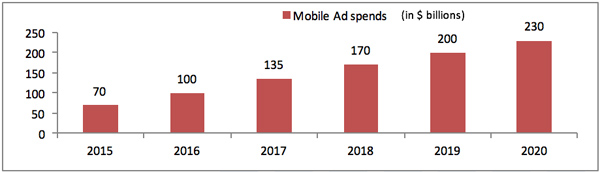
    Mobile devices and the Internet of Things (IoT) will lead the way to a much more user-friendly future. The majority of digital spends are going to be on mobile internet by decade’s end. Mobile marketing reach will be nearing 60 percent penetration, which will propel the digital advertising share to about 40 percent of all advertising spends by the end of the decade.

    Total Advertising Internet Mobile
    CAGR 4.4 % 10.7 % 21.5 %

    The Underdogs

    Developing countries will power the future of digital marketing. Markets such as China, India, Brazil, Russia, Mexico, South Africa, Turkey, Argentina, and Indonesia are collectively forecast to account for more than 25 percent of all global entertainment and media revenue by the end of the decade.

    More than a decade ago, C.K. Prahalad said that the “Fortune is at the bottom of the pyramid.” Developing countries of the world constitute the bottom of the pyramid, which holds the most potential, and soon every organization will want a piece of this pie. These countries are the potential gold mines of the future. As far as digital marketing is concerned, the term ‘population’ will soon be replaced by ‘economies of scale’.

    Organizations, marketers and agencies who master synthesis, community and creativity will be the winners, but the biggest winner of all, without a speck of doubt, will be the ‘consumer’. The consumer will be on the highest podium, around which the Internet of Things is going to revolve.

    With over a decade of expertise, Position2 is a digital marketing agency that accelerates demand for fast growing technology companies. ROI-driven solutions integrate paid acquisition, content marketing and marketing technology.

    By Divyansh Sharma

  • SEO is Going Mobile. Is Your Business Ready?

    If you’re looking for information about optimizing your site for search, the web is bursting with examples. In the past, when people spoke about website optimization, the first thing that came to mind would be optimization for a desktop.

    But times are changing.

    Yes, in today’s digital era, optimizing for the desktop is critical. But additionally, we now have to recognize that people are using mobile devices for many more tasks than they used to. If you ignore these mobile users, you could miss critical opportunities and capture an ever smaller segment of the market.

    Mobile Optimization Cannot be Ignored

    When you’re optimizing your website, it makes sense to tackle desktop first. But when you review your analytics, you’ll realize how many people search on mobile platforms. Research and reports have shown that the percentage of mobile users browsing the web is increasing by the day. Google has even made mobile friendliness a factor that can boost your search ranking.

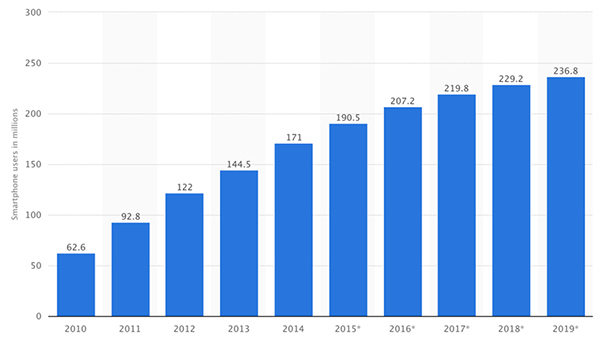
    According to research, the number of smartphone users will continue to rise in the coming years. And with the digital explosion meeting the Internet of Things (IoT), people are now more mobile than ever. The graph shown below depicts the growth of mobile users in United States, and the predicted figures for the next three years.

    If you don’t want to lose a large chunk of traffic, you need to cater for these mobile users today. Checking mobile-readability is simple: use this tool provided by Google.

    Looking Ahead to Further Optimization

    OK. Now you know how friendly your website is for mobile users. Google’s tool shows you a range of factors: mobile friendliness, mobile speed, and even the desktop speed. Page load time – or page speed – is an important factor that needs attention. But while the Google tool gives you a lot of great information, it can’t tell you what to do next.

    Getting a website optimized properly requires a lot of work behind the scenes. From the on-page optimization to off-page activities, online visibility establishment to technical checks, all of these factors are hidden – until you know what to look for. Only an expert provider has the experience and agility to tackle mobile and desktop at the same time.

    Here at Position², we take care of optimization for businesses, and help them to leverage their online presence on an ongoing basis. Now, with our content marketing service, we can handle every aspect of your optimization project. We’ll create content as often as it’s needed, optimize the content for search, build online visibility and optimize the structure and usability of content. Our dedicated SEO service complements this, by ensuring the whole website is optimized fully for desktop and mobile searches.

    Contact Position² today, to optimize your website for mobile and desktop search.

    Contributed by:
    John Bosco
    Link to G+: https://plus.google.com/u/0/114994015003691371841/posts