Blog
-
Why Cross-Device Targeting is a New Marketing Battleground
Cross-device targeting (or tracking) is a way to link different sessions from the same visitor on your website. The idea is simple: people may visit at different times, and on different devices. Cross-device targeting lets you tie the visits together, so that you recognize the same person regardless of the device being used.

When visitors can be tracked across devices, marketers can target them with personalized offers. This makes remarketing a powerful tool. If you don’t link desktop and mobile sessions in this way, you essentially lose customers when they close their laptops. Marketers miss out on opportunities to connect with them, and find it more difficult to understand their journey.
Two key approaches to cross-device targeting
There are two ways to approach cross-device targeting. The first is deterministic targeting, when a user has to sign in to get full functionality. This is also referred to as first-party tracking. Using this method, there’s no doubt that the right users are being identified, because they’ve provided the data we need to follow them. While you need to convince the user to cooperate by opting in and signing up, you’ll be rewarded with 100 per cent accuracy, provided that person logs in.
The second method is probabilistic targeting, which is far more complicated. It involves making a best guess that the customer is the same person by crunching huge amounts of data to find patterns of usage. Despite the fact that you need massive amounts of data, this method is surprisingly accurate, identifying people with over 97 per cent accuracy. The issue here is that users don’t necessarily know that they are being tracked.
Is cross-device targeting worth the investment?
Gartner estimates that 4.9 billion devices will be used to connect to the internet this year. In many cases, one user will have access to multiple devices and will browse to the same destinations on all of them. From desktop computers to smart watches, each device is a candidate for cross-device targeting because it fills in a blank for marketers.
The technique offers huge benefits in terms of reducing wasted impressions, and it can help achieve more effective audience engagement and attribution. Right now, only 3 in 10 marketers are using cross-device targeting, according to an eMarketer survey.
When it comes to collecting data about customers’ actions, mobile is particularly problematic. Cross-device targeting offers a unique chance to recapture individuals on their mobile devices.
Caveats and next steps
We briefly mentioned the privacy implications around user tracking, and it’s important that markers have an ethical approach when working with personal data. Right now, there is no unique identifier that can reliably track someone, but it’s likely that tracking technology will get better over time.
Additionally, smaller companies may find it more difficult to use cross-device targeting, because they cannot tap into valuable data streams that larger businesses have come to rely on. According to Econsultancy, one-third of publishers in North America currently don’t have enough data to act on. It’s quite common for providers to restrict access to their data, which puts everyone else in the market at a disadvantage. As we try to refine our understanding of consumer behavior, first party tracking will be the new battleground for marketers.
-
Here’s Why Data Driven Marketing is Increasingly Crucial for Marketers
This week’s hot news, events and videos from the online marketing and social media world.
From the Position2 Blog This Week:
Top Stories of the week
Our Creative Showcase
Creative assets play a critical role in the success of your online marketing campaigns. We go beyond creative thinking and design—bringing in strategic experience, insights into consumer behavior, and best practices for each channel—to build engaging and effective assets that enhance your brand.

If you are reading this blog post via a RSS reader, please click here to subscribe.
-
Why Data Driven Marketing is Critical to Personalization
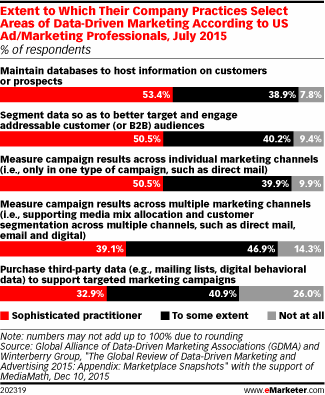
Data driven marketing is leading us towards more integrated marketing strategies, where data from different sources are combined to see the bigger picture. The key to success is to tap into relevant data from a range of campaigns. It’s possible to achieve highly optimized campaigns, and deliver content that is more targeted and personal.
In order to reach the right audience, you need accurate consumer insights, and you need to embed these into the planning stages. By using the right data at the right time, you can respond faster to consumer behavior and reach your audience.
What is data driven marketing?
Data driven marketing is a new tactic for marketers, where data actually underpins decisions. In order to leverage data for marketing, you need four key pieces of information:
- You need to know what data you already have. Increasingly, marketers are required to analyse and manage the data they rely upon.
- The team needs to trust that its data is accurate. If not, it needs to embark on immediate data quality initiatives to produce reliable data to drive the right decisions.
- The data needs to be organized into a usable format. It’s no good working from data silos that are messy and difficult to process.
- The data needs to be leveraged at precisely the right time, and the team needs the necessary tools to do that.
Big Data promises incredible insights into consumer trends, and new ways to look at consumers’ journeys as they interact with a brand in different ways. But businesses need to prepare—and crucially, they need to filter. 91 per cent of marketers have segmentation strategies already, and this is where personalized content can come into its own.
Why is data driven marketing necessary?
If you want to win market share in 2016, you’re going to need to blend creativity with technology, and data is the secret ingredient that binds them. But before we look at that, we need to look at what data actually is.
Not all data is equal; it’s possible to have too much data to work from. If you try to incorporate every scrap of data, you’re going to lack clear direction in your strategy. Additionally, you need to focus on data quality, because incorrect or incomplete records will hurt your ROI.
Changing habits is never easy, but there are two areas where you’re going to renew your focus:
- Unique customer identifiers are critical in profiling the customer journey. But be sure not to target customers with messaging that makes them feel pressured or suffocated. Lead scoring can help you pick out certain customers that offer strong potential to convert, which can lead to more effective conversations.
- Demographic and behavioral data will assist in better segmentation, so you can automate the process of making decisions and delivering customized messages.
Where does all this data come from?
You know you need accurate data, and an effective strategy to use it. But what are your data sources— are there any you can leverage, that you aren’t currently using?
Typically, marketers need to tap into business software, and form integrations that offer a single customer view. This means pulling in clean data from CRM, ERP and customer service systems, as well as social media, web analytics and automation software.
You can also leverage consumer feedback and face-to-face interaction, such as marketing initiatives at trade shows and meetings. Wearable devices and the Internet of Things are also bringing in new opportunities to see how consumers behave, while generating constant, real-time streams of data.
Take care not to use data irresponsibly. According to the Aimia Institute, people are sensitive about the data they provide, and may actually avoid giving businesses their personal data. A poorly targeted campaign can be to blame. Consider these statistics:
- 57 per cent of retail consumers take steps to actively avoid companies that are clumsy in their use of data
- 69 per cent choose to unfollow them on social media
- 69 per cent have ended subscriptions and closed accounts because of communications
- 58 per cent have opted out of emails
It’s critical to be smart with campaigns so that you aren’t cut out of the conversation.
The right data at the right time
According to Gartner, the right data is the magic ingredient that helps you to identify customer preferences and
uncover unmet needs. In order to do this, you need to measure the things that matter, and discard the bad data that will weigh you down.The Direct Marketing Association found that revenues generated by data-driven marketing grew for 46 per cent of US marketers from Q1 to Q2 in 2015. 53 per cent of respondents said that they expected revenue to increase in the third quarter.
Conclusion
Marketers are learning new ways of leveraging the data they hold. If they don’t have clean data driving automation and strategy, they could fail to deliver the personalized content their audiences demand. Marketing analytics suites help businesses deploy a range of data driven strategies for effective personalized approaches. Position² provides your business with a fully integrated suite of digital marketing solutions—including marketing analytics—that help convert leads into customers.
-
Want to Empower your Marketers? Get Automation to your Business!
This week’s hot news, events and videos from the online marketing and social media world.
From the Position2 Blog This Week:
Top Stories of the week
Persona Based Lead Scoring: The Mystery and the Method
Download this White Paper and learn:
Download the complimentary persona Based Lead Scoring White Paper now

If you are reading this blog post via a RSS reader, please click here to subscribe.
-
Why You Can’t Afford to Ignore Marketing Automation in 2016
For too long, marketers have been overly dependent on IT to assist with their campaigns. Often, this is a slow process; requests for data dumps can be slow to appear. For many years, data has been locked down so tightly that there was no other option for marketers.
But the task of compiling and using data is becoming increasingly devolved. This is part of a wider shift in the way we think about data, bringing it out of the server room and funneling it through tools that every department can access.
Increased sharing of data requires high quality data that is free from errors and out of date information.
Data in a database decays at a rate of 2 per cent per month. Up to 96 per cent of your database is currently out of date. Clearly, action needs to be taken on a consistent and long-term basis. The 2016 MarTech Data Report found that data quality is a problem for 49 per cent of its 400 respondents. Simultaneously, 51 per cent of respondents said missing information was a problem.
Marketing automation offers great opportunities, but we all have groundwork to do first.
Why does marketing automation matter?
Automation assists businesses in having real time conversations with the people most likely to spend. In an era of increased social engagement, two-way dialogue is a critical part of positioning your brand as being open and willing to engage. It certainly helps if those conversations can take place instantly, without being a crippling burden on your resources.
Customers are also using increasingly diverse channels, and automation helps businesses claim those channels and have conversations that span more than one. Thanks to better tracking and analytics, marketers can know where their efforts would achieve best results, without waiting for the IT department to turn around reports on KPIs.
By 2020, Gartner says that customers will manage 85 per cent of their relationships with suppliers without ever talking to a person. Where there is less human effort, there are also lower costs, and a better use of data that the business already holds.
Lead scoring, nurturing and segmentation also help boost efficiencies, passing these considerable resource savings to both marketing and sales departments. Marketing automation lets us see more granular segments and clearer signposts to engaging with prospects.
Choosing the right platform
In 2016, it’s not a question of whether you’ll adopt marketing automation, but which platform you should choose, and why. There are two key elements that a marketing automation platform must support:
- Your marketing funnel. Knowing your customer personas is key to marketing success, and when you’ve automated your processes, personas become absolutely critical. Too many companies choose solutions that don’t allow enough definition and measurement. That means content is less effective, and success is difficult to quantify.
- Your wider business. The marketing team does not exist in isolation. The data it uses should be the same data used by everyone else. What can marketing learn from other areas of the business? Integration is critical, because sales and customer support is part of the customer journey, and every cog is a part of the larger machine. Your automation platform needs to involved with the conversation, and needs to bring in all these different inputs.
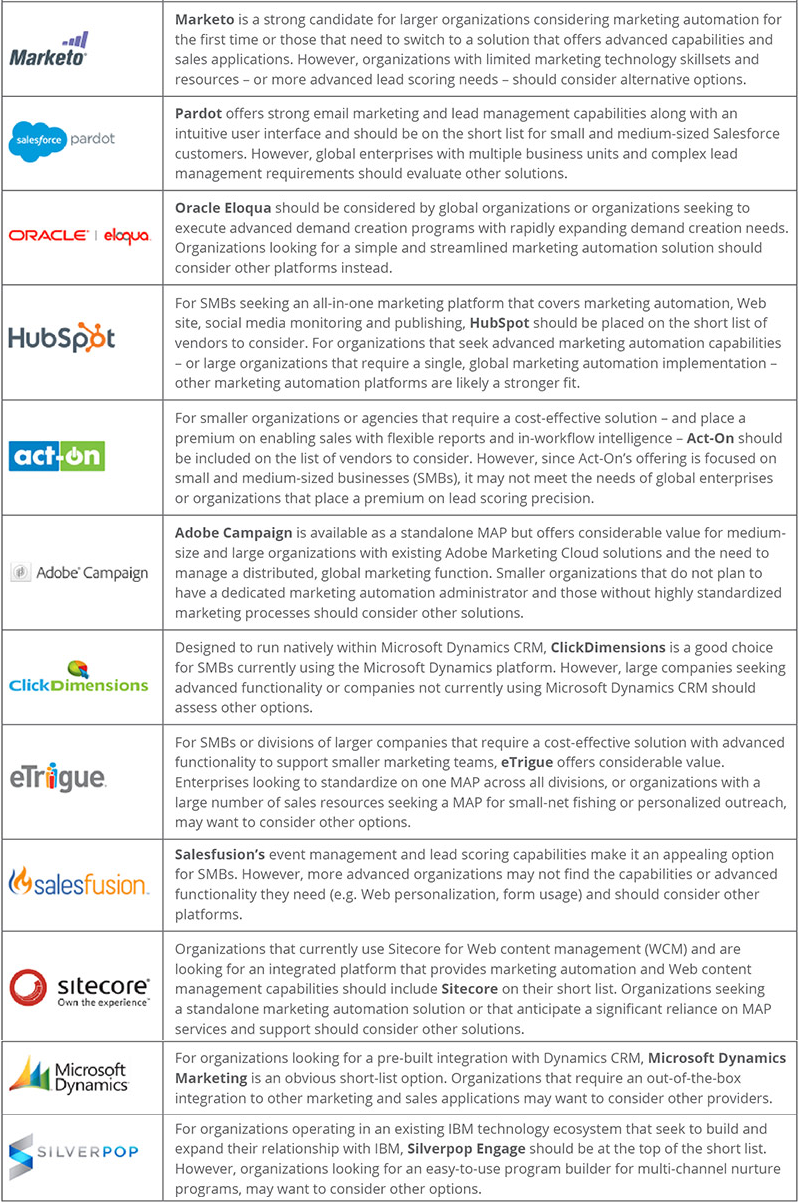
There are dozens of options on the market, and not all of them are comparable. Some serve enterprise well, but others are SME focused. Examine the solutions you already have, and the ecosystem that will best work for your business.
Moving towards an automated world
Marketing automation is pushing new boundaries in a new digital landscape. Software is delivering new features, opening up data that was previously difficult to access. Automation lets you respond quickly, adapt instantly, and tailor your approach depending on response.
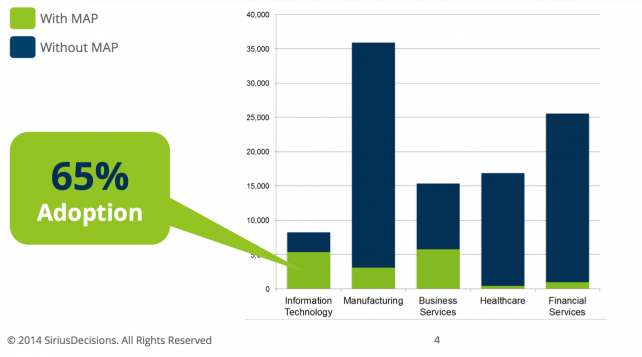
One thing is for certain: automation drives an increase in marketing qualified leads (MQLs). This is proven in several studies. 80 per cent of marketing automation system users saw an increase in leads, and 65 per cent say leads increased by at least 10 per cent. According to SiriusDecisions, marketing automation adoption is increasing at a rate of 22 per cent; given the opportunities, it’s hardly surprising.
Your first step
Position² is a Marketo Certified Partner, and our team already has over 4 years’ experience in the platform. Contact us for more information about our Marketo consultancy services. We have a booth at the forthcoming Marketo Marketing Summit 2016; stay tuned for more details about the event.
-
Another Ace Up Our Sleeve: p2webadmin At The SCM Marathon
The 13th annual Standard Chartered Mumbai Marathon was held on 17th January 2016. Procam International—India’s leading marathon organizer—handled the logistics behind this global Top 10 marathon that’s getting bigger every year. It was a privilege for Team Position2 to be associated with SCMM 2016—developing its official website, as well as handling overall social media management for this global event.

For us, preparations started nearly seven months prior to Race Day. From designing and developing a cutting-edge website to managing social media platforms, we put in an extraordinary effort into promoting the event and encouraging runners to register. Come Race Day, several team members travelled to Mumbai and covered the race, with continuous support from our Bengaluru office.
SCMM 2016 broke several records in terms of race results and social media interactions:
- Over 40K runners participated, with significantly higher international participation compared to previous years
- Three course records were set in the Men’s categories—two in the International Elite, and one in the Indian Elite
- Over 210 Million Rupees was raised for various charities
- The overall reach of the Marathon’s hashtag #SCMM stood at 1.22M people on Race Day
- There were over 103K engagements and 7.59K mentions of #SCMM on social media on Race Day alone
- The hashtag #SCMM2016 was trending at the #1 position in India and Mumbai, with #SCMM trending in Mumbai and Bengaluru as well

This was Team Position2’s third engagement with SCMM, and working together with Procam, this 13th edition of the marathon turned out to be a massive success! Having earlier worked with Procam on other big events such as the Airtel Delhi Half Marathon, the TCS World 10K Bengaluru, and the Tata Steel Kolkata 25K, we expected SCMM 2016 to eclipse them all, and it certainly did!
If that wasn’t enough, Team Position2 runner Vidya successfully completed the Women’s Half Marathon to cap what turned out to be an exhilarating day for us, and every participant.
SCMM 2016 rewrote the record books for an event of its kind. As our focus shifts to the next big race, p2webadmin looks forward to once again playing a key role behind the scenes, unforgettably inspired by the runner’s mantra of desire, determination and dedication.
-
Marketing is Getting Hyper-Personal. Let’s Look at the Factors in Play
This week’s hot news, events and videos from the online marketing and social media world.
From the Position2 Blog This Week:
Top Stories of the week
Persona Based Lead Scoring: The Mystery and the Method
Download this White Paper and learn:
Download the complimentary persona Based Lead Scoring White Paper now
If you are reading this blog post via a RSS reader, please click here to subscribe.
-
Hyper-Personalization—The Inevitable Evolution Of Marketing
Hyper-personalization or ‘personalized marketing at scale’, is where Big Data and online marketing intersect. This new marketing buzzword denotes more than a passing phase—it’s part of an irreversible evolution in marketing that targets individuals with content that is tailored to them. This is marketing done smarter, and it’s a technique you need to know about.
This new world of personalized marketing presents both opportunities and risks for marketers. We must seek to engage with our audience without being creepy or overstepping privacy boundaries.
We all know that blanket TV ads are becoming increasingly less effective. It’s time to look at hyper-personalization to boost engagement and generate demand. Nearly 6 in 10 marketers say that personalizing content is a crucial part of their strategy, and we think that number will only increase in the foreseeable future.
With so many experts in agreement, it’s time to face the facts. This isn’t a fad; it’s a technique that’s here to stay, and it will permanently and irreversibly change how marketing is done.
Three ways to deliver personalized marketing at scale
There are three key techniques we need to focus on. Let’s look at them briefly:
1. Social listening
Being represented on social media isn’t enough any more. The number of likes, shares and follows is irrelevant. What matters is the one-to-one connection that is created with a personalized approach. On social media, hyper-personalization means actively listening to individuals and then engaging in a conversation with them.
2. Data analysis
Hyper-personalization is married to Big Data. It cannot exist without it. So we need to update our data management strategies and look at ways to enrich what we know. Using a CRM is no longer enough. We need to capture profile information, scan social networks, look for relevant hashtags, and enhance our data with third-party sources. We all need to put more effort into maintaining a high level of data quality.
3. Content and context
Content is still king in this new age of marketing, but hyper-personalization implies that content needs to be personal and targeted. This is essentially the Holy Grail of content marketing. We need to track people, tailor our message, and create content for the individual.
Personalization and ROI
Hyper-personalization is intrinsically linked with providing exceptional customer service and triggering loyalty that results in increased frequency of purchases.
Customers increasingly expect a business to know who they are, and what they want, and hyper-personalization allows businesses to make that personal connection. In a report by Infosys, 59 per cent of shoppers who have experienced personalization believe it had a “noticeable influence” on their purchasing decisions. Marketers have many opportunities to leverage this competitive advantage.
It’s not just about creating loyalty; it’s about increasing spend, and that means giving customers more reasons to purchase, so that they come back and spend more frequently. These could include loyalty rewards, incentives, and coupons that tap into customers’ purchase triggers.
Customers expect personalization
At the beginning of this article, we briefly mentioned that personalization has to strike a fine balance. It has to deliver the experience customers expect, without stalking them or invading their privacy.
Technology is providing the experience that customers are expecting, but it can also be responsible for making them feel like they’re being tracked or monitored by ads. There must be a guaranteed return in exchange for personal information, but marketers need to be cognizant of the issues around privacy and data gathering.
Consider these figures from an eMarketer survey:
- 21 per cent of marketers said that the experience needs to be completely unique to be effective
- 32 per cent were neutral
- 46 per cent of client site marketers disagreed
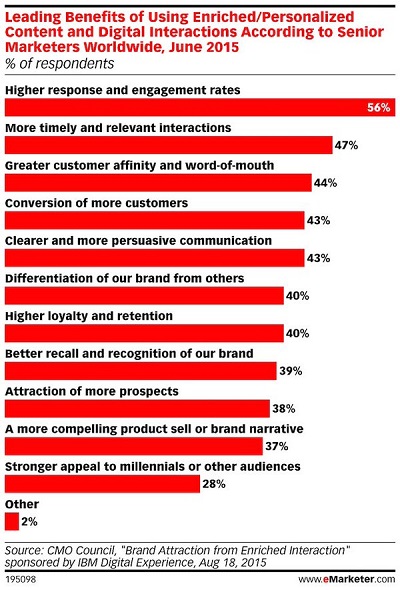
Perhaps the most compelling reason to use hyper-personalized content is the uplift in response and engagement rates. In a study by the CMO Council, 56 per cent of surveyed marketers reported this as an outcome of personalized content and digital interactions.
Takeaways
2016 is the year that segmentation will wither and die. With all the data potentially available to them, marketers now have opportunities to develop relationships with customers through engaging personal interactions and thus obtain valuable insights.
The only way marketing teams can achieve this is to carefully analyze data, drill down to the granular details to figure out what their customers want, and build a picture from data gleaned through multiple channels. This highly focused approach can produce astonishing results.
-
Smart Money is in Digital Ads, Where is Yours?
When consumers embark on their journey, we know that they use multiple channels to get information. Of all the touch points in a typical journey, display ads are a major contributor to conversion. As spend increases, and customers’ behavior changes, we’re seeing digital ads pushing better and better results.
The real magic here is that digital ads boost results across the board. As an example, take a look at the BrandScience and Microsoft econometrics study. They wanted to figure out how online advertising influences behavior. The study found that digital ads perform very well when taken as a sole channel. Combined with other media spend, they can lift ROI by up to 70 per cent.
Now is the Time
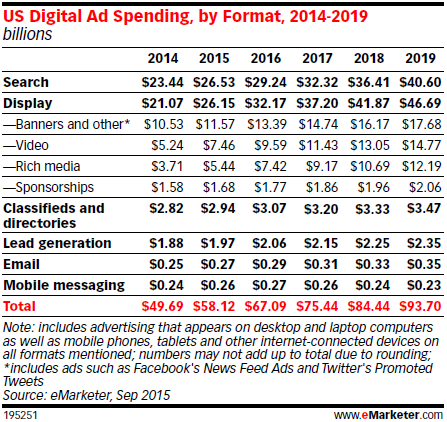
In 2016, US digital ad spend will surpass spend on search advertising. This is a big deal for marketers, because it’s the first time that digital ads will come out on top, with the estimated spend being more than $32 billion total. This huge figure is set to increase to over $46 billion by 2019.
We already know that paid media and digital ads are a major factor in the buyer’s journey. They support brand discovery, encourage repeat visitors from partner websites, and reinforce the brand message you’re cultivating. Now that we also know that digital ads boost results holistically, we can look more closely at the proof.
Digital Advertising: Facts and Figures
Display advertising is a very effective way to drive traffic. Display ads across all formats result in an average 0.6 per cent CTR. Globally, we’re going to see increasing shifts towards campaigns that focus on digital. Multinational companies like Procter & Gamble invest huge amounts of money in this space. Investment of 30-40 per cent of a marketing budget is fairly typical, and reflects the overall interest of bigger brands in boosting overall results in a campaign.
In fact, 57 per cent of CMOs expect budgets to increase over the next two to three years.
Looking specifically at mobile, spend on mobile search is expected to increase from $13.6 billion in 2015 to $18.5 billion in 2016. And if we look at US spend on banners, rich media, sponsorships and other display formats, a massive 77.5 per cent – $17.5 billion – will target individuals on mobiles and tablets.
The proof is there, and it’s compelling. But there’s one more piece in this puzzle.
Honing Digital Ads
When it comes to digital ads, the amount you invest is going to dictate your results. But focus is just as important, and 2016 is the year we’re going to see an uplift in ROI via more targeted advertising strategies.
Coming up with effective ad strategies is not easy, and there’s an ongoing question mark around ad blockers and other tools that can disrupt planned trajectory. Brands are struggling to leverage the market on their own. But with the right support from a capable agency, any business can navigate this complex terrain.
Position2 is well placed to deliver the strategy you need to make the most of your digital ad spend. We have our finger on the pulse, and we know which metrics to measure. We know how, and when, to target your audience.
Seeking an integrated digital media strategy? You found your perfect partner. Contact us for advice today, and subscribe to our blog for more updates.