Blog

  • How Does Quality Score Play into B2B AdWords Optimization

    A frequent question that I’ve been asked: How do you optimize an AdWords Account? My answer (to quote an oft-used phrase): I begin with the end in mind. If I’m working with a B2B Account, I am solely focused on the Cost Per Lead Metrics, so I optimize all the elements higher up in the funnel that I have control over in order to get a most favorable CPL.

    What elements do I have control over?

    Bids. Bid Strategy. Ad Text. Keyword Targeting. Landing Pages (sometimes). If I’m being the best steward of my client’s money, I’m making the most relevant choices for the account…examining the account data…and tweaking my choices, all the while chasing optimum performance.

    AdWords Optimization

    What element do I not have control over?

    Quality Score.

    You might point out to me that you’ve seen all these blog posts talking about quality score elements and what you might do to get your score higher. I would tell you that most of that advice is quite valid.

    You might also point out to me that you’ve read studies showing that higher quality scores lead to lower CPCs and better performance. I would acknowledge that those studies (as well as reports I’ve run on client accounts) validate this theory.

    So why don’t you have control over your Quality Score?

    Technically, you do have some control over it. However, it plays very little into how you would optimize an account.

    If I’m doing the best possible job for my client, I’ve chosen the right list of keywords; I’ve written extremely pertinent ads; I’m making the best bidding choices, and my landing pages are topically on point and contain all the right elements to convert relevant traffic.

    I let my performance against client goals dictate how I manage the account…not what the quality score is telling me.

    Would you ever manage an account based on Quality Score?

    If for some reason I’m not hitting client goals and I’m looking for an easy way to optimize the account, I would look at the Quality Score of the non-branded keywords. What I might do is create a CPA Matrix by Quality Score (QS) with an eye towards pausing all non-branded keywords tied to a Quality Score with a substandard CPA (generally QS 1-3), investing the savings into higher QS keywords. Implementation of this tactic should improve account performance.

    I have to say that I rarely resort to Quality Score-based tactics, because I’m solidly dialed in for campaign management. Were Google to take away Quality Score, it would have very little impact on my process and my results (which would still be awesome).

  • 5 reasons why your business needs content marketing

    From start-ups to Fortune 500 companies, everyone’s joining the content marketing bandwagon. In today’s dynamic and digital world, content marketing is possibly the most effective method to gain new prospects and retain the existing ones. There’s no escape from it if you’re serious about growing your business.

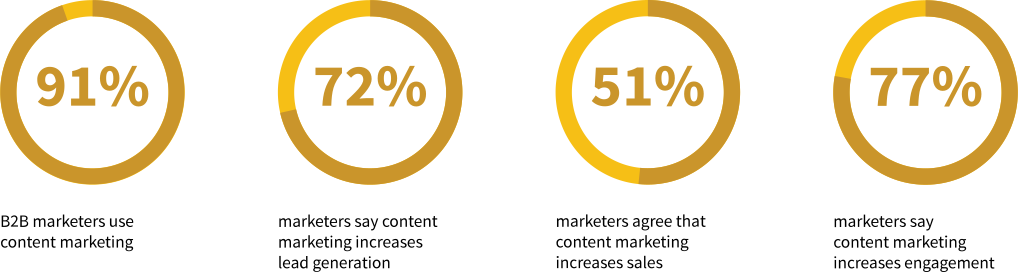
    Don’t believe us? Well, numbers don’t lie.

    5 reasons why your business needs content marketing

    Does this mean if you don’t have an effective content marketing strategy in place, you’re most likely to miss out on business? Probably, yes.
    However, if you’re still not convinced about adopting a content marketing strategy, here are 5 reasons why your business needs content marketing.

    1. Content helps to establish brand identity
      In a world where more than 46% Americans check their smartphone before getting out of bed, content consumption begins even before the day starts. Digital transformation is in favor of content marketers. By creating the right content and effective marketing strategy, marketers like you can carve a niche for their brand. Content in the form of blog posts, emails, infographics, and videos makes your brand stand out amidst competitors or cat videos. Create content that not just floats your boat but your customers’ too, in turn giving them a mnemonic to remember your brand.
    2. Easy to track and analyze
      A marketer like you probably spends a lot of time stuck in a dilemma pondering over what works for your business and what doesn’t. With an effective content marketing strategy, you can easily track and analyze your numbers, and quickly zero in on what’s working for your audience and what’s not. This process not only ensures a smooth content marketing operation but also makes it highly efficient at targeting leads and converting them to customers.
    3. Less expensive, more effective
      Unlike old-school marketing or advertising campaigns that burn a hole in the marketer’s pockets, online content marketing costs 62% less than traditional marketing. Your company’s return on investments will determine if your campaign was successful or not. With the right targeting, different content distribution, and analysis methods, it’s no surprise that digital content marketing fetches more ROI than traditional marketing.
    4. Improves search engine results
      Search engines have changed the business landscape. 60% of consumers start their research with a search engine before heading to a specific website. 81% of people look at products online before purchasing in store. Content marketing helps you improve your search engine results. Contrary to traditional campaigning that stays in the users’ minds only for a few weeks, days, or minutes, good content marketing collaterals remain relevant for a very long time. Plus, when users and media houses share your content, they’re unconsciously promoting your brand, potentially producing millions of dollars for free.
    5. Brings you closer to your target audience
      Generating leads is not the only goal for marketers like you. Producing the right leads who you can sell your business to is the ultimate goal. If done right, content marketing allows you to attract potential customers and retain the existing ones. Compared to traditional marketing where the user only has limited information, an online content marketing strategy leads to the other, giving the user more information about your brand. Moreover, content marketing strategy allows users who are actively searching for a brand to find it. It ensures they discover you.

    If you’re interested in amplifying your content marketing strategy, you’ve come to the right place. At Position2, we have helped a diverse range of companies across the globe create, curate, and multiply their content offerings.

    Stats Reference

    2016 B2B Report

    Content Marketing Statistics

  • Big Wins in Web Design at the WMA Awards 2018

    The Web Marketing Association holds its 17th annual WebAward Competition. This is the longest running annual website award competition that recognizes the best websites in over 96 industries and sets the standard of excellence for all website development.

    Out of thousands of entries, we exceeded industry standards and received the Standard of Excellence award in two categories – Information Services and Investor Relations.

    In the category of Information Services, we received our award for designing a winning customer interface for a Customer Identity Management Company.

    Here’s a comment from the judges.
    “Nicely architected. Easily navigable. Information is readily available as are stats as to company’s effectiveness and testimonials (or quotes from Forrester).”

    Our second win was for the digital rebranding of a venture capital firm.

    To quote the judges:

    “Site design is quite ‘tight’. Most modern websites these days have pages that scroll forever. Homepage and several subpages here are organized with all content ‘above the fold’, using modern rotators to introduce new ideas. This is an unconventional layout but shows that a lot of thought was put into distilling the information to be presented to the visitor.”

    2018 has been a great year for Position2. We were silver and bronze winners at the International Design Awards (IDA). We also made it to the #13 spot in Top San Jose Companies and stood at #598 in the Inc 5000 listing.

    Click here to know more about our IDA win.

  • 2018: Influencer Marketing for B2B

    Influencer Marketing picked up a lot of pace in 2017 and has stayed strong throughout 2018; a trend that is here to stay. In simple terms, Influencer Marketing is having someone advocate marketer’s story for them, like a blogger reviewing their product or someone on twitter sharing his or her opinion about the brand.

    Using Influencer Marketing for B2B companies for demand generation is a lot different than B2C due to the different mindsets among audiences. But is it really effective to use influencers in B2B marketing as well?

    Well, there are a lot of good reasons to invest in influencers and here are some:

    1. An influencer may have their own platforms and audiences on it that a B2B marketer can reach out to by connecting with the influencer.
    2. Influencers’ opinion is considered by their audiences as independent, unbiased and trustworthy.
    3. Often a popular influencer could help a marketer reach not only the digital world but also the traditional media, which is a win-win for the business.

    Over the years, the digitization of the media and marketing world has not only fueled the era of Influencers but also encouraged them to come up with their own set of platforms. This helps create more opportunities for the marketers to reach out to their audiences through the influencers.

    In 2018, B2B brands have increasingly used Influencers as their secret marketing technique. Consumers are more informed these days as they are very well connected and have more media inputs than ever. With the growing social media influence on consumers, Influencers play a crucial role for businesses to not only get their attention but to also, convert them into potential customers. According to a study conducted by NCS, Influencer Marketing can contribute to 11x higher return on investment than traditional marketing.

    There is no denying that Influencers could be very effective and work marketing miracles for B2B if done correctly, however, choosing the right influencer could be complex. The big question though is how can B2B marketers find the right influencers for their businesses.

    The most common mistake that’s made by the brands is going after popular influencers just because of the reach – the total number of people they can reach. Going after influencers that may have smaller but more targeted audience can help B2B business create a higher engagement. Larger reach doesn’t necessarily translate into better influence.

    However, it’s important for the marketer to clearly understand and define what they would want to achieve through influence marketing. If the aim is to just create awareness, going after the popular influencers is fine. But if the goal is to make the audience engage with the brand, then it’s important to identify the right influencer with the targeted audience. Influencers could be categorized as:

    1. Opinion Makers/Experts- Even though they may have a large number of followers as well, what makes them come out and be different is they are subject matter experts in their areas and simply exude the confidence while sharing their opinions which people trust. Trust can easily translate into buying decisions for their audiences.
    2. Advocates/Ambassadors- They are the ones who share their interests, opinion and the passion for a brand or product on a regular basis with their audiences on public platforms. They may not have a large audience but are very influential within their small groups of audiences and this translates to niche targeting for the brands. B2B companies may not consider these influencers as their best bet at influencer marketing, but it helps a great deal to connect with these advocates.

    An example of the above was the strategy of employee advocacy used by the company – Landis+Gyr, a global provider of energy management solutions across 5 continents and a pioneer in the energy industry. They shared content about their focus on customer needs, innovation, and core values through their employees’ social network. It worked really well for them as their campaigns accrued more than 1800 content shares and an estimated earned media value of over $10,800.

    IBM, a market leader in technology, on the other hand, promoted their IBM Watson platform by enabling a fashion designer to create the world’s first AI-inspired garment (Saree). This was unveiled at a awards ceremony for a large audience of women. It was very unique for IBM to market their AI platform using a celebrity fashion designer as an influencer.

    Cisco, a leader in networking and communication technology, has their community of IT advocates which they refer to as “Cisco Champions.” They have created a marketing program around them and use various incentives and awards to get these advocates to share their opinions and expertise on Cisco’s products on social media.

    It’s true that B2B influencer marketing is complex and choosing the right influencers could still be a work in progress for the industry. However, it might help a brand to have a good social media presence and keeping in touch with their customers. This may not only help to create opportunities for repeat business as a short-term impact but also create a way for successful influencer marketing in the long run.

    References:

    Nielsen Study Case Study

    Bringing Social Media to Life in the Energy Industry

  • Making the case for a Marketing Information Exchange Protocol

    Pic courtesy: Anand Thaker, Chiefmartec

    It’s A Forest Out There!

    In case you haven’t seen the above infographic, brace up to the challenge as a digital marketer. As on date, there are over 5,000 tools/platforms that help you solve digital marketing problems. There will be overlaps, and methods that are complementary, or plain opposing. But each of these does perform an activity that forms a part of your overall digital marketing solution.

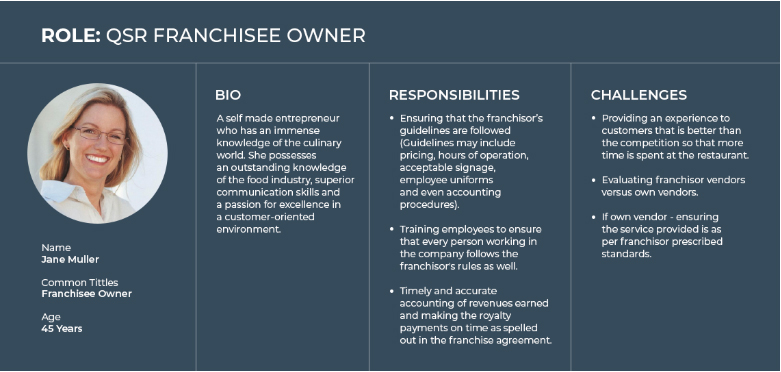
    While choosing from the above list is a challenge, one cannot dismiss the fact that getting these to work together is also a sizeable exercise. Especially when there is no common language of communication or data exchange across these platforms/tools. To give an example, assume you use a marketing automation platform. A simple nurture program setup will need you to define certain parameters as inputs to the design process. These are elements like product information, communication strategy, digital assets, target persona etc. Let’s take “Target Persona” as an example. A typical campaign can have anywhere from one to more personas. To make things much easier, let’s just take one persona. Say a Franchisee owner.

    The process of defining the target persona has no pre-defined templates. Each agency, or marketer, or for that matter, each presentation uses a different template for this. It may typically look like this.

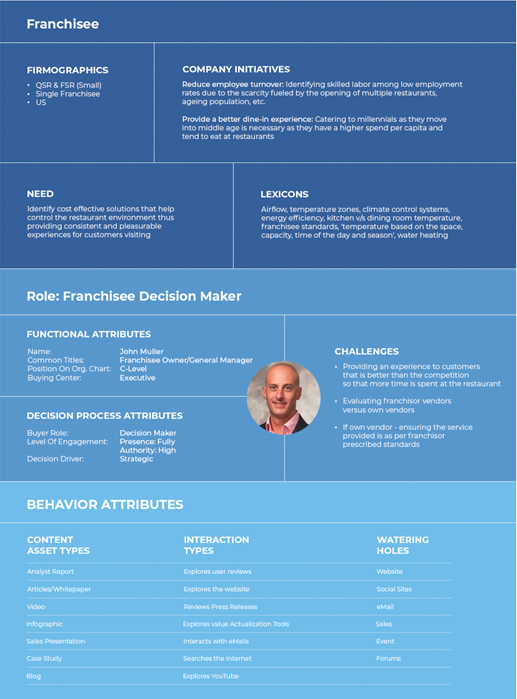
    Sirius Decisions, a thought leader in the B2B marketing space, has created a template for Persona that lists 10 key attributes. So if we were to revisit the persona definition, it would look like this

    Sharing Defined Persona With Stakeholders

    This information about your target persona needs to be shared with your search marketing program – essentially if you are setting up a display campaign – the above will need to be configured when you select audiences in either the Google network or Linkedin or Facebook. Now all 3 have varying definitions of the audience. So the agency/marketer will need to map persona to what the networks provide. Now, these are the big 3 – try doing that with other publisher networks.

    What if, there was a common definition or listing of persona that all parties could refer to? A publicly available list that one can use, contribute and refer to. So all you have to do was input a predefined persona into a field in the above platforms. In today’s world with technology like blockchain, implementing this is not a big challenge from a tech perspective, it’s more of an acceptance challenge with the relevant stakeholders.

    This was just the persona, as you go deeper, there are other pieces of information required. E.g Budget – which can be further split by Geo, the day of the week, time of the day, and mapped to the persona. Another set of information can be related to targeting, response tracking and thresholds, measurement standards – e.g how to measure lead velocity – and the list goes on. What if, all these were standardized? Wishful thinking?

    At Position2, we are putting together broad level frameworks that can help standardize these. The approach is to work closely with industry bodies to collaborate and build consensus. So when designing your solution integrating each of the over 5,000 tools can potentially be a simple plug and play!

    Do you have ideas or suggestions, feel free to connect with us. You can put in your comments below or email vinod@position2.com

  • Bursting the Blockchain Bubble

    Blockchain, cryptocurrency, bitcoin, and ethereum are a few terms we often come across while flipping over a tech magazine or surfing the Internet when looking for the latest technology trends. However, blockchain isn’t the new kid on the block — it’s been around for a decade. The global market worth for blockchain was $708 million in 2017, which is now anticipated to reach $60.7 billion in 2024*.

    First off, what exactly is blockchain?

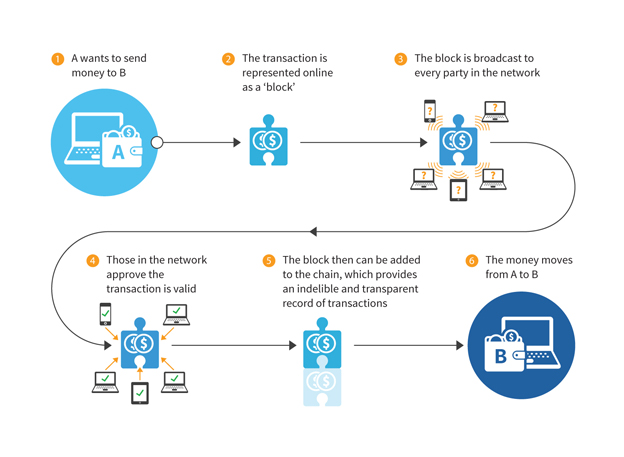
    Blockchain is a secure chain of blocks that plays the role of a ledger recording every transaction between two parties.

    Here’s a visual representation of how blockchain works.

    According to Bill Tai, venture capitalist, entrepreneur, and co-creator of the Blockchain Summit, blockchain is defined as “A distributed ledger where the recording of all those transactions isn’t just happening in one place. It’s written in thousands and thousands and thousands of places. It can’t go down, and it’s always transparent. You can always look it up. So it’s hard to hack because to try to replace or erase and change the information, you’d essentially either have to take over every single one of those computers around the world, writing it down at the same time, or you’d have to double the whole network all at once, which [is] really kind of impossible at the scale it is today.”

    So how will adapting blockchain technology be profitable for your business?

    Blockchain is set to change the way brands interact with customers. This standardization of data will not only give customers transparency of data but also motivate brands to come up with ideas that enhance their interaction with customers.

    Here are some areas where blockchain will improve business:

    1. Security
      Digital marketing has enabled interaction between the customers and brands, giving customers the power to choose what they want to do with a particular brand. This freedom, in turn, makes security a considerable concern for both marketers and customers. Data breaches are rising every second. With GDPR stepping in, marketers are in a tough spot. As if building confidence with customers wasn’t enough, but now, marketers have to do it at the cost of a security issue. If you’re a marketer looking for a solution that abides by the laws and keeps the data secure, make way for blockchain encryption. Blockchain’s security takes the trophy due to its decentralized data storage structure, meaning you can finally say goodbye to the middlemen and their fees. To hack into the data, one would have to break into each and every block the data has been stored in. Voila! There you have it — enhanced cybersecurity with blockchain.
    2. Innovations
      Remember when there were ledgers to store all business data until cloud services took over? Many of us avoided using cloud platforms for a long time, but now it’s something that we cannot imagine our businesses without. The same kind of innovation is happening with blockchain technology. Technology giants like Microsoft, IBM, and Amazon are already ahead of the curve by taking up ‘Blockchain as a Service’(BaaS). Imagine what more can evolve!
    3. Seamless Payment
      Did you know that retailers can create their own blockchain currency for their customers? They can even have the same currency for multiple retailers to build up loyalty programs. Therefore, every time you shop from a particular brand, you will be rewarded with points that you can cash at other retail stores that have the same points as their currency. This will not only increase customer participation but also be an added benefit to the customer while allowing a seamless payment process.
    4. Better Results
      Blockchain will help digital marketers measure the results better than before. Blockchain can serve as a record to solve how many people are actually looking at your content — one of the most significant grey areas in marketing. With Blockchain, a brand can verify if the ad was delivered and viewed by a real person. This will give accurate results and optimize the frequency of ads to ensure a brand does not deliver more than what is required.
    5. One-to-one Personalization
      How often have you come across targeting a whole segment whereas only a niche of that segment actually responded to your ad? Think about all the capital spent on targeting products/services to those who were not even interested in it the first place. With blockchain technology, marketers can utilize the details of each and every customer for a personalized one-to-one marketing experience, delivering exactly what customers want.
    6. Verification
      No more dealing with bots — blockchain technology will improve the verification process of social media accounts, followers, influencers, as well as email deliverability. Combining the decentralized principle of blockchain with identity verification, a digital ID can be produced that would act as a digital watermark for every online transaction. This can help organizations eliminate fraud by checking identity on every transaction in real time. Blockchain technology will also improve the verification process of social media accounts, followers, influencers, and email deliverability. BlockVerify, Guardtime, and ShoCard are a few companies that are leveraging blockchain technology to provide identification and authentication services.

    Believe it or not, blockchain is here to stay. We’re excited and are already looking for our thinking hats to transform our business with blockchain. Are you ready?

    *https://marketreportscenter.com/

    Research Material:

    https://marketreportscenter.com/

    https://www.inc.com/alisa-cohn/blockchain-is-here-to-stay-here-are-3-ways-you-can-use-it-in-your-business.html

    https://citrusbits.com/blockchain-stay-bitcoin-might-not-glimpse-future-decentralized-apps/

  • IDA Winners!

    Started in 2007, the International Design Awards (IDA) is an organization that recognizes smart and sustainable design in five disciplines, one of which is graphic design. Every year, IDA looks to celebrate graphic designs that not only push boundaries but also use unique elements collectively to create a lasting impression.

    On the 10th Annual IDA Awards, Position2 won Silver for the Multimedia and Interface Design Category and Bronze for the Multimedia and Website Design Category. Both awards were based on Position2’s thinking behind the Artiman Ventures website.

    Artiman Ventures, is a sector-agnostic Venture Capital firm that invests in white space companies. Artiman identifies and backs entrepreneurs that have an unfair advantage in creating or disrupting large markets. White space opportunities occur infrequently and typically at the intersection of multiple disciplines, markets, and geographies.

    Position2 created their new branding, logo, and website to reflect their contemporary thought process, new-age advancement of recognizing great white space ideas, infusing the investment they require and then facilitating the network and ecosystem to thrive in.

    The Artiman logo is designed around their three-pronged approach, which is represented with a triangle. The central concept of the triangle plays on the letter “A” of Artiman. The three vertices are anchored with: Invention; Investment; Network. It puts the entrepreneur in the center, signifying Artiman’s focus, which is, to ensure that each investment is spearheaded by an energized entrepreneur who has all the key ingredients required to propel the idea forward, successfully. Led by a team of highly experienced former entrepreneurs, their website recognizes their ground-breaking portfolio companies, and celebrates their B.E.T.A. Members (Biology, Economics, Technology, and Arts), nominated by a panel of academic advisors and opinion leaders, across multiple disciplines. Artiman catalyzes the injection of new white space ideas to give rise to a plethora of inventions that hold promise of true disruption.

    At Position2, we like turning a client’s brand story into a unique Customer Experience (CX). Through CreaMeleon, our creative group, we deliver an engaging brand experience for web and mobile platforms. With our 3D methodology – Discover, Define, Design – we give clients’ brand a holistic makeover. Our thorough structure ensures that the process is seamless and effective while the clients get maximum value. In our 3D methodology, the Discover phase primarily involves review, research, and brainstorming. Once the Discovery phase is complete, the UX expert develops the first draft of concepts with mood boards. Upon reviewing these mood boards, adjustments are made, if necessary. During the Define phase, the site structure, navigation, scope, flow, and site experience are defined. During the Design phase, the visual designer develops concepts showing how wireframes look with graphics.

    With an infectious spirit of painstaking craftsmanship and layers of brilliant creativity, CreaMeleon is a client’s perfect partner to create a great digital environment for the brand to live, adapt, and grow in. With a focused vision and a great depth perception, CreaMeleon is extremely accurate in covering the tiniest details. Staying updated on the latest news and industry best practices, CreaMeleon is constantly alert to new, disruptive ways to interpret a great design, user experience, and storytelling.

    Reference:

    https://idesignawards.com/

    https://idesignawards.com/winners/index.php?compNum=IDA+17

  • Is Your Business GDPR Compliant?

    With the General Data Protection Regulation (GDPR) just around the corner, businesses and marketers in Europe and across the globe are gearing up to be compliant with the new set of rules. Though GDPR was adopted in April 2016, the EU Parliament and Council has given a two-year preparation or transition period for businesses to prepare for these changes. With the deadline approaching, GDPR has now become a hot topic among agencies and marketers today. So, what impact will this have on businesses and their marketing teams?

    What is GDPR?

    The EU Parliament and Council believed that the current Data Protection (1995) Act was aptly suited for technology that existed in 1995. However, rapid changes in more recent years have made it easy for marketers to collect more data than ever before. The EU Council therefore decided to adopt GDPR to make privacy laws adaptable to current evolving technology, and these new GDPR rules will go into effect on May 25th, 2018. Though it sounds a bit harsh to businesses and other data handlers, the key idea behind the policy is to build trust between the technology providers and the users. GDPR remarkably broadens the privacy rights granted to the EU citizens, and it places many new restrictions on organizations that handle personal information.

    Need more information on some key GDPR terms? Here are some basic definitions from GDPR – Article 4.

    Does GDPR affect Non-EU Businesses and Marketers?

    GDPR will affect any organization that processes or accesses EU citizen’s data. Regardless of where the organization is located, marketers worldwide will need to prepare for the GDPR compliance if they manage any EU data.

    How Does This Impact B2B Marketing/Sales?

    There are several things that marketers should consider, including:

    Opt-In/Opt-Out

    Organizations must be able to provide proof that a data subject chose to opt-in for marketing communications, such as checking an unchecked ‘opt-in’ box on a form, and did not enter the list by default. “Double opt-in” (where opt-in is followed up with a “click to confirm”) is also a best practice.

    Legitimate Interest

    If marketers use legitimate interest for direct marketing, then they will be able to send emails on an opt-out (unsubscribe) basis. However, this is not compliant with GDPR. There are several other rules of GDPR that must be met, and if appealed, proving ‘legitimate interest’ may be harder to do it legally.

    Fields and Forms

    Marketers must ensure their forms are made compliant, with a mandatory opt-in requirement. Forms must be designed in a way that complies with GDPR.

    Events

    Marketers will not be able to use event attendee lists for campaigns anymore. They should consider gathering evidence for opt-in, such as an opt-in from event stands, or a follow-up email post-event.

    CRM

    Consider managing your CRM effectively. Under the “Right to Erasure,” everyone has the right to opt out from your list. These unsubscribed members must be removed or deleted from your records and any other databases.

    ABM and GDPR

    Consent

    Every organization must prove that the subject has consented to the processing of his/her personal data.

    Relevance

    B2B marketing communications, regardless of the medium, must be about products and/or services that are relevant to recipient’s job title. The content should be made relevant to the individual, not just to an account.

    Email Marketing

    We have an ambiguous situation for email marketing in regarding whether to consider a corporate email ID as a personal email and to communicate on an opt-in basis, or to consider the email ID as a corporate subscriber, meaning no no opt-in required. Therefore, B2B marketers will need to make a choice between consent and legitimate interest when sending emails.

    Penalties for Non-Compliance

    Organizations will face heavy penalties in the case of non-compliance with GDPR. Fines could be up to €20 million or 4% of organization’s annual turnover, whichever is greater.

    Checklist to Prepare for GDPR

    The ICO (Information Commissioner’s Office) advises following their checklist to prepare for GDPR compliance. Check out their checklist here.

    Conclusion

    Though GDPR may create complexities for a few businesses, we can take a positive stance on it. Ultimately, GDPR is about creating transparency between businesses and the customers, which builds more relevant and valued relationships between both the parties whilst ensuring the customers’ data is protected.

    Disclaimer: Please do not use this post as a guide to GDPR policy and consult your legal team for any clarifications about your company’s GDPR compliance. This blog is for informative purpose only.

    Resources

    https://gdpr-info.eu/
    http://www.wired.co.uk/article/what-is-gdpr-uk-eu-legislation-compliance-summary-fines-2018
    http://blog.strategic-ic.co.uk/gdpr-digital-marketing-what-do-you-need-to-know
    https://digitalmarketinginstitute.com/blog/03-03-2018-gdpr-and-digital-marketing-how-your-company-will-be-affected
    http://www.privacy-regulation.eu/en/article-4-definitions-GDPR.htm
    https://trailhead.salesforce.com/modules/european-union-privacy-law-basics/units/get-to-know-eu-privacy-law
    https://www.slideshare.net/kwanzoo/abm-display-advertising-success-in-the-world-of-gdpr-ppt
    https://www.aliaspartners.com/gdpr-recommendations-abm/
    https://www.slideshare.net/kwanzoo/abm-pov-episode-16-gdpr-and-its-impact-on-abm-advertising

  • Waterfalls and Frameworks: Two Key Takeaways from SiriusDecisions 2018 Summit

    The SiriusDecisions 2018 Summit was lined up with tons of activities, starting with a plethora of information about the SiriusDecisions frameworks to waterfalls to brands swaggering their case studies, and included keynotes from unconventionally famous celebrities, and concluded with a performance by “Fall Out Boy”.

    The action-packed three-day summit in Vegas, designed to have more networking sessions and a shorter duration than previous years’ summits, consisted of a lot of learning and oodles of entertainment. The summit focused on digital marketing for B2B companies and introduced new research material. Here are two key learnings from the summit with my insights and perspectives.

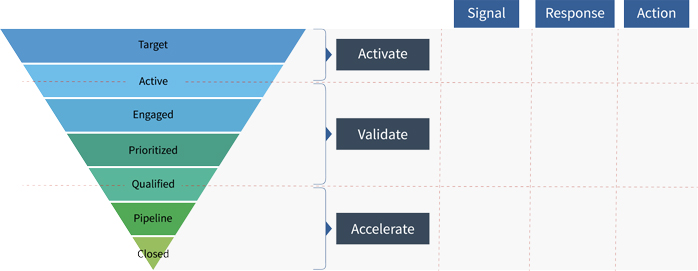
    • The New Nurture in the Demand Unit Waterfall World: Sirius claims to have over-architected the demand waterfall. The flaws in the old nurture model were taking personas as a group instead of the individuals, misunderstanding the role of the nurture, and using rules and linked programs to control the buyer. The new nurture simplifies the action in a three-step buyer journey process: activate, validate & accelerate, and map it to buyer action (signal, response, and action in each phase).
      My Serious Perspective: I completely agree that the old nurture program was over-complicated. The simple process is easier to design and build content. It’s aligned with the buyer requirements and reduces assumptions on buyer behavior. An interesting thought is to take the Nautilus messaging framework and map it to the new nurture model. This will be an effective and to target the right persona at the right time.

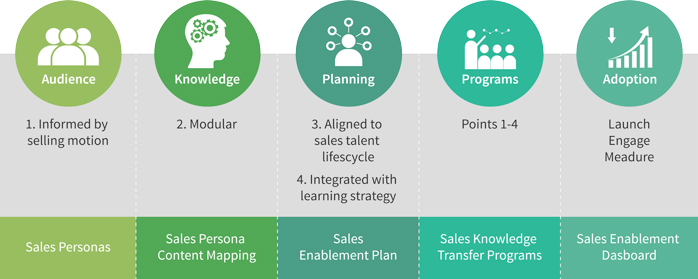
    • Sales & Marketing Alignment: There was a huge emphasis on keeping sales & marketing aligned. To make the Sirius models and frameworks successful, the alignment between these two disparate teams is crucial. Many case studies discussed strategies & technologies they used to attain this alignment. Statistics show that sales reps forget 87% of what was taught in the first 30 days. The Sirius perspective on sales knowledge transfer is to build a framework which provides a consistent approach to enabling sales with knowledge needed to maximize buyer interactions. When it comes to sales knowledge transfer, content has to be modular, informed by selling motion, aligned to sales talent lifecycle, and integrated with learning strategy to work well. The building-block approach “creates learning that is easily consumable in a variety of formats and accessible over time to promote rep engagement, retention, and just-in-time reference.” The teams involved in the knowledge transfer include channel marketing, marketing operations, product marketing, sales enablement, and communications. In addition to this training, it’s imperative to introduce new technologies to simplify access to sales material and automate certain aspects of strategic selling.

    Representation of the Sales Learning Framework

    My Serious Perspective: This framework is a great tool to re-structure the process for sales training, access marketing enabled content, and run sales automation. It was established earlier that sales teams would easily pick up the lead, assume the intent of the buyer, and select content which he/she felt right for the sales journey. With the introduction of this framework, we can evaluate the skill sets of the sales team and then recommend the right technology for automation and accessibility, define the process, and build specific content to assist the sales team through their sales journey in accordance to the buyer journey

    We also learned about the SiriusDecisions Program Pendulum, AI in the B2B journey, building the playbook for intelligent growth, and digital transformation in the B2B space. The inspirational keynotes consisted of celebrities whose stories were a great revelation on how you need to adapt to different personas and pave your way through various odds. Molly Bloom discussed how she created the largest high-stakes poker network by networking and building relationships. Planton Antoniou, a portrait photographer, spoke about his journey of taking snapshots of top political leaders, tech tycoons, and sport stars, including the portrait of Vladimir Putin for the cover of Time Magazine. Each picture told a story of the persona.

    The summit ended with a terrific performance by Fall Out Boy. We are already looking forward to next year’s summit! Want to discuss more or have a conversation about any of the SiriusDecisions frameworks or case studies? Share your thoughts below or contact us!

  • Google AdWords & the Era of AI

    Digital advertising has changed tremendously in the past few years. The growth of the internet and advancements in technology have contributed to immense innovation in the world of online advertising. However, with growth comes challenges that are faced by today’s digital marketers.

    The rise of ad blockers, ad fraud, flawed data collection and analysis, complicated ad technology, and lack of training are a few roadblocks marketers face today. This prevents them from tapping the full potential of online advertising channels. The rise of Artificial Intelligence (AI), or machine learning, could be the answer to these challenges and has the potential to mold the entire marketing landscape as we know it.

    During Google’s I/O keynote in 2017, CEO Sundar Pichai shared Google’s shift in approach from a mobile first world to an AI first world. So, what does Google have in store for the digital marketers in 2018? As quoted by Google experts, “Machine learning can analyze countless signals in real time and reach consumers with more useful ads at the right moments.” Google AdWords can now help marketers gain more control over owning the right audience segment to target. People consume information, make online purchases, read and research on their mobile phones and tablets, and continue the same over their desktops and laptops. Mapping this journey across multiple devices used to be a difficult task, but it is now possible because of AI.

    Thanks to machine learning, here are some of the AdWords search features that will benefit marketers:

    1. Improved Smart Bidding – When a Google search is performed, AdWords optimizes bids considering multiple signals, which include device, location (physical and intent), day, time, and demographics. However, the improved smart bidding system now strategizes to “maximize conversions,” which doesn’t need a max CPA bid to work. It’s useful in determining the optimal CPA of a campaign and working backwards to meet the ROI targets.
    2. In-Market Search Audience – Previously, this feature was only available for display and YouTube advertising. Now that this feature is available for search, advertisers can target users or audiences who are actively looking for their products or services and can bid up on those searches where the user has relevant research history. The abilities of machine learning has made this possible by analyzing numerous search queries to figure out the intent trends of the users. Then, it shows the most relevant ads to the users which is closest to their interests.
    3. Life Event Search Audiences – Like the In-Market Search Audiences feature, Google also launched Life Event Targeting in 2017. This targeting option allows advertisers to target users around a few major life events including graduation, moving houses, and getting married. Google is planning on expanding this list in the future.
      Just like Search, Google also launched Smart Display Campaigns. Advertisers need to provide a target CPA, budget, and ad assets such as images and text headlines. The system learns on its own to optimize towards the goals.
    4. Data Driven Attribution – On the reporting front, Google AdWords uses machine learning to give credit to user touch-points for conversions or leads while finding a correlation between multiple unique ways in which a user’s path could lead to a conversion.
      AdWords AI is helping today’s advertisers save time daily when it comes to handling regular PPC campaign activities and management. This technology has free up time on account manager’s schedules to think of bigger things for their clients. However, advertisers still need to contribute their expertise, time, and effort to ensure the right inputs are fed into the systems for the machines to learn effectively.

    AI has begun to make its mark across the world. As technology continues to evolve, marketing technology will as well. Advertisers need to stay tuned, keep up, map the consumer response, and determine the right course of action for each new feature. After all, the machines learn from humans.

    Reference:

    https://adwords.googleblog.com/2017/05/ powering-ads-and-analytics-innovations.html