Author: Team Position Squared

  • LinkedIn acquires Bizo and Launches Direct Sponsored Content

    LinkedIn & Bizo

    LinkedIn has acquired B2B ad tech company Bizo in a deal costing approximately $175 million. LinkedIn acquires Bizo

    This acquisition comes after Facebook bought LiveRail and Twitter purchased TapCommerce recently. These moves by social networks are aimed at bolstering their ad reach beyond the boundaries of their websites.

    Bizo enables B2B marketers to post ads to professional target audiences across the web. Bizo is integrated with marketing automation platforms and also has a database that will help marketers target by company, industry and functional area parameters. Bizo helps marketers nurture prospects at every stage of the buying funnel through targeted content and supports precise and measurable multi-channel marketing programs.

    Bizo’s targeting capabilities coupled with LinkedIn’s large professional network can help B2B marketers improve performance of multi-channel campaigns.

    LinkedIn Direct Sponsored Content (DSC)

    LinkedIn’s acquisition of Bizo was closely followed by the launch of a new feature, Direct Sponsored Content (DSC), which will help marketers reach out to specific audiences with more personalized content.

    DSC is an extension of LinkedIn’s Sponsored Updates. DSC enables marketers to publish sponsored content to their LinkedIn homepage feed without posting it on the Company Page. DSC can be viewed by page administrators on the Company Page but it will show only for those users who fit the target criteria specified for the campaign. The launch of DSC will allow marketers to target and engage with the right members of the target audience using more personalized content.

    Earlier, with Sponsored Updates, marketers had to post content to their Company Page. If they wanted to test an ad, they had to repeatedly post ads on the Company Page to measure the audience’s reaction. It was very likely that users would get irked by this. Marketers collected a mix of organic and paid results and could not measure the performance of posts accurately.

    DSC now allows marketers to optimize content according to the preferences of specific consumers and conduct A/B tests across audience segments.

    Will LinkedIn’s acquisition of Bizo achieve the desired results? Can Direct Sponsored Content (DSC) contribute to LinkedIn targeting and personalization capabilities?

    Image Source: Bizo 

  • SEO features for ecommerce sites, tracking intent data for B2B marketers and much more…| Best of the Week

    This week’s hot news, events and videos from the online marketing and social media world.
    The must have SEO features for an ecommerce site
    From the Position² Blog This Week:
    The ‘must have’ SEO features for an ecommerce site
    SEO strategy for ecommerce sites is different. They need to draw from retail marketing while also conforming to search engine algorithm trends. Check out this article to know about the SEO features for ecommerce sites.
    Top Stories this Week: Social Media
    Top Stories this Week: SEO, PPC and Digital Media
    Best of the Week Video Best of the Week Video
    Watch this video where Hugh talks about the different tactics used by B2B marketers and the effects they have on closure rates at every stage of the buyer’s journey.
    White Paper: Increase Visibility for Your Content by 4x
    Today’s traditional SEO is inadequate: Ignite your search results by accelerating visibility in more places than ever before.Download this White Paper and learn:

    • SEO, why the way we know it is not enough
    • Introducing and implementing Enterprise Visibility Accelerator (EVA)
    • Using multi-channel tracking tools for effective monitoring
    • How EVA benefits businesses.

    Download the complimentary EVA White Paper now

    Know more about Enterprise Visibilty Accelerator(EVA)
    If you are reading this blog post via a RSS reader, please click here to subscribe.
  • The ‘must have’ SEO features for an ecommerce site

    ECommerce/online shopping is the trend of the day. It will continue to grow and is expected to outrun ‘normal shopping’. At this pace, product companies need to prepare to compete with seasoned players in the market. Shopping cart

    Organic search space is dominated by the Amazons and Walmarts of the world. There are of course, several factors which contribute to this, like the number of pages, the number of visitors, the brand equation and the online spends of these companies.

    Given these, what should a normal player in the ecommerce space be doing to ensure that his website lists at the top of SERPs?

    Optimizing e-commerce websites is not an easy task. Strategies for ecommerce SEO need to be based on retail marketing and should also be in sync with recent search algorithm trends. From an SEO perspective, here’s what should be looked at for e-commerce sites:

    1. Keyword Selection

    Keyword research for any ecommerce site should be based on thorough market research and industry competition. Search engines, with their updated algorithms, intend to deliver best possible results to the user. So, understanding consumer search behavior is important.

    Consumer specific, long tail and geo-specific keywords should not be ignored.

    2. User Experience and Website Loading Time

    With growing competition in the online space, user experience becomes an important consideration. Sites need to provide the ‘shopping’ experience for users. Better user experience and engagement ratio on the website receive rewards and recognition from search engines.

    Smart search algorithms now focus on ranking websites based on the above factors and other metrics like page load time.

    3. Website Structure and On-page Factors

    The structure of the website needs to be in line with search engine guidelines. The content should be written primarily for users.

    Other on-page factors include:

    • URLs
      • Keep URLs short and simple
      • Include keywords and use hyphens as separators
      • Avoid query strings
    • Unique meta data
      • Have niche page title and descriptions
      • Avoid duplicate content
      • Focus on improving CTAs by using compelling descriptions
    • Navigation with breadcrumbs
      • Maintain consistent structure for navigation
      • Provide links to category and product pages
      • Use breadcrumbs efficiently
    • Category and product pages
      • Optimize product pages for long tail keywords
      • Embed videos
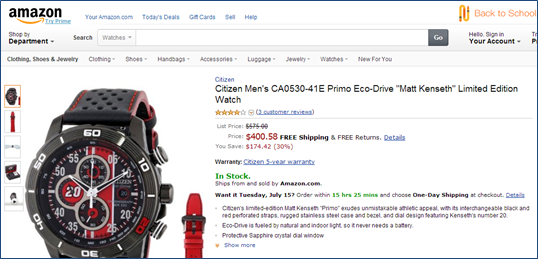
      • Post images which have high resolution (for example, product images on Amazon)
      • Encourage user reviews

    Category and product pages

    Image Source: Amazon.com 

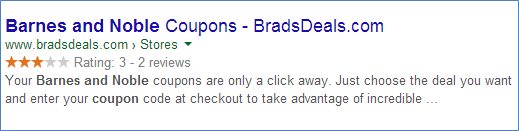
    • Schema markup (rich snippets, structured data, microdata)
      • Leverage schema for products and breadcrumbs
      • Add schema markup for product reviews, improve trust and gain better CTA

    Barnes and noble coupons

    Search Query: Barnes and Noble Coupons 

    4. Mobile Optimization

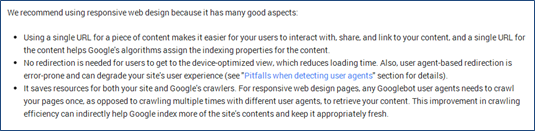
    Google recommends using responsive web design.

    • Optimize for mobile queries (mobile and desktop users don’t search alike)
    • Have compressed images for faster rendering
    • Keep it local
    • Give importance to CTAs and store locators

    Google developers

    Image Source: Google Developers

    5. Social Integration

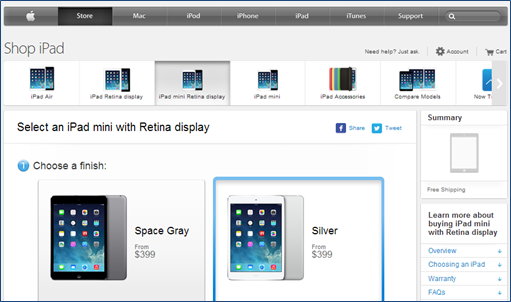
    • Have social plug-ins on category and product pages
    • Allow users to login through social profiles (social sign in)
    • Make user reviews/comments on social channels visible on the website
    • Share user-generated content

    Apple store

    Image Source: Apple Store 

    While the above are tips for boosting organic traffic to an e-commerce site, the real strength lies in the quality and service of the products offered. A great customer journey on site followed by great customer service reaps rich dividends!

    Happy Shopping!

    Do you have anything to add to this blog? Post your comments in the box below!

    Contributed by Chetan Rajasekaraiah, Senior SEO Specialist, SEO team

  • New Patent Enables Marketers to Tie Sales to Specific TV Ads

    New patent allows marketers to tie sales to TV ads

    AOL’s Adap.tv’s new patent allows it to tie consumer sales to specific television advertisements. This helps marketers to connect conversions with television advertising better.

    The new patent involves a system which can recognize conversions stemming from television and based on the study of those patterns, can predict the possibility of future conversions. For companies, activating this online conversion attribution capability is as simple as adding conversion tracking script on their websites.

    Sales will be measured against audiences who have been exposed to your ads and those who haven’t been. This system measures the total change among those groups and provides capabilities for real-time analytics. Being able to access real-time analytics is a huge plus compared to the earlier scenario where this data was available once in a quarter or a year.

    Using this technology, marketers can understand the capability of their TV or digital advertising in driving sales. It also helps marketers to have a more complete view of the performance of their marketing campaigns across channels. Marketers can track conversions to a specific ad and also to a particular airing time. This will be a lot of help for marketers during budget allocation for television and optimizing effective ads.

    Inability to trace conversions to their TV ad campaigns has long been a pain point for marketers. Such capabilities are steps towards addressing this concern as well as bringing together TV and online advertising.

    What do you think about this analytical capability? Let us know in your comments…

    Image source

  • Considerations for responsive web design, Facebook for B2B marketing and much more…| Best of the Week

    This week’s hot news, events and videos from the online marketing and social media world.
    Useful Considerations for Responsive Web Design
    From the Position² Blog This Week:
    Useful Considerations for Responsive Web Design
    In a market flooded with devices of varying screen sizes, it is tough for marketers to ensure that their website adapts to every screen resolution. Using responsive design helps solve this problem. Read on to know important aspects you need to consider when implementing responsive design.
    Top Stories this Week: Social Media
    Top Stories this Week: SEO, PPC and Digital Media
    Best of the Week Video Best of the Week Video
    Watch this video where Luke Starbuck tells you how you should select a marketing automation solution, how you can sell the idea to your company, the aspects you need to be aware of and how to implement the solution.
    White Paper: Increase Visibility for Your Content by 4x
    Today’s traditional SEO is inadequate: Ignite your search results by accelerating visibility in more places than ever before.Download this White Paper and learn:

    • SEO, why the way we know it is not enough
    • Introducing and implementing Enterprise Visibility Accelerator (EVA)
    • Using multi-channel tracking tools for effective monitoring
    • How EVA benefits businesses.

    Download the complimentary EVA White Paper now

    Know more about Enterprise Visibilty Accelerator(EVA)
    If you are reading this blog post via a RSS reader, please click here to subscribe.
  • Facebook is Testing ‘Buy’ Button and Twitter Acquires Payments Startup CardSpring

    Facebook

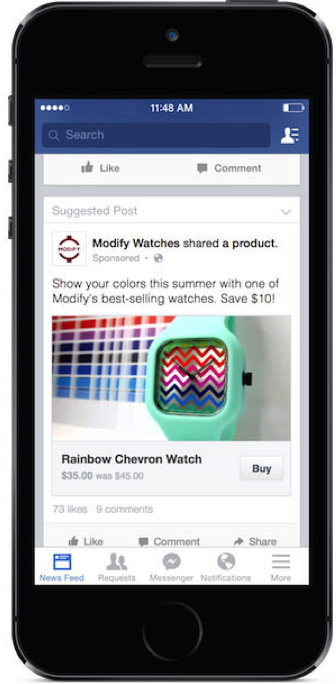
    The social behemoth is testing a new ‘Buy’ button that will let users purchase products without leaving the site. If launched, brands can use this feature to drive sales from News Feed and their Pages.

    Users can now click the ‘Buy’ CTA on ads and Page posts and purchase directly from a brand. Facebook is Testing 'Buy' Button

    Facebook assures users of privacy when using this feature. It says that it will not share with advertisers any of the credit and debit card information users share with Facebook. Users can also select whether they would like to save payment information or not.

    This test is being run with a few small and medium-sized businesses in the US. Facebook says that it will share more information after receiving feedback.

    This feature will allow for more Facebook-driven sales since users don’t have to leave the social network to make purchases. Often, the need to leave the site deters users from purchasing from social networks. If implemented, the ‘Buy’ button can increase sales for brands thereby driving better Facebook ad ROI while making it easier for users to shop on the site.

    Twitter

    The social network is in the news again, this time for the acquisition of payments infrastructure startup, CardSpring.

    This move by Twitter is being seen as an effort to strengthen its e-commerce offerings to increase revenue. CardSpring lets developers build applications for credit cards, discount coupons and other payment systems. Users can collect sales offers, sync them with credit card and collect at stores later.

    CardSpring can help Twitter boost ‘on the spur of the moment’ purchases. As soon as users spot great offers on Tweets, they can immediately purchase with CardSpring’s technology. Along with breathing life into Twitter’s revenue, this technology can also set up Twitter as a name for impulse purchases. This feature will also help users cash in on quick, on the spot deals.

  • Useful Considerations for Responsive Web Design

    Mobile internet penetration is growing at an exponential rate. According to a recent eMarketer study, four out of five global Internet users in 2014 are mobile web users.
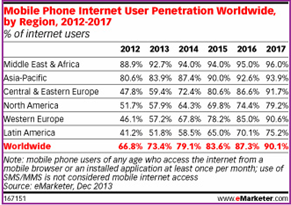
    Mobile phone internet user penetration worldwide

    So, what does this growth rate mean to the online world?

    • Mobile will become an essential platform for marketing in the digital world
    • Website rendering across different mobile devices will assume significance
    • Mobile friendly designs will be key to enhance user experience
    • Optimizing for mobile will be an added advantage

    Let us now look into two important actualities: having a mobile friendly site and optimizing the same.

    As we talk of mobile friendly websites, a key aspect on the priority list is responsiveness. So, what is Responsive Web Design (RWD)? A responsive site is one which adapts to its surrounding environment and caters to users browsing with different device resolutions.

    As Jeffrey Veen of Adobe says, “Responsive web design represents a fundamental shift in how we’ll build websites for the decade to come”.

    Talking about responsive, one of the top sites we found during the recent football craze was the ‘Sequence World Cup’ campaign created by Sequence Agency, UK.

    Sequence World Cup campaign

    Having understood the importance of RWD, you need to look at three key considerations while making any website responsive:

    1. Design considerations

    The first thing that comes to mind while designing for responsiveness is whether to have a single site or multiple sites for desktop and mobile. Web designers need to decide if they need a single site and how information will flow across the web and mobile. Among these options, responsive sites occupy first place, followed by apps for mobile users which take user personas into consideration.

    Other technical considerations which have been widely discussed include flexible images, grid foundation and media queries. A combination of these three makes a site responsive.

    2. Performance considerations

    The general perception has been that responsive sites take more time to load. Ever since Ethan Marcotte introduced the concept of responsive web, designers are trying out methods to improve performance and the following are some tips on the same:

    • Serving images on Content Delivery Networks (CDNs) instead of servers and also making the images smaller
    • Using Javacripts as the image loading technique (the ‘noscript’ technique)
    • Using conditional loading and other CSS tricks that help improve performance. Online tools like Google Page Speed Tools help make performance better. This should be backed by tests at regular intervals.

    3. Optimization considerations

    While the above two considerations improve the user experience and performance of the website, it is important for a marketer to have the site optimized for search since there is always a correlation between RWD and website experience.

    Responsive web and SEO go hand-in-hand. Google support for RWD-enabled websites and search engines catering to users’ requirements for all screen resolutions makes it important to optimize websites based on RWD. Usability is one key area that Google looks at while ranking websites. RWD helps users reach the right type of content across browsers.

    Content strategy combined with keyword research and analysis merits close attention. The right balance of short and long tail, and geo-specific keywords with the right density should be considered.

    Having the right blend of content for mobile sites is the winning point for mobile SEO. Mobile sites mean less content and the right way to optimize less content is to have only the most necessary part of the content on your mobile site.

    Site structure and internal linking should not be neglected. A deep level of interlinks going up to 2-3 clicks helps leverage SEO value. Higher level pages should be cross-linked properly.

    Google has in fact recommended use of RWD and said that websites optimized for mobile will be looked at with authority by search bots. With Google giving higher importance to Usability (UX), a responsive site with the basics of SEO covered should help cater to a mobile audience as well.
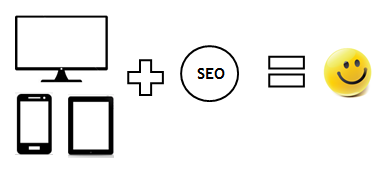
    Search Engine Optimization

    In the end, it’s all about providing a quality experience – be it on a desktop or on mobile.

    Go responsive & stay updated!

    Contributed by Chetan Rajasekaraiah, Senior SEO Specialist, SEO team
  • Twitter Launches New Analytics Tools

    The micro blogging site is sprucing up its analytics dashboard with the launch of new tools that enable marketers to measure all tweets’ performance in depth, including non-sponsored ones (read organic tweets).

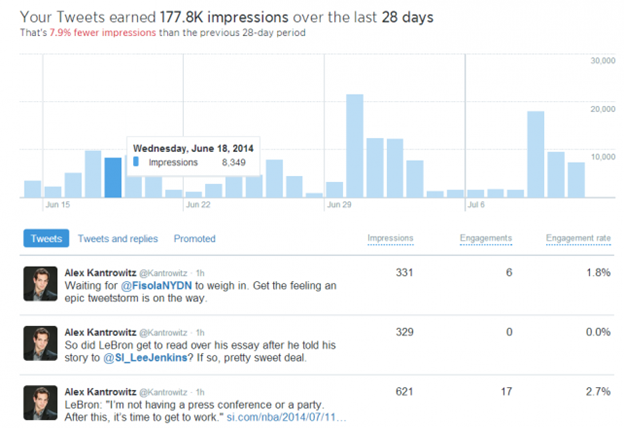
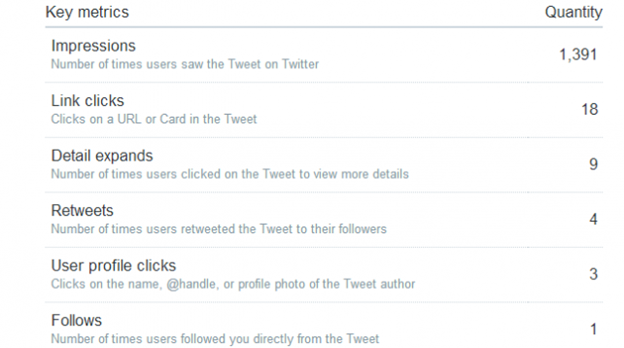
    Marketers can now see the number of tweet impressions, clicks, expands, re-tweets and profile clicks generated. You can also know the number of new followers you have gained through each tweet. The tweet activity dashboard has been launched around the world and is available to all advertisers, Twitter card publishers and verified users.

    Check out the following screenshot that displays the new tools’ capabilities: recent tweets along with impression counts, number of engagements and engagement rate.

    Twitter launches new analytics tools

    Image courtesy: Ad Age

    If you want to view engagement by category, you can click on the numbers, which brings up these details:

    Twitter launches new analytics tools

    Image courtesy: Ad Age

    Effect on marketers

    The launch of these tools helps marketers better understand organic content performance on Twitter. What’s more, if a tweet has gone viral and has been re-tweeted a lot, you will be able to view the performance of that particular tweet with a breakdown of how influential each category has been. Viral tweets contribute to an increase in engagement and consistent viral tweeting also boosts your follower base.

    The capabilities of these tools help marketers in formulating more engaging organic content strategies for Twitter that will get them better ROI.

  • Schema Mark-up Recommendations for B2B Websites

    Schema.org

    What is schema.org?

    Schema.org markup assists search engines like Google, Yahoo!, Bing and Yandex to take in the information present on the web pages and provide richer results, which makes it easier for users to find the right web pages.

    Here are some benefits of schema markup:

    • Higher click-through rates
    • Lower bounce rate
    • Increase in long tail conversions

    Recommendations for B2B websites

    B2B marketers can leverage schema.org markup for corporations, products, ratings, reviews, authors, events, locations, videos, etc. Sites that implement structured markup can see an increase in click-through rates. The following list shows some of the recommended schema.org elements with examples:

    1. Product

    Schema.org markup helps search engines like Google, Yahoo! and Bing gather information about products that companies offer. With the product schema employed, the following rich snippet shows what would appear in search results:

    IBM Lotus Symphony

    Search query: IBM

    The rich snippet will provide all the basic information for the product (description, reviews, offers and price), which will help customers determine whether the page is worth visiting.

    For more information, click here.

    2. Video

    An increasing number of companies are featuring videos on their websites as part of their marketing strategy. Video and the surrounding content can be marked up by setting the schema type to ‘VideoObject’ for the page.

    HD video conference

    Search query: HD video conference

    Schema.org has markups for the following elements: description, ratings, headlines, audio, awards, copyright, creator, publish date, creation date, genre, publisher, reviews, video quality, thumbnails and version. For videos, defining as many elements as possible will drive in more relevant traffic.

    For more information, click here.

    3. Organization

    There are different types that come under the organization schema.org markup like ‘airline’, ‘corporation’, ‘EducationalOrganization’, ‘GovernmentOrganization’, ‘LocalBusiness’, ‘NGO’, ‘PerformingGroup’ and ‘SportsTeam’.

    Within the above types, ‘corporation’ and ‘LocalBusiness’ schema.org markup have more relevance for B2B websites.

    a) Corporation Markup

    Here we can include the logo (image), company name, global navigation (SiteNavigationElement) and phone number (telephone). You can place the company name inside an h1 tag and mark it up with the ‘name’ markup. Global navigation can help search engines understand your page hierarchy better. In order to do that, we need to declare that the links are for navigation.

    Just using the markup doesn’t guarantee that your logo will be used. It only helps suggest this to Google, which takes the final decision. However, this markup is a strong signal to Google algorithms to show this image over others. For example, when Google is showing Knowledge Graph on the right hand side based on users’ queries.

    For more information, click here.

    Lear Corporation

    Image Source: Search engine land

    b) LocalBusiness Markup

    This schema.org object provides information on an organization’s specific office locations, thereby supporting local listings where geographical intent might be a clue in search relevance.

    Local business markup is relevant as the dealer and distribution information is of significant value for businesses. It also provides the organization’s headquarters and regional offices’ geographical location supporting local listings.

    The Google SERP displays the address of the business that has been marked up on the website (LocalBusiness) with additional information like reviews, ratings, etc.

    For more information on this, click here.

    Position2 Inc

    Search query: Position2 Inc

    In the case of B2B marketers, they should consider implementing this markup in the following locations:

    • Organization’s headquarters’ address information
    • Regional office locations
    • Address information of regional dealers, distributors and resellers

    4. Events

    Any event (concerts, shows, theatre, lectures, conferences, webinars, etc.) that is happening at a certain time and at a certain location can use this markup. Repeated events may be structured as separate event objects.

    The event schema lets you be really specific about the type of event you are describing. For ex: BusinessEvent. The information that is visible on the snippet, such as the name and location of the event, also needs to be clearly defined. Since this feature isn’t designed for advertising, your event name should not contain any promotional elements such as the price of the event, a call to purchase, an indication of a sale or temporary discount.

    Amazon Web Services

    Search query: Amazon Web Services

    5. Person

    Under the ‘Person’ (CFO, CMO, CEO) schema, you can interpret most pieces of personal information about employee pages. You can start off by marking up their names and job titles with “name” and “jobTitle”. You can also mark up headshots and descriptions with “image” and “description”. You can also define several other fields including ‘birthdate’, ‘awards’, ‘address’, ‘email’, ‘fax’, ‘phone’, ‘children’, ‘spouses’, ‘company’, ‘nationality’, ‘gender’ and many more.

    For more information on this, click here.

    Google Authorship

    By connecting authors’ names on the website to their Google+ profiles through the ‘rel=Author’ tag, Google is able to categorize a person’s written content better, possibly leading to greater exposure, traffic and ‘AuthorRank’ (especially if the person is an expert in the local community or industry).

    Barry Schwartz

    Search query: Barry Schwartz

    6. Mobile and Software App Listings

    You can add authenticity and trust to your mobile apps using schema markup. Here is a screenshot of the ‘SQL Server Database App’:

    SQL server mobile

    Search query: SQL Server mobile

    This works for software applications as well. When users search for apps, Google uses the information that is marked up on the website of the page to display your app details better in search results. We recommended that properties like ‘aggregateRating’, ‘offers’, ‘operatingSystems’ and ‘softwareApplicationCategory’ be integrated into the code for better display results.

    7. Others

    a) Careers/Job

    Job posting schema markup provides a list that describes a job opening in a certain organization. This makes it easier for search engines to index jobs.

    For more information on this, click here.

    b) Breadcrumbs

    This is a set of links (breadcrumbs) that can help a user understand and navigate your site’s hierarchy. Google can identify the breadcrumb information in the body of a web page and use it to understand and present the information on the pages in the search results.

    For more information on this, click here.

    c) Offers

    ‘Offer’ markup is an extension to ‘product’ schema markup, which provides a specific structure markup to support product information meant for sale.

    For more information on this, click here.

    Personalization of Google SERP’s

    Having semantic markup does not guarantee Google will display rich snippets in the SERP’s. It’s up to Google to decide whether rich snippets would be useful or not. Also, based on the user’s search intent, the best experience/results are provided for the users search query.

    Conclusion

    Remember that everything you mark will be clearly seen by search engines. So it is important to mark only relevant information that you need the search engines to index.

    Using the rich snippets testing tool, you can check your markup and make sure that Google can extract the structured data from your page. This tool will display the markup found on a specific web page, as well as a preview of how that page might appear in Google search results.

    Do you have anything to add to this post? Drop your comments below!

    Contributed by Susanna Varghese, Junior SEO Analyst