| This week’s hot news, events and videos from the online marketing and social media world. | ||||||||
|
||||||||
 |
||||||||
 |
||||||||
|
||||||||
| If you are reading this blog post via a RSS reader, please click here to subscribe. |
Author: Team Position Squared
-
Best of the Week | Video for Marketing is the Way to GO in 2016, and much more…
-
Video for Marketing is the Way to GO in 2016!
Social platforms are increasingly moving towards the use of video content. Facebook caused controversy when it introduced auto-playing videos, but now, we all expect to see them in our streams.
Twitter has championed video with Vine, and we’re seeing more videos pop up in Pinterest. MeVee is the newest player in real time social streaming, up against Meerkat and Periscope.
ReelSEO found that 96 per cent of surveyed B2B marketing stakeholders are engaged in video content marketing. Cisco estimates that, by 2019, 80 per cent of the world’s internet traffic will be video. If you’re a marketing professional, you have two clear choices: get on board, or get left behind.
The impact of video on marketing
Content marketing is a dynamic landscape, and goes far beyond blogging and tweets. Video is way to generate leads, but it’s also a very useful way of creating two-way conversations, which is the essence of successful social campaigns.
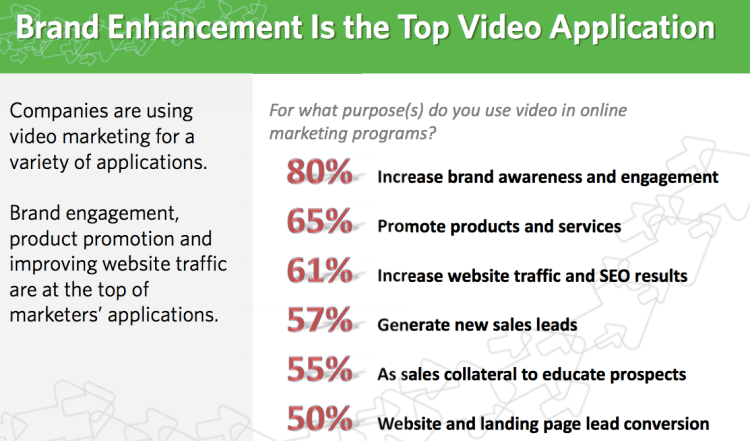
In a survey of 350 B2B marketing professionals, 73 per cent said video has a positive impact on ROI and results. 41 per cent said they planned to increase their spend.
Respondents are using video for a range of approaches, including website and email marketing and brand awareness. Research suggests that you can boost email open rates by 19 per cent, simply by using the word ‘video’ in the subject line. ReelSEO also found that 75 per cent of respondents are optimizing video to boost SEO.
The game changers
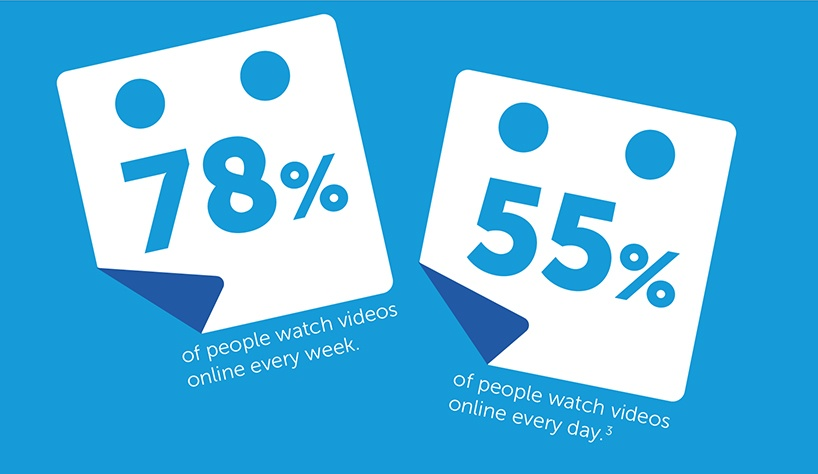
The figures that support the use of video are truly staggering. 78 per cent of people watch videos online every week, and more than 65 of viewers watch more than three quarters of a video.
To leverage these big audiences, you’ll need to identify and overcome barriers to adoption, and allocate the right budget and resource. You must devise ways to measure the ROI of your videos, whether they are used on social platforms, or deployed as ads. And authenticity is key, so if you don’t have in-house video producers, you’ll need to recruit or outsource immediately.
Changing landscapes
Cisco says that video consumption will increase over the next 4 years, driven by streaming services and the increasing number of fast internet connections. Soon, half the world’s population will have internet access, and each individual will have several connected devices that are video-ready.
The IAB says that half of our daily consumption of digital media takes place on smartphones and tablets, and Ericsson confirms that video traffic will grow 55% per year, for the next 5 years.
We’re also going to see 4K video improving engagement with super-crisp clarity and exceptional quality. The faster our connections are, the more we’ll be able to enjoy this new high standard in video.
Video is here to stay
Mobile and social have evolved to a point where the use of video is everywhere. 81 per cent of businesses now feature video on their website.
To stay relevant and engage your audience, you’re going to have to increase your use of video, using it to underpin inbound marketing and boost communication with your audience. You simply can’t ignore video any longer.
2016 is an exciting year for marketing; all of the tools you need for video marketing are out there to be exploited. We’ll continue to update you throughout the year as the use of video marketing explodes.
-
Top Trends That Will Dominate Digital in 2016
We’ve already looked at our takeaways for 2015, and the trends that dominated the digital marketing space over the last 12 months. Now, it’s time to look ahead at what 2016 will bring for us all.
If you want to stay ahead, you’ll need to adapt your strategy. There’s more focus on video than ever, and the Internet of Things is going to present some vital new opportunities.
6 Trends For 2016
Digital marketing is changing, and the coming year will shake up your plan. Here are our six key predictions for digital marketing in the coming year.
1. Video, Video and More Video
If you aren’t already using video to boost your online marketing, 2016 is the year that you’ll simply have to embrace it. According to Cisco, online video users are expected to double in 2016, providing an audience of 1.5 billion people. Video is particularly critical to capture the youth market, with a huge number of young consumers now favouring video over all other content.
Social media sites are already tapping into this trend: Vine, Periscope, YouTube, Snapchat, Twitter and Instagram are all key platforms for video. As with written content, the key here is quality content that can stand up against slick competition. To compete, you’ll need a top-notch production team that can deliver accurate, branded messaging, while building a fully-engaged following across all the platforms you use.
Online video now accounts for 50 per cent of all mobile traffic, according to Bytemobile, and that will increase to 74 per cent by 2017. This increasing focus on mobile plays out in two more of our key predictions, and we’ll look at these next.
2. Desktop is Dying
Video isn’t the only way that mobile is taking over, and marketers can’t afford to ignore the march towards mobile usage.
In 2016, we’re going to see this trend continue, to the point where the desktop is going to be pretty much dominated by mobile. E-commerce on mobile devices is going to account for more than 24 per cent of total ecommerce revenue, and mobile ad spend will top $100 billion globally.
Our collective use of social media backs up this trend. For every marketer that scales down its Facebook spend, there’s another pumping more money into Instagram. It’s this shift towards hand-held, pocketable content that will leave desktop firmly in second place.
3. Digital Ad Spend is Exploding
Online video advertising revenue is set to reach almost $5 billion in 2016, a huge increase from our 2013 spend of $2.8 billion. TV advertising revenue is set to decline.
The visibility of video is increasing, and that’s leading to a massive increase in video advertising views. In December 2013, ad views on video platform topped 35 billion, which is a 100 per cent increase, year on year.
As digital ad spend increases, we’ll see digital marketers looking at new ways to eliminate fraud and ad blocking. As we become more sophisticated at using native ads, we’ll see an uplift in efficiency. As a result, ROI will naturally increase – although there’s work to be done to improve users’ trust before that can happen.
4. Consumers Will Expect Hyper-Personalization
In 2016, consumers are going to expect a personal connection. Digital marketers need to embrace this thirst for one to one contact, and develop personal campaigns with joined-up, personalized campaigns.
Personalization extends to every corner of your marketing spreadsheet, from PPC ads through to social messaging. Customer Match will be key for AdWords campaigns, while apps mobile will be instrumental in driving loyalty programs. For the best results, channels need to be joined to create a single customer view.
Treating people like individuals marks a sea change for digital marketers, and will require analytics in a depth we’ve never seen before. Hyper-personalization is a perfect blend of big data and extreme refinement: if you can carve accurate customer profiles from your data silos, you’ll improve your chances of speaking directly to the people who will spend.
5. Wearable Tech Has Come of Age
Wearable technology has gone from being a niche interest to a mainstream consumer product, with smart watches and fitness bands leading the market. In 2014, wearable device shipments are set to reach 19 million units, with worldwide spending on wearables hitting $1.4 billion in 2016.
The increase through 2016 will be even more marked, with wearable shipments hitting 111.9 million by 2018. That means we’re going to have more and more data about what people do, what they buy, and where those transactions take place.
We’ll also see increased investment in the Internet of Things, both in the home and in the workplace, and that’s going to take marketers on an exciting new journey. While wearables tell us about people, the IoT will tell us about their homes, health and habits, giving us opportunities to optimize every step of their journey.
6. Marketing Automation
As our access to data is expanded, and our focus on data quality improves, marketers are going to be increasingly reliant on marketing automation. This technology allows us to tap into consumer habits, react quickly to trends and make contact with our audience more efficiently.
Marketing automation is a key cost saving measure, and two of the world’s biggest think tanks back this up; Gartner estimates 15 per cent savings on creative production, and Forrester research suggests that automation yields 50 per cent more sales-ready leads, at 33 per cent lower cost.
2016: Time to Expand Your Horizons
Content may still be king, but you’ll need to transform your campaigns to stay relevant. That means expanding the scope of content you offer, broadening your reach, and looking for opportunities in new and interactive technologies. Video and the Internet of Things will be key drivers of change, and the insight we have into audiences will multiply. In 2016, marketers are going to need to equip themselves accordingly, embracing and analyzing huge amounts of data to improve the way they connect with individuals.
-
Digital Marketing: Key Takeaways From 2015
This year has seen digital come into its own as a core part of marketing activity. Brands are increasingly ploughing their budgets into digital, and we’re likely to see budgets increase further. There are a number of reasons why digital is essential, and we’ve gathered some of the key trends here.
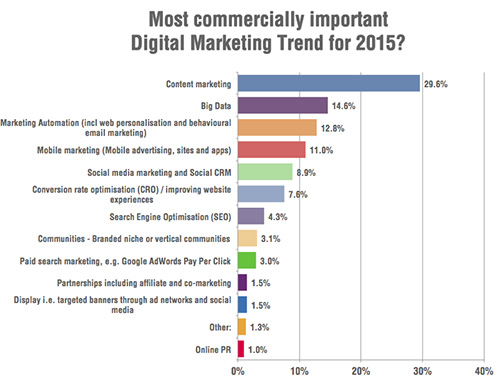
The shape of things to come: Content Marketing took up a big chunk of responses, more than Big Data and Marketing Automation combined.
Content marketing and personalization
According to Hubspot, content marketing generates three times as many leads as traditional marketing methods, but it costs 62 per cent less. Providing you’re efficient, and you have a strong sense of your audience, a shift to video is going to pay dividends.
Video is evolving to incorporate streaming media, and customers are expecting content that is tailored specifically to them. The key concept here is authenticity; you’re going to need to push beyond cookie-cutter content, and prove that yours is a brand to be trusted. While 73% of B2B marketers already use content marketing, we’re going to see an increase in investment in services like YouTube, and an emerging use of game-changing apps like Periscope.
Marketing automation
Digital allows you to put your data to work, and once your processes have been transformed, you’ll see huge efficiency gains.
For a great example of automation in action, check out Marketo Ad Bridge. It serves up ads to people based on their habits, across a range of social media channels, helping you to avoid the scattergun approach that can make digital ads less effective.
Mobile SEO
A decade ago, anyone could make a website that displayed on a desktop computer. Now, we’re using a variety of devices to search and browse the web, from tiny wristwatch wearables to huge tablet devices.
If you want to compete, you must have a mobile-friendly, responsive website, and it has to be optimised for use on a smartphone. A massive 60 per cent of all internet traffic in the US now originates from mobile devices; about half of internet traffic comes from mobile apps. If you still have a separate mobile website that offers a poor user experience, 2016 is the year you’ll ditch it for good.
Social media
Social media is an ever-evolving marketing tool, and if 2015 taught us anything, it’s that we can’t afford to stand still. Google+ has recently redesigned its interface to make the platform more appealing for its users.
Marketers are learning to maintain focus on key social media sites, but to keep others in the frame and maintain an energised approach to their campaigns. You never know when a service like Google+ will reinvent itself with a new, killer feature, and that will be the key moment when the really responsive marketers will gain an advantage.
Look to the future
In digital marketing, constant evolution is the key to staying ahead of the curve. In 2016, we’re going to need to rethink and reimagine our digital marketing strategies to take customers on new, enhanced journeys. Social media is going to continue to gather pace, and the scope of digital is going to increase even further. Stay tuned to the Position2 blog to hear the first news on trends in 2016.
Happy Holidays from Team Position2!
-
Best of the Week | Digital Marketing: Key Takeaways From 2015, and much more…
This week’s hot news, events and videos from the online marketing and social media world. 
Best of the Week Video
As the year draws to a close, we’ve put together a highlight reel that showcases some of our talented Creative Team’s capabilities. Whatever the media and type of content, we do it in a way that gets results. Take a look for yourself!White Paper: Increase Visibility for Your Content by 4x Today’s traditional SEO is inadequate: Ignite your search results by accelerating visibility in more places than ever before. Download this White Paper and learn:
- SEO, why the way we know it is not enough
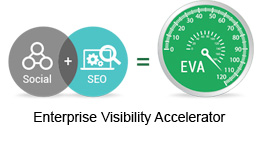
- Introducing and implementing Enterprise Visibility Accelerator (EVA)
- Using multi-channel tracking tools for effective monitoring
- How EVA benefits businesses.

If you are reading this blog post via a RSS reader, please click here to subscribe. -
Best of the Week | The Evolution of Content Marketing – What to do Next, and much more…
This week’s hot news, events and videos from the online marketing and social media world. 
From the Position² Blog This Week: The Evolution of Content Marketing – What to Do Next
Content marketing has seen its ups and downs since its renewed popularity as an online marketing strategy over the course of the last few years. In this blog we look at developments in the content marketing arena and what’s coming down the road.
Best of the Week Video
Modern marketer needs to be freshly equipped with relevant, innovative email marketing strategies and tactics. Marketo’s Mike Madden provides actionable takeaways for improving your email deliverability, getting higher click rates, and more!White Paper: Increase Visibility for Your Content by 4x Today’s traditional SEO is inadequate: Ignite your search results by accelerating visibility in more places than ever before. Download this White Paper and learn:
- SEO, why the way we know it is not enough
- Introducing and implementing Enterprise Visibility Accelerator (EVA)
- Using multi-channel tracking tools for effective monitoring
- How EVA benefits businesses.
If you are reading this blog post via a RSS reader, please click here to subscribe. -
The Evolution of Content Marketing – What to Do Next
In February 2011, Google put an end to thin, keyword-stuffed content with a seismic change to its algorithm. The change affected 11.8% of search queries, and caused some sites to drop out of the SERPs overnight. As we approach the 4th anniversary of the original Panda update, what are our logical next steps in content marketing? And what have we learned from the mistakes of the past?
Despite being hit by many successive updates, brands remain committed to the cause. Content marketing continues to be a key inbound marketing tactic, proven by the amount of content we’re collectively uploading to the web every day. For example, there are two million posts published on WordPress.com every day, and 113.6 million posts added daily to Tumblr. Add in all of the content uploaded to YouTube, business websites, and other blog platforms, and you begin to realise how important it is to be heard above the noise.
Trending techniques
In addition to increasing engagement, businesses must now battle content clutter and deliver increasing value and authenticity in what they post. As we look to 2016, we’re also going to see an increased focus on the bottom line: the return we get from the content we invest in.
Thin content is most definitely out, and quality is in. For most brands, quality means answering questions. That provides value for our readers, and a better user experience. Evergreen content and pillar posts are vital as part of a carefully planned strategy across different channels. As content marketing matures, so do its consumers—they want more detailed, more visually appealing content, and they have higher expectations of what your brand can provide.
To cut through the increasing content clutter, marketers are also looking to different channels, and resurrecting some techniques that have been neglected so far. The humble podcast is also coming of age thanks to some of the world’s biggest brands, moving from a hobbyist activity into the core of content marketing campaigns.
Why the sea change? Audio and video content can be branded easily, without cutting into the editorial themes of the content. Additionally, podcasts offer a great platform for advertising, and in the age of the ad-blocker, that’s an opportunity well worth exploring.
Driving profits with content
The more we learn about content marketing, the more we learn to see the bigger picture. Thankfully, success is no longer measured in ‘Likes’ and shares; it’s about being part of the research journey, building trust in a brand, and figuring out how to play the long game.
As you develop your strategy for 2016, think about ways content can be a component in both lead warming and nurturing, as well as providing the authority and trust you need to increase your bottom line. Apart from increasing the depth of content, it’s important to consider the channels and media you use to get your brand message across. To get the best ROI, marketers need to focus on efficient management to ensure that effort is not wasted, and that their budgets are always focused on productive outcomes.
-
Accelerated Mobile Pages (AMP) from Google Speeds Load Times, Improves Engagement
According to Kissmetrics, nearly 40% of people abandon a website that takes more than three seconds to load. Many websites today, when viewed on a mobile device such as a smartphone or tablet, take significantly more time than that, due to content loading from one or more distribution networks, ads from another, and possibly fonts, beacons, and trackers from yet other sources.
By the time all the data loads up and gets rendered on screen, it’s quite possible that the user has already lost interest, or has moved on to other content elsewhere.
That’s why, in an effort to improve the mobile web experience, Google has introduced an open-source initiative called Accelerated Mobile Pages (AMP) to speed things up considerably, and hopes to roll it out in February 2016 to all mobile users. Working with content publishers, web developers, creators and consumers, the project aims to improve the mobile content ecosystem in general.
According to Paul Bakaus, Team Lead at Chrome DevTools and the AMP project at Google, “To users, Content is King, and the User Experience is Queen.” With that in mind, his team developed AMP with the following goals:
- It needs to make websites faster
- It needs to be easily validated
- It must be easy to implement
- It needs strong incentives
- It needs to embrace the open Web, not replace it
Without getting into the technical underpinnings here, we know that AMP implements RAIL, and is designed to control the page load chain for optimized loading times. One of the ways this is accomplished is by reducing the relaying and resizing of images due to different mobile screen aspect ratios and resolutions. Also, content above the fold gets priority, and the system follows a “Lazy loaded, accelerated approach” to ad loading.
According to its creators, AMP is guaranteed to perform well, and is well supported by existing browsers and operating systems. Google has put in place an easy to use code library that developers can use to make their mobile sites load faster.
These are interesting times in the mobile content space, and we look forward to great things from AMP and other initiatives that decrease load times and provide a more engaging experience on mobile devices.
-
Tips to Improve Your Website Bounce Rate
“What is your site’s Bounce Rate?” is probably a question that many webmasters have been asked. Simply defined, it’s the percentage of visitors who land on your site and then leave without visiting any other page. It is one of the most important site metrics, and webmasters and digital marketers try to keep that number as low as possible.
Bounce rates are significant because they tell search engines that visitors are not finding what they were looking for on your site, or did not find the content compelling enough to check out any other pages. A high rate makes search engines more likely to conclude that your website doesn’t have content for specific topics or keywords, which then results in falling search rankings for your site.
A website’s overall bounce rate is the average of bounce rates for all its pages. Free tools such as Google Analytics, Pingdom, as well as paid tools like Clicky can analyze and compute your website’s bounce rate. Once you have figured out your site’s bounce rate, it can be used as a benchmark to gauge improvements over time.
A bounce rate over 50% is considered to be excessive, while 40–50% is considered average, and a rate under 40% means that your site is doing well.
Tips to improve your website’s bounce rate
- Use a tag line for your business, which helps visitors get an idea about its products and/ or services, and sets expectations. Ideally, your tag line should be below your logo.
- The Title and Description of the page should clearly define the content on it. This makes more users click on your link in search results.
- Provide links from the home page to other sections of the site, e.g., products, services, blog, resources, and so on, and use page descriptions of two to three lines for each of them.
- Don’t clutter the page with too much information or very long paragraphs. It is also a good practice to use images that are descriptive and can help summarize content.
- It is highly advisable not to use auto-play for audio and video content on your site, which may force some visitors to leave the page immediately.
- Don’t make it mandatory for visitors to provide an email ID, phone number, or other information to enter your site. Most people are not comfortable with sharing contact information and will often exit sites that ask for it.
- Optimize the page load time. Ideally, it should take under 2 seconds to load a page. Surveys show that pages with high load times have high bounce rates.
- It is recommended not to display pop up ads, which are annoying to visitors.
- External or third-party links should open in new browser tabs. This helps keep visitors on your site for further engagement.
- Provide simple and easy site navigation. Complicated navigation schemes may force users to abandon the site.
- Your website must be mobile friendly. According to Google, the bulk of searches today take place through smartphones. This will help reduce the bounce rate for users on mobile devices.
- The search option within your site should be easy to find and use.
- Having unique and engaging content will greatly enhance time spent by visitors on your site, encouraging visitors to explore other sections and perhaps share your content with their friends on social media.
These recommendations will not only improve a site’s bounce rate and user engagement, but also help improve its keyword rankings. Try these and improve your website bounce rate!
-
Best of the Week | How Marketo Ad Bridge Enables To Target The Right Audience, and much more…
This week’s hot news, events and videos from the online marketing and social media world.
From the Position2 Blog This Week:
- 14 Hot Web Design Trends From 2015
- Digital Marketing Is Now Marketing In A Digital World: Gartner
- 6 Trending And Cutting-Edge Digital Marketing Strategies You Need To Know
- 15 Tips to Help You Write Better Social Media Content
- The A-Z Of Digital Transformation
- 5 Ways to Uncover Powerful Website Analytics
Persona Based Lead Scoring: The Mystery and the Method
Download this White Paper and learn:
- Classify leads based on behavior and demographic details
- Develop a consistent methodology to proffer quality leads to sales
- Employ data integrity and tracking
- Deploy marketing automation to improve efficiency and cut costs.?
Download the complimentary persona Based Lead Scoring White Paper now

If you are reading this blog post via a RSS reader, please click here to subscribe.