Author: Team Position Squared
-
Plugging the Leaky Funnel: Preventing Lost Marketing Leads
In most businesses, data is passed from marketing to sales in one direction. While this makes for a neat, tidy process, it isn’t necessarily the best way to close leads.
Many strategists argue that sales and marketing should be considered one team, so that data can flow in and out of both of them. Before we look closely at this idea, let’s examine the reasons why uni-directional flow can be so problematic for your funnel.
How Leads are Lost
The word ‘funnel’ can be a misleading term, because it promises a neat flow in one direction. Often, the marketing process is not that straightforward. This is why so many leads lose their way.
There are five key reasons why your business is losing leads. Essentially, all five leaks point to a mismatch between customer behaviour and business process:
- Leads get lost, ignored or discarded
- They are not scored, or have been scored incorrectly. MarketingSherpa found that 79 per cent of B2B marketers had not established any form of scoring
- They are not qualified, and not yet ready to spend
- There is a lack of communication, which may make it difficult to understand their position and whether they should be passed to the sales team
- They are not re-engaged after a sale. According to MarketingSherpa, 73 per cent have no process for nurturing leads after a sale has taken place
Calling these ‘leaks’ makes the situation sound minor; a small margin of error, perhaps. But according to SiriusDecisions, 70 per cent of the qualified leads that are passed to sales end up being lost.
DemandGen Report predicts that 80 per cent will go on to buy within 24 months – but they may not necessarily buy from you.
Plugging the Leak
Handling the constant flow of consumer enquiries is challenging for any business. But while data is still flowing one way, there will always be missed opportunities. Manual labor only makes control more difficult, because a CRM can only go so far to lighten the load.
Marketing automation helps to prioritise leads that are ready to be passed to the sales team, using algorithms and scoring to automatically trigger the process. This includes automatic scoring, the critical piece of the puzzle that is missing in so many businesses. It factors in the realization that leads enter and exit the funnel in different places.
Automation also lets you track real time developments in the buying cycle. If someone purchases a product, then comes back to make a second purchase, your sales team can respond with relevant information. Sure, they have the CRM already. But they’ll have the customer’s last time of visit, details of the pages they viewed, and the segment they have been assigned.
Armed with all of this new data, they can engage in personal discussion, deliver the right information, and nurture that second sale.
The Next Step
This continuous monitoring, scoring and qualification automation transforms the marketing and sales process. From a fixed, linear and leaky funnel, it becomes a cycle; a way to re-engage, re-market and re-assess from minute to minute.
If you haven’t implemented marketing automation, you might be amazed at the effect it will have on your ROI. Talk to us today about aligning your sales and marketing teams more effectively, using automation to drive efficiency and profit.
-
Best of the Week | Quality Assurance In The Digital Marketing World, and much more…
-
Quality Assurance In The Digital Marketing World
Long gone are the marketing days of batch and blast email campaigns. Throw some copy and graphics together with a collateral taste treat. The new age digital marketing champions must cater across channels, devices and content formats to the specialized needs and wants of their audience. They also need to respond effectively to a sales team clamouring for qualified leads. Tight rope walking is a neat trick, but all it takes is one slip. One drop in quality.
It could be spelling errors, grammar, language localization, skewed images, bad stock pictures, incorrect design elements, deviation from corporate brand guidelines, non-responsive email. Those are a few things that can go wrong in a single email. And digital marketing now includes email marketing, marketing automation, web development, analytics, and paid acquisition including social, media, PPC/SEM, SEO and content marketing.
A drop in quality can mean:
- unrepairable damage to the brand
- losing out on business in real time
- giving your competitors an edge over you
Quality Assurance Processes are your best protection in the face of the accelerating velocity of digital technology adoption. Quality Assurance Processes help you stay out ahead of the rapid pace of digital transformation of business models. Here are three basic examples.
Quality Drop #1: Poor Strategy and Planning
Lack of planning results in a poor strategy, and the execution that follows results in a #marketingblooper. Understand your market. Understand your target audience and your channels. Fine-tune your messaging and positioning. Beware of cultural and language nuances.
Quality Check
Planning must involve all stakeholders. The planning review must pass through multiple layers of people before it is executed. A robust review process is usually all that is needed to avoid a #marketingblooper.
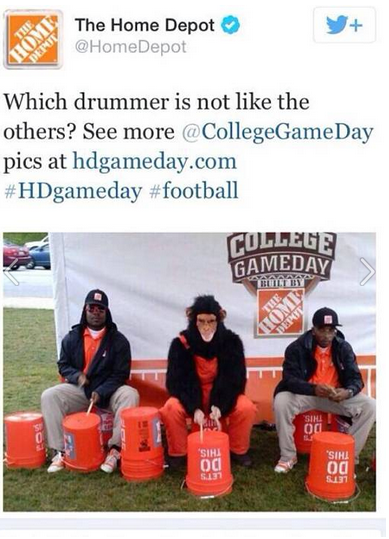
“Few things hurt a brand more than an accusation of racism. So even though it’s impossible to tell if this tweet from Home Depot was indeed racist or simply stupid, the fact that the Twittersphere was up in arms over it made corporate delete the tweet, apologize for two days, and fire the social media agency responsible.” Business Insider
Quality Drop #2: Lack of Policy and Processes
Without basic marketing policy and processes the marketing team may as well be blind-folded when it comes to day-to-day execution of tasks.
Quality Check
Put a few basic policies in place for all marketing teams:
- Brand guidelines, colour palette and corporate style guide
- Social media, public relations and external communication policy
- A process to handle all external communication with various stakeholders like Public Relation firms, Analyst Relation firms, media, social influencers, industry experts, etc.
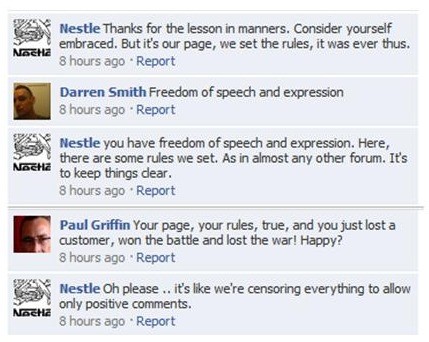
Image Source
Quality Drop #3: Implementation and Execution
“Every marketer makes a mistake.” – All Marketers
Mistakes can range from a simple typo or grammatical error to sending out an email for a new mobile app download which is not mobile-responsive.
Quality Check
For content:
- spelling, grammar, sentence construction, language (e.g. UK and US English is very different)
- all critical information is present and accurate
- titles, headers, and call to action buttons all labelled correctly
For collateral:
- design consistency – check the graphics and layout
- image quality – use appropriate images
- alignment of all design elements
- brand compliance for colour accuracy, typography, etc.
Responsive design:
- check on different browsers (Chrome, Firefox, Safari, IE)
- check on different versions of the browsers
- check on different devices (form factors – smartphones, tablets, laptops, etc.)
This is just the first pass at a very deep, very important issue.
Watch this space for more on quality assurance in the digital marketing world. We will come back with a deep dive into the rigorous Quality Assurance Processes we follow at Position2 to ensure there is no compromise on the quality of deliverables for our client partners.
Use the comment box below to share your best practices or a #marketingblooper.
-
Best of the Week | SEO And ROI Go Hand In Hand, and much more…
This week’s hot news, events and videos from the online marketing and social media world. 
From the Position² Blog This Week: SEO And ROI Go Hand In Hand
The moment a customer has the intent to search for relevant information, that’s where SEO comes in. It’s one of the best investments you can make for your online presence. SEO helps the consumer with decision making, and your ROI increases. It scales over time. Read this blog and find out how.

Best of the Week Video
#AdWordsTips – Negative keywords help your ads reach the most interested customers, which can lead to reduced costs and an increased return on investment. Learn more by watching this video.White Paper: Increase Visibility for Your Content by 4x Today’s traditional SEO is inadequate: Ignite your search results by accelerating visibility in more places than ever before.Download this White Paper and learn: - SEO, why the way we know it is not enough
- Introducing and implementing Enterprise Visibility Accelerator (EVA)
- Using multi-channel tracking tools for effective monitoring
- How EVA benefits businesses.

If you are reading this blog post via a RSS reader, please click here to subscribe. -
SEO And ROI Go Hand In Hand
The moment a customer has the intent to search for relevant information, that’s where SEO (Search Engine Optimization) comes in. It’s one of the best investments you can make for your online presence. It’s pretty simple. SEO helps the consumer with decision making, and your ROI increases. It scales over time.
Be Local, Everywhere
Give customers an accurate geographic location and relevant information about your products and services. Build a location-friendly website. A fair piece of your online sales strategy should focus on local search results that drive relevant traffic to your website. This is the benefit of meticulous keyword research. Do not stint. It’s a necessary piece of effective SEO. It’s how successful online businesses increase traffic.
SEO Keep-in-Minds
- Use an integrated method that blends content creation, traditional SEO principles, social media, conversion optimization and e-mail marketing.
- Use effective keyword selection to drive targeted (i.e. those with the intent to buy) traffic to the website.
- Indexed pages help build awareness about the website across the internet.
- Referral quality (External links) is important. It affects improvement in ranking of the website while increasing website credibility.
- By targeting the traffic you bring to the site (know your buyer persona) you improve the quality of leads and the conversion rate. Targeted consumers are more likely to fill out a form, send email and call for information.
Benefits of SEO
A good site needs to appeal with personalized search results to the online audience as well as its core and niche market segments. The aim of SEO is to optimize overall site quality and increase ranking for relevant queries catering to both online, niche, and core audiences. If users can match the importance of the site to their own needs while feeling comfortable on the site, conversions roll in. SEO is a long-term winner and deserves a place in your overall marketing strategy. You and the consumer both win. It’s how you increase ROI, by employing effective SEO.
-
Best of the Week | Search Engine Optimization (SEO): Looking Ahead To 2016, and much more…
This week’s hot news, events and videos from the online marketing and social media world. 
From the Position² Blog This Week: Search Engine Optimization (SEO): Looking Ahead To 2016
The last quarter of 2015 is upon us, so it is time for marketers to position themselves and strategize for 2016. SEO is a big part of that. What will shape SEO in 2016? Read this blog to find out the five factors that should be at the top of every SEO expert’s list.- Why Meaning Will Ultimately Determine Your Brand’s Content Marketing Success
- Go Native To Strengthen Your Brand Engagement
- 5 Ways Conversion Reporting Could Be Misleading Your Optimizations

Best of the Week Video
Check out this recorded session with Marketo Expert Jamie Lewis and learn why Marketo is a great fit for Managed Service Providers focused on the B2B market, and how the Marketo Platform can be leveraged to grow a Marketing Practice!White Paper: Increase Visibility for Your Content by 4x Today’s traditional SEO is inadequate: Ignite your search results by accelerating visibility in more places than ever before.Download this White Paper and learn: - SEO, why the way we know it is not enough
- Introducing and implementing Enterprise Visibility Accelerator (EVA)
- Using multi-channel tracking tools for effective monitoring
- How EVA benefits businesses.
If you are reading this blog post via a RSS reader, please click here to subscribe. -
Search Engine Optimization (SEO): Looking Ahead to 2016
The last Quarter of 2015 is upon us, so it is time for marketers to position themselves and strategize for 2016. SEO is a big part of that. It has changed over the last decade and the recent past has been a beehive of activity what with major updates from Google like Panda and Penguin. Their intent is to make the search experience more rewarding for the user.
Moz surveyed over 150 leading search marketers who provided expert opinions on over 90 ranking factors and published the Moz ranking factors for 2015, something of a Ground Zero document worth examining.
What will shape SEO in 2016?
Taking all this into account, we believe these five factors should be at the top of anyone’s list:
- Content
- Mobile
- Usability
- HTTPS
- Social factors
Content:
Content has been and will continue to be the winning factor for SEO. Update fresh, original, and unique content on your site on a regular basis. Use your Blog as a platform to keep fresh thoughts (i.e. content) churning. To portray your organization as an industry thought leader, invest in content generation and syndication for the website.
Mobile:
It’s the era of the smartphone, with rapidly growing mobile penetration and mobile searches taking precedence. So mobile-friendly websites are essential. Use Google’s Mobile Friendliness test to check your site for, well, mobile friendliness.
Usability:
Ease of use and navigation is crucial to the user’s experience. No ease, no user. Content placement should always be in synch with the users’ intent. Achieve this with through research on trending and user-focus keywords, and then place appropriate content across the site. Your success is measured by how well you understand the user’s journey and persona and compensate accordingly.
HTTPS:
Ever since Google announced HTTPS as a ranking signal, many business sites have utilized secure encryption. It provides users with an advanced level of trust when browsing the website. For any websites engaging in online transactions, it’s a must-have feature.
Social factors:
Social media can influence search rankings and helps generate your authority across the web. There may be no better way to quickly spread word across the online world. Be active across all social channels and make Google+ and YouTube a priority. Google also uses Twitter data to discover new content.
All of the above factors, in addition to on-page and technical aspects of the site, lead to good SEO results. Remember, SEO is a collaborative effort and a combination of all these can help make the journey smoother.
Let us know your comments and thoughts!
-
Facebook: ‘The Online Shopping Mall’
In the words of Facebook COO Sheryl Standberg, Facebook is making it easier for the 45 million businesses that currently leverage Facebook pages “to connect with their customers.” Two new segments now rolling out, Shopping and Services, allow businesses to feature their products and services directly from their Facebook pages.
Facebook first started testing Shopping in July. It permits retailers to showcase and sell their products from their page. Services is aimed at companies that provide professional services, like plumbers or salons, and helps them highlight what they do.
These new areas are still being tested with a group of businesses, but Facebook says it will open up the features to a broader business population in the coming weeks.
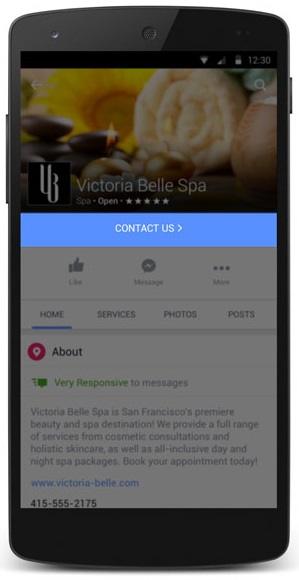
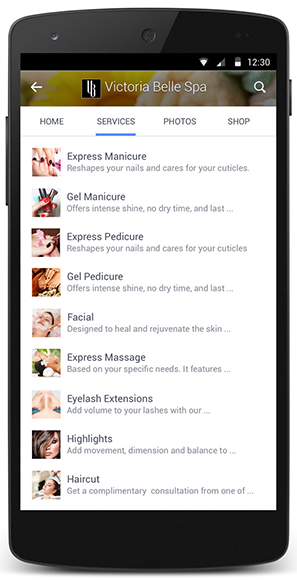
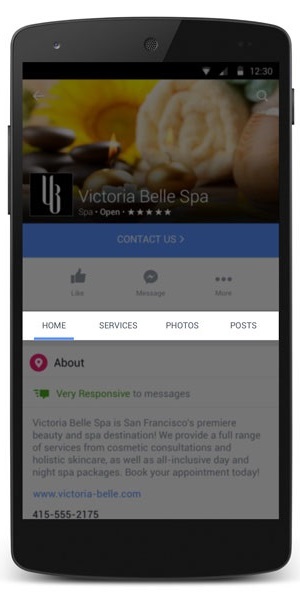
There’s more happening on the “customer” side as well. Facebook is making it easier for people to interact with businesses with three new “call to action” buttons: “Call Now,” “Send Message” and “Contact Us.” These buttons, which will join the “Donate” button for nonprofits, are being redesigned to appear prominently at the top of pages.
Facebook says it will continue to add more sections for pages and call-to-action options as it ramps up its features for businesses. Facebook says the updates are meant to make a company’s Facebook presence more customized based on the type of business and service offered.
-
Pay Per Click: In-House or Outsourced?
Assuming PPC is part of the overall marketing strategy, at some point every business owner is going to face The Big Decision: keep PPC in-house, or outsource? Hiring an outside agency can be a scary move, a big leap into the possibly unknown.
As with anything, there are pros and cons to consider.
PPC In-House
If you have the time and resources to do effective PPC in-house, and if you are happy with your current PPC performance and ROI, why fix what’s not broken?
But at least consider the problems inherent in PPC In-House Management
If you don’t have full-time marketing resources in-house, including your PPC Team, you may find over time it’s difficult to stay ahead of the competition. The digital marketing industry simply moves too fast. It morphs. It changes. There’s nothing part-time about staying on top of those changes and altering course where and when needed.
It takes people with the right expertise, the right skill set, to master this field. Good luck with that, if you haven’t hired them already. There aren’t enough resources available to train new hires. This may make the cost of supporting an in-house team more expensive than simply hiring an agency to take the headache off-site.
The Outsource Option
When you hire a marketing agency, don’t assume that you are getting both senior-level marketing professionals and a wide-range of skill sets at the firm. Make sure it’s true. Access to a dedicated PPC team means you have access to expert and up-to-date knowledge. You should expect to see well run campaigns that provide a greater ROI on your advertising spend. The proof, ultimately, will be in the pudding.
Run the numbers. You can hire an agency at a much lower cost than supporting in-house staff. Software licensing and other fees should be included in the agency fees. This means you don’t have to invest in any major resources. There are hidden values as well. While you have expertise within the context of your own business ecology, an agency pulls on expertise that comes from working with disparate clients across a broad range of industries.
And then what if you grow? Scalability. When it lands on your doorstep you don’t have to ramp up. You just tell the agency you are about to go big knowing you can be assured of the speed and quality of delivery.
In the long run outsourcing frees up time and enables you to focus on your core competencies. And that’s a good thing. What’s one less major headache worth?