Author: Team Position Squared

  • Types Of Marketing Content—And How To Create Evergreen Content

    This week’s hot news, events and videos from the online marketing and social media world.

    From the Position2 Blog This Week:

    Create Enduring Content for Users and Search Engines

    We show you how to develop durable content that stays relevant, drives traffic, engages viewers, and provides value long after it is published.

    White Paper: The Rapidly Changing World of SEO

    Get a head start in your quest for search engine optimization through this insightful white paper.

    Download this White Paper to know:

    • How important SEO is & why it should concern you
    • Various ways in which you can deploy SEO
    • How to combine Social Media with SEO
    • SEO best practices and a road map to get there

    Download the complimentary SEO White Paper now

    Search-Engine-Optimization-White-Paper-position2
  • Create Enduring Content for Users and Search Engines

    Fresh content can initially drive a lot of traffic, but as it gets old, it can lose its relevance, become stale, and drop down in search results. This makes it less likely to be found—and even if it is, it may have little or no usefulness to those looking for fresh information.

    Well, online content is not meant to last forever, but that does not mean that its relevance lies only in the short term. Web content that is properly optimized will continue to attract search traffic and users long after it has been published.

    Content

    So how do you make your web content last longer to drive traffic and better serve users? Developing evergreen content seems tough, but there are a couple of things that can be done to make web pages perform better.

    How to Create Enduring Content


    1. Create content for search engines and readers

    Content needs to be created not only for readers, but also for search engines to index it, else it will not show up in search results for people to find. Content cannot last long if search engines are not indexing it and displaying it in their results.

    2. Update your content regularly to make it more relevant and useful

    Content that was published over a year ago may not have the same relevance today. When new topics are trending, look at where your content can fit into current trends and revise accordingly.

    3. Use various forms of content

    Content does not mean only published articles. It can be of any form, and in fact, videos, PowerPoint presentations, PDFs, and infographics are good ways to make content last longer.

    It’s also a good idea to periodically optimize content meta tags such as the title of the asset, its meta description and meta keywords. If published content is still relevant after a long period of time, meta tags can be updated to suit the best trending searches related to the content.

    4. Let users know how old or new the content is

    For published articles and blogs, it is wise to display when it was published and let users know how old the content is. Without a publishing date, readers may not be certain if the content is still useful.

    Not displaying the date of publication may put readers at risk if the provided information is stale or no longer applicable. Displaying the date lets readers decide whether or not to use the content. Otherwise, readers may be confronted with a dilemma, and abandon otherwise useful content only to avoid the risk of using outdated information.

    5. Notify readers when you update content

    Content that deals with particular subjects is likely to change frequently. If you update time-sensitive content to keep it relevant, it’s good practice to let readers know about such changes by mentioning it at the beginning.

    Sometimes it may not be possible to change published content to keep it fresh or relevant to current requirements. In such cases, let readers know that the content deals with old information, and then provide a link to a new page. This will help readers get the fresh information they are looking for, and is an excellent method to drive user engagement.

    Creating durable content for users and search engine requires continuous effort. It is not a one-time activity, and it requires regular updates to published content. To do this, you may also want to monitor your ranking results and traffic to know how your content is holding up over time.

  • How Marketers Can Leverage Social Media To Engage Their Audience

    This week’s hot news, events and videos from the online marketing and social media world.

    From the Position2 Blog This Week:

    Top Stories of the week

    White Paper: The Rapidly Changing World of SEO

    Get a head start in your quest for search engine optimization through this insightful white paper.

    Download this White Paper to know:

    • How important SEO is & why it should concern you
    • Various ways in which you can deploy SEO
    • How to combine Social Media with SEO
    • SEO best practices and a road map to getting there

    Download the complimentary SEO White Paper now

    Search-Engine-Optimization-White-Paper-position2

    If you are reading this blog post via a RSS reader, please click here to subscribe.

  • Which Social Media Sites are B2B Buyers Using?

    Social media has had a huge influence on the way we live and work. For marketers, social media has allowed brands to start conversations practically in real time. It allows any business to engage with its audience in ways that were simply not possible 10 years ago. The ripple effect is felt across both B2C and B2B marketing.

    The social landscape is continuously evolving, and different platforms offer different—and changing—opportunities. But regardless of which platforms brands choose to use in their campaigns, social media will be one of the most affordable and effective methods at their disposal.

    Whatever the size of your business, you can tap into its potential and achieve impressive results—and social media’s influence on B2B purchases should not be underestimated.

    Who’s on social media in 2016?

    Social networks attract users of all ages, from all demographics across the globe.

    The number of young adults on social media has increased massively over the last decade. In 2005, around 12 per cent of this age group used social channels. Today, the figure is 90 per cent. When we talk about ‘young adults’, we’re essentially talking about tomorrow’s IT leaders. While some of these individuals are graduates, many are already making important brand decisions.

    The figures are significant for older internet users too. In the US, around two-thirds of the adult population uses one or more social networking sites, compared to 5 per cent 10 years ago.

    This cross-generational change has sent shock-waves through practically every sector. We all get our breaking news from Twitter, share memories on Instagram, and keep in touch with family through Facebook. In order to communicate with customers and service users, businesses have had to modernize their approach and get involved in this socially connected world.

    Why businesses must take note of social media

    Facebook is arguably the world’s best-known social network, with more than 1.4 billion active monthly users. 70 per cent of marketers use Facebook to generate more customers, and success is particularly pronounced in B2C marketing campaigns.

    Let’s not forget LinkedIn, which is responsible for more than 80 per cent of social media leads in business. Twitter is used by just over one-third of marketers, while Pinterest and Instagram have 20 million and 150 million active monthly users respectively, and offer great potential in the creative sectors, from home wares to fashion and beyond.

    So, what do businesses actually stand to gain?

    Increased brand awareness

    Social media is important in keeping a brand top-of-mind for a consumer. 37 per cent of internet users follow their favorite brands on social media, while 30 per cent use social networks when researching a purchase.

    Better consumer targeting

    Social media opens up two-way conversations, and gives you insight into the things your customers care about.

    Enhanced customer service

    Your customers are increasingly savvy, and they expect a great experience when they shop with you. Social media lets them get in touch directly, and that provides opportunities to offer rapid responses to support enquiries.

    Timely feedback

    Need to judge the reaction to a new campaign idea? Want to roll out a trial product and gauge the response? With social media, you have a direct connection to your audience.

    More leads

    Social media is a cornerstone of any inbound marketing campaign. Having a presence on key social channels lets you publish content, get your brand noticed, and create more leads.

    Increased sales

    There’s no magic formula for increasing sales through social media, but if you improve awareness, targeting and customer service, increased sales will follow.

    Social media is a fantastic tool for B2B marketing; 54 per cent of B2B marketers are already using it to generate new leads. As we head towards 2017, it’s estimated that US marketers will spend more than $100 billion on social media advertising.

    Ignore the trends at your peril

    We’ve reached a stage where the impact of social media can’t be denied. Since the mid-2000s, it has been a growing influence in the way we all live, work and shop. For businesses, it’s critical to have an active presence on social media, and to take interactions with customers seriously in order to drive profits and sales.

    Looking specifically at buyers in the IT sector, we know that 86 per cent use social media when making a purchase decision. These buyers tend to be the young adults that are also using social media for fun.

    We also know where these influential decision-makers tend to hang out:

    • 83 per cent research on LinkedIn
    • 80 per cent check out Twitter
    • 80 per cent look at Facebook business Pages
    • 61 per cent review YouTube videos
    • 39 per cent use Google+

    Social media is critical, not just because of the research angle, but because so many of these buyers will not contact a supplier until they’re more than half way to a decision.

    Social media can’t do your marketing for you, but it’s one of the key ways to reach the end of the marketing funnel. As such, marketers ignore it at their peril, and the consequences of neglecting social media could have a tangible impact on a business’ bottom line.

  • Google To Stop Showing Ads On Right Side Of Desktop Search Results

    Position² Point of View

    This new Google policy will result in many advertisers seeing a big drop in traffic, as their ads will appear at the 14th position on search result pages instead of at the fourth position.

    This will also have an impact on Cost Per Click, as more advertisers will compete for the top three slots—similar to Google display ads that appear above organic results on mobile devices. In our experience, the top three positions produce the best results on mobile, and it looks like this will now apply to desktop searches as well. Advertisements in fourth position will now have reduced impact, as they will appear at the bottom of the page, which may result in low CTR and low traffic.

    QS is King

    Quality Score is going to play a key role with this change, as only high quality ads can appear on top of the page, irrespective of bid price. So keywords with low quality scores will see a huge drop in traffic. This means that we will be seeing fewer high quality ads on Google.

    Long Tail Keywords

    Traditionally, most advertisers largely ignored long tail keywords, or didn’t focus as strongly on improving their QS. These keywords will play a key role now—if we can establish good quality scores for them with relevant ads and landing pages.

    Product Listing Ads

    PLAs will get more visibility now, as the number of text ads will be reduced, and PLA advertisers will see an increase in CTR. Advertisers who run PLAs must review their results as a consequence of Google’s new policy.

    How Will This Impact Your Advertising?

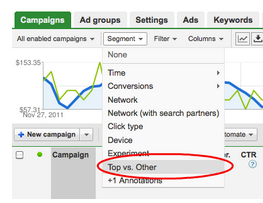
    If you’re a marketer, you need to run a simple Adwords report comparing “Top vs. Other” segments and see what kind of traffic you’re getting. If your maximum traffic is for “Top” you will see an increase in CPC, so you will want to increase your budget outlay. If you’re getting most of your traffic from “Others” you must work on improving positions and QS for your keywords to avoid large drops in your traffic.
    google

    Positives

    Companies that can afford to advertise in top positions will see an increase in competition, so we can expect higher quality results. In general, the quality of ads goes down in the lower positions, as they are dominated by affiliates and often feature lower production values.

    Fewer premium advertisers will result in less complexity, and this will probably reduce the importance of bid management platforms. If we find out that low ranking keywords are not performing, we can eliminate them as they will not get much traffic in the future. This will result in a smaller number of keywords to use in campaigns, and further simplify account management.

    Negatives

    So far, Google advertising has been the most affordable and easy to test channel for small advertisers with limited budgets. Such advertisers will now need to increase their spending to get good results from the Adwords platform.

    Watch this space for more updates!

    By Sudheer Dayanand@Team Position2

  • What Marketers Need To Know About Cross-Device Targeting

    This week’s hot news, events and videos from the online marketing and social media world.
    Drupal 8 Is A Boon For Digital Marketing | Position2 Blog
    From the Position² Blog This Week:
    Drupal 8 Is A Boon For Digital Marketing | Position2 Blog
    48% of people cited “website design” as the number one factor in deciding business credibility. But, when a visitor taps on a button that doesn’t respond, the frustrated users’ buyer journey ends on your digital doorstep. Drupal 8 is looking to solve that problem. Read on and find out how to leverage Drupal 8.
    Top Stories this Week: Social Media
    Top Stories this Week: SEO, PPC and Digital Media
    Modern Marketing Insights: Jesse Noyes Discusses How to Measure Your Content Marketing Best of the Week Video
    How can marketers measure their content marketing efforts and the effectiveness of that content? Watch this 2 minute video where Jesse Noyes, VP of Product Marketing, Content and Communications at Kapost, offers the three top things marketers should be measuring.
    Persona Based Lead Scoring: The Mystery and the Method
    Download this White Paper and learn:


    • Classify leads based on behavior and demographic details
    • Develop a consistent methodology to proffer quality leads to sales
    • Employ data integrity and tracking
    • Deploy marketing automation to improve efficiency and cut costs.?

    Download the complimentary persona Based Lead Scoring White Paper now

    Lead_scoring_Whitepaper
    If you are reading this blog post via a RSS reader, please click here to subscribe.
  • Why Cross-Device Targeting is a New Marketing Battleground

    Cross-device targeting (or tracking) is a way to link different sessions from the same visitor on your website. The idea is simple: people may visit at different times, and on different devices. Cross-device targeting lets you tie the visits together, so that you recognize the same person regardless of the device being used.

    cross-device-marketing

    When visitors can be tracked across devices, marketers can target them with personalized offers. This makes remarketing a powerful tool. If you don’t link desktop and mobile sessions in this way, you essentially lose customers when they close their laptops. Marketers miss out on opportunities to connect with them, and find it more difficult to understand their journey.

    Two key approaches to cross-device targeting

    There are two ways to approach cross-device targeting. The first is deterministic targeting, when a user has to sign in to get full functionality. This is also referred to as first-party tracking. Using this method, there’s no doubt that the right users are being identified, because they’ve provided the data we need to follow them. While you need to convince the user to cooperate by opting in and signing up, you’ll be rewarded with 100 per cent accuracy, provided that person logs in.

    The second method is probabilistic targeting, which is far more complicated. It involves making a best guess that the customer is the same person by crunching huge amounts of data to find patterns of usage. Despite the fact that you need massive amounts of data, this method is surprisingly accurate, identifying people with over 97 per cent accuracy. The issue here is that users don’t necessarily know that they are being tracked.

    Is cross-device targeting worth the investment?

    Gartner estimates that 4.9 billion devices will be used to connect to the internet this year. In many cases, one user will have access to multiple devices and will browse to the same destinations on all of them. From desktop computers to smart watches, each device is a candidate for cross-device targeting because it fills in a blank for marketers.

    The technique offers huge benefits in terms of reducing wasted impressions, and it can help achieve more effective audience engagement and attribution. Right now, only 3 in 10 marketers are using cross-device targeting, according to an eMarketer survey.

    When it comes to collecting data about customers’ actions, mobile is particularly problematic. Cross-device targeting offers a unique chance to recapture individuals on their mobile devices.

    Caveats and next steps

    We briefly mentioned the privacy implications around user tracking, and it’s important that markers have an ethical approach when working with personal data. Right now, there is no unique identifier that can reliably track someone, but it’s likely that tracking technology will get better over time.

    Additionally, smaller companies may find it more difficult to use cross-device targeting, because they cannot tap into valuable data streams that larger businesses have come to rely on. According to Econsultancy, one-third of publishers in North America currently don’t have enough data to act on. It’s quite common for providers to restrict access to their data, which puts everyone else in the market at a disadvantage. As we try to refine our understanding of consumer behavior, first party tracking will be the new battleground for marketers.

  • Why Data Driven Marketing is Critical to Personalization

    Data driven marketing is leading us towards more integrated marketing strategies, where data from different sources are combined to see the bigger picture. The key to success is to tap into relevant data from a range of campaigns. It’s possible to achieve highly optimized campaigns, and deliver content that is more targeted and personal.

    In order to reach the right audience, you need accurate consumer insights, and you need to embed these into the planning stages. By using the right data at the right time, you can respond faster to consumer behavior and reach your audience.

    What is data driven marketing?

    Data driven marketing is a new tactic for marketers, where data actually underpins decisions. In order to leverage data for marketing, you need four key pieces of information:

    • You need to know what data you already have. Increasingly, marketers are required to analyse and manage the data they rely upon.
    • The team needs to trust that its data is accurate. If not, it needs to embark on immediate data quality initiatives to produce reliable data to drive the right decisions.
    • The data needs to be organized into a usable format. It’s no good working from data silos that are messy and difficult to process.
    • The data needs to be leveraged at precisely the right time, and the team needs the necessary tools to do that.

    Big Data promises incredible insights into consumer trends, and new ways to look at consumers’ journeys as they interact with a brand in different ways. But businesses need to prepare—and crucially, they need to filter. 91 per cent of marketers have segmentation strategies already, and this is where personalized content can come into its own.

    Why is data driven marketing necessary?

    If you want to win market share in 2016, you’re going to need to blend creativity with technology, and data is the secret ingredient that binds them. But before we look at that, we need to look at what data actually is.

    Not all data is equal; it’s possible to have too much data to work from. If you try to incorporate every scrap of data, you’re going to lack clear direction in your strategy. Additionally, you need to focus on data quality, because incorrect or incomplete records will hurt your ROI.

    Changing habits is never easy, but there are two areas where you’re going to renew your focus:

    • Unique customer identifiers are critical in profiling the customer journey. But be sure not to target customers with messaging that makes them feel pressured or suffocated. Lead scoring can help you pick out certain customers that offer strong potential to convert, which can lead to more effective conversations.
    • Demographic and behavioral data will assist in better segmentation, so you can automate the process of making decisions and delivering customized messages.

    Where does all this data come from?

    You know you need accurate data, and an effective strategy to use it. But what are your data sources— are there any you can leverage, that you aren’t currently using?

    Typically, marketers need to tap into business software, and form integrations that offer a single customer view. This means pulling in clean data from CRM, ERP and customer service systems, as well as social media, web analytics and automation software.

    You can also leverage consumer feedback and face-to-face interaction, such as marketing initiatives at trade shows and meetings. Wearable devices and the Internet of Things are also bringing in new opportunities to see how consumers behave, while generating constant, real-time streams of data.

    Take care not to use data irresponsibly. According to the Aimia Institute, people are sensitive about the data they provide, and may actually avoid giving businesses their personal data. A poorly targeted campaign can be to blame. Consider these statistics:Data driven marketing

    • 57 per cent of retail consumers take steps to actively avoid companies that are clumsy in their use of data
    • 69 per cent choose to unfollow them on social media
    • 69 per cent have ended subscriptions and closed accounts because of communications
    • 58 per cent have opted out of emails

    It’s critical to be smart with campaigns so that you aren’t cut out of the conversation.

    The right data at the right time

    According to Gartner, the right data is the magic ingredient that helps you to identify customer preferences and
    uncover unmet needs. In order to do this, you need to measure the things that matter, and discard the bad data that will weigh you down.

    The Direct Marketing Association found that revenues generated by data-driven marketing grew for 46 per cent of US marketers from Q1 to Q2 in 2015. 53 per cent of respondents said that they expected revenue to increase in the third quarter.

    Conclusion

    Marketers are learning new ways of leveraging the data they hold. If they don’t have clean data driving automation and strategy, they could fail to deliver the personalized content their audiences demand. Marketing analytics suites help businesses deploy a range of data driven strategies for effective personalized approaches. Position² provides your business with a fully integrated suite of digital marketing solutions—including marketing analytics—that help convert leads into customers.