ECommerce/online shopping is the trend of the day. It will continue to grow and is expected to outrun ‘normal shopping’. At this pace, product companies need to prepare to compete with seasoned players in the market. 
Organic search space is dominated by the Amazons and Walmarts of the world. There are of course, several factors which contribute to this, like the number of pages, the number of visitors, the brand equation and the online spends of these companies.
Given these, what should a normal player in the ecommerce space be doing to ensure that his website lists at the top of SERPs?
Optimizing e-commerce websites is not an easy task. Strategies for ecommerce SEO need to be based on retail marketing and should also be in sync with recent search algorithm trends. From an SEO perspective, here’s what should be looked at for e-commerce sites:
1. Keyword Selection
Keyword research for any ecommerce site should be based on thorough market research and industry competition. Search engines, with their updated algorithms, intend to deliver best possible results to the user. So, understanding consumer search behavior is important.
Consumer specific, long tail and geo-specific keywords should not be ignored.
2. User Experience and Website Loading Time
With growing competition in the online space, user experience becomes an important consideration. Sites need to provide the ‘shopping’ experience for users. Better user experience and engagement ratio on the website receive rewards and recognition from search engines.
Smart search algorithms now focus on ranking websites based on the above factors and other metrics like page load time.
3. Website Structure and On-page Factors
The structure of the website needs to be in line with search engine guidelines. The content should be written primarily for users.
Other on-page factors include:
- URLs
- Keep URLs short and simple
- Include keywords and use hyphens as separators
- Avoid query strings
- Unique meta data
- Have niche page title and descriptions
- Avoid duplicate content
- Focus on improving CTAs by using compelling descriptions
- Navigation with breadcrumbs
- Maintain consistent structure for navigation
- Provide links to category and product pages
- Use breadcrumbs efficiently
- Category and product pages
- Optimize product pages for long tail keywords
- Embed videos
- Post images which have high resolution (for example, product images on Amazon)
- Encourage user reviews
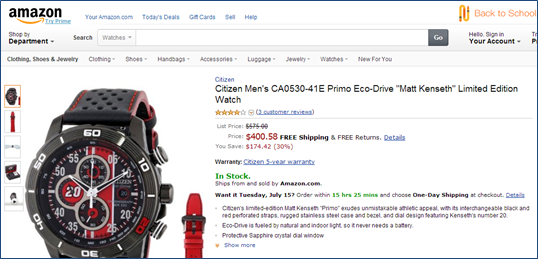
Image Source: Amazon.com
- Schema markup (rich snippets, structured data, microdata)
- Leverage schema for products and breadcrumbs
- Add schema markup for product reviews, improve trust and gain better CTA

Search Query: Barnes and Noble Coupons
4. Mobile Optimization
Google recommends using responsive web design.
- Optimize for mobile queries (mobile and desktop users don’t search alike)
- Have compressed images for faster rendering
- Keep it local
- Give importance to CTAs and store locators
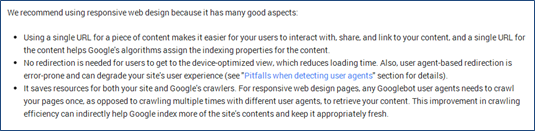
Image Source: Google Developers
5. Social Integration
- Have social plug-ins on category and product pages
- Allow users to login through social profiles (social sign in)
- Make user reviews/comments on social channels visible on the website
- Share user-generated content

Image Source: Apple Store
While the above are tips for boosting organic traffic to an e-commerce site, the real strength lies in the quality and service of the products offered. A great customer journey on site followed by great customer service reaps rich dividends!
Happy Shopping!
Do you have anything to add to this blog? Post your comments in the box below!
Contributed by Chetan Rajasekaraiah, Senior SEO Specialist, SEO team
Leave a Reply