Tag: schema

  • Top 5 SEO Trends for 2015

    2014 has been an eventful year in the online search space with more focus on making search experience user-friendly. Google’s algorithm updates like Google Panda 4.1, Google Penguin, all highlight the same issue. Additionally, new features on Google Webmaster & Google Analytics dashboard have enabled SEOs deliver better web-pages for the users.
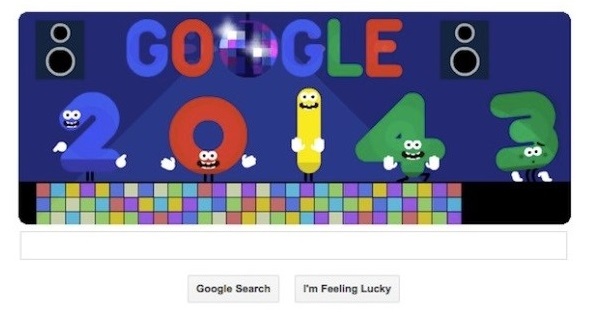
    Position2 Shared Top SEO Trends for 2015

    Image Source

    It’s time for marketers to focus on 2015 and look at the techniques that will hold ground and begin showing results in the New Year!

    Top SEO Trends for 2015   

    • Optimizing for Mobile Search
    • Conversational Search
    • On-page Markup
    • Content Strategy
    • Website Architecture
    • Integration with Social Channels

    Mobile Search Optimization

    1 out of every 5 individuals in the world now owns a smartphone. With the rapid growth in the smartphone market, usage of Internet on mobile devices has reached a new high. With this trend in place, digital marketers are now particularly targeting users browsing via mobile devices with renewed interest. All kind of digital assets now need to be optimized for mobile. Google is now updating algorithms that reward sites rendering optimally on the mobile platform with a higher mobile ranking. Your site optimized for mobile combined with a great mobile UX feature will stand out as the winning factor in 2015.
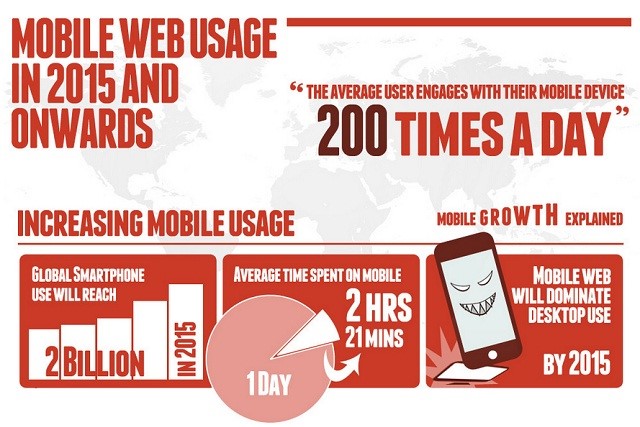
    Position2 - Mobile Search Optimization is the most trending factor in SEO

    Image Source

    Conversational Search

    Hummingbird update stressed on words as part of search queries. Phrases with conversational words are now given priority and web pages that provide a solution to these conversational queries now rank higher rather than pages that just tend to “match” these keywords. Hummingbird makes an effort to understand the real intent of a searcher rather than just the syntax.

    Conversational search queries will continue to gain more importance in 2015 – the reason being these kinds of queries address the “actual” need or the search intent. Keyword & Content strategy in 2015 should be a combination of long-tail and keywords which address Latent Sematic Indexing (LSI).

    On-page Markup:

    Schema markup should serve as a great way to display rich snippets although these may not be the only ranking factor. Schema markup helps improve click-thorugh rates as search results for schema-enabled pages have a higher tendency to boost trust among visitors.

    Content Strategy

    Content still is the “King” of SEO. The only thing that would require a re-alignment is the kind of strategy required towards content generation. Content going forward needs to be a blend of long-tail & conversational keywords. Content generation can be in various forms – websites, blogs, rich-media assets like Press Releases, PDFs, PPTs & Videos. Content syndication in lieu of link building should be the mantra. Association with other sites needs to be carefully evaluated before committing, more so after the announcement of Google Penguin 3.0. Content calendars need to be in place to serve as placeholders for developing fresh on-site content.

    Website Architecture

    Site structure & content placement will have a key role to play. The way websites are built emphasizing user navigation & other usability factors, will be a pivotal factor to rank higher on Search Engines.  Websites need to have a clear navigation, neat URL structure and an organized content architecture. All these aid in improving bounce rates and avg. session duration which are now amongst the varied factors considered for better ranking on Google. Diagnostic tools like Google Webmaster and other online tools like Moz should be of great help to diagnose and repair errors.

    Social Media Integration

    Not to be left behind in the race for SEO, is Social Media. Social posts too now have the power to rank well on Search results. As Matt Cutts says “Facebook and Twitter pages are treated like any other pages in our web index, so if something occurs on Twitter or Facebook and we’re able to crawl it, then we return that in our search results”. Leveraging Google+ & YouTube will go a long way in helping website optimization. Prominence should be given to generate additional content using Blogs, data/product sheets and spread them across the web using social media platforms. Social sharing buttons need to be integrated across websites & blogs for a better experience. Overall focus of marketers should be to give users an enhanced experience on Search – be it via a website, blog, digital asset or social post.

    Contact us now for SEO deployment that delivers real results!

    Have a Great Year ahead & Happy Searching in 2015!

  • The ‘must have’ SEO features for an ecommerce site

    ECommerce/online shopping is the trend of the day. It will continue to grow and is expected to outrun ‘normal shopping’. At this pace, product companies need to prepare to compete with seasoned players in the market. Shopping cart

    Organic search space is dominated by the Amazons and Walmarts of the world. There are of course, several factors which contribute to this, like the number of pages, the number of visitors, the brand equation and the online spends of these companies.

    Given these, what should a normal player in the ecommerce space be doing to ensure that his website lists at the top of SERPs?

    Optimizing e-commerce websites is not an easy task. Strategies for ecommerce SEO need to be based on retail marketing and should also be in sync with recent search algorithm trends. From an SEO perspective, here’s what should be looked at for e-commerce sites:

    1. Keyword Selection

    Keyword research for any ecommerce site should be based on thorough market research and industry competition. Search engines, with their updated algorithms, intend to deliver best possible results to the user. So, understanding consumer search behavior is important.

    Consumer specific, long tail and geo-specific keywords should not be ignored.

    2. User Experience and Website Loading Time

    With growing competition in the online space, user experience becomes an important consideration. Sites need to provide the ‘shopping’ experience for users. Better user experience and engagement ratio on the website receive rewards and recognition from search engines.

    Smart search algorithms now focus on ranking websites based on the above factors and other metrics like page load time.

    3. Website Structure and On-page Factors

    The structure of the website needs to be in line with search engine guidelines. The content should be written primarily for users.

    Other on-page factors include:

    • URLs
      • Keep URLs short and simple
      • Include keywords and use hyphens as separators
      • Avoid query strings
    • Unique meta data
      • Have niche page title and descriptions
      • Avoid duplicate content
      • Focus on improving CTAs by using compelling descriptions
    • Navigation with breadcrumbs
      • Maintain consistent structure for navigation
      • Provide links to category and product pages
      • Use breadcrumbs efficiently
    • Category and product pages
      • Optimize product pages for long tail keywords
      • Embed videos
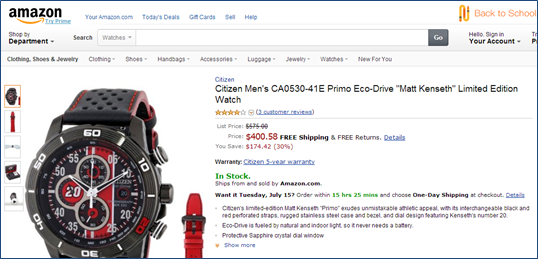
      • Post images which have high resolution (for example, product images on Amazon)
      • Encourage user reviews

    Category and product pages

    Image Source: Amazon.com 

    • Schema markup (rich snippets, structured data, microdata)
      • Leverage schema for products and breadcrumbs
      • Add schema markup for product reviews, improve trust and gain better CTA

    Barnes and noble coupons

    Search Query: Barnes and Noble Coupons 

    4. Mobile Optimization

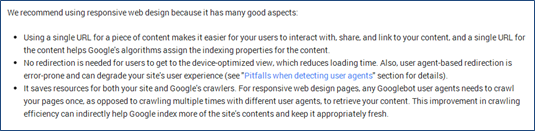
    Google recommends using responsive web design.

    • Optimize for mobile queries (mobile and desktop users don’t search alike)
    • Have compressed images for faster rendering
    • Keep it local
    • Give importance to CTAs and store locators

    Google developers

    Image Source: Google Developers

    5. Social Integration

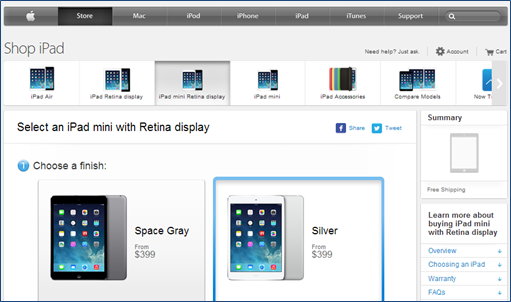
    • Have social plug-ins on category and product pages
    • Allow users to login through social profiles (social sign in)
    • Make user reviews/comments on social channels visible on the website
    • Share user-generated content

    Apple store

    Image Source: Apple Store 

    While the above are tips for boosting organic traffic to an e-commerce site, the real strength lies in the quality and service of the products offered. A great customer journey on site followed by great customer service reaps rich dividends!

    Happy Shopping!

    Do you have anything to add to this blog? Post your comments in the box below!

    Contributed by Chetan Rajasekaraiah, Senior SEO Specialist, SEO team

  • Schema Mark-up Recommendations for B2B Websites

    Schema.org

    What is schema.org?

    Schema.org markup assists search engines like Google, Yahoo!, Bing and Yandex to take in the information present on the web pages and provide richer results, which makes it easier for users to find the right web pages.

    Here are some benefits of schema markup:

    • Higher click-through rates
    • Lower bounce rate
    • Increase in long tail conversions

    Recommendations for B2B websites

    B2B marketers can leverage schema.org markup for corporations, products, ratings, reviews, authors, events, locations, videos, etc. Sites that implement structured markup can see an increase in click-through rates. The following list shows some of the recommended schema.org elements with examples:

    1. Product

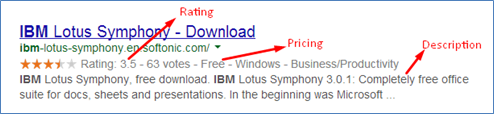
    Schema.org markup helps search engines like Google, Yahoo! and Bing gather information about products that companies offer. With the product schema employed, the following rich snippet shows what would appear in search results:

    IBM Lotus Symphony

    Search query: IBM

    The rich snippet will provide all the basic information for the product (description, reviews, offers and price), which will help customers determine whether the page is worth visiting.

    For more information, click here.

    2. Video

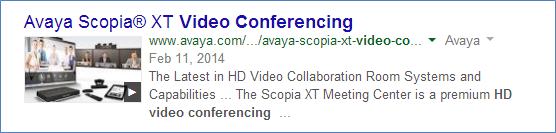
    An increasing number of companies are featuring videos on their websites as part of their marketing strategy. Video and the surrounding content can be marked up by setting the schema type to ‘VideoObject’ for the page.

    HD video conference

    Search query: HD video conference

    Schema.org has markups for the following elements: description, ratings, headlines, audio, awards, copyright, creator, publish date, creation date, genre, publisher, reviews, video quality, thumbnails and version. For videos, defining as many elements as possible will drive in more relevant traffic.

    For more information, click here.

    3. Organization

    There are different types that come under the organization schema.org markup like ‘airline’, ‘corporation’, ‘EducationalOrganization’, ‘GovernmentOrganization’, ‘LocalBusiness’, ‘NGO’, ‘PerformingGroup’ and ‘SportsTeam’.

    Within the above types, ‘corporation’ and ‘LocalBusiness’ schema.org markup have more relevance for B2B websites.

    a) Corporation Markup

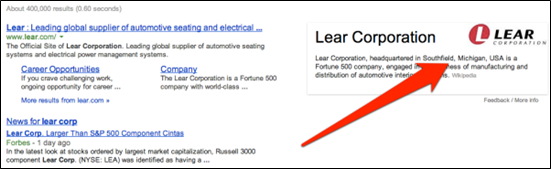
    Here we can include the logo (image), company name, global navigation (SiteNavigationElement) and phone number (telephone). You can place the company name inside an h1 tag and mark it up with the ‘name’ markup. Global navigation can help search engines understand your page hierarchy better. In order to do that, we need to declare that the links are for navigation.

    Just using the markup doesn’t guarantee that your logo will be used. It only helps suggest this to Google, which takes the final decision. However, this markup is a strong signal to Google algorithms to show this image over others. For example, when Google is showing Knowledge Graph on the right hand side based on users’ queries.

    For more information, click here.

    Lear Corporation

    Image Source: Search engine land

    b) LocalBusiness Markup

    This schema.org object provides information on an organization’s specific office locations, thereby supporting local listings where geographical intent might be a clue in search relevance.

    Local business markup is relevant as the dealer and distribution information is of significant value for businesses. It also provides the organization’s headquarters and regional offices’ geographical location supporting local listings.

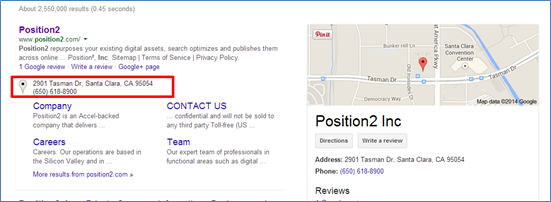
    The Google SERP displays the address of the business that has been marked up on the website (LocalBusiness) with additional information like reviews, ratings, etc.

    For more information on this, click here.

    Position2 Inc

    Search query: Position2 Inc

    In the case of B2B marketers, they should consider implementing this markup in the following locations:

    • Organization’s headquarters’ address information
    • Regional office locations
    • Address information of regional dealers, distributors and resellers

    4. Events

    Any event (concerts, shows, theatre, lectures, conferences, webinars, etc.) that is happening at a certain time and at a certain location can use this markup. Repeated events may be structured as separate event objects.

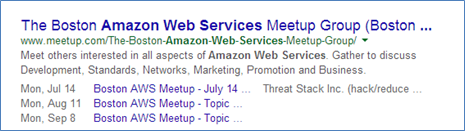
    The event schema lets you be really specific about the type of event you are describing. For ex: BusinessEvent. The information that is visible on the snippet, such as the name and location of the event, also needs to be clearly defined. Since this feature isn’t designed for advertising, your event name should not contain any promotional elements such as the price of the event, a call to purchase, an indication of a sale or temporary discount.

    Amazon Web Services

    Search query: Amazon Web Services

    5. Person

    Under the ‘Person’ (CFO, CMO, CEO) schema, you can interpret most pieces of personal information about employee pages. You can start off by marking up their names and job titles with “name” and “jobTitle”. You can also mark up headshots and descriptions with “image” and “description”. You can also define several other fields including ‘birthdate’, ‘awards’, ‘address’, ‘email’, ‘fax’, ‘phone’, ‘children’, ‘spouses’, ‘company’, ‘nationality’, ‘gender’ and many more.

    For more information on this, click here.

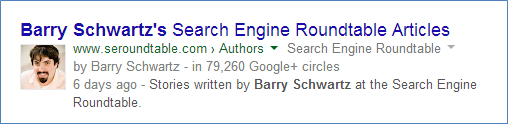
    Google Authorship

    By connecting authors’ names on the website to their Google+ profiles through the ‘rel=Author’ tag, Google is able to categorize a person’s written content better, possibly leading to greater exposure, traffic and ‘AuthorRank’ (especially if the person is an expert in the local community or industry).

    Barry Schwartz

    Search query: Barry Schwartz

    6. Mobile and Software App Listings

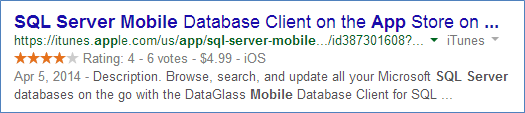
    You can add authenticity and trust to your mobile apps using schema markup. Here is a screenshot of the ‘SQL Server Database App’:

    SQL server mobile

    Search query: SQL Server mobile

    This works for software applications as well. When users search for apps, Google uses the information that is marked up on the website of the page to display your app details better in search results. We recommended that properties like ‘aggregateRating’, ‘offers’, ‘operatingSystems’ and ‘softwareApplicationCategory’ be integrated into the code for better display results.

    7. Others

    a) Careers/Job

    Job posting schema markup provides a list that describes a job opening in a certain organization. This makes it easier for search engines to index jobs.

    For more information on this, click here.

    b) Breadcrumbs

    This is a set of links (breadcrumbs) that can help a user understand and navigate your site’s hierarchy. Google can identify the breadcrumb information in the body of a web page and use it to understand and present the information on the pages in the search results.

    For more information on this, click here.

    c) Offers

    ‘Offer’ markup is an extension to ‘product’ schema markup, which provides a specific structure markup to support product information meant for sale.

    For more information on this, click here.

    Personalization of Google SERP’s

    Having semantic markup does not guarantee Google will display rich snippets in the SERP’s. It’s up to Google to decide whether rich snippets would be useful or not. Also, based on the user’s search intent, the best experience/results are provided for the users search query.

    Conclusion

    Remember that everything you mark will be clearly seen by search engines. So it is important to mark only relevant information that you need the search engines to index.

    Using the rich snippets testing tool, you can check your markup and make sure that Google can extract the structured data from your page. This tool will display the markup found on a specific web page, as well as a preview of how that page might appear in Google search results.

    Do you have anything to add to this post? Drop your comments below!

    Contributed by Susanna Varghese, Junior SEO Analyst