Tag: Ecommerce

  • Should You Go Mobile First Or Mobile Only?


    Flipkart, India’s answer to Amazon, bid adieu to its mobile website with the Big App Shopping Sale in March, 2015. From here on out, Flipkart shopping is all about the mobile app. Myntra, India’s foremost e-commerce fashion site, has shut down its mobile website, and may ditch browser-based shopping altogether. Such is the rising power of mobile.

    With e-commerce firms actively pushing consumers to their apps and leveraging attractive discounts and deals to encourage consumers to buy through the apps, having a mobile app in place is now all but essential. From Amazon’s Happiness Day sale in November 2014 to Myntra’s Binge Weekend Sale and Snapdeal’s App Fest in February 2015, the offers on mobile apps just keep on coming.

    “There is a business reason behind promoting apps,” says Mr. Rajiv Srivastsa, founder and chief operating officer of Urban Ladder. “It leads to higher conversion and engagement. If you build only an app platform, it is cheaper as you don’t have to invest in two-sets of codes – both mobile website and app.  However, in the long run, one has to engage the user enough, so she doesn’t uninstall the app.”
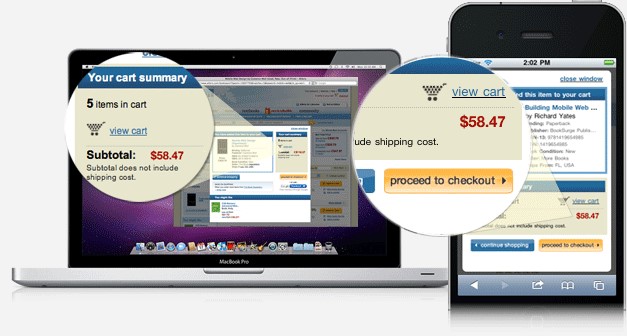
    Mobile App or Mobile Website for e-commerce Business

    Experience is the Key

    Though apps offer an attractive way for e-commerce players to interact with their consumers, it is neither easy nor advisable to force apps on customers. According to a study conducted by ICM Research in UK, a majority of customers prefer to interact with retailers through their mobile websites and only download an app if they are incentivized to do so, or if they are regular shoppers. And yet the same consumers are far more likely to complete transactions through the retailer’s mobile app than through the mobile website.

    “Going app-only makes sense if you can provide an experience not otherwise possible on the mobile web platform,” says Shamik Sharma, chief product and technology officer at Myntra.

    Consumer Experience on Mobile App

    Merits / Demerits of Mobile App

    There are crucial differences in the ways mobile websites and mobile apps help customers navigate and experience their shopping journeys. Mobile apps function a lot like mobile websites. They have certain operational and functional benefits and they have downsides as well. Customers can interact with the app 24/7 no matter where they may be. The IT advantage for business is having their own corner on a customer’s device. Mobile apps promote a customized experience because they work in the background, allowing e-retailers to collect user-specific data such as recurring purchases, duration of browsing, preferred platform to share information, geo-location and so on. The downside involves convincing customers it’s in their interest to install the app and give up permissions.

    Some businesses simply prefer both mobile websites and mobile apps. For example, India’s MakeMyTrip mobile site is an acquisition platform while the app is a loyalty and retention platform complementing its desktop presence. According to Pranav Basin, head of online products for Makemytrip.com, “The desktop plus mobile app is a great combo. They complement each other perfectly”. Ankit Khanna, Senior VP for product development at Snapdeal cautions, “We do not want to force consumers to download our app. If they want to browse first and buy later, we enable them to do that”.Website Vs. Mobile App – Position2 Blog

    While an app install “cost” is high, once you get the consumer on board the marketing cost could shrink.

    While mobile apps enable better targeting of customers, the major draw back is the extra step introduced into the shopping journey – at least the first time around. As one e-marketer pointed out, with e-commerce you click and buy. With an app, you click, you download and install, and then you buy.

  • Pinterest Bans Affiliate Links

    Pinterest announced some bad news for Bloggers and active power pinners who drive leads and earn revenue via affiliate marketing. Pinterest is set to ban affiliate networks on their site. Currently, affiliates are able to monetize pins by using a trackable link. These affiliates earn commissions from pins that produce conversions and/or drive traffic to their retail partners’ sites.

    Why is this happening now? Pinterest does not earn any revenue from these affiliate links even though it has become a platform to facilitate them. The social network has not confirmed this, but the writing has been on the wall that Pinterest wants to leverage their network of pinners for their own monetization plans. First there was their “promoted pins”, and then partnership announcements with Apple and Stripe.

    This really should not come as too much of a shock to the affiliate networks. Pinterest has banned affiliates before. Back in 2012, Pinterest cracked down on Amazon affiliate programs by removing the tracking tag from links directed to Amazon’s site. At the time, there were hundreds of other affiliates, but Pinterest selectively picked their battles instead of taking on the futile task of going after every affiliate network. Now, Pinterest will still be picking battles by going after larger networks, but the announcement has made it official, stating that they will “automatically remove all affiliate links, redirects and trackers on Pins.”

    So Pinterest power users partnered with affiliate networks, you have been warned. Although as per Pinterest, the ban will not be a drastic rollout. Pinterest stated, “…all your past Pins will show up normally and still be clickable.” Sounds like a kind and gentle transition to being cut off, but forget about being able to track those pins. Pinterest also stated that affiliates are still welcome to get paid by curating boards or by working on paid social media marketing for their network partners.

    Let us know how you feel about this latest Pinterest development.

    Contact Position2 to discuss how to kick off a social media B2B strategy.

  • The ‘must have’ SEO features for an ecommerce site

    ECommerce/online shopping is the trend of the day. It will continue to grow and is expected to outrun ‘normal shopping’. At this pace, product companies need to prepare to compete with seasoned players in the market. Shopping cart

    Organic search space is dominated by the Amazons and Walmarts of the world. There are of course, several factors which contribute to this, like the number of pages, the number of visitors, the brand equation and the online spends of these companies.

    Given these, what should a normal player in the ecommerce space be doing to ensure that his website lists at the top of SERPs?

    Optimizing e-commerce websites is not an easy task. Strategies for ecommerce SEO need to be based on retail marketing and should also be in sync with recent search algorithm trends. From an SEO perspective, here’s what should be looked at for e-commerce sites:

    1. Keyword Selection

    Keyword research for any ecommerce site should be based on thorough market research and industry competition. Search engines, with their updated algorithms, intend to deliver best possible results to the user. So, understanding consumer search behavior is important.

    Consumer specific, long tail and geo-specific keywords should not be ignored.

    2. User Experience and Website Loading Time

    With growing competition in the online space, user experience becomes an important consideration. Sites need to provide the ‘shopping’ experience for users. Better user experience and engagement ratio on the website receive rewards and recognition from search engines.

    Smart search algorithms now focus on ranking websites based on the above factors and other metrics like page load time.

    3. Website Structure and On-page Factors

    The structure of the website needs to be in line with search engine guidelines. The content should be written primarily for users.

    Other on-page factors include:

    • URLs
      • Keep URLs short and simple
      • Include keywords and use hyphens as separators
      • Avoid query strings
    • Unique meta data
      • Have niche page title and descriptions
      • Avoid duplicate content
      • Focus on improving CTAs by using compelling descriptions
    • Navigation with breadcrumbs
      • Maintain consistent structure for navigation
      • Provide links to category and product pages
      • Use breadcrumbs efficiently
    • Category and product pages
      • Optimize product pages for long tail keywords
      • Embed videos
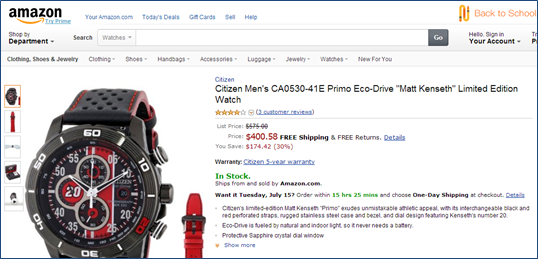
      • Post images which have high resolution (for example, product images on Amazon)
      • Encourage user reviews

    Category and product pages

    Image Source: Amazon.com 

    • Schema markup (rich snippets, structured data, microdata)
      • Leverage schema for products and breadcrumbs
      • Add schema markup for product reviews, improve trust and gain better CTA

    Barnes and noble coupons

    Search Query: Barnes and Noble Coupons 

    4. Mobile Optimization

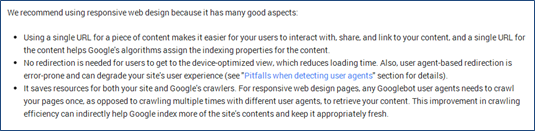
    Google recommends using responsive web design.

    • Optimize for mobile queries (mobile and desktop users don’t search alike)
    • Have compressed images for faster rendering
    • Keep it local
    • Give importance to CTAs and store locators

    Google developers

    Image Source: Google Developers

    5. Social Integration

    • Have social plug-ins on category and product pages
    • Allow users to login through social profiles (social sign in)
    • Make user reviews/comments on social channels visible on the website
    • Share user-generated content

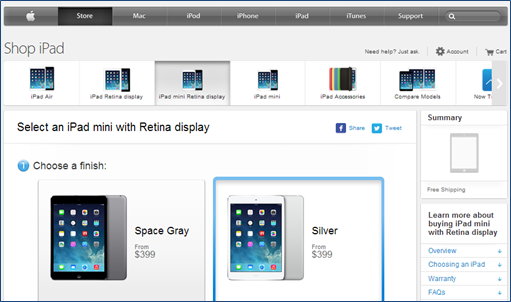
    Apple store

    Image Source: Apple Store 

    While the above are tips for boosting organic traffic to an e-commerce site, the real strength lies in the quality and service of the products offered. A great customer journey on site followed by great customer service reaps rich dividends!

    Happy Shopping!

    Do you have anything to add to this blog? Post your comments in the box below!

    Contributed by Chetan Rajasekaraiah, Senior SEO Specialist, SEO team