Blog

  • Rewiring the GTM Engine: How AI-Driven RevOps Creates a Compounding Revenue Advantage

    Rewiring the GTM Engine: How AI-Driven RevOps Creates a Compounding Revenue Advantage

    Editor’s Note:

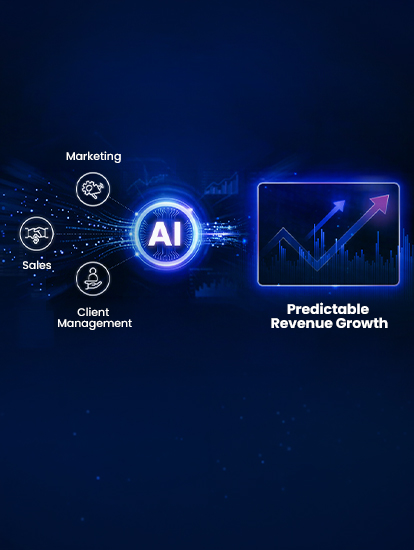
    Revenue growth today is no longer driven by effort alone, but by orchestration. In an AI-driven world of complex buying journeys and expanding buying groups, RevOps unifies Marketing, Sales, and Client Management teams into one connected engine for predictable growth.

    Most B2B revenue leaders aren’t losing because they lack effort. They’re losing because their engine is wired wrong.

    Marketing generates leads, Sales chases them, and Client Management inherits whatever’s left. Each team runs its own race on its own scoreboard. It’s a model that once made sense. Today, it’s a liability. And if you’ve ever sat in a QBR wondering why the numbers don’t add up despite everyone hitting their targets, you already know this.

    The ability to align Marketing, Sales, and Client Management teams with RevOps, and the extent to which AI improves B2B revenue operations end-to-end, are quickly becoming the most important strategic differentiators for B2B growth leaders. This blog breaks down what that actually looks like in practice.

    The GTM Model Most Companies Are Still Running On Is Broken

    Let’s be honest about something the industry dances around: when Marketing, Sales, and Client Management teams are misaligned in B2B organizations, it isn’t a people problem. It’s a structural one.

    The traditional GTM model was designed for a simpler era. Shorter sales cycles, smaller buying committees, and more predictable customer behavior. None of that is true anymore. Today’s B2B buyer is more informed, more deliberate, and harder to reach. They move across channels, involve multiple stakeholders, and expect a seamless experience from first touch to renewal. What they get, in most organizations, instead, is a series of disconnected handoffs.

    Marketing hands off to Sales with a list of MQLs and a hopeful shrug. Sales closes the deal and passes it to Client Management, summarizing it in a CRM field. Client Management tries to pick up the relationship from scratch. And somewhere in each of those transitions, context is lost, misalignment in client objectives and expectations, momentum stalls, and revenue leaks.

    The starting point to fix B2B funnel leakage is being honest about where the leaks actually are. They’re not just in the pipeline. They’re in the gaps between teams, in the moments when one function’s output becomes another’s problem, and no one has a unified view of what’s actually happening with the customer.

    Research consistently shows that organizations with aligned revenue teams grow faster and are significantly more profitable than those without. Yet most B2B companies are still operating under a model that structurally prevents that alignment.

    That’s the problem Revenue Operations was built to solve.

    Align Marketing, Sales, and Client Management Teams with RevOps: It Goes Beyond Alignment

    Revenue Operations is the strategic function that brings Marketing, Sales, and Client Management under a single operating model with shared data, shared metrics, and synchronized execution across the entire customer lifecycle.

    But here’s what gets missed in most RevOps conversations: the goal to align Marketing, Sales, and Client Management teams with RevOps isn’t really about alignment at all. Alignment is the floor, not the ceiling. What RevOps actually enables is compounding. A system where every improvement in one part of the engine makes every other part more effective.

    A more precise lead qualification process benefits not just Marketing. It shortens Sales cycles. It raises the quality of customers that Client Management inherits. It reduces churn at the back end. Each gain amplifies across the whole system, and over time, the gap between organizations that have built this model and those that haven’t becomes very difficult to close.

    That compounding effect is exactly what organizations need to build a sustainable, predictable revenue engine. Companies with well-implemented Revenue Operations achieve up to 30% reductions in go-to-market costs, meaningful improvements in sales productivity, and stronger customer retention. That’s not incremental progress. That’s a structural advantage.

    Now layer AI into that foundation, and you move from a well-aligned organization to an intelligent one.

    AI Improves B2B Revenue Operations Across the Entire Funnel

    This is the part of the conversation that’s often oversimplified. AI isn’t a magic layer you drop on top of a broken system. But when it’s embedded into a properly built RevOps framework, it transforms every stage of the revenue lifecycle in ways that compound over time.

    Here’s where AI improves B2B revenue operations across each GTM function:

    Marketing: Precision Over Volume

    The core challenge in B2B marketing has never really been lead generation. It’s been lead quality. Most teams can fill the top of the funnel. What they struggle with is knowing which of those leads are actually worth pursuing. This is precisely the point at which Marketing and Sales teams are most often misaligned. Marketing passes over volume; Sales qualify for fit; neither trusts the other’s judgment.

    AI changes the starting point. Predictive intent models analyze behavioral signals, firmographic data, and engagement patterns to identify which accounts are in-market before they raise their hand. That means Marketing can target with precision, personalize at scale, and pass sales a pipeline that’s genuinely worth working.

    The result isn’t just better leads. It’s the foundation for truly aligning Marketing, Sales, and RevOps, built on shared intelligence rather than negotiated definitions.

    Sales: From Pipeline Management to Revenue Intelligence

    Here’s a scenario most sales leaders will recognize immediately: a rep has 40 open opportunities. They have strong conviction on three, a vague sense of the rest, and no reliable signal for where to focus. They default to the deals that feel right, which is one of the most predictable and costly ways to let revenue leakage in B2B sales go unaddressed.

    The pipeline looks fine. The activity metrics look fine. The conversion rate tells a very different story.

    AI-powered deal scoring and pipeline intelligence, embedded inside a RevOps framework, flip that dynamic. Reps get a data-driven ranking of their pipeline showing which deals are progressing, which are stalling, and why. Conversational intelligence tools surface recurring objections, highlight what’s working in winning deals, and flag risk signals early. Managers shift from forecast reviews to real coaching conversations.

    And because all of this draws from the same unified data infrastructure that RevOps governs, the sales team doesn’t just have better tools. They have full customer context: what marketing has touched, what success is being tracked, and what the customer actually cares about. That’s what it takes to build a predictable revenue engine that holds up over time, and it starts with giving every revenue team the same view of the same data.

    Client Management: Proactive Retention and Expansion

    RevOps improves customer success and retention in ways that are arguably the most underappreciated part of this conversation, and the area with the highest untapped upside for most organizations.

    Consider this scenario: a mid-market SaaS company has a customer entering their second year of a three-year contract. Everything looks stable on paper. Usage is steady, support tickets are low, and the last QBR went smoothly. But quietly, engagement on a key feature has dropped 40% over the past two months. The internal champion who signed the deal has just changed roles. And a competitor has been running a targeted campaign against the account for the past 3 weeks.

    Without AI-driven signals, none of this surfaces until the renewal conversation, by which time it’s already too late to change the outcome.

    With AI embedded into the Revenue Operations engine, that account gets flagged months in advance. The client success manager re-engages proactively with the right message. Marketing launches a targeted re-engagement sequence. Sales gets looped in on the expansion conversation. What could have been a quiet churn becomes a renewed and potentially expanded relationship.

    That’s the reality of how RevOps improves customer success and retention in practice. Not through better intentions, but through better infrastructure. And it’s one of the clearest examples of how AI improves B2B revenue operations, directly impacting the bottom line.

    RevOps Framework for B2B SaaS Companies and Enterprise Organizations

    Knowing that you need to rewire your GTM engine and knowing how to do it are two different things. This RevOps framework for B2B SaaS companies and enterprise organizations is designed to get you started without boiling the ocean.

    Step one: Unify your data. This is non-negotiable. AI is only as intelligent as the data it operates on. If your CRM, marketing automation platform, and customer success tools aren’t integrated and aligned on shared definitions, you’re building on a shaky foundation. Agreeing on what counts as an MQL, what signals a renewal risk, and what qualifies as an expansion opportunity isn’t a technical decision. It’s a strategic one. And it’s the first real step to fix B2B funnel leakage at its root.

    Step two: Build shared metrics. One of the most powerful, yet underused, levers for aligning Marketing, Sales, and Client Management teams is metric design. When each function is measured independently, each function optimizes independently. Shift to shared revenue metrics like pipeline contribution, win rates, net revenue retention, and customer lifetime value, and you create a scoreboard everyone is genuinely playing to win together.

    Step three: Pick one motion and prove it. The RevOps transformations that fail tend to try to do everything at once. The ones that succeed identify a single, high-impact workflow such as lead-to-opportunity handoff, renewal risk flagging, or expansion signaling, apply AI-driven RevOps principles to it, demonstrate the value, and scale from there. Start focused. Build momentum. Then expand.

    This is the most reliable path to build a predictable revenue engine that actually holds. Not through a big-bang transformation, but through deliberate, compounding improvements to the system.

    This Is What Sustainable B2B Revenue Growth Looks Like

    The organizations pulling ahead in B2B today aren’t necessarily the ones with the biggest teams or the deepest pockets. They’re the ones with the most intelligent architecture.

    They’ve stopped running three disconnected GTM functions and started building one unified revenue system. They’ve made it a priority to align Marketing, Sales, and Client Management teams with RevOps as a foundational operating principle, not an afterthought. They understand that AI improves B2B revenue operations not as a theoretical concept, but as a lived operational reality. And they’ve built a RevOps framework for B2B SaaS companies and enterprise teams alike that compounds with every deal closed, every customer retained, and every expansion captured.

    The outcome is exactly what every revenue leader is chasing: a predictable revenue engine that doesn’t just perform better today but gets smarter over time. One that reduces revenue leakage in B2B sales, strengthens how RevOps improves customer success and retention, and turns misaligned functions into a single, synchronized growth machine.

    Rewiring the GTM engine is not a small undertaking. But for organizations that get it right, the returns are durable, defensible, and compounding.

    The question isn’t whether to make the move. It’s whether you can afford to keep waiting.

  • Why High-Quality Content Systems Are a Game Changer for Technical B2B Companies.

    Why High-Quality Content Systems Are a Game Changer for Technical B2B Companies.

    How a thoughtful content system transformed the digital experience for a materials testing company.

    For companies that provide advanced technical services such as materials testing, analytics, or engineering support, your content is more than just information. It is often the first way customers experience your expertise, helps them choose the right service, and can be the reason they decide to contact you.

    But many technical B2B companies struggle with the same challenge:

    A disorganized website, unclear messaging, and content that fails to assist users in making informed decisions.

    This was the case with the materials-testing company we collaborated with. They had useful information on their site, but it wasn’t organized in a way that would assist the different Persona types. The result? Lack of attention, poor interest, and lost conversions.

    A high-quality content system changed everything.

    First, What’s a Content System?

    A content system describes the strategic, repeatable structure for how a company develops, manages, delivers, and preserves content within its digital ecosystem.

    Rather than posting pages and blogs when needed, a content system will ensure:

    • Every page has a clear purpose.
    • Content is mapped to real customer needs.
    • The site is easy to navigate.
    • Users at different levels of expertise can find what they need.
    • Content supports the entire marketing funnel – from awareness to decision.

    For technical B2B companies, this is not optional. It’s a competitive advantage.

    The Personas That Shaped the System

    To create the right content structure, we identified three main personas. Each one has a different level of technical knowledge and different expectations.

    1. The Expert (PhD-Level Researcher)

    Highly technical; knows exactly which technique they need; wants depth and accuracy.

    2. The Informed but Uncertain Mid-Level Scientist

    Understands materials testing but requires guidance on selecting the most suitable technique.

    3. The Novice

    Knows the problem they want to solve but needs simple explanations and directional help.

    A successful content system must support all three simultaneously. That became the foundation of our redesign.

    Key Transformation #1: Intuitive Navigation

    The original website made users hunt for information.

    Our new organization of the navigation was based on a simple rule:

    The right information should be available to the user in three or fewer clicks.

    This entailed rational categorization of services, simpler labeling, and an easy route for users from novice to expert.

    Key Transformation #2: A Brand Identity That Reflects the Service

    The redesigned logo centered on electrons, forging a visual connection between the brand and its core strength: advanced analytical techniques for material testing.

    This change went beyond a mere aesthetic update, establishing a cohesive visual narrative and significantly enhancing brand perception.

    Key Transformation #3: Technique Pages That Educate and Convert

    The original technique pages were completely reconstructed, featuring clear and organized sections that covered the following key areas:

    • Definition: What the technique entails.
    • Problem Solved: The issue addressed by the technique.
    • Visuals: Images of the necessary equipment.
    • Results: Examples of the output.
    • Applications: Typical use cases.
    • Target Audience: Guidance on who should select this specific technique.
    • Comparison: How it stacks up against alternative options.

    The content should cater to three distinct audience levels:

    • Experts: To satisfy their need for in-depth information.
    • Mid-level Scientists: To help them make well-informed comparisons.
    • Novices: To clearly explain the fundamentals without causing confusion or being overwhelming.

    Key Transformation #4: Smart Content Mapping to Resources

    We transitioned from isolated pages to an interconnected content ecosystem.

    This system ensures that each technique is now linked to:

    • Relevant case studies
    • Webinars
    • Blogs
    • Application notes

    This helps users naturally transition from learning → to evaluating → to deciding, thereby improving both user experience and funnel performance.

    Key Transformation #5: Humanizing the Expertise

    The core stakeholders were categorized into three groups:

    • Executives
    • Operational Experts
    • Technical Specialists

    Showcasing the actual people behind the service is a strategic move to build confidence. This is especially vital for companies whose success hinges on precision, accuracy, and scientific integrity.

    Why This Content System Is a Game Changer

    A well-structured content system goes beyond mere aesthetics; it is crucial for enhancing performance across the entire funnel.

    Top of Funnel- Attract and Educate.

    Novices and mid-level scientists can easily and conveniently understand it clearly It leads to higher-quality traffic, more visits, and greater activity on resources.

    Mid Funnel — Influence & Compare

    Technique pages, use cases, and mapped resources help users evaluate the right options with confidence.

    This lowers bounce and improves lead quality.

    Bottom Funnel — Build Trust & Convert

    PhD-level researchers and decision-makers are assured by expert-level content, stakeholder profiles, and breakdowns of techniques.

    This shortens decision cycles and increases conversion rates.

    The Real Win: Content That Works for Everyone

    A high-quality content system not only organizes information but also directs, teaches, and helps users at different levels of expertise.

    For technical B2B companies, this is what sets leaders apart from everyone else.

    When your content system works:

    • Your website becomes a decision-making engine
    • Your users feel understood
    • Your brand stands out as a trusted expert
    • And your conversions grow naturally

    Content That Builds Trust Before the Initial Conversation

    The ongoing transformation points strongly toward a significant evolution: as you improve your customer experience, you also improve your content system.

    You turn complexity into clarity

    You turn expertise into accessible value

    And you turn your website into a place where every audience, from novices to PhD-level researchers, feels supported

    In the case of technical B2B firms, building customer confidence is at the centre of this

    It’s how you establish your brand’s voice, showcase your expertise, and build customer confidence before they even contact you.

  • Humans + AI Agents: The New Team Model (Part 3 of 3)

    Humans + AI Agents: The New Team Model (Part 3 of 3)

    Why AI Marketing Agents Deliver Results Traditional Tools Cannot

    Editor’s Note: This is the final installment in a three-part series examining how AI marketing agents are revolutionizing the industry. In Part 1, we introduced the fundamental shift from reactive tools to proactive execution partners. In Part 2, we explored the tangible advantages these agents deliver and how they’re transforming content marketing. In this concluding article, we deliver on our promise to explore implementation strategies and the future evolution of human + agent collaboration.

    Key Takeaways

    • Successful AI agent deployment requires clean, structured data, robust integration capabilities, and strict compliance with regulations like GDPR and CCPA
    • Marketing teams must shift from operators to orchestrators, rebuilding workflows around Human → Agent → Human loops that combine machine efficiency with human judgment
    • The future of AI Agentic marketing includes multimodal AI capabilities, democratized development tools, strategic business integration, and increased focus on ethical frameworks and regulation

    Key Considerations Before Implementing AI Agents

    While what are ai marketing agents can do is impressive, successful deployment requires careful planning and realistic expectations about limitations and requirements.

    1. Data Quality and Infrastructure Requirements

    AI agents rely on large datasets, making compliance with regulations like GDPR and CCPA critical, requiring strict data governance frameworks that ensure agents only access necessary information and process data securely.

    Organizations need:

    • Clean, structured data accessible across systems
    • Robust data integration capabilities
    • Privacy and security protocols
    • Regular data quality audits
    • Compliance monitoring frameworks

    2. Limited Emotional Intelligence

    AI agents excel at data processing and pattern recognition but struggle with nuanced human emotions. Reliable sentiment analysis—figuring out if a sentence is happy, sad, or sarcastic—remains challenging for AI, as does understanding the human intuitions underlying what data to look for and what questions to ask.

    Marketing scenarios requiring deep empathy, cultural sensitivity, or complex emotional understanding still benefit from human judgment and oversight.

    3. Technology Integration Complexity

    Organizations with fragmented technology stacks may need to invest in data unification before effectively deploying agents, as successful AI agent implementation requires robust data integration capabilities to access customer information, campaign performance metrics, and external market data.

    Teams should:

    • Assess existing infrastructure readiness
    • Identify integration requirements early
    • Plan for gradual, phased implementation
    • Allocate resources for ongoing optimization

    4. Ongoing Governance and Monitoring

    Agentic AI systems pose complex governance challenges due to their autonomous, opaque decision-making and vulnerability to bias, cybersecurity threats, and regulatory gaps, requiring organizations to expand beyond traditional governance practices.

    Essential safeguards include:

    • AI sandboxing for testing
    • Stress testing protocols
    • Agent-to-agent monitoring
    • Emergency shutdown mechanisms
    • Human oversight frameworks
    • Regular performance audits

    5. Change Management and Team Readiness

    Marketing teams need training on how to work alongside AI agents rather than viewing them as replacement tools, with successful implementations emphasizing human-AI collaboration where agents handle routine decisions while humans focus on strategy, creativity, and relationship building.

    Organizations should:

    • Invest in comprehensive training programs
    • Establish clear roles and responsibilities
    • Create guidelines about agent capabilities and limitations
    • Foster a culture of collaboration, not competition
    • Set realistic expectations about timelines and results

    How Companies Are Evolving Toward Human + Agent Teams

    To keep pace with marketing’s increasing complexity, organizations are redesigning fundamental workflows through four major shifts:

    1. Marketers Become Orchestrators, Not Operators

    Instead of spending time on repetitive tasks, marketers direct multi-agent systems that produce campaign concepts, audits, content, and reports in a fraction of the time previously required.

    2. Workflows Rebuilt Around Agents

    Human → Agent → Human loops deliver both speed and quality: agents handle execution, humans refine and govern outputs. This creates an iterative process that combines machine efficiency with human judgment.

    3. AI Embedded Into Daily Operations

    Agents integrate directly into Slack, CMS systems, analytics platforms, and knowledge bases—not isolated inside prompt boxes. This seamless integration makes AI assistance as natural as opening any other business application.

    4. Execution Becomes Predictable and Repeatable

    Organizations shift from “this depends on who’s doing the work” to “this is how our system works.” This standardization enables consistent quality, reliable timelines, and scalable operations across teams and markets.

    The Future of AI in Marketing: What’s Coming Next

    Looking ahead, several technological advancements will further transform how can agentic ai be used in marketing and expand what’s possible.

    1. Multimodal AI Capabilities

    Multimodal AI, which processes and integrates multiple forms of input like text, voice, images, and video, will become far more refined, enabling AI to better mimic human communication and power intelligent virtual assistants capable of understanding complex, context-rich queries.

    This means future ai agents for seo and marketing will seamlessly analyze and create across all content formats, understanding visual context as easily as text.

    2. Democratized AI Development

    AI development will become increasingly accessible through no-code and low-code platforms, automated machine learning tools, and plug-and-play APIs, allowing entrepreneurs, hobbyists, and businesses to benefit from faster innovation cycles.

    This accessibility will enable more marketing teams to build custom agents tailored to specific business needs without requiring extensive technical expertise.

    3. Strategic Business Integration

    Rather than isolated AI pilots, organizations will embed agents throughout the business architecture. Leaders will deploy AI agents for lead prioritization and personalized marketing, recruitment and talent skilling, and customized interactions across all transactions and communications to enhance experiences.

    4. Ethical AI and Regulation

    As adoption grows, expect increased focus on ethical frameworks and regulatory compliance. Organizations will need transparent AI governance, bias monitoring, and clear accountability structures to maintain trust with customers and stakeholders.

    5. Synthetic Data Innovation

    The future of AI will leverage synthetic data to overcome limitations of real-world datasets, enabling more robust training and testing while addressing privacy concerns. This will accelerate agent development while maintaining data security.

    Frequently Asked Questions

    What are AI marketing agents?

    AI marketing agents are autonomous software systems that use artificial intelligence to execute marketing tasks independently. Unlike traditional automation tools that follow rigid scripts, these agents can perceive data from multiple sources, reason through complex situations, make informed decisions, and take action to achieve specific marketing goals—all with minimal human intervention. They combine machine learning, natural language processing, and generative AI capabilities to handle everything from customer interactions to campaign optimization.

    How do AI marketing agents improve marketing campaigns?

    AI marketing agents improve campaigns through several mechanisms. They automatically test different content versions to identify top performers, adjust campaign spending in real-time for optimal ROI, and deliver personalized messages at precisely the right moments. Agents can manage and optimize campaign performance in real-time, interacting with customers through advanced conversational interfaces and delivering hyper-personalized content and product recommendations. This leads to campaigns that are more effective, efficient, and responsive to audience behavior.

    How can AI marketing agents automate marketing tasks?

    AI marketing agents automate tasks by handling multi-step processes end-to-end. They can build audience segments from natural language descriptions, generate campaign briefs and content variations, create and activate complete journey flows, conduct continuous A/B testing, and monitor performance metrics—all without requiring constant human input. Agents use Retrieval Augmented Generation to access proprietary company knowledge, ensuring responses and actions are accurate and specific to the business while populating CRM fields, triggering nurturing journeys, and creating service tickets.

    How can AI marketing agents provide data analysis and insights?

    AI agents excel at processing vast amounts of data to surface actionable insights. They analyze historical data and forecast future trends, helping marketers make data-driven decisions and optimize workflows by identifying customer behavior patterns, predicting product performance, optimizing pricing strategies, and improving lead scoring. Agents continuously monitor performance metrics, identify anomalies or opportunities, and provide recommendations—transforming raw data into strategic intelligence that guides decision-making.

    How are AI marketing agents used in content marketing?

    In content marketing, ai agents revolutionize production and distribution. They generate multiple personalized content variations at scale, optimize content for different channels and audiences, manage content workflows across thousands of assets, and ensure consistent brand voice and quality. Agents can generate personalized content such as email copy, subject lines, and calls to action that adhere to brand tone and campaign strategy, using approved campaign briefs and brand guidelines to ensure content is on-brand and contextual. This enables hyper-personalization that was previously impossible due to human capacity constraints.

    What are the key benefits of agentic marketing?

    Agentic marketing delivers several transformative benefits: dramatically improved efficiency through task automation, enhanced customer engagement via 24/7 personalized interactions, limitless scalability to handle growing audiences and content needs, always-on campaign management that continuously optimizes performance, and data-driven decision intelligence that surfaces actionable insights. Organizations implementing agentic marketing report up to 73% higher productivity, faster time-to-market, more predictable outputs, and marketing operations that function with the reliability of software while maintaining human strategic oversight.

    Where We Go Next

    Marketing is changing—not slowly, but all at once. The teams that learn to work side by side with AI agents for digital marketing will define the next decade of growth.

    At Position², we’re not waiting for this future; we’re building it today through our Agentic AI model. Our approach proves that when you combine expert marketers with intelligently designed agents, you don’t just improve efficiency—you transform what’s possible.

    The question isn’t whether to adopt Agentic Ai for marketing. The question is how quickly you can evolve your team, processes, and infrastructure to capitalize on this transformation. Those who move decisively will create competitive advantages that compound over time, while those who hesitate will find themselves falling further behind organizations that have mastered human + agent collaboration.

    The future of marketing is agentic. The future starts now.

    Ready to explore how AI agents can transform your marketing operations? Contact Position² to learn more about our Agentic Services-as-a-Software model.

  • Taming Agentic AI Sprawl With Governance Frameworks for Enterprise

    One-liner: Effective agentic AI governance frameworks are essential for securely deploying autonomous AI agents across enterprises while ensuring compliance and reducing risks.

    The Rise of Agentic AI and a New Kind of Risk

    Agentic AI is not a brand-new concept. Early AI agents began appearing in the early 2000s alongside advances in machine learning. Fast forward two decades, and the pace has changed dramatically. By 2023, agent-based systems were driving measurable productivity gains and cost savings across enterprises.

    By 2024, the global Agentic AI market reached $5.4 billion and is projected to grow to $50.31 billion by 2030, reflecting a 45.8% CAGR. (1)

    Growth at this scale brings opportunity, but it also introduces a new category of enterprise risk.

    A Moment of Realization: When Optimism Meets Fear

    While listening to an eye-opening keynote at the AI Realized Summit, Fall 2024, I felt equal parts optimism and concern. The fear was not about AI itself, but about scale. An expanding ecosystem of autonomous agents accessing sensitive systems, interacting with critical data, and operating with limited oversight, governance, or security.

    If that sounds familiar, it should.

    Later that summer, while listening to the Spark of Ages podcast, a conversation with Chandar Pattabhiram, Chief GTM Officer at Workato, crystallized the issue. He described what he called agentic sprawl and the lack of visibility and governance surrounding rapidly deployed agents.

    That was the moment the light bulb went on.

    Why Agentic AI Sprawl Is a Growing Enterprise Risk

    Agentic AI sprawl occurs when autonomous AI agents are deployed across teams and departments without centralized governance, oversight, or security protocols. As adoption of these agents increases, enterprises risk losing control over how AI systems interact with sensitive systems, data, and decision-making processes.

    This risk is not hypothetical; it mirrors earlier challenges experienced during the growth of IT sprawl and SaaS sprawl. However, the stakes are higher with agentic AI, which has more autonomy and decision-making power.

    Lessons From IT and SaaS Sprawl

    In highly regulated industries, similar challenges have occurred before. Teams often created tools rapidly to improve performance tracking and streamline data access. However, leadership had little visibility into:

    • Who created these tools
    • What data did they access
    • Who had access to them
    • Whether they were still needed

    To address this, organizations adopted centralized governance frameworks and lifecycle management processes to track, manage, and decommission these tools. A similar approach is needed for managing agentic AI governance frameworks effectively, ensuring accountability and minimizing risks.

    Common Problems Caused by Agentic AI Sprawl

    Redundancy and Duplication of Effort

    Multiple teams may build AI agents that perform overlapping functions, leading to redundant efforts and wasted resources.

    Fragmented Workflows

    Rather than cohesive systems, enterprises may end up with disconnected AI agents that manage different stages of the same workflow.

    Lack of Visibility and Accountability

    Without centralized oversight, organizations cannot assess:

    • Data access risks
    • Compliance exposure
    • Security vulnerabilities
    • Model behavior and decision logic

    Establishing an Agent Registry as the Foundation

    The first step toward effective AI governance is visibility.

    An enterprise AI agent registry should track:

    • Active and retired agents
    • Ownership and purpose
    • Data access and permissions
    • Deployment status

    This registry helps enterprises manage AI agent sprawl, reduce overprovisioning, and ensure compliance with internal and external governance standards.

    Core Components of an Enterprise AI Governance Framework

    Algorithmic Accountability

    Every decision made by an AI agent must be traceable. Organizations should maintain an audit trail that tracks:

    • Input data
    • Decision logic
    • Model outputs
    • Final outcomes

    This algorithmic accountability is critical, especially for regulated industries like financial services and healthcare, where transparency is paramount.

    Real-Time Guardrails and Monitoring

    Static governance policies are not enough. Enterprises need real-time guardrails to detect:

    • Model drift
    • Hallucinations
    • Safety threshold violations

    When these issues occur, systems should automatically pause or restrict agent actions until reviewed.

    Human-in-the-Loop Oversight

    Modern Human-in-the-Loop (HITL) systems focus more on oversight than approval. Agents should provide:

    • Clear reasoning
    • Explainable outputs
    • Human-readable decision summaries

    This allows effective AI governance while maintaining operational efficiency.

    Leadership and Cross-Functional Governance

    Successful AI governance frameworks require leadership buy-in. Enterprises should form a cross-functional governance group responsible for:

    • AI products
    • AI services
    • Autonomous agents embedded within business processes

    This approach ensures informed decision-making and promotes effective risk management.

    Why Governance Builds Trust in Enterprise AI

    Strong AI governance frameworks not only reduce risks but also help build trust with:

    • Regulators
    • Customers
    • Internal stakeholders

    By prioritizing auditability, accountability, and transparency, organizations can scale their AI agents responsibly and ensure long-term trust with all stakeholders.

    Final Thoughts on Managing Agentic AI Sprawl

    As agentic AI adoption continues to accelerate, enterprises must treat autonomous agents not just as software but as digital colleagues with real-world impacts. Effective AI agent governance frameworks are essential for taming agentic AI sprawl and ensuring its responsible growth.

    This article provides the foundational elements needed to manage AI agent sprawl, reduce risks, and build trust in agentic AI systems.

    1. https://www.wisdomtree.com/investments/blog/2025/04/21/agentic-ai-the-new-frontier-of-intelligence-that-acts

    FAQs

    1. What is agentic AI sprawl?

    Agentic AI sprawl refers to the uncontrolled deployment of autonomous AI agents across multiple departments or teams without centralized governance or oversight.

    2. Why is governance important for AI agents?

    Governance frameworks ensure that AI agents are deployed with clear accountability, security, and compliance, preventing sprawl and minimizing risks.

    3. How is agentic AI different from traditional software?

    Agentic AI operates autonomously, adapts over time, and influences decision-making processes, requiring stronger governance and oversight compared to traditional software.

    4. What industries need agentic AI governance most?

    Industries like financial services, healthcare, and insurance face the highest requirements for agentic AI governance due to regulatory concerns.

  • Humans + Agents: The New Team Model (Part 2 of 3)

    Why AI Marketing Agents Deliver Results Traditional Tools Cannot

    Editor’s Note: This is the second installment in a three-part series examining how AI marketing agents are revolutionizing the industry. In Part 1, we introduced the fundamental shift from reactive tools to proactive execution partners. In this article, we explore the tangible advantages these agents deliver and how they’re transforming content marketing from concept to execution.

    Key Takeaways

    • Organizations report dramatic efficiency gains: UX audits completed in minutes instead of days, 20+ hours saved weekly on website maintenance, and persona-aligned messaging produced in hours rather than weeks.
    • Unlike generative AI that creates content or predictive AI that forecasts trends, agentic AI autonomously reasons through situations, makes decisions, and executes complete multi-step marketing campaigns.
    • Successful implementation requires robust data infrastructure, clear operational guardrails, and a cultural shift where marketers operate as orchestrators, directing intelligent systems.

    Advantages of Using AI Agents in Marketing

    The shift to marketing automation with AI agents delivers transformative benefits across efficiency, engagement, scalability, and decision-making capabilities.

    1. Dramatically Improved Efficiency

    AI agents streamline repetitive and time-consuming tasks, allowing marketers to focus on strategic initiatives by automating processes like data entry, transcription, and simple customer interactions. Organizations report:

    • UX audits delivered in minutes instead of days
    • Website health monitoring reduces 20+ hours of manual maintenance
    • Multi-location campaign localization happening automatically
    • Content workflows scaling across thousands of assets with consistent quality

    2. Enhanced Customer Engagement

    AI agents trained on organizational data provide round-the-clock assistance across time zones, maintaining cohesive relationships with individual consumers over long periods through highly personalized experiences that increase loyalty and conversion rates.

    Marketing AI agent solutions enable:

    • Real-time personalization at the individual customer level
    • 24/7 customer support with minimal human intervention
    • Continuous journey optimization based on behavioral signals
    • Context-aware interactions across all touchpoints

    3. Limitless Scalability

    Generative AI easily handles large volumes of customer interactions or content creation needs, accommodating growing audiences and quickly converting content in multiple languages or formats. This scalability allows organizations to:

    • Manage global campaigns across markets simultaneously
    • Test and optimize hundreds of content variations
    • Handle peak demand periods without resource constraints
    • Scale personalization efforts beyond human capacity

    4. Always-On Campaign Management

    By continuously collecting and analyzing data, AI agents enable marketers to run constant, real-time campaigns that adapt based on performance feedback without requiring human input at every step. This creates marketing operations that never sleep, continuously optimizing toward better results.

    5. Data-Driven Decision Intelligence

    AI agents analyze historical data and forecast future trends through predictive analytics, helping marketers make data-driven decisions and optimize workflows by identifying customer behavior patterns. Teams gain:

    • Actionable insights from complex datasets
    • Predictive lead scoring and customer lifetime value calculations
    • Market opportunity identification based on consumer demand
    • Continuous performance optimization recommendations

    How AI Agents Transform Content Marketing

    Understanding how ai agents transform content marketing requires examining specific use cases where autonomous execution delivers superior results.

    From Static to Dynamic Content Creation

    Traditional content production limits the number of variations marketers can create. AI agents for marketing eliminate this constraint by generating multiple, distinct content versions in seconds. This enables strategic hyper-personalization where high-value customers, new leads, and seasoned brand fans each receive uniquely tailored messaging.

    Intelligent Audience Segmentation

    Marketers without technical expertise can now build complex target audiences using natural language prompts. An agent translates descriptions like “customers with high engagement scores who live in the Northeast and haven’t purchased in 90 days” into precise segment attributes, democratizing advanced targeting capabilities.

    Automated Campaign Brief Generation

    Starting a new campaign requires a clear brief. AI agents build comprehensive briefs instantly based on simple natural language prompts, incorporating organizational goals and pre-configured marketing guidelines. This accelerates planning and approval stages significantly.

    Multi-Channel Journey Orchestration

    Agents can build complete draft journey flows from original briefs and content, allowing marketers to review, refine, and activate campaigns automatically while ensuring seamless multi-touch personalization. What once took weeks of planning now happens in hours.

    Continuous Testing and Optimization

    Since agents automate journey creation, embedding continuous A/B testing becomes significantly easier. This transforms testing from a periodic task to an automated capability, with agents learning from results and adjusting strategies in real time.

    Real-World Applications: From Theory to Practice

    Position2 has transformed how to automate marketing with AI from concept to operational reality through our Agentic Platform.

    1. Vertical-Specific Agent Development

    Our teams design and train agents based on real client work, creating specialized capabilities for:

    • Campaign Concept Generation
    • Content Creation and Optimization
    • UX and Website Health Audits
    • Persona Intelligence and Orchestration
    • Performance Monitoring and Reporting
    • Journey, ICP, and Segmentation Development

    These aren’t generic AI assistants—they’re vertically tuned systems wired into knowledge bases for AI & SaaS, Computing Systems, and Multi-Location Healthcare.

    2. Integrated System Architecture

    Agents run inside the channels where work happens:

    • Slack for team collaboration
    • Analytics platforms for performance tracking
    • CMS systems (WordPress, Drupal, Webflow)
    • Arena for content management
    • Client-specific knowledge bases
    • Vertical playbooks and data libraries

    This integration enables on-brand, accurate, context-aware outputs rather than generic AI responses.

    3. Human-Centric Governance

    Our teams maintain full control over:

    • Strategic objectives and priorities
    • Operational guardrails and boundaries
    • Brand voice and messaging standards
    • Quality thresholds and approval workflows
    • Final direction and decision-making

    Agents execute and learn; humans supervise and lead. Our agents don’t work independently—our people and agents together form the service delivery model.

    4. Measurable Business Impact

    Across clients, we’re documenting substantial gains:

    • Speed: UX audits reduced from days to minutes
    • Localization: Multi-location healthcare campaigns automatically customized by region
    • Efficiency: 20+ hours saved per week on website maintenance
    • Quality: Persona-aligned messaging produced in hours instead of weeks
    • Scale: Content workflows managing thousands of assets with consistent quality

    This represents early proof that AI Agentic Services-as-a-Software delivers: speed + accuracy + repeatability—powered by AI, directed by experts.

    Where We Go From Here

    The advantages are clear. The results are measurable. But successful implementation requires more than just deploying technology—it demands careful planning around data infrastructure, governance frameworks, and organizational readiness.

    In Part 3, we’ll examine the practical considerations for implementing AI agents: data quality requirements, integration complexity, governance and monitoring frameworks, change management strategies, and the organizational shifts needed to evolve toward true human + agent teams. We’ll also look ahead to what’s coming next in the evolution of agentic marketing.

    The future of marketing is agentic. The transformation is already underway.

    Stay tuned for Part 3, where we explore implementation strategies and the future evolution of human + agent collaboration.

  • Humans + Agents: The New Team Model

    When Marketing Is Not Human vs. Machine, But Human With Machine

    Editor’s Note: This is the first installment in a three-part series examining how AI marketing agents are revolutionizing the industry. In this introduction, we’ll discuss the fundamental shift from reactive tools to proactive execution partners and why human-agent collaboration is the future of marketing.

    Key Takeaways

    • AI marketing agents represent a fundamental shift from reactive tools to proactive execution partners, combining autonomous decision-making with human strategic oversight to deliver measurable business results.
    • Human-agent collaboration achieves up to 73% higher productivity compared to human-only teams, with AI agents handling operational workflows at software speed while humans focus on strategy, creativity, and brand judgment.
    • Agentic AI for marketing differs from generative and predictive AI in that it not only creates content or forecasts trends, but also actively reasons through situations, makes decisions, and executes multi-step marketing tasks autonomously.

    The Dawn of Agentic Marketing: A New Era of Collaboration

    Marketers are entering a transformative period where effective teams aren’t just people supported by AI tools, but people working alongside AI agents for marketing that execute, monitor, and learn in real time. Recent studies show that human + AI teams have shown up to 73% higher productivity compared to human-only teams (Ju & Aral, 2025), revealing a clear truth: teams where humans direct intelligent systems dramatically outperform those relying on manual workflows alone.

    This shift isn’t about “AI replacing marketers.” It’s about marketers who direct AI marketing agents outperforming everyone else. These agents can now execute, monitor, analyze, and learn in real time, handling the operational workload that must run at software speed, while humans stay in charge of strategy, creativity, judgment, and brand nuance.

    At Position2, we believe the next generation of growth marketing will be delivered through human-agent collaboration, where AI accelerates execution and eliminates operational drag, while humans remain firmly in control of decision-making. This philosophy forms the foundation of our Agentic Services-as-a-Software model: an execution layer powered by AI agents for digital marketing, guided by marketers, designed to deliver continuous, compounding performance.

    Understanding AI Marketing Agents: Beyond Automation

    What Are AI Marketing Agents?

    AI marketing agents are specialized software systems that autonomously analyze data, make informed decisions, and execute marketing tasks such as segmentation, personalization, and campaign activation. Unlike traditional marketing automation tools that follow preset rules, marketing AI agents possess the ability to learn, adapt, and take intelligent action based on changing conditions and real-time data.

    Comparing Agentic AI with Generative and Predictive AI in Marketing

    To understand the unique value of agentic AI for marketing, it’s essential to distinguish it from other AI approaches:

    Generative AI creates new content—text, images, video—based on prompts. In marketing, this means generating email copy, landing page content, or social media posts. Generative AI automates content creation but doesn’t make strategic decisions about when or how to deploy that content.

    Predictive AI forecasts future trends and behaviors based on historical data. It predicts customer churn, likelihood of conversion, or the optimal next offer. Predictive AI provides valuable insights but doesn’t act on those insights independently.

    Agentic AI represents the evolution beyond both: it reasons through situations, makes decisions, and takes action. While generative AI creates content and predictive AI forecasts outcomes, agentic AI builds audience segments, activates campaign journeys, and responds to customer inquiries—executing the entire strategy.

    AI Type Primary Function Marketing Application
    Generative AI Creates new content based on prompts Generating email copy, landing page content, and subject lines
    Predictive AI Forecasts future trends based on historical data Predicting customer churn, conversion likelihood, and best next offer
    Agentic AI Reasons, decides, and acts autonomously Building audience segments, activating campaigns, orchestrating journeys

    Key Characteristics of a Marketing AI Agent

    For agentic AI in digital marketing to function effectively within business environments, agents must be configured with a clear framework. Agents require five core traits: role definition, knowledge access, executable actions, operational guardrails, and channel integration.

    1. Role Definition

    The agent’s specific purpose or job dictates the goals it should achieve. For instance, a “Campaign Optimization Specialist” agent focuses on monitoring performance metrics and adjusting strategies, while a “Customer Service Assistant” agent handles inquiries and support requests.

    2. Knowledge Foundation

    Agents require access to both internal data sources, like CRM systems and customer data platforms, as well as external data, such as public websites and current trends. This comprehensive knowledge base enables contextually aware decisions and responses.

    3. Executable Actions

    The predefined tasks the agent can perform based on triggers or instructions. Actions range from technical operations like workflow execution to functional tasks such as sending personalized product offers or creating audience segments.

    4. Operational Guardrails

    Guidelines define the agent’s operational boundaries through natural language instructions, security features, and protocols for escalating issues to human oversight. These ensure agents operate within acceptable parameters and maintain brand standards.

    5. Channel Integration

    The applications or interfaces where agents perform work and interact with customers or internal teams. Examples include websites, CRM systems, mobile apps, or internal platforms like Slack.

    Industry Trends: Why Human + Agent Models Are Accelerating

    The momentum behind agentic AI human-in-the-loop approaches is backed by compelling data and widespread adoption signals.

    Currently, 88% of companies use AI in at least one function (up from 78% last year), but only approximately 23% have begun scaling agentic AI systems—the systems that actually execute tasks, automate workflows, and support decision-making.

    This gap between general AI adoption and agentic AI implementation represents a massive opportunity. Organizations capturing the most value aren’t simply deploying tools; they’re rebuilding workflows around AI agents with human oversight at every critical step.

    Across sales calls, RFPs, and partner conversations, we consistently hear the same message: Leaders don’t want more platforms. They want marketing to operate with the reliability of software, guided by experts. This is precisely what human + agent teaming delivers.

    Where This Series Goes Next

    In Part 2, we’ll dive deep into the advantages of using AI agents in marketing—from dramatically improved efficiency to enhanced customer engagement, limitless scalability, and data-driven decision intelligence. We’ll explore real-world applications and how AI agents transform content marketing from concept to execution.

    In Part 3, we’ll examine the practical considerations for implementing AI agents, including data requirements, governance frameworks, and the organizational shifts needed to evolve toward true human + agent teams. We’ll also look ahead to what’s coming next in the evolution of agentic marketing.

    The future of marketing is agentic. The future starts now.

    Stay tuned for Part 2, where we explore the transformative advantages of AI marketing agents and how they’re already delivering measurable results.

  • StudioX: 3D rendering platform built for designers, marketers, and product teams

    Creative collaboration shouldn’t slow you down

    Every January, CES sets the stage for what’s next in tech. It’s where global brands unveil their boldest ideas, and timing is everything. Campaigns run on tight schedules. Prototypes arrive late. Marketing needs assets yesterday. The pressure to deliver doesn’t stop. Creative teams simply cannot afford bottlenecks.

    The pressure also mounts when the product or its prototypes are delayed or unfinished. That’s a concern anymore. All StudioX needs is your engineering diagram and data to create a virtual 3D model of your product to create all your marketing assets. Shipment delays, missing prototypes or products will no longer make you miss deadlines or fall behind on marketing.

    That’s exactly why StudioX was built: a next-generation 3D rendering platform designed to help designers, marketers, and product teams move faster, stay aligned, and scale visuals across every channel, without waiting for hardware to arrive.

    Whether you’re preparing a CES launch or rolling out regional campaigns, StudioX knocks down creative hurdles with speed, consistency, and control.

    1. Speed up 3D rendering for fast launches

    CES doesn’t pause for production delays; neither should your team. With StudioX, you can easily create photorealistic visuals from your product files, well before prototypes are ready. Designers can refine details like texturing, marketers can prepare launch visuals, and product teams can review renders quickly and confidently.

    Instead of waiting for photography, you can be at CES with rendered visuals prepared for marketing and campaign use.

    2. Flexibility without the chaos

    Plans often change at the last minute. A new colorway gets approved, packaging shifts, or design specs evolve mere days before the event. With StudioX, making these changes is effortless. Update the file, re-render, and your teams can access the latest version right away.

    For companies showcasing multiple products at CES, this agility means less scrambling and more showcasing. No reshoots, no delays, and no missed opportunities to make that first impression count.

    3. Consistency that builds trust

    When your product looks different in your booth and online, customers notice, and inconsistent visuals erode credibility. StudioX helps maintain visual consistency by allowing teams to use preset poses and standardized scene setups for 3D rendering. It powers your press materials, product pages, and launch campaigns, ensuring a consistent and accurate visual story across every touchpoint.

    For CES exhibitors debuting multiple devices or configurations, this consistency reinforces your design story and strengthens brand trust.

    4. 3D rendering made simple across teams

    Designers, marketers, and product managers often work in different time zones and with different tools. StudioX enables teams to access the latest renders from a single platform, maintaining consistency across all outputs.

    For launch teams prepping CES demos and campaign rollouts in parallel, it’s the difference between waiting for handoffs and moving forward together.

    5. Scalable creativity that grows with your portfolio

    One hero product might headline CES, but the real work starts after scaling 3D rendering for follow-up campaigns, regional launches, and future variants. StudioX helps brands scale creative production for follow-up campaigns, regional launches, and future variants, letting teams easily reuse preferred lighting and environment setups for consistency.

    It’s not just about one event. It’s about building a faster, smarter creative pipeline that supports every launch that follows.

    More than speed

    StudioX doesn’t just make 3D rendering faster; it expands what’s possible.

    Exploded views reveal the engineering story inside your products, perfect for press kits or innovation showcases.

    Preset poses make it easy to create hero angles for launch visuals in seconds.
    Environment light allows you to explore different lighting moods and setups, all within the browser, with no additional tools required.

    Create faster. Work smarter. Launch better.

    From CES to your next big product reveal, StudioX delivers faster 3D rendering, flexible workflows, and consistent visuals all from one simple browser-based platform.

    Because in a world where launches move fast, StudioX keeps you ready to move faster.

    Book a demo to see Studiox’s 3D rendering capabilities in action.

  • Vector Search Engine – what are they and what are the right use cases for them

    Introduction

    Before we discuss Vector Search Engine and when to consider using them, let’s start with a simple question.

    What is a vector?

    In terms of data representation, a vector is a sequence of numbers (or scalars) that can represent data points in a multidimensional space.

    It’s not a new concept – its use in mathematics was first introduced by polymath Hermann Grassmann in the mid-19th century. In this article, we will discuss how the vector representation of data works with machine learning, natural language processing (NLP), and image processing. Using vectors to represent data has been around since the 1980s (through Spatial databases). You’ve probably used a spatial database more than once – Google Maps? Two billion users a month rely on that database, which uses vectors to deliver accurate results efficiently to get where they need to go.

    So, let’s discuss the difference between a traditional database and a Vector Search Engine. A traditional database is organized on structured data (think rows and columns) and can be paired with a relational database. Traditional databases can be queried with exact match (or range) queries and filtered based on specific criteria, relying on structured query languages (like SQL).

    Vector Search Engine represent and store data as vectors, numerical representations of those data points in high-dimensional spaces. High-dimensional spaces are datasets that contain many variables (columns) compared to the number of data points (rows). Vectors capture the underlying meaning of data, enabling similarity searches.

    Understanding Vectors

    To understand vectors, it starts with embedding.

    Embedding is the numerical representation (vector) that captures the meaning and relationships of text, image, and audio files. Each embedding or vector has a high-dimensional aspect. That means that each vector can have hundreds or thousands of dimensions—each dimension captures a different feature or aspect.

    When creating those vectors, the goal is to keep data with similar meanings close to each other in the vector space to allow for an optimized similarity search.

    Word embedding

    Here’s an example of word embedding (provided by Google Gemini):
    We have two sentences:

    Sentence 1: “The cat is on the mat.”
    Sentence 2: “A feline rested on the rug.”

    An embedding model (like those used in NLP) would convert these sentences into vectors. These vectors might look something like:

    Sentence 1: [0.23, -0.87, 0.56, …, 0.12]
    Sentence 2: [0.25, -0.85, 0.58, …, 0.10]

    Because the sentences have similar meanings, their vectors would be relatively close to each other in the high-dimensional space.

    Image embedding

    It is common to use a convolutional neural network (CNN) to extract features of an image and generate image embeddings.1

    Here’s an example of image embedding (provided by Google Gemini):

    An image of a dog might be represented by a vector like:
    [0.78, 0.12, -0.45, …, 0.91]

    A similar vector would be used for another image of a dog. Conversely, a significantly different vector would be used for a picture of a cat.

    Digging into convolutional neural networks a little more, they excel at learning hierarchical features from images. Their layers can detect patterns like edges, textures, and more complex object parts.

    Image embeddings from convolutional neural networks can be used for:

    • Similarity search: Finding images that may be visually similar (think two images with two different dog breeds, both are sitting)
    • Image retrieval: Searching for images based on their content
    • Image classification: Using the embeddings as features for classification tasks
    • Facial recognition: Representing faces as embeddings for comparison

    An important aspect of Vector Search Engine is their capacity to store, index, and manage high-dimensional data. This concept is not easy to understand, so I asked Gemini to give me an easy way to describe it.

    Imagine you want to describe a simple object, like a color. You might use just one number: its position on a rainbow scale (e.g., 0 for red, 100 for violet). That’s a one-dimensional space.

    Now, let’s describe a point on a map.

    You need two numbers: its latitude and its longitude. That’s a two-dimensional space.

    If you want to describe a cube, use its length, width, and height. That’s a three-dimensional space, and we can easily visualize all of these.

    Core concepts of Vector Search Engine

    A Vector Search Engine is designed for efficiently storing, indexing, and querying high-dimensional vector embeddings. These embeddings are numerical representations of data, capturing the semantic meaning (or features) of various forms of unstructured data. We covered one of the core concepts above – embeddings, and we’ll dig deeper into a few more core concepts.

    High-Dimensional Vectors

    • Vector embeddings typically have a large number of dimensions.
    • Each dimension captures a nuanced aspect of the data, allowing for a rich and detailed representation.
    • An embedding with many dimensions requires specialized indexing (and querying) techniques.


    Similarity Search:

    • Unlike a traditional database (which focuses on exact matches), Vector Search Engine excel at finding data points similar to a query vector.
    • Similarity is determined by measuring the distance between vectors in the high-dimensional space.2

    Standard distance metrics include:

    • Cosine Similarity: measures the angle between two vectors, which are useful for text and high-dimensional data, as it’s insensitive to magnitude. Magnitude in this reference is a calculation that allows for the normalization of vectors, enabling the metric to measure the similarity based on the orientation or direction of the vectors rather than their size.
    • Euclidean Distance: The straight-line distance between two points in the vector space. This is the fundamental distance metric in various fields, including mathematics, physics, computer science, and particularly in machine learning algorithms.
    • Dot Product: Another measure of vector similarity. It’s used in geometry, physics, and computer science.

    Indexing:

    • Vector Search Engine employ specialized indexing techniques to perform similarity searches across large datasets of high-dimensional vectors efficiently.
    • Traditional indexing methods used in relational databases are not efficient for high-dimensional data.

    Standard vector indexing algorithms include:

    • Hierarchical Navigable Small Worlds (HNSW): builds a multi-layer graph structure for an efficient approximate nearest neighbor (ANN) search.
    • Inverted File Index (IVF): Divides the vector space into partitions and searches within the most relevant partitions.
    • Product Quantization (PQ): Compresses vectors to reduce memory usage and speed up distance calculations.

    Approximate Nearest Neighbor (ANN) Search:

    • Due to the computational cost of finding the exact nearest neighbors in high-dimensional space, Vector Search Engine often use ANN algorithms.
    • ANN algorithms sacrifice some accuracy to achieve significantly faster search speeds, which is acceptable for many similarity search applications.


    These core concepts revolve around representing complex data as high-dimensional vectors, indexing these vectors for efficient similarity search using specialized algorithms and distance metrics, and performing approximate nearest-neighbor searches to retrieve semantically related information quickly.

    Use cases for a Vector Search Engine

    By now, you’ve got a good understanding of the concepts around Vector Search Engine and their differences.

    1. Semantic Search and Information Retrieval: Imagine searching for “pictures of cute fluffy animals” and getting back images that look like cute fluffy animals, even if the captions don’t explicitly use those words. Vector Search Engine excel at understanding the meaning behind text and images. By embedding queries and documents (text, images, audio, video) into a shared vector space, the database can find the most semantically similar items, going beyond simple keyword matching. It powers more intelligent search engines and recommendation systems.

    2. Personalized Recommendations: Imagine your favorite streaming service suggesting movies or shows you might like. Vector Search Engine can store user preferences (represented as vectors based on their viewing history, ratings, etc.) and content characteristics (also as vectors). By finding the closest content vectors to a user’s preference vector, the system can deliver highly personalized and relevant recommendations for movies, music, products, articles, and more.

    3. Fraud Detection: In the financial world, Vector Search Engine can help teams identify unusual patterns that indicate fraudulent activity. By representing user transactions, account details, and other relevant information as vectors, the system can detect anomalies – data points far away from typical behavior in the vector space. This process can identify potentially fraudulent activities that a rule-based system might miss.

    4. Chatbots and Conversational AI: When you interact with a chatbot, it needs to understand the nuances of your questions. Vector Search Engine store embeddings of previous conversations, user queries, and knowledge base articles. The chatbot can retrieve relevant information and generate more contextually appropriate and helpful responses by embedding a new user query and finding the most similar existing vectors.

    5. Image and Video Similarity Search: Beyond just text, Vector Search Engine are powerful for finding similar images or videos. By extracting features from visual content and embedding them as vectors, you can perform searches like “find me other dresses that look like this one” or “show me all video clips with a similar scene.” It has applications in e-commerce, media management, and content moderation.

    6. Drug Discovery: In pharmaceutical research, Vector Search Engine can help accelerate discovery. On average, it takes 10 years to bring a drug from initial discovery to market approval. Utilizing a Vector Search Engine, in drug discovery, molecules can be represented as vectors based on their properties. Researchers can then search the database for molecules similar to known drugs or target compounds, potentially identifying new drug candidates faster – potentially improving the time to clinical trials (and eventually to market).


    While Vector Search Engine offer exciting possibilities, there are some common challenges and important considerations to keep in mind when working with them:

    Challenges:

    1. The Curse of Dimensionality: Vector embeddings can have hundreds (or thousands) of dimensions to capture the richness of the data completely. This high dimensionality can lead to the “curse of dimensionality,” where distance metrics become less meaningful, and overall search performance degrades. Finding the right balance between information richness and dimensionality is critical.3

    2. Scalability and Performance: Maintaining efficient search performance can become challenging as the data volume and vectors’ dimensionality increase. Indexing high-dimensional data for fast similarity search is a complex problem. Indexing techniques (like HNSW, Annoy, etc.) have trade-offs regarding build time, query speed, and memory usage. Scaling the database horizontally to handle large datasets while preserving query latency requires careful architectural design.

    3. Choosing the Right Embedding Model: The quality of the vector embeddings is paramount. The choice of embedding model (e.g., different transformer models for text, CNN architectures for images) significantly impacts the effectiveness of the Vector Search Engine. Understanding the specific data type and the desired semantic understanding is critical; selecting the right model that is appropriate can have an impact on your success.

    4. Indexing and Query Optimization: Efficiently indexing and querying high-dimensional vector data requires specialized techniques. Understanding the characteristics of different indexing algorithms and how they perform under various workloads is essential for optimizing query latency and throughput. Choosing the right distance metric (e.g., cosine similarity, Euclidean distance) for the specific use case also impacts performance and relevance.

    5. Data Updates and Maintenance: Real-world data is dynamic. Updating vectors in an extensive database while maintaining index integrity can be challenging. You need to develop strategies for handling inserts, deletes, and updates to avoid performance degradation.

    Monitoring and Observability: Monitoring the performance and health of a Vector Search Engine is crucial. Effective monitoring and alerting systems are important for identifying and addressing potential issues.


    Considerations:

    1. Defining the Use Case and Data: The first step is to clearly understand the specific problem you are trying to solve with a Vector Search Engine and the nature of your data. This will guide the choice of embedding model, indexing strategy, and distance metric.

    2. Embedding Strategy: How will you generate the vector embeddings? Will you use pre-trained models or train your own? What are the trade-offs regarding accuracy, computational cost, and customization?

    3. Indexing Technique Selection: Which indexing algorithm best suits your data volume, dimensionality, query patterns, and performance requirements? Understanding the trade-offs between approximate nearest neighbor (ANN) search algorithms (speed vs. accuracy) is essential.

    4. Distance Metric: Which distance metric aligns best with the notion of similarity for your data? Cosine similarity is often used for text embeddings, while Euclidean distance might be more appropriate for other data types.

    5. Accuracy vs. Speed Trade-off: Many ANN search algorithms offer a trade-off between search speed and accuracy (recall). You need to determine the acceptable level of approximation for your application.

    6. Integration with Existing Systems: How will a Vector Search Engine integrate with your existing data pipeline and infrastructure? Considerations should include ingestion, query execution, and synchronization.

    7. Cost and Infrastructure: Vector Search Engine can have specific infrastructure requirements – especially for large-scale deployments. You need to fully understand the costs associated with storage, compute resources, and managed service offerings.

    8. Security and Privacy: If your Vector Search Engine contains sensitive information, your team needs to ensure that the appropriate security measures are in place to protect the data. Standard security tactics like encryption and access control are necessary to ensure that you’re meeting compliance requirements.

    Whether your focus is on developing a Retrieval-Augmented Generation (RAG) for an LLM or a semantic search feature, keeping these challenges and considerations in mind – you’ll be able to tap into the full power of Vector Search Engine.

    Successfully integrating a Vector Search Engine into your product or feature hinges on a clear understanding of its capabilities and a planned approach to implementation. You will need to clearly define your use case and have a solid understanding of your data. Those two steps will inform your decisions regarding the following:

    1. Embedding Strategy: Which embedding model (pre-trained or custom-trained) will best represent your data’s semantic meaning for your specific problem?

    2. Indexing Technique: Given your data volume, dimensionality, and query speed requirements, select the most appropriate approximate nearest neighbor (ANN) indexing algorithm (e.g., HNSW for balanced performance, PQ for memory efficiency).

    3. Distance Metric: Choose the distance metric (e.g., Cosine Similarity for semantic text search, Euclidean for more general feature comparisons) that accurately reflects ‘similarity’ for your application.

    Outside of the initial setup, you will have ongoing operational considerations that need to be addressed.

    From planning for data updates to establishing monitoring and observability to track performance (and resource utilization) and ensure your chosen solution aligns with your scalability, cost, security, and privacy requirements, you can harness the full power of Vector Search Engine for intelligent data retrieval and advanced applications by addressing these factors proactively.

    Some analysts predict that the Global LLM and Agentic AI markets could reach $36 billion and $47 billion in revenue by 2030, respectively. Understanding the infrastructure and underlying technology that will support that growth is important. Making the right decisions now will ensure scalability and future growth.

    This article was a collaborative effort between Qdrant and Position2.

    Qdrant is a leading open-source, high-performance Vector Search Engine and vector search engine. Built to power semantic search, recommendation engines, Agentic AI memory and AI-driven retrieval. Qdrant offers both a managed service (Qdrant Cloud) or the option to run it on-premise.

    Position2 is an AI-first Growth Marketing firm that drives growth for innovative brands. We understand your needs, and that understanding drives us to develop the right marketing mix for your company. Our unique process of mapping content to each customer journey stage and deep knowledge of AdTech & Martech platforms deliver exceptional results for your ABM programs. We power our integrated marketing campaigns with the most advanced tactics in Paid Acquisition, Marketing Automation, CRM, Analytics, and cutting-edge Content Creation, Design, and Web Development.

    1. Clainche, S. L., Ferrer, E., Gibson, S., Cross, E., Parente, A., & Vinuesa, R. (2022). Improving aircraft performance using machine learning: A review.
    https://doi.org/10.1016/j.ast.2023.108354

    2. Atlas Vector Search Overview – Atlas – MongoDB Docs.
    https://www.mongodb.com/docs/atlas/atlas-vector-search/vector-search-overview/

    3. Embeddings and Vector Search Engine – SnapLogic – Integration Nation – 39516.
    https://community.snaplogic.com/t5/snaplogic-technical-blog/embeddings-and-vector-databases/ba-p/39516?attachment-id=1451

  • From CES to regional product launches: 5 ways StudioX cuts the chaos

    Why launch speed matters

    Every January, CES sets the pace for consumer electronics. Months of planning. Millions invested. And just days to make an impression. It’s the stage where launches can’t afford delays. But prototypes often arrive late, photoshoots slip, and the clock keeps ticking. Every hour raises the risk of missed opportunities.

    Studiox was built for exactly this reality. From CES to any regional launch, it lets brands create campaign-ready visuals long before the first prototype leaves the factory. Instead of waiting, you’re creating. Instead of scrambling, you’re scaling.

    Here’s how Studiox helps consumer electronics brands launch faster, smarter, and without chaos.

    1. Time savings that matter

    Launch dates don’t wait for prototypes, especially at events like CES. With StudioX, they don’t have to. Upload your file, render, and deliver campaign assets weeks before hardware arrives. Prep your website and product pages before your team even sees a prototype. That’s not just saving time, it’s buying time back.

    2. Flexibility without fire drills

    Plans change mid-launch. A new colour option, last-minute packaging shifts, late approvals, sound familiar? With StudioX, it’s no crisis. Update the model, re-render, and you’re ready. No reshoots. No delays. What used to take weeks now takes minutes, and nobody loses sleep.

    3. Consistency that builds trust

    Ever see a product look one way on Instagram and completely different on the retail page? That kills customer confidence. StudioX fixes it. Every asset is connected to one master source, so your product looks the same everywhere: ads, carousels, banners, or e-shops. Customers trust your brand because they know what they’re buying.

    4. Scalability without stress

    One launch is manageable. But ten at once? StudioX scales to make it possible. With reusable lighting, textures, and environments, your team doesn’t start from scratch every time. Roll out global launches, local campaigns, and endless SKUs without stretching timelines or headcount.

    5. Cost control meets speed

    Physical shoots are costly. Reshoots cost even more. StudioX eliminates both. Create one digital set of assets, then reuse them across campaigns, seasons, and markets. Leaner spends. Faster launches. A rare win-win.

    More than speed

    StudioX isn’t just fast. It also packs creative firepower

    • Exploded views: Show the engineering story inside. Perfect for press kits or design explainers.
    • Preset poses: Create hero shots, tilts, and angles in seconds.
    • Instant scene switch: Change settings with one click from a boardroom to coffee shop vibes, all in-browser.

    Create faster. Launch smarter.

    Whether it’s CES or your next regional drop, the clock never stops. StudioX helps you keep pace: saving time, staying flexible, delivering consistency, scaling up, and cutting costs.

    Faster launches aren’t a dream. They’re the new baseline.

    Want to see a launch done in real time? Click here.

  • Exploded views that sell Show the inside story of your product

    Your product isn’t just a shell. It’s a story of precision engineering, design brilliance, and smart decisions baked into every component. The problem? Traditional visuals hide all that.

    That’s where exploded views come in. They don’t just show a product; they reveal the craft, innovation, and intent that make it stand out. An exploded view brings clarity for engineers, technicians, and customers – the full picture, at a glance.

    From idea to impact, faster than ever. StudioX gives you instant exploded views with the detail and precision your teams need for launches, training, and support.

    Why exploded views matter for electronics brands

    • Thermal design clarity: Show airflow, cooling systems, and spacing that prove your engineering edge.
    • Serviceability: Highlight tool-less repairs, replaceable parts, and upgrade paths customers actually care about.
    • Variant comparison: Demonstrate differences across SKUs instantly – colors, finishes, feature sets.
    • Cross-team value: From engineers to marketers to sales, everyone gets a visual that speaks their language.

    Exploded views aren’t eye candy. They’re how you turn complexity into a competitive advantage. And StudioX makes this process instant, accurate, and repeatable – without specialist CAD bottlenecks or delays.

    One click, full story

    Forget outsourcing. Forget waiting on design teams. With StudioX, it’s as easy as

    1. Upload
    2. Choose your view
    3. Render

    Done in minutes.
    StudioX handles alignment, spacing, and a clean presentation.
    And because it’s browser-based, your entire team has access – anytime, anywhere.

    • Faster workflows: from product to campaign-ready visuals in minutes.
    • Consistency at scale: one visual language across every product line and market.
    • Control for every team: design, marketing, service, and training can all generate views without waiting.

    Where exploded views win

    • Manuals and datasheets
      Replace walls of text and instructions with visuals that make sense in seconds.
    • Service and repair
      Equip technicians with step-by-step breakdowns that simplify troubleshooting, repairs, and CRU workflows.
    • Training and support
      Give sales and field teams visuals that explain complex products instantly.
    • Marketing and campaigns
      Reveal the design intelligence inside your product – launch decks and ads that grab attention.

    The business impact

    With StudioX, exploded views unlock speed and scale

    • Cut production timelines from weeks to hours.
    • Eliminate costly dependencies on external CAD specialists.
    • Scale visuals across product lines and global markets.
    • Build richer product stories that resonate with engineers, customers, and teams.

    Bottom line

    Your product is too smart to be shown like everyone else’s.

    Exploded views created in StudioX let you show every detail, every angle, every reason your product wins. From design reviews to service manuals to campaigns, StudioX makes it instant.

    So stop waiting. Start rendering.
    Experience StudioX today