| This week’s hot news, events and videos from the online marketing and social media world. | ||||
 |
||||
 |
||||
|
||||
|
||||
| If you are reading this blog post via a RSS reader, please click here to subscribe. |
Blog
-
Personalized Marketing, 5 ways B2B companies can evaluate their on-site SEO program in 2014 and much more…| Best of the Week
-
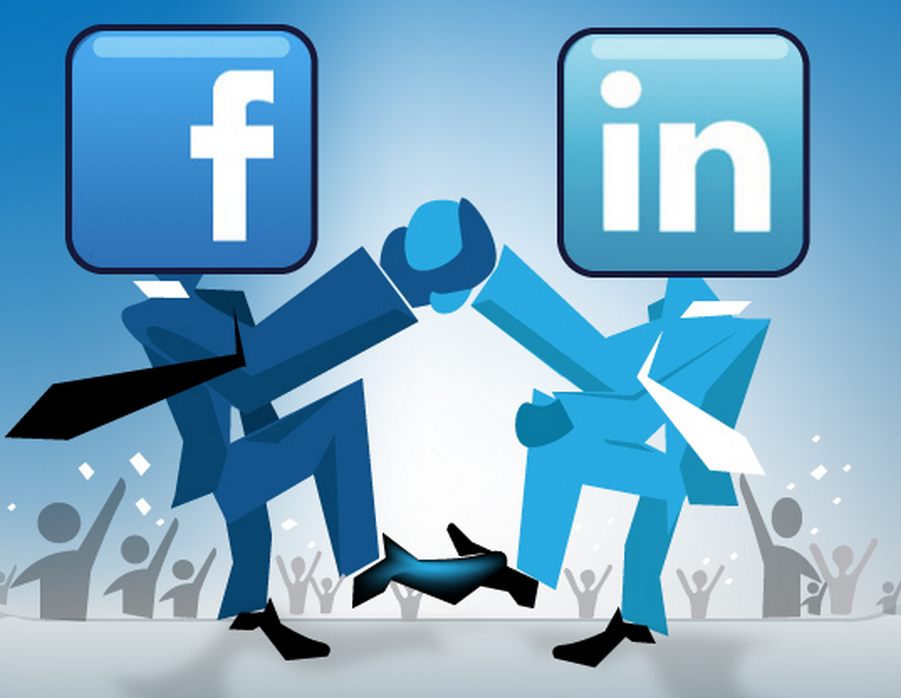
LinkedIn or Facebook: Where should you advertise?
 Let’s face a fact.
Both Facebook and LinkedIn are possibly the best advertising platforms digitally, not only socially. Want to target the mass, Facebook’s CPM rates are a boon for you and looking to target the CEOs and CIOs of the world, head to LinkedIn. This is basically how the world loves to classify social media advertising, which may not entirely be wrong.
With minimum spending caps being ridiculously low as compared to traditional websites (news sites being the favorite), Facebook and LinkedIn have heralded a new dawn of reaching people. We’re not letting in Twitter in this discussion as the price points, reach capability and available audience type are very different as compared to the two in focus here.
So as a digital marketer, where should you be heading to? What’s the best that you can tap in your available budget, objective and time frame? Let’s see which platform fits the bills in these three criterions:
- Budget
At the very outset, let’s spill the beans that Facebook is far more affordable than LinkedIn. This can be safely said at least in the CPC and CPM factors. LinkedIn is still a couple of times more expensive than Facebook. There is a very critical reason here; LinkedIn is still a smaller and more focused community. Facebook is huge and really diverse, which gets the luxury advertising concept, that focus is expensive and mass is cheaper always. Want to target a niche segment or audience similar to your current customers? Spend more and go for LinkedIn. Want to build a huge brand affordably and by huge we mean, in terms of eyes only? Go for Facebook. - Objective
Brand building has traditionally been Facebook’s forte owing to its CPM capability and affordable rates. Brand reach and customer positioning is LinkedIn biggest win, thanks to designations and place of work data availability and correctness. - Time-frame
This is where Facebook wins hands down. There is a famous digital saying that you can become a Facebook hero in a few hours, overnight is passé. Basically, get a thousand dollars, divide it 80:20 to CPM and CPC respectively, set a time frame of two weeks and you might just be called to the next industry summit, all thanks to Facebook. LinkedIn, on the other hand, takes it slow but does the job really well. You need to hit the CEOs and stay exclusive, LinkedIn will do it so perfectly that there’s a possibility that no one below B-level would ever know of your brand.
Plan your advertising platform smartly. It’s not always what messaging you put across; it needs to be on the right platform as well.
Image Source: Screaming Lunatic Design Agency
- Budget
-
Personalized Marketing – How Personal Should You Get?

Personalized marketing.
Though the name is pretty much self-explanatory, we would still like to define it because it is a significant aspect of modern marketing and deserves a definition. Simply put, personalized marketing is the breaking down of the mass marketing process to directly address the needs and interests of individual prospects.
Why is personalized marketing so important?
In the past, it was probably acceptable to a certain extent for marketers to send out generic communications. You would remember that personalized messages weren’t as common some years ago, as they are today. Generic communication to the entire audience suited everyone whether customers or marketing departments for no one knew or even could do any better.
As consumers and technology changed, there was a need for marketing to become a lot more focused and cost-effective. Consumers began asking for their individual needs to be addressed and marketers had to measure up to the changing expectations.
Increase in the amount of content
This situation escalated with the onslaught of online content. The internet is an ocean of content and an average person receives more content today and from more sources than compared to a few years ago.
Sifting through the entire content one receives, looking for information that is relevant, is not something that anyone looks forward to. In the midst of all this generic (and mostly irrelevant) content, people are on the lookout for communications that talks to them directly and offers to address their needs.
Marketing is getting more personal
According to research conducted in 2013, 74% of online customers said that they get frustrated when they encounter content irrelevant to their interests on websites.
This goes to show that after being literally (or, should we say virtually) bombarded with generic content, consumers don’t want to be bundled with a crowd. They want personalized brand messages that are in line with their interests.
But if you think that this mindset is restricted to brand messages, you’re wrong. Consumers want the entire marketing process to be personalized, sometimes including personalized products too. And while this is tough, marketers are figuring how to do this because it stands to deliver greater loyalty and higher sales.
Benefits of Personalized Marketing
Personalized marketing is also helpful in nurturing leads and retargeting campaigns. Talking to a lead about something that interests them about your brand will naturally capture their attention and result in better lead nurturing.
With retargeting campaigns, targeting prospects with products/services they have already shown an interest in buying may prod them into actually making the purchase.
But, but, but…how personal can you get? Doesn’t this personalization need to stop?
Introducing personalization as early as possible and increasing it as far as possible is a great way to improve loyalty and effectiveness.
What’s important, however, is that it should be done right.
Do it right.
Adopting an overly familiar tone with prospects just because you know their name or presuming that you know their requirements too early in the relationship can put them off. You definitely don’t want to get off the wrong foot like this. Nobody likes a smug presumptuous associate!
However, as you gain more knowledge about the prospect, using this well to personalize your information, suggestion of products, etc. will help further the relationship. You can even use a marketing automation system to manage this if the volume of prospects is high. Mass personalized marketing as a concept is here to stay.
We would love to know what your opinion is about personalized marketing. Drop your comments in the box below…
-
Deconstructing the Value of LinkedIn Sponsored Updates
LinkedIn is arguably the most popular networking site, in the social world, for professionals.
The site has a really attractive ad products’ suite to which it added Sponsored Updates in July last year.
So what is it all about?
Sponsored Updates are very much like regular LinkedIn updates, the only distinction being that they are marked as ‘Sponsored’. LinkedIn users can like, comment, share and follow sponsored updates posted by brands.
Sponsored updates can be viewed on desktops, smartphones and tablets.
With every increase in the amount of content generated on the web, the chances of your content getting missed in the virtual ocean of content are higher than before. At the same time, marketers can’t do too much to make their content stand out because readers don’t appreciate content presentation that is at odds with the rest of the page that they are reading.
Effectively, brands need to do some amount of tight rope walking to get noticed by customers without alienating them.
The future of Sponsored Updates and how it’s helping B2B marketers
Sponsored Updates cater to two important requisites in digital marketing today: native advertising and targeted marketing.
Sponsored Updates is a good example of native advertising where the ad takes the form of regular content.
Using Sponsored Updates, B2B brands can target the right people with the right content. LinkedIn’s competence in targeting combined with the subtle nature of Sponsored Updates makes it a powerful tool in the hands of canny marketers.
One of the common problems these days is the quality of leads that marketers get but this may soon be a thing of the past.
The combination of the right audience, subtle and well-targeted content is resulting in Sponsored Updates delivering high quality leads. It is expected that as more marketers start using these updates and best practices evolve, Sponsored Updates will become a large source of high quality leads for B2B businesses on LinkedIn.
Another aspect that will be observed in the coming days is that as marketers develop greater familiarity with this tool, more of them will use images and different content types including rich media. This will increase the types of brand messages that marketers can communicate using Sponsored Updates.
For example, Sponsored Updates can be used to not only make company announcements and gain new customers, but also to deliver communication to their current customers about upgrades to products/ services they are using.
Success Story – Adobe
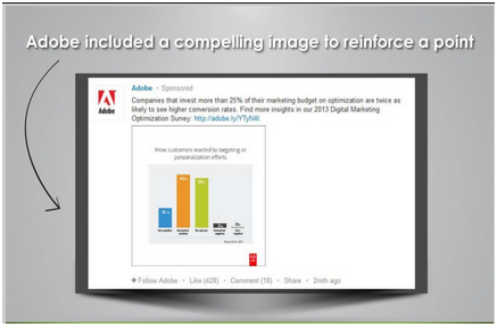 Adobe, a top B2B brand on LinkedIn, was a part of LinkedIn’s Sponsored Updates testing phase. The brand has continued using Sponsored Updates with impressive results after testing. Research indicated that after Adobe used Sponsored Updates, targeted decision makers were:
- 50% more likely to agree that Adobe is shaping the future of digital marketing
- 2.5x more likely to agree that Adobe’s Sponsored Updates captured their attention
- 79% more likely to agree that Adobe can help them optimize their media spend
Have LinkedIn Sponsored Updates been useful for your B2B brand in any other way? Tell us in your comments!
Image Source: Tech Marketing Buffalo
-
Turning Google+ posts into display ads, Four very useful iPad stats and much more…| Best of the Week
This week’s hot news, events and videos from the online marketing and social media world. 
Best of the Week Video
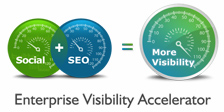
Accenture gets it! Whether it is offline advertising or going viral, they have it all figured. Check out this week’s “awesome b2b company video” channel on You Tube and get inspired!White Paper: Increase Visibility for Your Content by 4x Today’s traditional SEO is inadequate: Ignite your search results by accelerating visibility in more places than ever before.Download this White Paper and learn: - SEO, why the way we know it is not enough
- Introducing and implementing Enterprise Visibility Accelerator (EVA)
- Using multi-channel tracking tools for effective monitoring
- How EVA benefits businesses.
If you are reading this blog post via a RSS reader, please click here to subscribe. -
Adapting to Changing Digital and Social Media Rules
After a great run in 2013, digital and social media seem ready for a strong performance in 2014.
So, why are we placing special emphasis on the changing digital and social media rules?
Consider this:
Digital and social media are the fastest growing branches of digital marketing in 2014. 100% business executives use social networks for work purposes. Social media has taken on increased importance in the B2B industry.
In any digital strategy B2B brands need to consider both their Target Group (executives) and their digital/social media budget.
But, there is another crucial aspect that brands should consider while working on their digital and social media strategy. Now, what’s that?
We are referring to the frequently changing ground rules of digital and social media websites.
Brands often focus so much on budget allocation, demographic specifics and the content to be used, that they run the risk of missing the opportunities and threats presented due to the changing ground rules of social networks. As you will agree not knowing the rules of the game will lead to a sub-optimal brand strategy.
Relevant Changes in the Social and Digital Realm
Here are a few examples of changes in the social and digital world that made a significant difference to the way these sites functioned and in turn impacted brand strategies:
- Google HummingbirdThis was one update from the search engine that made digital marketers sit up and take a second look at search efforts, analytics setup, content used and general website health. Though marketers were already focusing on all these, the Hummingbird update prompted them into making changes to:
- Keyword complexity levels
- Level of importance of user behavior in analytics
- Quality of content developed
- Strategy for an error-free website
- Facebook’s News Feed Algorithm UpdateFacebook’s changes to its News Feed algorithm in early December last year gave a shock to marketers. With this update, organic reach reduced. According to Facebook’s director of communications Brandon McCormick, this was the site’s goal from a long time. Facebook wanted to clean up the clutter of Liked Pages that users would have accumulated over the years. If a user has liked your brand’s Page years back and hasn’t visited you since then, post this update, its less likely that your brand’s content will appear in that user’s News Feed.Brands need to focus on improving their Facebook page user experience so that their users keep visiting it and the brand page stays in the user’s News Feed.
- Instagram AdsInstagram kicked off its advertising plan last year. Given its popularity as a ‘visual site’, this update opened the doors for digital marketers to explore online visual marketing. However, this introduction also meant that marketers had to shuffle around their media plan within the same social and digital marketing budget to accommodate one more online portal. It’s probably money well spent given the powerful impact of visuals in marketing.Social sites keep introducing new capabilities in their race to stay ahead of each other. While it may be tough to follow these constant changes, these actually provide marketers with the opportunity to fine tune their media plans to achieve their various marketing objectives better. Discerning marketers will pick and choose sites to make their campaigns more synergistic and impactful.
- Google+ Post AdsGoogle+ launched the ability to turn Google+ posts into ads recently. A really attractive feature of this update is the ads’ ability to offer consumer interaction with the brand directly through the ad along with exposure to Google Display Network’s 2 million sites. This change is important enough to make marketers who hadn’t given Google+ much thought, pause and re-think their strategy. If a brand decides to start using these ads, it does mean tweaking its budget allocation again.
Impact on Marketing Strategies
Often these changes are designed to improve user and/or marketer experience with the site. In doing so, they mostly offer new benefits to marketers and help them connect better with their audience. Even the changes like the Facebook News Feed algorithm can serve as good warnings for brands to improve their engagement with their audience.
Keeping an eye open for changes in sites’ ground rules:
- Helps in judicious and beneficial online marketing media planning and budget allocation
- Helps understand user behavior better.
- Helps avoid the negative impact that ignoring these can have on their brands.
Can you think of any other updates that have significantly affected the digital/social world recently? In what other ways do you think such changes impact brand strategies?
- Google HummingbirdThis was one update from the search engine that made digital marketers sit up and take a second look at search efforts, analytics setup, content used and general website health. Though marketers were already focusing on all these, the Hummingbird update prompted them into making changes to:
-
19% Growth in Global Paid Search Sales Revenue in Shopping Season [New Study]

Global search saw a fruitful close in 2013.
Though 2013 is already behind us, there’s still useful data to be studied from it.
According to a recent study by Kenshoo, paid search based sales revenue during the end of year shopping season grew by 19% globally in 2013.
Year End Shopping Season Sees Increase seen in Spend, CTR and Revenue
The 2013 shopping season saw a 34% year-over-year (YoY) increase in paid search spend. This increase in spends was met by an increase in clicks by 26.9% and CTR by 12.5% (YoY). Presumably, a result of this was that online shopping went up by 19% in 2013.
The increase in paid search spends by US marketers (YoY) during the shopping season was especially high at 48.1% and they saw a 14.1% increase in CTR.
The strong end of year spends seems to indicate what to expect in 2014 with 72% respondents in a PPC Hero study saying that they plan to increase paid search spend in 2014.
Tablets Continue to Rule
Mobile devices drove 36.7% of all the global paid search clicks in 2013. Tablets claimed the biggest share in this percentage with 16.3% of total clicks and 18.9% of the revenue (Kenshoo).
Mobile devices are increasingly being used for online search and shopping with 24% of online shopping on Nov 28th and 29th taking place from these devices. These spends and retailer promos indicate that the trend of focusing on mobile paid search and cross-channel linking is likely to continue.
The reign of mobile devices is projected to continue in 2014 too. Linking offline data with online activities has been of high importance from quite some time. The same cross-channel linking is important for online mobile clicks too. Integrating call tracking solutions and generating mobile-optimized ad creative and landing pages will also become significant in 2014.
Product Listing Ads (PLA) Adoption Rises Too
PLAs saw a strong rise in usage in the end of 2013 YoY (Kenshoo) and it’s likely that this trend will continue in 2014.
CTR for PLAs increased by 30% in 2013 enabling search marketers to generate 115.6% more clicks from only 65.4% more impressions. PLAs also performed better than paid search ads leading to the belief that richer ad formats are the order of the day. This was reinforced with Google allowing usage of images in search ads.
Looks like paid search is set to grow at impressive rates along with other major digital marketing areas in 2014. What are your thoughts on paid search’s current position?
-
Turning Google+ Posts into Display Ads
 We’ve all clicked on banner ads that took us to the advertiser’s website or landing page. This is what interactivity meant to us.
Until now.
Google+ is now offering interactive ads – ‘Google+ Post Ads’.
What’s the difference you may ask?
Most of the traditional ad formats on the web offer the same advantages that they offered even a decade ago. Digital marketers can measure views, impressions and clicks. But neither can these ads tell brands what consumers thought about a particular ad nor can consumers make any enquiries about the advertised product.
Advertisers have varied objectives while advertising on the web – sometimes it’s to build awareness and sometimes to build engagement. More and more brands want their consumers to engage with them but traditional ad formats have not been allowing them to. Traditional ads only served to lure consumers to the brand’s Facebook page or website from where the brand engagement would begin. Google+ post ads endeavor to fill that gap in online advertising and interaction.
Features and Benefits of +Post Ads
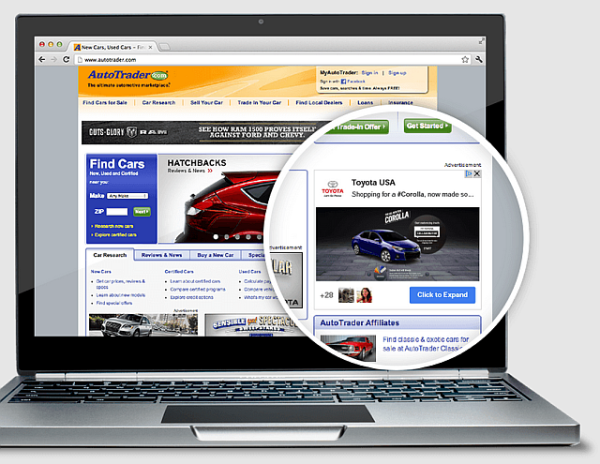
Google+ Post Ads give a brands’ online content a power boost by turning their Google+ posts into display ads that will run across the web through the trusted Google Display Network. With these ads, brands can go beyond normal, ‘static’ advertising. +Post ads let brands host Hangouts On Air, it lets viewers comment on the ad, follow your brand or +1 right from the ad. This kind of interaction with the brand directly from the ad is a huge plus for advertisers.
With +Post ads:
- A brand’s target audience will be able to tell their favored brand exactly what they thought about that particular ad
- Make specific enquiries about the product/service advertised
- Engage with the brand, thereby providing the brand with invaluable insight into consumers’ minds
Add in the social angle to this, and it gets better. It goes without saying that people are more open to things their friends have favored. The comments, +1s and shares +Post ads receive give your content a social edge that works for both advertisers and consumers. +Post ads also expand in a lightbox and show full screen social creatives.
Go all out on the Web!
As we mentioned before, the ability of +Post ads to run across the web through the Google Display Network’s 2 million sites takes its reach to astronomical heights. Brands can reach the right audience at the right place thereby increasing the relevance and potential ROI of their ad. What’s more, brands can also make use of Google Display Network features like demographics, affinity segments and contextual targeting while determining ad reach.
An advantage of +Post ads is that you only pay when people engage with your content. This means the awareness comes free and that you are paying for engagement. You can set more specific advertising objectives and measure campaign response against these objectives.
The added bonus is that engagement with your brand’s content can continue even after your ad campaign has ended. As they discover your posts through Search and Google+, people can continue to engage with your content.
But +Post ads are still in the Beta testing phase. Brands interested in testing it out need to sign up for it or get in touch with their Google team.
+Post ads sure seem to bring up one’s curiosity about it. What do you think about them?
Image Source: Search Engine Land
-
2013 Digital marketing updates, Important Investment Areas for B2B Marketers and much more…| Best of the Week
This week’s hot news, events and videos from the online marketing and social media world. 
From the Position2 Blog This Week: A Retrospect of 2013 Digital Marketing Updates
Zeroing in on the changes that had the most impact on the digital world helps see the year in the perspective that’s best for your brand. Check out this blog post to know about the crucial digital marketing updates in 2013.
Best of the Week Video
Last week, we shared with you a b2b company – HP – that had some great videos online. Here is another b2b company that has over 8 million video views, in total. We are sure, it will provide you with enough inspiration to create some great videos for your audience.White Paper: Increase Visibility for Your Content by 4x Today’s traditional SEO is inadequate: Ignite your search results by accelerating visibility in more places than ever before.Download this White Paper and learn: - SEO, why the way we know it is not enough
- Introducing and implementing Enterprise Visibility Accelerator (EVA)
- Using multi-channel tracking tools for effective monitoring
- How EVA benefits businesses.
If you are reading this blog post via a RSS reader, please click here to subscribe. -
[Infographic] Digital Marketing Trends & Predictions for 2014
Digital Marketing Trends & Predictions for 2014

The year 2014 – digital marketing has reached a whole new level and continues to do so. However, some marketers are still wondering – “What factors are going to influence my marketing efforts this year and to what extent? Are there any surprises waiting?” Find out the answers to these questions and make some informed investment decisions after looking at this infographic.