Blog

  • How to Market Your Multi-Location Business with Facebook Ads

    Introduction

    Use Facebook Ads to market your multi-location business on social media effectively. By utilizing Facebook Business Manager and location pages, you can increase traffic to your website, drive sales, and reach your target audience. This blog post covers the importance of demographic analysis, geographical distribution, interests, and behaviors to create a successful ad campaign. Topics such as setting objectives, budgeting, targeting, custom audiences/lookalike audiences, ad formats, and Facebook Pixel are discussed. With this guide, you can leverage Facebook Ads and location pages to promote your business and engage with your target audience.

    Multi Location

    Understanding Your Target Audience For Multiple Businesses

    The target audience’s interests and needs in each location should be considered to have a successful Facebook ad campaign. Use location targeting and Facebook’s Lookalike Audiences to expand reach. Analyze ad performance with Facebook’s analytics tools and experiment with ad formats and messaging—preview ad performance using simple steps to find what resonates best with each target audience. Use your Facebook account to leverage these tools for the most effective campaign.

    Demographic Analysis

    For small & large businesses with multiple physical locations, understanding your target audience’s demographics is critical to effective Facebook ad campaigns. Marketers can utilize Facebook Ads Manager to access detailed insights on age, gender, location, interests, and behaviors. Marketers can increase engagement rates and ROI by tailoring ad creative and messaging to each location’s demographic profile. This approach helps small & large businesses make the most of their Facebook ads.

    Geographical Distribution

    To optimize Facebook advertising for multi-location businesses, use Facebook’s location targeting options to reach specific regions or zip codes where your target audience is located. Analyze Facebook Insights data to optimize each location’s ad strategy and budget allocation. Exclude areas where your business cannot serve customers effectively. Precise geographic targeting tools in Facebook ad accounts can improve campaign effectiveness and ROI.

    Interests and Behaviors

    To create a successful ad campaign for your multi-location business, it’s essential to understand the interests and behaviors of your target audience. By targeting users based on their hobbies or favorite brands, you can create ad content that resonates with them. Additionally, targeting users based on behaviors such as frequent travelers or online shoppers can help you reach the right audience. Understanding these critical aspects of your target audience will improve your overall Facebook advertising strategy and increase engagement rates for your multi-location business.

    Designing your Facebook Ad Campaign

    Crafting a successful Facebook ad campaign requires defining your target audience by demographics, interests, and location. Once identified, create compelling ad copy and visuals. Use location targeting to reach customers near your business. Choose the right call-to-action for conversions. Continually test ad formats and targeting options to optimize performance. Monitor and analyze ad data to make informed decisions. Allocate your ad budget effectively for multi-location businesses.

    To optimize your Facebook ad campaign, assign page roles and access levels to admins in the drop-down menu. This ensures the right people have the necessary permissions to manage and monitor your ads. You can delegate tasks and streamline your ad campaign management process by giving specific page roles.

    Setting your Advertising Objective

    Setting a relevant advertising objective is essential to create a fruitful Facebook Ad campaign for your multi-location business. Align it with your marketing goals and target audience. Pick the apt ad format and targeting options, using a cover photo, company logo, and personal profile to enhance brand awareness, website traffic, and leads or conversions. Continuously monitor and adjust the campaign to optimize performance based on the objective.

    Choosing the Correct Format for your Ad (image, video, carousel, etc.)

    Selecting the correct format from various options can be daunting when creating a Facebook ad. Images are great for showcasing products, videos can tell a story or provide demonstrations, and carousel ads are ideal for displaying multiple products. For e-commerce businesses, collection ads are perfect as they allow users to browse and buy products without leaving the facebook. Keep campaign goals and target audience preferences in mind. Also, ensure your profile picture and images have the correct pixel size per Facebook’s templates.

    Crafting Compelling Ad Copy

    Writing compelling Facebook Ad copy is essential for success. Be concise and attention-grabbing, and communicate your business value. Use persuasive language to entice your audience to take action. Incorporate social proof, such as testimonials or reviews, to build trust. Experiment with different variations and monitor their performance to optimize effectiveness.

    Selecting Appropriate Images and Videos

    Choose eye-catching and relevant visuals for your multi-location business’s Facebook ads. High-quality, consistent visuals build credibility and trust with potential customers. Authentic images help convey authenticity and differentiate you from competitors. Align your visuals with campaign goals and target audience to increase conversions.

    Choosing the Right Call-To-Action

    Picking the right call-to-action (CTA) in Facebook Ads is crucial. A clear and persuasive CTA guides your audience to the desired action, boosting conversions. Aligning CTA with ad messaging and business goals is crucial. Testing various CTAs can help find the most effective one for better results.

    Facebook Marketing in 2023

    • Facebook’s family of services (Facebook, WhatsApp, Instagram, and Messenger) boasts a whopping 2.45 billion-plus worldwide active users.
    • An estimated 79 percent of the U.S. population is on Facebook—74 percent of that log in every day, and two out of three consumers visit a Local Business Page at least once per week.
    • For 53.2% of internet users ages 16-24, social media is their primary source of brand research. And 66% of all Facebook users check out a local business Page at least once weekly.

    How To Manage Facebook Business Page
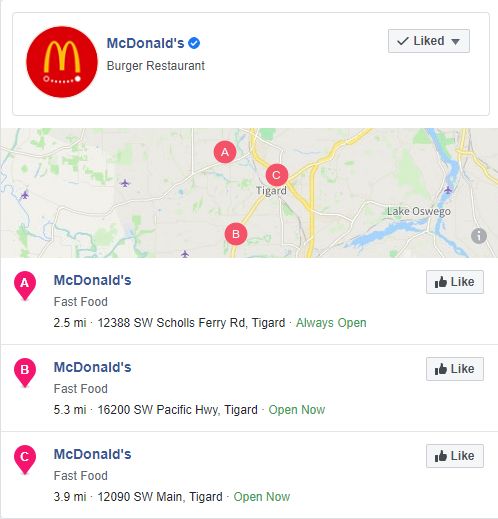
    How To Manage Facebook Business Page

    Every business is a prospective Facebook advertiser, and multi-location businesses are no exception. However, special care must be taken in the Facebook Ads campaign setup to prevent location overlap and overreach. This post will review the campaign setup process for an advertiser targeting a local marketplace with multiple locations. Note that we will not talk through every possible campaign setting here. Facebook campaigns can get wonderfully complex, and advanced campaign setup is beyond the scope of this article.

    Campaign Choice
    How to Market Your Multi-Location Business on Facebook with Facebook Ads

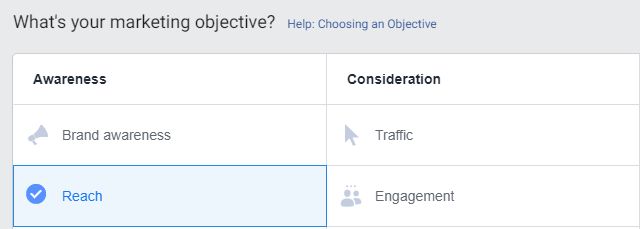
    When entering the Facebook Ads UI, an advertiser is faced with quite a few campaign setup choices. People in charge of a Multi-Location Facebook Ads Setup should choose 1 of these 4 marketing paths.

    1. “Reach” Ads will show the ads to as many people as possible within the given budget. This should be the default choice for less-experienced Facebook Advertisers.

    2. If it is a priority to get people to the website instead of having the visitor act within the Facebook Universe, “Traffic” would be the choice.

    3. “Engagement” will sacrifice some reach for commentary and feedback on the ad itself. Suppose your business is comfortable with engaging potential customers (as well as some trolls) on Facebook. In that case, this might also be a good choice since if your ads generate more than expected Facebook Engagement, their frequency in the auction will increase.

    4. “Brand Awareness” will sacrifice some reach to target people that Facebook thinks to have an enhanced interest in your advertising.

    Campaign Budget

    Start small and realize you must create a separate campaign for each location. Once you set your budget, you will be asked to choose a “Campaign Bid Strategy,” We recommend “Lowest Cost,” which is the optimal choice for most people reading this article.

    Facebook Page

    Every location that you plan to advertise separately needs its own Facebook Page. No exceptions. If, for some reason, you have not created a Facebook Page for each business location that you plan to market, please do so ASAP. Each Campaign created will be for one unique location (though it is perfectly OK to have nearly identical campaigns for each location you are marketing).

    Location Targeting

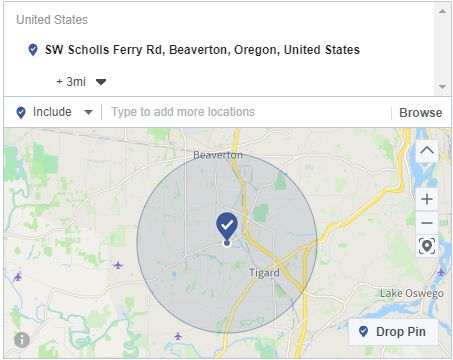
    You should know roughly how far your customers will visit each business location. Is it 3 Miles? 10 Miles? 50 Miles? For some businesses, putting the location in the circle and choosing a radius for the circle is all you would need to do for location targeting.
    Location Targeting

    However, with multiple locations, what can quickly happen is that the circles will overlap. You will have multiple locations serving ads to the same people, which wastes money and might cause consumer confusion. Instead of doing radius circles, targeting your locations at the Zip Code, City, or Metro Area level might be more efficient.

    Demographic Targeting

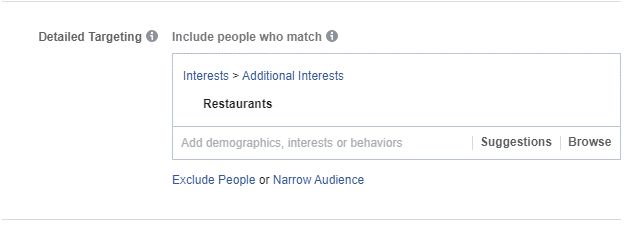
    Adding some extremely basic demographic targeting will help narrow the size of your target audience and increase your ad’s relevance.
    Demographic Targeting

    What does your business sell or offer? Drop those terms into the detailed targeting box to see what matches Facebook comes up with. Add those as part of your Detailed Targeting to increase the relevance of your targeted audience and decrease the amount of money you spend on people that likely have no interest in your business.

    Custom Audiences / Lookalike Audiences

    Here is one targeting wrinkles that could be highly effective. Have you developed an in-house email list for your business? If yes, you can target those email addresses tied to Facebook Accounts in conjunction with your geographical targeting or on its own.

    Even but also be a good choice since your ads like ” Audience” from your in-house email list will allow you to target people who are demographically like the people on your in-house list.

    Facebook Lookalike Audiences are exceptionally large and will allow you to target 1-10% of the country’s population. For our purposes here, you should stick to 1%, which will still leave you a massive list. However, when you apply your geographic and demographic overlays to the Similar Audience, you will be left with many people who should be interested in your business that also reside in your local area and who you don’t know about.

    We have found that companies who have developed comprehensive in-house email lists have done exceptionally well in Facebook Ads because Similar Audiences are so influential for their marketing efforts.

    Ad Format

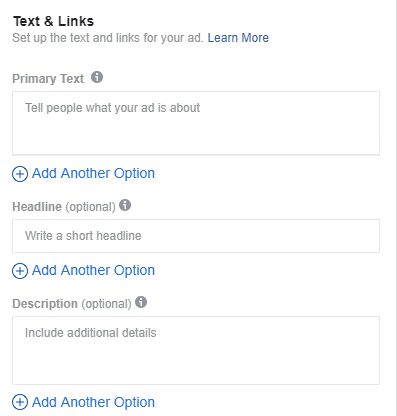
    Facebook Campaign Ads consist of images and text. Sure, we could use videos or immersive screen experiences, but investing in these assets does not make sense if you are running multi-location brick-and-mortar businesses. For each location, upload a high-quality representative image for use in your Facebook Ads, which is quite adequate.
    Ad Format

    For your ad text, these are the 3 fields you must focus on. The “Primary Text” appears above the ad image and is what people will focus on when they see your ad in the feed. Here is where you let people know what service your business performs and why somebody should consider stopping by. Be succinct in what you write here. A few sentences are fine but keep them short and snappy.

    The Headline is “Optional,” but you should not treat it that way. Put your Business CTA here, or mention your Business Name again (since it will also appear at the top of the ad).

    The Description is “Optional,” but you should use this space to share salient information such as hours open or a promotion that you might be running.

    You can also add a Call to Action button to your ad; we strongly recommend that. “Learn More” or “Contact Us” are the two choices that make the most sense for multi-location businesses.

    Facebook Pixel

    Ensure your webmaster has properly implemented the Facebook Pixel on your website(s). It will not only give you unbelievably valuable information about the people who have visited your website, but it will allow you to retarget these people in the future.

    Conclusion

    The Facebook Ads UI can be very intimidating for somebody who has never seen it before and has no experience with Paid Advertising. However, for the uninitiated, the following general advice should help you adjust to this new process.

    1) Start Small. Keep your budgets low while you are learning. Spending just $5-$10 daily is OK until you understand the process better.

    2) Start Nearby. Facebook will almost always spend the entire budget you are giving it. So, when you start, focus on the audience closest to each location. Some people may drive 30 minutes to your place of business. Most will not, however. Generate your learnings with people close to your location.

    3) Start Simple. Your first Facebook Campaign is not where you launch a multi-step multimedia ad experience. Plenty of advertisers do well with a single-sentence message, a simple CTA, and a particular image. Stick to that until you have become comfortable with the platform and are comfortable with the results from your ad investments-Location Businesses with Facebook Ads

    FAQs on Multi-Location Businesses with Facebook Ads

    How can I measure the success of my Facebook Ad campaigns for multiple locations?

    To measure the success of your Facebook Ad campaigns for multiple locations, you can start by setting specific goals and KPIs for each location. Then, use Facebook Ads Manager to track metrics such as reach, engagement, conversions, and ROI for each location.

    What are the best types of Facebook Ads for a multi-location business?

    For a multi-location business, the best types of Facebook Ads are local awareness ads, which can be customized for each location and targeted to users in specific geographic areas. Carousel ads are also effective, as they can showcase multiple locations in one ad.

    How do I ensure my Facebook Ad campaigns are consistent across multiple locations?

    To ensure consistency in Facebook Ad campaigns across multiple locations, you should use the same ad creative, targeting, and messaging across all campaigns. Utilize Facebook’s ad sets feature to create unique campaigns for each location, but ensure they have the same overall message and branding.

    How do I optimize my Facebook Ad campaigns for maximum ROI for my multi-location business?

    To optimize your Facebook Ad campaigns for maximum ROI for your multi-location business, you should start by defining your target audience and creating location-specific campaigns. Use relevant images and videos, compelling ad copy, and clear calls to action. Use Facebook’s targeting options to reach the right people and monitor your campaigns regularly to make data-driven adjustments to improve performance.

    Can I use Facebook Ads to promote multiple locations at once, or do I need separate campaigns for each location?

    You can use Facebook Ads to promote multiple locations by creating a single campaign with multiple ad sets, each targeting a different location. However, it’s essential to customize your ad creative and messaging for each location to ensure relevance and effectiveness. Alternatively, you can create separate campaigns for each location to have more control over targeting and budget allocation.
  • The Power of Images and Videos in Content Marketing

    Introduction

    In today’s digital age, visual storytelling has become a cornerstone of effective content marketing. It leverages the power of images and videos to convey compelling narratives, engaging audiences on a deeper level than text alone. As attention spans shorten and content volume grows, capturing and retaining audience interest through visual means is more crucial than ever. This article delves into the effectiveness of visual content, its psychological impact on audiences, and best practices for visual storytelling in content marketing.

    The Effectiveness of Visual Content Marketing

    Engagement Metrics

    Visual content significantly outperforms text-only content in terms of engagement. Studies have shown that social media posts with images produce 650% higher engagement than text-only posts. Videos, in particular, drive even higher engagement rates. According to a report by HubSpot, 54% of consumers want to see more video content from brands they support.

    Images and videos are more likely to be shared, liked, and commented on across social media platforms. On Facebook, posts with images see 2.3 times more engagement than those without. Similarly, tweets with images receive 150% more retweets than those without. These statistics underscore the power of visual content in amplifying reach and fostering audience interaction.

    SEO Benefits of Video Marketing

    Visual content is also vital in search engine optimization (SEO). Properly optimized images and videos can improve a website’s visibility on search engine results pages (SERPs). Adding alt text to images helps search engines understand the content, which can lead to higher rankings. Videos can also enhance SEO by increasing the amount of time users spend on a page, a key factor in Google’s ranking algorithm.

    Including video transcripts and captions not only makes content accessible to a broader audience but also provides additional text for search engines to crawl, further boosting SEO. According to Forrester Research, pages with video are 53 times more likely to rank on the first page of Google search results.

    Psychological Impact of Visual Content on Audiences

    Cognitive Processing

    The human brain processes visuals 60,000 times faster than text. This rapid processing means that images and videos can convey complex information quickly and effectively. The Picture Superiority Effect suggests that images are more likely to be remembered than words. This effect is potent in marketing, where brands strive to create memorable impressions.

    Emotional Connection

    Visuals can evoke emotions, creating a stronger connection between the content and the audience. Emotions drive decision-making, and compelling visuals can influence purchasing behavior. For instance, charity campaigns that use emotionally charged images of people in need are often more successful in eliciting donations.

    One notable example is the “Share a Coke” campaign by Coca-Cola, which replaced its logo with popular names on bottles. This simple visual change created a personal connection with consumers, leading to a 2% increase in U.S. sales.

    Storytelling Techniques

    Compelling visual storytelling often employs metaphors and symbols to convey messages. For example, using an image of a growing tree to symbolize growth and progress can communicate complex ideas simply and effectively. These visual elements can transcend language barriers, making them powerful tools in global marketing campaigns.

    Visual marketing strategies enhance storytelling by making it more immersive. Compelling graphics, videos, and interactive elements can connect emotionally with the viewer, making the message more memorable. For instance, integrating storytelling with dynamic visuals and user-centric narratives in digital marketing campaigns can captivate and motivate audiences more effectively than text alone.

    Moreover, storytelling through visual marketing can be strategically designed to influence consumer behavior and decision-making processes. By carefully selecting images and symbols that align with the values and aspirations of their target demographic, brands can position themselves more favorably in the minds of consumers. This strategic alignment boosts brand recognition and enhances customer loyalty and advocacy, ultimately driving greater marketing success.

    Best Practices for Visual Storytelling

    Consistency and Branding

    Maintaining a consistent visual style is crucial for brand recognition. This includes using a cohesive color scheme, typography, and design elements that reflect the brand’s identity. Consistent visuals help establish a strong brand presence and make content instantly recognizable.

    Quality Over Quantity

    High-quality images and videos are essential for maintaining professionalism and credibility. Using high-resolution images/photos and professional video editing software can significantly enhance the visual appeal of content. Blurry or poorly edited visuals can detract from the message and harm the brand’s reputation.

    Audience-Centric Content

    Tailoring visual content to the preferences and needs of the target audience is key to effective storytelling. This involves understanding audience demographics and psychographics to create relevant and engaging content. Tools like Google Analytics and social media insights can provide valuable data on audience preferences.

    Story Arc

    A clear narrative structure with a beginning, middle, and end is essential for compelling visual storytelling. The Hero’s Journey, a popular narrative structure, can be applied to visual content to create relatable and inspiring stories. This structure involves a protagonist overcoming challenges and achieving a goal, resonating with audiences on a personal level.

    Integration with Other Content

    Visuals should complement and enhance other content types. Integrating images, infographics, and interactive elements with text can create a more engaging and informative experience. This synergy between visuals and text can help convey messages more effectively and keep audiences engaged.

    Tools and Platforms for Visual Storytelling

    Content Creation Tools

    Several tools can help create high-quality visuals:

    • Canva: A user-friendly design tool for creating professional graphics.
    • Adobe Creative Suite: Industry-standard software for advanced image and video editing.
    • Final Cut Pro: A powerful video editing software used by professionals.

    Distribution Platforms

    Different platforms are suited for sharing various types of visual content:

    • Instagram: Is ideal for high-quality images and short videos. Use Instagram Stories and IGTV for more engagement.
    • YouTube: Is the go-to platform for longer videos and vlogs. Optimize video titles, descriptions, and tags for better visibility.
    • Pinterest: Is an excellent platform for sharing visual content that drives website traffic. Use rich pins to provide more information directly on the pin.

    Case Studies and Examples

    Successful Campaigns

    Apple: Shot on iPhone

    Apple’s “Shot on iPhone” campaign showcased user-generated content, highlighting the camera quality of iPhones. This campaign not only demonstrated the product’s capabilities but also engaged users by featuring their photos in Apple’s marketing materials. The campaign significantly boosted iPhone sales and reinforced Apple’s brand image as a leader in smartphone photography.

    Nike: Dream Crazy

    Nike’s “Dream Crazy” campaign, featuring Colin Kaepernick, used powerful visuals and storytelling to address social issues and inspire audiences. The campaign’s strong imagery and emotional appeal resonated with viewers, resulting in a 31% increase in online sales.

    Lessons Learned

    From these campaigns, it’s clear that leveraging user-generated content and addressing social issues can create powerful connections with audiences. To be truly effective, visual storytelling should be authentic and resonate with the brand’s core values.

    Future Trends in Visual Storytelling

    Technological Advancements

    Emerging technologies like Augmented Reality (AR), Virtual Reality (VR), and Artificial Intelligence (AI) are transforming visual storytelling. AR and VR offer immersive experiences, allowing audiences to interact with content in new ways. AI can enhance personalization and automate content creation, making it more efficient and tailored to individual preferences.

    Evolving Audience Preferences

    As audience preferences evolve, authenticity and user-generated content are becoming increasingly important. Consumers are drawn to real, relatable content over polished, corporate visuals. Brands should focus on creating genuine connections and involving their audience in the storytelling process.

    In closing

    Visual storytelling is a powerful tool in content marketing, capable of engaging audiences, evoking emotions, and enhancing brand recognition. By understanding the effectiveness of visual content, its psychological impact, and best practices for creating compelling visuals, brands can leverage the power of images and videos to elevate their marketing strategies. As technologies advance and audience preferences shift, staying ahead of trends and focusing on authenticity will be key to successful visual storytelling.

  • The Digital Age: Navigating Misinformation and its Impact on Marketing

    As a society, we spend an enormous amount of time online—whether it’s on social media, websites, blogs, chat groups, or messaging services. The internet has, for all intents and purposes, taken over the world. It has connected people on an unprecedented level and given a voice to many who didn’t have one before. Even our news sources have moved online, making the dissemination of information faster than ever before. However, this rapid spread of information has also significantly increased the propagation of misinformation and disinformation.

    Misinformation and disinformation can spread virally, becoming pervasive and persuasive. In the digital marketing landscape, their impact can have far-reaching consequences, affecting everything from public opinion to brand reputation. Understanding the nature of misinformation, how it spreads, and how it impacts marketing is crucial for anyone involved in the digital space.

    Understanding Misinformation

    Misinformation is defined as “false or inaccurate information that deceives or is mistaken for fact but is not deliberate.” Disinformation, on the other hand, is false information deliberately and maliciously designed to deceive. People may unintentionally spread misinformation due to cognitive biases, illusory truth effects (believing information after repeated exposure), or motivated reasoning (accepting information that aligns with pre-existing beliefs without verification). As a result, trustworthy content is becoming harder to identify and verify.

    The COVID-19 pandemic, for example, saw a massive rise in misinformation and fake news that spread almost as virally as the disease itself, with nearly as damaging consequences. Similarly, global political events, such as the 2016 and 2020 U.S. presidential elections, have highlighted the challenges of managing misinformation across different media landscapes.

    Brands have also found themselves caught in the crossfire. For instance, companies like Nike and Amazon faced backlash when their ads appeared on conspiracy sites and other pages peddling false information, hurting their credibility and reputation. On the flip side, other brands have successfully navigated these challenges by fostering transparent communication and emphasizing their commitment to truthfulness.

    Types of Misinformation

    Misinformation comes in many forms, ranging from deceptively simple errors to deliberate fabrications. Here’s a breakdown of how misinformation can be classified:

    • Fabricated Content: Completely false information created with minimal or no factual or evidentiary basis.
    • Manipulated Content: Factual information, images, or videos that have been altered to present a distorted, sensationalist, or opposing viewpoint.
    • Imposter Content: Content crafted to look like it comes from a genuine source but is actually fake.
    • Misleading Content: Information that appears factual but is based on false premises or misleading data.
    • False Context: Factual information presented out of context to mislead the audience.
    • Satire/Parody: Humorous or mocking content designed to imitate real news sources. While often intended as harmless, satire can sometimes fool readers if not clearly identified.
    • False Connections: Content represented by captions, headlines, or visuals that do not support the actual content.
    • Sponsored Content: Marketing or advertising content presented as editorial or genuine content.
    • Propaganda: Content used to influence or manipulate public knowledge, attitudes, or values.
    • Error: Mistakes made in reporting by established agencies, often due to oversight or miscommunication.

    How and Why Misinformation Spreads

    The internet is an incredibly efficient tool for spreading information, but that efficiency also applies to misinformation. By the time misinformation is recognized, it has often been copied, reproduced, shared, tweeted, and discussed millions of times globally. The scale and speed at which misinformation spreads have grown exponentially, with different media playing specific roles in this phenomenon.

    On Social Media:

    Social media platforms are powerful tools for serving information and connecting brands with their audiences. They play a crucial role in democratizing information and enabling grassroots movements. However, their content-tailoring algorithms can sometimes create echo chambers, where users are primarily exposed to information that aligns with their beliefs, leading to the rejection or hostility toward opposing viewpoints.

    Messengers and Chat Groups:

    Messaging and chat groups are notorious for spreading fake news and misinformation. Millions of messages are forwarded daily with little to no fact-checking, leading to the rapid dissemination of damaging falsehoods.

    Fake Websites:

    Fake news sites are a major source of misinformation. Whether politically motivated or driven by other agendas, these sites can cause significant harm by spreading fake healthcare information, false news, or even promoting illegal goods and services.

    Marketing Tactics:

    In some cases, marketing tactics themselves can be sources of misinformation. While going viral can benefit brands, inauthentic or fraudulent marketing tactics can also propagate misinformation. Brands must be cautious in their strategies to ensure that they do not unintentionally contribute to the spread of false information.

    AI’s Role in Spreading Misinformation

    The rise of artificial intelligence (AI) has made it easier than ever to create and spread misinformation. AI-driven tools can amplify false information faster and on a larger scale than ever before. However, AI also offers promising tools for combating misinformation, such as automated fact-checking and content moderation.

    Deepfakes:

    Deepfakes are realistic and believable photos, videos, or audio files that are completely fabricated or manipulated to send misleading messages. The potential for damage to a person or brand’s reputation is incredibly high, as deepfakes can be used to influence public opinion, damage credibility, and sow discord.

    Social Media Algorithms:

    Social media algorithms are designed to serve users content they are likely to be interested in. However, this can also result in users being exposed only to information that aligns with their pre-existing beliefs, leading to a biased outlook. On the positive side, these algorithms can be leveraged to promote accurate and verified content, helping to counter misinformation.

    AI-driven Bots:

    Bots have been used in disinformation campaigns, such as during the 2016 U.S. election. However, AI can also be harnessed for good, by developing systems that detect and flag bots, thereby reducing their influence on social media platforms.

    Safe Marketing Amid Misinformation

    Marketing faces unique challenges in the digital age. Misinformation on social media can significantly impact consumer perceptions, brand reputation, and marketing strategies. Companies need to prioritize accuracy, transparency, and ethical communication to navigate this complex landscape.

    Fact-check: Ensuring Accuracy in Every Message

    Brands must ensure that all claims made in their marketing materials are accurate and evidence-backed. Misleading information can quickly damage a brand’s reputation and lead to social, legal, or financial repercussions.

    • Thorough Verification: Implement a rigorous fact-checking process for all content before it is published, using credible sources and consulting experts.
    • Third-party Fact-checking: Collaborate with independent fact-checkers or third-party organizations to add credibility and demonstrate a commitment to truthfulness.
    • Regular Audits: Conduct regular audits of past content to ensure ongoing accuracy, issuing corrections or updates promptly if needed.

    Be Transparent: Building Trust Through Openness

    Transparency is crucial in building and maintaining consumer trust. Brands need to be open about their products, services, and business practices, including any limitations or drawbacks.

    • Open Communication: Clearly communicate product details and avoid overstating benefits or making unsubstantiated claims.
    • Honest Marketing: Ensure that marketing campaigns accurately reflect the true nature of the product or service.
    • Engagement and Dialogue: Encourage open dialogue with customers, using social media and other platforms to address concerns and answer questions.

    Stay Vigilant: Monitoring and Responding to Threats

    Brands must remain vigilant in the rapidly changing digital landscape, actively monitoring online platforms for misinformation that could harm their reputation or industry.

    • Social Listening: Use social listening tools to track mentions of your brand across social media, forums, and news sites, enabling quick responses to misinformation.
    • Crisis Management Plan: Develop a crisis management plan with protocols for responding to misinformation swiftly and effectively.
    • Partnerships with Media Platforms: Collaborate with social media platforms and online publishers to address misinformation involving your brand promptly.

    Be Responsive: Addressing Negative Sentiment Effectively

    How a brand responds to misinformation can make all the difference. Negative sentiment can grow quickly if left unaddressed, making it crucial to respond promptly and effectively.

    • Quick Corrections: Respond quickly with accurate information when misinformation is identified, issuing public statements, corrections, or sharing verified data.
    • Proactive Engagement: Engage directly with your audience to clarify misunderstandings and provide additional context, helping to maintain trust.
    • Apologies and Accountability: If the brand has made an error, a sincere apology can go a long way in rebuilding trust.

    Educate Your Audience: Empowering Informed Decisions

    Educating your audience is a powerful way to combat misinformation. It empowers consumers to make informed decisions based on facts rather than falsehoods.

    • Educational Content: Create and share content that explains complex topics related to your industry, using blogs, videos, infographics, or webinars to provide clear, evidence-based information.
    • Myth-busting Campaigns: Launch campaigns to debunk common misconceptions in your industry, using credible sources and straightforward language.
    • Community Involvement: Engage with your audience in forums, social media groups, and other online communities, offering expert insights and factual information.

    Find Credible Partners: Collaborating with Integrity

    Marketing is only as effective as the partners you collaborate with. Partnering with reputable organizations, experts, and influencers can reinforce your company’s messaging while working with the wrong partners can negatively impact your brand’s standing.

    • Vet Your Partners: Choose partners carefully, vetting their past work and public statements to ensure alignment with your brand’s values.
    • Collaborate with Fact-checked Influencers: Work with influencers who prioritize accuracy and transparency in their content, ensuring your brand is represented authentically.
    • Engage with Industry Groups: Join industry groups or organizations focused on combating misinformation, contributing to a larger effort to maintain the integrity of your industry.

    The Bottom Line

    Misinformation is a complex and pervasive challenge in the digital age. While it can damage reputations, it also presents an opportunity for brands to stand out through transparency, honesty, and accuracy. By being proactive and vigilant, marketers can effectively navigate the digital landscape, building trust and loyalty among consumers in an era where information is constantly questioned.

    In this ever-evolving landscape, brands need to stay informed, adaptable and committed to truthfulness. By embracing these principles, they can safeguard their reputations and continue to thrive in the digital age.

  • The role of customer success in SaaS growth

    In the competitive landscape of Software as a Service (SaaS), having a strong product and an effective sales and marketing team is just the beginning. To thrive and maintain momentum, you must excel in a rapidly changing market environment. This is where customer success becomes a transformative force in your business. It’s not just about meeting current customer expectations; it’s about anticipating future needs and adapting your strategies accordingly.

    In the early stages, the primary goal for many SaaS companies is to bring in new customers. The objective is to attract many paying clients to drive rapid growth. However, as the company expands, relying solely on new customer acquisition to sustain that growth becomes increasingly challenging. At this point, it becomes crucial to pivot your strategy towards enhancing customer retention. This shift helps stabilize growth and maximizes each customer’s lifetime value, ensuring long-term success.

    Why is customer success crucial for SaaS companies?

    If your customers’ problems remain unresolved, you risk losing them. Research indicates that 91% of customers who experience issues do not voice their complaints and simply churn instead. Happy and empowered customers are essential for the growth of your SaaS enterprise (or any business, for that matter). Losing even a single customer can impact your revenue. Here are four compelling reasons to prioritize customer success in your organization:

    • The financial impact of churn
      Churn isn’t just an inconvenience; it translates to lost revenue. Every customer who departs represents a direct hit to your bottom line.
    • The cost of acquiring new customers
      When you lose a customer, the financial burden of acquiring new ones increases. Retaining customers is always more cost-effective than seeking out new ones.
    • The power of brand advocates
      Content customers serve as unofficial ambassadors for your brand, effectively marketing for you without added costs. Their endorsements can lead to new customer acquisition organically.
    • The potential for upselling
      When you ensure your customers succeed, you open avenues to upsell additional services or products that fit their growing needs. As your clients thrive, their increasing demands create opportunities for you to provide even more value.

    Common mistakes to avoid in customer success strategies

    While many SaaS companies recognize the importance of customer success, they frequently fall into typical traps that undermine their efforts. Here’s how to avoid these pitfalls and leverage customer success for long-term benefits:

    • Misalignment across departments
      A significant obstacle in achieving customer success is the disconnect between different teams. Often, customer success teams operate in isolation, not fully integrated with sales and marketing departments. This fragmentation can lead to inconsistent customer experiences. You must foster collaboration among these teams to create a cohesive strategy prioritizing customer satisfaction.
    • Reactive engagement instead of proactive outreach
      Many SaaS businesses wait for customers to express issues rather than taking the initiative to engage them. This reactive approach can lead to dissatisfaction and increased churn. By adopting proactive outreach methods, like regular check-ins and personalized communications, you can cultivate a supportive atmosphere that anticipates customer needs.
    • Lack of training and resources
      Customer success teams often lack the tools and knowledge to provide effective assistance. This deficiency can stem from limited access to customer data, product usage insights, and adequate training. Investing in comprehensive training and resources can enable your teams to resolve issues effectively, enhancing customer experiences.
    • Neglecting customer feedback
      Ignoring customer feedback can severely limit your understanding of their challenges and potential areas for improvement. Establishing strong feedback mechanisms like surveys, focus groups, and direct interviews will provide valuable insights to shape your product development and customer success efforts.
    • Overreliance on metrics
      While metrics are important, focusing solely on these numbers can lead to misinterpretations. You should aim for a balanced approach that includes context around these metrics, evaluating customer and journeys to understand their satisfaction levels better.
    • Inefficient onboarding processes
      An ineffective onboarding experience can lead to a poor initial impression, alienating customers before they fully engage with your product. Concentrate on designing comprehensive onboarding processes that introduce new customers to key features, provide ongoing support, and demonstrate the product’s value. A strong onboarding experience fosters customer loyalty from the outset.

    In conclusion, committing to customer success is not merely beneficial for your users; it’s a fundamental necessity for sustainable business growth in the SaaS sector. Recognizing the importance of customer success and addressing common pitfalls can enhance customer satisfaction, reduce churn, and pave the way for your company’s long-term success.

  • Stopping bias and discrimination in the training of generative AI tools

    The buzz over the last year and a half around AI has raised awareness of Generative AI systems (Gen AI) and large language models (LLMs) and shone a spotlight on the issues and gaps in these systems, specifically regarding bias and discriminatory practices.

    Here are some definitions (courtesy of Google’s Gemini) so we’re all on the same page.

    Gen AI: It is a system that uses machine learning, algorithms, and training data to generate content based on user inputs or prompts. Content can include text, images, music, video, code, and more. Gen AI models are bidirectional, taking cues from human inputs and prompts to shape their content production.

    LLMs: Are programs that use deep learning to analyze large amounts of data to understand human language and perform natural language processing (NLP) tasks. LLMs can recognize, generate, summarize, translate, and predict text and other content. They can also understand how words, sentences, and characters work together and recognize distinctions between different pieces of content.

    Types of bias

    By now, we’ve all seen the headlines and examples of clear biases in the output from prominent Gen AI solutions and LLMs. Earlier this year, UNESCO shared a study highlighting sex and gender biases in prominent LLMs.

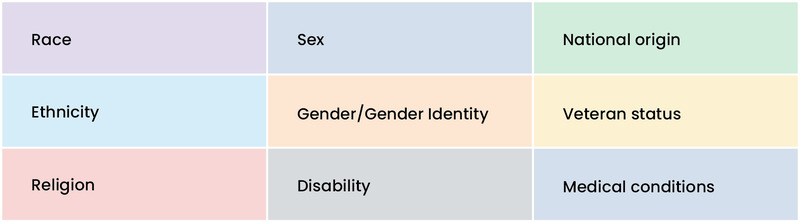
    The list of potential biases is long, to say the least. They can include:

    Types of Bias

    According to the CompTIA 2024 AI Outlook, 22% of companies are pursuing the integration of AI across a wide variety of products and workflows, and another 33% are engaging in limited implementation of AI.

    With so many companies and government entities considering adoption or having already implemented AI and LLMs into their products, processes, and workflows concerns about potential bias and discriminatory practices grow.

    The table above clearly illustrates that biases and discrimination have a direct impact on all people, whether they are part of a historically marginalized community or not.

    Sources of bias

    Where do biases in our AI systems come from? It’d be easy to declare this a technology issue, but it stems from human, systemic, and institutionalized biases resident in our digitized world. When systems use web data and information for training, they reflect the biases present in that training data and it becomes part of any output from that system.

    As for systemic or institutional bias – that bias can come directly from that institution’s data and inadvertently exclude people. An example of this is a hiring tool that learned the features of a company’s employees (predominantly men) rejected women applicants for spurious and discriminatory reasons; resumes with the word “women’s,” such as “women’s chess club captain,” were penalized in the candidate ranking.1

    The impact of bias

    Real-world examples show that these ingrained biases can impact a person’s financial well-being, the ability to get hired, medical treatment, mental health, and an overall potential loss of opportunity.

    What considerations can prevent unconscious AI bias?

    To ensure fairer AI systems – it’s universally understood that data privacy, transparency, and accountability have to be at the forefront of all internal use policies.

    These policies must be coupled with the ability to detect existing biases in those systems and accompanied by mitigation plans.

    So what does implementation look like?

    Data Privacy

    Eliminating bias in AI begins with data anonymization. Data anonymization is nothing new; industries like Healthcare, Financial Services, and Telecommunications have been doing it effectively for years. Government organizations also use it to protect Personally Identifiable Information (PII).

    One component of data anonymization that can preserve privacy while preserving data utility for AI applications is pseudonymization. Pseudonymization anonymizes data by replacing any identifying information with a pseudonymous identifier. Across industries, Pseudonymization protects personal information like first and last names, addresses, and Social Security Numbers.

    Additional techniques that can help preserve privacy are federated learning and differential privacy, which enable data analysis without compromising privacy.

    Data anonymization has pros and cons. Teams must decide how they utilize PII data to ensure they pursue the right approach.

    Transparency

    Transparency is key to reducing bias and discrimination in AI systems. It’s a pretty broad term – what it means in terms of AI systems is there is an openness and clarity of AI systems, this applies to their algorithms, decision-making processes, and data sources. Areas to focus on for data transparency include:

    • Data collection and processing – What data sources are you using? How is the data collected and processed?
    • Assessments – Conduct assessments of these systems for bias and discrimination, including any remediation efforts. Publicly publish any assessments of the system (and maintain records of these).
    • Privacy policy – Develop and publish your privacy policy for system users.
    • Evidence compliance with all applicable regulations in the regions you operate.

    Transparency is a critical component of responsible AI, as it helps ensure that decisions are made fairly, ethically, and without bias—most importantly, that these efforts are shared with system users.

    Accountability

    Accountability involves establishing processes and frameworks to create an oversight and monitoring function over these systems to ensure that they operate as intended and do not cause unintended consequences.

    • Creating a governance framework supports both accountability and transparency. It establishes an oversight body that reviews the development, deployment, and day-to-day performance of AI systems.
    • Define ethical guidelines for staff who build and update these systems.

    The common elements between transparency and accountability are that both of these functions require active monitoring and reporting on the adherence to stated policies, guidance, and compliance with all applicable regulations. As with most technology solutions, these need to be audited and tested to ensure the controls are working as intended, not causing new issues, and any subsequent bias is identified.

    In closing

    Bias and discrimination exist in these systems, and the solutions that can help reduce them in AI systems are nothing ‘new.’ They are tried-and-true approaches that multiple industries have used for years to protect sensitive data and create and maintain the confidence of consumers, regulators, and investors. As these systems are being developed, companies need to consider whether speed to market is more important than developing systems that have enshrined fairness and are not actively reinforcing societal bias.

    1 – Jeffrey Dastin. Amazon scraps secret AI recruiting tool that showed bias against women. Reuters. Oct. 10, 2018.
    https://www.reuters.com/article/us-amazon-com-jobs-automation-insight/amazon-scraps-secret-ai-recruiting-tool-that-showed-bias-against-women-idUSKCN1MK08G

  • The benefits of applying a Marketing LLM to your Digital Marketing efforts

    Defining Large Language Models (LLM)

    Although LLMs have been around since the 1950s, let’s start by defining what they are. A Large Language Model is a type of AI program that uses deep learning and machine learning to perform natural language processing (NLP) tasks. LLMs are trained on large amounts of data to understand and generate human language.

    LLMs are built on transformer models (because of the massive datasets they are trained on), which are neural networks that use self-attention to learn context and detect relationships between elements in a sequence.

    What is a Marketing LLM?

    Marketing-focused LLMs are specifically trained on your data. The data you use to train can be your marketing content, campaigns, analytics, and customer data. These LLMs can ingest and train on large amounts of data.

    The clear advantage of leveraging AI in your Marketing Strategies

    LLMs and Generative AI aren’t going anywhere, these tools have been around for a while, and they will continue to make an impact on multiple industries. Across those industries and companies, Gen AI is being utilized to create content (like social posts, ad copy, and blogs), creative assets, templates, product descriptions, and metadata to create efficiencies in their marketing and creative teams as well as improve speed to market for test iterations.

    In a recent Web FX poll, 50% of the 200 senior marketing and Sales leaders surveyed are using AI in their marketing strategies.

    Let’s dive into specific use cases.

    Content creation

    Over half of marketers (55%) in an eMarketer study use AI for content ideation, indicating the technology’s value in generating new creative concepts and strategies. Let’s look at some examples of how a Marketing LLM can impact your campaign creative:

    • Personalization at scale: Marketing LLMs can quickly tailor content to specific audiences, ensuring that the right message gets to the right target.
    • Scalable content: You can quickly develop and version existing content for use in omnichannel campaigns.
    • Optimizing existing content: With speed and efficiency you can quickly optimize content to improve your engagement and conversion rates on existing campaigns.

    Data-Driven Insights and Analysis

    In the same eMarketer study from earlier this year, almost half (45%) of the respondents use AI to gather consumer insights, showcasing AI’s role in understanding market trends and customer behaviors. Marketing LLMs can deliver value with:

    • Processing customer data with NLP: You can utilize an LLM to clean and correct customer data or personalize responses tied to customer interactions.
    • Analyzing customer sentiment: Review and analyze sentiment based on classifying inbound communication.
    • Identifying trends and opportunities: With so many touchpoints to process, it’s difficult for teams to identify trends. An LLM can process unstructured data like customer feedback, social media posts, and online reviews – identifying trends and opportunities your team might miss.

    Chatbots and Conversational AI

    There are clear differences between chatbots and conversational AI. Chatbots use predefined conversation flows that are limited. Think about the last chatbot you used—there are clear limits to what it can answer based on your input. Simply put, Conversational AI uses machine learning and NLP to provide a more robust, personalized experience. There are use cases for both – broadly they can be used for:

    • Enhancing customer experience
    • Being an always-on, 24/7 support function
    • Being a key component in Sales or Business Development flows

    Optimization and Testing

    Testing your marketing is critical to increasing its effectiveness, reducing waste on strategies that don’t work, and increasing the ROI of your campaigns – Marketing LLMs are a great tool to help you with all of that.

    • Creative copy and content optimization
    • A/B testing and experimentation strategies

    Integration with Marketing Automation

    Marketing LLMs can have an impact on Marketing automation – from identifying prospects that can convert to finding the best time to market to them to get that conversion. They can also assist in:

    • Streamlining workflows and processes
    • Personalized nurturing campaigns
    • Enhancing marketing efficiency

    Challenges and Considerations

    In 2017, The Economist declared that data was the most valuable resource. Although the article focused on US tech companies and their use and storage of massive amounts of data – it’s a very relevant topic for AI and Marketing LLMs.

    Data quality and privacy concerns are top considerations when using a Marketing LLM – the data the system is trained has a direct impact on the results. Poor data quality can quickly cause issues with an LLM. These issues can be mitigated before they even start by:

    • Data cleaning: Identify, correct, and remove inconsistencies, errors, and missing values from your data set.
    • Data collection: Establishing strong controls (process and procedures) on the collection of data.
    • In addition to the above, creating rules and procedures for data validation, integration, and monitoring.

    Privacy concerns: You need to ensure that training data does not contain personally identifiable information (PII)—if it does, it increases the risk of being exposed by hackers and is subject to multiple laws worldwide. The best policy regarding privacy concerns with PII is to ​​ensure that data is anonymized and that consent is obtained where necessary.

    Ethical and responsible AI implementation: We’ve all seen the news stories about bias and discrimination in LLMs, and it’s clear that improved data quality and human oversight are critical to preventing bias, discrimination, and misleading information that can hurt historically marginalized communities.

    Future Outlook

    As LLMs continue to evolve, we can count on a future with them making an impact on both consumers and businesses. Advancements in LLMs will include a deeper level of personalization, advanced conversational capability, and an industry-level focus on specific industries.

    Today, LLMs can provide businesses with a clear advantage by enhancing productivity by optimizing operations, reducing costs, and improving delivery. LLMs can process and analyze vast amounts of data faster and more efficiently than people, driving quicker, more accurate decision-making.

    Conclusion

    When it comes to Marketing LLMs, there are so many practical applications that can uplevel your marketing and customer experience for your customers—and these capabilities will only grow as new LLMs enter the marketplace.

    Although there are some clear concerns about data quality, potential biases, and privacy, these can all be mitigated by strong controls (process and procedure) combined with actual human oversight.

    We believe there’s a clear competitive advantage to using Marketing LLMs and that the benefits clearly outweigh the concerns.

  • Protecting your sender/domain reputation is key to your email marketing efforts

    Anyone specializing in email marketing on either the Brand or Agency side knows the importance of sender/domain reputation. A bad domain reputation can have severe consequences for your email marketing campaigns. Here are some of the key consequences:

    • Inbox Placement: Email service providers like Gmail, Yahoo, and Outlook use sender reputation and domain reputation as major factors in determining whether to deliver an email to the inbox or the spam/junk folder. A good reputation increases the chances of your emails landing in the inbox, leading to higher open and engagement rates.
    • Deliverability: Internet Service Providers (ISPs) and email providers may block or bounce emails from senders or domains with poor reputations, significantly impacting your email deliverability rates. Low deliverability means fewer recipients actually receive your messages.
    • Anti-Spam Compliance: Major blacklist providers like Spamhaus and Spamcop use reputation data to identify and block potential spam sources. Maintaining a good reputation helps ensure compliance with anti-spam laws and regulations.

    Let’s dive into how to maintain a good sender/domain reputation. It starts with SPF (Sender Policy Framework), DKIM (DomainKeys Identified Mail), and DMARC (Domain-based Message Authentication, Reporting, and Conformance). These play significant roles in email authentication and security to keep your database healthy.

    What are SPF and DKIM?

    SPF and DKIM are internet protocols that ensure:

    • Verification of the sender’s domain and whether emails sent are legitimate or not
    • Allows domain owner to specify email servers allowed to send on their behalf

    However, they both do it in different ways.

    How SPF works:

    The Domain owner creates an SPF record in DNS (Domain Name System). The SPF record is a list of authenticated IP addresses that are allowed to send emails on behalf of that domain. Once an email is sent from a domain with an SPF record, the Recipient server validates the Sender IP address with the SPF record and checks if it’s an invalid list of authentic senders.

    If validation fails due to the address not being listed in the SPF record or misconfiguration and SPF authentication, the recipient server will tag the email as suspicious and reject it.

    How DKIM works

    While sending an email, the Sending server generates (and adds) a unique digital signature for the content. The signature is created using a private key specific to the sender’s domain. The sender domain also posts a public key in its DNS records so that the recipient server can retrieve the sender’s public key from the DNS record based on the sender domain.

    The recipient server will decrypt the public key and verify a digital signature, matching will ensure the message has not been altered during transmission and the sender’s domain.

    How these help your Email marketing efforts:

    • Prevents spoofing: The recipient will know if the incoming email is legitimate or not, reducing the risk of the recipient receiving spam emails.
    • Improves deliverability: A valid SPF record ensures trust in the sender domain and prevents it from being filtered through ISPs and email filters.
    • Protects Sender’s reputation: Since you will have fewer bounces and spam complaints against your domain, the sender’s reputation will be intact or improved.
    • Ensures Brand integrity: Protecting messages from alteration in transmission and ensuring they have been triggered by a legitimate sender will protect the brand’s reputation and build trust in it.

    DMARC (Domain-based Message Authentication, Reporting & Conformance) is an email authentication protocol that helps protect domain reputations and combat email spoofing and phishing attacks. Here’s how DMARC helps:

    • Email Authentication: DMARC works in conjunction with SPF (Sender Policy Framework) and DKIM (DomainKeys Identified Mail) to authenticate the sender’s domain and verify that the email is not forged or spoofed. This authentication process helps email providers identify legitimate emails from your domain.
    • Reputation Protection: By authenticating your domain and preventing spoofing, DMARC helps maintain a positive reputation for your domain. Spoofed or phishing emails sent from your domain can significantly damage your reputation, leading to deliverability issues.
    • Visibility and Reporting: DMARC provides visibility into how your emails are authenticated and handled by receiving email providers. It generates reports that provide insights into authentication failures, which can help identify potential issues and take corrective actions.

    By implementing DMARC, email senders can enhance their domain reputations, improve email deliverability, and protect their brands from potential spoofing and phishing attacks. It’s an essential part of a comprehensive email authentication strategy, alongside SPF and DKIM, and is widely adopted by major email providers and organizations.

    Here’s how the process flow works with SPF, DKIM, and DMARC:

    Bad sender/domain reputation can have severe consequences for email marketing campaigns. To avoid these, it’s crucial to maintain a good domain reputation by following email marketing best practices, monitoring your domain’s reputation, and addressing any issues promptly.

    To maintain a strong reputation, email marketers should follow best practices such as:

    • Using authenticated email protocols (SPF, DKIM, DMARC)
    • Maintaining clean, permission-based email lists
    • Monitoring email engagement and complaint rates
    • Promptly addressing any issues that may negatively impact reputation

    By prioritizing sender and domain reputation, email marketers can maximize inbox placement, deliverability, and overall effectiveness of their campaigns.

  • Why Brands Need Preference and Subscription Centers

    What are Preference and Subscription Centers, and how are they different?

    The preference center allows customers to select the specific product categories, communication frequency, and channels they prefer for receiving brand updates. This ensures customers only get relevant information tailored to their interests and preferences.

    The subscription center is a hub where businesses can easily manage their subscriptions, add or remove features, update billing details, and more. It centralizes all subscription information for efficient account management.

    For B2B companies (including SaaS companies), a subscription page is a value add for any customer or administrator portal – it can deliver:

    • Efficient management: Centralized hub to track subscriptions, renewals, billing, and usage.
    • Flexibility: Easily modify plans by adding/removing services as needed.
    • Transparency: Visibility into account details like contracts and billing history.
    • Streamlined support: Self-service access to documentation and assistance requests.

    A subscription center should be integrated as a component of any web-based (or app-based) product or service. Where it differs from the consumer side is that for a subscription center for a SaaS tool – the focus will be on the client administrators or vendor managers. There are cases where the broader user community could benefit from subscription center access.

    Preference centers give consumers choices for what marketing they receive from Brands that can positively impact the bottom line by:

    • Enhancing the experience: Deliver personalized, relevant content based on preferences.
    • Increasing engagement: Customers control the frequency/type of communications.
    • Higher retention: Feeling heard builds loyalty and valued customer relationships.

    On its face, a preference center is a webpage—functionality-wise, it’s a lot more. Your preference center needs to transmit consumer preferences to your customer database / CRM. It should allow consumers to change and update their preferences and update the same customer database on a regular basis. On the preference center page, let your customers know how long changes take to go into effect.

    Ideally, you would collect your customer’s preferences during signups or account creation. More often than not, the B2C preference center will also contain the overall opt-out for marketing (or email marketing) since the data update method is similar. If you’re just creating a preference for the first time – you might want to consider an email campaign or in-app message to encourage them to set their own preferences.

    Not implementing a preference or subscription can cause:

    • The inability to personalize can lead to irrelevant content, which drives lower engagement and potentially opt-outs from any Marketing materials.
    • Privacy violations from unauthorized data access/misuse.
    • Inefficient subscription management and tracking, billing errors.

    Conclusion

    In today’s customer-centric landscape, preference and subscription centers are essential for brands to build strong, lasting relationships. By empowering customers with control over their experiences, brands can deliver personalized value, driving engagement, satisfaction, and loyalty. Neglecting these centers risks alienating customers through poor relevance and lack of transparency. Implementing robust, user-friendly preference and subscription capabilities is a necessity for companies striving to exceed modern consumer expectations and maintain a competitive edge. The investment yields substantial returns through increased customer lifetime value and a positive brand reputation.

  • The not-so-secret challenges of SaaS Marketing: Taking a different approach to marketing – Personalize at scale, build partnerships, and create a loyal customer base

    The marketplace is crowded, and the traditional approach of batch and blast is no longer effective. Instead, businesses need to pivot and focus on personalization, partnerships, and community building to reach their target audience more effectively and build a loyal customer base. We’ll break down how each of these verticals can improve your marketing efforts.

    The traditional approach to marketing

    Traditionally, marketing has been based on a mass marketing approach. We liken this to businesses creating one-size-fits-all broad-based marketing messages and campaigns designed to reach as many people as possible.

    However, it’s an approach that is no longer effective in the crowded marketplace of today’s digital age. There is so much noise and competition – standing out from the crowd is difficult and challenging for you to get your organization’s message seen.

    A new approach to marketing

    The new approach to marketing is based on three vital segments: personalization, partnerships, and community building. This means that you need to become more intentional in creating marketing messages and campaigns tailored to your target audience’s specific needs and interests. You also need to build relationships with other businesses and organizations that can help you reach your target audience.

    Personalization at Scale

    Personalization is the key to reaching your target audience more effectively because you meet your customers where they are. In fact, 91% of consumers are more likely to purchase from brands that provide relevant offers and recommendations.

    By understanding your customers’ needs and interests, you can create marketing messages and campaigns that are more likely to resonate with them. No need to be disingenuous; there are a number of ways to personalize your marketing, including:

    • Using customer data to create targeted email campaigns
    • Creating personalized landing pages
    • Offering personalized discounts and promotions
    • Sending personalized recommendations

    Partnerships

    Because the market is crowded, consider aligning your interests with companies that share your goals. Partnerships are an effective method of reaching your target audience.

    By partnering with other businesses and organizations, you can get your message in front of a wider audience. There are a number of ways to partner with other businesses, including:

    • Co-marketing campaigns and events
    • Joint ventures
    • Referral programs
    • Affiliate marketing

    Community Building

    One of the most underutilized tactics is community building, another important and new approach to marketing. By building a community around your brand, you can create a loyal following of customers who are more likely to do business with you. There are a number of ways to build a community through organically crafted content, including:

    • Creating a blog
    • Hosting webinars and events
    • Running contests and giveaways
    • Engaging with customers on social media

    Advocacy and Loyalty

    Advocacy and loyalty are essential for any business that wants to succeed. By creating advocates for your brand, you can get your message spread by word-of-mouth. There are a number of ways to create advocates, including:

    • Providing excellent customer service
    • Offering rewards and incentives
    • Giving back to the community

    Meeting your customers where they are

    Finally, it’s important to meet your customers where they are. Be authentic, using the channels they use and speaking to them in a way that they understand.

    For example, if your target audience is on social media, then you need to be active on social media. If your target audience is reading blogs, then you need to be writing blogs. The proof is in the pudding.

    The Bottom Line

    Taking a different approach to marketing is essential for businesses that want to succeed in today’s crowded marketplace. By focusing on personalization, partnerships, community building, advocacy and loyalty, and meeting your customers where they are, you can reach your target audience more effectively and build a loyal customer base.

    To learn more about how to take a different approach to marketing, check out our blog series or contact us for a consultation.

  • The Rise of Voice Search Marketing

    In this ever-evolving digital marketing era, it’s crucial to stay ahead of the curve for businesses that aim to capture the attention of their target audience. Voice Search Marketing is one trend that has been making waves and is set to reshape the landscape — the era of typing queries into search engines is gradually giving way to a more natural and conversational approach.

    The Voice Search Revolution

    Consumers are increasingly using voice search to streamline their online experiences. Voice-enabled devices like smart speakers, smart TVs, virtual assistants, and smartphones with voice recognition technology have become ubiquitous.

    Traditional SEO strategies evolve as users shift from typed searches to vocalized queries. Long-tail keywords are becoming more critical as people use natural language when speaking to voice-activated devices.

    Optimizing for Voice Search

    i) Conversational Content is Key:

    Crafting content in a conversational tone is crucial for voice search optimization. Users tend to phrase voice queries in a more natural and spoken manner, so businesses need to adapt their content accordingly.

    ii) Local SEO and Voice Search:

    Voice searches often have a local intent. Optimizing for local SEO is paramount, ensuring that businesses appear in relevant voice search results, especially for queries like “near me” or location-specific requests.

    Emerging Technologies

    i) AI and Natural Language Processing (NLP):

    Integrating AI and natural language processing (NLP) enhances the accuracy and understanding of voice search platforms. Businesses are leveraging these technologies to provide more personalized and relevant results.

    ii) Visual and Voice Integration:

    Voice search is not limited to verbal interactions. Visual and voice integration is gaining traction, allowing users to initiate searches through images and continue the interaction through voice commands.

    Adapting Analytics for Voice

    Traditional analytic tools may struggle to attribute voice searches accurately, leading to challenges in understanding which interactions originated from voice commands. This limitation can hinder marketers’ ability to evaluate the benefits of their voice search optimization efforts. Additionally, users often initiate a voice search on one device and continue the interaction on another. Traditional analytics may not be able to connect these multi-platform journeys, leading to fragmented data and incomplete user profiles.

    Investing in analytics tools designed for voice interactions can provide more accurate insights. These tools can track and attribute voice searches, offering a clearer picture of user behavior and the effectiveness of voice search optimization strategies. Also, integrating cross-device tracking capabilities will allow marketers to follow users seamlessly across different platforms. This holistic view of user journeys enables more accurate attribution and a better understanding of the overall customer experience.

    Privacy Concerns:

    As with any data collection, voice search analytics raise privacy concerns. Users may hesitate to interact in voice if they feel their privacy is compromised. Marketers should prioritize transparency in data collection by clearly communicating how voice data is used, stored, and protected. Adhering to privacy regulations and obtaining explicit user consent can build trust and encourage more users to embrace voice interactions. By addressing these challenges and implementing tailored solutions, businesses can unlock the full potential of voice search marketing and gain a competitive edge in the evolving digital landscape.

    The Future of Voice Search Marketing

    As we look to the future, it’s evident that voice search is not just a current trend but a transformative force in digital marketing. Businesses that embrace this shift early on by optimizing their content for natural language and staying abreast of emerging technologies will have an advantage in being at the forefront of connecting with their target audience more naturally in 2024 and beyond.