Tag: Google

  • Key Takeaways from the Digital Now Conference in Association with Google

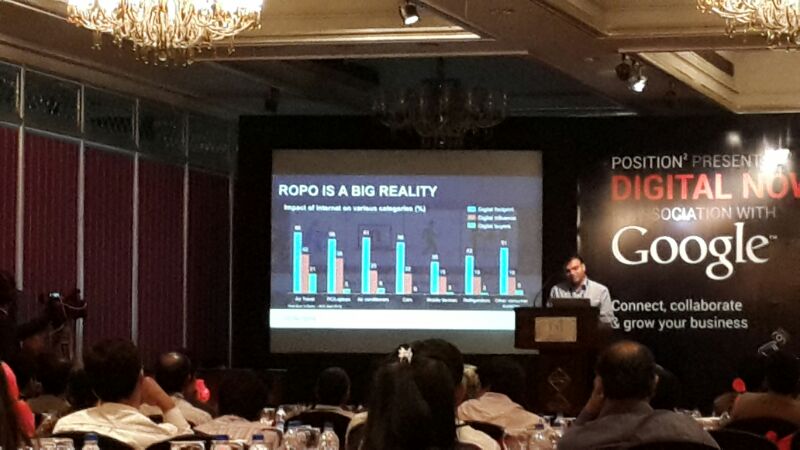
    The Bangalore chapter of Digital Now conference, in association with Google, concluded on June 12. The event was a great success, both for the participants and speakers.
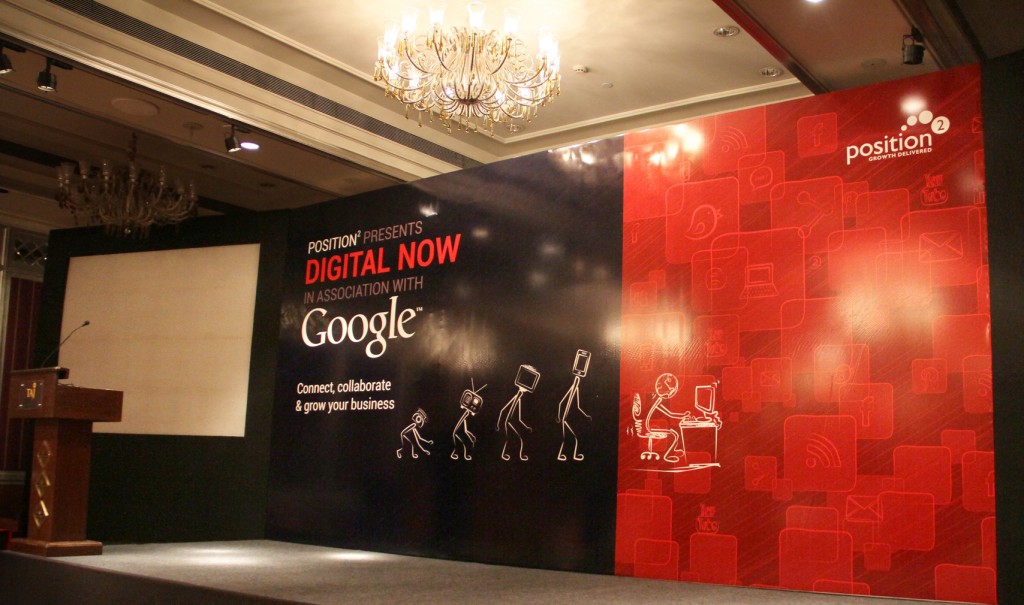
    Position2 presents Digital Now in association with Google

    If you could not attend the event or if you want a second look at the insights shared, here are the key takeaways:

    Reach of Digital in India by Google’s Akshay Sonthalia

    Google’s Strategic Partnership Manager, Akshay Sonthalia, delivered the keynote address on the reach of digital in India. Akshay shared several popular videos with the audience, that highlighted one key factor – digital marketing is capable of touching the hearts of millions. It Connects.

    Check out the key takeaways from his session:

    • Think digital, with Google – Engage with people’s emotions, logic and sense of awe. Digital helps move people when it matters the most
    • Video views are exploding in India with YouTube having 60 million unique users. If you have not completely embraced video marketing, you need to start now to stay ahead of your competitors
    • Timeliness, reach and impact can act as cost effective ways to reach out to millions of people
    • Increase reach by embracing personalization. In fact, digital ads have more scope to get creative as compared to traditional media, where you are bound by a set of guidelines
    • Indians are transacting online more. Here is what we found – Digital buyers in India are expected to reach 41.8 million by 2016 (eMarketer)Research online purchase offline
    • Research Online Purchase Offline (ROPO) is today’s reality – consideration happens in digital even if purchase doesn’t. Leverage it.
    • 3 pillars of capturing demand: Personalize, build for mobile and data usage
    • Good customers are great to have, they say awesome things about you. However, you should not ignore disgruntled customers. In fact, you should be wary of them, since they can ruin your credibility with even a single bad experience, thanks to digital media. Invest in reputation management systems.
    • Consumers can create and consume content. Keep consumers engaged to make them your brand advocates

     Infrastructure for going digital, by Position2’s CEO Rajiv Parikh and MD 74 Nambiar

    After watching some wonderful, moving videos, it was time for the audience to tighten their seat belts. Next up were our CEO Rajiv Parikh and MD 74 Nambiar for the session on ‘What you need to go digital’. Here are the key insights from this session:

    • Customer journey varies in B2C and B2B sectors. Position2 took the audience through the journey of a consumer, until she/he reaches a purchase decision.
    • Content in multiple formats is in demand
    • Mobile is big, so you have to make your landing pages mobile-friendly
    • You need a three layered framework to go digital:
      • Content layer
      • Interaction layer (for instance, blogs, social channels, landing pages etc.)
      • Marketing layer (paid search, media, email etc.)
    • We also emphasized on the need for user centric SEO, as compared to search engine centric. The consumer is king and while creating an SEO strategy, companies need to focus on conversational keywords, user experience and content authority. If you are still focusing on keywords, content quantity and frequency, its time to realign your marketing priorities.

    Insights from the panel discussion

    The following are the important points that cropped up during the panel discussion that followed:

    • Move from traditional to digital marketing
    • Monitor the journey of a customer through digital
    • Consumer behavior drive social media marketing

    Hope this was a good refresher!

    To the 100+ people who attended the event, thank you! If you did not get to the event, we hope you see you next time.

    Drop your comments in the section below!

  • Google My Business Launch and Facebook Plans to Sell Web Browsing Data

    Google My Business launch and Facebook plans to sell web browsing data

    Google

    Based on brands’ feedback that it’s tough to find their loyal customers, Google is making it easier for businesses to connect with the latter.

    Here comes ‘Google My Business’…a free and easy way for brands to connect with customers wherever they are.

    With Google My Business, you can:

    • Update business information on Google Search, Maps and Google+ from one place making it easy for customers to connect with you. This also helps in making sure you provide consistent information to customers across platforms.
    • Add pictures of your business and provide customers with a virtual tour of your business, giving them a glimpse of your company
    • Connect with your customers on Google+ by sharing updates about events and important news
    • Monitor and respond to Google reviews
    • Gain insights and integration with AdWords Express and understand how people find and interact with you
    • Manage your brand’s information even when you are on the move with the Google My Business Android app and the soon-to-be launched iOS app

    Google will be moving brands using Places for Business and the Google+ Dashboard onto Google My Business along with adding new businesses.

    Facebook

    User browsing data and information about the apps they have downloaded will now be provided to advertisers by Facebook.

    Announcing this through a blog post, Facebook said this move was to help users see more personalized ads. The rollout will be limited to US based users initially.

    However, users can opt out of this feature by clicking on this link and selecting the companies they want to opt out from. Users can also opt out from Facebook’s iOS and Android apps.

    Implications

    With Google’s update, brands can now:

    • Connect with customers better and also when they are on the move
    • Manage consistent brand messaging
    • Keep an eye on customer reviews more easily and respond

    Until now, Facebook could target users with ads based on their behavior on the social network only. You can now target users based on their extended web activities. For example, if a user wants to buy a subscription for a PPC service and is searching for it, you can show him/her ads about PPC services using this data. With users choosing to research online increasingly before making purchases, brands can benefit immensely from this data.

  • Google Brings “Magazine-style” Text Ads to Display Ad Units

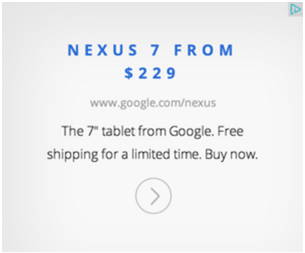
    Google has launched “magazine-style” text ads that brings standard text ads to websites that would normally run only display ads. These ads will consist of text only, but will adhere to a design aesthetic, suitable to display.

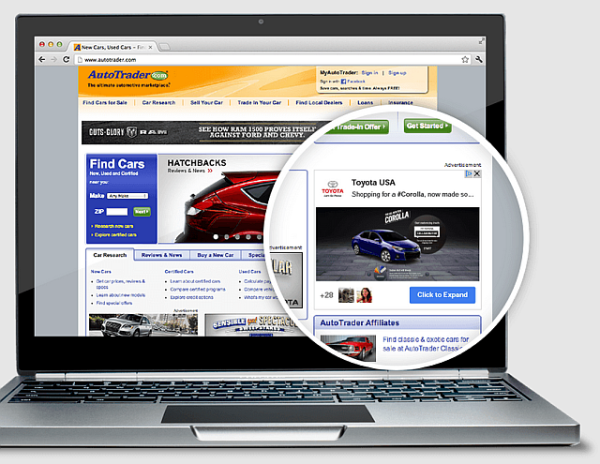
    Google will not add any images to these ads but will only take the text and re-format it into a larger ad unit. Look at the image below for an instance.

    The new ad type will appear when a text ad outbids a display ad. Google launches magazine style ads

    Impact on marketers and publishers

    Running these ads helps marketers align their advertising strategy with Google’s recommendations better by allowing them to run both text and display ads that increases their revenue potential.

    For example, if you wanted to run a text ad on a top website that runs only display ads, this is your opportunity. If you felt that visuals would distract the viewer from your ad’s main message, this new format can come to your rescue. It presents only text on ads, but in a more aesthetically appealing look.

    What do you think about this new ad format by Google?

  • New Google PLA Format Based on Reviews and Ratings

    Google testing new PLA formatGoogle is testing a new form of its Product Listing Ad (PLA).

    In this new format, a search for “best anti-virus software solution” will display software products in the order of a numerical ranking system that seems to be taking both, quality and quantity into consideration for each item’s ratings.

    For example, even if Norton* has higher number of reviews, it will come second to McAfee* due to a difference in their star rating where McAfee’s star rating is higher. As a marketer, you need to focus on both, number of reviews and star ratings to take advantage of the new PLA.

    If there are two result items with the same star rating, then their number of reviews will determine their ranking. The item with more reviews will be ranked higher.

    Continue watching this space. We will keep you updated on any further developments.

    *These examples have been used only for demonstration purposes. Position² has no stake and hence does not promote any of the companies, whatsoever.

  • Google Releases Universal Analytics For All

    Universal Analytics, which was in beta till now, has been launched by Google for everyone.

    According to Google, Universal Analytics equips you to power up for the measurement challenges of today’s multi-screen and multi-device environment.
    Universal Analytics
    A few important things you need to know about Universal Analytics are:

    • It has all the features, tools and reports of classic Analytics, including remarketing and audience reporting.
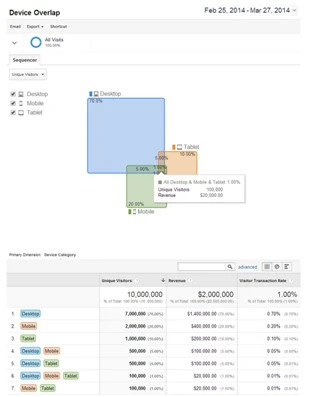
    • Google will be launching the User ID feature gradually, which will help you understand your customer’s complete journey. This feature provides a more user-centric view of website traffic by showing anonymous user engagement activity across different screens and site visits. User ID will also enable cross device reporting.
    • Current premium accounts will upgrade to Universal Analytics with the same service level and additional product features. Users with free accounts can also upgrade with all features intact.
    • Unlike the prior lag in data, Universal Analytics offers timely reporting with fresher data if you are in a different time zone.
    • The User Agent/IP Override feature will help you to proxy data from devices and intranets through internal servers onto Google Analytics.

    For a real-life example of how Universal Analytics works, you can check out this case study.

    Universal Analytics helps marketers in better tracking, campaign configuration and measurement with enhanced features:

    • The tracking code is more flexible and easier to implement on different levels.
    • It is easier to set up cross-domain or sub domain tracking.
    • Access to new configuration options such as organic search sources, session and campaign timeout handling, referral exclusions and search term exclusion.
    • Access to custom dimensions, metrics and new features, which will arm marketers with better measurement options.

    If you want to know more about Universal Analytics, click here.

    Image Source: Google Analytics

  • Google Buys SlickLogin, LinkedIn Opens up Publishing and Yahoo! Gets Started on ‘Contextual Search’

    Google

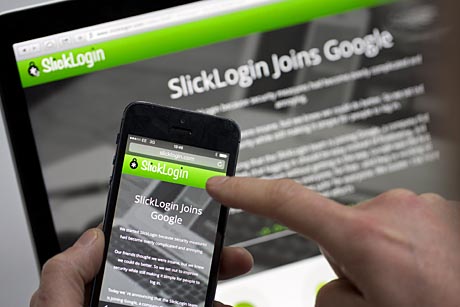
    Google Acquires SlickLogin

    Five month old start-up SlickLogin has been acquired by Google for their work on sound-based verification capabilities. Post its debut at TechCrunch Disrupt, September 2013, Israel-based SlickLogin released its product in closed Beta.

    How it works

    Users need to have the SlickLogin app installed on their smart phone. Adding five lines of code to an existing app will enable the app. When users want to login to a website enabled by SlickLogin, they need to click the login button and hold their phone in front of the computer.

    SlickLogin will then verify the phone’s position using technology such as, Wi-Fi, Bluetooth, Near Field Communication (NFC) or Global Positioning System (GPS). The website would then play a unique sound generated, through the computer’s speakers, which is picked up and analyzed by the phone’s app. A signal is then sent to the site’s server confirming the user’s identity.

    User Security Concerns

    SlickLogin seems to have its finger on the pulse. Each uniquely generated sound is tied to that moment. No one can record a signal and play it later to hack into an account. The phone would not have the required login credentials and these details are not embedded into the sound also. If anyone tries any of this, they may only be logging that user into their own account!

    This acquisition will help Google strengthen its login security beyond the current two-step process.

    LinkedIn

    LinkedIn Influencers

    The social network has opened its publishing platform, LinkedIn Influencer to more members.

    Now, the posts published by LinkedIn users will be made a part of their professional profile, shared with their professional network and can spread out to a large group of professionals. Users can now not only follow other members who are not in their network, but can also build their own follower group.

    The opening up of LinkedIn Influencer gives professionals a great chance to:

    • Share their experiences with others (whether they are experienced or new)
    • Expand their brand influence
    • Add to their reputation as thought leaders in their respective industries

    LinkedIn has added more influencers to the existing list and will also be monitoring them to maintain high quality levels and engagement. The capability has been extended to 25,000 LinkedIn members currently and will be expanded to include all members in multiple languages in time.

    There will be more of user-generated content on LinkedIn henceforth, which can draw more people to consume content on the site. LinkedIn can soon be a major hub for quality content by professionals. Brands can now begin to turn to LinkedIn with more focus for their content marketing strategy due to a surge in high quality content generated. If your brand’s executive is a LinkedIn Influencer, it means better brand reputation and more exposure.

    Yahoo!

    Yahoo Contextual Search

    In case you had read about it, we recently wrote about Yahoo!’s ambitions for developing better ‘contextual search’.

    Appears to be true, seeing the $10 million given to Carnegie Mellon University.

    Yahoo! does not mention the term ‘contextual search’ explicitly. But, a read of the company statement gives a sure signal of an improved version of contextual search being built.

    Though Google is already a player in the game, the possibility and consequences of a better contextual search by Yahoo! is an interesting development for the search world.

    What is your take on these updates?

    Images Courtesy: The Sydney Morning Herald, LinkedIn, Mashable

  • Google Joins Hands with comScore for Real-Time Ad Measurement

    Google

    A few months ago, Google opened its doors to Nielsen to place measurement tags on YouTube ads. This move was to help marketers get a better handle on the performance of their video ads and also increase the credibility of Google’s ad ROI data.

    Advertisers take many factors into consideration when it comes to choosing a website to advertise on. Quality and accountability are two main factors and Google is working on delivering both of these.

    comScore is no stranger to Google. It was one of their first partners in the area of audience measurement through application of its Validated Campaign Essentials (vCE) solution on YouTube.

    And now, in an effort to draw more marketers into buying ads, Google has signed a new deal with comScore. This deal will allow real-time ad performance measurement in different formats, across the web on Google’s DoubleClick ad server.

    Here are a few important aspects you should know about the deal:

    • comScore’s vCE solution will be integrated with Google’s DoubleClick ad server.
    • This multi-year Google deal with comScore covers measurement of display ads, video ads and ads on mobile devices.
    • You can also measure ad performance across websites and device screen sizes.

    The main advantages of this development are:

    • This allows for real-time measurement of ads and delivery of insights.
    • This will help manage campaign spends better, with increased investment in campaigns that deliver and withdrawal of funds from those that don’t.
    • Marketers will be able to access more data about people who are exposed to their ads and learn about their interests.
    • This insight into audiences can help in fine tuning retargeting campaigns later.
    • Makes the Google ad offering more complete with credible ROI data.
    • It makes cross-screen metric measurement easier with its ability to monitor ads on multiple screen sizes.
    • This development comes at a time when there is greater emphasis on video marketing and display ads.
    • It allows marketers to use these powerful tools, knowing well that they have appropriate measurement tools.

    Initially, these capabilities will be available in the US for desktop-based display and video ads. It will be expanded to include mobile devices and cross-platform measurement later.

    With this development, Google has shown that, though late, they do listen to marketers and work on making advertising on their network beneficial for the latter.

    What do you think of this Google-comScore tie-up? Do you think it will deliver all that it is promising and entice more marketers to buy ads?

    Image Courtesy: Campaign India

  • Search is Changing – Real-time Updates in SERPs

    SERPsThe world around us is moving at a swift pace today, so much so that often information absorption has to be literally (read, virtually) instantaneous. Web platforms have made it so easy to share information that people use these channels to announce important events and updates rather than wait for the slow dissemination of information by traditional media.
    Speed of Information Diffusion

    According to the now obsolete Hypodermic Needle Model theory, traditional media has an “immediate” effect on the masses. The theory stated that people were passive receivers of information and that they were immediately influenced by it.

    This theory was developed in the days when only traditional media existed and its meaning of the word ‘immediate’ is vastly different from today’s adrenaline driven, turbo charged world of social media and online communities.

    Immediate today means ‘immediate’!

    Earlier, it took at least a few hours for news to be updated through traditional media (as it does sometimes even today). But today, by that time, crucial updates would have already broken out on forums and social channels.

    In today’s highly interconnected world, it’s very important today to know about key events as soon as possible. This necessity invariably prompts people to look towards information sources that are more real-time oriented.

    For instance, the ongoing crisis in Syria captured headlines world over, especially on the web. People took to online communities and social sites like Twitter and Instagram to protest and express their anguish. A brand crisis like defective brakes in a new car model too can prompt widespread searches. Tyson’s chicken scare recently triggered a few frantic searches.

    Real-time Updates in Search Engines

    Search EnginesSearch engines are mostly regarded as a treasure trove of data by netizens. Innumerable people gravitate towards search engines when they are looking to learn about the latest events. However, a developing trend is where web users are turning to online forums and social sites like Twitter, Pinterest, Instagram and the like for real-time updates.
    Let’s do a quick inspection of the most popular multi-lingual search engines and understand their current position in terms of availability of real-time updates:

    Google

    Arguably the most popular search engine, Google has not missed this trick. They have been covering Twitter and FriendFeed updates to which they added Google+ updates also recently.

    Bing

    Microsoft’s search engine is also up-to-date offering Twitter and Facebook updates on its SERPs.

    Yahoo!

    They entered the game a little late after both Google and Bing but Yahoo! also started offering real time information on the search categories available at search.yahoo.com.

    There are also unmistakable signs of search engines opening up to search result components of different natures when compared to results that appeared on SERPs traditionally. For example, Google has begun integrating Google+ updates and it recently allowed more in-depth articles in its search results. According to Google, many users’ requests for information were for broader topics, to cater to which, the search giant incorporated more detailed posts in SERPs.

    YouTube videos have also been included in search results from a long time.

    Effect on Businesses

    All of this asks the question, ‘Can brands take advantage of people’s interest in real-time information?’ One way of doing this is in the manner mentioned above; of quickly reaching out to consumers at a time of a product crisis.

    Another way to positively leverage this opportunity is by aligning promotions with significant events. Tweeting congratulations to Golden Globe winners as the awards are announced or building a quick info newsbyte around significant events will help the brand get featured in the search results.

    How else can brands leverage people’s search for real-time information? Tell us!

    Image Sources: Bizness Quest, Real Traffic Productions

  • Turning Google+ Posts into Display Ads

    google plus We’ve all clicked on banner ads that took us to the advertiser’s website or landing page. This is what interactivity meant to us.

    Until now.

    Google+ is now offering interactive ads – ‘Google+ Post Ads’.

    What’s the difference you may ask?

    Most of the traditional ad formats on the web offer the same advantages that they offered even a decade ago. Digital marketers can measure views, impressions and clicks. But neither can these ads tell brands what consumers thought about a particular ad nor can consumers make any enquiries about the advertised product.

    Advertisers have varied objectives while advertising on the web – sometimes it’s to build awareness and sometimes to build engagement. More and more brands want their consumers to engage with them but traditional ad formats have not been allowing them to. Traditional ads only served to lure consumers to the brand’s Facebook page or website from where the brand engagement would begin. Google+ post ads endeavor to fill that gap in online advertising and interaction.

    google+-post-ads

    Features and Benefits of +Post Ads

    Google+ Post Ads give a brands’ online content a power boost by turning their Google+ posts into display ads that will run across the web through the trusted Google Display Network. With these ads, brands can go beyond normal, ‘static’ advertising. +Post ads let brands host Hangouts On Air, it lets viewers comment on the ad, follow your brand or +1 right from the ad. This kind of interaction with the brand directly from the ad is a huge plus for advertisers.

    With +Post ads:

    • A brand’s target audience will be able to tell their favored brand exactly what they thought about that particular ad
    • Make specific enquiries about the product/service advertised
    • Engage with the brand, thereby providing the brand with invaluable insight into consumers’ minds

    Add in the social angle to this, and it gets better. It goes without saying that people are more open to things their friends have favored. The comments, +1s and shares +Post ads receive give your content a social edge that works for both advertisers and consumers. +Post ads also expand in a lightbox and show full screen social creatives.

    Go all out on the Web!

    As we mentioned before, the ability of +Post ads to run across the web through the Google Display Network’s 2 million sites takes its reach to astronomical heights. Brands can reach the right audience at the right place thereby increasing the relevance and potential ROI of their ad. What’s more, brands can also make use of Google Display Network features like demographics, affinity segments and contextual targeting while determining ad reach.

    An advantage of +Post ads is that you only pay when people engage with your content. This means the awareness comes free and that you are paying for engagement. You can set more specific advertising objectives and measure campaign response against these objectives.

    The added bonus is that engagement with your brand’s content can continue even after your ad campaign has ended. As they discover your posts through Search and Google+, people can continue to engage with your content.

    But +Post ads are still in the Beta testing phase. Brands interested in testing it out need to sign up for it or get in touch with their Google team.

    +Post ads sure seem to bring up one’s curiosity about it. What do you think about them?

    Image Source: Search Engine Land

  • 2013 Digital marketing updates, Important Investment Areas for B2B Marketers and much more…| Best of the Week

    This week’s hot news, events and videos from the online marketing and social media world.
    LinkedIn - It's Place in the B2B Industry
    From the Position2 Blog This Week:
    A Retrospect of 2013 Digital Marketing Updates
    Zeroing in on the changes that had the most impact on the digital world helps see the year in the perspective that’s best for your brand. Check out this blog post to know about the crucial digital marketing updates in 2013.
    Top Stories this Week: Social Media
    Top Stories this Week: SEO, PPC and Digital Media
    Best of the Week Video Best of the Week Video
    Last week, we shared with you a b2b company – HP – that had some great videos online. Here is another b2b company that has over 8 million video views, in total. We are sure, it will provide you with enough inspiration to create some great videos for your audience.
    White Paper: Increase Visibility for Your Content by 4x
    Today’s traditional SEO is inadequate: Ignite your search results by accelerating visibility in more places than ever before.Download this White Paper and learn:


    • SEO, why the way we know it is not enough
    • Introducing and implementing Enterprise Visibility Accelerator (EVA)
    • Using multi-channel tracking tools for effective monitoring
    • How EVA benefits businesses.

    Download the complimentary EVA White Paper now

    Know more about Enterprise Visibilty Accelerator(EVA)
    If you are reading this blog post via a RSS reader, please click here to subscribe.