Tag: Google

  • Effective Ways of Improving Your Business Using Local SEO

    Local SEO is becoming one of the most essential components of every business or brand that wants long-term success across search engines. Location-specific searches and the results that go along with them suggests that local business owners need to step up their game in terms of local SEO.

    At present, Google alone has to manage more than 100 billion searches per month from around the world. Among them:

    • 4 billion queries generated from desktops per month in the United States alone have local intent.
    • 50% of all the mobile queries have local intent.

    Local SEO is a great way to target customers by allowing the local businesses to get featured before their customers are looking for them. Higher a business ranks in this local search result, greater are its chances of being noticed by a potential customer.

    What is Local SEO?

    Local SEO has grown significantly over the last few years, particularly due to the rise of smart phone usage and better connectivity all around. Although it has lot of similarities with organic SEO, it is ultimately very different.

    Local SEO is focused on providing results that are relevant to a searcher based on his/her  current location.

    Why Local SEO Matters?

    The number of search queries with local relevance is increasing due to the growth of mobile search. More and more local customers use mobile phones and mobile ‘apps’ to find best local business while they’re walking around.

    In order for Google and other search engines to serve users with the most relevant information using the vast amount of data they have about us, local based results will become more and more prevalent. So the search engines rely on information including local content, social profile pages, links, and citations to provide the most relevant local results to the user.

    The rise of location-specific search of late makes it incumbent on local business owners to seriously start considering ways to scale their local SEO efforts. With the recent Google Pigeon update, local businesses are scrambling in a frenzied manner reacting to the changes.
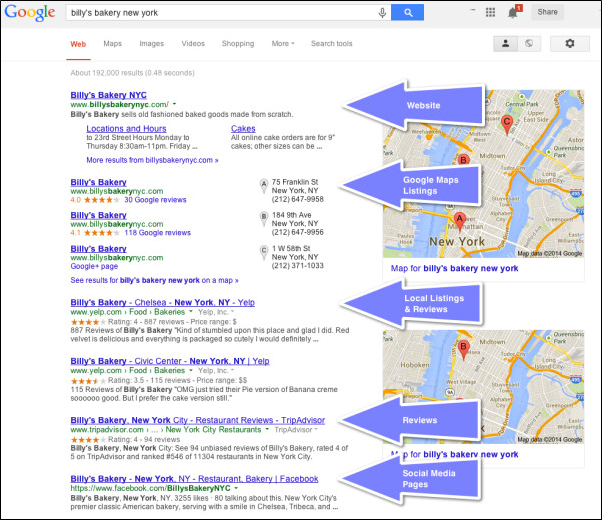
    Position2- Effective Ways of improving the business using Local SEO

    How to Optimize Your Business for Local Search?

    1. Create Google+ Local Entry and Optimize

    Claim your listing on Google+ Local. If you have already claimed your Google Places page, then it can automatically be moved to Google+ Local, and hence you can manage your Google+ Local page from your original Google Places dashboard. When you appear on Google, you make it easier for the customers to find information regarding your business online. They can see the contact information, hours of operation, direction, as well as the reviews and the ratings.

    2. Encourage Reviews To Add Credibility To Your Business

    Online reviews are playing an increasingly critical role in driving consumers’ purchasing decisions. The quantity and quality of reviews also strongly influences how your business appears in local business listing results. Note that having a more positive score (quality) is more important than quantity of reviews.

    3. Build and Optimize Citations

    NAP (name, address, phone number) citations are a key ranking factor in local SEO. Local citations from quality directories and other locally relevant sites are still very important to gain higher local SEO ranking on Google search. Google crawls them and compares them with the address data on the company’s website. Citations increase the trustworthiness of the company.

    4. Local SEO Website Optimization

    Optimize the website for local search; include some geo-specific information so that the search engines understand the locations you are trying to target.

    • Use your City and State names in your Title tags, Meta descriptions, and in the content of your site  appropriately.
    • Make sure you website provider is making use of the Schema Local Markup, specifically for the Place and the Organization tags.

    5. Ensure Your Business Website is Mobile Friendly

    Google has also recently indicated that one in three US mobile queries is now ‘local’ and 87% of people use their phone when on the go. Google also found that 95% of mobile users look up local information on their phones and the primary functions are calling or visiting a business place. When you are on top of your local SEO, you have a better chance of ranking higher for mobile SEO too.

    Conclusion

    Local search engine optimization is becoming increasingly important, especially because of the rising number of searches via mobile devices. Google is using a combination of proximity, reviews, citations, and other factors to prioritize Local SEO results. Local SEO trends are rising  as of now and they are only going to get better and more significant in the future. Now is the time for you to take advantage of local search engine optimization and boost your business before your competitors gain an edge over you.

    Image Source: SearchEngineLand
  • The Google Penguin Algorithm is Reborn

    After more than a year, Google has officially come up with a streamlined version of the Penguin algorithm which is being referred to as the Penguin 3.0 Update. The Google Penguin Algorithm was initially announced in April 2012. It was basically a deterrent mechanism for webmasters who indulged in Black Hat SEO techniques. These include but not limited to, deviously increasing the ranking of a web page by manipulating the number of links pointing to it. These tactics are commonly called link schemes which are in violation of Google’s Webmaster Guidelines. Google penalizes such websites by lowering their ranking and blacklisting them so that genuine websites have a fair chance of ranking higher on the search engine.

    In order to prove that your website is clean in the eyes of the Penguin, take special care to see to it that your links are all genuine. Black Hat specialists realized long back that if you have links from an authoritative site then your site is also ranked highly in the search engine. Hence they started buying links on a big scale and started creating link farms wherein you could choose which links you want to be associated with, for your website. Soon Google got a whiff of it and it started taking stringent actions. Thus, the Penguin algorithm was born.

    Penguin 3.0 is more of a re-write of the original Penguin algorithm than just being a refreshed version. So you need to be extra cautious in order to pass muster as far as Penguin 3.0 is concerned. Beware of paid links or text ads that pass PageRank since it is a clear violation of Google guidelines. Get rid of poor quality backlinks. Do not use the same optimized anchor text on too many links since Google thinks you are confusing the user and hence you will not be ranked higher.

    Penguin is a filter algorithm that sits on top of the search algorithm in order to check for fraudulent links and penalize the websites indulging in it. Penguin is not too concerned about the content on your website but is more interested in the links that point to your website. So webmasters need to abandon all Black Hat techniques in their quest for higher search engine rankings now.

    The best way to find out whether your site has been affected by the Penguin algorithm is to check the traffic to your website on the day Google launches a major update. The most effective way to do this is using the Penguin Penalty Checker Tool. That way you can take note if Google is penalizing you for some issues related to links pointing to your website. If in case you are being penalized then you need to rectify it at the earliest. If your website does not show any changes in the traffic on the day a major update is launched then you probably might be safe. But confirm it by getting an audit done for your website and find out if there are any objectionable issues with regards to your website that might cause your site to drop in the search engine results page.

    If unfortunately you have been hit by Penguin 3.0 and whatever you do does not seem to alleviate the matter then you will have to wait until the next Penguin update or release to authenticate what you have done is according to Google’s diktats. If you feel that some obnoxious website is trying to spam you by linking to your website in order to lower your PageRank then you can tell Google to ignore such websites by using the Disavow Links Tool.

    Quality content is always the most important aspect of your website to attract links from reputable sources. Never pay for links since that could make you vulnerable to getting blacklisted by Google. Always build your site with the end-user in mind. Consider it a given that the users are seeking using a smooth interface to navigate effortlessly on your website. That way you are bound to get a good ranking on Google search.

    Connect with Google Certified Professionals to find out what this updates means to your website.

  • The Google Tag Manager gets an Update

    The Google Tag Manager is a very useful tool not only for the IT fraternity but also for the digital marketers. You can make the whole process of tag management more predictable and tailor-made for your specific needs. Some of the features associated with the just released Google Tag Manager update are as follows:

    • Customizing the Tag Manager to your unique needs using new APIs
    • A user friendly interface that can launch and edit your tags quicker and more efficiently.
    • A host of other third party templates that makes tagging easier than before.

    A tag is an HTML code that executes on a web page or a mobile app. Without an integrated tag management solution you have to manually add the individual tags to the source code of your site. The Google Tag Manager Update (GTM for brevity) helps you manage how tags are deployed on your website or mobile app making the whole process hassle-free. You just have to specify the tags you want to use and the GTM will do all the hard work. You get a powerful set of tools to control how these tags are fired and how your tag data is handled using triggers, variables and a data layer.

    GTM for the web is deployed using a single container code snippet that you can place on all your web pages. For the purpose of mobile apps you can use the Tag Manager SDK. These container snippets will handle the deployment and execution of various entities like Google AdWords, Google Analytics, Floodlight ( A Floodlight tag is an HTML tag that you place on your website to track conversions, such as a consumer making a purchase or completing an online form), and other tags that you might be using.

    The GTM platform is intuitive and structured making it easy even for first time users to take control. The Google Tag Manager API helps you better manage your web interface. You can easily manage bulk users and set up role-based permissions and the API will provide the right level of access to the right users. You can use the API to generate master container templates to make variations with respect to domain and campaign ids.

    Tags could be used for a variety of purposes but most of the tags in GTM are used to send data from your site to a third party site. GTM uses triggers and variables to decide how and when your tags are fired. Tags are deployed based on events and are executed when a page loads or when there is some kind of an interaction with your web page.

    You can decide when exactly to execute a tag depending on a specific customer interaction on your website, example, somebody clicking on a download form or a submit button. Thus, you can get specific data regarding the customer behavior on your website which helps you analyze how your digital marketing campaigns are performing. Based on these insights you can tweak your campaigns to improve your digital marketing strategy.

    Will you be utilizing the Google Tag Manager update for your websites and mobile apps?

  • Google Authorship Axed but Author Rank Endures

    Google authorship

    It was heralded as a radical idea that was going to change online content marketing forever. Google patented Agent Ranking/Author Ranking way back in 2007. At that time, the idea was to give due credit to writers/authors for the content that they generated by tagging their identities to their content when it showed up in the results page. The goal was simple and if it had been successfully accomplished, online content would have had an added layer of credibility.

    Google’s enthusiasm is understandable. After all, its mission is to organize the world’s information and make it universally accessible and useful.

    But for Google things did not pan out the way they had expected. Surprisingly it offered a rather cumbersome option for authors to add their identities to their content. Latest statistics reveal that a majority of the authors made no effort to attach their names to their content. Thus, the very purpose of Author Ranking was defeated due to authors’ aversion to ‘publicity’. Ironically, while real authors didn’t use this feature, there was a proliferation of fake ‘authors’ attaching their names to content they never wrote.

    This setback did not faze Google. It’s a research based organization at heart and views failures as stepping stones to success. The company tests and evaluates every product, innovation or change. After rigorous testing anything that does not meet the company’s expectation or does not provide enough user value is ruthlessly terminated. It’s this very discipline that keeps Google at the top of its game even after so many years.

    In keeping with the company norms, Google finally had to pull the plug on Author Ranking and call it a day. But that does not mean the search engine giant will not be researching talented authors and make this a leading factor in deciding Page Ranking going forward. It has more than one ways to do it. Google Knowledge Vault is a good case in point and so is the schema markup. It keeps a tab on authors and sees to it that content from tried and tested authors is always valued better than greenhorn writers who are yet to earn their stripes.

    What it Means for Content Marketing

    Where once the content was followed by the name of the author and a picture in search engine results, the page will now look more lackluster. This doesn’t have to deter content writers and marketers since according to latest research from Google the Authorship snippets in any case offered very little value to searchers and there was no radical change in ‘click behavior’ on results page.

    The search engine will rely on Author Rank nonetheless to reward quality content. There is schema.org which is a collaboration of major players in the field of online search. Schema is a microdata that helps search engines to better parse and interpret content on the web in order to better rank it in the results page.

    Quality content deserves recognition and reward. Google Author Ranking was a wonderful initiative and something that deserved to do much better. Position2 engaged with a financial services company and recommended Author Ranking that helped them get their content a far higher ranking in the search engine results page.

    We believe that the current avatar of Author Rank will continue to help in ranking authors as per their credibility though it will remain inconspicuous to the lay user. Having recognized the need to provide search engine rankings based on author credibility, Google is unlikely to give up on this. While Google has officially pulled back this offering, it’s probably a strategic retreat for them to work on it away from the public eye.

    Giving up on a juicy research problem is just not the Google way!


  • Google Incorporates ‘Structured Snippets’ into Search Results

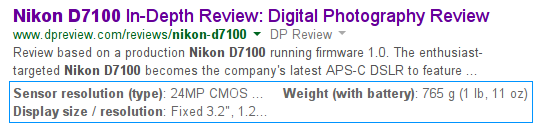
    The Search Engine giant has come up with yet another initiative to offer online searchers a more insightful and hopefully a better experience every time they search via Google. This time it has been named ‘Structured Snippets’ which is kind of self-explanatory. These snippets of information will be displayed for select search terms as facts and data points appearing right below individual search results. To better understand this view the visual example below.

    Structured Snippets

    Fig. shows the search result for Nikon D7100 with the camera core specs tagged as structured snippets.

    Now these structured Snippets that are tagged at the bottom of the original text are not clickable. They merely serve as additional pieces of information helping users to make better decisions without having to follow any links. According to Google, these snippets of information are directly a result of its collaboration with the WebTables research teams. The structured snippets work by extracting information from data tables on a website and then vetting it with an algorithm. This algorithm will test the data for quality, accuracy and relevancy to the search result below which it will be displayed thus authenticating its efficacy. Up to four bits of information can appear under each individual search result, according to an announcement from Google.

    Digital marketers can now take comfort in the fact that their organic search results will have an additional real estate which will cover their pivotal data and facts without any extra effort from their side. Thus, companies purveying goods and services online need to have the key features about their products in their websites so as to assist Google in successfully extracting it. Your readily verifiable objective facts and figures are what will be going into these structured snippets text. All this will give your users a more compelling reason to click your website since now they have a prior knowledge about what you are intending to sell, in terms of hard data.

    So what is your opinion about this new feature from Google, as a digital marketer?


  • Google Offers Adwords Callout Extensions

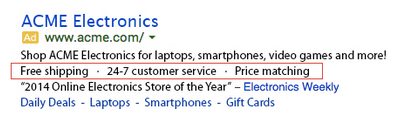
    Google has come up with a new callout extensions for Adwords to the delight of digital marketers. Now your ad copy will have an additional real estate that you can use appropriately. Learn more about Google AdWords Callout Extensions. This new feature from Google immediately makes your ad copy more conspicuous with people knowing exactly what you are selling and what its salient features are. This results in better ROI with higher click through rates.

    Google Offers Adwords Callout Extensions

    Fig. shows a typical callout extension example

    Google can show a maximum of four callout extensions each not exceeding 25 characters including space. But your callout extensions’ eligibility to be shown with your ads is based on many parameters. It depends on how high you are ranked on Google Adwords and on which device your ad is being currently served. Depending on all these factors and looking at your callout extensions content, Google will decide what is the best way to serve it to your viewers. You can set parameters yourself about the ways and geographies where your callout needs to be shown. You can even customize it for mobile devices.

    Your callout extensions will show if your campaign is opted into “Search Network Only” or “Search Network With Display Select” mode. You as a digital marketer can implement the callout extensions at the account, campaign or ad group level depending on your requirement. You don’t have to pay any extra money to Google to display your callouts. Your ad copy with callouts will be served primarily in the space above the search engine organic results. You can edit the callouts independent of the ad copy and when you do so your statistics won’t be affected.

    These callout extensions are not clickable but serve as only additional promotional content displaying your exclusivity and add-on benefits. You can create many callout extensions and Google will decide which ones to serve depending on the ones that are performing the best.  You can add any other information about you that will help your customers to better understand and connect with you. You can choose not to display callouts at all if you may so wish.

    So as a digital marketer do you think callout extensions will add value to your ad copies going forward?

  • Pigeon – Local Search Algorithm update from Google

    One of the biggest updates to local search was announced just over a week ago. The last local search update was on 10/2012 (65-Pack Update).

    SERP feature history

    Image source: Mozcast

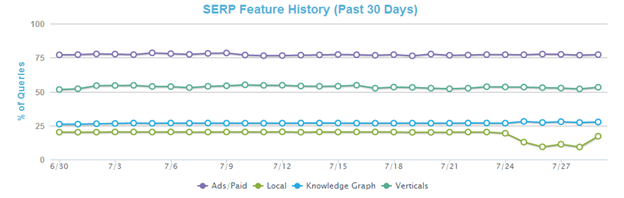
    As Mozcast reports, there has been a decline in local search results over the last week. Linda Buquet, Google Local specialist says that this is a major update and in the future, Google’s local search will have stronger ties to web search signals.

    The Pigeon update will bring in the following changes:

    • More visibility to local search results on SERPs
    • Yelp problem solved – Yelp results will now be included as part of local listing
    • Boost for other local directories

    Pigeon updateImage source: SearchEngineLand

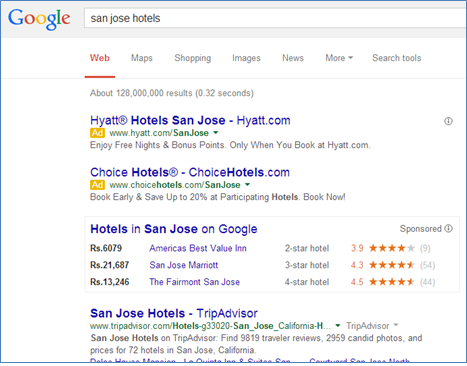
    • Benefit for big directory sites like Yelp and TripAdvisor – they now rank prominently on search results for local search queries

    Penguin update

    This update is currently being rolled out for US English queries and is likely to be extended to other regions. A complete update of Pigeon would have knee-deep effects…

    Looking at this from a SEO perspective:

    • Local search directories get higher visibility
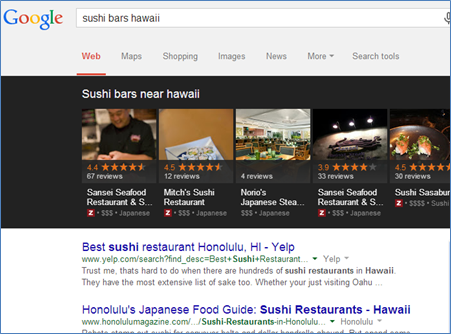
    • Vertical specific big directories will stand out with more benefits. A search on Google for “sushi bars hawaii” now no longer displays the 7-pack results. This is now replaced by top directories.

    Sushi bars Hawaii

    • Website authority will be directly linked to local search results. Google’s intent is to provide useful, relevant and accurate search results to users
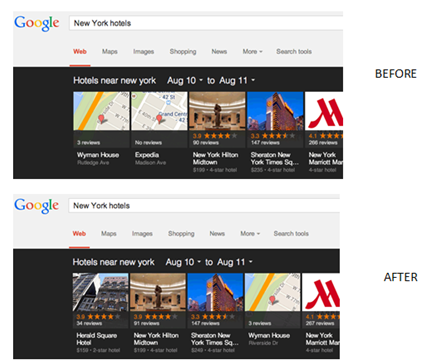
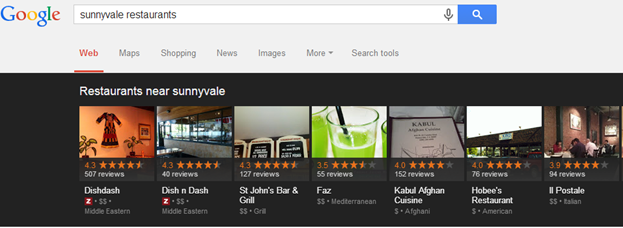
    • Local carousels will be displayed with good images and customer reviews attracting good rankings

    Sunnyvale restaurants

    Position2’s POV

    Although at first glance this update might seem more relevant to B2C businesses, at Position2 we believe it will benefit B2B firms as well. To help our clients (in B2B and B2C worlds), we are rolling out many new initiatives to help with local search. Some of those include:

    • Basic principle of local SEO, i.e., NAP – Name, Address and Placement are not to be forgotten
    • Creation and optimization of listing on Google + Local pages. We share a detailed G+ strategy with our clients and help them implement the same. We see great results from this strategy. However, this has to be managed even after the G+ strategy has been provided.
    • Optimizing on Google Maps to be given importance along with integration of Google Maps and user-generated reviews
    • Customer reviews and ratings to be updated on G+ local pages
    • Having good presence on business-specific local search directories
    • Including schema to help Google show personalized results

    Have noticed changes in your site’s local search rankings? Tell us in the comments box below.

    Stay tuned to Google as the update is still being rolled out!

    Contributed by Chetan Rajasekaraiah, Senior SEO Specialist, SEO team

  • Google Tests Capability to Trace Consumers from Mobile Browsers to Apps

    Google Tests Capability to Trace Consumers from Mobile Browsers to Apps

    Google is looking to close the gap between mobile browser and app users in ad targeting.

    Till now, advertisers were treating the same consumers as two separate individuals depending on whether they were using mobile browsers or apps owing to disconnect between the two tracking technologies. Google is going to start testing a means of targeting tablet and smart phone users by connecting the separate tracking mechanisms for mobile browsers and apps. Google is using the cookie in a mobile browser and connecting it to a mobile app’s equivalent of a cookie.

    Once this connection is established, Google can show the same ads to consumers irrespective of whether they are using mobile browsers or apps. Google can also track consumers who saw an ad in a mobile browser and show a follow-up ad on a mobile app.

    This test will help advertisers to run consistent ad campaigns across mobile browsers and apps by using current anonymous identifiers while users can still keep a finger on their privacy controls on Android and iOS. With this capability, advertisers can treat their target audiences as unified groups instead of treating them as separate entities and setting up unconnected ad campaigns. An added advantage is that the capability to trace consumers from mobile browsers to apps makes use of Google’s 2 million+ strong third-party site network and mobile app ad network, AdMob, which can track users and post ads across hundreds of thousands of Android and iOS apps.

    Being able to track consumers as one will help marketers target them with more relevant ads and avoid repetition. Often, it so happens that consumers would have seen a brand’s ad while browsing the web on their mobile device and later when they use an app, they end up seeing the same ad. While repetition sometimes helps in better brand retention, it can also annoy consumers.

    Google’s ability to show follow-up ads can contribute to more conversions since these follow-up ads are not only new for the consumer, they also prompt them to actually take action after introducing the product to them in the previous ad.

    We would like to know your thoughts on this Google move…leave your comments in the box below.

  • Geo-targeting – 7 Tips to Consider

    It’s a common scenario today for brands to have customers in many countries. But, targeting these customers and engaging them is a challenge, owing to their varying preferences and requirements.

    This is where geo-targeting steps in…

    Targeting customers by location is called Geo-targeting. It’s an important aspect of online marketing especially for brands targeting customers in different geographical locations.

    Geo-targeting helps brands address customers using their preferred language and target them with region-specific offers. This increases customers’ brand affinity, engagement and conversions. Google AdWords provides a variety of options and features for geo-targeting.

    However, there are certain important factors you need to consider while planning geo-targeting campaigns:

    1. Your site’s domain

    Some brands have Top Level Domains (TLD) specific to the country they want to provide information for. A ‘.co.uk’ site is specific to the UK and ‘.co.jp’ is specific to Japan. Country specific TLDs make it easy for Google to understand who you are targeting with your information and lets it rank your website appropriately in location specific search results.

    However, with a generic TLD like .com or .org, your website may not appear correctly in search results because Google doesn’t know which location you are targeting. If no information has been entered in the Webmaster tools, Google will look at multiple signals like the IP address, location information on your page, links to your page and any other relevant information from Google Places and pick your website’s country domain. These may not yield you the best results. With generic TLDs, it’s best to give Google the requisite information to improve search ranking for specific locations.

    2. Choose the right geographical areas

    This sounds like a no-brainer, but it’s surprising how often this is missed. Select geographical areas for your campaigns based on your product availability. If your product is available in certain regions of a country, picking those areas will increase the chances of better ad ROI. With Google AdWords, you can achieve precision targeting by postal code targeting.

    3. Optimize By Exclusion

    Optimize your effectiveness by leaving out areas that are delivering low responses. You can get back to these areas with a revised strategy. After the first run of your campaign, you may notice that your ads have low ROI in certain areas or your products may not have a market in some regions due to geographical factors. You can optimize your ROI by cutting out non-performing areas. Concentrate more on the areas that are generating the highest number of clicks. You can also try bidding less on the areas that have low traction.

    4. Include mobile devices

    If most of your target audience is on their mobile devices for considerable amounts of time, you should geo-target your mobile audience also. If you are using Google AdWords call extensions and tracing a significant part of your conversions through calls, geo-targeting on mobile devices will be even more beneficial for your business.

    People use mobile devices when they are on the go and would be looking for deals that are nearby. Geo-targeting mobile users is highly beneficial because, you can then target them with not only offers in establishments they are close to, you can also roll out geo-specific offers.

    5. Use the appropriate languages and currency

    Matching your web pages’ language with the main languages of the region is a major aspect of geo targeting that influences traffic and engagement. Provide content in different languages and use a drop down menu that allows users to select the language/region they are accessing the site from. This is an effective way to ensure users can consume content easily. Another way to make your site easy to use is to build it so that it reads the user’s IP address and displays content in the main language of that region.

    You also need to focus on the currencies that your site uses to process transactions. Offer the right currency depending on the geographical area the user is browsing from. You can also offer currency options and leave the choice up to customers.

    6. Offer coupons and deals

    The marketing strategy for each market is different. So, it’s important to sync your offers and deals with the visitor’s geographical area. You can either track users’ IP addresses or you can provide menus for users to select from before providing region-wise offers. Localized offers and deals are more relevant to visitors as they cater to specific market requirements and can therefore help in driving conversions.

    7. Run tests

    Everything may not go as planned so it’s best to run tests to see if your effectiveness is indeed going up or whether you need to tweak any part of your strategy. Different people react differently to changes, even minor ones and it’s best to use this as an opportunity to improvise further.

    Do you have anything to add to this? Let us know in your comments!

  • Google Panda 4.0 and Payday Loan 2.0 Algorithms– Implications for SEO

    Google Panda 4.0

    Recently Matt Cutts announced on Twitter that Google had released its Google Panda 4.0 algorithm. This is a major algorithm update and not just a data refresh, which means that Google has probably made significant changes to how Panda identifies websites from now on.

    Google Panda 4.0

    Google Panda History

    Google Panda had been designed to prevent sites with poor quality content from showing up on Google’s top search results and provide searchers with the best results possible.

    The last confirmed Panda update was on January 22, 2013 and had affected about 1.2% of English queries. This time it is affecting approximately 7.5% of English queries and different languages to varying extents.

    Panda 4.0 is considered to be a softer, gentler algorithm change that worked well for only some sites. Google plans to lay the groundwork for future changes in this direction.

    Matts Cutts twitter

    Sites that have been affected by this update

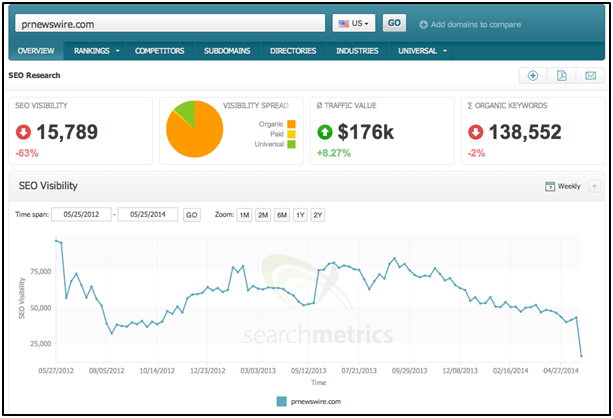
    A study of this list by Search metrics reveals that one of the biggest casualties was eBay, which lost a huge amount of traffic from Google. Another was Ask.com.

    In a recent blog, Barry Schwartz said that even press release sites like PRweb, Newswire, Business Wire and PRLog seem to have lost significant ranking through Google.

    Drop in traffic for PRweb

    From the above image, we see that PRweb had a significant drop in traffic: 71%.

    The winners’ list shows that small business sites have found favor with Google after the Panda update, and many of them have seen an incredible increase in traffic to their websites. Sites that had lost their footing in rankings despite having good quality content because of the Panda 3.0 update benefitted from Panda 4.0.

    How does this affect SEO?

    Until now, we have observed evident changes like:

    • Rank difference: There would be a considerable difference in the rankings on Google.
    • Loss/gain of traffic to the site: Some of the sites lost almost 50%-75% traffic overnight while some gained substantially.

    How to overcome the Google Panda 4.0 effect

    Listed below are some solutions to counter the impact of Google Panda 4.0:

    • Have unique and fresh content on your website. Keep in mind that content needs to be generated for users and not search engines.
    • Exclude keyword hoarding. Do not target all the keywords to one page. Use a combination of long tail/conversational and generic keywords.
    • Remove duplicate content.
    • Do not use keyword stuffed title tags. Keep it natural.
    • Do not overuse keyword rich internal links and keyword rich footer links.
    • Removing doorway pages and cloaking.
    • Avoid risky affiliate marketing setups

    Please remember recovery can take awhile if you have been hit.

    Google Payday Loan Algorithm 2.0

    Along with the Panda update, Google rolled out its Payday Loan algorithm 2.0 that targets ‘very spammy queries’. This is the second version of the Payday Loan algorithm, which is used to combat specific search queries like payday loans that tend to have a high number of extremely spammy results. This algorithm is not related to the Google Panda or Penguin updates.

    Payday Loan algorithm 2.0 is a continuation of Google’s quest to clean up search queries. The algorithm was rolled out worldwide, affecting different languages to different degrees. It has affected 0.2% of English queries. An advantage is that general queries are likely to receive better search results while preventing the appearance of low quality sites.

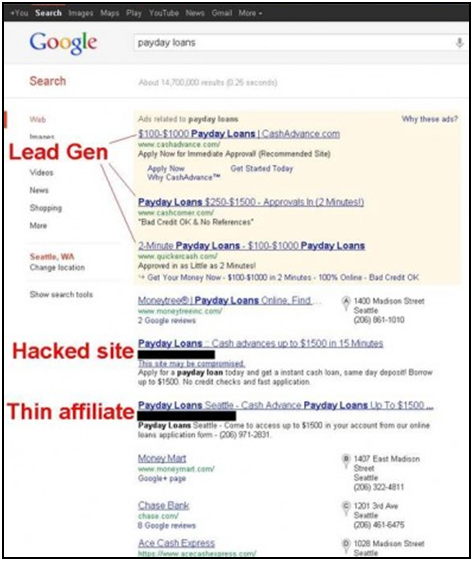
    Recently, spam results started to reappear in payday loans’ Google SERP’s:

    Spam results on payday loans' Google SERP

    Google Payday Loan Algorithm 3.0

    Google Payday Loan algorithm 3.0 was released on June 12, 2014. At SMX Advanced Matt Cutts announced that this would target terms like [payday loans], [casinos] and other forms of highly spammy queries. Payday Loan algorithm 2.0, had been rolled out a week earlier targeted spammy sites.

    However, Matt did not shed much light on the difference between spammy sites and spammy queries.

    Payday Loan History

    The search engine’s original Payday Loan algorithm was first released on June 11, 2013. It impacted roughly 0.3% of US queries and around 4% of Turkish queries, where the volume of webspam is said to be higher.

    Last year, it was noticed that for the search term ‘Payday loans’, a completely different set of results were appearing on the SERPs each day. The Payday loan companies were using domains that consisted of slightly outdated specific search queries. These queries were likely to have a high number of extremely spammy results. In order to keep the best Payday loan companies on top of the SERPs, Google released the Payday Loan algorithm.

    How does this affect SEO?

    • Removal of the sites from Google SERPs that have spammy content on their site
    • Loss of rankings on Google SERPs
    • Decrease in traffic to the website

    How to overcome the Payday Loan effect

    • Avoid optimizing for any terms that would be considered ‘spammy queries’
    • Do not use spammy methods – like cloaking, hacked sites/hacked content, leveraging Google+ accounts and leveraging expired domains – to promote your website
    • Have original, quality content on the website
    • Do not stuff keywords during optimization. Target 2-3 Keywords for a page. You can use conversational or long tail keywords.
    • Keep the title and description as natural as possible.

    Have anything to add to this? Post your comments below.

    Contributed by Susanna Varghese, Junior SEO Analyst