Tag: Google

  • Google+ Offers A New Design In A Relaunch


    It’s no secret that Google+ has been struggling as it tries to connect with users. It has been a difficult few years as Google tried to compete with other social media platforms like Facebook and Reddit. With its recent redesign and the addition of a few new features, Google hopes to boost the platform’s user base in several different ways. Here are some changes you might see the next time you log into your Google+ account.

    Communities

    Many users had asked Google to add a “Communities” feature, to allows users to connect with others based on their interests and hobbies. Whatever your interests may be, the new design makes it much easier to meet people who share those interests. Over 1.2 million users have started using the new Communities feature every day since its introduction—a major change from the somewhat isolating feel of Google+’s “Circles.” The overall Google+ community has always been its strongest point, and this new feature allows a greater sense of connection.

    Collections

    Also geared toward users’ interests and ways to connect with others, the Collections feature of Google+’s new design allows users to find content based on topics that they might be interested in. This is a great feature that social platforms like Facebook and Twitter do not offer—users are solely reliant on what their friends and connections post rather than what they might be inclined to read. The Collections feature is supposed to resemble Pinterest in the way that groups of users can post on a specific topic and share it with the public or with just friends. It’s an easy way to group content and to make it easier to find while providing a social experience.

    Google hopes to create a different kind of social platform unlike what users might currently be using. While over 2.2 billion people have a Google+ account, fewer than ten percent of users have ever posted anything on the site. Many Android phone users (or those with YouTube accounts) were required to sign up to continue using the services, though the platform was rarely used for what it was actually built for. A new homepage design now allows you to not only see what your friends have posted, but also some posts that you might be interested in.

    With a new design, Google executives hope to start over with a clean slate. Wrobleski writes, “While this is an exciting new beginning for us, we’re definitely not done yet.”

    By not trying to do the same things as Facebook and Twitter, but rather by adding community-oriented features similar to Pinterest and Reddit, users are more likely to appreciate the benefits of Google+’s design and what it has to offer. This makes the Google+ relaunch one that may offer more of what users are looking for, in a different kind of social platform.

  • Meta Data Optimization For Online Visibility


    Content may be King, and it is a primary factor for successful SEO. And it’s what marketers all round the world push to boost online visibility. But its only one part of the story.

    Content comes in many forms – web pages, blogs, articles, rich-media assets like PDF, PPT or infographics. Its real power is released in optimization, then syndication.

    Use meta data to optimize content for search engines. Search engine crawlers look at meta information to understand what the page is actually about, affecting your search result ranking.

    Here are the different kinds of meta data optimization:

    1. Web pages
    2. Blog posts
    3. OGP (Open Graph protocols)
    4. Rich-media assets

    Web-page properties which can be optimized include:

    • Title
    • Description
    • Keywords
    • URL
    • Image Attributes

    web page properties

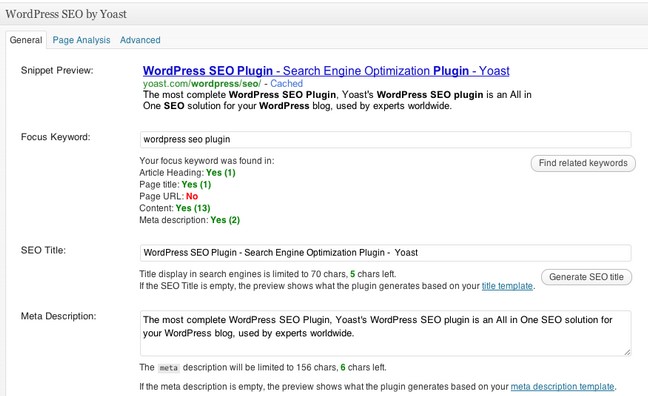
    Optimize blog posts much like web-pages. If the blog is on a popular CMS like WordPress then optimization becomes relatively easy with plugins like Yoast.

    WordPress SEO plugin by Yoast

    OGP (Open Graph Protocols) include optimizing the HTML in the <head> section of the page:

    • og:title
    • og:type
    • og:description
    • og:image
    • og:url

    Optimize rich media assets like PDF’s by adding document properties such as title, author, subject and keywords.

    Necessary document properties

    Sites can be optimized using structured meta data and mobile metadata. The viewport tag found in the head section lets search engines know about mobile sites. Google Developers lists information about viewport tags and mobile optimization techniques.

    Effective optimization requires technical expertise and close co-ordination between digital marketers and developers. On-page optimization as well as all of the factors listed above are key to successful SEO and need to be considered when optimizing a site.

    Share your thoughts in the comments section.

  • A Is For Alphabet, G Is For Google

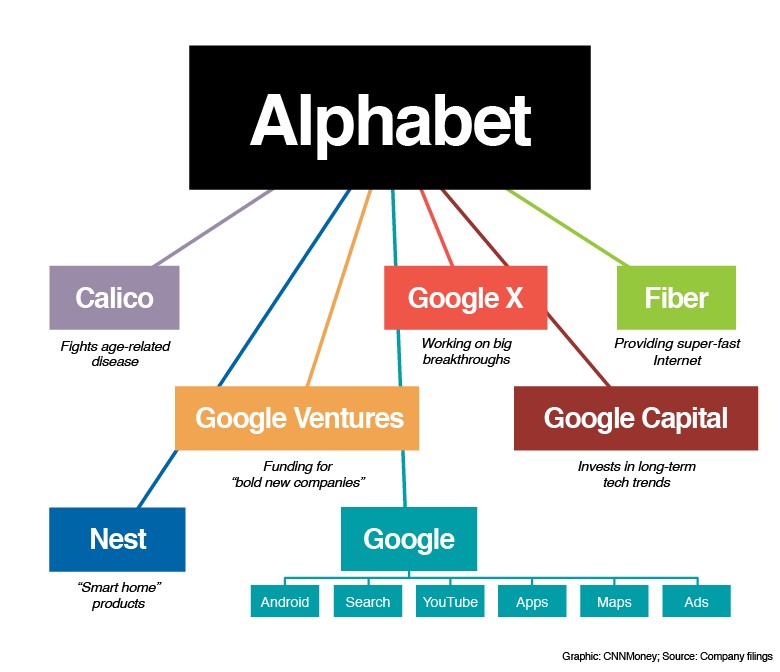
    Google announced on Monday that it would rebrand itself as Alphabet – a new holding company whose largest wholly owned subsidiary will be Google. Larry Page and Sergey Brin, Google’s co-founders, announced a radical shake-up of the company’s corporate structure and management. Sundar Pichai will control the core search engine business.
    The new holding entity, Alphabet, will preside over various subsidiaries, the largest of which is Google. All shares of Google will automatically convert into corresponding shares of Alphabet, which will continue to trade under the stock ticker symbols GOOG and GOOGL.
    Page will become Alphabet’s CEO, Brin will be its president, and Eric Schmidt will be the executive chairman of Alphabet. Ruth Porat will be its CFO, and David C. Drummond will be the chief legal officer and secretary. The company’s chief business officer, Omid Kordistani, will step down and become “an advisor to Alphabet and Google”, according to the company’s SEC filing. Page, Brin, Schmidt and Drummond will leave Google, whereas Porat will keep her CFO role there and Pichai will take over as CEO.

    alphabet

    Neither Google nor Alphabet owns the domain alphabet.com — BMW does. Alphabet is part of the BMW group and a business mobility solution with a focus on fleet management and financing. BMW’s Alphabet was founded in 1997, so it’s unlikely that the company will give up its long-established domain name.

    Alphabet’s new address https://abc.xyz/ also eschews convention.

    And on a lighter note…

  • Cortex: Twitter Ramps Up Its Artificial Intelligence Efforts


    The hunt is on at Twitter for engineers to ramp up the company’s artificial intelligence efforts. It calls the new team “Cortex.” After acquiring DeepMind in 2014 Google has been doing a lot of work with artificial neural networks. And Facebook CEO Mark Zuckerberg has flagged artificial intelligence as one of the company’s key initiatives. So it’s no wonder that Twitter wants to enlist architecture and systems software engineers to work on “Deep Learning”,

    Wikipedia tells us that “one of the promises of deep learning is replacing handcrafted features with efficient algorithms for unsupervised or semi-supervised feature learning and hierarchical feature extraction.” Twitter’s Cortex team will mine this specialized branch of artificial intelligence to help the company better personalize its service for its 300 million users, and keep up with Google and Facebook in the industry’s real-time personalization race.

    Twitter’s job listing explains why it needs artificial intelligence and how it views the new Cortex team:

    “Twitter is a unique source of real-time information, offering amazing opportunities for automatic content understanding. The format of this content is diverse (tweets, photos, videos, music, hyperlinks, follow graph …), the distribution of topics ever-changing (on a weekly, daily, or sometimes hourly basis), and the volume ever-growing; making it very challenging to automatically and continuously expose relevant content. Manually defining features to represent this data is showing its limits.

    “Our team, Twitter Cortex, is responsible for building the representation layer for all this content. As an architecture engineer at Twitter Cortex, you will help us build, scale and maintain the backbone of our online learning systems, and directly impact the lives of our users and the success of our business.”

    Twitter may not have the resources of Google or Facebook, but the Cortex group demonstrates that Twitter is a serious AI contender. For Twitter, AI capabilities could translate into new products and features and breathe life into stalling user growth. If the flood of content generated on Twitter every hour can by presented as a personalized feed to each user based on their interests then Twitter might just strike gold.

    Let us know your thoughts about how artificial intelligence can revolutionize the digital social media world.

  • Google Trends: A Real Time Window On The World

    Google-trends

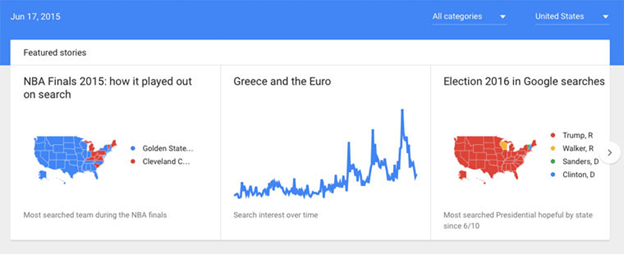
    Google Trends. It’s all about real-time minute-by-minute data on trending searches. On average Google processes over 40,000 search queries every second. That’s over 3.5 billion searches per day and 1.2 trillion searches per year worldwide. Google’s recent changes ensure that users get:

    1. Real-time data
    2. Story-centric Homepage
    3. Better coverage for deeper insights
    4. Curated data sets

    Real-Time Data

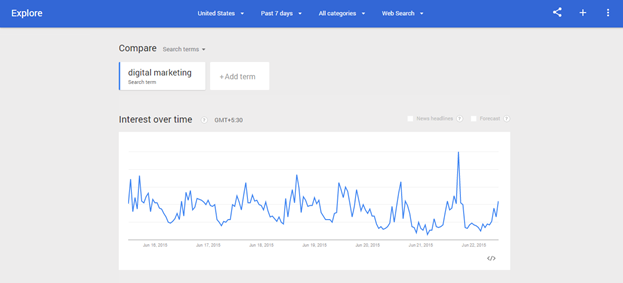
    Marketers can explore minute-by-minute, real-time data behind the billions of searches that take place on Google every month. Go to Google Trends and explore this data by selecting any time range in the last week from the date picker.

    Story-Centric Homepage

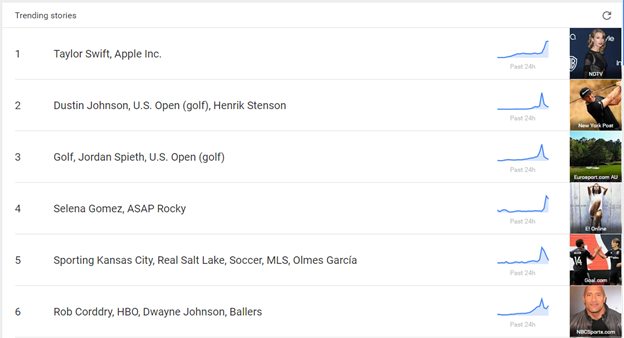
    Google now combines Search with YouTube and Google News to better understand what topics and stories are trending across the web right now. The Google Trends homepage ranks lists of trending stories that are gaining traction across Google, real-time.

    Trending-stories

    Better coverage for deeper insights

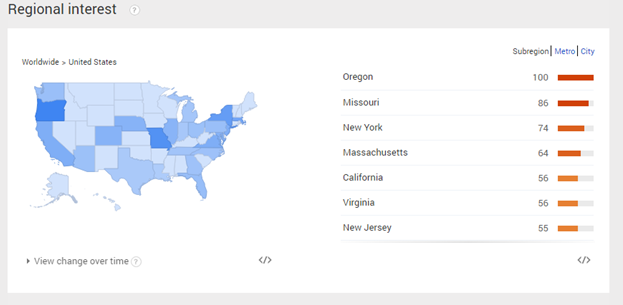
    Google has increased the breadth and coverage of Google Trends data to allow for in-depth research on more niche topics in smaller geographies.

    trends-data

    regional-interest

    Curated data sets

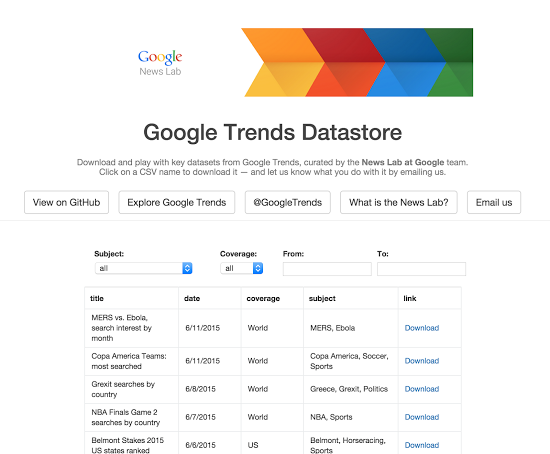
    Google News Lab team examines trending topics every day to figure out which pieces of data brings to life a headline or story. This helps marketers understand what’s likely to work when telling stories using data.

    google-trends-datastore

  • Google I/O 2015: Some Highlights

    Google I/O, the annual event for developers – those creative coders busy building what’s next – unveils the latest in tech, mobile & beyond, a la Google.

    Keynote

    The keynote address at Google I/O by Senior Vice-President of Products, Sundar Pichai

    Project Jacquard

    project-jacquard

    Paul Dillinger of Levi Strauss on stage at Google I/O 2015 talks about Project Jacquard and the association between Google and Levi’s. Image: levistrauss.com

    Google Advanced Technology and Projects (ATAP) has come up with touch-sensitive fabric. It’s a combination of conductive fibers woven into fabric that enables the embedding of sensors in your clothes.

    Project Ara

    Project Ara makes smartphones modular — you build the smartphone you want by adding modules such as display, camera, processor, battery, etc. No more obsolescence every few years. On day 2 of the conference, at the ATAP keynote, Google engineer Rafa Camargo assembled a Project Ara phone in real time, and the phone went live, running on Android 5.0 Lollipop. While the phone was switched on, Camargo added a new camera module to the assembly, no rebooting required.

    project-ara

    Project Vault

    How to guard secure data while accessing it? That’s where The Vault comes in, a mix of cryptographic tools and a custom real-time operating system on the memory stick.

    We barely scratched the surface of Google’s vast range of product concepts and prototypes unveiled and demonstrated at Google I/O by Google ATAP. We’ll be carefully watching for the entire year ahead.

  • Best of the Week | Google Algorithm Update: Say Goodbye to Doorway Pages, and much more…

    This week’s hot news, events and videos from the online marketing and social media world.
    Personalized Search
    From the Position² Blog This Week:
    Google Algorithm Update: Say Goodbye to Doorway Pages!
    Google abhors black hat SEO techniques is an understatement. The latest instance is the tweaking of Google doorway page penalty algorithm to make it more stringent. Go through this blog to ensure you are not caught on the wrong foot.
    Top Stories this Week: Social Media
    Top Stories this Week: SEO, PPC and Digital Media
    A Universal SEO Strategy Audit in 5 Steps - Whiteboard Friday Best of the Week Video
    Watch this YouTube video that gives you useful tips to choose the right keywords for your Google AdWords success.
    White Paper: The Rapidly Changing World of SEO
    Get a head start in your quest for search engine optimization by going through this insightful white paper. Download this White Paper to know:

    • How important SEO is & why it should concern you?
    • Various ways in which you can deploy SEO
    • How to combine Social Media with SEO?
    • SEO best practices and a road map to getting there

    Download the complimentary SEO White Paper now

    Search-Engine-Optimization-White-Paper-position2
    If you are reading this blog post via a RSS reader, please click here to subscribe.
  • The State of Marketing Technology

    Today technology is used in every facet of marketing. Marketing as a discipline is changing and marketers need to adapt to the changing technology landscape. IDC predicts, spends on marketing technology will reach $32.3 billion by 2018. According to credible sources, 65% of senior marketing executives plan to increase marketing technology spends.

    With so much marketing technology around, marketers at times can get overwhelmed. There are so many companies selling marketing technology that there is too much gratuitous stuff out there. Due to this most marketers till now have steered clear of marketing technology and this is the reason why its adoption and implementation is abysmally low.

    Now this is clearly a wasted opportunity since most marketers who have adopted marketing technology have reported rapid and significant improvements in ROI. In order to help marketers make the most of this technology we provide a set of programs that every company needs to give a serious thought, in an effort to scale leads, opportunities and ultimately revenues.

    Search Engine Marketing

    Search engine is one of the most important avenues through which users arrive at your website. Search engine marketing helps you to get more qualified leads through both search engine optimization and pay per click advertising. Your landing page becomes all the more crucial if you have to convert your leads to conversions. You have to give your users what they are seeking in a simple yet effective manner. There might be a need to test different landing pages depending on who you are targeting. Technology can help you do this in a dynamic and cost effective way. There are specialized tools for programmatic buying, attribution systems, tracking systems, consumer insights, conversion optimizers, campaign management, reporting and dashboards.

    search marketing

    Remarketing

    Remarketing is a very effective use of technology in order to follow your website visitors to other resources on the internet. You can target people with specific offers who have shown interest in particular product or service of your company. The conversion rate is high in this type of targeting since you already know what people are looking for. You can easily set up the technology needed to implement this in your digital marketing campaigns.

    remarketing

    Conversion Optimization

    When a visitor finally lands on your website it is expected that you convert the users into what you want them to do. This could be filling out a form or at least collecting their email addresses. But for that you need to have the right strategy in place like an outstanding offer or a marketing app that can do the trick for you. Conversion optimization technology can help you do this with minimum human intervention.

    conversion optimization

     Analytics

    Analytics helps you understand where your marketing dollars are going and how effective it is in improving your company’s revenue. There are many tools available today that can measure the performance of your ads, offers, digital channels and technologies. This way you can only pursue the campaigns that makes sense to you and scale down or end those campaigns that don’t.

    Google Analytics is the most widely used analytics tool. You can analyze your return on marketing investment or ROMI, using the marketing intelligence platform MiDash.

    analytics

    Marketing Automation

    Marketing automation is a class of software that automates, streamlines and measures marketing tasks and workflows. All this helps companies to increase operational efficiencies and scale revenues faster. Marketing automation can be thought of as the technology that brings it all together. It includes among other things, analytics, tracking, and online forms.  You get a clear picture of what people are doing once they land on your website. This way you can personalize your website content, create better email campaigns and bridge the gap between sales and marketing. You can send automated alerts to customers, nurture lead scoring using information from your CRM tools and third party sources.

    marketing_automation

    This is the state of marketing technology today and things can only get better! Let us have your views on marketing technology and its various benefits!

    Contact us to deploy marketing technology for your business now!

  • Personalized Search

    A personalized search reaches beyond the user’s initial query by incorporating information gleaned from his digital history of interests. There are at least two ways in which personalized search can be delivered: modifying the search query, and re-ranking the search results.

    The search engines of yore catered to all users in the same way. Not so today. The search engine learns about the user profile from the individual’s search history. This profile is then mapped to a set of categories that the search engine accesses to make sense of the query. In effect, the search engine disambiguates keywords in order to serve up what the searcher is actually looking for. With this level of personalization, search engines provide different results for different searchers.

    Google first introduced personalized search in 2004 and began actively implementing it in 2005 in the Google search results. Various factors come into play when personalizing a user’s search results, like the location of the user, the search language and the user web history.

    Search engines today want to reach beyond what you type in the search box. They seek to understand what your intent might be in order to give you exactly what you want. Or, what they think you want. To do this they use information you have provided, either wittingly or unwittingly, to create user profiles, or personas. The search engine then utilizes the persona to target information in a way that best serves your perceived interest.

    The more often you visit a certain web page, the more Google believes that you like that page. Your behavior is duly noted and used to optimize future search results. The next time you search, a page which you have been previously visiting with regularity is likely to be shown more prominently. Herein lays both advantages and disadvantages of just such a likelihood.

    Finding new information becomes a major disadvantage of personalized search. You will be repeatedly shown the same results because that is what you always click on. It’s in your history. This naturally narrows your information exploration on the web. The problem is called ‘filter bubble’ and it means that people are letting search engines decide what the users want to see and what they don’t want to see. In the extreme case the user becomes confined to his own ‘filter bubble’ and is cordoned off from the rest of the information out there on the Internet.

    Extrapolate this to a community level, and the consequences become troubling. As certain search results are bumped up and more and more people view them, the favored results become more prominent, and the ones not so favored are removed from the listed search results. When this happens collectively the society as a whole will likely have a skewed perspective of a particular topic. It gets Orwellian without much effort. He who controls the search engine controls information.

    Google uses Google News to personalize your search. The first few results for a specific news query would likely be the same to all viewers. But as you scroll down, the results begin to differ. Google takes your past searches into account and your location and gives you local news that may matter more to you. This could be useful. But the potential disadvantage is missing what may be important news from farther afield.

    The average person’s attention span is 8 seconds, so personalized search helps to quickly sift through the blocks of data that search engines throw up. Personalization saves time and significantly improves the quality of the search. It can also help search engines display highly targeted (“personalized”) advertising — the best deals, offers and discounts, depending on an individual’s interests – the idea being that the consumer finds what he is looking for faster and with all the relevant information displayed more prominently.

    Contact us to deploy personalized advertising campaigns!