Blog

  • Google Offers Adwords Callout Extensions

    Google has come up with a new callout extensions for Adwords to the delight of digital marketers. Now your ad copy will have an additional real estate that you can use appropriately. Learn more about Google AdWords Callout Extensions. This new feature from Google immediately makes your ad copy more conspicuous with people knowing exactly what you are selling and what its salient features are. This results in better ROI with higher click through rates.

    Google Offers Adwords Callout Extensions

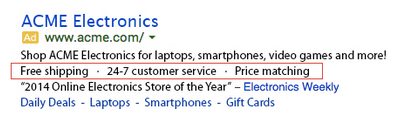
    Fig. shows a typical callout extension example

    Google can show a maximum of four callout extensions each not exceeding 25 characters including space. But your callout extensions’ eligibility to be shown with your ads is based on many parameters. It depends on how high you are ranked on Google Adwords and on which device your ad is being currently served. Depending on all these factors and looking at your callout extensions content, Google will decide what is the best way to serve it to your viewers. You can set parameters yourself about the ways and geographies where your callout needs to be shown. You can even customize it for mobile devices.

    Your callout extensions will show if your campaign is opted into “Search Network Only” or “Search Network With Display Select” mode. You as a digital marketer can implement the callout extensions at the account, campaign or ad group level depending on your requirement. You don’t have to pay any extra money to Google to display your callouts. Your ad copy with callouts will be served primarily in the space above the search engine organic results. You can edit the callouts independent of the ad copy and when you do so your statistics won’t be affected.

    These callout extensions are not clickable but serve as only additional promotional content displaying your exclusivity and add-on benefits. You can create many callout extensions and Google will decide which ones to serve depending on the ones that are performing the best.  You can add any other information about you that will help your customers to better understand and connect with you. You can choose not to display callouts at all if you may so wish.

    So as a digital marketer do you think callout extensions will add value to your ad copies going forward?

  • Creatives in Today’s World

    We all know that visuals are an attractive aspect of digital marketing collateral. But within the world of creative development, what are the skills required and trends observed to succeed? Where is the world of creative development heading?

    Recent research indicates that app development and 3D modeling are must-have skills. This is partially true. However, creative development is such a diverse area that each sub-domain under creative development requires different, in-depth specialized skills.

    Rajesh Muthyalu, Creative Director at Position2 sheds more light on the current scenario in creative development. Here’s what he had to say:

    Team Position2: Creative professionals thrive in a rapidly changing world…how do you keep up to date with all that’s happening?

    RM: It is our job to know what is happening and so we consciously spend time to stay updated about the latest developments. We subscribe to select newsletters and follow trends on leading websites. We ensure that everyone in the company has access to this information.

    We strongly believe in knowledge sharing and update everyone in the team with new trends. Importantly, we look at new trends through the filter of usability. We are also active on relevant LinkedIn groups through which we gather updates about important webinars on design trends. The team attends these webinars to stay updated.

    Team Position2: What is your take on mobile specific designs and usage of responsive technology?

    RM: At Position2, we use responsive design technique. It is better than mobile specific designing because there are a variety of screen sizes in the market. We incorporate new aspects like long scrolling, which have come into being due to smaller screens that necessitate more scrolling. Also, for mobile based Landing Pages (LPs), we follow best practices like shorter forms, less images and so on to facilitate better user experience and faster loading speeds.

    Team Position2: How do you believe the B2B industry is keeping up with the change in creative development?

    RM: B2B industry does embrace new trends in creative development like scrolling and single page website. But the adoption is slower and not to the extent of B2C because of the difference in the nature of the target audience. B2B targets industry professionals who are short of time and expect information to be readily available in one place. B2B designs need to follow specific wireframes where all the important information has to be seen on the home page in the form of top menu bars and such. We can and do implement new trends in the B2B industry also but the focus is on doing what’s best for a client.

    Team Position2: When we think of creative teams, we imagine a bunch of creative professionals brainstorming and writing on a piece of paper or a whiteboard. How does the Creative team at Position2 work?

    RM: We first get an initial brief about the client, which includes details about their target audience. Next step is to have a Q&A session with the client. We then have a strategy meeting where team member comes up with creative ideas separately. We always encourage input from everyone, because anyone can come up with a great idea. We then discuss each person’s ideas, vote and pick the most appealing ones.

    Before beginning the creation process, we create a single reference document with approved final ideas. The ideation process involves developing multiple wireframes, copy and obtaining client approval for the design and copy. Once we get the approval, we plunge into the creation process, post which we employ a stringent QC process that includes multiple rounds of internal and client QC. The final design includes inputs from all the relevant people without compromising on creativity or usability.

    However, our creative process can be customized based on asset and client requirement.

    Team Position2: Have you adopted the use of smart devices to help you do great creative work?

    RM: Depending on the requirements, we use latest devices during the creative development process. Testing for all scenarios is done using different updated devices and technology.

    Team Position2: How do you take decisions? Do you trust your intuition or would you prefer to rely on research? Do you like to break away from rules and create new trends or do you stick to existing trends?

    RM: We check designs with industry trends and see how they compare. We always give first priority to usability, because, as designers we can adapt quicker to new trends than users. It is important that we don’t leave users behind because we have evolved faster than them.

    Team Position2: How has the creative field evolved over a period of time?

    RM: Not much change has happened in the last 2 years, and in the B2B industry, change is relatively slower than in B2C. In B2C, technology and trends change much faster. Lately, more changes have happened in B2C than in B2B.

    Team Position2: What new skills are in demand in the creative field?

    RM: For videos, skill in using Adobe After Effects, Adobe Premier Pro, Adobe Flash and Cinema 4D is necessary. We use technologies based on the time available to deliver. Sometimes, we use all the above technologies to create a video.

    For infographics, static banners, ads and LP designs, we use: Adobe Photoshop and Adobe Illustrator. Animated banners and ads require expertise with Adobe Flash.

    And every designer needs to understand basic HTML to design web pages. He/she also has to have knowledge of HTML 5 and basic design guidelines.

    Team Position2: “Traditional media restricts you because of guidelines (TV – time, print – space)…but social is where creativity thrives because you have more freedom. According to recent research, social media/ mobile friendly designs inspire to create. Is this true or do they restrict creativity? What are the main sources of inspiration for you?

    RM: Social media gives immense freedom and flexibility to create wonderful campaigns and helps you get to a whole new level.

    But there are certain social media platform design specifications that have to be followed. We subscribe to these updates from all the major social media sites and stay updated. Also from the viewpoint of development, in digital media, you can change content anytime, even if it is live.

    Testing results on digital will help optimize collateral better. However, one drawback is that you will lose out on visibility and engagement if you make changes in videos and upload new ones.

    Team Position2: How important do you think 3D modeling is as a trend? How are companies/ clients going to benefit from that?

    RM: Rather than a common trend, 3D modeling is used based on the industry the company is from and what their requirement is. 3D modeling more suited for certain industries than others. For example, 3D modeling is a great technique for the automobile industry.

    Team Position2: How do you keep your team updated in terms of knowledge and skill sets?

    RM: Always, emphasis is placed on the team having basic understanding of all creative technologies. Depending on the sub-domain the person is working in, he/she needs to go deeper into their respective field. The team attends relevant webinars and training sessions based on the skills required. But, as said earlier, usability and creativity are most important.

    Team Position2: Do app development and 3D modeling enhance the appeal of creatives?

    RM: We develop a lot of apps for our clients. In any medium, creative appeal is the combined function of technology, powerful visuals and copy. Based on the medium and platform used, you need to pick visuals, animation or copy to be highlighted to enhance appeal.

    Team Position2: What role do mobile devices play in creation and inspiration?

    RM: Mobile device aspects like Flat UI, no bevel, embossing and iOS have inspired creation and changed design trends. Since we need to consider load time and usability on mobile devices, it changes the design. Responsiveness that has come into play because of changing mobile device screen sizes has also impacted design.

    Before I sign off, I would like to say that, “We have seen simple, sleek and flat designs. Now, it’s time to design using responsive framework since users are spending most of their time on mobile/tablet devices. Flat designs and long scroll approach with parallax scrolling will become even more popular. We need to focus more on UI/UX than latest trends keeping best practices in mind especially in the B2B space.”

    That was really informative Rajesh. Thank you!

    Marketers, what is your opinion about the field of creative development today?
     

  • How will Amazon Ad Network Affect Digital Marketers

    Amazon's Ad Network

    Amazon is bolstering its ad network on the Internet with renewed vigor in order to give the industry veterans like Google a run for their money. Amazon recently manifested its serious intent to be a big player in the online advertising arena with the takeover of Twitch, a video game live-streaming site for almost a billion dollars! Learn more here about why Amazon paid such a hefty price for Twitch.

    The Amazon ad network is not just a list but it is much more than that. Amazon has a massive database of consumer shopping patterns on the Internet and marketers can use this to their advantage for targeting ads to the specific consumer group in order to make the maximum impact. Retargeting is a marketing idea that really caught the fancy of marketers in 2014. But the problem with retargeting is that you need to get the consumer to visit the appropriate site before you can remarket to him/her.

    The novel idea here is to pre-target the consumer by using massive Amazon algorithms which predict consumer buying and activity patterns and gives you important metrics on who might be open to evaluating your product. Now Amazon here has an edge over Google, since Amazon is basically a consumer-oriented company and hence they have better leverage over consumer buying behavior. It’s the next wave of advertising which digital marketers are waiting with bated breath that is not just about people searching for products but introducing people to products.

    The amount of data that Amazon has is staggering. Currently it uses this to its advantage to improve conversion rates on its site. “Conversions are our key metric” – is a quote from Amazon’s 2013 annual report. Now this speaks volumes about the amount of data that digital marketers can lay their hands on in order to achieve better conversion rates, as well. Marketers can take comfort in the fact that hitherto unheard levels of targeting can be achieved just by partnering with Amazon. Consumer data is the holy grail of marketers and currently Amazon is sitting on a mother lode of such data on the Internet. Thus Amazon with its deep pockets can change the game for good, forever.

  • Programmatic Buying, Better Clicks with Search Ads and much more…| Best of the Week

    This week’s hot news, events and videos from the online marketing and social media world.
    Defining the Concept of Programmatic Buying
    From the Position² Blog This Week:
    Defining the Concept of Programmatic Buying
    Programmatic buying is slowly but surely gaining traction in the online world. It has its own set of advantages over traditional buying when it comes to purchasing online display inventories. Read this insightful blog that delves deeper into this topic.
    Top Stories this Week: Social Media
    Top Stories this Week: SEO, PPC and Digital Media
    Best of the Week Video Best of the Week Video
    An excerpt from a MarketingSherpa Email Summit panel discussion. The panelists discuss about responsive email design and ways to enhance end-user experience irrespective of devices used.
    White Paper: Increase Visibility for Your Content by 4x
    Today’s traditional SEO is inadequate: Ignite your search results by accelerating visibility in more places than ever before.Download this White Paper and learn:

    • SEO, why the way we know it is not enough
    • Introducing and implementing Enterprise Visibility Accelerator (EVA)
    • Using multi-channel tracking tools for effective monitoring
    • How EVA benefits businesses.

    Download the complimentary EVA White Paper now

    Know more about Enterprise Visibilty Accelerator(EVA)
    If you are reading this blog post via a RSS reader, please click here to subscribe.
  • LinkedIn Gives Users Control Over Their Data and Facebook’s New Ad Format Gives Brands Better Visibility

    LinkedIn

    LinkedIn has decided to be more transparent when dealing with your user data. You can now request data about your account from LinkedIn and within 72 hours you will get a host of information that you can use as you deem fit. This information includes Registration information, Login history, email history, your first degree contacts, photos that you have uploaded and a lot more.

    So how will this help LinkedIn Users? It is going to be hugely beneficial for users since they can now keep a close tab on their accounts with a little help from the social networking site. You can now manage your account better and make the best of it for networking in a more professional way.

    LinkedIn has been steadily growing its user base over the years. The networking site is being used by people more for professional interactions rather than personal associations. So this tool now will immensely help professionals to keep track of their online identity. You can now get all your information, contacts, interactions, uploads and related things in one place. This feature from LinkedIn puts you in the driver’s seat.

    It also offers the users an added sense of security. You can find out anytime about all the places and terminals from where your account has been logged into. You can also remotely log out. If your password is changed you will know exactly which device and IP address initiated that change. For more security related features please visit LinkedIn Developers’ Blog.

    So how exactly do you think this new feature is going to help your LinkedIn Profile?

    Facebook

    Facebook has launched new ad formats through which users can display their events more prominently. This is particularly of interest to the marketing community who can now exploit this new feature for pushing better ad formats irrespective of the platform. Brands can display their events in both desktop and mobile news feed now.

    The social networking giant has also given a host of metrics to you as a marketers through which you can gauge the amount of attention that your event receives. You get a detailed report of the amount of people who had a passing acquaintance with your event link, the number of people who actually viewed your event and the response of the people who viewed it.

    Brands can actually leverage this events feature from Facebook to their advantage. Just creating an event can help you garner that much more eye balls. Learn more about how to get started with Facebook Events to catapult your brand online. Now if this event is an RSVP for some online tuning in for your brand showcase then you can actually capitalize on it. But it has to be used with caution since creating events for every little thing might actually work adversely against you since people do not have the time or the patience to view everything that you post.

    Though, it is a powerful conduit for your brand online without a smidgen of doubt. If you stick to a few standard tips on how to harness this feature on Facebook optimally then you can have a whole new set of customers who will be hanging on every word that you say.

    So will you be using this feature from Facebook for better brand visibility?

  • Defining the Concept of Programmatic Buying

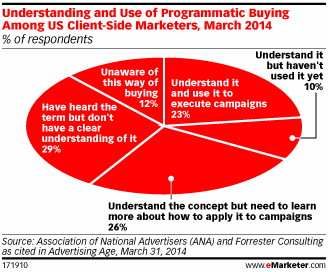
    Programmatic buying is gaining increasing traction lately. Recent research shows that programmatic ad buying is going to increase in the coming years Programmatic buying

    Many marketers are showing a lot of interest in programmatic buying. They are seeing it as a useful tool and want to know more about it.

    What is Programmatic buying?

    It is a system that allows buyers to purchase online display inventory from multiple sources such as, ad networks, ad exchanges and a few direct publishers.

    Programmatic Buying is different from the traditional form of media buying that is done by individuals. This software driven approach to media buying comes with a host of benefits from speed to versatility to effectiveness that makes it attractive to marketers.

    Programmatic Buying Process

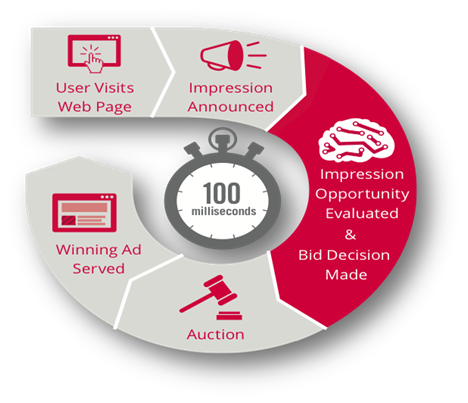
    Here’s a graphic that depicts the process of programmatic buying:

    Programmatic buying process

    Source: Ogilvy grow (a Demand Side Platform or DSP)

    The entire cycle of ‘bid-call-response’ illustrated above happens in real time and is completed within a timeframe of 100 milliseconds.

    Advantages of Programmatic Buying

    • Single Platform Execution – programmatic buying is a one stop solution to bid on online display inventory across multiple marketplaces
    • Enhanced real-time targeting capabilities for optimization – programmatic buying allows you to implement numerous strategies such as:
      • Behavioral targeting: you can utilize first party data captured on your website (IP address, cookie pool, user demographics) and third party data segments bought from Data Management Platforms (DMPs) like Bluekai and Lotame that will let you maximize campaign reach
      • Audience or affinity group targeting: you can buy specific, appropriate audience groups and not irrelevant audience on websites. With audience analysis and segmentation, you can ensure increased reach with effective utilization of your spend
      • Keyword contextual targeting: your ad will be featured on web pages that include specific, contextual keywords related to your campaign
      • White-listing: you can create and use a white list of sites that have shown impressive performance in previous campaigns
      • Re-targeting: you can re-target audience segments that have visited your site but did not take up any further action. This strategy is mostly used to engage your audience better and help them progress along the buying funnel
      • SEM re-marketing: this tactic allows you to re-market to audience segments that are using campaign specific keywords on search engines
      • Lookalike audience targeting: you can target audience groups with characteristics similar to customers who have completed the sales cycle
      • Process transparency: The entire process is transparent, which includes real-time reporting, allowing you to have full access to all imperative metrics related to the promotional activity
    • Programmatic buying provides the capability to post edits on the DSP, which is mirrored across the campaign’s reach in real time. Programmatic buying’s artificial intelligence based approach without human weaknesses (subjectivity, inconsistency etc.) makes it sound like the best of both worlds

    Its early days and the jury is still out.

    What do you think about the capabilities of programmatic buying? Do you think it will help marketers run better performing campaigns and derive more ROI?

    Technical contribution by Kishore Kangokar, Group Head- Media, Position2 Inc.


  • Twitter Opens Analytics to All Users and Facebook Allows Advertisers to Target Mobile Users by Bandwidth

    Twitter

    The micro-blogging site has given all users access to its analytics feature. This was initially limited to advertisers, Twitter Card publishers and verified users only.

    Twitter Analytics provides real time insights into how your tweet is performing by showing you the impressions, clicks, retweets and replies for each tweet. You can also get a report on monthly engagement and engagement rates for your account and download Tweet metrics.

    This has been an eye-opener for many users since they realized that their organic reach and engagement rates are not at par with their expectations. But, in the future, this could be a very useful tool to measure your Twitter campaigns.

    The Analytics feature is available to people who tweet primarily in English, French, Japanese and Spanish and who have had an account for at least two weeks. Twitter is looking out to extend this service to the rest of the users, though the company did not specify a time frame.

    Twitter has become very popular in recent times, for news dissemination, joining forces for a crucial cause and the like. The analytics dashboard will help you gauge the reach and engagement of every tweet. This insight is helpful in making sense of your tweet and its effectiveness amidst all the clutter.

    Better campaign measurement means better planned Twitter campaigns with an increase in ROI. The analytics dashboard can also encourage more marketers to run Twitter campaigns. Real time insight into tweet engagement rates allows you to know how your campaign is running at the moment. If you are running a campaign for a long time and you have periodic milestones during that time, you can check if users are engaging with your tweets the way you expected at those milestones.

    Have you used Twitter’s analytics? What do you think about this update?

    Facebook

    Facebook is now allowing you to target mobile users in the developing world with ads depending on their bandwidth. This way you don’t waste your company’s resources in showing a video ad to somebody who is on a 2G mobile network.

    This has huge implications for digital marketers who want to target mobile internet users. Mobile penetration today around the globe is truly phenomenal. But, this is not backed by robust mobile data network, particularly in the developing countries. Until now, advertisers had no choice but to target all mobile internet users with one strategy irrespective of their data speeds.

    For instance, with this new feature from Facebook, you can target your video ads to only those consumers who have sufficient bandwidth to support live streaming. For other customers with slower connections, you can resort to image or link ads.

    Being able to target users based on their data speeds will help you be more confident that users would have access to technology to support your ad format. Knowledge of user data speeds will also help you plan your ad campaigns better resulting in more ROI since you wouldn’t be wasting valuable creatives and money on advertising to users who will not be able to even view your ad.

    Facebook is a quick learner on leveraging its one billion+ user database to its advantage. First, it gave advertisers the ability to target devices and operating systems. With this new addition, Facebook is all set to give you powers that will help you run better performing, cost effective campaigns.

    Will this new Facebook feature help your brand?

  • Personalization Strategy, B2B Sales Strategies and much more…| Best of the Week

    This week’s hot news, events and videos from the online marketing and social media world.
    6 Important ‘Must Haves’ for a Successful Personalization Strategy
    From the Position² Blog This Week:
    6 Important ‘Must Haves’ for a Successful Personalization Strategy
    Gone are the days of ‘one size fits all’. Today, your customers need personalized attention, which makes a personalized strategy imperative. Read this blog to learn about 6 important pointers necessary for a successful personalization strategy.
    Top Stories this Week: Social Media
    Top Stories this Week: SEO, PPC and Digital Media
    Best of the Week Video Best of the Week Video
    John Rampton of Search Engine Journal talks to John Gagnon from Bing Ads about Advanced Metrics and how you can use them to improve performance.
    White Paper: Increase Visibility for Your Content by 4x
    Today’s traditional SEO is inadequate: Ignite your search results by accelerating visibility in more places than ever before.Download this White Paper and learn:

    • SEO, why the way we know it is not enough
    • Introducing and implementing Enterprise Visibility Accelerator (EVA)
    • Using multi-channel tracking tools for effective monitoring
    • How EVA benefits businesses.

    Download the complimentary EVA White Paper now

    Know more about Enterprise Visibilty Accelerator(EVA)
    If you are reading this blog post via a RSS reader, please click here to subscribe.
  • Pinterest Provides Businesses with New Analytics Dashboard

    Businesses actively using Pinterest have one more reason to rejoice. Those that were not have one more reason to join it.

    Pinterest is offering an Analytics Dashboard to business users, through which you can find out how your content are faring on the platform. You can gauge your content reach and access information on the number of impressions and views received.Pinterest launches new analytics dashboard

    The tool also provides insights into how each user interacts with your content. It keeps a record of the impressions, clicks, repins, likes, which enables detailed analysis. The dashboard also has the ability to record the traffic your website receives when you add the ‘Pin It’ button.

    All this helps you understand what works and what doesn’t for your business, thus allowing you to make informed decisions like optimizing click through rates by sharing a particular Pin that is doing well or scaling impressions using Promoted Pins. You can now get a detailed idea about what your fans like and can adapt likewise.

    Whenever a social networking site reaches a critical mass, as a brand, you would want to leverage it to your advantage. Pinterest’s Analytics Dashboard will go a long way in helping you understand your performance on the platform. This insight can help you formulate more effective Pinterest strategies for better user engagement.

    Pinterest is steadily becoming ambitious in the paid ad market. After the launch of Promoted Pins, the visuals-focused network is bolstering its ad offerings with an Analytics Dashboard that will help you measure the performance of your Pinterest campaigns. Despite the existence of numerous third party tools to analyze brand performance on Pinterest, an in-house tool like this could make a lot of difference in the insights that can be gained.

    What do you think about Pinterest’s new analytics?

  • 6 Important ‘Must Haves’ for a Successful Personalization Strategy

    Personalization strategy

    Personalization is a major focus area for digital marketers with mobile, cross channel marketing and marketing automation. According to a recent study, one-third of marketers said that personalization will be a key component in the future.

    Customers have a lot of information on products with less time to focus and decide. So, it makes sense for marketers to deliver a marketing experience that’s personalized and relevant. This means personalized messages, offers, products, communication and more.

    We have already written about the importance of personalization, not just in generic marketing, but also in cross channel marketing. Cross channel marketing is closely tied to personalization because of the changes in the way users are doing product research today (read on for more on this).

    Now, for the ‘must have’s’…

    • Audience Segments

    The way you have segmented your target audience plays a vital role in formulating your personalization strategy.

    Your target audience comprises of several different aspects, each of which plays a role in determining marketing effectiveness. Identifying each of these aspects and tailoring them to suit your audience is at the heart of personalized marketing. The more granular your understanding and the more personalized your approach, the more effective your marketing will be.

    For example, your customers may come from different regions – the US, Canada, France etc. and personalizing your marketing to cater to different languages and cultures can increase ROI. From within the same market, different individuals may have different information needs. Knowing what each individual in your audience wants enables successful personalization.

    • Prospect/Customer Data

    Data is central to understanding an audience. A robust and comprehensive database of prospects/ customers is extremely important while preparing a personalization strategy. Marketers recognize this – recent eMarketer research shows that marketers are increasing their efforts to gather customer data. Marketers also are broadening the boundaries of their data collection. Working without data makes marketing ineffective.

    Every bit of data can help fine tune personalization further. So, it’s important to meticulously gather information on a variety of aspects such as:

    • Demographics and zip codes
    • Loyalty membership
    • Device/s used
    • Referral sources such as websites, social network sites, ads, email campaigns etc.
    • Keyword referral data
    • Site search data
    • Past browsing and purchase history
    • Email campaign responses

    For example, using techniques like geo-targeting, you will be able to target prospects with offers personalized to their location. Add tracking codes on your website that allow you to follow prospect trails through your website and gather information about prospects’ likes and habits.

    Prospects have a plethora of channels at their disposal today and they use all of them for product research. Tracking prospects can help you follow the digital footprints they leave through channels they use. In the hands of a savvy marketer, these footprints are like gold nuggets!

    If you analyze your business’s data, you will spot many opportunities for personalization. The more relevant data you get, the greater the likelihood of fine tuning your personalization.

    • Prospect/Customer Journeys

    The customer journey offers many important cues for personalization especially in terms of personalizing information and offers.

    You want the customer journey to be smooth and quick but that doesn’t happen often. Understanding who gets stuck and where and for what reasons – this forms the basis for developing an appropriate personalization strategy. You may need to repurpose your content or develop fresh content to help the prospect get over his information road blocks or even reconfigure your offers to make him get over his inertia.

    • Personalization Technologies

    Before implementing your personalization strategy, you need to check if your technological capabilities match your strategy requirements. If you aim to collect prospect/customer data such as those mentioned above, you need to ensure that your website and marketing campaigns use technology and tools that enable collection and unification of such data. Infrastructure normally follows ambition. So, once you know your destination, you can acquire the appropriate technologies in a phased manner corresponding with your marketing readiness.

    • Strategy Cost

    Keep a close eye on the cost of building and implementing your personalization strategy. Some tools and technologies required can cost a lot. Build a basic personalization strategy that fits your budget and then make changes or retain the same depending on the availability of funds. As mentioned in the earlier point – set a high ambition in terms of where you want to reach in personalization, but get there based on what’s possible.

    • Product Suite/Service Offerings

    Your product/service spread determines your brand’s relevance to your audience. There will be people with diverse tastes and preferences in your target audience. While it’s not possible to have products for each one of them, the more relevant products you have, the more relevant you will be to individuals in your audience. This helps a lot of customers migrate across products as their requirements evolve or prospects to try out an entry level model. It’s this relevance that can lead to higher effectiveness.

    Personalization is an integrated process of constant fine tuning. You can keep adding dimensions and improve on what you are doing, but these 6 pointers should set you firmly down the road to success.

    Are there any other important pointers to consider while putting together a personalization strategy? Let us know through your comments below!