Category: Paid Search
-
Accelerated Mobile Pages (AMP) from Google Speeds Load Times, Improves Engagement
According to Kissmetrics, nearly 40% of people abandon a website that takes more than three seconds to load. Many websites today, when viewed on a mobile device such as a smartphone or tablet, take significantly more time than that, due to content loading from one or more distribution networks, ads from another, and possibly fonts, beacons, and trackers from yet other sources.
By the time all the data loads up and gets rendered on screen, it’s quite possible that the user has already lost interest, or has moved on to other content elsewhere.
That’s why, in an effort to improve the mobile web experience, Google has introduced an open-source initiative called Accelerated Mobile Pages (AMP) to speed things up considerably, and hopes to roll it out in February 2016 to all mobile users. Working with content publishers, web developers, creators and consumers, the project aims to improve the mobile content ecosystem in general.
According to Paul Bakaus, Team Lead at Chrome DevTools and the AMP project at Google, “To users, Content is King, and the User Experience is Queen.” With that in mind, his team developed AMP with the following goals:
- It needs to make websites faster
- It needs to be easily validated
- It must be easy to implement
- It needs strong incentives
- It needs to embrace the open Web, not replace it
Without getting into the technical underpinnings here, we know that AMP implements RAIL, and is designed to control the page load chain for optimized loading times. One of the ways this is accomplished is by reducing the relaying and resizing of images due to different mobile screen aspect ratios and resolutions. Also, content above the fold gets priority, and the system follows a “Lazy loaded, accelerated approach” to ad loading.
According to its creators, AMP is guaranteed to perform well, and is well supported by existing browsers and operating systems. Google has put in place an easy to use code library that developers can use to make their mobile sites load faster.
These are interesting times in the mobile content space, and we look forward to great things from AMP and other initiatives that decrease load times and provide a more engaging experience on mobile devices.
-
Tips to Improve Your Website Bounce Rate
“What is your site’s Bounce Rate?” is probably a question that many webmasters have been asked. Simply defined, it’s the percentage of visitors who land on your site and then leave without visiting any other page. It is one of the most important site metrics, and webmasters and digital marketers try to keep that number as low as possible.
Bounce rates are significant because they tell search engines that visitors are not finding what they were looking for on your site, or did not find the content compelling enough to check out any other pages. A high rate makes search engines more likely to conclude that your website doesn’t have content for specific topics or keywords, which then results in falling search rankings for your site.
A website’s overall bounce rate is the average of bounce rates for all its pages. Free tools such as Google Analytics, Pingdom, as well as paid tools like Clicky can analyze and compute your website’s bounce rate. Once you have figured out your site’s bounce rate, it can be used as a benchmark to gauge improvements over time.
A bounce rate over 50% is considered to be excessive, while 40–50% is considered average, and a rate under 40% means that your site is doing well.
Tips to improve your website’s bounce rate
- Use a tag line for your business, which helps visitors get an idea about its products and/ or services, and sets expectations. Ideally, your tag line should be below your logo.
- The Title and Description of the page should clearly define the content on it. This makes more users click on your link in search results.
- Provide links from the home page to other sections of the site, e.g., products, services, blog, resources, and so on, and use page descriptions of two to three lines for each of them.
- Don’t clutter the page with too much information or very long paragraphs. It is also a good practice to use images that are descriptive and can help summarize content.
- It is highly advisable not to use auto-play for audio and video content on your site, which may force some visitors to leave the page immediately.
- Don’t make it mandatory for visitors to provide an email ID, phone number, or other information to enter your site. Most people are not comfortable with sharing contact information and will often exit sites that ask for it.
- Optimize the page load time. Ideally, it should take under 2 seconds to load a page. Surveys show that pages with high load times have high bounce rates.
- It is recommended not to display pop up ads, which are annoying to visitors.
- External or third-party links should open in new browser tabs. This helps keep visitors on your site for further engagement.
- Provide simple and easy site navigation. Complicated navigation schemes may force users to abandon the site.
- Your website must be mobile friendly. According to Google, the bulk of searches today take place through smartphones. This will help reduce the bounce rate for users on mobile devices.
- The search option within your site should be easy to find and use.
- Having unique and engaging content will greatly enhance time spent by visitors on your site, encouraging visitors to explore other sections and perhaps share your content with their friends on social media.
These recommendations will not only improve a site’s bounce rate and user engagement, but also help improve its keyword rankings. Try these and improve your website bounce rate!
-
Making The Most Of Marketing Databases
Among B2B marketers some will call Big Data the “next hype” while others will simply revere it for being a demigod of the digital world. One thing is for sure: before too long terms like ‘predictive analysis’ will litter casual conversation around the office water cooler.
Organizations have caught on and are bolstering their Big Data spending in a bid to gain better insights into trends and to make informed decisions within the passing moment.
We’ve already noticed some growing pains, the downside of “data excess”. With so much consumer intelligence at our disposal why is it that companies fail to tap the potential of data collected in real time, and act on it?
Put simply, their databases are hold them back. Companies far too often focus across all information and fail to make the most of relevant information. Effective data analysis promises priceless insight into customer behavior, patterns and product sets. Understanding the patterns helps you eliminate potential failures while creating unparalleled consumer experience. Combine that with real-time marketing data and the doors to targeted consumer engagement swing wide open.
Imagine running like a well-oiled machine the data-driven digital marketing for a leading fitness equipment company. You have collected data on consumers’ exercise patterns and timings. By analyzing the data, it becomes clear that the targeted consumer begins his day at 5 am, checking his mail first thing. So you now have the opportunity to send personalized offers at the most personalized time dialed in to his fitness levels and delivered via his preferred device. Bingo!
While this strategy may seem like the holy grail of digital marketing, rest assured that none of it is possible without an effective database. Choose an area where data can help you make a difference rather than get lost in the sea of data. There is always time to re-evaluate and decide on collecting more or less data. Hoping Big Data fades away like a fad of the day is a business strategy you want to avoid.
-
Building A Cohesive Brand
From the get go, the biggest challenge facing digital marketers has been defining the target market. Who is the customer? That’s the big question. Figure that out and you can build Brand recognition that permeates their every touch point.
Brands need to have a strategic digital content engine in place that seamlessly penetrates the customer’s lifestyle. Without that, all the talk of methodologies and best practices for gaining more business and ROI from your Digital Marketing efforts is of little use.
It’s not about new methods of digital intervention into people’s lives.It’s about Cohesive Branding.This means appropriately aligning your digital marketing efforts to meet your customer on common ground.
Here are some of the rules of the road we follow at Position2 to create an engaging Brand presence for our partners and clients:
Create brands that connect with your audience
These are real people with real lives. Listen, talk to, share with and help out your customers wherever and whenever they need you.
Collaborate with your customers
Solving a customer’s problem polishes the Brand. Leverage that to open the way with new possibilities for potential customers. You are, in effect, creating a bond with the Brand that may last a lifetime.
Define a Brand’s Culture and Values
Then make that the center of your marketing efforts. This is how you define a Brand identity likely to connect with targeted customers. There’s a backstory to tell your customers. It’s the underlying effort behind the products you sell them.
-
Best of the Week | Plugging the Leaky Funnel: Preventing Lost Marketing Leads, and much more…
-
RankBrain: AI Comes To Google Search
“If you say ‘Google’, people think of search,” Greg Corrado said. He’s a senior research scientist at Google working in artificial intelligence, computational neuroscience, and scalable machine learning. “Search is the cornerstone.” Corrado met with the press to highlight, for the first time, the important place of Artificial Intelligtence (AI) in search. At Google they call their AI system RankBrain.
Making use of AI, RankBrain embeds vast amounts of written language into mathematical entities — called vectors — that the computer can understand. When RankBrain sees words or phrases for the first time it guesses what words or phrases it already knows that might have a similar meaning, and filters the result accordingly. This makes RankBrain extremely effective at handling never-seen- before search queries, of which there are more than a few.
Google handles millions of search queries a second, 24/7/365. Let that sink in. Of that total number of daily queries, about 15% of them are completely new to Google.
The hundreds of signals that contribute to Google’s regular search algorithm all kick in for any query, to be sure. And RankBrain is only one signal out of all those hundreds determining what results appear on a Google search page and where they are ranked. But in the months it has been deployed, according to Corrado, RankBrain has become the third-most important signal contributing to the result of a search query.
“The other signals, they’re all based on discoveries and insights that people in information retrieval have had,” Corrado said, “but there’s no learning,”.
And that’s the thing. RankBrain isn’t just precise in matching sites to queries. It also learns and improves its performance over time. Corrado says Google has used RankBrain to handle a massive search load over the past few months and has discovered that RankBrain is better at predicting top search results than Google’s own search engineers.
The Google engineers who spend their days developing the algorithms that power Google Search were asked to review selected pages and guess which ones Google’s search engine technology would rank on top. They were correct a stunning 70% of the time. Rank Brain had an 80% success rate.
RankBrain rolled out across all of Google search starting in early 2015 with the green light from Amit Singhal, Google’s senior vice president of search. The yearlong effort started with a team of about five Google engineers, including search specialist Yonghui Wu, and deep-learning expert Thomas Strohmann, before expanding to dozens of people. It took a long time to be certain the system was ranking things correctly.
“It’s very carefully monitored,” Corrado explained. Google periodically updates the system by feeding it new data to help it better reason with new concepts.
-
Quality Assurance In The Digital Marketing World
Long gone are the marketing days of batch and blast email campaigns. Throw some copy and graphics together with a collateral taste treat. The new age digital marketing champions must cater across channels, devices and content formats to the specialized needs and wants of their audience. They also need to respond effectively to a sales team clamouring for qualified leads. Tight rope walking is a neat trick, but all it takes is one slip. One drop in quality.
It could be spelling errors, grammar, language localization, skewed images, bad stock pictures, incorrect design elements, deviation from corporate brand guidelines, non-responsive email. Those are a few things that can go wrong in a single email. And digital marketing now includes email marketing, marketing automation, web development, analytics, and paid acquisition including social, media, PPC/SEM, SEO and content marketing.
A drop in quality can mean:
- unrepairable damage to the brand
- losing out on business in real time
- giving your competitors an edge over you
Quality Assurance Processes are your best protection in the face of the accelerating velocity of digital technology adoption. Quality Assurance Processes help you stay out ahead of the rapid pace of digital transformation of business models. Here are three basic examples.
Quality Drop #1: Poor Strategy and Planning
Lack of planning results in a poor strategy, and the execution that follows results in a #marketingblooper. Understand your market. Understand your target audience and your channels. Fine-tune your messaging and positioning. Beware of cultural and language nuances.
Quality Check
Planning must involve all stakeholders. The planning review must pass through multiple layers of people before it is executed. A robust review process is usually all that is needed to avoid a #marketingblooper.
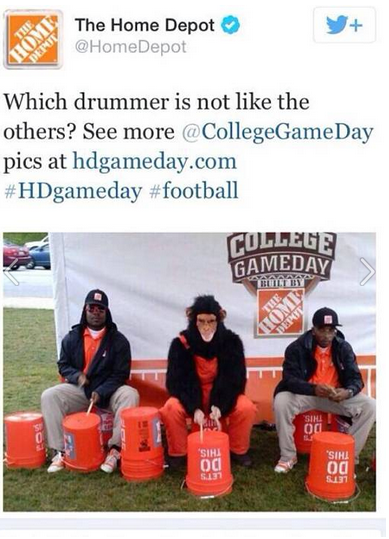
“Few things hurt a brand more than an accusation of racism. So even though it’s impossible to tell if this tweet from Home Depot was indeed racist or simply stupid, the fact that the Twittersphere was up in arms over it made corporate delete the tweet, apologize for two days, and fire the social media agency responsible.” Business Insider
Quality Drop #2: Lack of Policy and Processes
Without basic marketing policy and processes the marketing team may as well be blind-folded when it comes to day-to-day execution of tasks.
Quality Check
Put a few basic policies in place for all marketing teams:
- Brand guidelines, colour palette and corporate style guide
- Social media, public relations and external communication policy
- A process to handle all external communication with various stakeholders like Public Relation firms, Analyst Relation firms, media, social influencers, industry experts, etc.
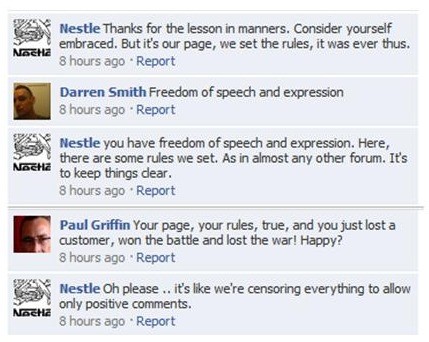
Image Source
Quality Drop #3: Implementation and Execution
“Every marketer makes a mistake.” – All Marketers
Mistakes can range from a simple typo or grammatical error to sending out an email for a new mobile app download which is not mobile-responsive.
Quality Check
For content:
- spelling, grammar, sentence construction, language (e.g. UK and US English is very different)
- all critical information is present and accurate
- titles, headers, and call to action buttons all labelled correctly
For collateral:
- design consistency – check the graphics and layout
- image quality – use appropriate images
- alignment of all design elements
- brand compliance for colour accuracy, typography, etc.
Responsive design:
- check on different browsers (Chrome, Firefox, Safari, IE)
- check on different versions of the browsers
- check on different devices (form factors – smartphones, tablets, laptops, etc.)
This is just the first pass at a very deep, very important issue.
Watch this space for more on quality assurance in the digital marketing world. We will come back with a deep dive into the rigorous Quality Assurance Processes we follow at Position2 to ensure there is no compromise on the quality of deliverables for our client partners.
Use the comment box below to share your best practices or a #marketingblooper.