Category: Paid Search

  • Facebook to Launch New Campaign Structure

    Facebook will unveil a new campaign structure on March 4, one that will help marketers, regardless of their size, in organizing, optimizing and measuring ads.

    In the new campaign structure, Facebook has added another level, ad sets, to its existing campaign structure of two levels: ads and campaigns.
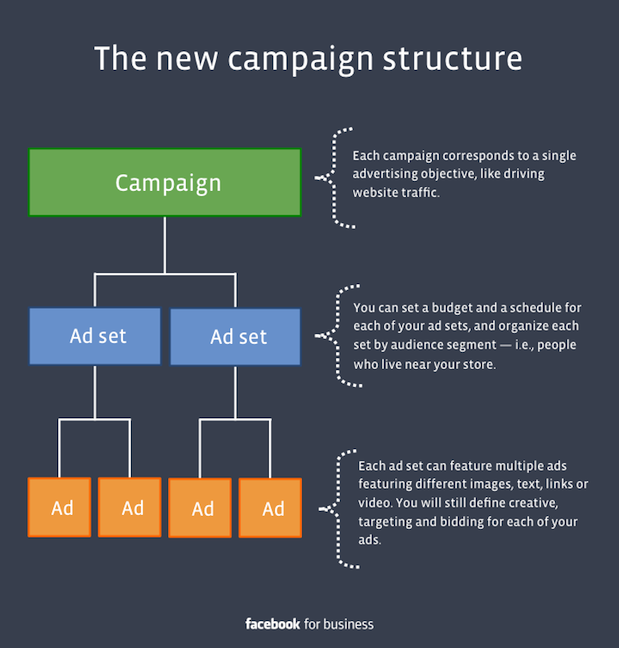
    Facebooks new ad campaign structure

    Campaigns answer each advertising objective. They are designed to help marketers optimize and measure results for each objective across ad sets and ads.

    Each marketing campaign can feature multiple ad sets, with each having its own budget and schedule. You will also be able to organize each ad set to stand for specific audience segments like, people who stay close to your business. This audience segmentation for each ad set will help you control spends on each audience group, decide when they will see your ads and measure their responses. Facebook’s ad delivery system will optimize delivery for the best performing ad in an ad set.

    You can accommodate multiple ads in each ad set, where each ad can feature different content – images, videos, text or links. You can also control the creative, targeting and bidding at the ad level. So, you can ensure that each ad within an ad set is reaching the right audience with their designated images, text, links and video.

    For example, if you are a local magazine, you may have different campaign objectives, like:

    • Increasing the number of yearly subscriptions
    • Driving readership through contests
    • Broadening your overall reach

    You would have designed separate campaigns to achieve each objective. Different objectives like the above mean you would want to target different audience groups for each. You can now create ad sets targeting separate audience groups for each objective. You may want to target current weekly or monthly subscribers to take up yearly subscriptions with ads highlighting special offers for the same; you might look to target new subscribers to read more through contests based on your magazine’s content and target people who haven’t subscribed yet through promotional ads about your magazine.

    The new campaign structure can help you achieve all this.

    This update will be available worldwide across all ad interfaces including the Ads Create Tool, Ads Manager and Power Editor along with third-party ad interfaces built by Preferred Marketing Developers.

    All existing ad campaigns will be migrated to the new structure automatically once the update is rolled out to your account. You will also have access to historical data pertaining to any of your existing campaigns and ads later since the rollout will not have any impact on the performance, spends or delivery of your existing ads.

    For more information on the new campaign structure and how you can prepare yourselves, check out the Facebook Help Centre.

    Image Source: Facebook for Business

  • Google Empowers Programmatic Buying with Time Inc. Deal

    Time Inc.

    Google has signed on the dotted line yet again.

    This time, it has entered into a deal with Time Inc. Google and Time will be launching a premium programmatic ad exchange, Time Inc. Global Exchange on March 1.

    Here are a few important details about this deal:

    • Time’s 116 million customers will now be merged into Google’s DoubleClick Ad Exchange
    • Marketers will gain access to all Time’s customers on the Time Inc. Global Exchange
    • The Time Inc. Global Exchange will include the desktop and mobile properties of Time’s premium brands like TIME, PEOPLE, Sports Illustrated etc.

    Such a deal gets you thinking, is Google trying to give the digital world a sign? Is programmatic buying really better than manual media planning? Many brands swear by programmatic ad buying and many set much store by manual media planning. Regardless of the type of ad buying you prefer, this Google-Time deal is definitely intriguing in the opportunities and possibilities it can offer for Google, Time and marketers.

    What is your take on this Google move?

    Image Source: Media Bistro

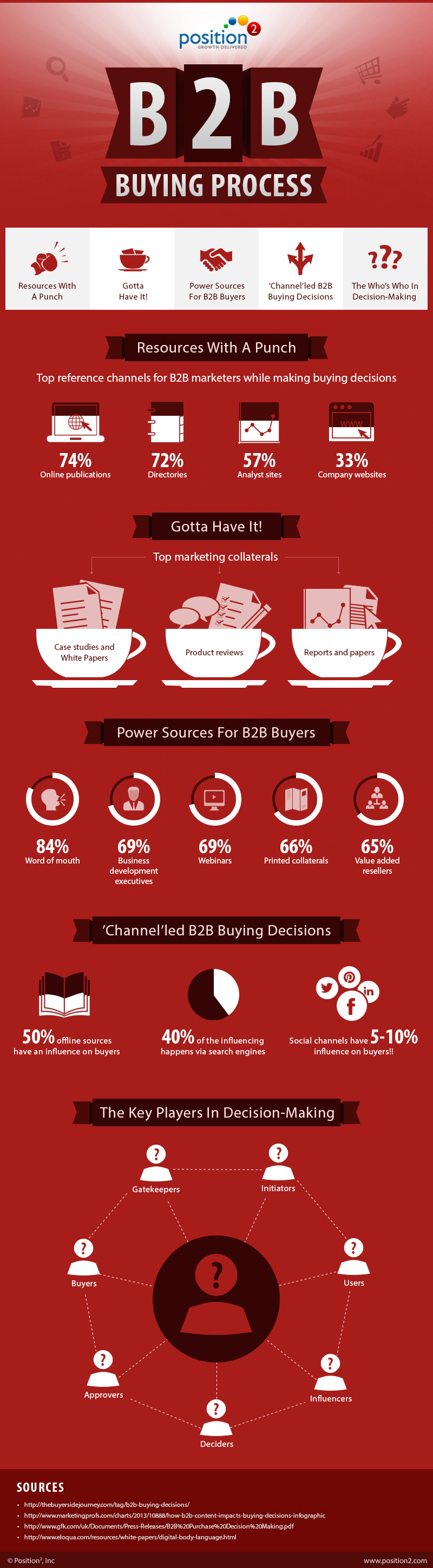
  • [Infographic] B2B Buying Process

    The B2B buying process is notably different from the B2C process. The influencers change in number and roles, the sources of research referred to before a B2B marketer makes a purchase are different…take a look at this appealing infographic to know about these factors and more on the B2B buying process.

    B2B Buying Process Infographic

  • SMBs Flock to Social Platforms to Fuel Growth

    SMBs using social media

    Today much of marketing has a social hue to it. Marketers are flocking to social media platforms for leads/customers – basically, revenue either in a current or deferred form.

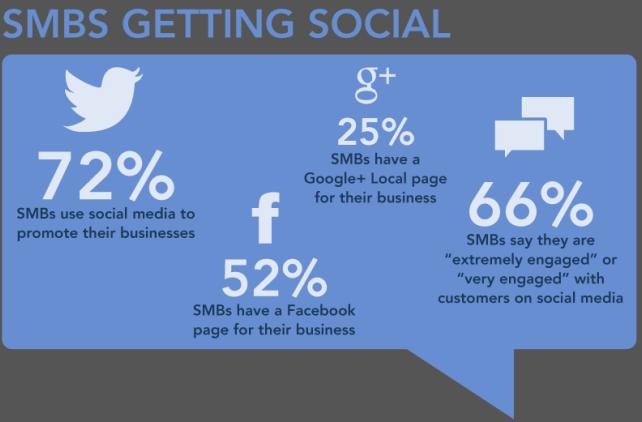
    Here are some statistics to demonstrate just how significant a trend this has become:

    The ease of use and immediacy of social media make it an invaluable tool for small businesses. Small and Medium Businesses (SMBs) are using social media to grow their businesses and 25% of SMBs have planned to increase their social media spend in 2014.

    LinkedIn Not the ‘Go to’ Site for SMBs

    LinkedIn has long been considered the ideal social network for businesses and professional engagement. However, when it comes to SMBs, social networks other than LinkedIn are also doing well.

    The numbers above reiterate the fact that LinkedIn is not ‘the’ most preferred social media site when it comes to SMBs. Twitter, which is not necessarily a business networking platform, is close behind LinkedIn.

    According to BIA/Kelsey, with 24.3% SMBs active on the site, Twitter has achieved a fair degree of traction with this audience. Twitter has beefing up its ads API in an effort to attract more brands and the effort seems to be paying off.

    Facebook – The Unquestioned Champion…

    Through continuous efforts to strengthen its advertising portfolio, Facebook has managed to cater to brands’ marketing needs. 52% SMBs surveyed by BIA/Kelsey are active on the site and recent statistics released by Facebook shows that it has 25 million active SMB pages. That’s an impressive number.

    Facebook is definitely doing things right to have these many SMBs using the network for marketing. A recent study by MediaPost stating that 83% SMBs use Facebook re-emphasizes its dominance.

    What can SMBs do to further their growth through social media?

    SMBs are really gearing up to drive high growth rates with aggressive marketing particularly on social media platforms. In order to push up growth better, SMBs need to do the following:

    • 30% of searches will have local intent by next year. This is a valuable pointer to drive sales. Increased focus on local marketing will help SMBs drive more people to their business and improves chances of conversion.
    • Introduce deals and coupons for local customers to redeem. This will spruce up local traction through local search queries.
    • They can use social media tools like Pinterest ‘Place’ pins to drive growth.
    • Start off with small social media spends and then scale up depending on particular platform growth.

    Do you have anything else to add to this? Let us know!

    Image Courtesy: BIA Kelsey

  • Yahoo! Launches Gemini Platform for Mobile Search and Native Ads

    Yahoo GeminiYahoo! Launches Gemini Platform for Mobile Search and Native Ads

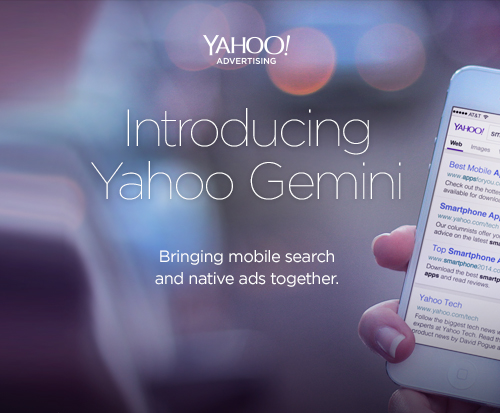
    Yahoo! has recently introduced Yahoo Gemini, a unified marketplace for mobile search and native ads. This is Yahoo’s latest attempt to try and lure more marketers to its advertising business.

    Yahoo Gemini has:

    • Made it easier for marketers to run multi-channel campaigns and drive better growth through more informed campaign spend.
    • Made it easy for marketers wanting to buy mobile search ads on the Yahoo network along with the scale and creativity of native ads.

    The recent surge in mobile web traffic is the key to the increase in demand for mobile ads.

    Yahoo’s share of the digital advertising market in the US is expected to come down to 5.4% in 2014 from a share of 5.9% in 2013. And Yahoo still has a lot of catching up to do in 2014, with Google commanding a 40% market share, Facebook (7.4%) and Microsoft (5.7%). The launch of the Gemini platform and its recent unified approach to digital advertising are Yahoo’s attempts at increasing that ad market share.

    When Google, Yahoo and Microsoft step up to improve their search and ad market share, it is the digital marketer who benefits. The companies release new features and tools in their competition to cater to marketers’ needs the best. Marketers can make optimum use of these tools and derive more ad revenue out of online campaigns.

    Image Courtesy: Yahoo!

  • Google Joins Hands with comScore for Real-Time Ad Measurement

    Google

    A few months ago, Google opened its doors to Nielsen to place measurement tags on YouTube ads. This move was to help marketers get a better handle on the performance of their video ads and also increase the credibility of Google’s ad ROI data.

    Advertisers take many factors into consideration when it comes to choosing a website to advertise on. Quality and accountability are two main factors and Google is working on delivering both of these.

    comScore is no stranger to Google. It was one of their first partners in the area of audience measurement through application of its Validated Campaign Essentials (vCE) solution on YouTube.

    And now, in an effort to draw more marketers into buying ads, Google has signed a new deal with comScore. This deal will allow real-time ad performance measurement in different formats, across the web on Google’s DoubleClick ad server.

    Here are a few important aspects you should know about the deal:

    • comScore’s vCE solution will be integrated with Google’s DoubleClick ad server.
    • This multi-year Google deal with comScore covers measurement of display ads, video ads and ads on mobile devices.
    • You can also measure ad performance across websites and device screen sizes.

    The main advantages of this development are:

    • This allows for real-time measurement of ads and delivery of insights.
    • This will help manage campaign spends better, with increased investment in campaigns that deliver and withdrawal of funds from those that don’t.
    • Marketers will be able to access more data about people who are exposed to their ads and learn about their interests.
    • This insight into audiences can help in fine tuning retargeting campaigns later.
    • Makes the Google ad offering more complete with credible ROI data.
    • It makes cross-screen metric measurement easier with its ability to monitor ads on multiple screen sizes.
    • This development comes at a time when there is greater emphasis on video marketing and display ads.
    • It allows marketers to use these powerful tools, knowing well that they have appropriate measurement tools.

    Initially, these capabilities will be available in the US for desktop-based display and video ads. It will be expanded to include mobile devices and cross-platform measurement later.

    With this development, Google has shown that, though late, they do listen to marketers and work on making advertising on their network beneficial for the latter.

    What do you think of this Google-comScore tie-up? Do you think it will deliver all that it is promising and entice more marketers to buy ads?

    Image Courtesy: Campaign India

  • Twitter Tests new Profile Redesign and Yahoo’s Probable Contextual Search Plans

    Twitter

    Twitter Tests New Profile RedesignLooks like the micro-blogging site has been busy sculpting its new profile design…

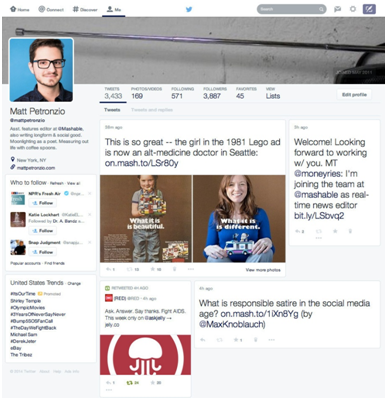
    Twitter is testing out a new profile design that looks a whole lot like a Facebook profile page.

    The main picture and the bio on the page have been scaled to the left and the header photo has been given more screen space. Twitter has also tweaked the look of its tweet stream, focusing more on photos and content cards along with a departure from the vertical timeline.

    Twitter has also implemented a few features reserved for users with verified accounts, such as, the option for the stream to display ‘Tweets’ and ‘Tweets and replies’.

    User profiles with the new design can view other profiles in the same way even if the new design has not been implemented in the profile being viewed.

    Twitter, however, has not confirmed this story.

    Yahoo!

    YahooIs the company looking at implementing contextual search?


    It appears so from CEO Marissa Mayer’s comments at a Goldman Sachs technology conference this Tuesday, where she said that she is excited by contextual search.

    Contextual search is where users see customized results based on variable user factors, such as, location, time and earlier behavior. It also looks at factoring in details other than these.

    For example, with contextual search, a user looking for a store that sells specific models of printers can see results that include stores nearby that sell the particular model along with relevant ads and cool deals.

    Contextual search is a major step in search and Google has already begun incorporating some of these contextual elements into its search. However, there is plenty of room for improvements in contextual search and this is the space Yahoo! is looking at for a share.

    Once search engines begin stepping on the gas to build better contextual search abilities, it gets more serious. Businesses need to start working on more deals and coupons for web users to redeem.

    This kind of search has more of an impact on local brick and mortar businesses. Users looking for restaurants with their favorite cuisine can benefit more from contextual search. Restaurants can look forward to better business if they have relevant coupons to display in online search results when users look for them.

    Do tell us what you think about these two updates…

    Images Courtesy: Mashable, Fonts In Use

  • Twitter Releases its First Post-IPO Earnings Report

    Twitter Post IPO

    Image Courtesy: Value Walk

    The results are out! And, it’s been a bittersweet experience for Twitter in the quarter ending December 2013, post its IPO launch in November 2013

    Revenue

    Monetization has been a question that was raised with the launch of all social media platforms’ IPO. But, it looks like Twitter has found the answer with $242.6 million earned as revenue.

    This is the sweet spot.

    So, what is the bitter aftertaste?

    User Growth and Engagement

    The micro blogging site reports current monthly active users to be at 241 million. But user growth has risen only by 4% as compared to the previous quarter. The number of views of Twitter timeline fell by 17% to 148 billion.

    Twitter’s success depends on 2 factors:

    • It’s ability to grow the user base and
    • User engagement

    Currently, both are faltering, which has had a severe impact on its share holdings. Twitter’s stock price fell by 18% after the report was released.

    Conclusion

    Despite the scares, it is important to note that Twitter has succeeded in monetization efforts. However, given its current performance, Twitters’ efforts to build the user base and engagement will be closely watched by the Bull as well as marketers.

    What does this mean for businesses?

    These results may alert brands that are advertising on Twitter to pause and consider the ability of the site to deliver in terms of user reach and engagement. Despite having a large active user base, brands will expect Twitter to project a more promising picture especially after a confident IPO launch.

  • Evolution of Facebook ‘For Business’

    In the last decade since its launch, Facebook has seen a number of updates, some of which were game-changers for the social media industry.

    Let’s take a walk through the years and go through those updates that made a significant difference to businesses and marketers, in particular.