Category: Paid Search

  • Google Launches “Store Visits”

    It’s an exciting time to be a digital marketer. You never know what’s in store for you in the digital world as you are in for a surprise the every other day. Google has just come up with a very pragmatic way to measure the effectiveness of your AdWords campaigns. Going forward it will try and link you online marketing campaigns to your offline sales!

    Since the last few years tablet and smart phone usage has proliferated quite sensationally around the world. People are using it more and more to visit ecommerce sites on the go. Due to the mobile form factor , the Internet user’s location can be determined easily and this is the basis for Google’s ‘Store Visit’ to see the light of the day.

    But there are privacy concerns as well. Google which had previously been embroiled in litigation regarding privacy now wants to steer clear of any such issues, with the launch of this new feature. It has reassured users that their data or location details will never be revealed to the advertisers.

    A New Era for Digital Marketers

    Even in this day and age of digital marketing, the truth is that brick and mortar stores have not seen much of a dent in their sales. With Google’s ‘Store Visit’ all those ecommerce players who have a physical store can now rejoice. Using  a customer’s location, the store’s AdWords campaign can now be mapped to actual footfalls in the physical store. This is one metrics with the highest efficacy to determine the true return on investment of your digital campaign and this has got the digital marketers quite excited.

    Imagine you are marketing online for client’s hotel booking using the Google AdWords program. This ‘Store Visits’ tool gives you a direct way to gauge the impact of your online advertising campaign. Your customer’s location will be tracked by Google and if the same customer comes to your client’s hotel and books a room then you can rest assured that your advertising has really paid off.

    This will definitely make more marketers to tread the digital path. Now you can not only drive sales to your offline business store front but you can measure the effectiveness of your digital marketing campaign in a tangible way too!

    Will you be registering for the Google ‘Store Visits’ for you business!

    Do let us know!

    Contact us now for highly effective digital marketing campaigns offering tangible results!

  • Google Launches Hindi Advertising!

    The search engine biggie Google has woken up to the potential of consumers speaking in the vernacular Indian language, residing mostly in the northern part of the country. Google has just launched ads in Hindi to cater to over half a billion people who speak the Hindi language fluently. This will help global advertisers to connect with this market that was hitherto not possible online. Now this is a very big move for Google and also to the tens of hundreds of brands and companies that will partner with Google for this particular program.

    google-hindi-ad

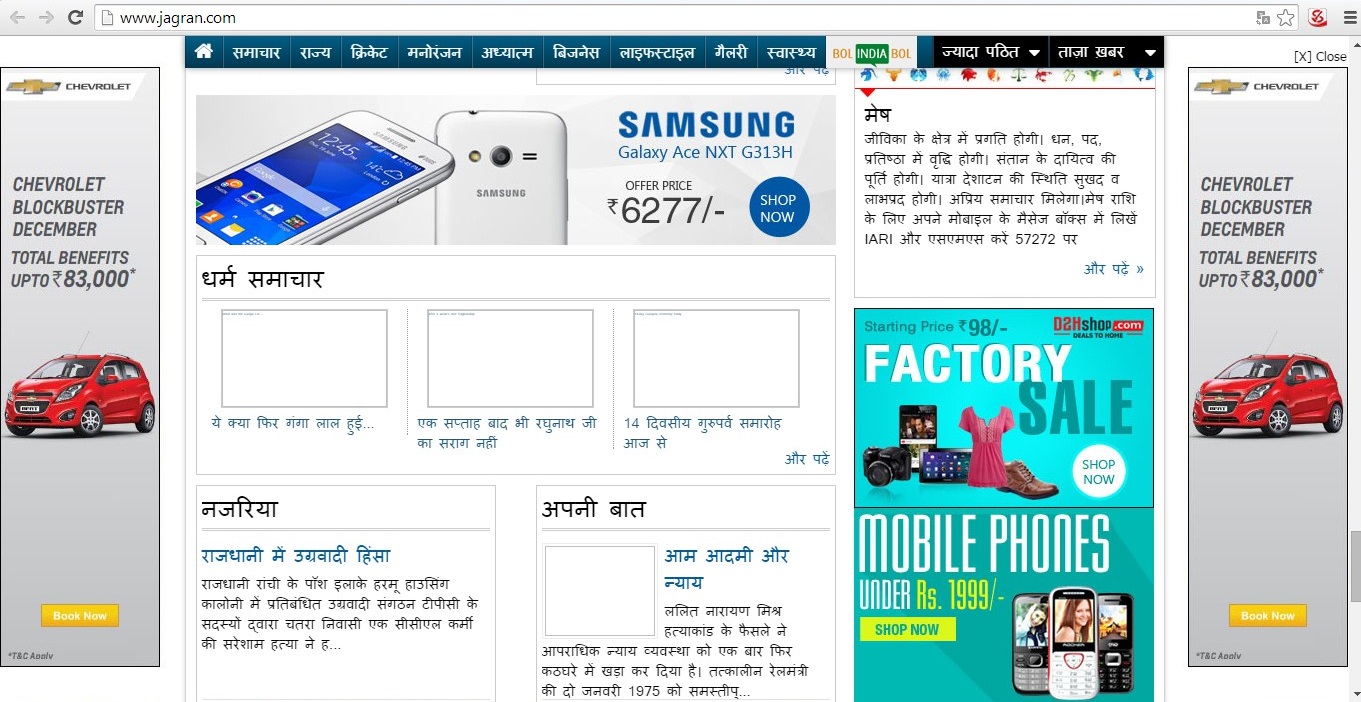
    If you see the above online newspaper wherein the content is in Hindi but all the advertisements are in English! Now you don’t need a rocket scientist to tell you that the click through rate of such an ad is abysmal when compared to the same ads served on an English daily. So Google had to change its tack. It adapted, improvised and overcame the problem of ads not resonating with readers caused due to a language barrier and came up with a solution that is making it more India-centric.

    Now onwards, AdWords advertisers can effectively build campaigns on the Google Display Network using text, image, video, rich text, et al. As part of this new development, Google has also introduced Voice Search in Hindi and an exclusive website to find out the best available online Hindi content across websites, videos, apps, blogs, et al, that has been aptly named hindiweb.com.

    Google had just some time back launched the Indian Language Internet Alliance (ILIA) that is assigned with the task of promoting Indic-language online. Google is aiming to reach out to over 300 million online users speaking Hindi by 2017 via this ILIA master stroke!

    The adoption of Internet in India until now was mainly being unleashed in the international business language, English. Of late companies are seeing the potential of advertising in Hindi as a majority of this demographics does not speak English, anyway. This was basically an opportunity squandered online and for a brand like Google this was unacceptable. Though Google search is available in a variety of Indian languages, serving advertising in an Indian language is a first for Google too!

    So what do you think about this new Google development?

    Post your comments below!

    Contact us now for all round digital marketing.

  • Slideshare Throws Open the Analytics Tool

    It’s the age of integrated marketing wherein you will see a host of features being added to online resources that will aid you in 360 digital marketing. In a bid to help publishers get a feedback on their presentations, the eponymous slide sharing website ‘Slideshare’ has sprung on a pleasant pre-Christmas surprise! You get a free analytics tool to assess your content’s performance so you can better tweak it to your user requirements.

    If you are a webmaster or a web content publisher then this tool helps you get information on your- top slides, recent sources of traffic, recent visitors, traffic originating geographies, engagement statistics and such other useful nuggets of information. You can also get a detailed feedback on how people are engaging with your presentation and the channels that they are using to get to you.

    If you closely look at the social media platforms lately, it is not hard to deduce a pattern here. Every site worth its salt wants to get on the free analytics tool offerings bandwagon in order to give of all people, the digital marketers, a better way to curate their online campaigns.  Henceforth you will be able to precisely monitor what people like so as to tailor make your content to exacting user needs. You will be able to keep tabs on user likes, emails, comments, downloads, and embedded link clicks.

    Since the advent of the Web 2.0 technologies, the web is slowly but surely going towards being more and more interactive. It’s a two way street, all the way! Now that’s exactly what the Father of the World Wide Web Sir Tim Berners-Lee had envisioned when he threw open one of the greatest technological gifts that the modern man has ever received! This latest development from Slideshare is a small step in fulfilling what Sir Berners-Lee had earnestly espoused a long time ago.

    Let us know what you think of this new offering from Slideshare.

    Contact us to benefit from Integrated Digital Marketing now!

  • Facebook Incorporates C.T.A Buttons for Business Pages

    What do you do – When you have a user base of 1.35 billion and counting? When your market capitalization is north of $200 billion and climbing? Well, you find newer ways to make money out of your business!

    That’s exactly what’s driving the world’s largest social media giant. Facebook will soon be launching a Call-To-Action button for its business users who were complaining since a very long time for the lack of incentives for having a Facebook Page! This feature that is to be launched shortly will first be available across the United States and then the rest of the world.

    Facebook will initially provide CTAs like – Contact Us, Shop Now, Sign Up, Book Now, Watch Video, Use App and Play Game. These links could take you to any destination on or off Facebook depending on the needs of the business entity that is using them. Businesses are glad that going forward they can have a strong CTA on their Facebook Page so that they can get more leads or conversions as the case may be.

    CTAs for Businesses

    • Contact Us – A general CTA to know more about a business
    • Shop Now – Ecommerce portals
    • Sign Up – Newsletters, White Papers, Mailers, et al
    • Book Now – Movies, Airlines, Hotels, et al
    • Watch Video – B2B businesses to shed light on their new products, offerings et al
    • Use App – App developers or general businesses offering apps
    • Play Game – Entertainment sites or game developers

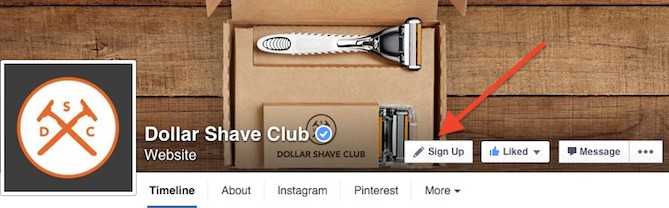
    Since this new feature has not yet seen the light of the day, we do not have statistics for this new button yet. But it has been in beta testing mode for a company called Dollar Shave Club for around three weeks and the company is just thrilled at the results that this CTA has delivered.

    Facebook_CTA

    Looking at their 2.5X higher conversion rate as compared to other relevant social placements, it seems the CTA button is here to deliver results.

    Let us know what you think about this new CTA button from Facebook. Contact us for a better conversion rate for your brand on Facebook now!

  • Google Introduces New Sitelinks Search Box

    Google introduced a new Sitelink search box feature that gives webmasters the ability to control searching within their site. Websites seen in the SERP (Search Engine Results Page) now display a site search box above the Sitelinks. The new search box has been designed to simplify a user’s query for specific content on your website, working directly through your own website search pages.

    The Sitelinks Search Box is displayed in a prominent position and the new functionality eliminates a step in a user’s content search process. The auto-complete feature is also used to great advantage when a user types search terms into the search box. The new search box is available for both desktop and mobile searches.

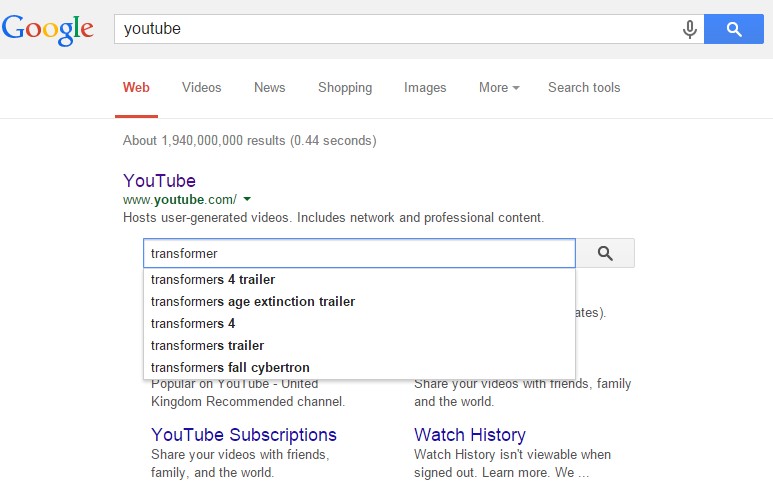
    Desktop version:

    Position2 - An example of the desktop version sitelinks


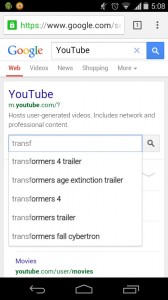
    Mobile version:

    Position2 - An example of the mobile version sitelinks

    The new Sitelink Search Box sends the user directly to your website’s search pages. You need to markup your pages correctly to enable this feature. Websites must have a working search engine function to implement this feature, and webmasters should use Schema.org markup on the home page.

    Best practices for schema markup (from the Sitelink Search Box implementation guidelines) include:

    • Put the markup on the homepage of your site. (It is not necessary for the markup to be repeated on other pages.)
    • Use JSON-LD. (Alternatively, you can use microdata.)
    • Specify only one URL search pattern for the target. (Google is experimenting with multiple pattern support, so if you have feedback or use cases for multiple target support, let us know in our Webmaster Central Help Forum.)

    Some Google best practices on site-wide configurations include:

    • Set a preferred canonical URL for your domain’s homepage using the rel=”canonical” link element on all variants of the homepage. (This helps Google Search choose the correct URL for your markup.)
    • Prevent crawling of your site’s search results pages with robots.txt. (See more in our Webmaster Guidelines.)
    • Make sure your server supports UTF-8 character encoding.

    This feature gives webmasters the ability to drive traffic to specific pages that a user might be searching for, while eliminating a step along the way that gets them there. It’s sure to become popular.

    Feature to disable the Sitelinks Search Box

    Google also added a new feature to disable the Sitelinks Search Box and prevent it from showing up completely. To disable the Sitelinks Search feature use the new meta tag, nositelinkssearchbox:

    <meta name=”google” content=” nositelinkssearchbox”>

    Adding this tag to a site tells Google not to show a Sitelinks Search Box when the site appears in search results. The Sitelinks Search Box will be disabled as part of the normal Googlebot crawling and processing of the page. This can take a few weeks depending on the site and other factors.

    Contact us now to make your website user-friendly!

  • Add E-commerce Analytics for Better Business

    The Future of e-commerce

    The future of e-commerce is mobile. It lives in tablets and smartphones. There shouldn’t be a retailer out there who doesn’t know this to be true. But a new study by the mobile services provider Zmags (Mobile and Tablet Ecommerce: Is Anyone Really Ready?) found that only one-third of the top U.S. online retailers are even optimally ready for mobile e-commerce. Two-thirds of top U.S. retailers currently overlook this market opportunity. Neither are they ready for today’s shoppers using tablets and smart phones, nor can they identify new, incremental sources of traffic and conversions.

    Welcome to e-commerce Tracking

    If you want to effectively analyze online business performance you need transaction data. It’s vital. Measuring metrics like conversion rates is all well and good, but measuring revenue truly captures a business owner’s attention. To make the analysis simple, include e-commerce data in your web analytics application.

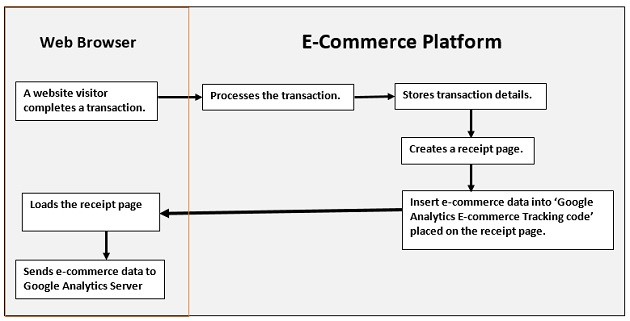
    How e-commerce Tracking Works?
    e-commerce_trackingImage Source

    1. A website visitor completes a transaction.
    2. Your e-commerce platform:
    • processes the transaction (verify credit card details etc)
    • stores transaction details
    • creates a receipt page (generally ‘thank you’ page)
    • inserts e-commerce data into ‘Google Analytics e-commerce tracking code
    • sends receipt page to the visitor’s web browser
    1. As soon as the page is loaded into the visitor’s browser, the Google Analytics e-commerce tracking code is executed and sends the e-commerce data to the Google Analytics server.


    How to Set up e-commerce Tracking in Google Analytics

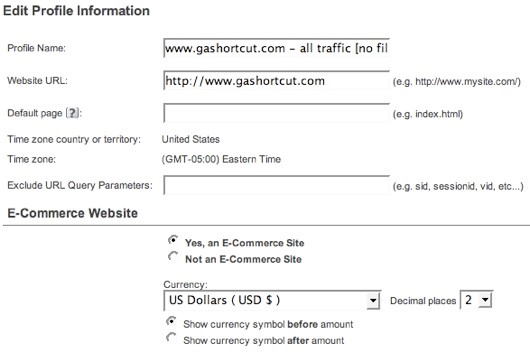
    Step 1: To activate e-commerce tracking

    You must first enable e-commerce reports. Log into GA and edit the profile settings. To activate the e-commerce reports, specify that your site is an e-commerce site.
    activate_trackingImage Source

    Unless you have an international site, you won’t find much use for the other e-commerce settings. For example, you can specify one of 25 different currencies and the number of decimal places you want displayed. Even if you use USD you can specify 3 decimal places. By Default, e-commerce tracking is set to “off”. In order to track a transaction on GA activate e-commerce tracking at a profile level.

    Step 2: Tag your receipt page

    Make sure you add the GA tracking code on your receipt page. The e-commerce tracking code is stored in the ga.js and if this file is not included on the receipt page you can’t track transactions.

    Step 3: Install the code

    Code construction: the hard part. GA uses a JavaScript collection technique to track e-commerce transactions. Your server code must inject transaction information into the GA JavaScript before sending the receipt page back to the browser. When the receipt page renders in the visitor’s browser the JavaScript executes and sends the transaction info to GA.

    code_constructionImage Source

    Here’s the code:

    < script type=”text/javascript” >
    pageTracker._addTrans(
    “order-id”, // required
    “affiliate or store name”,
    “total”,
    “tax”,
    “shipping”,
    “city”,
    “state”,
    “country”
    );
    pageTracker._addItem(
    “order-id”, // required
    “SKU”,
    “product name”,
    “product category”,
    “unit price”, // required
    “quantity” //required
    );
    pageTracker._trackTrans();
    < /script >

    There are three distinct parts to the JavaScript, and each is a different method. The first section, identified by the _addTrans() method, creates the transaction and stores all the information about the transaction. The second section, identified by the _addItem() method, is used to add an item to the transaction. You need to create an_addItem() section for each separate item, or SKU, in the transaction. The order ID in the _addItem() method must be the same order ID used in the _addTrans() method. That’s how GA ties an item to a transaction. The final section, the _trackTrans() method, sends the data to GA by requesting the __utm.gif file once for the transaction and once for each item in the transaction. So if you have 3 different SKUs in a transaction there will be 4 requests for the __utm.gif.

    The JavaScript shown above can appear anywhere on your receipt page. But make sure that it appears after the main GA page tag because the e-commerce code is part of the pageTracker object. Just to reiterate a point: you must create server side code that outputs the transaction data in the above format. If you do not have access to your shopping cart code, and if your cart provider does not provide e-commerce tracking, you may be out of luck.

    Once the code has been installed you should begin to see e-commerce data in your GA.

    What Data can be Tracked?

    Google Analytics collects two types of e-commerce data: transaction data and item data. Transaction data describes the overall transaction (transaction ID, total sales, tax, shipping, etc.) while item data describes the items purchased in the transaction (sku, description, category, etc.). All of this data eventually ends up in GA reports.

    The complete list of data includes:

     Transaction Data

    • Transaction ID: your internal transaction ID [required]
    • Affiliate or store name
    • Total
    • Tax
    • Shipping
    • City
    • State or region
    • Country

    Item Data

    • Transaction ID: same as in transaction data [required]
    • SKU
    • Product name
    • Product category or product variation
    • Unit price [required]
    • Quantity [required]

    A few notes about the data:

    • Geo-location data is no longer used by Google Analytics. The new version of GA identifies where the buyer is located using an IP address lookup.
    • You should avoid using any non-alpha numeric characters in the data, especially in the numeric fields.
    • Do not add a currency identifiers (i.e. dollar sign) in the total, tax or shipping fields. This can cause problems with the data.

    Contact us to learn more about how analytics can improve your business.
  • “No CAPTCHA reCAPTCHA” from Google

    Research experts at Google have come up with a solution to make CAPTCHAs more effective and it is called ‘no CAPTCHA reCAPTCHA’. This is not only perspicuous to the human users but is also effective in stopping malicious bots. CAPTCHAs are so commonplace these days that humanity as a whole is ‘wasting’ a lot of time on it without any utilitarian value added, whatsoever. The driving force behind the whole research was that if this effort could be properly channelized, humanity as a whole would benefit and thus was born reCAPTCHA.

    There is lot of indecipherable text in ancient literature tomes, old newspapers, satellite imagery, Google Street View, et al as far as machines are concerned. So if such texts could be given to the humans in the process of typing CAPTCHAs, a huge problem would be solved with no extra strain on resources!

    Google has rolled out a new API that directly asks users whether they are robots. Human users then can just check the box mentioning ‘I’m not a robot’, and gain access without actually solving any CAPTCHA. There’s more to this API than meets the eye. Google will scrutinize a user’s entire engagement with the CAPTCHA using Advanced Risk Analysis before determining whether the user is a robot or a human.

     If you are a mobile user you will have an image based reCAPTCHA. You might be shown an image of an animal and given a few image options that may or may not match with the animal in question. You have to select only those options that are relevant. Humans can easily do this whereas  machines cannot. This makes the tool very useful to discern a human user from a robot.

    Your Digital Marketing Dollars Saved

    You can use the Google reCAPTCHA for free. You need not download anything from Google and thus your computing resources can be utilized elsewhere. Everything is done via the Google servers. You can now have a fool-proof method of keeping those lurking bots at bay. The best part is that if Google finds out using logs that some of their reCAPTCHAs can be deciphered by machines then it will automatically up the ante without you having to do anything.

    Imagine your website is under relentless attack by unscrupulous bots. Your resources might be at stake or your site’s security itself could be under threat. There are ample instances of bots writing tens of hundreds of reviews to unprotected sites around the world and in the process trying to advertise some product or service without the webmasters’ permission. Now you can close the doors on all such malicious bots thanks to Google reCATPCHA.

     If Google finds out that an entity consistently solves your reCAPTCHAs then the ensuing reCAPTCHAs will become harder to solve thus giving you an additional shield against these nasty bots. Thus the main aim of this tool is to see to it that humans are allowed access and bots are stopped in their tracks. reCAPTCHA does a fine balancing act as far as security and usability is concerned at all times, in order to give a seamless experience to the human users.

    Let us know what you think about reCAPTCHA.

    Contact us to have a spam-free experience on the Net now!

  • Pin a Post on Your Google+ Page/Profile

    Google has added a new feature wherein you now have the option to Pin your favorite Post on your Profile or Page, as the case may be. This is of considerable significance since you can now display your most important Post to all your viewers. This Pinned Post will be available at the top of your content. This post could be your recent activity or an event that you are hosting that needs to be highlighted constantly.

    This Google+ feature mandates you to Pin only those Posts that are Public. This can be useful to businesses as they can now highlight their most important product launch or any new services rendered at the top of their Page.

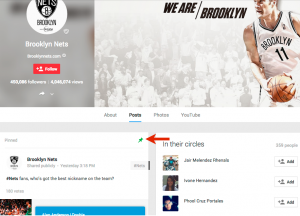
    To Pin your Post to your Page just click on the downward facing arrow on the top-right of your Post and you can Pin only one Post at a time and it will be marked with the picture of a Pin on the top-right corner for easy identification as shown below:

    google+_pin

    google+

    Do let us know what you think of this new additional feature on Google+.Contact us now for all round visibility for your campaigns across the digital spectrum!


  • E-tailers hit Hard by Changing Facebook News Feed Policy

    It’s the sign of the changing times. The digital domain is a dynamic and evolving world where nothing can be taken for granted. We had recently talked about the issue of changing Facebook News Feed Policy under the title – Facebook Starts Monitoring Promotional Pages. Now it looks like the Indian e-tailers who had until now extensively used the Facebook News Feed for promotional purposes are getting the short end of the stick.

    Though India is a developing country, the digital penetration in this part of the world is worth mentioning. Check for the latest Indian Internet users figure here which has already crossed the 250 million mark!  Facebook alone has crossed the 100 million users mark in India! This  burgeoning digital demographics here has given rise to sundry ecommerce players that are mushrooming by the day. For companies that did not have access to deep pockets or cutting-edge expertise in digital marketing, the Facebook News Feed was a fertile ground to sow their advertising seeds. But not anymore!

    Come January and the social networking giant will start monitoring overly promotional posts and desist brands from using it as a purely advertising tool. This has got the Indian ecommerce players quite chagrined. They will now have to shell out more money in order to advertise on the Facebook ad platform. But if you look at it closely, it’s not all gloom and doom!

    Your Efficiency is Your Edge

    This move from Facebook will surely separate the men from the boys of the digital marketing world. Going forward you will have to provide compelling content if you want people to like your brand or company. This will no doubt put a strain on your creative and design teams. But still it is worth the effort. If you can add value to your users on Facebook then definitely you don’t have to worry about this latest development from Facebook. It will be business as usual for you or maybe even better, since going forward Facebook will be looking to separate the contenders from the pretenders. Hence you need to equip yourself with the right set of skills in this digital war zone for more user clicks, impressions and leads.

    If you want to implement Integrated Digital Marketing, look no further and contact us now.

  • Twitter’s new Feature Offers Personalized Ad Targeting

    The micro blogging giant, Twitter on Wednesday announced that it will be collecting the list of applications installed on iOS and Android devices. Twitter clarified that it will not access any data within those applications on all its users’ mobile devices. This feature is designed to deliver tailored content that users might be interested in based on their application library. For those of us skeptical about this feature, Twitter is offering an opt-out option. Additionally, users who have opted out of internet-based ads on their devices will not be subjected to this feature.

    The App Graph, as it is called, collects “who to follow” suggestions for accounts that share similar interests, add interesting Tweets, accounts, or other content to the timeline and more importantly, displaying more relevant promotional content. To help users notify about this feature, a message will be displayed on your mobile device- “to help tailor your experience, Twitter uses the apps on your device”.

    To turn off this feature and remove your data, follow these simple instructions below based on your mobile device OS:

    Using Twitter for Android:

    • Tap the overflow icon
    • Tap Settings.
    • Tap the account you’d like to adjust.
    • Under other, you can adjust the setting to Tailor Twitter based on my apps.

    Using Twitter for iOS:

    • From the me tab, tap the gear icon
    • Tap Settings.
    • Tap the account you’d like to adjust.
    • Under Privacy, you can adjust the setting to Tailor Twitter based on my apps.

    Better Targeted Ads

    It is clear that mobile users are growing at a fast pace. By 2015, out of all the internet users worldwide, more than 52% will be over mobile. In order to optimize your ad budgets, you must target your audience in a personalized way. Like we said in our Black Friday infographic, 1:1 contextual marketing is the way to go and App Graph will help Twitter move in this direction.

    Contact us now to learn more on how to do personalized targeting.