Category: Paid Search

  • Improved Ad Campaign Tracking Tools on Twitter

    For Internet advertisers of all kinds, Twitter is fast becoming the place to be. Consider the numbers:

    • 288 million active users tweeting monthly
    • 500 million tweets sent daily
    • 80% of active tweeters using mobile (Twitter)

    With this in mind, advertisers will need a better way to manage their Twitter ads. Fortunately the micro-blogging site has just launched two new ad conversion tracking tools, both of which will help advertisers gain better insight into ad campaigns run on Twitter.

    The two new tools are:

    • Transaction Values
    • Key Conversion Tags

    Transaction Values

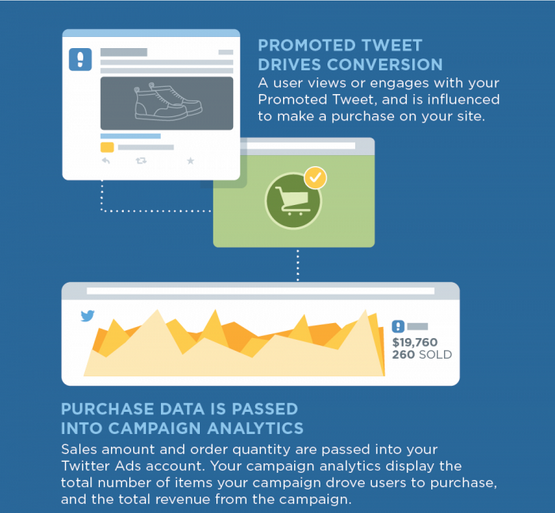
    While advertisers may have previously used website tag for remarketing, now they can use it to track their sales figures as well. By making some simple changes begin collecting order quantities and conversion values for each conversion. Twitter Ads analytics dashboard will then display the aggregated value and reporting.
    improved-ad-campaign-tools-on-twitter

    Advertisers will be able to see their ROI from their Promoted Tweet Campaigns. If not already using conversion tracking, now would be a good time to start. Simply create a tag in Twitter Ads UI and begin implementing it within a website. This new feature allows digital marketers to measure sales that were directly driven by Promoted Tweets.
    improved-ad-campaign-tracking-tools-on-twitter

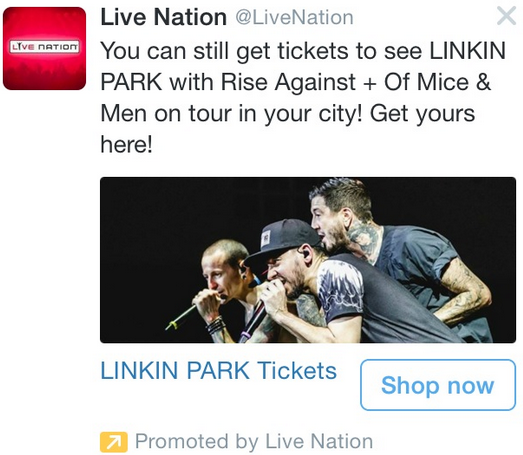
    LiveNation, a Beverly Hills, California-based company that promotes concerts and  live-events, finds Twitter’s real-time platform a natural fit for its business model. Live Nation beta tested the Transaction Values feature on Twitter for over a month with Promoted Tweet campaigns using the Website Card to increase ticket sales, and the results they logged were impressive. The analytics of @LiveNation reveal that the company earned a ROAS of 819% in the test phase.

    Key Conversion Tags

    With the key conversion tag feature advertisers can select the single conversion event that is most important to them and optimize for it. They then receive gleaned analytics within their Twitter Ads UI that show only that conversion type. And they can still get all their conversion type reporting for their campaigns within their analytics dashboard at any time.

    As an example, a boutique bakery might turn to Twitter to drive more sales of its cakes for a specific holiday. All it needs to do is place a website tag on the final conversion page of the cake sale and then select this tag as the key campaign tag. Twitter will then optimize the bakery’s campaign to generate more conversions on the cake sale page. The bakery will be able to view all the cake purchases within the Twitter Ads analytics dashboard, all in real time.

    Contact Position² to deploy B2B advertising campaigns on Twitter now!

  • An App to Manage Your Facebook Ads

    Facebook has come a long way. What started as a university dorm room project has become the go-to social networking platform for one sixth of humanity. Today Facebook boasts an ad community two million strong, and counting. To address the needs of this advertising community, Facebook has rolled out an app which is sure to make life more flexible.

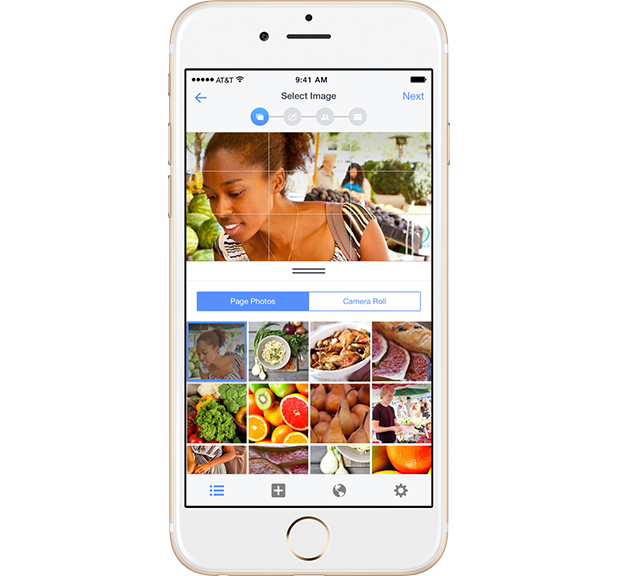
    This mobile app, currently available only on the iOS platform for the US market, helps advertisers create new ads or monitor current ads, and makes managing Facebook ads much easier than ever before. It’s called Ads Manager App.

    App-to-Manage-Facebook-Ads

    App-to-Manage-Facebook-Ads


    Tasks that you can perform with the Ads Manager App while on the go include:

    • Monitor your ad performance
    • Tweak your live ads
    • Increase or decrease budgets
    • Change ad schedules on the fly
    • Receive push notifications
    • Start a new ad campaigns

    Two Million Strong Indeed!

    facebook-ads-manager-app

    Facebook recognized all the small- and medium-size business enterprises that have ad campaigns on their platform, and paid homage to them with a thoughtful and inspiring ad that ends with two big words from Mark Zuckerberg: “Thank You”.

    Facebook illustrated an international mix of entrepreneurs who actively contribute to the global economy in their own ways while at the same time providing useful services and jobs in their own communities. The Ads Manager App is sure to be of  benefit to all those entrepreneurs and, Facebook hopes, to the 1.3 billion strong Facebook user community as well.

    Let us know what you think of this new Facebook app for advertisers!

    Contact Position² to deploy B2B advertising campaigns on Facebook!

  • IoT: What You Need to Know as a Digital Marketer [Infographic]

    The Internet of things (IoT) will play a major role in the way we conduct business and assimilate information in a more interconnected world. But do we have the right infrastructure to let IoT reach its full potential? And are we fully disposed to explore its immense benefits to digital marketing? Go through this incisive infographic to learn more about it.

    Internet-of-things-position2_infographics

  • Web Design Trends for 2015

    With a quick look back at Web Design 2014 you’ll see mobile, HTML 5, scrolling, micro UX, flat UI and the  king of design principles, minimalism, were all the rage.

    For what’s headed your way in Web Design 2015, read on…

    Top 10 design trends in 2015

    1. One Page Layout

      Embrace the mobile and choose one page layout to deliver a web project on iPhone, tablet or any other mobile device in the most optimal way. With one page layout you view the entire site without clicking on links to visit additional pages. You scroll instead, because everything is on a single page. This is the navigation technique requiring less page loading, less flowing data, less dynamic interaction with the end result, a smoother user experience.

    2. Responsive Design

      Responsive design has become the new standard for web design over the past few years. 2015 is no exception. Responsive web design and mobile friendly websites were made for each other.

    3. Focus on Typography

      iA’s Oliver Reichenstein rightly said “Web design is 95% typography”. Web typography isn’t limited to the use of fonts on your website. Rather, it’s the art of creating and manipulating the typefaces and white spaces to enhance communication and readability.

    4. Ghost Buttons and Big Background

      Make your site stand out by prominently displaying great content. Ghost buttons are pretty simple, are becoming more widely used, are minimal, stylish, very easy to create, and usually combined with a cool and simple hover animation. What caught on in 2014 will expand in 2015.

    5. SVG

      Scalable Vector Graphics may be the best format for responsive web design. It’s an ideal fit for flat and material design. The SVG advantage is its vector format which maintains sharpness after scaling. It can be implemented with CSS or JavaScript and can be used to create animations. With SVG, web designers focus on their design and spend less time thinking about different screen resolutions.

    6. Card Design

      Websites relying on an arrangement that resembles cards or tiles are usually very simple while presenting the viewer with as much information as possible. Card design works well with advertising products or displaying a portfolio. Social media giants such as Spotify, Pinterest, Twitter and Google have caught on and are using the tile-like arrangement.

    7. Flat Design/ Material Design for Mobile

      Incorporating Skeuomorphism into Flat Design is Material Design’s raison d’etre. The everyday objects and interactions we know in the real world are thrown into the sleek minimalism and mobile-friendliness of Flat. This results in an intuitive and device-friendly design style, convenient for both the machine and the user. The best of both worlds.

    8. Parallax Scrolling

      As the mobile web continues to grow and web design continues to skew in the direction of a more effective and enjoyable mobile experience, scrolling will continue to dominate clicking. It’s more intuitive, easier to do, cuts down on load times and allows for more dynamic interaction to take place between the user and the website. Parallax scrolling first became popular in early 2014, but look for it on more and more websites in 2015. With parallax scrolling you can create flexible and unique web pages that will surprise your visitors with effectiveness and convenience. It works especially well in creating single page websites or storytelling.

    9. Microinteractions

      Microinteractions are contained experiences or moments within a module on a website that revolve around a single use case, for example the email signup box that pops up on the website and wiggles back and forth on the screen, giving a playful personality to an otherwise static graphic. Microinteractions promote an increase in user engagement — in the case above, more email signups. You’ll see this theory begin to permeate web design in 2015. As developers begin to think along these lines you’ll see more WordPress themes and plugins.

    10. Personalized UX

      Look for cookies rehabilitation in 2015, just as certain popups have made a classier return with better design and best practices in place. The technique of using cookies to display certain content to repeat visitors can be used far more creatively than simply displaying spam and relentlessly up-selling.

    Contact Position² for professionally designed web pages to stay ahead of the trends!

  • LinkedIn Targets Users Off-platform

    LinkedIn is all set to monetize its users’ data outside its own platform. The business-oriented social networking site has come to realize that it is sitting on a mother lode of user data on the Internet. It has a precise database of corporate world professionals that is much sought-after by B2B advertisers worldwide. With LinkedIn, the user identity is authenticated which is critical for business transactions. It is also a budding platform for reputation and authority ranking. Targeting B2B professional services could be a real opportunity on this platform.

    For LinkedIn it all started with the Bizo acquisition. Bizo offers multichannel nurturing and is a leader in business audience marketing. It offers targeting and analytics for display and direct response ads. With the launch of Network Display global ad network, marketers can sift large amounts of LinkedIn user profiles and target only those users that make sense to them. It could be as granular as targeting HR professionals in Lower Manhattan with a delightful, modern payroll solution!

    LinkedIn has made significant advancement towards a strategic roadmap for its marketing solutions business with this new launch. It provides a full-funnel, end-to-end product suite offering for marketers to reach, nurture and acquire professional customers both on and off the platform. LinkedIn Lead Accelerator is the core offering here that connects brands to the right professionals with the right content while they go through the purchase funnel.

    This is a new frontier for LinkedIn wherein its quality audience and content marketing solutions can be embedded into Bizo’s unique targeting and nurturing solutions. All this can lead to better targeting, higher relevance and accurate measurement of advertising campaigns.

    LinkedIn is not the first social media site to target users outside its platform. Both Facebook and Twitter have been there and done that. But B2B digital marketers are particularly intrigued by LinkedIn’s entry into this domain since it offers the most precise B2B targeting group of any social media site.

    The business networking site can precisely target the type of professionals it wants to, from its vast pool of a few hundred million users. It has exclusive deals with a number of publishers and also with the ad exchange AppNexus, thus providing it access to a huge inventory over which it can conveniently layer its own data.

    Contact Position² to accurately target your audience on or off social media platforms now!

  • Facebook Introduces Product Ads

    The numero uno social networking site is giving the numero uno search engine a run for its money. Case in point is the latest launch of Facebook “Product Ads” which will compete directly with Google “Product Listing Ads”. The Facebook Product Ads was created specifically to help businesses sell their products on the platform.

    With this new feature from Facebook, advertisers can now target people who visited their website or app courtesy of Custom Audiences. They can also target people based on their interests or location. Businesses can promote single product or their entire line of products catalogue across the desktop and mobile platform as single or multi-product ad units.

    There are various ways in which advertisers can deploy ads like manually uploading their product catalogs or create campaigns that target a specific audience with certain products. Alternately, they may use the Facebook Custom Audience so as to automatically deliver the most relevant products to the target group.

    Brands that have already used the new ad feature from Facebook are quite excited about the benefits that it offers. Retail giant Target has recorded 20 percent rise in conversions with Product Ads over other Facebook ads. With this new feature Facebook is slowly but surely making the transition towards becoming a publisher too as opposed to merely being a social network.

    Content is a big part of Facebook’s offerings going forward as it tries to create ‘full-funnel’ media experiences. The social media behemoth would like to convert content into community and community into commerce.

    Let us know what you think about the Facebook Product Ads.

    Contact Position² to get 360° visibility for your brand on the social media!

  • Locale Adaptive Web-pages now Get Support from Google

    Google recently introduced the Googlebot Crawl configurations for local-aware pages and provided insights on how locale adaptive web pages are crawled and indexed.

    What are Locale-Adaptive pages?

    Web-pages which dynamically change content depending on the user’s origin country or language settings are called locale-adaptive pages.

    Barry Schwartz says Google will now be able to handle such content by sending Googlebot from different IPs across the world, as well as let it set language settings.

    Google will use two methods of crawling and indexing:

    1. Geo-distributed crawling: When Googlebot uses IP addresses coming from outside the USA in addition to the current IP addresses Googlebot uses that appear to be from the USA.
    2. Language-dependent crawling: When Googlebot starts to crawl with an Accept-Language HTTP header in the request.

    It is important to understand how Googlebot currently recognizes whether a website has locale-specific content and  uses different crawl settings.

    There are 3 approaches:

    1. Serving different content on the same URL—based on the user’s perceived country (geolocation)
    2. Serving different content on the same URL—based on the Accept-Language field set by the user’s browser in the HTTP request header
    3. Completely blocking access to requests from specific countries

    This update from Google solves the problem that Google crawlers have understanding sites that have utilized locale-adaptive techniques. On Webmaster support Google said that “new crawling configurations are enabled automatically for pages we detect to be locale-adaptive, you may notice changes in how we crawl and show your site in Google search results without you altering your CMS or server settings”.

    What does this mean to Webmasters?

    • Usage of different URLs or TLDs is important for sites having content specific for different countries or languages.
    • Usage of ‘rel=”alternate” hreflang’ annotations with separate URLs needs to be continued
    • Verification of Googlebot geo-distributed crawls can be done using reverse DNS lookup
    • Robot exclusion protocol needs to be consistent across the site; robots meta-tags and the robots.txt file should specify the same directives in each locale.

    Conclusion

    With the latest announcement by Google on support to locale-specific pages, it now becomes easier to get these dynamically changing content pages indexed on Search.

    Be ready to witness changes in crawl rates and appearances of web-pages on SERP’s over the next few weeks. Contact Position² to deploy locale-adaptive techniques for your website now!

  • Pinterest Bans Affiliate Links

    Pinterest announced some bad news for Bloggers and active power pinners who drive leads and earn revenue via affiliate marketing. Pinterest is set to ban affiliate networks on their site. Currently, affiliates are able to monetize pins by using a trackable link. These affiliates earn commissions from pins that produce conversions and/or drive traffic to their retail partners’ sites.

    Why is this happening now? Pinterest does not earn any revenue from these affiliate links even though it has become a platform to facilitate them. The social network has not confirmed this, but the writing has been on the wall that Pinterest wants to leverage their network of pinners for their own monetization plans. First there was their “promoted pins”, and then partnership announcements with Apple and Stripe.

    This really should not come as too much of a shock to the affiliate networks. Pinterest has banned affiliates before. Back in 2012, Pinterest cracked down on Amazon affiliate programs by removing the tracking tag from links directed to Amazon’s site. At the time, there were hundreds of other affiliates, but Pinterest selectively picked their battles instead of taking on the futile task of going after every affiliate network. Now, Pinterest will still be picking battles by going after larger networks, but the announcement has made it official, stating that they will “automatically remove all affiliate links, redirects and trackers on Pins.”

    So Pinterest power users partnered with affiliate networks, you have been warned. Although as per Pinterest, the ban will not be a drastic rollout. Pinterest stated, “…all your past Pins will show up normally and still be clickable.” Sounds like a kind and gentle transition to being cut off, but forget about being able to track those pins. Pinterest also stated that affiliates are still welcome to get paid by curating boards or by working on paid social media marketing for their network partners.

    Let us know how you feel about this latest Pinterest development.

    Contact Position2 to discuss how to kick off a social media B2B strategy.

  • Twitter Buys a Creative ‘Niche’ Company

    On February 11, 2015, Twitter acquired Niche. Twitter believes in giving its users the widest variety of tools to create, distribute and manage compelling content on the web. Thus it sees value in Niche as a way of feeding the use of its online services. It can also boost Twitter’s bottom-line since there are a lot of synergies between its own Vine platform and Niche.

    ‘Niche’ with a tagline of ‘all the world’s creators, in one place’, was founded in the fall of 2013. It is a video sharing platform that helps creators, artists and social media influencers to connect with advertisers online.

    Niche today boasts of a community of more than 6000 creative personalities like comedians, photographers, artists, foodies and fashionistas that have an unfair share of fans across the globe. These are the next generation of Picassos and Steven Spielbergs that are creating a lot of buzz across the visual social media. Niche helps these super creative minds to connect with brands and monetize. Brands like Gap, Warner Bros, American Eagle & NFL have leveraged the creative magic and popularity of these stars.

    Niche has taken great care to position itself not as a talent agency but as a technology provider that connects with creators on a campaign-by-campaign basis. Niche offers free, cross-platform analytics to help social media creators to know exactly what is and what isn’t working.

    Nash Grier, a Vine super genius making branded videos for MTV, Virgin Mobile, et al is pulling in $4,166 per second not far behind Robert Downey Jr. raking in $5,827 per second on the sets of ‘The Avengers’, the highest for any actor in the world!

    With the Niche acquisition, Twitter can now scour for talent on the web with its vast reach and deep pockets. This would also appeal to advertisers on Twitter who are looking to reach out to a younger demographic.

    Contact us to give wings to your creative aspirations on the World Wide Web now!

  • UI and UX Trends in 2015

    Digital marketing has been trending for a couple of years, and now it’s in constant flux.  In 2014, we saw changes in mobile, HTML 5, scrolling, micro UX, flat UI and all time design principles.

    user-experience

    What’s likely in 2015?

    Responsive Design:

    According to comScore Report, smartphones and tablets account for 60% of all online transactions. Mobile devices and mobile apps currently drive 50% of traffic, and Cisco Systems forecasts that by 2018  the number will rise to more than 75% of traffic.

    In recent months, there has been an increase in the number of sites designed with mobile app-like  navigation, this as opposed to the traditional desktop navigation bars with several drop-down menus that are toggled when rendered on small screen devices.

    Today there is a need to design for the mobile form factor and your desktop version should be mobile friendly as well. Mobile ubiquity is the new mantra, not mobile-first. Designing for the mobile platform forces designers to streamline their web content according to user needs. Mobile was the platform that made digital marketers first listen to the users, and now the market has responded with “give me that for the desktop, too!”

    In 2015 and beyond, the mobile ubiquitous trend will continue to grow. Navigation will continue to simplify with fixed headers and minimalist design reducing clicks and clutter. Visitors are attracted to easy-to-use sites that allow them to quickly find what they’re looking. But don’t give up on visual appeal! Users still want to be dazzled by stunning visual elements.

    Long Scroll

    Scrolling is still predicted to dominate clicking in the future – simply because it works best in the mobile environment. It is easy and intuitive to use. It improves user experience. It limits the load time of the page with more interactive kinds of experience that users can have with the website.

    Flat Design

    No more patterns, shadows, gradients or bubbles. Now’s the time to embrace the simplicity of the flat design. It channels the key trend in recent web design – invincible minimalism. Perfect for all kinds of hand held devices, flat user interfaces provide a smooth and uncluttered page structure. Google engineered their future on mobile with a flat design or material design based on metaphors, bold graphics and meaningful motion. This could easily become a new trend in the already prominent flat design.

    Videos

    Users are looking to be entertained and large blocks of text are not the best way to do that. Video is easier, cost effective to produce and a great way to quickly deliver a message. There’s a science behind it. Our brain processes visuals more rapidly than other forms of information. By using video, even as a background element, you can highlight your core strengths and services to make an impact in a matter of seconds.

    Personalization of UX

    Showing users relevant content will improve their overall experience with your website. That’s why we all use cookies. But the ways in which we do it will change in 2015 to create a sense of continuity. Brands will use the recently read or visited functionality to render their websites more familiar and relevant. Knowing the user’s activity on your website, you can also try to propose some new content for his or her consideration, and cookies can help you do  it.

    These are some of the trends that can be expected in 2015 — that render to UI & UX.

    Get in touch with us to get your website optimized based on UI & UX now!