Author: Team Position Squared

  • To A/B Test or To Personalize?

    A/b testing or website personalization?

    To A/B test or to Personalize?These are two separate concepts each geared to deliver more effective marketing.

    Let’s examine a few important aspects of these before we go any further.

    As is true for most things, a/b testing and personalization also have their unique pros and cons.

    A/B Testing

    A/B testing is an approach towards making your website/emailer/online ads more effective by testing each aspect of them individually to see what delivers the greatest effectiveness. It’s a process of identifying which combination of elements, placed in what order can deliver the best results.

    Even if you have been carrying out a/b testing for years and have tested every element on your site, you can convince yourself that you don’t need website personalization only if your company is a single product/service selling entity and you sell to the same people in the same way, every time. This is a highly unlikely scenario.

    With multiple products and services, the task of A/B testing is far more complex, as one can only test one variable at a time. Testing multiple elements, one at a time can be tedious with a high possibility of confusion and errors. However, complexity should not necessarily be a deterrent to effectiveness and the investment of effort is often worth it.

    A/B testing builds effectiveness by focusing on what works with various segments of prospects. It looks at what works with the majority in each segment. What it misses out on are commercially important people who are not represented by the majority but possess significant business potential and this is where personalization comes in.

    Personalization

    Personalized marketing is about marketing to individuals based on their individual preferences and choices. This helps make them feel more predisposed towards the brand and inclined to buy. Personalized marketing includes personalizing website appearance, information, products, offers etc. This is based on data of the individual’s preferences if he is a regular customer.

    But companies can hardly mine lots of data from a first time site visitor and target them with a great personalized experience. It takes time to build that kind of robust, informative database and apply it into your website experience. Sometimes marketers use a combination of individual data and data analytics to predict what the customer will like based on the behavior of other customers who closely resemble the individuals’ profile.

    So, you should be using a/b testing, which will help you have a strong foothold with the best performing elements till your database gathers strength.

    If you have a large website, it may not be likely to gain so much of traffic that you have sufficient data to personalize every page/section. In such a case, a/b testing is useful which helps to optimize specific points on your site.

    Personalizing your website without a/b testing is like being a brand that is very interactive and friendly but does not know what its customers like.

    Website personalization lets you can target every unique individual audience member. If you have your user personas down right, you can easily target almost everyone in your target audience by embedding their personas in your website.

    What we suggest is that you take up both a/b testing and personalization. What do you think about a/b testing vs. personalization?

  • Google Releases Universal Analytics For All

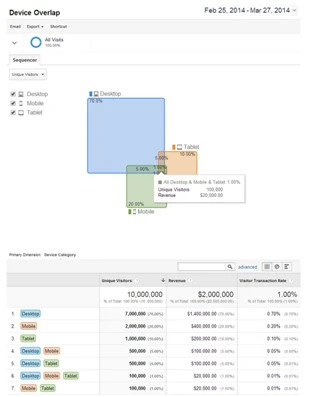
    Universal Analytics, which was in beta till now, has been launched by Google for everyone.

    According to Google, Universal Analytics equips you to power up for the measurement challenges of today’s multi-screen and multi-device environment.
    Universal Analytics
    A few important things you need to know about Universal Analytics are:

    • It has all the features, tools and reports of classic Analytics, including remarketing and audience reporting.
    • Google will be launching the User ID feature gradually, which will help you understand your customer’s complete journey. This feature provides a more user-centric view of website traffic by showing anonymous user engagement activity across different screens and site visits. User ID will also enable cross device reporting.
    • Current premium accounts will upgrade to Universal Analytics with the same service level and additional product features. Users with free accounts can also upgrade with all features intact.
    • Unlike the prior lag in data, Universal Analytics offers timely reporting with fresher data if you are in a different time zone.
    • The User Agent/IP Override feature will help you to proxy data from devices and intranets through internal servers onto Google Analytics.

    For a real-life example of how Universal Analytics works, you can check out this case study.

    Universal Analytics helps marketers in better tracking, campaign configuration and measurement with enhanced features:

    • The tracking code is more flexible and easier to implement on different levels.
    • It is easier to set up cross-domain or sub domain tracking.
    • Access to new configuration options such as organic search sources, session and campaign timeout handling, referral exclusions and search term exclusion.
    • Access to custom dimensions, metrics and new features, which will arm marketers with better measurement options.

    If you want to know more about Universal Analytics, click here.

    Image Source: Google Analytics

  • Influencer Marketing for B2B, Need to Embrace Content Consumption Monitoring and much more…| Best of the Week

    This week’s hot news, events and videos from the online marketing and social media world.
    Despite Strong Growth, Share of Online Display Advertising Spend Well Behind TV
    From the Position² Blog This Week:
    Influencer Marketing for B2B
    Influencer marketing, done right, can be an effective tool for B2B companies. Read this blog post to learn some of the key questions you need to answer before taking up influencer marketing and the advantages it offers to you.
    Top Stories this Week: Social Media
    Top Stories this Week: SEO, PPC and Digital Media
    Best of the Week Video Best of the Week Video
    Check out this video to learn about tips and tricks for various Google AdWords features.
    White Paper: Increase Visibility for Your Content by 4x
    Today’s traditional SEO is inadequate: Ignite your search results by accelerating visibility in more places than ever before.Download this White Paper and learn:


    • SEO, why the way we know it is not enough
    • Introducing and implementing Enterprise Visibility Accelerator (EVA)
    • Using multi-channel tracking tools for effective monitoring
    • How EVA benefits businesses.

    Download the complimentary EVA White Paper now

    Know more about Enterprise Visibilty Accelerator(EVA)
    If you are reading this blog post via a RSS reader, please click here to subscribe.
  • What to Expect @ Marketo’s ‘The Marketing Nation Summit’, April 2014

    Image Source: Marketo

    The much awaited Marketing Nation Summit 2014 is here! The event is from 7-9 April. It promises to be intensive and is tagged as the “Marketing Event of the Year”. Innovation is the key area of focus and the event has been designed to offer many enriching ideas.

    As an exhibitor, we at Position² are excited to be in the midst of an atmosphere buzzing with ideas and insights.

    Here’s an outline of the event’s agenda. The sessions are divided into 5 tracks to help you plan better:

    • Track 1: Planning and measuring
    • Track 2: Inbound marketing
    • Track 3: Relationship marketing
    • Track 4: Driving conversion
    • Track 5: By popular demand (includes topics selected based on feedback from previous events)

    Each of these tracks has individual sessions with topics that range from ‘Why Video is the Modern Marketer’s Best Friend’ to ‘How to Turn Every Bounced Lead into Two Warm Leads’. With speakers like Brian Kardon, Kevin Zellmer, Lori Wizdo & Nick Westergaard, there is a lot of thought provoking content on offer.

    Statistics from recent surveys show that these track topics are hot buttons for many marketers in 2014:

    There is going to be a powerful combination of new ideas, technologies, insights and healthy debates around these topics – all leading up to more effective marketing and better customer connect.

    Visit us at Booth #188

    We are a Marketo certified company and our Marketing Automation experts will be at the show. Let’s discuss about how we can help your business grow. You can also try your luck at winning a free marketing automation audit by Position²!

  • Influencer Marketing for B2B

    Image Source: Business2Community

    ‘Influencer Marketing’ – this concept has been doing the rounds in digital marketing for some time now. However, recent research on it suggests that it is picking up pace. Features like LinkedIn Influencers have made influencer marketing more powerful and the social media that carry it more persuasive.

    For starters, here is a simple definition of influencer marketing as we understand it:

    Influencer marketing is a marketing practice where brands leverage a person’s expertise and reputation in a specific area to launch/promote the brand’s products and services.

    You can either market through influencers or to influencers. The former is more prevalent but marketing to influencers and making them your advocates is a powerful strategy too. Let’s look at the road more travelled, marketing through influencers.

    There are many factors that brands must consider before cementing a partnership with an influencer. Here are a few:

    • How appropriate is the influencer to the brand in terms of values and beliefs?
    • How credible is the influencer and how far-reaching is his reputation ?
    • How appropriate are the channels used by the influencer(s) and how can the brand best leverage them?
    • Do you have a communication strategy and the content in place to build prospects’ interest in influencers?
    • How are you going to measure the ROI from your influencer marketing efforts?

    Advantages of Influencer Marketing for B2B Brands

    • Higher Trust Factor
      In B2B marketing, relationships tend to be more valuable and complicated than in B2C. The cost of changing a partner could have significant implications for a company right from re-aligning work processes to changing equipment. Consequently the choice of a company is a careful decision and influencers play a significant role in making partners appear the correct choice not just in terms of product fit but also in in terms of philosophy. Independent influencers are powerful allies as you benefit from their stature and thought leadership.
    • Greater Persuasiveness
      Having reputed influencers from your industry associated with your brand boosts the persuasiveness of your offer. Their acknowledged domain knowledge makes prospects more inclined to hear out your product story and believe it. You can use influencers’ support to augment your brand message and vouch for your product capabilities. Their knowledge and research make for a stronger marketing effort.
    • Product Launch Support
      Influencer marketing helps brands go deeper into new markets and market segments better. This is because not only can brands use their own networks to promote the launch, they can also make use of the influencer’s network. And what’s more, brands will also be reaching relevant target audiences in the process improving their targeted reach ensuring optimum use of resources. All this is great when it comes to giving new products the impetus they need in the market.
    • Eases Introduction of New Changes
      B2B products sometimes require new operating systems or have changes that markedly alter product functionality. Human beings often don’t like change even if it is for the better and so it is wise to announce the change through influencers who present it positively. This not just makes the new version acceptable but also provides reassurance via the influencers’ endorsement of product quality.
    • Bolsters Brand Networking Capabilities
      Mutually rewarding relationships between influencers and brands boosts brands’ networking abilities. Brands can not only expand their reach, they also gain access to new relevant leads through the influencer’s network.

    If your influencer communication strategy is right, you can sign up the best influencers in your industry. Once you have done this, make sure that both your industries and business objectives align. Remember that relationships play an important role in influencer marketing and the better your relationship with your influencers the more persuasive they will be in endorsing your brand. Influencer marketing can then help you go a long way in powering up your overall marketing efforts.

  • Globalization and Localization of Social Networks

    Social networks are pouring a lot of resources into making sure they have a global footprint.

    In the last few weeks, visual-centric social platform Pinterest has been investing in expanding its presence globally. The following list of countries and languages have been covered by Pinterest up until now:

    • India (Hindi)
    • Greece (Greek)
    • Hungary (Hungarian)
    • Romania (Romanian)
    • Thailand (Thai)
    • Philippines (Tagalog)
    • Malaysia (Malay)
    • Vietnam (Vietnamese)

    It’s not only Pinterest

    Other major social networks have been spreading their wings worldwide from quite some time. Expectedly, Google spearheaded this initiative. Facebook, Twitter and Instagram are also available in multiple languages. With communication becoming more advanced by the day and increasing number of people connecting with each other, globalization of social networks was imperative. At the same time, being available in local languages was also crucial for social networks.

    Reasons for Social Networks and Brands Going Global

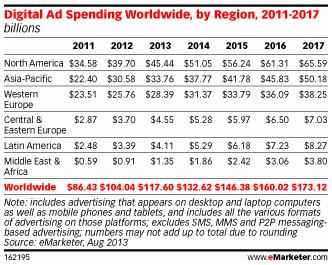
    Digital Ad Spending Worldwide
    According to recent research by eMarketer, global digital ad spending by brands has been increasing till 2014 and is projected to continue the upward trend for the next few years.

    With specific focus on social networks, according to a recent study by Decipher on behalf of the Word of Mouth Marketing Association and the American Marketing Association, 7 out of 10 marketers expect their companies to increase their social media spending in 2014.
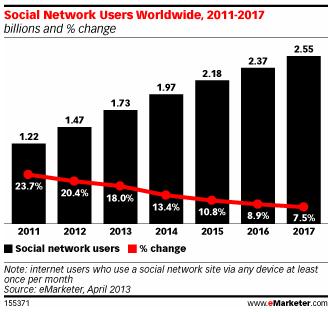
    Social Network Users Worldwide
    Another eMarketer study said that the strength of social media users worldwide will be 1.97 billion and will climb up to 2.55 billion by 2017.

    When brands are spending billions in ad dollars all over the world and social networks’ user base is expanding without being restricted to certain regions, social networks will want their share of the pie.

    To do this, social networks must expand globally along with maintaining robust ad offerings, retaining user trust, ensuring ROI for brands among other things.

    What is your take on this trend?

  • Winning More Customers With Marketing Automation

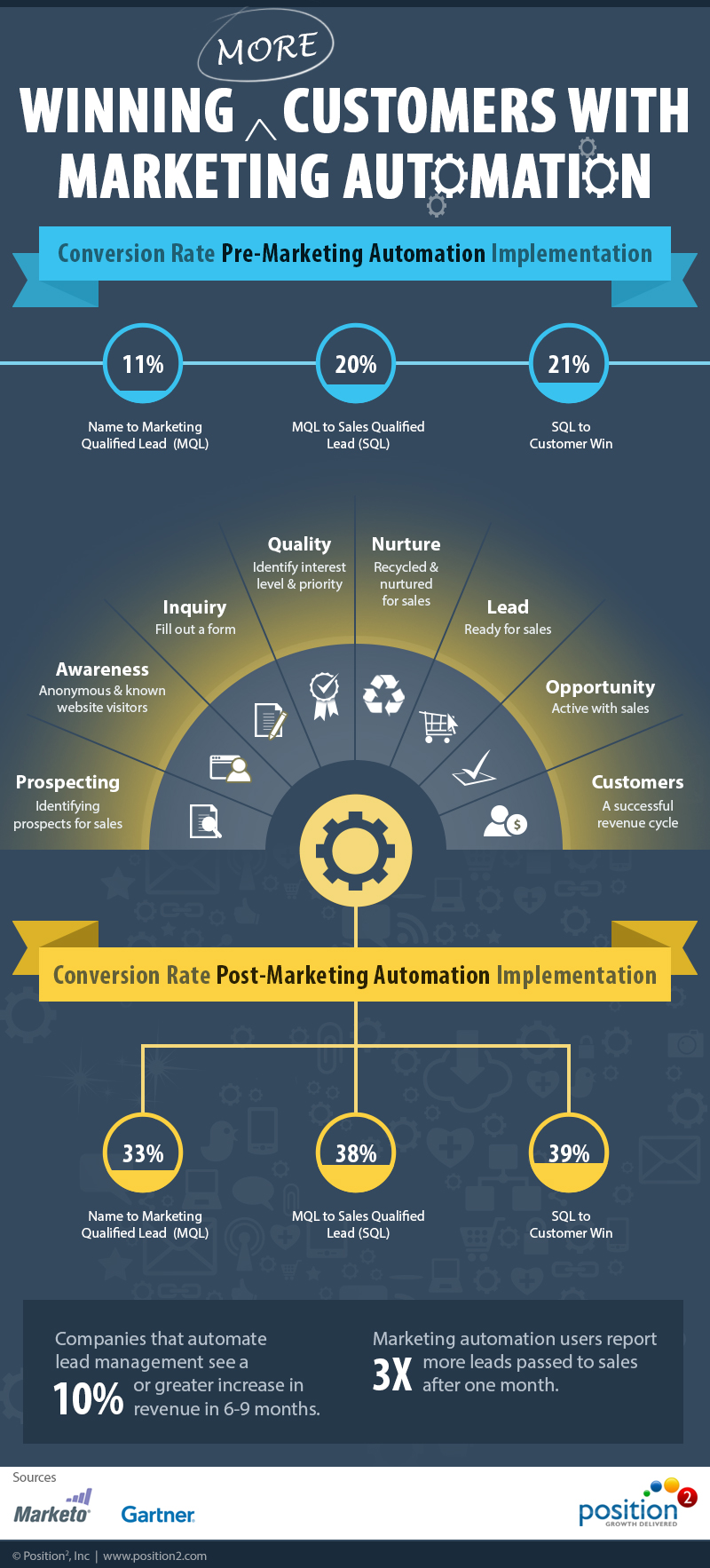
    Marketing automation is a hot area in digital marketing and brands are embracing it at a really fast pace. Check out this infographic that shows how customer wins increased with the usage of marketing automation systems.

    Winning More Customers With Marketing Automation

  • LinkedIn Builds On Content Marketing Ad Tools

    LinkedIn Builds On Content Marketing Ad Tools

    Image Source: Zach Zupancic via Flickr

    After its Influencers update, LinkedIn is continuing to focus on building tools that will increase its focus on content marketing.

    LinkedIn Content Marketing Score

    LinkedIn calls this tool as a ‘recommendation engine’ that measures your target audience’s engagement with your content and informs you about the extent of your impact. You can compare your performance with your competitors and see how you are doing. You can also measure your content performance across various LinkedIn platforms: Company Updates, Sponsored Updates, Groups, Influencer Posts etc.

    LinkedIn Trending Content

    You can now have your finger on the pulse of your audience’s content preferences. LinkedIn Trending Content tool will rank the topics that are popular with your audience. This will help you develop and modify content according to industry trends.

    Trending Content will display trending articles and topics that are ranked based on their engagement on LinkedIn. You can even see the particular audience segments that are sharing the most content about any topic.

    What it means for brands…

    You can target your content based on specific audience interests. While Trending Content will provide information about industry topic trends, it will also help in securing higher content reach with more shares. This is because Trending Content also shows data on audience segments that are sharing content, which will help in targeting only those segments that are most active in sharing.

    If you already have content on LinkedIn, score your current content and study the results. If you are not doing well, you can use the Trending Content tool and develop content based on trending topics.

    If you are starting out now, find out what topics are trending in your industry amongst your target audience. Build your content and strategy based on this.

    For more information on how you can bring Content Marketing Score and Trending Content together, you can download LinkedIn’s eBook.

    Tell us what you think about these two updates…

  • Developing Website User Personas, Peer Content Marketing Tips and much more…| Best of the Week

    This week’s hot news, events and videos from the online marketing and social media world.
    Checklist to Develop User Personas for Your Website
    From the Position² Blog This Week:
    Checklist to Develop User Personas for Your Website
    A thorough understanding of users is indispensable when developing a website that delivers a customized message to every visitor. Read through this blog post to know the questions you need to ask in order to build user personas for your website.
    Top Stories this Week: Social Media
    Top Stories this Week: SEO, PPC and Digital Media
    Best of the Week Video Best of the Week Video
    Check out this video where Moz’s Rand Fishkin gives tips on how you can boost your mobile SEO to help your business.
    White Paper: Increase Visibility for Your Content by 4x
    Today’s traditional SEO is inadequate: Ignite your search results by accelerating visibility in more places than ever before.Download this White Paper and learn:

    • SEO, why the way we know it is not enough
    • Introducing and implementing Enterprise Visibility Accelerator (EVA)
    • Using multi-channel tracking tools for effective monitoring
    • How EVA benefits businesses.

    Download the complimentary EVA White Paper now

    Know more about Enterprise Visibilty Accelerator(EVA)
    Position2 Google India YouTube Channel Position2 Google India YouTube Channel
    We at Position2 are proud to be associated with Google India for their new
    YouTube channel
    If you are reading this blog post via a RSS reader, please click here to subscribe.
  • Checklist to Develop User Personas for Your Website

    Personas

    Images Source: Alex Morley

    Everyone knows that it’s important to have a website that is appealing, informative and technically updated. But, an informative and friendly website is not all that it takes to connect with visitors these days.

    Your website needs to be able to talk individually to every visitor and cater to their needs. This requires knowing:

    • Why do users come to your website?
    • What are their needs?
    • Do they have a particular problem that has to be addressed?
    • What approach do they usually take to tackle their business problems online?

    These are just some of the questions that you need to be thinking about while developing your website content. It’s easier to talk to visitors when you know who they are and what they are looking for.

    Prospects visit websites in search of solutions for stated or unstated problems but it’s not enough just to have a solution to their problem. You need to make them want to listen to you and buy from you.

    Online buyer personas define groups as specific individual types and in doing so, help the website speak directly to these individuals. For example, typifying a user type as ‘Deal seeking Donald’ helps you write your content as if you were talking to him directly, answering his questions as they form in his mind. This makes your brand look like it knows him and cares about his problems.

    Also, if you are considering embracing personalized marketing, building buyer personas will be an important step to send out the right information to the right personality type.

    Check out this step-by-step procedure that will help you create user personas for your website:

    Step 1: Define Industries & Roles

    List out the different industries your target audience belongs to: IT, e-commerce, finance etc. The next thing is to identify their role within the organization:

    • What is their designation?
    • Are they the decision makers?
    • Are they executives who actually use the product/service?

    Step 2: Define Demographics

    Gather demographic details about your target audience. Here are some questions you can ask across industries:

    Step 3: Learn their Business Objectives

    Know what makes their business tick:

    • What are the passions that drive them?
    • What business goals are they trying to achieve?
    • What are the business problems they need solutions to?

    Step 4: Your Value Proposition

    Tell users how you can enhance their business:

    • What is it that your company can offer users?
    • How is your company different from the competitors?

    Step 5: Categorize personality types

    Divide your target audience by their overall personality types:

    • Are they problem solvers?
    • Are they early adopters of new technologies?
    • Are they conservative?

    After defining your personas, here are some aspects that you need to understand:

    • What will these users expect from you in terms of products and solutions?
    • What should be your top content communication format?
    • Depending on their needs, which are the pages they are most likely to view and spend time on?
    • How will you structure those pages?
    • What keywords are the users typing in to look for your brand or industry?

    Imbibe the information you gain from user personas into your website building process.

    Can you think of any other important questions you need to answer while building user personas?