Author: Team Position Squared

  • Need More Traffic? Learn How to Optimize Google’s Featured Snippets

    The goal of all content is to attract new audiences, generate more traffic and reach the business’s overall goals. With Google’s algorithms and practices constantly evolving, it pays to adapt to the changes coming your way. One such new development in recent years is the use of featured snippets on the search results page. If you succeed in optimizing your content for Google’s featured snippets, you can increase the traffic to your site and even become recognized as a trusted source on the subject in question.

    To help you do this, here are four infallible ideas to optimize your content for Google’s featured snippets.

    What Exactly Are Google’s Featured Snippets?

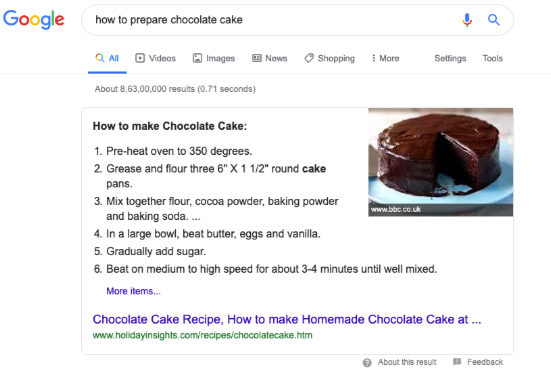
    Also known informally as answer boxes, Google’s featured snippets are exactly what they sound like – they’re featured pieces of content that appear in a distinct box right at the top of the search-results page. They precede the organic search results and come in second only to advertisements. Here’s an example of a featured snippet.

    You see that recipe in the box? That’s a featured snippet. Featured snippets are generally in the form of paragraphs, lists, or tables, and typically show up when people search for specific things like questions, recipes, statistics, and lists.

    How to Optimize Your Content for These Snippets?

    Optimizing your content for Google’s featured snippets may seem daunting until you do it. Following are a few pointers to get you started with the best practices to hop on to the featured snippets bandwagon:

    1. Research Your Keywords Thoroughly

    Keyword research forms the basis of creating content that shows up as a featured snippet. Why you ask? Because Google’s featured snippets are most often triggered by long-tail keywords. Begin by using trusted research tools to identify keywords which contain question words in them, such as “what,” “where,” “when,” and “how.” Google’s Keyword Planner can help you pick and use the right keywords to get your content noticed. Serpstat is another tool that helps with both keyword research as well as featured snippet research.

    2. Create Content That Answers the Right Questions

    Your content needs to be useful and informative. Only then can it qualify for the searches that trigger Google’s featured snippets. So, identify the topic you want to write about, and find a unique angle that people are actually interested in. Use public forums or social media to find out what people are asking and create content that’s relevant to what’s in demand. Or better yet, create a poll and ask your followers what they’d like to read about, or what they’d like to know the answer to. These tips can help you write about things that people want to read.

    3. Structure Your Content Well

    Once you’ve zeroed in on the right keywords, you need to ensure that you create content that’s easily scannable. For instance, if your content can be done up in the “how-to” format, it’s best to opt for this style. You could also opt for long-form content that’s at least 1,500 to 2,000 words wherever possible. It’s no secret that Google rewards long and informative posts, but don’t just stop with the word count. Mix it up by adding relevant images, infographics, and videos. Also, remember to make your titles descriptive and to format your title tags well.

    Learn How to Optimize Google's Featured Snippets

    4. SEO – An Important Piece of The Puzzle

    No matter what you hear, SEO is not going away anytime soon. It’s always relevant. This is why you need to keep your SEO game on point if you want to make it into the big leagues and have your content featured in a snippet. If you’re new to SEO, here are some of the best practices you need to focus on.

    • Easy-to-read content
    • Meta descriptions and keywords
    • Title tags
    • Link-building
    • Elimination of duplicate content

    A Final Word of Advice: Build on Your Strengths

    Here’s a quick tip before you get started: Get better at what you’re good at. Identify the topics where you already rank high on search results and build on the dimensions of those subjects. For instance, if you rank high on search results for “best ways to lose weight,” optimize the relevant content pieces for the answer boxes. This way, your chances to have your content show up as a featured snippet get improved.

  • Why Should You Invest in Long-term SEO?

    “Why Should You Invest in Long-term SEO?” is one of the most common and repeated questions around the Search Engine Optimization industry.

    Over the last ten years, Google has increased its focus on user experience and search intent, making this a hot topic. Google’s rollout of RankBrain several years ago made this topic even hotter. But the big question is whether an investment in SEO is worthwhile. In this article, we’ll share with you the benefits of making a long-term investment in SEO. We have included a number of items such as SERP (Search Engine Results Page) features and voice searches that you might not even realize fall under SEO.

    Evolving Search Algorithms
    According to John Muller, Google’s Webmaster Trends Analyst, its search engine algorithm gets refreshed throughout the year. If we take the unconfirmed algorithm updates from Google into consideration, we would see a pattern of an everyday refresh. Truth be told, webmasters around the world report fluctuations in ranking almost every day. The below screenshot shows the rank fluctuations from one of the SEO tools for the last 30 days.

    The message is pretty clear that the Google algorithm is evolving every day, and your effective SEO strategy should be revised to accommodate the changes. Additionally, adhering to the Search Engine’s guidelines will help your website visits grow naturally.

    Evolving SERP Features
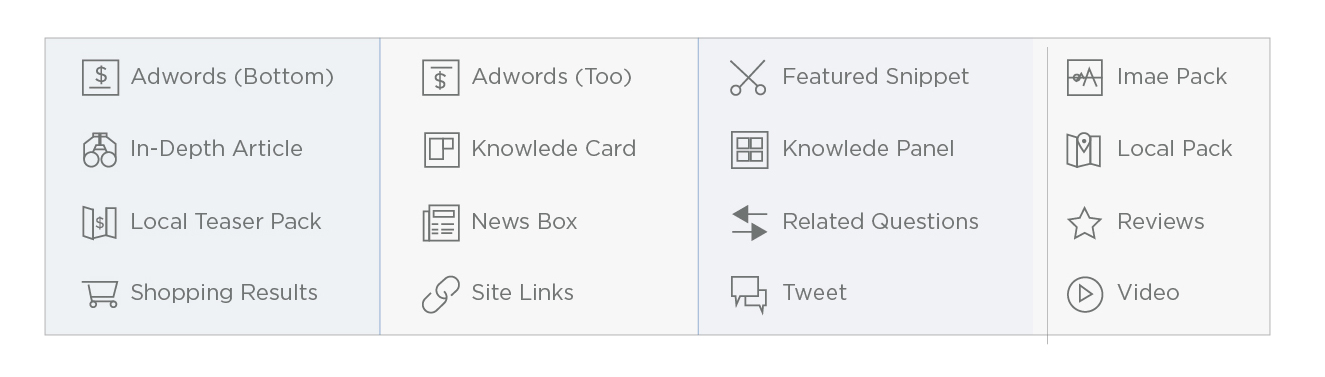
    Google keeps introducing new SERP features to deliver users what they are looking for. These changes are most visible in search results, which make every organic marketer optimize the website/content for the new feature. Every time search engines, especially Google, introduce a new SERP feature, it altogether changes the definition of “how to do SEO.” Below is a sample set of SERP features that dominate the search results.

    Emojis in Advertising: Do’s and Don’ts

    So what does this mean for you? A long-term SEO strategy is critical for making sure you perform well on SERPs.

    Evolving Search Intent
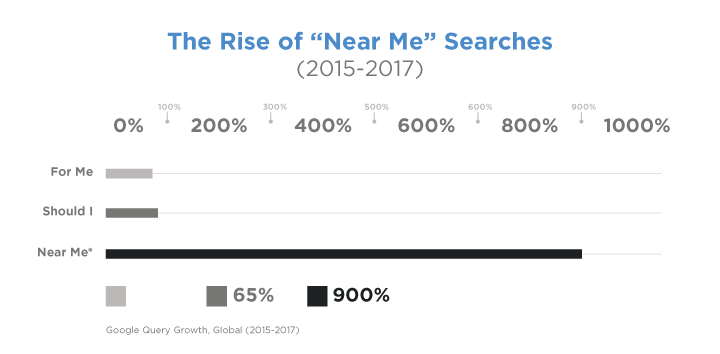
    With greater penetration of mobile devices, the search intent is evolving, as well. Currently, Local and Voice are changing the game plan. Small businesses should capitalize on local SEO to get maximum visibility. In the past two years, “Near me” organic searches have witnessed exponential growth. From 2013 to 2017, there was a 900% increase in “near me” searches.

    Emojis in Advertising: Do’s and Don’ts

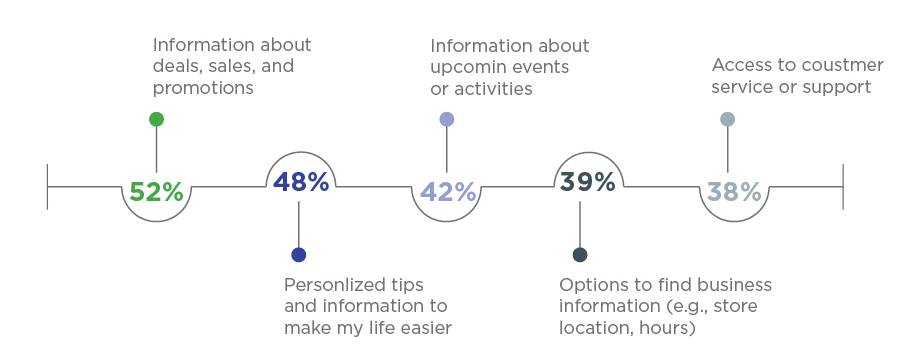
    Voice search is growing exponentially YoY and is becoming popular with all age groups, especially the younger generation. If you are in the B2C market, voice search optimization should be an integral part of your marketing strategy. The following few points will clearly say where it is leading and why you should capture this:

    • The global market for voice search devices grew by 187% in Q2 2018.
    • Apple, Google, Xiaomi, Amazon, and other manufacturers collectively shipped 16.8 million units in Q1 of 2018.
    • Google sold 5.4 Million Google Home models so far in 2018.
    • Amazon had sold 4.1 Million Echo devices by Q2 2018.

    Courtesy

    One in five searches on a mobile device is now a voice search. According to Google, 39% of people use voice search to find business, store, etc.

    Emojis in Advertising: Do’s and Don’ts

    Clearly, optimizing your website content for voice is critical.

    Your website content should use natural language to make sure your users understand the content with ease. To optimize your content for voice searches, use long-tail keywords and focus on natural language. Keep in mind that most long-tail keywords in voice searches are in the form of questions. Having a Q&A or a FAQ section could be the right place to start.

    Competitors are Evolving
    Every business competes for better online presence. So, when it comes to online marketing, you face new competitors every day. These aren’t just your direct business competitors but also other websites like Wikipedia, Twitter, etc. These information-focused websites dominate the SERP pages for your business terms across all search engines. The bottom line is that you need to outrank your business competitors as well as the general information-based websites. Regular competitor gap analysis will help you sharpen your sword and get yourself in front of your battlefield.

    Brand Building (Economically)
    Long term SEO helps economically build your brand by growing your online presence. Remember, an established brand usually stays at the forefront of a person’s mind even after the sale or service is over. Brand building and SEO work toward the same goals with an additional benefit of getting better traffic, targeted audiences, improved conversion rate and profitable ROI.

    Hidden Benefits
    When you focus on delivering high-quality content based on what your users are looking for, you can considerably reduce your customer-care and sales costs. Here are two recommendations for accomplishing this:

    • Focus on common questions of your users/customers in a FAQ section
    • Provide tutorials/guides to help customers understand your products and services

    Final thoughts:
    The bottom line is that if you have a marketing budget, investing in long-term organic SEO should not be a second thought. Long-term investment in SEO is one of the best marketing choices you can make for your business growth. This form of digital marketing will help your potential customers find your website with ease, which will result in targeted organic traffic, higher sales and better ROI.

    Interested in learning more about the growing organic trends, reach out to us!

  • Emojis in Advertising: Do’s and Don’ts

    With World Emoji Day coming in just around the corner on July 17th, let’s take a look at one of the most pressing questions in advertising – Should brands use emojis as part of their marketing strategy? The short answer would be “yes.” The longer answer needs more details.

    Here Are 4 Reasons Brands Should Use Emojis in Advertising

    1. Emojis Scale Past Language Barriers
    It’s no secret that emojis are universally understood by people everywhere in the world. So, if your brand is interested in expanding into a new state or country, using emojis as part of the initial marketing strategy could be a great way to gain the attention of the local folks.

    2. They Improve the Rate of Engagement
    Text can quickly get boring. And given the volume of wordy advertising campaigns being churned out every day, using emojis can be a refreshing change for the end user. In fact, using emojis can improve engagement by nearly 48% on platforms like Instagram.

    3. They’re Easily Processed by The Human Brain
    The human brain processes visuals several times faster than text. Scientists from MIT have found that we can process entire images in as few as 13 milliseconds. Brands can use this to their advantage and convey a lot more with a single emoji than they could with a string of words.

    4. Emojis Offer Opportunity for Innovation
    Unlike text, which can only be manipulated to a certain extent, emojis offer greater scope for creativity and innovation. There are around 3,000 emojis in use today, and brands can even create their own emojis to convey their unique message to the end users and consumers. The possibilities are endless.

    Emojis in Advertising: Do’s and Don’ts

    Practical Tips for Using Emojis in Your Marketing Campaign
    The next important question is – How do you go about using emojis in your advertising strategy? While there aren’t any rules set in stone, you can benefit a great deal from these three practical tips we’ve listed here.

    1. Know How Much Is Too Much
    Don’t make the mistake of being too lavish with your emojis. Often, brands tend to err on the side of generosity and use too many emojis when just one would have sufficed. For instance, using a simple party emoticon when you’re announcing a sale or a discount on Twitter can get the message across more effectively than using multiple emojis.

    2. Stay Loyal to Your Brand
    Many marketing heads worry that using emojis can dampen the seriousness of their brand. While that’s not entirely true, the nature of your brand certainly influences the kind of emojis you can use. For instance, if your company offers financial consultation services, it’s best to stay loyal to your core theme and use smiley faces, the applauding emojis, and the thumbs-up icon.

    3. Use Emojis in Multiple Channels of Communication
    Most brands tend to limit the use of emojis to social media channels like Instagram, Twitter, and Facebook. Given the informal nature of these platforms, this trend is quite understandable. But did you know that you could also use these little visuals in the subject of an email? Using the right smileys around Valentine’s Day, Christmas, and St. Patrick’s Day improves the open rate for emails.

    The Bottomline – to Emoji or not to Emoji?
    As is the answer to most questions, it’s best to emoji with moderation. Using them too much can make the novelty wear off, while not using them at all can make your message come across as stoic and unfriendly. The trick is to use emojis sparsely, in the right places, and in the right manner.

  • Brand Building with SEO Why it is important and 10 actionable tips to get it right!

    Google (and any other search engine) always give a better and favored treatment for bigger brands. More prominent brands rank for competitive terms with fewer links. For base and long tail keywords, brands rank quickly in SERPs. Whereas, the smaller brands need more than twice the link of bigger brands to get ranked for similar terms in SERP.

    Brand building and SEO work toward the same goal. Get better traffic, targeted traffic, improved conversion, profitable ROI. Like, every bigger brand small and mid-sized businesses too should focus on spreading the brand image with their users in mind.

    Remember, an established brand usually stays in the forefront of a person’s mind even after the sale or service is over.

    Google SERPs changes and updates just as frequently as each algorithm update. Most recently, SERPs consist of sitelinks, Local Pack, Knowledge Graph, Featured Snippets, People Also Ask, Images, Videos, Product Listings, and Reviews.

    According to Google’s guidelines to their quality raters (real people who assess web pages and grade scores against the predefined set of perimeters) EAT principle is predominantly used. E-A-T stands for Expertise, Authority, and Trustworthiness.

    While Google has not mentioned in their document about the brands against the EAT principle specifically, it is quite evidently important that brands fulfill all these standards by default.

    According to Google, high-quality pages own the following characteristics:

    • The content should be good enough to please the needs of a user for a page’s unique topic and purpose
    • The website also holds enough secondary information, for example, “About us,” “Contact us”, etc.
    • The website speaks about the supplementary content (SC) that improves the user’s experience of a web page
    • The page is structured and designed in a way that users locate the content easily and quickly.
    • The website is maintained and edited regularly

    Here are some brand building tips to ensure your SEO strategy supports your efforts:

    • Create fresh and unique content that addresses your users/audience pain points with blog posts, in-depth articles, videos, and podcasts.
    • Add value to the existing content to make them linkable content assets
    • Build authority via content
      • Create a blog section on your website and start adding your expert opinion
      • Be a contributor or guest blogger in niche forums/portals to have a share of voice to increase your brand image
      • Publish press releases about your brand and its activities
      • Acquire quality links via natural content-driven link building activities
      • Maintain a quality backlink profile
      • Optimize your content for your consumers by using targeted and long-tail keywords that THEY will resonate with organically. However, do not focus on keyword phrases for search engine crawlers
    • Be active on social media channels
      • Repurpose your content across various social media channels
      • Make your employees your brand advocates in social channels
      • Cross-promote the content via social channels
      • Have influencers talk about your business for reputation management and increase social shares
    • Leverage universal search (Images, Videos, etc)
    • Have a consistent NAP (Name, Address, Phone Number) across the internet. These local SEO factors for crucial for ranking if you are running a location-specific business.
    • If not backlinks, create brand identity via brand mentions from related websites
    • Have your website search engine optimization compliant
      • Audit your website against technical SEO compliance and fix the errors. Make use of Google’s free Search Console to get quick error reports on your website.
      • Leverage SEO on-page optimization and incorporate the crucial SEO elements
      • Follow white-hat SEO best practices and adhere to Google’s guidelines to stay on the track.
      • Consistent use of on-page optimization and off-page SEO while building a brand
    • Claim your Business on Google My Business to get visibility in Google Knowledge Panel.
      • Do not forget Yahoo Maps, Bing Maps
      • Data Aggregators helps you build your brand across the world wide web.
    • Build your marketing strategy focusing the local publications. Google and Bing will reward your business with a boost in local and blended search rank when you get a mention/link from local publications.

    As a business, you don’t just want people to identify you with jus t your logo. You should want your target audience and need them to find you and connect with you. Appearing for relevant search keyword phrases and search terms found by the target audience is the key to any brand image building strategy. SEO helps with both.

    Share your thoughts on the comments. Are you looking for consultation on how to build your brand image, increase your online presence, and get visibility for your brand? Let’s connect!

  • Position2 Academy Launched

    Position2 Academy is an open-learning initiative that aims to provide learning and career advancement opportunities for young digital-marketing aspirants. Our training programs are offered as instructor-led online training, web-based training, and private classroom training. Apart from the topic specific to the program, we also provide Microsoft Office and soft-skills training, which are fundamental to any profession.

    As an award-winning demand-acceleration agency with a global footprint, we are committed to delivering consistent results for our clients’ all-round progress. We carry the same attitude and commitment to our training program. To deliver the best for our clients, we are looking to strengthen our team with the best kick-starters in the digital industry; ones who would be pioneers of the next generation of integrative and innovative digital marketers.

    We are a driven, progressive, fast-paced, and successful agency first and a training academy second. The training offered by us is not to give you just a certificate but a career foundation that is second to none. We are here to build your digital career.

    Why Position2 Academy?

    • The courses are designed in a way that you are not only aware of the current best practices but become equipped to quickly adapt to any changes that come in the future.
    • Our trainers are domain experts for our agency who help multiple clients achieve accelerated success results.
    • Our focus is to enhance every individual’s natural skill set and inclination for mapping a successful career in digital marketing.
    • As the training progresses, you will be able to work on live projects to test your learning and enhance your experience.
    • You directly get hired by Position2 at the end of your training, if you qualify in the assessment.
    • The focus is on building your career in digital marketing, which means in addition to the knowledge of digital marketing, you would get trained in Excel, Communication skills and more.
    • In addition to knowing the strategic nuances of digital marketing, the faculty at Position2 is approachable and communicative. You are encouraged to ask questions, as many and as often as you like.

    Call us at 080 42416040 or mail to training@position2.com for more details.

  • Crawl Budget Optimization – a Crucial SEO Factor

    Are you a business owner with a website with multiple pages and many new URLs that are auto-generated every day? If this is your website, then Google might not crawl all of these pages effectively. The most important point is to prioritize what and when and how much to crawl.

    In simple terms, according to Google, a” define crawl budget as the number of URLs Googlebot can and wants to crawl.” Both the crawl rate limit and the crawl demand make up the crawl budget. While crawling a website, the number of requests made by Googlebot per second is considered the crawl rate. The crawl demand is where Googlebot determines how popular new and old pages are and the prevention of URLs becoming stale in the index. The more pages are crawled by search engine bots; the more will be indexed for search results.

    Most often than not, the crawl budget is overlooked when optimizing a website. Many do not realize that it is a significant SEO factor that can bring traffic to your website.

    Crawl Budget Optimization – a Crucial SEO Factor

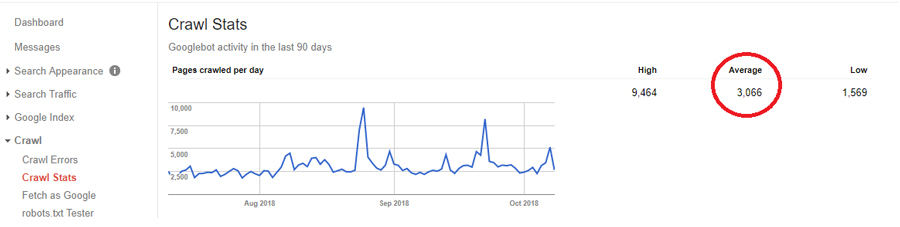
    The above screenshot is from Google search console (Google Webmaster Tools). It tells us that Google crawls 3,066 pages per day for the verified website. From that, we can figure it out that the monthly crawl budget for this site is ~3,066*30=~91,980.

    Fact check:
    A healthy crawl rate will help your websites get indexed effectively and quickly. But don’t jump to the conclusion that a higher crawl rate will help improve your organic ranking.

    Factors that affect the crawl budget

    • Duplicate Content
    • Thin Content
    • 404 Pages
    • Redirect Chains
    • Robots.txt
    • XLM Sitemaps
    • Website Architecture
    • Website Speed

    Duplicate Content

    Irrespective of the source of the content, duplicate content can negatively impact your SEO efforts, and wastes crawl budget to a significant level. Duplicate content can happen in many ways.

    Internal content duplication

    Internal content duplication may occur when different URLs point to a single page.

    • www.example.com/page1
    • example.com/page1
    • example.com/page1/
    • example.com/Page1
    • example.com/page1/index.php

    Duplication with URL parameters

    Base URLs added with parameters would create N-number of duplicate pages

    • www.example.com?id=1
    • www.example.com?id=abcd

    E-commerce duplication

    Sorting and filter options will create unintentional internal duplication

    • www.example.com/cat1/sub-cat1/product-listing
    • www.example.com/products/cat1/sub-cat1?product_list_order=name&product_list_limit=15

    The similar problem occurs with websites that offer calendars to save certain events/webinars etc.

    Thin Content

    Pages created via tags, and authors sections create thin / low-value content. This occurs mostly within the blog post section. These pages are planned for users and search engine bots to find relevant pages and improve internal navigation.

    404 pages and soft 404 pages

    If a website has a huge number of 404 and soft 404 errors, these need to be fixed. Since Googlebot tend to revisit the pages to validate if they are still non-indexable. Keeping an eye on pages that return 404 status code is key to keep things on track.

    Redirect chains

    If your site has an unreasonable number of redirect chains, bots will stop following the directions, and the destination URL may not get the bots’ attention. Each redirection is a waste of one unit in your allocated crawl budget.

    Robots.txt

    Robots.txt file instructs bots what to crawl and what not to crawl. Thus, not using it properly might consume a considerable amount of crawl budget units.

    Improper XML sitemaps

    An XML sitemap is the most important section of your website which helps proper crawling and indexing. Knockout the errors in the XML sitemaps (404s, non-canonical, redirected URLs, URLs blocked by robots and meta tag) and validate it frequently.

    Improper website architecture

    Bots will find it difficult to find fresh content and pages if the site structure is not developed properly. Having proper silo structure and internal linking structure will help improve the crawling and indexing.

    • www.example.com/product1 (Flat structure)

    Website site speed

    The faster the page loads and the response time the better for your users and search bots. The faster a web page loads not only keeps the user on the website, but it also ensures web crawlers are keen to re-crawl your website. So, if your website load time is slow, it negatively affects the crawling. Google’s page speed insights can be the first place for anyone to work around the improvement.

    Where to look for crawl data?

    To have a more detailed breakdown of the crawl stats by individual pages, we need to analyze the spiders’ footprints in the server logs. Often raw log files are hard to read and analyze, to help make the job easier, tools available in the market.

    Does crawl optimization improve ROI?

    Crawl optimization will help you get rid of inactive pages that are not useful from your website and help you build more useful and active pages. This will gradually and positively impact the indexation and internal popularity of the website and mainly for the most focused pages for your business.

    In short, Crawl budget helps you bring positive ROI with much fewer pages but are very active and important pages.

    Takeaways

    • Crawl budget is considered an important factor for SEO for websites large and small.
    • Very low crawl budget means Googlebot doesn’t like your web pages/content.
    • Very high crawl budget doesn’t guarantee a high ranking. Additionally, a very high crawl budget will overload your server.
    • Tweaks in crawl budget settling will not help. Instead, optimize your website to have an effective and efficient crawl budget by implementing the factors discussed above.

    Crawl budget is not as popular and talked about when referring to ‘quality content’ or ‘authoritative links.’ However, it is very much an important factor for larger e-commerce sites and content portals. When you spend time analyzing your server logs and optimize your crawl budget, it not only gives a cleaner site but will improve your site’s performance in organic search.

    Are you a business owner and still not sure where to start crawl budget optimization for your website? Let our experts do it for you. Let’s talk about it!

  • Meet us at SEMpdx Engage Conference on March 7th and 8th, 2019

    Join us March 8th from 11:40-12:30 PT as our head of Organic Marketing, Tushar Prabhu, speaks about creating and optimizing content with our proprietary Predictive Content methodology at the SEMpdx Engage Conference, a digital marketing conference in Portland. The Engage Conference is a two-day digital marketing conference with panel sessions of expert insights, strategies and the latest advancements in digital marketing, SEO, content, advertising, and paid media.

    Over the last couple of years, Tushar has been working with our content and organic marketing teams, developing Predictive Content, a methodology that has been transforming organic marketing for our clients.

    Participate in this packed 50-minute discussion with your questions as Tushar teams up with Kane Jamison, CEO of Content Harmony, covering concepts around content strategies, user intent, the latest in content marketing and how to get your content to rank in organic search. Do not miss out as this could jump-start your content marketing strategy.

    Come say hello to us at the Engage Conference, on March 7th and 8th at our booth at the Sentinel Hotel – Portland. We are excited to see you there!

  • 5 reasons why your business needs content marketing

    From start-ups to Fortune 500 companies, everyone’s joining the content marketing bandwagon. In today’s dynamic and digital world, content marketing is possibly the most effective method to gain new prospects and retain the existing ones. There’s no escape from it if you’re serious about growing your business.

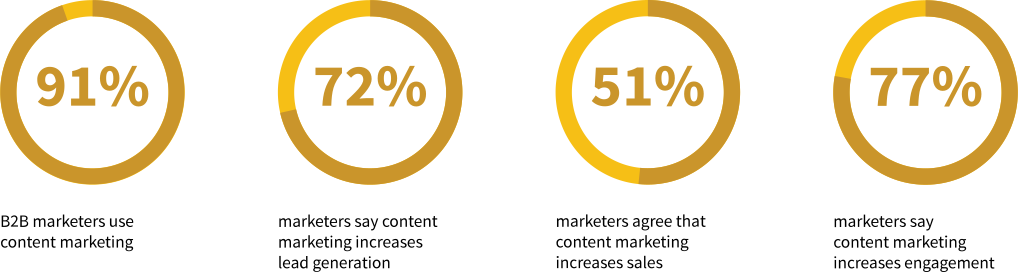
    Don’t believe us? Well, numbers don’t lie.

    5 reasons why your business needs content marketing

    Does this mean if you don’t have an effective content marketing strategy in place, you’re most likely to miss out on business? Probably, yes.
    However, if you’re still not convinced about adopting a content marketing strategy, here are 5 reasons why your business needs content marketing.

    1. Content helps to establish brand identity
      In a world where more than 46% Americans check their smartphone before getting out of bed, content consumption begins even before the day starts. Digital transformation is in favor of content marketers. By creating the right content and effective marketing strategy, marketers like you can carve a niche for their brand. Content in the form of blog posts, emails, infographics, and videos makes your brand stand out amidst competitors or cat videos. Create content that not just floats your boat but your customers’ too, in turn giving them a mnemonic to remember your brand.
    2. Easy to track and analyze
      A marketer like you probably spends a lot of time stuck in a dilemma pondering over what works for your business and what doesn’t. With an effective content marketing strategy, you can easily track and analyze your numbers, and quickly zero in on what’s working for your audience and what’s not. This process not only ensures a smooth content marketing operation but also makes it highly efficient at targeting leads and converting them to customers.
    3. Less expensive, more effective
      Unlike old-school marketing or advertising campaigns that burn a hole in the marketer’s pockets, online content marketing costs 62% less than traditional marketing. Your company’s return on investments will determine if your campaign was successful or not. With the right targeting, different content distribution, and analysis methods, it’s no surprise that digital content marketing fetches more ROI than traditional marketing.
    4. Improves search engine results
      Search engines have changed the business landscape. 60% of consumers start their research with a search engine before heading to a specific website. 81% of people look at products online before purchasing in store. Content marketing helps you improve your search engine results. Contrary to traditional campaigning that stays in the users’ minds only for a few weeks, days, or minutes, good content marketing collaterals remain relevant for a very long time. Plus, when users and media houses share your content, they’re unconsciously promoting your brand, potentially producing millions of dollars for free.
    5. Brings you closer to your target audience
      Generating leads is not the only goal for marketers like you. Producing the right leads who you can sell your business to is the ultimate goal. If done right, content marketing allows you to attract potential customers and retain the existing ones. Compared to traditional marketing where the user only has limited information, an online content marketing strategy leads to the other, giving the user more information about your brand. Moreover, content marketing strategy allows users who are actively searching for a brand to find it. It ensures they discover you.

    If you’re interested in amplifying your content marketing strategy, you’ve come to the right place. At Position2, we have helped a diverse range of companies across the globe create, curate, and multiply their content offerings.

    Stats Reference

    2016 B2B Report

    Content Marketing Statistics

  • Big Wins in Web Design at the WMA Awards 2018

    The Web Marketing Association holds its 17th annual WebAward Competition. This is the longest running annual website award competition that recognizes the best websites in over 96 industries and sets the standard of excellence for all website development.

    Out of thousands of entries, we exceeded industry standards and received the Standard of Excellence award in two categories – Information Services and Investor Relations.

    In the category of Information Services, we received our award for designing a winning customer interface for a Customer Identity Management Company.

    Here’s a comment from the judges.
    “Nicely architected. Easily navigable. Information is readily available as are stats as to company’s effectiveness and testimonials (or quotes from Forrester).”

    Our second win was for the digital rebranding of a venture capital firm.

    To quote the judges:

    “Site design is quite ‘tight’. Most modern websites these days have pages that scroll forever. Homepage and several subpages here are organized with all content ‘above the fold’, using modern rotators to introduce new ideas. This is an unconventional layout but shows that a lot of thought was put into distilling the information to be presented to the visitor.”

    2018 has been a great year for Position2. We were silver and bronze winners at the International Design Awards (IDA). We also made it to the #13 spot in Top San Jose Companies and stood at #598 in the Inc 5000 listing.

    Click here to know more about our IDA win.

  • IDA Winners!

    Started in 2007, the International Design Awards (IDA) is an organization that recognizes smart and sustainable design in five disciplines, one of which is graphic design. Every year, IDA looks to celebrate graphic designs that not only push boundaries but also use unique elements collectively to create a lasting impression.

    On the 10th Annual IDA Awards, Position2 won Silver for the Multimedia and Interface Design Category and Bronze for the Multimedia and Website Design Category. Both awards were based on Position2’s thinking behind the Artiman Ventures website.

    Artiman Ventures, is a sector-agnostic Venture Capital firm that invests in white space companies. Artiman identifies and backs entrepreneurs that have an unfair advantage in creating or disrupting large markets. White space opportunities occur infrequently and typically at the intersection of multiple disciplines, markets, and geographies.

    Position2 created their new branding, logo, and website to reflect their contemporary thought process, new-age advancement of recognizing great white space ideas, infusing the investment they require and then facilitating the network and ecosystem to thrive in.

    The Artiman logo is designed around their three-pronged approach, which is represented with a triangle. The central concept of the triangle plays on the letter “A” of Artiman. The three vertices are anchored with: Invention; Investment; Network. It puts the entrepreneur in the center, signifying Artiman’s focus, which is, to ensure that each investment is spearheaded by an energized entrepreneur who has all the key ingredients required to propel the idea forward, successfully. Led by a team of highly experienced former entrepreneurs, their website recognizes their ground-breaking portfolio companies, and celebrates their B.E.T.A. Members (Biology, Economics, Technology, and Arts), nominated by a panel of academic advisors and opinion leaders, across multiple disciplines. Artiman catalyzes the injection of new white space ideas to give rise to a plethora of inventions that hold promise of true disruption.

    At Position2, we like turning a client’s brand story into a unique Customer Experience (CX). Through CreaMeleon, our creative group, we deliver an engaging brand experience for web and mobile platforms. With our 3D methodology – Discover, Define, Design – we give clients’ brand a holistic makeover. Our thorough structure ensures that the process is seamless and effective while the clients get maximum value. In our 3D methodology, the Discover phase primarily involves review, research, and brainstorming. Once the Discovery phase is complete, the UX expert develops the first draft of concepts with mood boards. Upon reviewing these mood boards, adjustments are made, if necessary. During the Define phase, the site structure, navigation, scope, flow, and site experience are defined. During the Design phase, the visual designer develops concepts showing how wireframes look with graphics.

    With an infectious spirit of painstaking craftsmanship and layers of brilliant creativity, CreaMeleon is a client’s perfect partner to create a great digital environment for the brand to live, adapt, and grow in. With a focused vision and a great depth perception, CreaMeleon is extremely accurate in covering the tiniest details. Staying updated on the latest news and industry best practices, CreaMeleon is constantly alert to new, disruptive ways to interpret a great design, user experience, and storytelling.

    Reference:

    https://idesignawards.com/

    https://idesignawards.com/winners/index.php?compNum=IDA+17