Tag: SEO

  • Effective Ways of Measuring Your Content Marketing Efforts

    Did you know that 92% of companies that blogged multiple times a day acquired customers via their blogs this year? It is time to take full advantage of this content marketing craze by reaching out to your customers with the right content.

    The Rise of Content Marketing

    All Google updates have led to one conclusion by SEO experts:  Content is King. It all started in 2011, when the search query “content marketing” began its rising trend, and has now grown to be extremely common. Creating quality content for your business has major benefits for your search engine optimization, social media marketing, and your company’s overall branding.

    What is Content Marketing?

    Content Marketing is the new way to get higher search rankings and increased sales by creating useful, informative content that is appealing both to your target group and also to Google and other search engines. The motive is to attract, obtain and engage a clearly defined target audience in order to drive profitable customer interactions.

    By answering the most frequently asked questions with respect to your content, your company can become the most credible resource for your domain and gain new leads that convert to customers in the long term.

    About Position²

    Image Source: Iciweb

    What types of content should you create?

    If you are looking for opportunities to generate more results from your marketing efforts, you need to look at establishing a content marketing strategy. This Pyramid highlights a variety of different types of content that need to be taken into consideration:
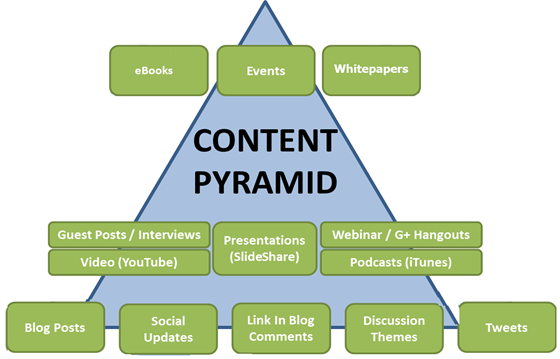
    content marketing strategy pyramid


    Content Marketing: Parts as a whole

    1. Creating Valuable Content: Content needs to be created for your audience with the objective of informing and educating them, by simultaneously boosting your credibility and connections with consumers. This can be done in the form of articles, eBooks, press releases, white papers, blogs, webinars, posts, infographics, etc.
    2. Distributing that Content: This unique content needs to be then shared with users through social networking websites, blogs, through e-mail marketing and other platforms where your viewers are active, provided your content is suitable for that particular platform. Once your content strategy has been recognized, metrics need to be defined in order to accurately measure and monitor your success.

    Take a look at metrics to effectively measure the content marketing efforts:

    1. Brand Lift: “Brand lift” is the blanket term for a brand’s increase in customer or audience perception. This is a concept that has its roots in online advertising (brand advertising, to be more specific) and refers to an increased awareness of the brand (product, or contribution), attitude (view on quality, value and appeal), recall (ability to evoke), favorability (likelihood to recommend), and intent (likelihood to purchase)-all of which can be a challenge to measure.One way to measure the rise or fall in the sentiment of your brand in the long run is through social media. Once we have a plan in place, we create content that promotes your brand and conveys your expertise, distributing it over the right channels to ensure effective placement. When highly consumable content gets published in front of your target audience, you can begin to gain authority and thought leadership in your industry. Increased authority in your space not only helps to retain customers, but also generate awareness and trust in your brand. This creates an organic sales funnel that can dramatically increase conversions.Ultimately, this increased inbound traffic improves your overall branding.
    2. Social Media Success: This is a metric that allows you to better understand where the social traffic is coming from. By observing the gross amount of social media success, your business will be able to understand what type of content was well received, on what platforms and by which users. It also helps explain how these social actions are affecting your other marketing channels too.The “social media content” widget looks at how many “social actions” were taken while viewing your content. These can include:Interactions – Likes, Comments, Shares, Replies, Retweets, and so on.Reach – The percentage of fans that have seen your post from your page.Engagement Rates –A formula for quantifying a brand’s success.This is a valuable performance measure, as it displays that visitors didn’t just passively leave the web page open for an extent of time, or click through to other web pages because they were bored. It shows that they actually appreciated your content enough to share it within their network.
    3. Onsite Engagement and content effectiveness: Once traffic is driven to your website from the variety of content that has been distributed to your audiences, the hope is that this effort will drive repeat traffic to your web site. The metrics in Google Analytics helps measure whether the content you’re creating is engaging enough to draw traffic to your website from the search engines. This allows you to make two conclusions about those pieces of content that are attracting a lot of readers and giving you a lot of their time.Firstly, that content is building relationships by compelling readers to return. Secondly, that valuable content is creating an increase by facilitating repeat exposures.This is a valuable way of determining if your content marketing efforts are driving real value to your business. If your content efforts are often the most viewed part of your website, it might be safe to say that your audience is finding value and that you are educating them on a particular expertise.
    4. Google Analytics audience Widget: Google Analytics is a collection of widgets that allows you to quickly visualize your data. The audience related widgets on the Google Analytics dashboard provide information about viewers. The visitor’s pie chart gives an idea of the number of visitors that revisited the website because they found well optimized content in search engines.Some of these are:“Content behavior metrics” Helps to determine the number of new/revisiting users. Also helps to check whether the content you are creating is engaging enough to draw traffic to your website or not.“Site Content metrics effects” Shows the website’s ALL/ landing pages performance metrics which helps in determining which page content played an important role to get the visitors on the website.Lastly, “GEO metrics effects on content strategy” shows you where in the world your visitors are from. You can use this data to improve your content in all kinds of ways, such as:‘Visitor Language usehelps in optimizing multi-language websites.Location area’: helps to determine the place / nearby places of the visitor, hence it can be helpful in optimization / filtering the content related to location.By using Google Analytics we can measure the content effectiveness using real data. It is always helpful to see what is effective and to avoid what is not.
    5. Lead Generation: One of the most valuable metrics to monitor when it comes to your content marketing efforts is if lead generation efforts have increased. Lead generation is important because leads are the most likely people to convert and make your business revenue grow. This is where we start determining whether the content marketing efforts are making financial sense.When a visitor signs up on a website, he/she enters his/her contact information to have access to exclusive content created by the company about business. This visitor is a new lead who can eventually become a paying customer. It is important to measure the rate at which leads are being generated from the website content to see what type of content is working to get more traction from your web visitors.Successful content solicits a certain response from your target audience. For instance, taking advantage of a special gift or promo being offered and filling up information sheets that converts visits into leads.
    6. Conversions: Consumption is the most basic and most measurable type of metric you can use to measure content marketing success. It is straightforward and deals with real figures and statistics. It states how many people actually consumed your content. Google Analytics, Website platforms and social media insights already have these tools available for you to use and the only thing left for you to do is use them and gain better insights about your content consumption. Content marketers and conversion optimization professionals have a glorious collaboration ahead.
    7. Thought Leadership: Content marketing can describe a business as being an expert or a thought leader in an industry which can lead to many invaluable benefits. Becoming a thought leader and a trusted source of information will gradually gain more traffic, follows, and subscriptions, leads, and conversions over time. Social signals get a boost when website owners refer your work and when social media followers share the content. Take a step back and observe the media mentions of your content, if other thought leaders refer to your content, if the media is requesting for your contribution on certain topics or requests the leaders to speak at business events.Look at how your content is performing and helping you to position your company as a thought leader. By becoming an industry known expert, your content could continue to gain more traffic, follows, subscriptions, leads, and conversions over time. Overall, there are several ways to measure the performance of content marketing strategies.What metrics does your organization use to measure your content marketing? How often are you analyzing the results of your content strategy? I’d love to hear about your experience with your content marketing strategy. Share your thoughts in the comments below!

    Blog contributed by Anu Gupta, SEO Analyst, Position


  • Surviving the post-Hummingbird era

    Google officially released the Humming bird update almost a year ago on Sep 26, 2013 & we at Position2 had shared our thoughts then. This update was perceived not to be a worrisome algorithm update. But, this can make SEO’s scratch their heads as the approach towards website optimization changes after Humming bird.

    Humming Bird update

    So what does this update mean to Marketers?

    It is estimated that Humming bird affected 90% of search queries & made SEO practices more strict & difficult too. With Humming bird – the underlying layers of the search algorithm have undergone a change and are now more in sync with semantics. This stresses the need to move on from a keyword-focus SEO strategy to landing page level, context based approach while optimizing a site for natural search. Content on site should sound like an answer to relevant search query raised by users.

    Search crawlers are now capable of identifying & listing technical aspects of a website that co-relate with Search rankings. Most important amongst them are Page load time, 302 re-directs, and keyword stuffed metas. Overall on-page factors will remain the most important aspect to focus on while catering to a post-Humming bird era website.

    Although Humming bird may not be as impactful as a Penguin or a Panda; the overall effect lies in the manner in which focus will now shift from keyword-rich content to semantic type of content.

    We see the following impact from Humming Bird:

    Search engines will evolve to be smart engines

    • Paradigm shift in focus : rather than ranking for a query, try to provide the “best” answer for that query
    • Comparison based semantic searches will be served with results from comparison sites: Eg: if the search query goes as “flipkart v/s snapdeal” – Search engines will list review sites, comparison websites & aggregators on top
    • Location based search results will be future – Geo enhancements as part of Search results is already underway – These will also meet Google Pigeon algorithm update guidelines

    Having said about the implications, let us now look at some best-practices & useful considerations for survival in a post-Humming bird era:

    Technical:

    • Ensure that the website in focus is up-to-date with the latest technologies such as responsive web design, hreflang for international landing pages.
    • Define your website architecture and place content in a neat, easy-to-access manner – not only for Search engines but for users too. Remember search engines now cater to consumer behavior
    • Follow best practices of on-page optimization such as on-page Schema Markup, Social Media tags such as Twitter cards, OGP etc.

    Content:

    • Target keywords which are more likely to be used by users (don’t ignore long tail) – as all these contribute in the “semantic” world
    • Have meaningful, grammatical error-free content which resonates to users search intent
    • Create content to answer the 5 W’s of your product/service – Who, What, When, Why, Where?

    Position2’s PoV:

    Our SEO focus has always been on improving the overall health & diagnostics of the site as part of optimization & also delivering the best user-experience on the website. Our thorough audits evaluates close to 40 technical parameters crucial for SEO. In addition, we also provide QC checklists & guidelines for enhancing website architecture.

    In addition to the technical aspect, our detailed, well-researched content calendars are in place catering to primary & long-tail keywords to ensure that there are regular content refreshes happening on the site. We also stress on having an optimized presence on social media to boost organic search presence.

    As Google has aptly named this algorithm to be “precise and fast” like the Humming bird itself, expectations are that sites need to perform to answer precise search queries & of course need to fast!

    Put in your comments and share your thoughts on the Humming Bird experience and how it changed the way you approached SEO.

    Contributed by Chetan Rajasekaraiah, Senior SEO Specialist, SEO Team

    Image source

  • Predictive Analytics, B2B Video Marketing, Brand Strategy and much more…| Best of the Week

    This week’s hot news, events and videos from the online marketing and social media world.
    Understanding Predictive Analytics
    From the Position² Blog This Week:
    Understanding Predictive Analytics
    Today marketers need to know about the future of business with a fair degree of accuracy. That is when they turn to predictive analytics which studies current data, detects patterns and predicts possible future trends. Read this interesting blog to know more about this exciting branch of advanced analytics.
    Top Stories this Week: Social Media
    Top Stories this Week: SEO, PPC and Digital Media
    Best Of Week Video Best of the Week Video
    Watch this Webinar moderated by Rick Siegfried that gives you tips on how to optimize your ad campaigns and landing pages using personalized targeting & analytics.
    White Paper: Increase Visibility for Your Content by 4x
    Today’s traditional SEO is inadequate: Ignite your search results by accelerating visibility in more places than ever before.Download this White Paper and learn:


    • SEO, why the way we know it is not enough
    • Introducing and implementing Enterprise Visibility Accelerator (EVA)
    • Using multi-channel tracking tools for effective monitoring
    • How EVA benefits businesses.

    Download the complimentary EVA White Paper now

    Know more about Enterprise Visibilty Accelerator(EVA)
    If you are reading this blog post via a RSS reader, please click here to subscribe.
  • 6 Tips for Conversion Rate Optimization

    SEO is an important component of most companies’ online marketing investment. But good SEO is a job half done, because it only brings in prospects. To support your SEO, you need to run Conversion Rate Optimization (CRO) initiatives to see that the prospects you have brought in actually end up doing what you want them to do – buy from you, subscribe to your email newsletter, recommend friends to buy your product, share your content, etc.

    Your website SEO will get you traffic. But that’s just the beginning. There is a lot to consider after that. For example:

    • How relevant is that traffic?
    • What are your conversion rates and how can they be improved?
    • Is enough of your audience converting? If not, what can you do about it?

    Here is a 6 step checklist that will help you in your CRO efforts:

    1. Setting your objectives

    It’s important to define your objectives. This is the basis for building your website to make your audience take actions that will help you achieve your objectives. Want them to buy? Set up an ecom store. Want them to leave their contact details? Provide a form for them to fill in. Align your website with your objectives.

    2. Research

    Effective CRO requires thorough research. Understanding your audience and their online behavior is crucial for conversions. If you know what they are looking for, what the drivers of their behavior are, then you know what you need to do to get conversions. It’s important to remember that research is a continuous process and its inputs help you fine tune your initiatives to keep conversions improving.

    3. Understand your website and its effectiveness

    This understanding will help build your web pages so that they contribute to more conversions. A conversion is the end result you want out of every site visit. It’s important that you determine what constitutes a conversion for you: product subscriptions, service sign-ups, collateral downloads/ subscriptions, enquiry calls etc.

    The advantage is that everything that happens on your site can be tracked. This creates a wealth of data for you to analyze and see what’s working and what isn’t.

    Record current statistics on number of site visits, bounce rates, conversion rates and amount of time spent on site. Mark up the landing pages that were visited the most. Nailing these details will give you a clear view of conversion goals for your website. Focus on strengthening those pages that are falling behind in contributing to conversions. The clearer the conversion goals are, the easier it is to turn traffic into conversions.

    Outline your sales funnel by combining analytics, research and landing page optimization. You can visualize your sales pipeline better by knowing the landing pages that are performing the best.

    4. Website design and layout

    Designing your website and planning the layout is crucial in the plan to lead website visitors on the path towards conversions. Your website should guide the visitor’s journey to conversion. Interlink pages so that it is easier for visitors to move from one page to another. Your CRO strategy should include a plan for developing necessary collateral that will move website visitors from being a browser, to making a choice and finally to a buyer. Your CRO and landing page optimization practices should support improvement of conversion rates.

    5. Testing

    It’s important to test your pages and see which are working best. Testing has to be continuous because what works tends to change with time and the audience. You don’t want to be in a position where your pages are not working any longer and you don’t know it. There are two important kinds of tests you can run:

    • A/B testing
      Build multiple designs for entire web pages in need of conversion optimization and test them out. Monitor and note behavior on all designs you are testing.
    • Multivariate testing
      Develop multiple new designs for selected elements on the web pages you are optimizing while considering the elements that interact with each other. Your website traffic will come across combinations of the elements you have targeted and you can record their actions.

    6. Integrate social efforts

    Your CRO strategy can start early – even before visitors come to your site. When you integrate social efforts with CRO, you know why your audience is visiting your site and your chances of conversion are much higher than otherwise. Your social media campaigns can prime your audience and bring them to your site, ready for conversion.

    What do you think helps improve conversion rates? Have you worked on your CRO? Let us know.

  • Pigeon – Local Search Algorithm update from Google

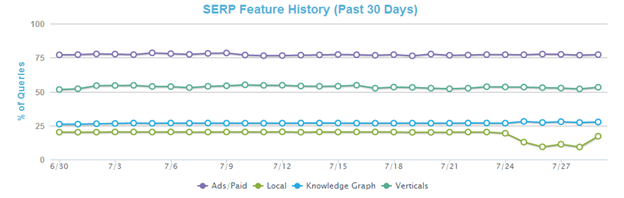
    One of the biggest updates to local search was announced just over a week ago. The last local search update was on 10/2012 (65-Pack Update).

    SERP feature history

    Image source: Mozcast

    As Mozcast reports, there has been a decline in local search results over the last week. Linda Buquet, Google Local specialist says that this is a major update and in the future, Google’s local search will have stronger ties to web search signals.

    The Pigeon update will bring in the following changes:

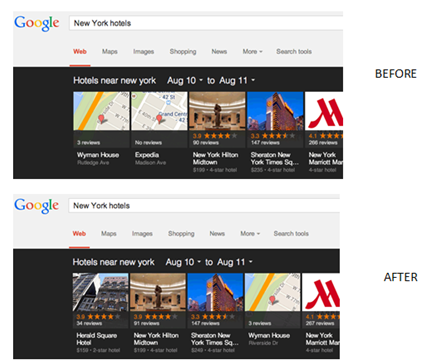
    • More visibility to local search results on SERPs
    • Yelp problem solved – Yelp results will now be included as part of local listing
    • Boost for other local directories

    Pigeon updateImage source: SearchEngineLand
    • Benefit for big directory sites like Yelp and TripAdvisor – they now rank prominently on search results for local search queries

    Penguin update

    This update is currently being rolled out for US English queries and is likely to be extended to other regions. A complete update of Pigeon would have knee-deep effects…

    Looking at this from a SEO perspective:

    • Local search directories get higher visibility
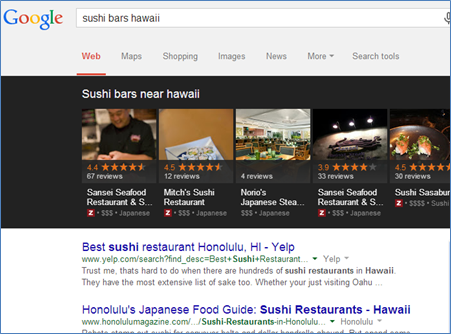
    • Vertical specific big directories will stand out with more benefits. A search on Google for “sushi bars hawaii” now no longer displays the 7-pack results. This is now replaced by top directories.

    Sushi bars Hawaii

    • Website authority will be directly linked to local search results. Google’s intent is to provide useful, relevant and accurate search results to users
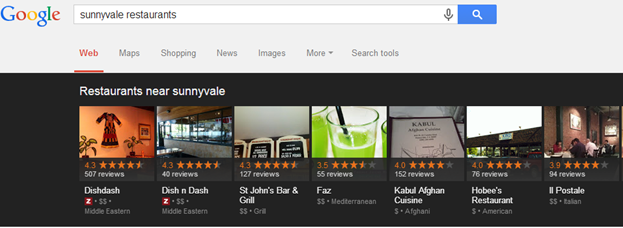
    • Local carousels will be displayed with good images and customer reviews attracting good rankings

    Sunnyvale restaurants

    Position2’s POV

    Although at first glance this update might seem more relevant to B2C businesses, at Position2 we believe it will benefit B2B firms as well. To help our clients (in B2B and B2C worlds), we are rolling out many new initiatives to help with local search. Some of those include:

    • Basic principle of local SEO, i.e., NAP – Name, Address and Placement are not to be forgotten
    • Creation and optimization of listing on Google + Local pages. We share a detailed G+ strategy with our clients and help them implement the same. We see great results from this strategy. However, this has to be managed even after the G+ strategy has been provided.
    • Optimizing on Google Maps to be given importance along with integration of Google Maps and user-generated reviews
    • Customer reviews and ratings to be updated on G+ local pages
    • Having good presence on business-specific local search directories
    • Including schema to help Google show personalized results

    Have noticed changes in your site’s local search rankings? Tell us in the comments box below.

    Stay tuned to Google as the update is still being rolled out!

    Contributed by Chetan Rajasekaraiah, Senior SEO Specialist, SEO team

  • The ‘must have’ SEO features for an ecommerce site

    ECommerce/online shopping is the trend of the day. It will continue to grow and is expected to outrun ‘normal shopping’. At this pace, product companies need to prepare to compete with seasoned players in the market. Shopping cart

    Organic search space is dominated by the Amazons and Walmarts of the world. There are of course, several factors which contribute to this, like the number of pages, the number of visitors, the brand equation and the online spends of these companies.

    Given these, what should a normal player in the ecommerce space be doing to ensure that his website lists at the top of SERPs?

    Optimizing e-commerce websites is not an easy task. Strategies for ecommerce SEO need to be based on retail marketing and should also be in sync with recent search algorithm trends. From an SEO perspective, here’s what should be looked at for e-commerce sites:

    1. Keyword Selection

    Keyword research for any ecommerce site should be based on thorough market research and industry competition. Search engines, with their updated algorithms, intend to deliver best possible results to the user. So, understanding consumer search behavior is important.

    Consumer specific, long tail and geo-specific keywords should not be ignored.

    2. User Experience and Website Loading Time

    With growing competition in the online space, user experience becomes an important consideration. Sites need to provide the ‘shopping’ experience for users. Better user experience and engagement ratio on the website receive rewards and recognition from search engines.

    Smart search algorithms now focus on ranking websites based on the above factors and other metrics like page load time.

    3. Website Structure and On-page Factors

    The structure of the website needs to be in line with search engine guidelines. The content should be written primarily for users.

    Other on-page factors include:

    • URLs
      • Keep URLs short and simple
      • Include keywords and use hyphens as separators
      • Avoid query strings
    • Unique meta data
      • Have niche page title and descriptions
      • Avoid duplicate content
      • Focus on improving CTAs by using compelling descriptions
    • Navigation with breadcrumbs
      • Maintain consistent structure for navigation
      • Provide links to category and product pages
      • Use breadcrumbs efficiently
    • Category and product pages
      • Optimize product pages for long tail keywords
      • Embed videos
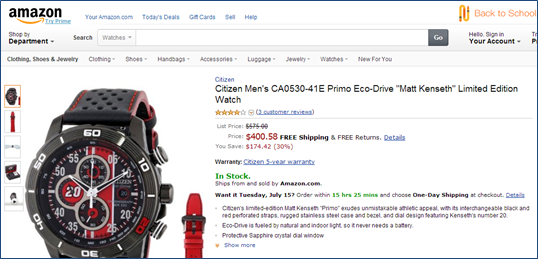
      • Post images which have high resolution (for example, product images on Amazon)
      • Encourage user reviews

    Category and product pages

    Image Source: Amazon.com 

    • Schema markup (rich snippets, structured data, microdata)
      • Leverage schema for products and breadcrumbs
      • Add schema markup for product reviews, improve trust and gain better CTA

    Barnes and noble coupons

    Search Query: Barnes and Noble Coupons 

    4. Mobile Optimization

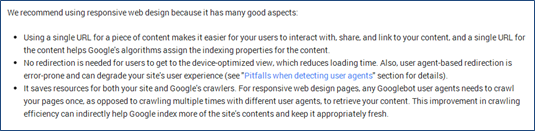
    Google recommends using responsive web design.

    • Optimize for mobile queries (mobile and desktop users don’t search alike)
    • Have compressed images for faster rendering
    • Keep it local
    • Give importance to CTAs and store locators

    Google developers

    Image Source: Google Developers

    5. Social Integration

    • Have social plug-ins on category and product pages
    • Allow users to login through social profiles (social sign in)
    • Make user reviews/comments on social channels visible on the website
    • Share user-generated content

    Apple store

    Image Source: Apple Store 

    While the above are tips for boosting organic traffic to an e-commerce site, the real strength lies in the quality and service of the products offered. A great customer journey on site followed by great customer service reaps rich dividends!

    Happy Shopping!

    Do you have anything to add to this blog? Post your comments in the box below!

    Contributed by Chetan Rajasekaraiah, Senior SEO Specialist, SEO team

  • Google Panda 4.0 and Payday Loan 2.0 Algorithms– Implications for SEO

    Google Panda 4.0

    Recently Matt Cutts announced on Twitter that Google had released its Google Panda 4.0 algorithm. This is a major algorithm update and not just a data refresh, which means that Google has probably made significant changes to how Panda identifies websites from now on.

    Google Panda 4.0

    Google Panda History

    Google Panda had been designed to prevent sites with poor quality content from showing up on Google’s top search results and provide searchers with the best results possible.

    The last confirmed Panda update was on January 22, 2013 and had affected about 1.2% of English queries. This time it is affecting approximately 7.5% of English queries and different languages to varying extents.

    Panda 4.0 is considered to be a softer, gentler algorithm change that worked well for only some sites. Google plans to lay the groundwork for future changes in this direction.

    Matts Cutts twitter

    Sites that have been affected by this update

    A study of this list by Search metrics reveals that one of the biggest casualties was eBay, which lost a huge amount of traffic from Google. Another was Ask.com.

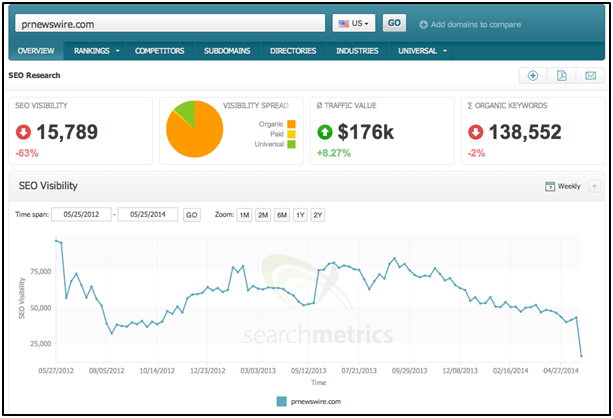
    In a recent blog, Barry Schwartz said that even press release sites like PRweb, Newswire, Business Wire and PRLog seem to have lost significant ranking through Google.

    Drop in traffic for PRweb

    From the above image, we see that PRweb had a significant drop in traffic: 71%.

    The winners’ list shows that small business sites have found favor with Google after the Panda update, and many of them have seen an incredible increase in traffic to their websites. Sites that had lost their footing in rankings despite having good quality content because of the Panda 3.0 update benefitted from Panda 4.0.

    How does this affect SEO?

    Until now, we have observed evident changes like:

    • Rank difference: There would be a considerable difference in the rankings on Google.
    • Loss/gain of traffic to the site: Some of the sites lost almost 50%-75% traffic overnight while some gained substantially.

    How to overcome the Google Panda 4.0 effect

    Listed below are some solutions to counter the impact of Google Panda 4.0:

    • Have unique and fresh content on your website. Keep in mind that content needs to be generated for users and not search engines.
    • Exclude keyword hoarding. Do not target all the keywords to one page. Use a combination of long tail/conversational and generic keywords.
    • Remove duplicate content.
    • Do not use keyword stuffed title tags. Keep it natural.
    • Do not overuse keyword rich internal links and keyword rich footer links.
    • Removing doorway pages and cloaking.
    • Avoid risky affiliate marketing setups

    Please remember recovery can take awhile if you have been hit.

    Google Payday Loan Algorithm 2.0

    Along with the Panda update, Google rolled out its Payday Loan algorithm 2.0 that targets ‘very spammy queries’. This is the second version of the Payday Loan algorithm, which is used to combat specific search queries like payday loans that tend to have a high number of extremely spammy results. This algorithm is not related to the Google Panda or Penguin updates.

    Payday Loan algorithm 2.0 is a continuation of Google’s quest to clean up search queries. The algorithm was rolled out worldwide, affecting different languages to different degrees. It has affected 0.2% of English queries. An advantage is that general queries are likely to receive better search results while preventing the appearance of low quality sites.

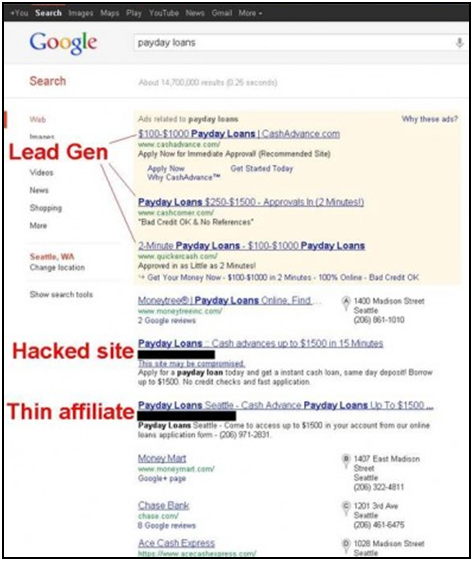
    Recently, spam results started to reappear in payday loans’ Google SERP’s:

    Spam results on payday loans' Google SERP

    Google Payday Loan Algorithm 3.0

    Google Payday Loan algorithm 3.0 was released on June 12, 2014. At SMX Advanced Matt Cutts announced that this would target terms like [payday loans], [casinos] and other forms of highly spammy queries. Payday Loan algorithm 2.0, had been rolled out a week earlier targeted spammy sites.

    However, Matt did not shed much light on the difference between spammy sites and spammy queries.

    Payday Loan History

    The search engine’s original Payday Loan algorithm was first released on June 11, 2013. It impacted roughly 0.3% of US queries and around 4% of Turkish queries, where the volume of webspam is said to be higher.

    Last year, it was noticed that for the search term ‘Payday loans’, a completely different set of results were appearing on the SERPs each day. The Payday loan companies were using domains that consisted of slightly outdated specific search queries. These queries were likely to have a high number of extremely spammy results. In order to keep the best Payday loan companies on top of the SERPs, Google released the Payday Loan algorithm.

    How does this affect SEO?

    • Removal of the sites from Google SERPs that have spammy content on their site
    • Loss of rankings on Google SERPs
    • Decrease in traffic to the website

    How to overcome the Payday Loan effect

    • Avoid optimizing for any terms that would be considered ‘spammy queries’
    • Do not use spammy methods – like cloaking, hacked sites/hacked content, leveraging Google+ accounts and leveraging expired domains – to promote your website
    • Have original, quality content on the website
    • Do not stuff keywords during optimization. Target 2-3 Keywords for a page. You can use conversational or long tail keywords.
    • Keep the title and description as natural as possible.

    Have anything to add to this? Post your comments below.

    Contributed by Susanna Varghese, Junior SEO Analyst

  • How to Improve Organic CTR – does your SEO take care of this?

    What is the best ROI that you can get through SEO campaigns? How do you know the end results that can be derived from SEO?

    Is it engagement, traffic, brand building and reputation management? Or is it simply lead generation?

    How do you know the end results that can be derived from SEO?                                                                                                                                                                                                 

    You need to keep some best practices in mind while generating higher ROI vs. KPIs with SEO.

    Search engines are vital in fulfilling the ‘intent’ of finding information. SEO efforts cannot be directly tied to the final purchase of products and services like paid media/advertising. Constant and dynamic updates are made every day by search engines, making it more difficult for marketers to understand it.

    The basic rules are simple and straight: stick to the ‘intent of doing good for users’.

    Users come first and then the search engines. In fact, the very foundation of success of search engines is users. Search engines want to serve the best information to their audience. The concept of optimizing content for a visitor plays a very vital role for the marketers.

    Boost Organic CTR

    Here are few tips on how you can boost organic CTR for your website and also within the internal web pages:

    1. Focus on people and consider the latest technology as support

    People are our ultimate target audience. Users/searchers use technology to attain their goals.

    Online marketers should not forget that technology is user-driven. Focus on people and consider the latest technology as support

    Tips:

    • We need to think and adapt to what the users want and need and not the search engines.
    • Get to know your audience – conduct offline and online market research. Their feedback will be useful for your success.
    • Develop strategies around human beings (target audience) and deploy them to balance both target audience and search engines.                                 Image source

    2. Keyword Research and Mapping

    Let’s start with the basics. It is important that we have all the right keywords mapped to the right content.

    Keyword research and mapping                                                                                                                                                                                     Image source

    In other words, keywords should develop out of content and not otherwise. Combine long tail keywords and conversational keywords for balanced conversions. This increases conversions on the website with better targeted content.

    Tips:

    • With the keyword level data vanishing from Google Analytics (‘not provided’), you need to benchmark page level metrics such as KPIs for your success (page level: traffic, engagement, bounce rate, new visits, etc.).
    • With unique keywords mapped to each page, track performance of the page level traffic to mark success.
    • Have a content strategy around conversational keyword targeting (with natural language understanding) that includes blogs, forums, etc.

    3. Search Engine Results Page (SERP) Ranking

    Your SERP Ranking is an indicator of a certain level of success of your SEO efforts. But it is not the complete picture. Your SERP ranking is an indicator of a certain level of success of your SEO efforts

    We need to remember that organic rankings on Page 1 are just indicators of doing the right optimization. You need an SEO strategy that is defined better to consider these as success parameters.

    However, when your audience is finding information on search engines, it is important that you hit the sweet spot on the first page of Google. In short, ranking between 1st and 10th on Google Page 1 does matter. However, rankings above the fold (the part of the screen visible without scroll; usually rankings 1-4) have more visibility; have higher CTR and direct more traffic to the website.

    In other words, higher the rankings on search engines, higher the probability of directing relevant traffic to the website and hence conversions.  Image source

    Tips:

    • Make sure your basic SEO and technical parameters are in place.
    • Move inch by inch. Have a detailed plan to test out your SEO strategies, both short and long-term. Create content accordingly.
    • Remember to create content for your target audience and not search engines. Analyze your audience’s wants and needs.

    4. Title Tag

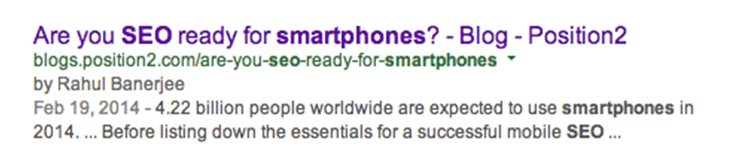
    The title tag describes the theme page in short and appears as a blue link on SERPs. These appear when a searcher types in a query to find information on search engines.

    A page title catches attention and influences the searchers to click on the link to your page. A well-defined page title has higher CTR on SERPs.

    Are you SEO ready for smartphonesTips:

    • Make your page title as natural, relevant and attractive as possible so that the target audience is compelled to click.
    • Include your target keywords to impact organic rankings.
    • Keep the title within 65 characters.

    Make it simple, short, interesting and natural to increase search inquest.

    5. Meta Description

    While the meta title gives an idea about the page users see on SERPs, meta descriptions help the audience understand what the web page content is about before they actually reach it. While search engines consider meta descriptions as ranking factors, when constructed well, they also influence searchers to click. You need to briefly describe what the page is offering.

    Tips:

    • Use it tactically. Have an objective for defining your webpage.
    • Keep it natural and understandable for your target audience. Include keywords that snag users’ attention and lead to chances of higher CTR.
    • Maintain the optimal character limits for the descriptions. It should be around 150-160 characters with spaces. Write what markets the unique content of the page. Include USPs, value adds, discounts and offers.
    • Meta descriptions are indicative of the page theme and may not show in the SERPs. Google also uses other publicly available sources of authority like Wikipedia to show relevant results. So, have a content marketing plan along with website optimization.

    6. URL Optimization

    The best approach is to frame URLs for people that are crisp, easy to read and remember.

    Clear and concise URLs on SERPs reassure readers that a page will deliver on their search and enable better CTRs.

    URL optimization

    7. Rich Snippets (Structured Data Markup)

    a) On-page markup using Schema

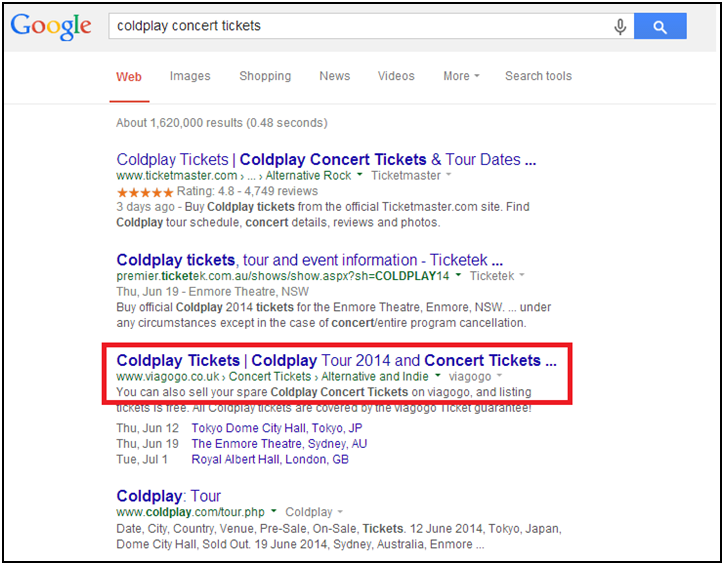
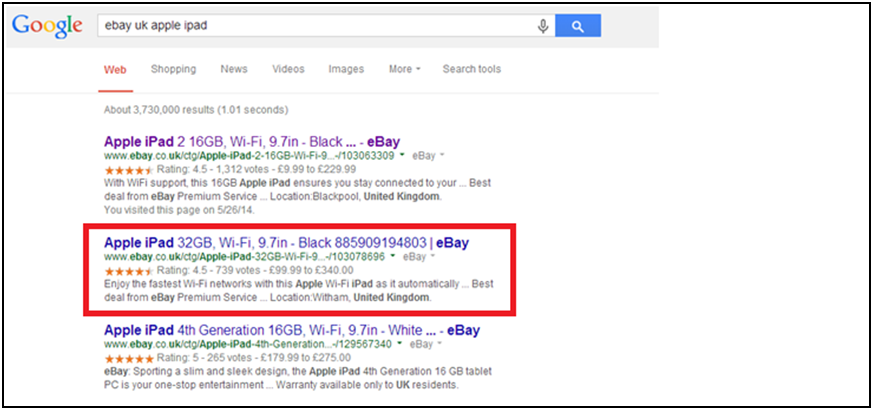
    Inclusion of Schema markup enables search engines to understand and categorize unstructured data on web pages. This helps provide richer search results and makes it easier for users to find relevant information on the SERPs thereby driving better CTRs.

    On-page markup using schema

    Customer rating markup on a product page: Improves credibility of the product leading to better CTRs.

    b) Google Authorship markup

    Linking the content of the author with his/her Google+ profile enables a headshot of the author to appear next to the search listing. This leads to better CTRs for blog posts and articles from SERPs.

    Google authorship markup

    8. Call-to-Action (CTA) – Visibility

    Apart from techniques to increase CTR through search, the final touch should be well-judged placements of CTAs on the website. This would increase the probability of CTRs and hence, conversions on the website. Call to action

    As mentioned earlier, it is necessary to rank above to fold in search engines and have CTAs (buttons, forms, etc.) above the fold.

    Call to action

    Call to action     Tips:

    • Test the important pages of the website, the home page, products and solutions pages with Heat Map. Monitor your audience’s movements on your website pages. Then place the CTAs accordingly.
    • Competitive analysis tells you how your competition is doing. Draw inputs through the comparison.
    • Work on your website design based on your budget and look to improve user experience.

    Contributed by Rahul Banerjee – Head SEO, Position2

  • Position² @ SMX West, San Jose, March 2014

    Position2 was at the SMX West event in San Jose last month represented by our Head of SEO, Rahul Banerjee.

    We think SMX West lived up to its expectations this year, especially from a SEO point of view. A look into the future of SEO was most intriguing. SMX shed light on a few key future trends to watch for:

    If you need additional information, feel free to reach out to us.

    • Conversational Search: Advancement is seen both in complexity and nature because of changing user behavior. Now, there is increased emphasis on conversational and voice search. An example of this is the Hummingbird update which emphasizes semantic search methodology (for example, Google Auto Complete option) and Natural Language Understanding (NLU) by looking at the relevance and meaning behind the query.

    Position2 shares an example of conversational search.

    Our content strategies are aligned with user experience and the optimization of search engines also powers better search results. For example, the use of blogs, forums, the Google authorship program, social media optimization etc. helps reach out to the target more with the natural language parameter of users.

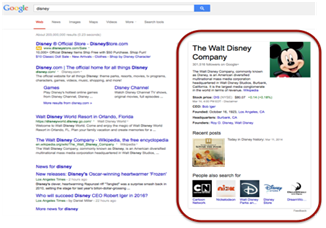
    • Knowledge Graph: It is a system that understands facts about people, places and objects and the interconnectivity between them.With the implementation of the Knowledge Graph, companies will now need to make more efforts to build their brand online. Google will include results about reputed brands of authority who are trusted. Online brand building efforts need to be an ongoing activity.

    Position2 shares an example of knowledge graph.

    However, Google is also testing ads on the Knowledge Graph and carousel.

    Position2 shares an example of knowledge graph ads.

    • Structure Data Markup: It helps Google understand the content architecture of a website better and facilitates faster and more relevant results.We recommend our clients implement structure data markup (eg. Schema.org) on their websites.

    Position2 shares an example of schema markup.

    Here are some more key relevant points for organic SEO:

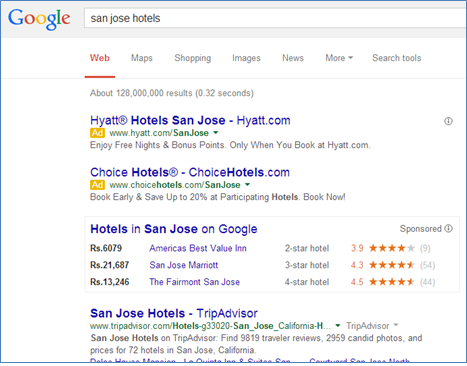
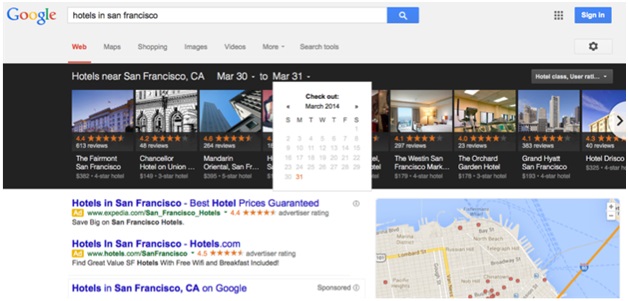
    • High competition: With Google testing out paid ads on search results, organic search results have less shelf space and are needed to compete more to be visible. For example, if you type “Hotels in San Francisco” in Google, the top scroll of the Google SERP includes only paid ads pushing the organic results lower.
    • Mobile will soon dominate: Google mobile queries are set to surpass PC search this year.


    Image Source: Google

    Mobile is another factor that is altering the nature of search. Mobile capabilities differ from device to device, which in turn impacts the content development, communication, engagement and measurement.

    Implementing and embracing personalization will make for better search experience.

    • Apps: There is a global opportunity to develop and market through apps. However, app stores must also be localized.
    • Social presence: Google may not able to read social signals completely from other channels like Facebook and Twitter yet. But, this is going to change soon, which is why we maintain a social presence for our clients and help them build the right influencer network. Google has already said that users who use their Google logins will experience better search results. Google will roll out a full fledged algorithm soon.
    • Natural link building: ‘The best links are not asked for’. Work on natural link building. Do not use shortcuts or indulge in explicit link sales. Let the target audience refer, like, comment and build links for you.

    If you have original content that is useful for people, you can ask for recommendations/references. But your intentions will matter. Google is constantly penalizing websites with vested interest towards link building as an activity.

    • Devalued content: Press releases, articles and guest blogging are now devalued content due to over optimization techniques used by most of the SEO experts. Content that offers value should be created for the target audience and not for search engines.
    • Build recognition, reputation and trust through well-devised content marketing plans. Authority plays a vital role for Google to rank a website. Consumers also look for brand reputation and trust levels before making online purchase decisions.
    • Google Panda updates: It is likely that Panda will be updated more frequently. Expect one soon. Google is constantly testing out search parameters to provide the best results to users.
    • World does not stop at ‘Not Provided’: Post the ‘Not Provided’ update, Google changed the way it harvests data from search to protect users’ privacy. First, all logged-in users were switched to “https” from “http”, where the referral data relating to that search is hidden. But, as already indicated, that refers now to the whole universe.

    Position2 recommends analyzing success with page-level metrics like page-level traffic, bounce rate, percentage of new visitors etc. to have an edge and understand user engagement metrics.

    • Generic Top Level Domains (gTLDs): These do not impact rankings. For example, a domain like www.buymycar.com need not be ranked for car related keywords if it does not have content related to buying cars.

    Share your thoughts on the event insights with us in the comments below.

    More to follow from Position2

    … keep in touch!

  • Improve SEO Effectiveness with Google Trends

    Good SEO needs more than an understanding of the technical aspects of search and client’s requirements. It also needs a thorough knowledge of search trends relevant to your line of business.

    Google Trends is a great tool to stay updated on these trends. Yes, it will also give you information on keywords that are not specific to your brand, but that’s how people search. It’s not enough to just optimize your website for brand search terms. You also need to include relevant non-brand related keywords.

    Just think about it. Your target audience may not necessarily be looking for information using your brand name. They may be using search terms related to your industry. Having a wide spread of relevant keywords, though more expensive, can give you a competitive edge.

    Using data from Google Trends will help beef up your SEO efforts as it will help you understand consumer behavior better.

    Google has been emphasizing the fact that, in the future, SEO will be driven to cater to consumer needs. Google is now evolving from being a search engine to an interface which helps users get what they exactly want.

    The settings in Google Trends offer different categories of data:

    • Web, Image, News, Product and YouTube search
    • Worldwide or region-wise search
    • Time ranges (extremely important to know how a keyword evolved)
    • Data is further available by interest categories such as, Arts and Entertainment, Autos and Vehicles etc.

    You can compare up to five terms or even groups of terms at one time with up to 25 terms in each grouping, such as:

    • Social + Icons + networking
    • Analysis + web + tools + spend
    • ROI + campaign

    As with regular search, the + sign here tells Google that you want to cover searches that include ROI and campaign both. Using ‘Hot Searches’ and ‘Top Charts’, you can also find out about the top searches for the day and by popular categories. It is small things like this that can give you a vital edge or insight that makes a huge difference in the effectiveness of your campaign.

    Avenues to Use Google Trends

    Assistance in keyword research

    Google Trends shows popularity of search terms over a period of time with a graph that indicates interest ‘levels’. While it gives you an idea of the trend for those words, it does not provide exact numbers that search marketers can use. However by using Google Trends with the AdWords Keyword Planner, you can check the interest levels for the keywords for a particular campaign. This helps weed out relevant but unpopular keywords you may have picked.

    Worldwide Keyword Popularity

    The above screenshot shows the interest levels for terms ‘social media’ and ‘social networking’. The graphical representation clearly indicates that people have searched using ‘social media’ more than ‘social networking’. For example, if you are promoting a webinar related to social media skills through Google AdWords, you would do better using the phrase ‘social media’ in the title rather than ‘social networking’.

    In geo-targeting for campaigns

    You can access region-wise data on Google Trends and learn about the regions that exhibit the most interest in your keywords.

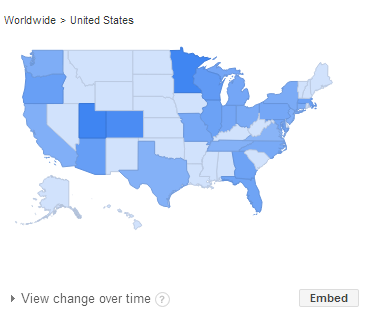
    Regional Keyword Popularity

    This depiction shows the maximum traction to be coming from Utah and Minnesota. You can even get data on the cities that top in these searches.

    Support in content marketing

    You can use ‘Hot Searches’ and ‘Top Charts’ to learn about trending topics in your industry. Do a quick survey among your clients and find out their real-time problems. Post blogs that answer those problems and build your reputation as an industry thought leader. Let’s pick Google among the social platforms and see the region where the interest has spiked.

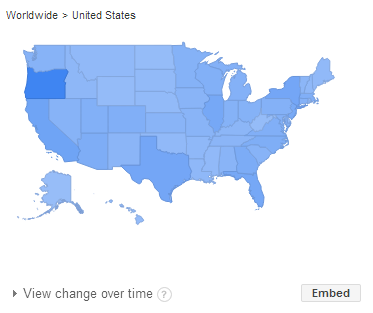
    Region wise Brand Popularity

    So, if you are planning on promoting an eBook on best practices for Google search optimization, Oregon should be a top contender in your list.

    Video content generation

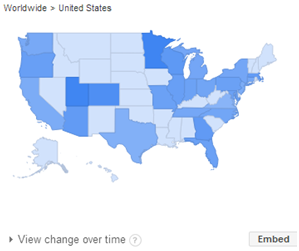
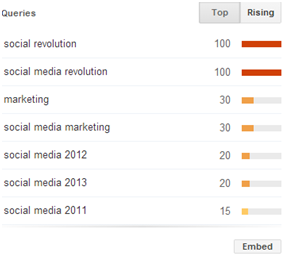
    A YouTube search for ‘social media’ and ‘social networking’ reveals that again Minnesota ranks highest again with ‘social revolution’ being the topmost key phrase.

    Maybe, you can convert your webinar on social media into a video or a series on how a brand can kick start a social revolution for itself by making the right moves. You can ensure your video features in YouTube search using these terms in your video title and description.

    Region wise Keyword Popularity on YoutubeTop Ranking Keywords on Youtube

    Another advantage of using Google Trends lies in estimating budgets to be allocated for paid campaigns. Data from Google Trends can be used to bid smartly on key search terms which users are actually using. This would help reach out to a larger section of the audience.

    Can you think of any other ways in which Google Trends can be used to boost SEO efforts? Tell us!

    Images Source: Google Trends