Tag: ROI

  • The State of Marketing Technology

    Today technology is used in every facet of marketing. Marketing as a discipline is changing and marketers need to adapt to the changing technology landscape. IDC predicts, spends on marketing technology will reach $32.3 billion by 2018. According to credible sources, 65% of senior marketing executives plan to increase marketing technology spends.

    With so much marketing technology around, marketers at times can get overwhelmed. There are so many companies selling marketing technology that there is too much gratuitous stuff out there. Due to this most marketers till now have steered clear of marketing technology and this is the reason why its adoption and implementation is abysmally low.

    Now this is clearly a wasted opportunity since most marketers who have adopted marketing technology have reported rapid and significant improvements in ROI. In order to help marketers make the most of this technology we provide a set of programs that every company needs to give a serious thought, in an effort to scale leads, opportunities and ultimately revenues.

    Search Engine Marketing

    Search engine is one of the most important avenues through which users arrive at your website. Search engine marketing helps you to get more qualified leads through both search engine optimization and pay per click advertising. Your landing page becomes all the more crucial if you have to convert your leads to conversions. You have to give your users what they are seeking in a simple yet effective manner. There might be a need to test different landing pages depending on who you are targeting. Technology can help you do this in a dynamic and cost effective way. There are specialized tools for programmatic buying, attribution systems, tracking systems, consumer insights, conversion optimizers, campaign management, reporting and dashboards.

    search marketing

    Remarketing

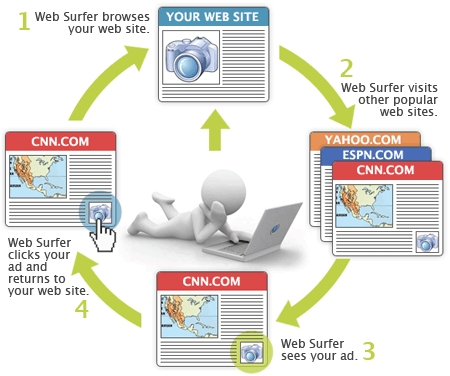
    Remarketing is a very effective use of technology in order to follow your website visitors to other resources on the internet. You can target people with specific offers who have shown interest in particular product or service of your company. The conversion rate is high in this type of targeting since you already know what people are looking for. You can easily set up the technology needed to implement this in your digital marketing campaigns.

    remarketing

    Conversion Optimization

    When a visitor finally lands on your website it is expected that you convert the users into what you want them to do. This could be filling out a form or at least collecting their email addresses. But for that you need to have the right strategy in place like an outstanding offer or a marketing app that can do the trick for you. Conversion optimization technology can help you do this with minimum human intervention.

    conversion optimization

     Analytics

    Analytics helps you understand where your marketing dollars are going and how effective it is in improving your company’s revenue. There are many tools available today that can measure the performance of your ads, offers, digital channels and technologies. This way you can only pursue the campaigns that makes sense to you and scale down or end those campaigns that don’t.

    Google Analytics is the most widely used analytics tool. You can analyze your return on marketing investment or ROMI, using the marketing intelligence platform MiDash.

    analytics

    Marketing Automation

    Marketing automation is a class of software that automates, streamlines and measures marketing tasks and workflows. All this helps companies to increase operational efficiencies and scale revenues faster. Marketing automation can be thought of as the technology that brings it all together. It includes among other things, analytics, tracking, and online forms.  You get a clear picture of what people are doing once they land on your website. This way you can personalize your website content, create better email campaigns and bridge the gap between sales and marketing. You can send automated alerts to customers, nurture lead scoring using information from your CRM tools and third party sources.

    marketing_automation

    This is the state of marketing technology today and things can only get better! Let us have your views on marketing technology and its various benefits!

    Contact us to deploy marketing technology for your business now!

  • Digital Marketing & Behavioral Targeting and much more…| Best of the Week

  • Improve Your Digital Marketing ROI Using Big Data, and much more…| Best of the Week

    This week’s hot news, events and videos from the online marketing and social media world.
    How to Improve your Digital Marketing ROI Using Big Data
    From the Position² Blog This Week:
    How to Improve your Digital Marketing ROI Using Big Data
    Today everybody is talking about big data. But how exactly can you take advantage of big data from a digital marketer’s point of view? Read this blog that sheds some light on this pertinent question. It makes for an interesting read.
    Top Stories this Week: Social Media
    Top Stories this Week: SEO, PPC and Digital Media
    White Paper: Increase Visibility for Your Content by 4x
    Today’s traditional SEO is inadequate: Ignite your search results by accelerating visibility in more places than ever before.Download this White Paper and learn:


    • SEO, why the way we know it is not enough
    • Introducing and implementing Enterprise Visibility Accelerator (EVA)
    • Using multi-channel tracking tools for effective monitoring
    • How EVA benefits businesses.

    Download the complimentary EVA White Paper now

    Know more about Enterprise Visibilty Accelerator(EVA)
    If you are reading this blog post via a RSS reader, please click here to subscribe.


  • How to Improve your Digital Marketing ROI Using Big Data

    Today we are in the middle of a radical shift in the way we interact and communicate with one another. Factors like democratization of data, mobile computing, broadband Internet ubiquity, faster and cheaper computing prowess have all contributed in making big data so momentous today. Big data might happen to become as important as Internet itself to businesses and the society in general in the not so distant future. You don’t need to be intimidated by big data as that is clearly not going to help you in any way. All you have to do is implement these big data essentials to enjoy better ROI for all your digital marketing campaigns.

    Use Data Analytics

    You can find exactly how your website is faring using any data analytics that is available online. Google Analytics is a very useful tool if you want to get an accurate feedback on your website. All you have to do is register for Google Analytics and you can begin monitoring your website. It gives you an accurate idea about how many people visited your website and how long they stayed. You can find out how exactly they landed on your page i.e. the external site that directed them here. This is useful if you are already into digital marketing since now you know which are the campaigns that are working for you.

    Go for Retargeting


    retargeting

    Image Source

    Today it is not enough if you track your users on your website, you need to keep tabs on them even after they leave your website. It is an essential part of retargeting wherein when they go to some relevant website you can again target them and have better chances of converting them to customers. Since the user has already seen your ad before, he is more likely to reciprocate positively to your ad this time around. But for this you need to use cookies in order to keep track of your user whenever he is online.

    Exploit Social Media

    The explosion of social networking sites is one of the hallmarks of the Internet since the rise of the search engines during the early part of the millennium. Today everybody is connected via Facebook, Twitter, Pinterest, Instagram, et al. This makes your job easier since all you have to do is find out what these people are saying about you and your competitors thus offering you a lot of insight into customer opinions and proclivities. You can then dovetail your digital marketing strategy accordingly and make the most of this new found knowledge.

    social media

    Image Source

    Learn from People’s Searches

    Learning from people’s search queries can be a very rewarding experience for you if you do it analytically, diligently and persistently. This can throw light on what people are demanding and what are their expectations from any product or service. Google Trends is a very good platform to delve into people’s search patterns. You might not get too excited in the beginning since it is a whole lot of data that you have to sift in order to get anything valuable out of it.  But if you do it with perseverance then you would be surprised to find out how much insights you can gain about your customers both existing and prospective. You can get a detailed list of what people are searching, the frequency with which they are doing it, the websites that they click on the results page and such other useful nuggets of information.

    Put your House in Order

    Before you go about looking for data anywhere on the World Wide Web do organize the data that is lying in your own data centers. This can be immensely helpful in ways you would have never imagined possible. You can do detailed research about your customers and profile them as per their past interactions with your website and the result that it delivered to you. You can compare two instances where you received different results and find out the exact reasons for such a disparity; sales is one parameter to consider here.

    DBMS (Database Management Systems) from marquee names like Oracle, IBM and Microsoft cost prohibitively high and are beyond the reach of small business enterprises. In such a scenario, you can consider buying the software from small suppliers who differentiate themselves by focusing on niche markets. You can even try Linux operating system as a database platform since it is an open source product. According to Forrester Research’s product evaluation, open source databases viz. Ingres, PostgreSQL and MySQL come out as some of the best.

    You can find out the exact reasons why you could not convert your leads to sales in a particular scenario as you are now backed by compelling data from your own database. This shall help you fine-tune your digital marketing strategy saving you precious resources by offering you better insights into conducting highly targeted campaigns.

    Position² Point of View

    Today we are living in a world where information is generated at an unprecedented rate and off-the-shelf raw computational power is getting better by each passing day. Now these are the two parameters that make big data so widely popular and sensational. You might love it or you might hate it but you just cannot ignore big data. The field of big data analytics is still in its infancy. The explosion of data in today’s world is really mind-boggling to say the least. Data scientists today are the new age rock stars (excuse the metaphor). There is highly valuable information out there in all that raw data that is zipping from one end of the globe to the other in the blink of an eye. Though it is still nebulous as to where we are headed in terms of exploiting big data to our advantage, one thing is for sure that big data analytics has evolved today from being a business initiative to a business imperative. The faster you realize that, the better it is for the fortunes of your company.

  • ROI of constant innovation, online B2B conversations and much more…| Best of the Week

    This week’s hot news, events and videos from the online marketing and social media world.
    The ROI of Constant Innovation
    From the Position² Blog This Week:
    The ROI of Constant Innovation
    Businesses need to be innovative to ensure their survival and growth in the current market. However, innovation requires investment of resources. What is the cost of innovation on a company? Read this blog to know what you should consider before innovating and more…
    Top Stories this Week: Social Media
    Top Stories this Week: SEO, PPC and Digital Media
    Position2 is a silver sponsor at ClickZ Live! Find us at booth #3
    ClickZlive
    Best of the Week Video Best of the Week Video
    Watch Moz’s Rand Fishkin as he talks about the misconception in the amount of time content marketing takes to start giving returns.
    White Paper: Increase Visibility for Your Content by 4x
    Today’s traditional SEO is inadequate: Ignite your search results by accelerating visibility in more places than ever before.Download this White Paper and learn:

    • SEO, why the way we know it is not enough
    • Introducing and implementing Enterprise Visibility Accelerator (EVA)
    • Using multi-channel tracking tools for effective monitoring
    • How EVA benefits businesses.

    Download the complimentary EVA White Paper now

    Know more about Enterprise Visibilty Accelerator(EVA)
    If you are reading this blog post via a RSS reader, please click here to subscribe.
  • The ROI of Constant Innovation

    The ROI of Constant Innovation

    Think of the world of business as a treadmill that’s operating at high speed. If you stand still, you will be flung off!

    Innovation is how you stay on the treadmill. It’s the way to keep moving to survive and thrive in today’s competitive environment.

    Turbulent business times require companies to innovate constantly to maintain their edge in the market. The direction of many business organizations’ thinking is leaning towards the concept of transient competitive advantage. This concept says that a business needs to continuously innovate to stay afloat in the market.

    However, there is a catch here…

    Innovation always entails certain risks. Well, that’s to be expected, isn’t it? After all, innovation involves betting on something that’s hitherto untried and untested…

    But, what do you need to consider before plunging into innovation?

    Can you afford to invest in innovation? Where will the money come from? What can constant innovation cost your company? Who will manage it?

    Often, investment in innovation comes out of funds that would otherwise go into the company reserves strengthening the organization or be distributed as profits/dividends thereby making investors happy. Investing in innovation has an opportunity cost that needs to be quantified to see what ROI justifies the investment. However, not all aspects of this decision can be quantified.

    You should invest in exploring innovative ideas only if you can provide the necessary resources and hold out until your idea turns profitable. There is no point in kicking off ambitious innovative projects only to slacken the pace midway due to financial constraints. All business ventures, especially innovative concepts have a gestation period. It takes considerable time to:

    • Educate your audience about the features
    • Convince them that the product works and delivers what it promises
    • Penetrate the market and get sales going

    There are also other important factors that affect the success of an innovative business venture:

    • Market conditions – how conducive are current market conditions to make space for an innovative product like yours?
    • Latent need in the market for such a product – do you sense a strong need in the market for your innovation?
    • Can you consistently own a lion’s share of the market for your innovation?
    • Premium: It’s likely that you are going to find others copying your innovation and maybe even improving on it in the months to come. Can you charge a premium for the innovation while you are still the first in the market so that you can quickly recoup some of the investment made in the innovation?
    • Competitors’ position – Often innovation is a tool to create a buzz and a favorable image. It’s worth thinking about how your innovation will affect competition and use market intelligence to understand if your competitors are working on something similar that can counter or nullify your innovation.
    • Your marketing strategy – how aggressive and sensitive is your marketing strategy? Is it inclusive of all the above factors?

    Funding Innovation

    Investing in an innovative idea is often worth its while. Creating a separate fund out of your profits, for exploring and supporting innovative ideas is a great way to ensure continued investment in innovation. If you do this, you wouldn’t need to dip into your profits every time someone in your organization comes up with an idea worth checking out. You can just use your ‘innovation fund’.

    The Innovation Manager

    An important factor that you need to consider is the employee in charge of innovation. The best person to manage innovation is someone interested in trying out new ideas and one who is not demotivated by the losses to the division that are inevitable till profits start rolling in.

    Ideally, whoever is handling innovation should be remunerated so that he doesn’t pay the price for the long gestation yet is incentivized if the innovation is successful. Willingness to invest resources and absorb losses is imperative for success in innovation.

    Let’s take a look at two examples of innovative products and their later modifications:

    • The Apple iPhone was a revolutionary innovation. However, the later versions of the iPhone are not innovations in themselves. They are extensions of the original innovation, the iPhone.
    • Another example is the luggage case, which was the innovation idea. The trolleys that are so common today are a modification of this innovative idea.

    What is your opinion about innovation? Are there any other steps a business can take to ensure continued exploration of innovative ideas?

    Image Source

  • Twitter Launches New Analytics Tools

    The micro blogging site is sprucing up its analytics dashboard with the launch of new tools that enable marketers to measure all tweets’ performance in depth, including non-sponsored ones (read organic tweets).

    Marketers can now see the number of tweet impressions, clicks, expands, re-tweets and profile clicks generated. You can also know the number of new followers you have gained through each tweet. The tweet activity dashboard has been launched around the world and is available to all advertisers, Twitter card publishers and verified users.

    Check out the following screenshot that displays the new tools’ capabilities: recent tweets along with impression counts, number of engagements and engagement rate.

    Twitter launches new analytics tools

    Image courtesy: Ad Age

    If you want to view engagement by category, you can click on the numbers, which brings up these details:

    Twitter launches new analytics tools

    Image courtesy: Ad Age

    Effect on marketers

    The launch of these tools helps marketers better understand organic content performance on Twitter. What’s more, if a tweet has gone viral and has been re-tweeted a lot, you will be able to view the performance of that particular tweet with a breakdown of how influential each category has been. Viral tweets contribute to an increase in engagement and consistent viral tweeting also boosts your follower base.

    The capabilities of these tools help marketers in formulating more engaging organic content strategies for Twitter that will get them better ROI.

  • Measuring ROI in Cross-Channel Marketing

    How to measure Cross Channel Marketing

    Mobile, TV, mobile.

    Newspaper, TV, tablet.

    The combinations vary.

    People these days aren’t just consuming digital media but juggling content across platforms. They do not want to miss out on anything while doing everything that they want to do.

    Media multi-tasking has necessitated cross channel marketing and it is here to stay.

    So, what is cross channel marketing?

    Cross channel marketing is the integration of marketing campaigns across channels.

    So, marketers now need to plan their content strategies in such a way that they can target users across different channels. However, the needs of people differ with every channel. You may be able to keep up with changing needs but:

    • How do you measure campaign performance across channels with different parameters?
    • Can you take the right decisions about budget allocations with measurement data on such different parameters?

    A recent study by CMO Club and Visual IQ has revealed that only 1 in 5 CMOs are confident about their ability to quantify the impact of one channel on another and only 1 in 4 marketers think they can quantify the impact of offline and online channels. Due to the different ways in which people engage on different channels, marketers are finding it tough to collate and manage data.

    Here are a few pointers that can aid you in measuring campaign performance across channels on different parameters:

    • It is very important to know the parameters you can compare with each other and the ones you cannot. You need to predetermine the weightage of the various measurement parameters:
      • Should Facebook likes, Google+ ‘+1’, Pinterest re-pins and Instagram likes be categorized as a measure of basic interaction only? Do they have equal weightage?
      • Are LinkedIn shares and Twitter re-tweets to be rated as a superior level of engagement?
      • Are online video ad views and TV ads comparable because they both are ads in the same format?
      • Can you compare radio ads with other mainstream ads’ performance?
    • Based on your measurement data, make adjustments to your channel-wise budget allocation.
    • Invest more on channels that are better suited for you and so, yield more ROI. Pick out the best mix for your brand, keeping in mind your industry, budget, campaign aims and so forth. As per the above mentioned study, only 6.7% marketers think that they can determine the best touch point/channel mix for their brand.

    Using attribution models helps take the right decisions about budget allocations even with measurement data on different parameters. Attribution models assign credit to each channel depending on the time the marketing communication happened. For example, if you are using the ‘First Interaction’ attribution model and TV is your first point of contact, TV is where you should focus the most. Choose the attribution model best suited for you.

    • Do you think the first touch point/channel deserves all the credit?
    • Or, is it the last channel that is most important?
    • Check out these different attribution models:
      • First Interaction – This attribution model gives all credit to the first touch point/channel that started the marketing communication sequence.
      • Last Interaction – The last touch point before the conversion gets all the credit. According to the CMO Club and Visual IQ study, 47% marketers use this attribution model.
      • Linear – This model spreads the credit equally among all the channels irrespective of their position along the path to conversion.
      • Time Decay – The channel right before the conversion gets the most credit while the first touch point gets the least. As for the touch points in between, they get lower credits as the progression moves away from the conversion to the first channel.
      • Position Based – This model gives the first and last channels equal credit. The touch point in the middle gets the lowest credit. The other touch points get more credit as they get closer to the first and last touch points.

    Do you think anything else is important when measuring ROI for cross channel marketing?

    Image Source: skylinetradeshowtips

  • What to Expect @ Marketo’s ‘The Marketing Nation Summit’, April 2014

    Image Source: Marketo

    The much awaited Marketing Nation Summit 2014 is here! The event is from 7-9 April. It promises to be intensive and is tagged as the “Marketing Event of the Year”. Innovation is the key area of focus and the event has been designed to offer many enriching ideas.

    As an exhibitor, we at Position² are excited to be in the midst of an atmosphere buzzing with ideas and insights.

    Here’s an outline of the event’s agenda. The sessions are divided into 5 tracks to help you plan better:

    • Track 1: Planning and measuring
    • Track 2: Inbound marketing
    • Track 3: Relationship marketing
    • Track 4: Driving conversion
    • Track 5: By popular demand (includes topics selected based on feedback from previous events)

    Each of these tracks has individual sessions with topics that range from ‘Why Video is the Modern Marketer’s Best Friend’ to ‘How to Turn Every Bounced Lead into Two Warm Leads’. With speakers like Brian Kardon, Kevin Zellmer, Lori Wizdo & Nick Westergaard, there is a lot of thought provoking content on offer.

    Statistics from recent surveys show that these track topics are hot buttons for many marketers in 2014:

    There is going to be a powerful combination of new ideas, technologies, insights and healthy debates around these topics – all leading up to more effective marketing and better customer connect.

    Visit us at Booth #188

    We are a Marketo certified company and our Marketing Automation experts will be at the show. Let’s discuss about how we can help your business grow. You can also try your luck at winning a free marketing automation audit by Position²!