Tag: ROI

  • Hyper-Personalization—The Inevitable Evolution Of Marketing

    Hyper-personalization or ‘personalized marketing at scale’, is where Big Data and online marketing intersect. This new marketing buzzword denotes more than a passing phase—it’s part of an irreversible evolution in marketing that targets individuals with content that is tailored to them. This is marketing done smarter, and it’s a technique you need to know about.

    This new world of personalized marketing presents both opportunities and risks for marketers. We must seek to engage with our audience without being creepy or overstepping privacy boundaries.

    We all know that blanket TV ads are becoming increasingly less effective. It’s time to look at hyper-personalization to boost engagement and generate demand. Nearly 6 in 10 marketers say that personalizing content is a crucial part of their strategy, and we think that number will only increase in the foreseeable future.

    With so many experts in agreement, it’s time to face the facts. This isn’t a fad; it’s a technique that’s here to stay, and it will permanently and irreversibly change how marketing is done.

    Three ways to deliver personalized marketing at scale

    There are three key techniques we need to focus on. Let’s look at them briefly:

    1. Social listening

    Being represented on social media isn’t enough any more. The number of likes, shares and follows is irrelevant. What matters is the one-to-one connection that is created with a personalized approach. On social media, hyper-personalization means actively listening to individuals and then engaging in a conversation with them.

    2. Data analysis

    Hyper-personalization is married to Big Data. It cannot exist without it. So we need to update our data management strategies and look at ways to enrich what we know. Using a CRM is no longer enough. We need to capture profile information, scan social networks, look for relevant hashtags, and enhance our data with third-party sources. We all need to put more effort into maintaining a high level of data quality.

    3. Content and context

    Content is still king in this new age of marketing, but hyper-personalization implies that content needs to be personal and targeted. This is essentially the Holy Grail of content marketing. We need to track people, tailor our message, and create content for the individual.

    Personalization and ROI

    Hyper-personalization is intrinsically linked with providing exceptional customer service and triggering loyalty that results in increased frequency of purchases.

    Customers increasingly expect a business to know who they are, and what they want, and hyper-personalization allows businesses to make that personal connection. In a report by Infosys, 59 per cent of shoppers who have experienced personalization believe it had a “noticeable influence” on their purchasing decisions. Marketers have many opportunities to leverage this competitive advantage.

    It’s not just about creating loyalty; it’s about increasing spend, and that means giving customers more reasons to purchase, so that they come back and spend more frequently. These could include loyalty rewards, incentives, and coupons that tap into customers’ purchase triggers.

    Customers expect personalization

    At the beginning of this article, we briefly mentioned that personalization has to strike a fine balance. It has to deliver the experience customers expect, without stalking them or invading their privacy.

    Technology is providing the experience that customers are expecting, but it can also be responsible for making them feel like they’re being tracked or monitored by ads. There must be a guaranteed return in exchange for personal information, but marketers need to be cognizant of the issues around privacy and data gathering.

    Consider these figures from an eMarketer survey:

    • 21 per cent of marketers said that the experience needs to be completely unique to be effective
    • 32 per cent were neutral
    • 46 per cent of client site marketers disagreed
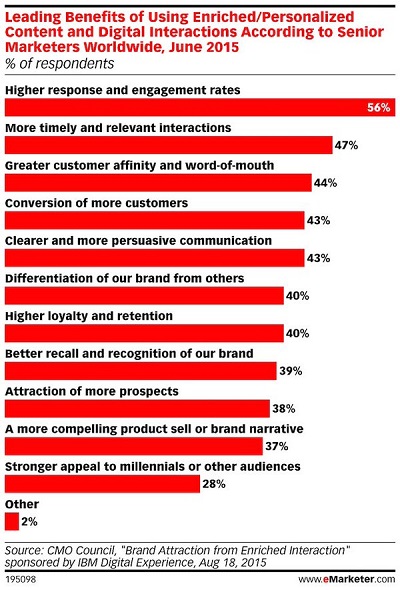
    Benefits of personalized content


    Image Source

    Perhaps the most compelling reason to use hyper-personalized content is the uplift in response and engagement rates. In a study by the CMO Council, 56 per cent of surveyed marketers reported this as an outcome of personalized content and digital interactions.

    Takeaways

    2016 is the year that segmentation will wither and die. With all the data potentially available to them, marketers now have opportunities to develop relationships with customers through engaging personal interactions and thus obtain valuable insights.

    The only way marketing teams can achieve this is to carefully analyze data, drill down to the granular details to figure out what their customers want, and build a picture from data gleaned through multiple channels. This highly focused approach can produce astonishing results.
  • Video for Marketing is the Way to GO in 2016!

    Social platforms are increasingly moving towards the use of video content. Facebook caused controversy when it introduced auto-playing videos, but now, we all expect to see them in our streams.

    Twitter has championed video with Vine, and we’re seeing more videos pop up in Pinterest. MeVee is the newest player in real time social streaming, up against Meerkat and Periscope.

    ReelSEO found that 96 per cent of surveyed B2B marketing stakeholders are engaged in video content marketing. Cisco estimates that, by 2019, 80 per cent of the world’s internet traffic will be video. If you’re a marketing professional, you have two clear choices: get on board, or get left behind.

    The impact of video on marketing

    Content marketing is a dynamic landscape, and goes far beyond blogging and tweets. Video is way to generate leads, but it’s also a very useful way of creating two-way conversations, which is the essence of successful social campaigns.

    video marketing stats

    Image Source

    In a survey of 350 B2B marketing professionals, 73 per cent said video has a positive impact on ROI and results. 41 per cent said they planned to increase their spend.

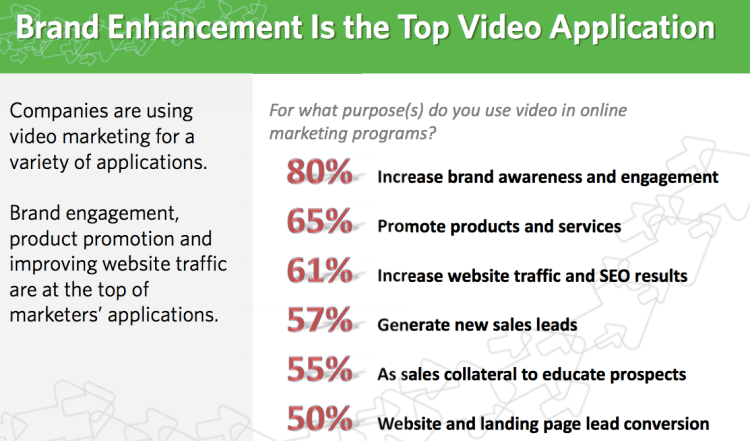
    Respondents are using video for a range of approaches, including website and email marketing and brand awareness. Research suggests that you can boost email open rates by 19 per cent, simply by using the word ‘video’ in the subject line. ReelSEO also found that 75 per cent of respondents are optimizing video to boost SEO.

    The game changers

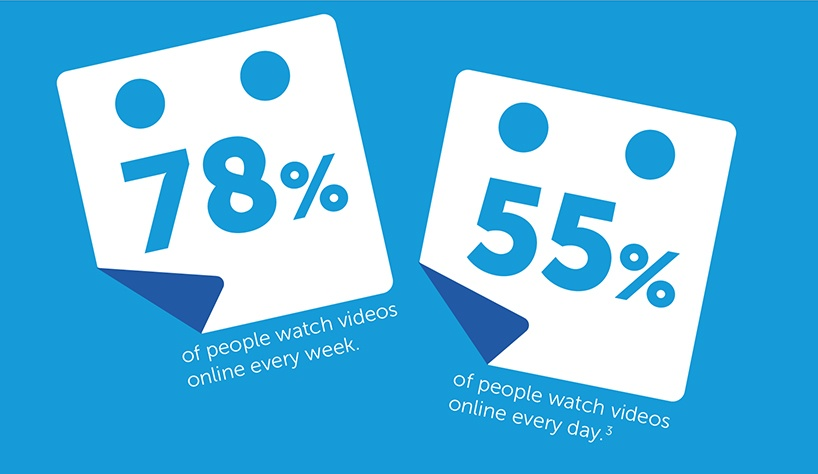
    The figures that support the use of video are truly staggering. 78 per cent of people watch videos online every week, and more than 65 of viewers watch more than three quarters of a video.

    video marketing- people watching videos

    Image Source

    To leverage these big audiences, you’ll need to identify and overcome barriers to adoption, and allocate the right budget and resource. You must devise ways to measure the ROI of your videos, whether they are used on social platforms, or deployed as ads.  And authenticity is key, so if you don’t have in-house video producers, you’ll need to recruit or outsource immediately.

    Changing landscapes

    Cisco says that video consumption will increase over the next 4 years, driven by streaming services and the increasing number of fast internet connections. Soon, half the world’s population will have internet access, and each individual will have several connected devices that are video-ready.

    The IAB says that half of our daily consumption of digital media takes place on smartphones and tablets, and Ericsson confirms that video traffic will grow 55% per year, for the next 5 years.

    We’re also going to see 4K video improving engagement with super-crisp clarity and exceptional quality. The faster our connections are, the more we’ll be able to enjoy this new high standard in video.

    Video is here to stay

    Mobile and social have evolved to a point where the use of video is everywhere. 81 per cent of businesses now feature video on their website.

    To stay relevant and engage your audience, you’re going to have to increase your use of video, using it to underpin inbound marketing and boost communication with your audience. You simply can’t ignore video any longer.

    2016 is an exciting year for marketing; all of the tools you need for video marketing are out there to be exploited. We’ll continue to update you throughout the year as the use of video marketing explodes.

  • Best of the Week | The Evolution of Content Marketing – What to do Next, and much more…

    This week’s hot news, events and videos from the online marketing and social media world.
    The Evolution of Content Marketing - What to Do Next | Position2 Blog
    From the Position² Blog This Week:
    The Evolution of Content Marketing – What to Do Next
    Content marketing has seen its ups and downs since its renewed popularity as an online marketing strategy over the course of the last few years. In this blog we look at developments in the content marketing arena and what’s coming down the road.
    Top Stories this Week: Social Media
    Top Stories this Week: SEO, PPC and Digital Media
    5 Email Marketing Must Haves to Conquer the Inbox Best of the Week Video
    Modern marketer needs to be freshly equipped with relevant, innovative email marketing strategies and tactics. Marketo’s Mike Madden provides actionable takeaways for improving your email deliverability, getting higher click rates, and more!
    White Paper: Increase Visibility for Your Content by 4x
    Today’s traditional SEO is inadequate: Ignite your search results by accelerating visibility in more places than ever before.


    Download this White Paper and learn:

    • SEO, why the way we know it is not enough
    • Introducing and implementing Enterprise Visibility Accelerator (EVA)
    • Using multi-channel tracking tools for effective monitoring
    • How EVA benefits businesses.

    Download the complimentary EVA White Paper now

    Enterprise Visibility Accelerator-EVA
    If you are reading this blog post via a RSS reader, please click here to subscribe.
  • The Evolution of Content Marketing – What to Do Next


    In February 2011, Google put an end to thin, keyword-stuffed content with a seismic change to its algorithm. The change affected 11.8% of search queries, and caused some sites to drop out of the SERPs overnight. As we approach the 4th anniversary of the original Panda update, what are our logical next steps in content marketing? And what have we learned from the mistakes of the past?

    Despite being hit by many successive updates, brands remain committed to the cause. Content marketing continues to be a key inbound marketing tactic, proven by the amount of content we’re collectively uploading to the web every day. For example, there are two million posts published on WordPress.com every day, and 113.6 million posts added daily to Tumblr. Add in all of the content uploaded to YouTube, business websites, and other blog platforms, and you begin to realise how important it is to be heard above the noise.

    Trending techniques

    In addition to increasing engagement, businesses must now battle content clutter and deliver increasing value and authenticity in what they post. As we look to 2016, we’re also going to see an increased focus on the bottom line: the return we get from the content we invest in.

    Thin content is most definitely out, and quality is in. For most brands, quality means answering questions. That provides value for our readers, and a better user experience. Evergreen content and pillar posts are vital as part of a carefully planned strategy across different channels. As content marketing matures, so do its consumers—they want more detailed, more visually appealing content, and they have higher expectations of what your brand can provide.

    To cut through the increasing content clutter, marketers are also looking to different channels, and resurrecting some techniques that have been neglected so far. The humble podcast is also coming of age thanks to some of the world’s biggest brands, moving from a hobbyist activity into the core of content marketing campaigns.

    Why the sea change? Audio and video content can be branded easily, without cutting into the editorial themes of the content. Additionally, podcasts offer a great platform for advertising, and in the age of the ad-blocker, that’s an opportunity well worth exploring.

    Driving profits with content

    The more we learn about content marketing, the more we learn to see the bigger picture. Thankfully, success is no longer measured in ‘Likes’ and shares; it’s about being part of the research journey, building trust in a brand, and figuring out how to play the long game.

    As you develop your strategy for 2016, think about ways content can be a component in both lead warming and nurturing, as well as providing the authority and trust you need to increase your bottom line. Apart from increasing the depth of content, it’s important to consider the channels and media you use to get your brand message across. To get the best ROI, marketers need to focus on efficient management to ensure that effort is not wasted, and that their budgets are always focused on productive outcomes.

  • Do You Have A Content Marketing Strategy?


    You will find a good piece of content at the core of a successful email campaign. But that’s only one cog in the wheel. For an entire annual marketing plan to be a success you need a focused content strategy, something along the lines of what Michael Brenner has in mind in ‘What is Content Strategy and Why Do You Need it?’ on Forbes.com: “A content strategy flips the tables on traditional linear marketing by defining the process and then securing the right resources for producing a consistent stream of content mapped to buyer needs across all phases of the buying cycle. This is done for each buyer type or “buyer persona” that is involved in the B2B decision-making process.”

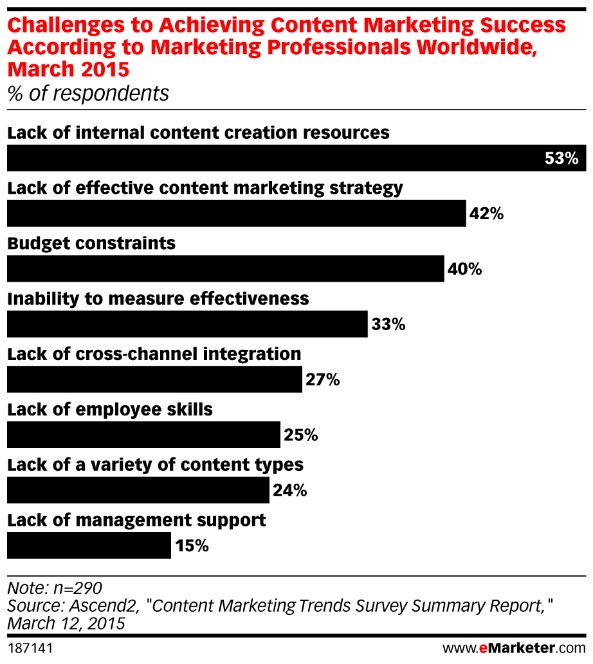
    If you think content marketing isn’t easy, you are not alone (see below). Marketers assume they face unpredictable challenges designing a sustainable content marketing strategy. And then they have to implement it. But it may not be all that daunting.

    Challenges in achieving content marketing success

    Beyond verbal: Why you need a documented content marketing strategy?

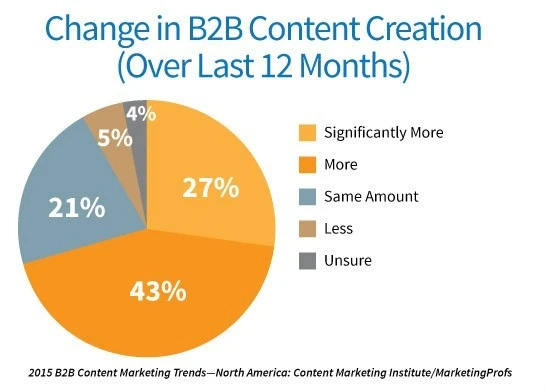
    Seventy percent of marketers say they are creating more content today than they did one year ago. That’s a quantum leap in both content creation and distribution. Marketers are learning how essential it is to have the right content, in the right channel, at the right time – every time a potential customer goes looking for an answer. Having a method to match the content creation madness helps marketers aim their energy, their money and, most crucially, their time in the right direction.

    2015 B2B Content creation trends for North America


    Content Marketing Institute’s research shows that marketers with a documented content strategy:

    • Are far more likely to consider themselves effective at content marketing
    • Feel significantly less challenged with every aspect of content marketing
    • Generally consider themselves more effective in their use of all content marketing tactics and social media channels
    • Can justify spending a higher percentage of their marketing budget on content marketing

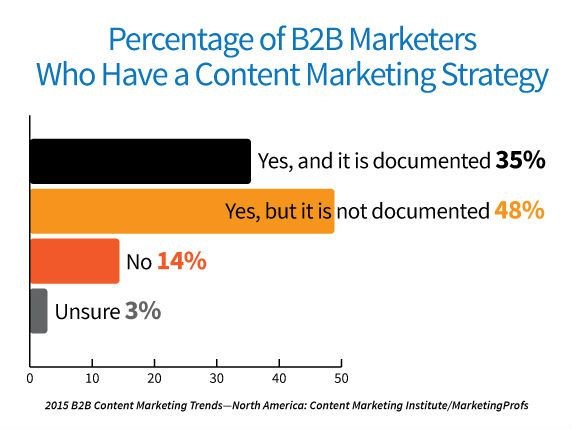
    Percentage of B2B marketers using content marketing strategy

    How to build a winning content strategy?

    You need to ask yourself a few questions before you start a deep-dive into the elements of your strategy:

    • Define your ultimate goals (traffic, sales, retention, awareness, etc.)
    • Define the target group that will help achieve your goals
    • Pinpoint where is the target group and who or what influences it
    • Establish the metric to judge the success of your efforts (links, shares, engagements, conversions, etc.)
    • Compare ROI with other marketing activities

    Once you have filled in those blanks, follow these simple steps for a well-rounded content strategy.

    Step 1: Do a content inventory

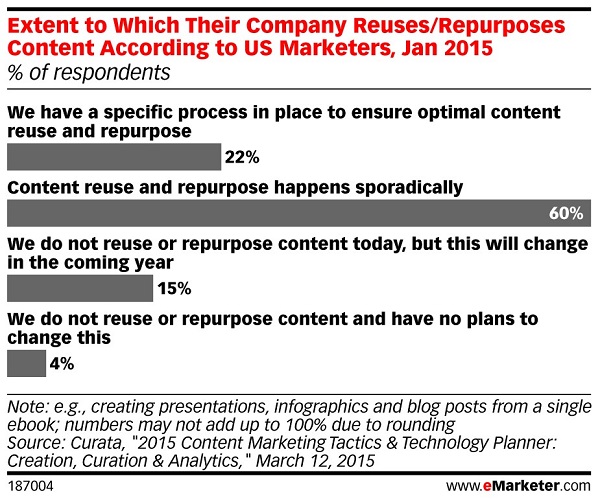
    More often than not, marketers are sitting on a gold mine of unused content. A documented content inventory gives you a clear picture of where your existing content can be found, how well it performs, and what gaps remain unfilled.

    Content reuse/repurpose trends


    Step 2: Start building a content calendar to fill identified gaps

    The content calendar helps you nail down the content type, tone, audience and publishing schedule. For example, a retail solutions firm, not only wants to produce great content for potential customers interested in, say, retail operation optimization but also for potential new employees who want to know how good a company they are to work for

    Step 3: Content is ‘King’; content promotion is ‘Queen’

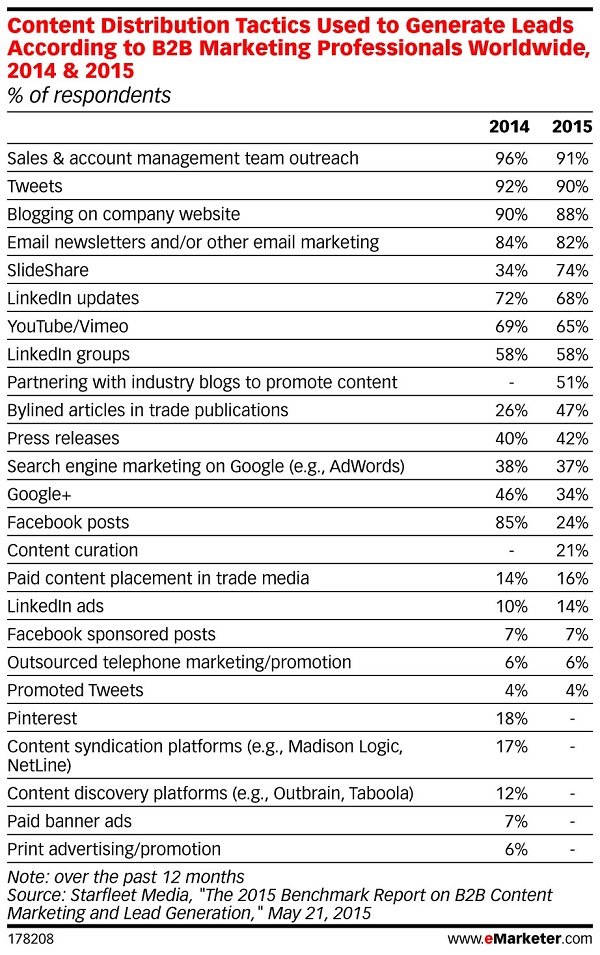
    Decide how to distribute and promote your content. How long — duration — will you keep it published (limited time, indefinitely)? What’s the reusability across channels? Planning this will help you publish and promote the right content to the right channels.

    Usage of content distribution tactics

    Step 4: Track and Tweak

    Track how your content performs across the distribution channels and which promotions pay off. Optimize your content with an analytic approach based on agreed upon metrics.

    Building and implementing a content strategy can be as easy as taking stock of existing content, filling in the gaps and then looking at the numbers coming in to tweak the content for the next round.

    We would love to hear your thoughts on content marketing strategy and execution. What are your pain points? What really works for you?

  • Google Phantom 2 Algorithm Update

     ‘What does it mean to the businesses and search marketers?’

    Google’s on a roll. From the “Mobilegeddon” update last month to its recent secretive “Phantom 2” algorithm update, it’s delivering the best possible search results to users. And then going back for more. Google silently tweaks its algorithm much frequently than most marketers imagine.

    While the Mobilegeddon algorithm update was designed to boost the rankings of mobile friendly sites on mobile devices, Google’s Phantom 2 update will penalize sites with low quality content, specifically impacting “how-to” style content. Additionally, the impact will be felt by the entire domain not just standalone low quality website pages.

    What “Phantom” should mean for Search marketer?

    It’s a swift silent punisher of sites with thin content. They will lose the bulk of their rankings, traffic and conversions overnight.

     google phantom 2 update

    Image Source

    What does Phantom do to the actual business?

    • Your entire website is punished or sand-boxed
    • You rapidly lose a lot of traffic
    • You can’t see your high traffic ranking keywords on Google search results pages (SERPs)
    • Traffic conversions drop faster than you think
    • Your Return on Investment (ROI) disintegrates

    Essentially, you lose almost everything online you were working on the site (whether intentional or unintentional).

    It sounds scary, right?

    Reasons why a website is hit by Google Phantom 2 algorithm

    1. Sites with Low Quality Content

    Google has been cautioning everyone for quite some time now with Panda algorithm updates. Sites that add very little or no value to the audience are hit with the Phantom 2 algorithm update. This includes poor representation and lack of uniqueness in the content to the users.

    2. Engagement

    If your website content is not able to provide value to the audience, the engagement level is bound to be low on the website. The Phantom update emphasizes this fact. And the current Phantom 2 updates are a lot more strict than Panda updates

    3. User Experience (UX)

    • While content is one major aspect, others include the website load time, 404 errors, user flow, page architecture (design), color combinations, user navigation all of which should be taken very seriously by the webmasters. Make sure the website functions perfectly without distracting your audience and the search engines
    • Supplement, template content or using auto generate content tools slanders the uniqueness and the usefulness of the content for users. Marketers should be very careful and should maintain the relevance of the content for the users
    • Use of distractive and/or sponsored ads: Ads are meant to help users make the right decisions or provide information they intend to use during the buying process. Many businesses overdo by forcing users to click on these ads
    • Affiliate networks, which keep on bombarding and showcasing users with irrelevant ads
    • Sometimes ad links and content are in the same flow & color and users can’t determine the difference. Applying these tactics hurts the sites rather than helping. Remember, Google has already included human bots in deciphering these tactics
    • Pop-up’s annoy the audience if not used judiciously. Google algorithm has been optimized to identify these
    • Pages only containing images and videos without considering the theme of the webpage or over exposing the aspect of rich media are a negative impact
    • Pages with just links that point to subdomains or other websites with less/no content, are of little help. No more old school link farm techniques

    4. No Corrective Action Taken

    If your website has been hit by Google Panda or had elements hit by the update earlier, and you have done nothing to make content more appealing, fresh, and unique to the users, Phantom 2 will definitely have an impact.

    5. Duplicate Content and Canonical issues

    Happens frequently but often ignored by webmasters. Make sure you remove duplicate pages/content. Just remove them or block duplicate content from search engine indexing. Use proper canonical tags to make sure that one version of pages exist.

    6. Doorway Pages

    Doorway pages–Don’t try to deceive Search Engines and create similar pages to gain multiple rankings on SERPs. Google is smart enough to identify these and punish websites accordingly. Read here

    7. User Generated (spam content)

    Make sure user-generated conversations are relevant and checked for spam. Lots of low quality and thin ineffective user generated content raises an alarm and will be hit by the Phantom update. Ensure that community/forums are not used as junkyards for link and ad promotions. Have guidelines for the users to comment. Do periodic checks and edit/remove comments, which have negative user experiences.

    More to consider

    • Understand Your Target Audience/Personas before you write content. Attribute content across the funnel of the buyer’s journey
    • Have in place a content marketing strategy and plan. Make sure you generate genuine and unique content for the users, not for search engines
    • Try to develop a mix of content/asset types to keep users engaged. Distribute your content to relevant channels where your target audience generally visits. Content is King, but Distribution is ‘Queen’
    • Start with small. If you have constraints generating content, take small steps. Use Social Media to interact with your audience
    • Optimize your online channels Facebook, Google+, LinkedIn, etc., and reach out to your audience
    • Generate small content pieces. The traditional rule for audience engagement is 80/20. Eighty percent of your content should be for your audience, and 20% should be for your business (sales, marketing, self-promotion, etc.)
    • Have a social calendar in place to communicate with your audience
    • Regular Website Health Check up – Make sure all the technical aspects of the website are taken care of like page load time, design, navigation, etc. Regular checks on website hygiene ensures removing any major issues and creates better user and search engine experience
    • Make sure you track your content performance using analytical tools
    • Conduct regular analytics audits to make sure you are on top of your user engagement metrics. Understand what your audience needs and generate content accordingly

    At Position2 we utilize an Integrated Digital Marketing Approach to make sure our clients achieve premium results. Our proprietary Website Calibrator™ technology, a 41-point technical SEO audit, keeps our client websites equipped for any Search Engine algorithm updates.

  • Content Marketing Trends in 2015

    Over 35,000,000 distinct units of content were shared on a daily basis in 2014.  As staggering as that may seem, 2015 promises to  be even bigger. Now’s the time to look at the content trends likely to appear in 2015, and plot your marketing course accordingly.

    content-marketing-trends-2015

    Current Marketing Trend

    Social Media Marketing and Blogs on Top

    Today most marketers promote their content on social media sites, and for good reason. Clicks, shares, and views from social media sites are five times more likely to be shared.

    The Prediction: This year we’ll see content marketing efforts push beyond social media and spill over into webinars, case studies and other relevant content platforms. These efforts deliver more value, brand awareness, backlinks and discussions than just a simple social share.

    1. Businesses will finally get involved in content creation

    Nearly all marketers now factor content marketing into their overall marketing plan, and 45% of B2B marketers report having a content strategy in place. They understand how social media and content marketing line up with each other. They understand that content marketing is all about story-telling. Make this the year you generate high quality engaging  multimedia content. Customers respond to visual content and remember it better.

    For help planning a content strategy for your business, see the links below:

    1. Content marketing targets engagement and brand awareness

    According to the Content Marketing Association, brand awareness and engagement are the leading marketing goals for 2015. To build better brand awareness develop regular posting schedules, speak with a consistent voice and share the kind of content with groups that functions like free publicity.

    In 2015 expect to see a deeper focus on brand awareness and engagement as content marketing assumes a more natural approach.

    1. Get ready for the content marketing visualizations boom

    Neil Patel of Crazy Egg and KISSmetrics says that content marketers should be ready for visualizations in 2015 and move beyond basic infographics. Neil suggests that 3D infographics or animated infographics work to your advantage, adding a “wow” effect that generates more shares and likes.

    To learn more about infographics check content marketing infographics for 2015

    1. Calculating content marketing ROI

    In 2015 you’ll see content gaining more traction in terms of lead generation, and lay a new groundwork for the future of content marketing. Content marketing platforms will become fully integrated with customer records and customer relationship management.

    For tips on how to improve digital marketing ROI see tips to improve digital marketing ROI

    1. Smart marketers prefer thought leadership

    Don’t just present content. Add value. From shares and tweets to blog posts to whitepapers, have a well-defined plan to engage with the consumer. Always ask the question,”Will our clients and prospects find this content valuable?”

    1. Content marketers wake up to email marketing

    There was a time when you could offer a company newsletter via email and that was enough to build and grow your list. Email marketing has been used as a distribution channel for existing content such as blog posts, and to promote paid products and content to subscribers. All that has to change.

    In 2015 marketers need to get really smart about the kinds of email marketing content they want to produce and develop engaging ways to promote it.

    1. Conquering content on mobile

    In 2015 there is no longer any debate about mobile. Everyone will be investing in the space. So it is essential for content marketers to develop mobile-friendly content for customers. The health of their brand depends on it. It’s a problem that needs adressing. While 41% of respondents confirm that up to half of their subscribers open emails on mobile devices, only 42% of vendors admit they rarely employ a mobile-friendly design in their communications.

    There’s a big disconnect between what marketers know they need to do, and what they’re actually doing. Look for that to change in 2015 because it’s a change or die situation.

    2015 to-dos

    • Make responsive connections with your prospects
    • Build brand awareness
    • Increase commitment

    What ups and downs or trends do you predict for content marketing in 2015? Please Share your insights below!

    Contact Position² to establish a B2B content marketing strategy now! Happy Blogging!!!

  • Improved Ad Campaign Tracking Tools on Twitter

    For Internet advertisers of all kinds, Twitter is fast becoming the place to be. Consider the numbers:

    • 288 million active users tweeting monthly
    • 500 million tweets sent daily
    • 80% of active tweeters using mobile (Twitter)

    With this in mind, advertisers will need a better way to manage their Twitter ads. Fortunately the micro-blogging site has just launched two new ad conversion tracking tools, both of which will help advertisers gain better insight into ad campaigns run on Twitter.

    The two new tools are:

    • Transaction Values
    • Key Conversion Tags

    Transaction Values

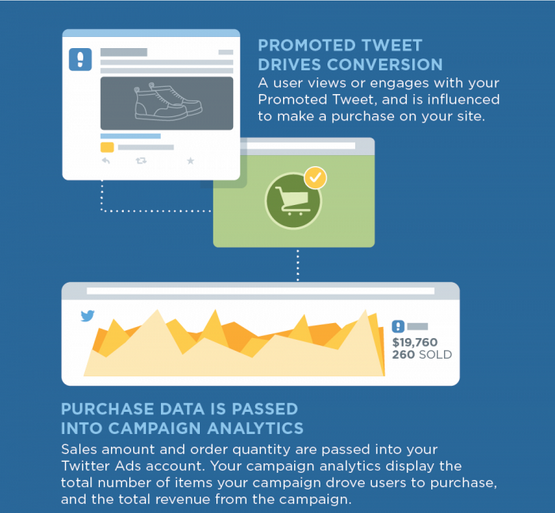
    While advertisers may have previously used website tag for remarketing, now they can use it to track their sales figures as well. By making some simple changes begin collecting order quantities and conversion values for each conversion. Twitter Ads analytics dashboard will then display the aggregated value and reporting.

    improved-ad-campaign-tools-on-twitter

    Advertisers will be able to see their ROI from their Promoted Tweet Campaigns. If not already using conversion tracking, now would be a good time to start. Simply create a tag in Twitter Ads UI and begin implementing it within a website. This new feature allows digital marketers to measure sales that were directly driven by Promoted Tweets.

    improved-ad-campaign-tracking-tools-on-twitter

    LiveNation, a Beverly Hills, California-based company that promotes concerts and  live-events, finds Twitter’s real-time platform a natural fit for its business model. Live Nation beta tested the Transaction Values feature on Twitter for over a month with Promoted Tweet campaigns using the Website Card to increase ticket sales, and the results they logged were impressive. The analytics of @LiveNation reveal that the company earned a ROAS of 819% in the test phase.

    Key Conversion Tags

    With the key conversion tag feature advertisers can select the single conversion event that is most important to them and optimize for it. They then receive gleaned analytics within their Twitter Ads UI that show only that conversion type. And they can still get all their conversion type reporting for their campaigns within their analytics dashboard at any time.

    As an example, a boutique bakery might turn to Twitter to drive more sales of its cakes for a specific holiday. All it needs to do is place a website tag on the final conversion page of the cake sale and then select this tag as the key campaign tag. Twitter will then optimize the bakery’s campaign to generate more conversions on the cake sale page. The bakery will be able to view all the cake purchases within the Twitter Ads analytics dashboard, all in real time.

    Contact Position² to deploy B2B advertising campaigns on Twitter now!

  • IoT: What You Need to Know as a Digital Marketer [Infographic]

    The Internet of things (IoT) will play a major role in the way we conduct business and assimilate information in a more interconnected world. But do we have the right infrastructure to let IoT reach its full potential? And are we fully disposed to explore its immense benefits to digital marketing? Go through this incisive infographic to learn more about it.

    Internet-of-things-position2_infographics