Blog

  • Facebook Launches Video Ads, AdWords Will Change Video Advertising Options and Twitter’s Testing a Click-to-Call Feature

    Facebook

    Facebook

    Facebook tested the video advertising waters in December 2013 and is now launching premium video ads with a select group of advertisers.

    According to Facebook, if you want to reach a large audience with top quality visuals, motion and sound, premium video ads are for you. These 15 second video ads will start playing without any sound when they appear on the screen and stop playing once a viewer scrolls past. The ads start playing with sound only when a viewer taps the video and it expands into a full screen view.

    To make sure the engagement quotient of these ads is as good as other content on the News Feed, Facebook has tied up with Ace Metrix company, which is helping them review and assess the engagement levels for each ad. Ace Metrix will assess the creative qualities of the videos in the Facebook environment objectively and provide marketers with pointers on watchability, meaningfulness and resonance.

    Facebook will be rolling out the premium video ads slowly over the next few months.

    Purchase and Measurement

    Premium video ads are bought based on Targeted Gross Rating Points to reach a specific audience over a short period of time. Delivery of these ads is measured by a third-party, Nielsen Online Campaign Ratings (OCR) and marketers need to pay based on what Nielsen OCR measures.

    Google AdWords

    Attention AdWords video advertisers!

    Google AdWords is making changes to video ads’ settings and formats starting April 15 and all campaigns will be automatically migrated from May 15. This change will blend the in-search and in-display formats into one format – TrueView in-display.

    According to Google, the new settings enable marketers to:

    • Organize video viewing around a user’s interactions with ads
    • Choose the places where the ads are shown at campaign level
    • Deliver more relevant ads on the YouTube search page

    Check out the following screenshot for an overview of the changes to come in April:

    To know more about these changes, click here.

    Twitter

    According to a story by Digiday, Twitter is testing a click-to-call button that will enable mobile users to call up advertisers directly. The testing is in beta now.

    According to Twitter’s VP of global online sales Richard Alfonsi’s statements to Digiday, this click-to-call feature will further Twitter’s current offering of promoted tweets, trends and accounts. He also said that this direct response capability will help Twitter focus on lower-funnel conversion oriented goals.

    We will be following this development. So keep an eye on this space for more updates.

    We would like to know your take on these updates. Do post your comments in the box below.

    Image Source: mkhmarketing, Search Engine Watch

  • Despite Strong Growth, Share of Online Display Advertising Spend Well Behind TV

    Online Display Advertising Spend Well Behind TV

    A recent Nielsen study revealed that the growth of display advertising on the internet surged to an all-time high touching 32% in 2013. This growth covers global display advertising across the web, mobile internet and apps.

    Internet display advertising is big. But, it is not the biggest fish in the advertising pond. Yet.

    Despite its impressive growth, (which is also the fastest compared to other media platforms), the share of global online display advertising only accounts for 4.5% of overall ad spends. The growth rate of TV advertising is much lower at 4.3% but it continues to be a popular choice with most marketers as is evident by its 57.6% share of ad spends.

    Web display advertising grew rapidly in 2013. But, as the Nielsen study shows, it’s just an example of high growth on a small base. The allure of video content, which is behind the continuing success of TV as an advertising medium, is drawing more companies to opt for videos to be a part of their online marketing mix.

    Small but Versatile

    The sheer indispensability of the Internet often makes us forget just how young the medium is. Given its age, its penetration and versatility is amazing and it has a number of advantages over its older and more traditional competitors. One can access online content across a variety of screens from PC, laptop, tablet to mobile. One can even watch TV over the Internet! Web advertising has an indisputable trump card in multi-screen advertising.

    With media multi-tasking becoming a common phenomenon today, the call of multi-screen advertising is growing louder. Brands can target users on different devices by using tools like responsive websites.

    Of the many drivers that are powering online display advertising growth, multi-screen advertising is significant as it allows advertisers to stay in touch with audiences even as they migrate across screens as is their habit these days.

    Multi-Screen Advertising Set to Grow Further

    Tools like Twitter TV ad targeting that help brands in targeting TV viewers using Promoted Tweets and events like the Google-comScore deal that will help measure different ad formats across the web in real-time makes Internet advertising more appealing to marketers. Each of these events is likely to strengthen the case for internet advertising and drive greater spends.

    Multi-screen advertising specifically can become a huge area of investment in the near future because it leverages the Internet’s versatility.

    Conclusion

    Despite its obvious promise, internet advertising is still in a very nascent stage. It does have formidable competition in TV but that hasn’t stopped it from growing significantly. Digital marketers who are running online display ads are gaining valuable learning (and business) from tapping into this near ubiquitous, extremely versatile medium.

    Over the last few years, we’ve witnessed the galloping influence of the Internet and it doesn’t show any signs of letting up. If anything, it’s increasing! We’re betting on it as the medium to market through and advertise on.

    What are you betting on? TV or the Internet?

    Image Source: 401(K) 2012

  • Google Strengthens GDN Targeting with Bizo Partnership

    Display Ads

    In a bid to improve the targeting capabilities offered on the Google Display Network (GDN), Google has struck a deal with data management and targeting platform Bizo.

    Google is now testing new targeting capabilities in beta through their partnership with Bizo. The latter has access to a database of more than 120 million business professionals throughout the world that can leveraged across different platforms such as, email, display and social.

    Bizo audience targeting capabilities coupled with GDN can make sure that your ads are placed in front of the right audience. A wide choice of audience segments are available to pick from:

    • Technology
    • Beauty
    • Fashion
    • Music and so on

    You can choose Bizo audience segment targeting within Google AdWords for both display and video campaign targeting. You can also optimize and measure campaigns in real-time since all the performance data is stored in Google AdWords.

    However, the cost of CPMs and CPCs for advertising with this kind of audience targeting on the GDN is likely to be high owing to the cost of Bizo and other third-party providers.

    This partnership will add more power in the targeting arsenal of online marketers. With personalized marketing increasing the emphasis on precision audience targeting, such empowered targeting capabilities will help marketers target the right people improving the chances of conversion and ROI. Better conversion and ROI can help in more efficient campaign planning and budgeting ensuring judicious use of your digital marketing budget.

    Do you think such partnerships will help Google become stronger in the online audience targeting space?

  • Facebook to Launch New Campaign Structure

    Facebook will unveil a new campaign structure on March 4, one that will help marketers, regardless of their size, in organizing, optimizing and measuring ads.

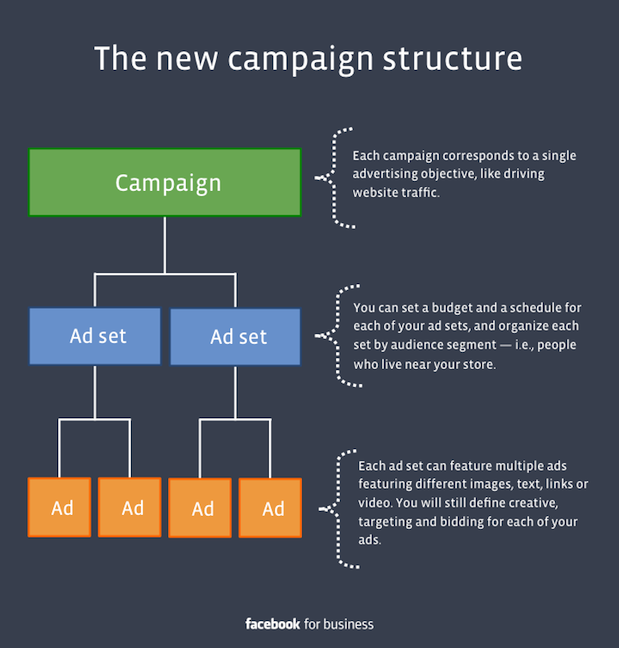
    In the new campaign structure, Facebook has added another level, ad sets, to its existing campaign structure of two levels: ads and campaigns.

    Facebooks new ad campaign structure

    Campaigns answer each advertising objective. They are designed to help marketers optimize and measure results for each objective across ad sets and ads.

    Each marketing campaign can feature multiple ad sets, with each having its own budget and schedule. You will also be able to organize each ad set to stand for specific audience segments like, people who stay close to your business. This audience segmentation for each ad set will help you control spends on each audience group, decide when they will see your ads and measure their responses. Facebook’s ad delivery system will optimize delivery for the best performing ad in an ad set.

    You can accommodate multiple ads in each ad set, where each ad can feature different content – images, videos, text or links. You can also control the creative, targeting and bidding at the ad level. So, you can ensure that each ad within an ad set is reaching the right audience with their designated images, text, links and video.

    For example, if you are a local magazine, you may have different campaign objectives, like:

    • Increasing the number of yearly subscriptions
    • Driving readership through contests
    • Broadening your overall reach

    You would have designed separate campaigns to achieve each objective. Different objectives like the above mean you would want to target different audience groups for each. You can now create ad sets targeting separate audience groups for each objective. You may want to target current weekly or monthly subscribers to take up yearly subscriptions with ads highlighting special offers for the same; you might look to target new subscribers to read more through contests based on your magazine’s content and target people who haven’t subscribed yet through promotional ads about your magazine.

    The new campaign structure can help you achieve all this.

    This update will be available worldwide across all ad interfaces including the Ads Create Tool, Ads Manager and Power Editor along with third-party ad interfaces built by Preferred Marketing Developers.

    All existing ad campaigns will be migrated to the new structure automatically once the update is rolled out to your account. You will also have access to historical data pertaining to any of your existing campaigns and ads later since the rollout will not have any impact on the performance, spends or delivery of your existing ads.

    For more information on the new campaign structure and how you can prepare yourselves, check out the Facebook Help Centre.

    Image Source: Facebook for Business

  • SMBs turn to social media for growth, 5 content curation mistakes of B2B marketers and much more…| Best of the Week

    This week’s hot news, events and videos from the online marketing and social media world.
    SMBs Flock to Social Platforms to Fuel Growth<br /><br /><br /><br />
    From the Position² Blog This Week:
    SMBs Flock to Social Platforms to Fuel Growth
    Its not only large corporations who are striking gold on social media. SMBs are making it big too. With impressive growth prospects, SMBs are increasingly joining the social media business brigade. Check out this post to know more and also learn how this growth can be made better.
    Top Stories this Week: Social Media
    Top Stories this Week: SEO, PPC and Digital Media
    Best of the Week Video Best of the Week Video
    Does Google use EXIF data from pictures as a ranking factor?
    Watch this video where Matt Cutts, Head of Google’s Webspam team, talks about their policy on this and whether you should add EXIF data or not.
    White Paper: Increase Visibility for Your Content by 4x
    Today’s traditional SEO is inadequate: Ignite your search results by accelerating visibility in more places than ever before.Download this White Paper and learn:


    • SEO, why the way we know it is not enough
    • Introducing and implementing Enterprise Visibility Accelerator (EVA)
    • Using multi-channel tracking tools for effective monitoring
    • How EVA benefits businesses.

    Download the complimentary EVA White Paper now

    Know more about Enterprise Visibilty Accelerator(EVA)
    If you are reading this blog post via a RSS reader, please click here to subscribe.
  • Google Empowers Programmatic Buying with Time Inc. Deal

    Time Inc.

    Google has signed on the dotted line yet again.

    This time, it has entered into a deal with Time Inc. Google and Time will be launching a premium programmatic ad exchange, Time Inc. Global Exchange on March 1.

    Here are a few important details about this deal:

    • Time’s 116 million customers will now be merged into Google’s DoubleClick Ad Exchange
    • Marketers will gain access to all Time’s customers on the Time Inc. Global Exchange
    • The Time Inc. Global Exchange will include the desktop and mobile properties of Time’s premium brands like TIME, PEOPLE, Sports Illustrated etc.

    Such a deal gets you thinking, is Google trying to give the digital world a sign? Is programmatic buying really better than manual media planning? Many brands swear by programmatic ad buying and many set much store by manual media planning. Regardless of the type of ad buying you prefer, this Google-Time deal is definitely intriguing in the opportunities and possibilities it can offer for Google, Time and marketers.

    What is your take on this Google move?

    Image Source: Media Bistro

  • [Infographic] B2B Buying Process

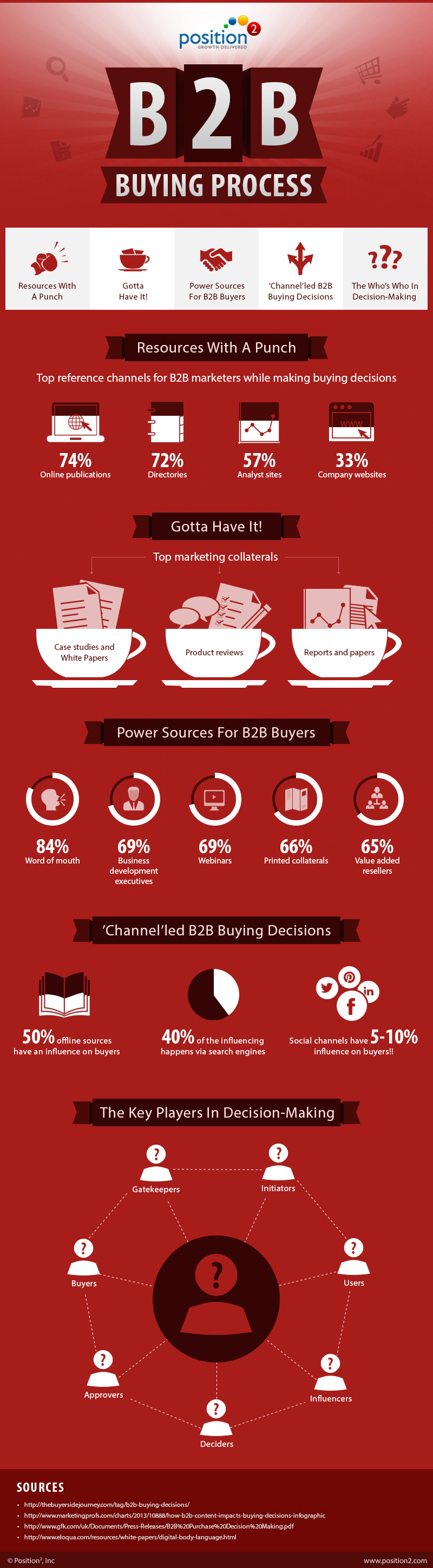
    The B2B buying process is notably different from the B2C process. The influencers change in number and roles, the sources of research referred to before a B2B marketer makes a purchase are different…take a look at this appealing infographic to know about these factors and more on the B2B buying process.

    B2B Buying Process Infographic

  • SMBs Flock to Social Platforms to Fuel Growth

    SMBs using social media

    Today much of marketing has a social hue to it. Marketers are flocking to social media platforms for leads/customers – basically, revenue either in a current or deferred form.

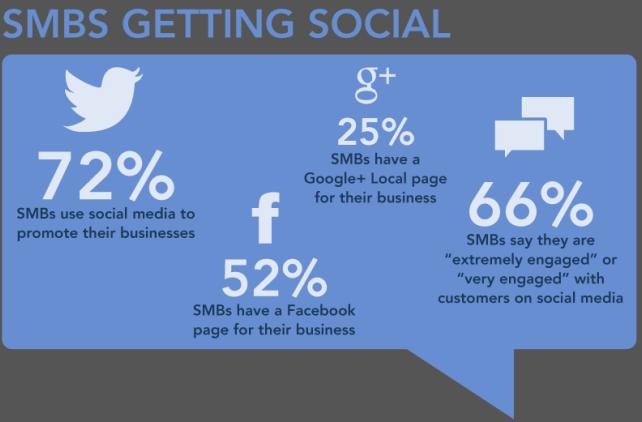
    Here are some statistics to demonstrate just how significant a trend this has become:

    The ease of use and immediacy of social media make it an invaluable tool for small businesses. Small and Medium Businesses (SMBs) are using social media to grow their businesses and 25% of SMBs have planned to increase their social media spend in 2014.

    LinkedIn Not the ‘Go to’ Site for SMBs

    LinkedIn has long been considered the ideal social network for businesses and professional engagement. However, when it comes to SMBs, social networks other than LinkedIn are also doing well.

    The numbers above reiterate the fact that LinkedIn is not ‘the’ most preferred social media site when it comes to SMBs. Twitter, which is not necessarily a business networking platform, is close behind LinkedIn.

    According to BIA/Kelsey, with 24.3% SMBs active on the site, Twitter has achieved a fair degree of traction with this audience. Twitter has beefing up its ads API in an effort to attract more brands and the effort seems to be paying off.

    Facebook – The Unquestioned Champion…

    Through continuous efforts to strengthen its advertising portfolio, Facebook has managed to cater to brands’ marketing needs. 52% SMBs surveyed by BIA/Kelsey are active on the site and recent statistics released by Facebook shows that it has 25 million active SMB pages. That’s an impressive number.

    Facebook is definitely doing things right to have these many SMBs using the network for marketing. A recent study by MediaPost stating that 83% SMBs use Facebook re-emphasizes its dominance.

    What can SMBs do to further their growth through social media?

    SMBs are really gearing up to drive high growth rates with aggressive marketing particularly on social media platforms. In order to push up growth better, SMBs need to do the following:

    • 30% of searches will have local intent by next year. This is a valuable pointer to drive sales. Increased focus on local marketing will help SMBs drive more people to their business and improves chances of conversion.
    • Introduce deals and coupons for local customers to redeem. This will spruce up local traction through local search queries.
    • They can use social media tools like Pinterest ‘Place’ pins to drive growth.
    • Start off with small social media spends and then scale up depending on particular platform growth.

    Do you have anything else to add to this? Let us know!

    Image Courtesy: BIA Kelsey

  • Yahoo! Launches Gemini Platform for Mobile Search and Native Ads


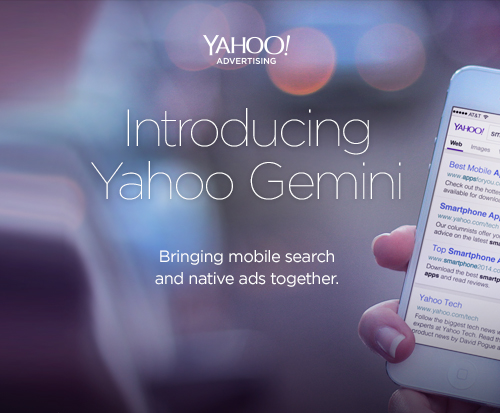
    Yahoo GeminiYahoo! Launches Gemini Platform for Mobile Search and Native Ads

    Yahoo! has recently introduced Yahoo Gemini, a unified marketplace for mobile search and native ads. This is Yahoo’s latest attempt to try and lure more marketers to its advertising business.

    Yahoo Gemini has:

    • Made it easier for marketers to run multi-channel campaigns and drive better growth through more informed campaign spend.
    • Made it easy for marketers wanting to buy mobile search ads on the Yahoo network along with the scale and creativity of native ads.

    The recent surge in mobile web traffic is the key to the increase in demand for mobile ads.

    Yahoo’s share of the digital advertising market in the US is expected to come down to 5.4% in 2014 from a share of 5.9% in 2013. And Yahoo still has a lot of catching up to do in 2014, with Google commanding a 40% market share, Facebook (7.4%) and Microsoft (5.7%). The launch of the Gemini platform and its recent unified approach to digital advertising are Yahoo’s attempts at increasing that ad market share.

    When Google, Yahoo and Microsoft step up to improve their search and ad market share, it is the digital marketer who benefits. The companies release new features and tools in their competition to cater to marketers’ needs the best. Marketers can make optimum use of these tools and derive more ad revenue out of online campaigns.

    Image Courtesy: Yahoo!