Blog

  • More Updates from Facebook’s f8 Developers Conference…

    Image Source: Facebook

    The latest edition of the f8 boasts of a series of updates that impacted users, marketers and developers.

    However, for the intents and purposes of our discussion here, we’ll continue to focus on updates that affect marketers in particular.

    Among other things, with the launch of its mobile ad network, Audience Network, Facebook is also focusing on integrating its website better with lead nurturing efforts of brands through enhancements to Mobile App Install Ads.

    Brands can now send news feed messages to users if they:

    • Completed an action
    • Are inactive
    • Need more nurturing

    You can now nudge along users who are at different stages on your Facebook strategy by messaging them on their news feed. With all the latest changes to the news feed that has made it more visual, Facebook users are focused on the news feed a lot. This increases the chances of your message reaching the user on their news feed.

    Facebook is now enabling messaging from apps or external events in order to help brands reach users through their news feed. Mobile app install ads also have calls to actions added to them in order to help drive the user actions you want.

    For more information on this and other f8 updates, check out this page.

    Adds more thrust to your Facebook strategy? Tell us in the comments section below.

  • Four types of social analytical tools, the state of B2B marketing data and much more… | Best of the Week

    This week’s hot news, events and videos from the online marketing and social media world.
    Four Types of Social Media Analytical Tools You Need
    From the Position² Blog This Week:
    Four Types of Social Media Analytical Tools You Need
    Effective and efficient social media management, especially when you are operating on a large scale, is tough without the support of analytical tools. Refer to this blog post to learn about the types of social media analytical tools you need.
    Top Stories this Week: Social Media
    Top Stories this Week: SEO, PPC and Digital Media
    Best of the Week Video Best of the Week Video
    Check out this video in which Cyrus Shepard, a senior content astronaut at Moz, talks about good and bad SEO practices and how Google traces your moves on the web.
    White Paper: Increase Visibility for Your Content by 4x
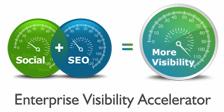
    Today’s traditional SEO is inadequate: Ignite your search results by accelerating visibility in more places than ever before.Download this White Paper and learn:

    • SEO, why the way we know it is not enough
    • Introducing and implementing Enterprise Visibility Accelerator (EVA)
    • Using multi-channel tracking tools for effective monitoring
    • How EVA benefits businesses.

    Download the complimentary EVA White Paper now

    Know more about Enterprise Visibilty Accelerator(EVA)
    If you are reading this blog post via a RSS reader, please click here to subscribe.
  • Being a Hit on Social Media and Facebook Updates for the Week

    Image Source: ilfoglio

    Social Media Content

    Every brand (almost) has a social media presence.

    And, all these brands post content on their social media accounts (we think it’s safe to assume all do).

    End result?

    • A totally cluttered social platform, which gets even more crowded when you factor in individual user posts.
    • If your content quality isn’t top notch, it will fall flat on its face when faced with top quality content.
    • If you are heavily reliant on organic content, social networks are adding filters to it in a bid to promote brand paid promotions (for example, Facebook’s recent changes due to which brands are now reaching a lesser percentage of their audience).

    You can blame Facebook and other social networks for making changes that are quashing organic content reach while filling their coffers through promotion of paid content posts.

    However, it is also true that be it for organic or paid promotion, brand content has to be of very high quality.

    Getting back to the point…

    Creating great content

    Do you follow a calendar or do you simply go with the creative flow?

    Social media content is different from blog posts, white papers and other long content forms. Social content has to be short and preferably written on the spur of the moment. This helps maintain the essence of the news. Remember, it is very important for social content to work in real-time.

    Posting frequency

    You need to post once every day on Facebook and four times on Twitter. Added to this are your blogging responsibilities. So, how do you create great content (particularly if you are short on resources)?

    Check this plan:

    • A short news update every day
    • A well thought out post once a week
    • Close the week with a collation of all the important happenings from that week

    Do you want to simply churn out content or do you want to make sure it is great content but posted less frequently?

    Take a call…

    If you want great content that interests your audience, cut down on your frequency and focus on quality.

    Facebook Finally Releases its Mobile Ad Network and Makes Changes to Login Systems

    After all the noise created by rumors, Facebook finally released its ad network, Audience Network, during the f8 developers conference recently.

    Changes to Login Systems

    Trying to solve users’ concerns about sharing information with apps, Facebook announced:

    • Anonymous login: You can use an app without sharing any personal information.
    • Facebook login: You can choose the information apps will gain.
    • Redesigned app control panel: You can see and manage the apps you use.

    For more information about new developments in login systems, click here.

    Tell us what you think about this post…

  • Social Media: Which One Is For You

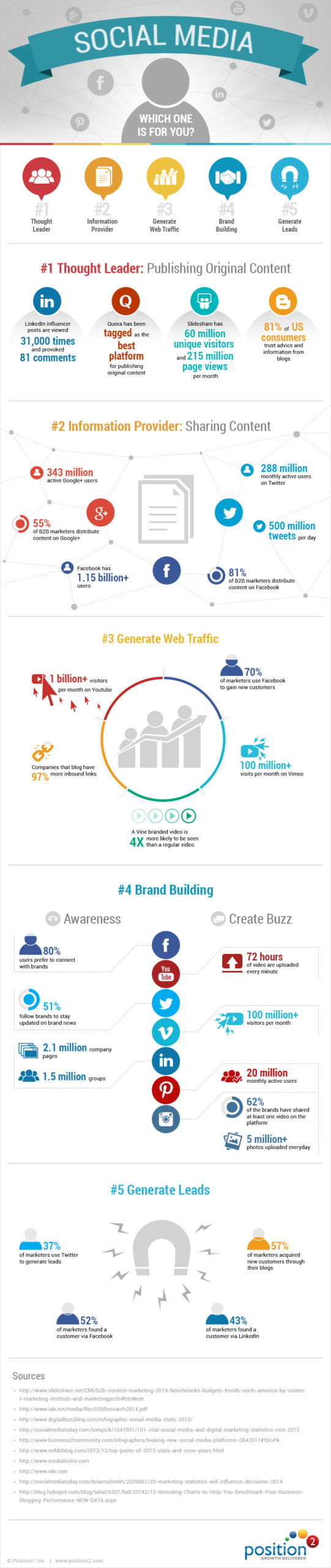
    Every social media platform is unique. The necessities in your social media marketing arsenal need to accomodate the requirements of every social platform. Check out this infographic which highlights the best social media platforms for your brand goals.

    InfoG final

  • Four Types of Social Media Analytical Tools You Need

    Image Source: Greenbookblog

    Social media has become a deeply entrenched aspect of our digital lives. We use it as a guide on what to do and to tell us what others are doing. Social media has become an integral aspect of brands’ digital lives too. Companies continue to invest significantly in social media because of its importance to consumers. According to a recent study, 58% B2B marketers are increasing their social media spend in 2014. As brands get more ambitious and expand the scope of their social media campaigns, the volume of social interaction between brands and consumers and also between consumers about the brand, increases. Brands obviously will want to get the most from their investment in social media and mining this data can give them rich insights for further marketing campaigns. Social media analytical tools can help marketers do just this. Following are four kinds of social analytical tools that can help you learn more about your consumers, reach out and engage better:

    1. Listening Tools

    A brand cannot afford to be ignorant about what’s being said about it on any major social platform. Social media listening tools (also known as social media monitoring tools) can be your digital eyes and ears. They sift through all the chatter and analyze it for positive and negative comments. Depending on their complexity and features, they can give you alerts on where your brand is featured or direct your attention to negative comments and potential trouble creators.

    Listening tools provide insights into social data and help formulate informed and effective social marketing strategies. These tools can help brands be proactive either in exploiting opportunities or in defusing controversies before they spiral out of control.

    2. Reach Tools

    Every brand wants to maximize its reach on social media. With the variety of social media platforms today, this is becoming an increasingly tough task. Each platform has different formats – Slideshare can carry a 100 MB presentation but Twitter restricts at 140 character messages. The growth and diversity of social media offerings makes manual posting across social media platforms tougher with each passing day.

    This is where social reach tools come in. Through an automated process they spread your brand’s content across the web, helping you target prospects, engage with existing customers and encourage word of mouth. What’s more, you can use even use these tools to identify influencers (positive and negative) for your brand. As you know, influencer marketing is a great technique to increase reach.

    3. Depth Tools

    Some products are high involvement products and choosing the right product means a lot to the buyer. It could be a camera for an amateur photographer or a financial software package for a small business owner. The stakes are high for the buyer either emotionally, financially or in terms of effort and impact.

    These prospects want in-depth information such as, third party reviews and ratings of your products before they make their purchase decision. Tools that offer social depth help your brand by building rich social content and experiences into your sites. You can even use social depth tools to facilitate comments, third party ratings and reviews on your site.

    4. Relationship Tools

    Social relationship tools are useful for publishing content on social sites. These tools offer scheduling capabilities, which ensure an enduring online presence. This helps the brand stay in touch regularly with consumers instead of making sporadic appearances.

    Additionally, relationship tools can create rich content assets like Twitter Cards and experiences like social contests and polls both of which give texture, prompt interest and involvement in the engagement. There are social CRM tools that help you respond to customer queries and build positive word of mouth amongst consumers. Each tool offers specific benefits, each of which is important to your business. You will have to choose your mix of tools based on your business objectives. These tools work best together, after all what’s the point of ‘listening’ to a problem, if you are not going to address it with your ‘reach’ tools or ‘relationship’ tools. Choose your tools carefully based on your resources and watch the effectiveness of your social media activities surge.

    Which tools work best for your business? Tell us…
  • Google Updates Call Extensions Feature

    Google Updates Call Extension Feature

    Image Source: Fonolo

    If you are an AdWords user who has been waiting for an opportunity to utilize the Google call extension feature, Google has a sweet surprise for you…

    Google call extension has added a new avenue to regular ads to reach potential customers who are willing to actively pick up a phone and place a call. In order to make this feature more useful, Google is now boosting the capabilities of call extension feature.

    Reasons for the change

    Google call extension with Google Forward Number enables tracking success of the feature. However, there were gaps with the conversion tracking where all conversion actions were grouped. This meant that you had no way to track if an action such as a purchase took place on your website by looking at the (call) count. Also, the call extension feature does not work if you have a flexible bidding strategy.

    What’s Changing?

    From the end of April 2014, a call will be split into multiple conversion actions based on call length. This change offers new options for reporting and bidding, including the ability to:

    • Create conversion names for each of your account conversion actions.

    For example, you can create a conversion action named “sale” for calls longer than 60 seconds and another named “lead” for calls longer than 30 seconds. You can then choose the conversion actions you would like to count for any ad group in your account.

    • Apply custom conversion values to each of your conversion actions
    • Edit call length settings in the Conversions page in the “Tools and Analysis” menu
    • Apply Target Return on Ad Spend (Target ROAS) bidding strategies

    However, these changes do not fill all the gaps. Minimum click threshold per ad group does continue. But, the current enhancements to the tracking will provide more comprehensive reporting on the features’ success.

    Watch this space for more updates. We will be keeping an eye on future changes Google may make.

    Position2’s POV

    Call extensions enhancement will have an impact on how success is measured for the feature with the application of custom conversion values:

    • Call extension feature can be leveraged to make actual sales because calls that last longer and typically lead to sales can be captured separately.
    • You can apply ROAS bidding strategy, which allows for call extensions to be targeted with call per conversion goals.
    • The minimum threshold for the feature to kick-in for ads continues so the feature should be reserved for best performance ads and keywords.
    • For companies that have a call center support system, the enhancement is a good way to capture incremental conversions.
  • LinkedIn Launches Sponsored Updates API, Partner Programs and Facebook is Rumored to Launch Mobile Ad Network

    LinkedIn

    The networking site is adding more weight to content marketing with the launch of Sponsored Updates Partners and Content Partners.

    LinkedIn Certified Sponsored Updates

    Sponsored Updates Partners can help brands increase their campaign ROI by supplying them with campaign management tools that make it easier to handle large Sponsored Updates campaigns. They can create bulk updates across campaigns, target different audiences at scale, schedule advance updates and track performance using reporting dashboards. These partners also help brands manage paid content activities on multiple social channels with a single dashboard.

    During the pilot test, participating companies experienced an overall increase of more than 30% in engagement on their Sponsored Updates campaigns, which was higher than previous campaign results without partner services.

    If your brand does not allocate resources to manage its social media campaigns, some Sponsored Updates Partners also offer managed services, providing expert campaign strategists to supervise brand activities on behalf of your company.

    LinkedIn Certified Content Partners

    Certified Content Partners help brands who do not have enough quality content to share with their audience. They build a bridge between companies and publishers, platforms and original content producers. Content Partners provide brands access to information relevant to their audience.

    Brands who want to run large Sponsored Updates campaigns on LinkedIn can now go ahead whether they have the requisite resources or not since a few Sponsored Updates Partners offer managed services.

    It does not matter even if you do not have sufficient relevant content to share. LinkedIn’s Certified Content Partners program, which puts such brands in touch with original content providers who can provide relevant content, can help you out.

    Facebook

    Is the social giant launching a mobile ad network?

    According to a post on Re/Code, yes it is. Facebook is reportedly working on a mobile ad network that will help it post ads to publishers and developers, making it possible to monetize a large user base even when users are not connected to Facebook.

    Facebook is expected to launch this network at the F8 Facebook Developers Conference on April 30.

    As per the Re/Code post, Facebook’s mobile ad network will attempt to give Google’s AdMob mobile network, Twitter’s MoPub network and small players like Millenial Media.

    Facebook seems to be stepping up its efforts to monetize the mobile space.

    What do you think about these two developments?

    Images Source: LinkedIn

  • The Future of Native Ads

    The Future of Native Ads

    Image Source: oDesk

    Native advertising has been called ‘ads dressed as content’. It is slowly changing the face of ads in the digital space. Native advertising has not only spawned a host of new ad types, it has also captured marketers’ fancy due to its ROI capabilities.

    In this blog post, we attempt to answer the following questions with respect to native advertising:

    • Why are publishers focusing on native advertising?
    • What is influencing the growth of native advertising today?
    • What is it being used for?
    • What does the future hold for native ads?

    Native Advertising to the Rescue

    The rise of native advertising will compensate media publishers who have been hit by dwindling print ad revenues. According to eMarketer, US print ad revenues will reduce from $32.16 billion this year to $31.29 billion in 2018; digital ad spending on newspapers and magazines will increase from $7.48 billion in 2014 to $8.41 billion by 2018. This shift in ad dollars is encouraging media publishers to turn towards native advertising.

    Drivers of Growth

    Web users have become so used to seeing display ads that they overlook them very easily as soon as they identify them as ads. The increasing immunity of consumers to regular display ads has prompted advertisers to adopt native advertising to regain consumers’ lost interest. Designed in the format of the host site’s content, native ads blend in to the content and lure users into engagement.

    Social media has quickly adapted to native ads’ format (for example, Facebook’s newsfeed redesign). Understandably, native ad spending is strongly focused on social media platforms. However, native ads are also flourishing on content portals, news properties, video sharing sites and streaming services, wherever fresh content is to be found.

    As per a BIA/Kelsey research, native ad spends will continue to grow in the coming years driven by mobile devices. As more people take to mobile devices, marketers will increase their focus on mobile marketing and native advertising.

    The Usage of Native Advertising

    According to the eMarketer study mentioned above, the top 3 reasons brands are using native advertising on mobile devices are for:

    • Raising awareness
    • Branding
    • Brand affinity

    Other lead-related reasons like purchase intent and customer acquisition come later in the list of priority reasons. Brand native advertising on mobile devices is more a branding exercise than a sales initiative.

    The Road Ahead

    Despite being a relatively new concept in digital marketing, native advertising has grown considerably and is poised for further growth.

    According to the BIA/Kelsey report mentioned above, in 2014, marketers plan to spend $3.1 billion on native ads in social networks. Growth projections for native ad spending are pegged at a significant 42.4% in 2014. Native advertising offers an interesting opportunity for brands who want consumers to engage with them and they are putting money on this opportunity.

    Have you tried native ads? What is your opinion about them?

  • Twitter Offers Mobile Ads Beyond its Site and LinkedIn Shuts Polling in Groups

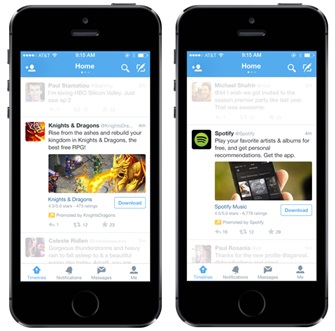
    Twitter’s Mobile App Install and Engagement Ads

    Post its acquisition of MoPub in 2013, Twitter is expanding its reach by selling ads in mobile apps beyond Twitter. According to Twitter’s blog, “For marketers, this means a rich, native ad unit that combines the best of Twitter Cards and Promoted Tweets. Users can easily install and engage with apps, directly from the Twitter timeline.”

    Through MoPub exchange, you can purchase ads that power mobile app installs and engagement. These apps appear on Twitter as well as thousands of apps on MoPub’s network. Currently in private beta, these ads will be available for purchase in Twitter’s ad auction. You can apply other targeting parameters offered by Twitter for these ads.
    Twitter’s Mobile App Install and Engagement Ads
    You can also participate in real-time bidding to buy mobile app installs and engagement ads programmatically through MoPub within Twitter’s ad system. The ads will appear in the form of banners, interstitials, videos and also in native formats.

    A few brands like Spotify, HotelTonight, Kabam, Deezer, SeatGeek, GREE and GetTaxi have already tested this feature in beta.

    Mobile app installs and engagement ads will work on both, Android and iOS.

    MoPub reaches more than 1 billion unique devices, which is a huge bonus for advertisers in terms of reach. With Twitter being a lead source of engagement, a wide reach can help brands in enriching user experience more.

    LinkedIn Group Polling is Shutting Down

    LinkedIn is closing the Polling feature in Groups. The announcement on its Help Center claims that this update is part of LinkedIn’s bid to build a better product suite.

    As an alternative, brands can continue to engage with fans by:

    • Posting questions to get the Group’s response
    • Sharing an update or
    • Participating in conversations directly on the LinkedIn homepage

    Though this update may not interfere with brand engagement on LinkedIn Groups overtly, it does make a difference where brands will no longer be able to engage through an organized ‘questionnaire’ format that LinkedIn Polling offered.

    Do let us know your opinion on these updates…

    Image Source: Twitter