Category: Social Media Marketing

  • Cortex: Twitter Ramps Up Its Artificial Intelligence Efforts


    The hunt is on at Twitter for engineers to ramp up the company’s artificial intelligence efforts. It calls the new team “Cortex.” After acquiring DeepMind in 2014 Google has been doing a lot of work with artificial neural networks. And Facebook CEO Mark Zuckerberg has flagged artificial intelligence as one of the company’s key initiatives. So it’s no wonder that Twitter wants to enlist architecture and systems software engineers to work on “Deep Learning”,

    Wikipedia tells us that “one of the promises of deep learning is replacing handcrafted features with efficient algorithms for unsupervised or semi-supervised feature learning and hierarchical feature extraction.” Twitter’s Cortex team will mine this specialized branch of artificial intelligence to help the company better personalize its service for its 300 million users, and keep up with Google and Facebook in the industry’s real-time personalization race.

    Twitter’s job listing explains why it needs artificial intelligence and how it views the new Cortex team:

    “Twitter is a unique source of real-time information, offering amazing opportunities for automatic content understanding. The format of this content is diverse (tweets, photos, videos, music, hyperlinks, follow graph …), the distribution of topics ever-changing (on a weekly, daily, or sometimes hourly basis), and the volume ever-growing; making it very challenging to automatically and continuously expose relevant content. Manually defining features to represent this data is showing its limits.

    “Our team, Twitter Cortex, is responsible for building the representation layer for all this content. As an architecture engineer at Twitter Cortex, you will help us build, scale and maintain the backbone of our online learning systems, and directly impact the lives of our users and the success of our business.”

    Twitter may not have the resources of Google or Facebook, but the Cortex group demonstrates that Twitter is a serious AI contender. For Twitter, AI capabilities could translate into new products and features and breathe life into stalling user growth. If the flood of content generated on Twitter every hour can by presented as a personalized feed to each user based on their interests then Twitter might just strike gold.

    Let us know your thoughts about how artificial intelligence can revolutionize the digital social media world.
  • Facebook Updates Cost Per Click Measurement


    On Wednesday the folks at Facebook announced that they have modified the way they calculate cost per click. It’s part of their new marketing API. From now on, Cost-Per-Click (CPC) will no longer be measured as likes and shares, but measured as link clicks to websites and apps. Bottom line: advertisers will no longer have to pay for likes, shares or comments.

    The New CPC?

    Cost of the Click will shift from engagement only ‘likes’ and ‘shares’ to a specific ad objective. Some examples of the new CPC include:

    • Clicks to visit another website
    • Call-to-action clicks that go to another website (i.e., “Shop Now”)
    • Clicks to install an app
    • Clicks to Facebook canvas apps
    • Clicks to view a video on another website

    The new definition serves ad objectives that Facebook believes are more closely aligned with the business objectives of advertisers.

    What Does This Mean?

    With the new CPC calculation in play advertisers are likely to enjoy a better ROI on their ad spends, because the outcome of driving traffic to their website will yield greater value. As certain campaign reporting metrics related to clicks change advertisers will have to bear a higher cost per clicks. But in the long run marketers will end up paying only for valuable clicks.

    “If you think back, a lot of advertisers thought of Facebook only as a social platform and were strictly engagement focused,” Richard Sim, Facebook’s head of ads product marketing, told Marketing Land. “Over the past few years we’ve really been focused on driving business results. The transition to clicks being only link clicks is a big step in this transition.”

    What Happens to Likes, Comments and Shares?

    Advertisers will still be able to bid for the engagement clicks (including Likes, Comments and Shares) but under the new CPC definition this will not be tracked. A high number of engagement clicks will continue to be an indicator of valuable and engaging content.

    What Next?

    According to Facebook, it could be one of three things:

    • If you buy Ads through a Facebook interface (like Ads Manager or Power Editor), sit tight and wait for the changes to be rolled out in the interface
    • If you buy through a Facebook Marketing Partner, find out how they intend to implement these changes
    • If you buy through the API, you can begin buying ads with the updated CPC starting July 8, 2015 in v2.4 of the Ads API. If need be, you can continue using the existing CPC definition through October 7.  But after that date, only the updated CPC will be available

    Is this the beginning of the end for Cost Per Engagement model? Let us know what you think about this change?

  • Twitter’s Audience Insights


    Audience Insights, a valuable and powerful tool from Twitter delivers a lot of useful information about your audience and how best to connect with them.

    How to Access Twitter’s Audience Insights

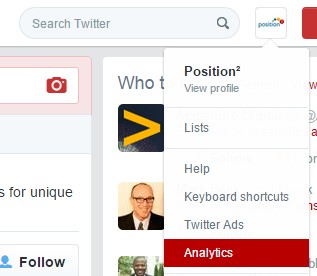
    To access Audience Insights, click on the profile picture displayed in the top right corner, which opens a drop-down menu. Click on “Analytics”.

    audience insights

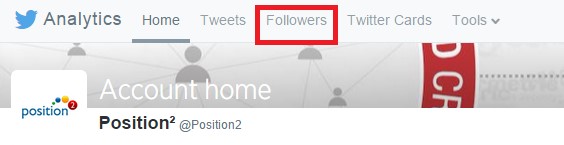
    Once in the Analytics section, click on the “Followers” tab..

    Analytics section of Twitter

    The Insights

    Twitter slices and dices your audience into different categories, showing what percentage of audience fits into which category. To do this, Twitter uses information it gleans from users’ onsite usage, as well as off-site information provided by Datalogix.

    The overview at the top of the page tells you the most common interest of a user category, what type of lifestyle they follow, what type of buying style is most common, and their most commonly used wireless carrier.

    Audience insights categories

    Other statistics Twitter provides about your audience include:

    • Interests
    • Consumer buying styles
    • Wireless carrier
    • Education (highest level completed)
    • Marital status
    • Net worth
    • Household income categories
    • Gender

    In its blog Twitter provides an overview of the potential power of the Audience Insight tool. “With audience insights, you can easily discover valuable information about your followers and the people who have engaged with your organic Tweets. You can also identify new, relevant audiences to target for an upcoming campaign. Your audience insights dashboard provides aggregate information about user demographics, interests, purchasing behavior and more.”

    Audience Insights is now available to all Twitter advertisers and analytics users. Marketers may think that have the appropriate target audience ‘following’ them. Audience Insights can tell them if that is true. Twitter’s Audience Insights helps marketers analyze their audience and its response to their messaging. It gives them important nuggets of information to realign content and messaging strategy as per the current trends and information needs of their audience.

    Are you using Twitter’s Audience Insights? Has it helped you learn anything about how to better connect with your audience? Share your thoughts in a comment below.

  • Fool-proofing Fat Fingers


    Updates to address accidental ad clicks

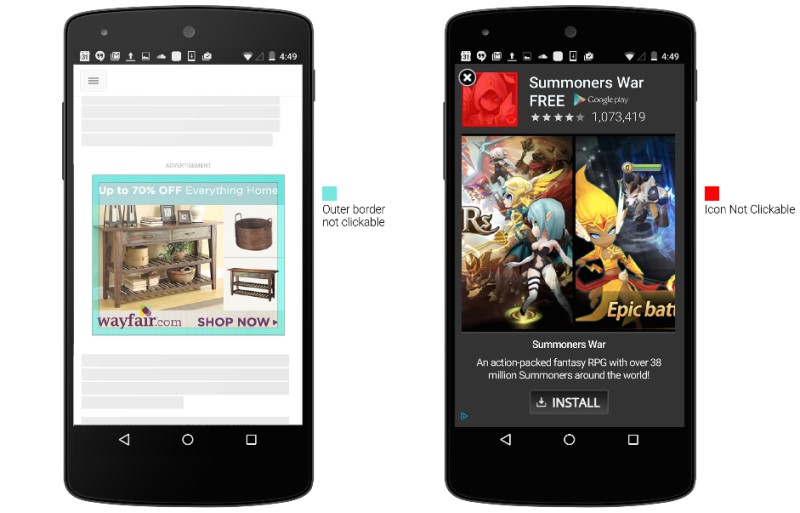
    Making accidental ad clicks on your mobile phone just got harder. Google has announced several new changes to reduce accidental clicks on mobile display ads, addressing fat finger ad clicks on mobile where a swipe for scrolling gets treated like a ‘tap’ to open the advertisement.

    1. Having identified the border area (see above, left) as particularly prone to accidental clicks during scrolling, Google now makes certain that taps close to the edge of an image ad won’t register as clicks.
    2. For in-app install ads and interstitial ads (see above, right) users won’t be able to click on the app icon because the close button is overlaid on that image. Users will need to click the call-to-action button.
    3. Finally, ads will only become clickable when they’ve been onscreen for “a short period of time”. This gives users time to scan through the display ad.

    If you are running Google display ads, you might want to note the timing of these changes when reporting clicks and click-through rates.

    On the Facebook Front

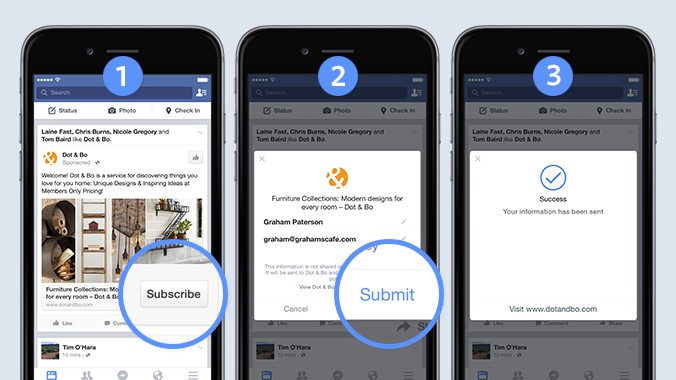
    Facebook announced this week that it’s testing a lead ad unit to make filling out forms on mobile devices easier for individuals,  and easier for businesses to gather that data. The new ad format auto populates contact information when the user is signed into Facebook.

    Facebook form filling to get easier

    As Facebook explained in a post on its business blog:

    “The lead ads that we’re testing use a native signup flow within Facebook. This helps avoid a lot of the pain points usually associated with filling out forms, like having to leave one app and start a form in another app, and having to enter all of their information from scratch. Just a few taps and people are done.

    “Like our other ad formats, we’ve built this ad type with privacy in mind. People can edit their contact information, and information isn’t sent to the business until a person clicks the ‘submit’ button. Advertisers may only use this information in accordance with their privacy policies, which we make available in the lead ad before people click submit. Advertisers are also restricted from re-selling lead information to third parties.”

  • Facebook: Where There Is No Outside

    Facebook wants its 1.44 billion active users to stay put. It sees each link out as a potential loss that undermines Facebook’s business model. To keep its users inside Facebook identifies all the likely content and experiences that users seek or pay for, those digital opportunities that take users out of its sphere of influence, and then recreates them inside the blue walled Facebook ecosystem.

    Consider Pages

    Facebook introduced Pages in 2007 with the intention of replacing business websites which were seen as inconsistent silos trumpeting incomplete information. In time Pages overwhelmed websites with cover photos, Timeline, maps, reviews, business hours, messaging channels, and many more rich features. Pages created a wealth of content for Facebook. Thousands of digital marketing professionals jumped in to build strategies, create content, media and links to maximize utility and engagement value. Facebook became a destination, a one stop shop for information on any brand. Nike.com might provide information about the latest shoes, but by visiting the Nike Page in Facebook a user got that information and, with News Feed amassing user targeted information in one endless scroll, exposure to much more — a band’s tour dates, the latest movie in a nearby theater, etc.

    Plugging the Leak

    When a users click on a News Feed preview, the link takes them outside the gates of Facebook. And they may not come back. Facebook responded by moving down the stack, from subsuming the authors to subsuming their content.

    Clicking on a YouTube video in Facebook took the user out to You Tube where upon completion of the video the user was encouraged to watch more non-Facebook content. Adding injury to insult, these videos would also display Google Ads. No revenue there. Facebook responded in December 2013 with Auto-play Videos. You could upload clips directly to Facebook and users could watch them without pre-roll ads or pop-overs. Six months later, between May and July 2014, auto-play video views grew 50%. By September, Facebook hit 1 billion video views per day. By January, it was 3 billion. And it’s over 4 billion today. Who’s to notice video ads appearing among all those organic clips?

    facebook

    Image Source

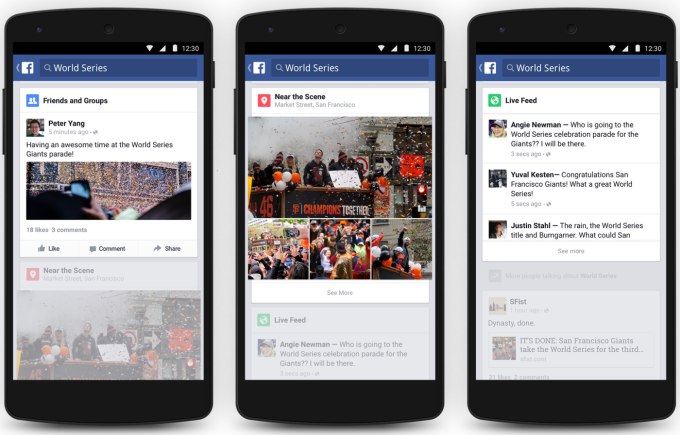
    Reader reactions and posts by the people involved on the latest news: Facebook’s Trends pages

    Got the message?

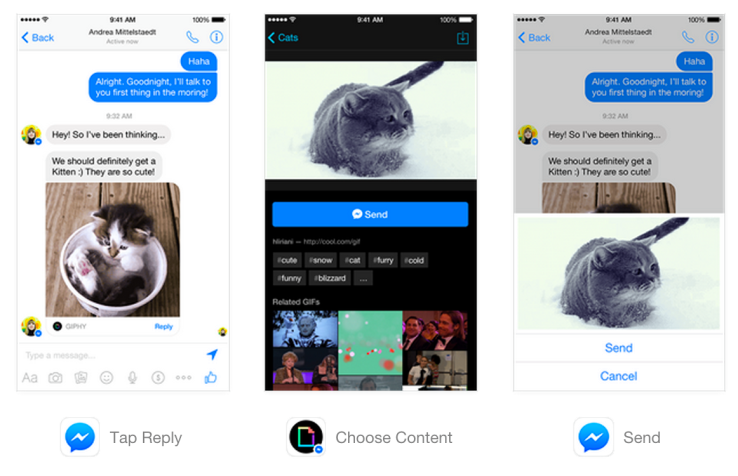
    Who needs email when there’s Facebook Message? At the March 2015 F8 conference, Facebook announced its new Messenger Platform. Users will be able to create and share content with third-party tools, and communicate directly with businesses rather than calling or emailing them.

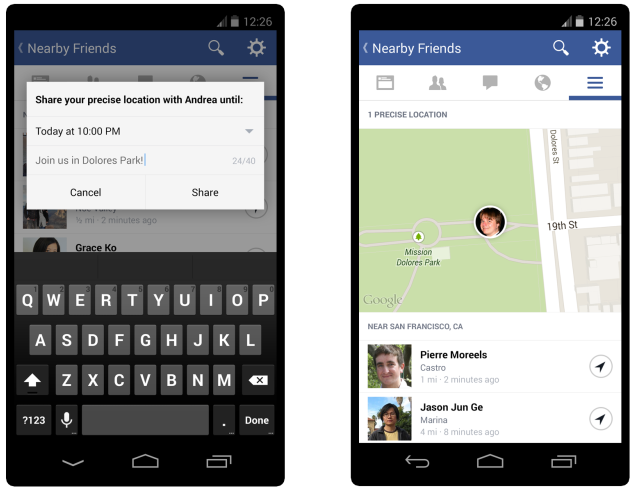
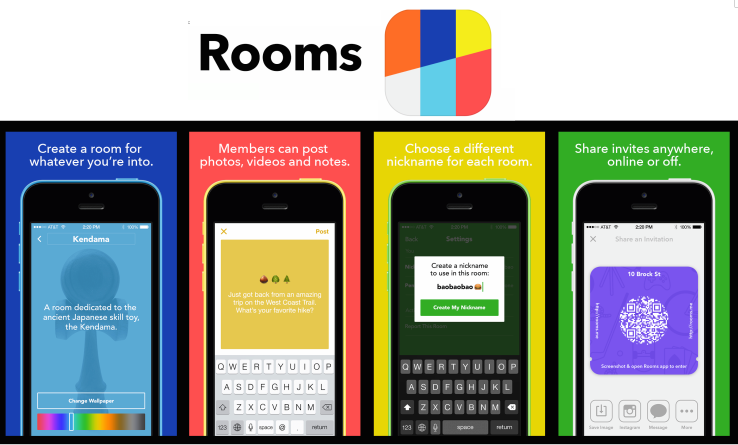
    Facebook targets other popular apps:

    facebook

    Image Source

    facebook rooms

    Image Source

    facebook messenger

    Image Source

    One Click Instant Purchase

    To counter being whisked off by ecommerce ads to an outside website where a user keys in payment and delivery details Facebook provided the Buy Button, a particular boon to anyone using a mobile device (which is pretty much everyone). Rather than clicking away to a merchant’s site, the Buy button lets the user complete the entire purchase flow within Facebook, which could boost conversion rates and further endear retailers to the social network.

    facebook

    Image Source

    App install ads, Facebook’s cash cow, accounted for a major part of the $2.4 billion it made on mobile ads last quarter. Here, Facebook has tried pop-up App Store windows in-hopes of letting users download without moving out of the realm of Facebook.

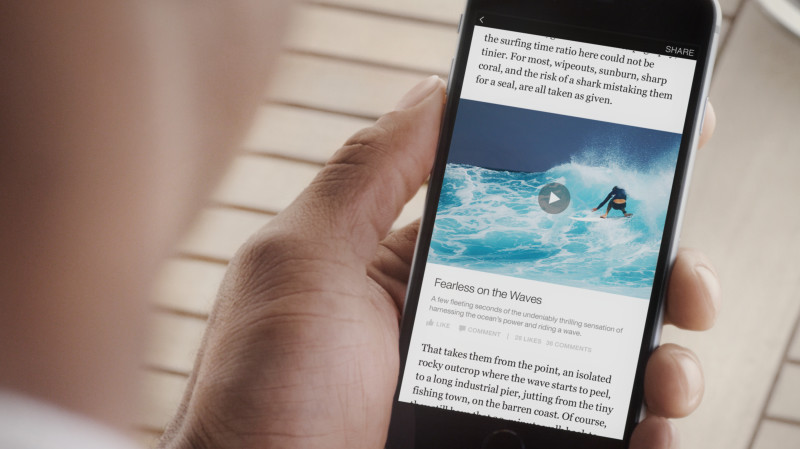
    Facebook’s Instant Articles

    Why wait for eight seconds for an external page to load when you can read the article with a single tap within the comfort of Facebook? Rich media tools within Instant Articles allow marketers to add audio captions and zoomable videos to their copy. Publishers keep 100% of the revenue if they sell the ads that appear within Instant Articles, while Facebook keeps 30% if it sells the ads.

    fb-instant-articles

    Image Source

    Best to Keep Facebook in Mind

    While these features appear to make life easier for Facebook users, they also keep them inside the blue zone. Which is the point, after all. Some features have been controversial, but controversy comes and goes. Commerce is forever. If one out of 1.44 billion Facebook users buys something, or books a room somewhere, or the flight to get there, best they do that business within Facebook than somewhere, well, outside. With Messenger and Group products remaining totally free for over 500 million users, advertisers have begun to rethink their global strategies, presumably with Facebook in mind.

  • What’s trending? – A New Twitter Trends Experience!

    In a bid to give its users a more immersive and enriching experience Twitter introduced a new trends experience for web to run with the similar mobile changes it introduced a few days back. It is, according to the company, “the largest engineering undertaking of the trends system since 2008”. Twitter users will be able to see additional context with their trends — short descriptions, sometimes an image.

    Twitter can get so crowded it can be difficult to stay on top of things. With this release trending topics are prioritized and enriched, making them easily spotted and utilized. Trending topics, URLs, users, images, videos — any such application-specific online content – gets ranked hierarchically.

    Making trending topics stand out

    These new additions will make trending topics pop:

    • Description – a short text description about the trending topic
    • Image – accompanying the text wherever it adds value
    • Data – total volume of Tweets and Re-tweets, the time trending started, etc.

    ‘Discover’ – the tab that was meant to improve content discovery on Twitter is slowly fading away. The new feature, ‘While You Were Away‘, recaps top Tweets any user may have missed.

    New twitter trends experience

  • Mobilegeddon? You Almost Missed the Facebook Update!

    While Google busied itself distracting the world on April 21 with “Mobilegeddon“, its mobile-friendly update, Facebook quietly released an update all its own. Did you notice?

    Facebook insists that the News Feed exists for one purpose only – to give you the content that matters to you. This latest News Feed update is specifically designed to improve the Facebook users’ experience, aiming at a better balance of content from friends versus content from businesses, publishers, public figures, and local organizations.

    The update comes in three layers.

    #1: More Content for Content-starved Users

    The rule that hitherto prevented you from seeing multiple posts from the same source has now been scrapped. When you run out of recent content and scroll through the News Feed, you’ll now see multiple posts from the same sources.

    #2: Updates from Friends Given a Thumbs Up

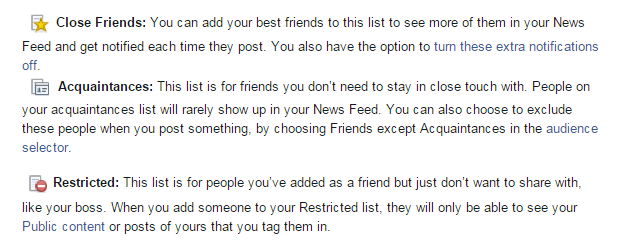
    Going forward, content from friends will be placed higher in the News Feed. The Menlo Park social media giant had been getting a lot of negative feedback from users who were missing out on important updates from close friends — photos, videos, status changes, links.

    facebook friends

    #3: Friends’ Likes & Comments on Posts is a No-show

    Likes and comments made by your friends on a Post have been relegated to the bottom of the News Feed so you can focus on what your friends are really saying.

     Latest Facebook mobile-friendly updates

    Advertisers Be Warned!

    Advertisers will have to make adjustments. Higher grade content posted with consistency will get noticed. Anything else is likely to sink from sight.

  • IBM and Twitter Come Together in a Landmark Data Deal

    The technology and consulting giant IBM recently joined hands with the micro-blogging site Twitter. This partnership will peer into people-to-people communication and gather insightful leads from it. Today Twitter is one of the biggest social networking sites and IBM has been one of the legendary organizations of the computing world for a long time.

    IBM will offer Twitter access to its cloud-based tools like IBM Watson Analytics. The IBM Watson is a major artificial intelligence breakthrough that makes sense of users’ queries more like a human and less like a machine. You don’t program the IBM Watson, you just work with it. It has cognitive capabilities that will assist in making sense of the data hidden in tweets, texts, reports, articles, and studies which make up to 80% of the world’s data. A search engine cannot make sense of all that and this is where the IBM Watson edges out the competition.

    Hundreds of millions of consumers and business professionals are connected via Twitter. Any trend happening on this micro-blogging site is of particular interest to digital marketers. Thus, Twitter can be seen as a trend synthesizer. On the other hand IBM’s leading cloud-based analytics platform helps business clients enrich their business decisions. Now with this partnership a new hitherto unheard class of data emerges to assist business leaders worldwide.

    Twitter captures ideas, opinions and debates in the cyberspace. While attempts were long being made to make sense of this data, there did not exist a reasonable way to do it. IBM Watson now seems to be bridging that gap. It helps in detecting patterns, understand what people are expecting from brands so that digital marketers can react likewise. Digital marketers can now find out which marketing tactics work and which ones are a waste of company resources. It will offer new insights into industry-specific data to understand new market opportunities and partnerships. Enterprises can now unravel consumer behavior, know markets better and predict trends. Data professionals can now club Twitter data into IBM DataWorks™. Further IBM and Twitter have joined to create apps using IBM Watson Developer Cloud and IBM Bluemix that will help businesses in their marketing, finance and sales departments.

    Ginni Rometty, Chairman, President and Chief Executive of IBM, said: “Twitter provides a powerful new lens through which to look at the world – as both a platform for hundreds of millions of consumers and business professionals, and as a synthesizer of trends. This partnership, drawing on IBM’s leading cloud-based analytics platform, will help clients enrich business decisions with an entirely new class of data. This is the latest example of how IBM is reimagining work.”

    Dick Costolo, Chief Executive of Twitter, added: “When it comes to enterprise transformation, IBM is an undisputed global leader in enabling companies to take advantage of emerging technologies and platforms. This important partnership with IBM will change the way business decisions are made – from identifying emerging market opportunities to better engaging clients, partners and employees.”

    So how will this new marriage in the data world help you realize your business goals?

    Do share your thoughts.

  • How to Improve your Digital Marketing ROI Using Big Data

    Today we are in the middle of a radical shift in the way we interact and communicate with one another. Factors like democratization of data, mobile computing, broadband Internet ubiquity, faster and cheaper computing prowess have all contributed in making big data so momentous today. Big data might happen to become as important as Internet itself to businesses and the society in general in the not so distant future. You don’t need to be intimidated by big data as that is clearly not going to help you in any way. All you have to do is implement these big data essentials to enjoy better ROI for all your digital marketing campaigns.

    Use Data Analytics

    You can find exactly how your website is faring using any data analytics that is available online. Google Analytics is a very useful tool if you want to get an accurate feedback on your website. All you have to do is register for Google Analytics and you can begin monitoring your website. It gives you an accurate idea about how many people visited your website and how long they stayed. You can find out how exactly they landed on your page i.e. the external site that directed them here. This is useful if you are already into digital marketing since now you know which are the campaigns that are working for you.

    Go for Retargeting


    retargeting

    Image Source

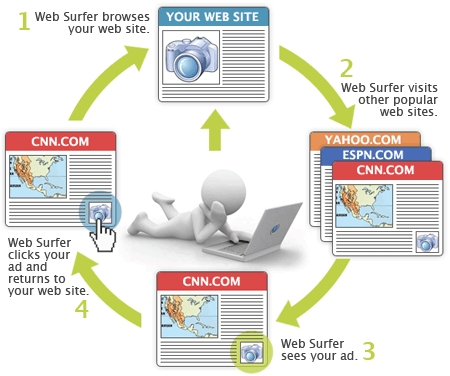
    Today it is not enough if you track your users on your website, you need to keep tabs on them even after they leave your website. It is an essential part of retargeting wherein when they go to some relevant website you can again target them and have better chances of converting them to customers. Since the user has already seen your ad before, he is more likely to reciprocate positively to your ad this time around. But for this you need to use cookies in order to keep track of your user whenever he is online.

    Exploit Social Media

    The explosion of social networking sites is one of the hallmarks of the Internet since the rise of the search engines during the early part of the millennium. Today everybody is connected via Facebook, Twitter, Pinterest, Instagram, et al. This makes your job easier since all you have to do is find out what these people are saying about you and your competitors thus offering you a lot of insight into customer opinions and proclivities. You can then dovetail your digital marketing strategy accordingly and make the most of this new found knowledge.

    social media

    Image Source

    Learn from People’s Searches

    Learning from people’s search queries can be a very rewarding experience for you if you do it analytically, diligently and persistently. This can throw light on what people are demanding and what are their expectations from any product or service. Google Trends is a very good platform to delve into people’s search patterns. You might not get too excited in the beginning since it is a whole lot of data that you have to sift in order to get anything valuable out of it.  But if you do it with perseverance then you would be surprised to find out how much insights you can gain about your customers both existing and prospective. You can get a detailed list of what people are searching, the frequency with which they are doing it, the websites that they click on the results page and such other useful nuggets of information.

    Put your House in Order

    Before you go about looking for data anywhere on the World Wide Web do organize the data that is lying in your own data centers. This can be immensely helpful in ways you would have never imagined possible. You can do detailed research about your customers and profile them as per their past interactions with your website and the result that it delivered to you. You can compare two instances where you received different results and find out the exact reasons for such a disparity; sales is one parameter to consider here.

    DBMS (Database Management Systems) from marquee names like Oracle, IBM and Microsoft cost prohibitively high and are beyond the reach of small business enterprises. In such a scenario, you can consider buying the software from small suppliers who differentiate themselves by focusing on niche markets. You can even try Linux operating system as a database platform since it is an open source product. According to Forrester Research’s product evaluation, open source databases viz. Ingres, PostgreSQL and MySQL come out as some of the best.

    You can find out the exact reasons why you could not convert your leads to sales in a particular scenario as you are now backed by compelling data from your own database. This shall help you fine-tune your digital marketing strategy saving you precious resources by offering you better insights into conducting highly targeted campaigns.

    Position² Point of View

    Today we are living in a world where information is generated at an unprecedented rate and off-the-shelf raw computational power is getting better by each passing day. Now these are the two parameters that make big data so widely popular and sensational. You might love it or you might hate it but you just cannot ignore big data. The field of big data analytics is still in its infancy. The explosion of data in today’s world is really mind-boggling to say the least. Data scientists today are the new age rock stars (excuse the metaphor). There is highly valuable information out there in all that raw data that is zipping from one end of the globe to the other in the blink of an eye. Though it is still nebulous as to where we are headed in terms of exploiting big data to our advantage, one thing is for sure that big data analytics has evolved today from being a business initiative to a business imperative. The faster you realize that, the better it is for the fortunes of your company.

  • Being a Hit on Social Media and Facebook Updates for the Week

    Image Source: ilfoglio

    Social Media Content

    Every brand (almost) has a social media presence.

    And, all these brands post content on their social media accounts (we think it’s safe to assume all do).

    End result?

    • A totally cluttered social platform, which gets even more crowded when you factor in individual user posts.
    • If your content quality isn’t top notch, it will fall flat on its face when faced with top quality content.
    • If you are heavily reliant on organic content, social networks are adding filters to it in a bid to promote brand paid promotions (for example, Facebook’s recent changes due to which brands are now reaching a lesser percentage of their audience).

    You can blame Facebook and other social networks for making changes that are quashing organic content reach while filling their coffers through promotion of paid content posts.

    However, it is also true that be it for organic or paid promotion, brand content has to be of very high quality.

    Getting back to the point…

    Creating great content

    Do you follow a calendar or do you simply go with the creative flow?

    Social media content is different from blog posts, white papers and other long content forms. Social content has to be short and preferably written on the spur of the moment. This helps maintain the essence of the news. Remember, it is very important for social content to work in real-time.

    Posting frequency

    You need to post once every day on Facebook and four times on Twitter. Added to this are your blogging responsibilities. So, how do you create great content (particularly if you are short on resources)?

    Check this plan:

    • A short news update every day
    • A well thought out post once a week
    • Close the week with a collation of all the important happenings from that week

    Do you want to simply churn out content or do you want to make sure it is great content but posted less frequently?

    Take a call…

    If you want great content that interests your audience, cut down on your frequency and focus on quality.

    Facebook Finally Releases its Mobile Ad Network and Makes Changes to Login Systems

    After all the noise created by rumors, Facebook finally released its ad network, Audience Network, during the f8 developers conference recently.

    Changes to Login Systems

    Trying to solve users’ concerns about sharing information with apps, Facebook announced:

    • Anonymous login: You can use an app without sharing any personal information.
    • Facebook login: You can choose the information apps will gain.
    • Redesigned app control panel: You can see and manage the apps you use.

    For more information about new developments in login systems, click here.

    Tell us what you think about this post…