Category: Marketing Technology

  • Humans + Agents: The New Team Model (Part 2 of 3)

    Why AI Marketing Agents Deliver Results Traditional Tools Cannot

    Editor’s Note: This is the second installment in a three-part series examining how AI marketing agents are revolutionizing the industry. In Part 1, we introduced the fundamental shift from reactive tools to proactive execution partners. In this article, we explore the tangible advantages these agents deliver and how they’re transforming content marketing from concept to execution.

    Key Takeaways

    • Organizations report dramatic efficiency gains: UX audits completed in minutes instead of days, 20+ hours saved weekly on website maintenance, and persona-aligned messaging produced in hours rather than weeks.
    • Unlike generative AI that creates content or predictive AI that forecasts trends, agentic AI autonomously reasons through situations, makes decisions, and executes complete multi-step marketing campaigns.
    • Successful implementation requires robust data infrastructure, clear operational guardrails, and a cultural shift where marketers operate as orchestrators, directing intelligent systems.

    Advantages of Using AI Agents in Marketing

    The shift to marketing automation with AI agents delivers transformative benefits across efficiency, engagement, scalability, and decision-making capabilities.

    1. Dramatically Improved Efficiency

    AI agents streamline repetitive and time-consuming tasks, allowing marketers to focus on strategic initiatives by automating processes like data entry, transcription, and simple customer interactions. Organizations report:

    • UX audits delivered in minutes instead of days
    • Website health monitoring reduces 20+ hours of manual maintenance
    • Multi-location campaign localization happening automatically
    • Content workflows scaling across thousands of assets with consistent quality

    2. Enhanced Customer Engagement

    AI agents trained on organizational data provide round-the-clock assistance across time zones, maintaining cohesive relationships with individual consumers over long periods through highly personalized experiences that increase loyalty and conversion rates.

    Marketing AI agent solutions enable:

    • Real-time personalization at the individual customer level
    • 24/7 customer support with minimal human intervention
    • Continuous journey optimization based on behavioral signals
    • Context-aware interactions across all touchpoints

    3. Limitless Scalability

    Generative AI easily handles large volumes of customer interactions or content creation needs, accommodating growing audiences and quickly converting content in multiple languages or formats. This scalability allows organizations to:

    • Manage global campaigns across markets simultaneously
    • Test and optimize hundreds of content variations
    • Handle peak demand periods without resource constraints
    • Scale personalization efforts beyond human capacity

    4. Always-On Campaign Management

    By continuously collecting and analyzing data, AI agents enable marketers to run constant, real-time campaigns that adapt based on performance feedback without requiring human input at every step. This creates marketing operations that never sleep, continuously optimizing toward better results.

    5. Data-Driven Decision Intelligence

    AI agents analyze historical data and forecast future trends through predictive analytics, helping marketers make data-driven decisions and optimize workflows by identifying customer behavior patterns. Teams gain:

    • Actionable insights from complex datasets
    • Predictive lead scoring and customer lifetime value calculations
    • Market opportunity identification based on consumer demand
    • Continuous performance optimization recommendations

    How AI Agents Transform Content Marketing

    Understanding how ai agents transform content marketing requires examining specific use cases where autonomous execution delivers superior results.

    From Static to Dynamic Content Creation

    Traditional content production limits the number of variations marketers can create. AI agents for marketing eliminate this constraint by generating multiple, distinct content versions in seconds. This enables strategic hyper-personalization where high-value customers, new leads, and seasoned brand fans each receive uniquely tailored messaging.

    Intelligent Audience Segmentation

    Marketers without technical expertise can now build complex target audiences using natural language prompts. An agent translates descriptions like “customers with high engagement scores who live in the Northeast and haven’t purchased in 90 days” into precise segment attributes, democratizing advanced targeting capabilities.

    Automated Campaign Brief Generation

    Starting a new campaign requires a clear brief. AI agents build comprehensive briefs instantly based on simple natural language prompts, incorporating organizational goals and pre-configured marketing guidelines. This accelerates planning and approval stages significantly.

    Multi-Channel Journey Orchestration

    Agents can build complete draft journey flows from original briefs and content, allowing marketers to review, refine, and activate campaigns automatically while ensuring seamless multi-touch personalization. What once took weeks of planning now happens in hours.

    Continuous Testing and Optimization

    Since agents automate journey creation, embedding continuous A/B testing becomes significantly easier. This transforms testing from a periodic task to an automated capability, with agents learning from results and adjusting strategies in real time.

    Real-World Applications: From Theory to Practice

    Position2 has transformed how to automate marketing with AI from concept to operational reality through our Agentic Platform.

    1. Vertical-Specific Agent Development

    Our teams design and train agents based on real client work, creating specialized capabilities for:

    • Campaign Concept Generation
    • Content Creation and Optimization
    • UX and Website Health Audits
    • Persona Intelligence and Orchestration
    • Performance Monitoring and Reporting
    • Journey, ICP, and Segmentation Development

    These aren’t generic AI assistants—they’re vertically tuned systems wired into knowledge bases for AI & SaaS, Computing Systems, and Multi-Location Healthcare.

    2. Integrated System Architecture

    Agents run inside the channels where work happens:

    • Slack for team collaboration
    • Analytics platforms for performance tracking
    • CMS systems (WordPress, Drupal, Webflow)
    • Arena for content management
    • Client-specific knowledge bases
    • Vertical playbooks and data libraries

    This integration enables on-brand, accurate, context-aware outputs rather than generic AI responses.

    3. Human-Centric Governance

    Our teams maintain full control over:

    • Strategic objectives and priorities
    • Operational guardrails and boundaries
    • Brand voice and messaging standards
    • Quality thresholds and approval workflows
    • Final direction and decision-making

    Agents execute and learn; humans supervise and lead. Our agents don’t work independently—our people and agents together form the service delivery model.

    4. Measurable Business Impact

    Across clients, we’re documenting substantial gains:

    • Speed: UX audits reduced from days to minutes
    • Localization: Multi-location healthcare campaigns automatically customized by region
    • Efficiency: 20+ hours saved per week on website maintenance
    • Quality: Persona-aligned messaging produced in hours instead of weeks
    • Scale: Content workflows managing thousands of assets with consistent quality

    This represents early proof that AI Agentic Services-as-a-Software delivers: speed + accuracy + repeatability—powered by AI, directed by experts.

    Where We Go From Here

    The advantages are clear. The results are measurable. But successful implementation requires more than just deploying technology—it demands careful planning around data infrastructure, governance frameworks, and organizational readiness.

    In Part 3, we’ll examine the practical considerations for implementing AI agents: data quality requirements, integration complexity, governance and monitoring frameworks, change management strategies, and the organizational shifts needed to evolve toward true human + agent teams. We’ll also look ahead to what’s coming next in the evolution of agentic marketing.

    The future of marketing is agentic. The transformation is already underway.

    Stay tuned for Part 3, where we explore implementation strategies and the future evolution of human + agent collaboration.

  • What the launch of Google’s ‘Apprentice Bard’ reminds us and how to fix it.

    It’s been more than a few weeks since Google’s Bard returned an incorrect output during a demonstration of its capabilities. That doesn’t mean that tools like this have no place being integrated into society – it means there is still some work to be done to realize its potential.

    These systems are classified as weak (or narrow) AI. They work as well as the data input or learning model. What we are seeing with some of these tools is that if the data isn’t updated or exists – these tools return incorrect answers.

    When you look at the FAQs for Microsoft’s AI-driven search engine Bing, Microsoft clearly acknowledges this – they state “Use your own judgment and double check the facts before making decisions or taking action based on Bing’s responses.” Recently, Microsoft’s AI-powered search has had its own issues where the AI took on a personality that was somewhat alarming to users of the system. Microsoft responded by limiting the number of queries that can happen in a day.

    As Big Tech embraces and integrates AI-powered search, we think of the famous quote ‘with great power, comes great responsibility.’ Google and other search providers are where they are today because of the ease of use, level of accuracy, and relevance of results. So we know accuracy and relevance matter.

    That’s not to say that the big search engines are pillars of accuracy, but it’s one thing to search and find the wrong results – it’s another for an AI to generate and provide incorrect information in order to always have an answer.

    We won’t go into a detailed technical discussion on how ChatGPT and Bard are built, but we can say that ChatGPT and the large language model it was based on, GPT3.5, is different than Bard and its associated large language model roots, LaMDA. ChatGPT is a pre-trained model versus Bard which is a supervised learning model. The difference is that Bard’s responses are more human-like and ChatGPT’s knowledge base goes back to 2021 as they state on their website.

    Some of the challenges with these models are:

    • Data issues: Preprocessing, missing values, data not available
    • Issues with testing – not selecting a wider representation of data in testing
    • Issues with the model – underfitting or overfitting a model
    • Lack of governance

    These challenges are not insurmountable, but it’s up to the team developing these models to have a structure that addresses some of these potential challenges and issues.

    This technology is ever-evolving, and Google and Microsoft will continue to innovate, update and improve on current offerings – it’s in their business interests. These companies are investing heavily in conversational AI, and as a result, users can expect more conversational responses from search engines – instead of just straightforward search results. Google’s CEO, Sundar Pichai, stated that these models will be available in the coming weeks or months and serve as a “companion to search.”
    Conversational AIs aren’t exactly new, we’ve been using them for years… don’t believe us? When was the last time you asked Siri, Alexa, or Google Assistant to change a song or answer a question?

    In conclusion, these conversational AIs are here (to stay), and they have the potential to make a huge impact on existing technology, processes, and user activities that will improve results and provide a more ‘human’ experience. We are excited to see what the future holds.

  • The Myth of Perfect Marketing Dashboards

    With marketing going digital, it’s becoming increasingly important to measure results. There are 5000+ data sources, and the challenge of tracking and making sense of all this data is getting harder.

    So what metrics should a marketer’s dashboard contain? If your answer includes only activity-based metrics such as impressions, clicks, and form fills, please read further.

    We recommend looking at the data across two dimensions: depth and breadth.

    On the depth side, the data can be organized into four layers:

    1. Assets – The most granular level is assets, which are typically landing pages (LPs) and email templates. The objective here is to determine which landing pages have high conversion rates and which emails have better open rates or click-through rates.

    2. Programs and Campaigns – Programs and campaigns are groups of ads, emails, and LPs that have a specific objective. The objective could be lead generation or conversion of leads from the top of the funnel to further down the funnel.

    3. Leads – At the lead level, the analytics you’ll be most interested in are the volume of new leads generated and the funnel view of the leads.

    4. Pipeline – The dollar value of the pipeline generated or influenced by marketing and the value of revenue closed are the most important data points. Setting up well-integrated marketing systems will enable you to determine the economic contribution of channels and campaigns.

    On the breadth side, the measurement spans across these areas:

    1. Lead Acquisition – Web traffic, campaigns, and events that offer top-of-funnel metrics

    2. Lead Management and Nurturing – The volume of the marketable database, the volume of leads, the movement of leads from one stage to another (conversion rate), email campaign performance metrics such as open rates, and click-to-open rates

    3. CRM – To arrive at the pipeline and ROI metrics, it’s important to map the leads that came in via multiple sources to their end journey, either opportunity generated or deal closed.

    While you’ll start with basic cuts of the data (by time, industry/vertical, and acquisition channel), over time you’ll likely want to add more customized dimensions, including BUs, geos, products, and services.

    Also, you’ll want to convert the measurements into key performance indicators (KPIs), which are typically ratios, to determine efficiencies. Best practices include comparing against goals or past performance to determine corrective actions.

    Perfect marketing dashboards are not the ones that contain real-time data on siloed metrics but the ones that can give you a comprehensive view of marketing performance across the breadth and depth of marketing activities. We are confident that Arena Calibrate provides an easy to set up and use dashboard. Give it a try and see how it can make your life easier. Once you start using it, we would love to hear your ideas on how we can make it better and more useful for marketers.

  • Evolution of B2B Marketing Strategies

    Marketing strategies are ever-evolving, year after year, with 2019 being no different. Trends like live videos and video ads will continue to grow strong because of the instant visual appeal to the audience and with more than 80% of the internet users who indulge in watching these videos. Similarly, chatbots continue to trend this year by becoming widespread and pretty ‘normal’ for brands. The novelty factor has reduced, and they have become quite common.

    Here are some of the B2B strategies that aren’t new but continue to stay in the market:

    Longtail SEO: In the B2B space, the only way to compete with the big players with deep pockets is not to outspend them but to outsmart them. Smaller players should take advantage of the longtail keywords in their industry that have lower search volumes but more qualified searchers. Fewer websites compete for longtail SEO keywords. Hence, it’s comparatively easier to rank for them.

    Longform Content: We all know that the attention span of the consumer is very short. However, for B2B marketers, long-form content may just turn out to be more beneficial this year. The reason is that Google has started giving more weight to content that has authoritative information. It’s not just about keywords anymore.

    Also, from a lead-generation point of view, the prospects who dig deeper during the Awareness stage, even if just a small number, are the most profitable leads to take to the consideration stage.

    It’s clear that solid, detailed and in-depth information for the right leads at the right time improves the chances that the prospect will engage further and consider the brand.

    Micro-influencers: We all know that having big industry influencers advocate for our brands can ensure a large exposure based on their social media reach and engagement. This, of course, would require you to spend a pretty penny. On the other hand, we have “micro-influencers” who are smaller players in the industry but may have a more engaging follower list.

    The number of followers and, hence the social media reach, maybe smaller for the “micro-influencers”, but the engagement with the followers could be so much more powerful. It’s a new approach to not burn a hole in your pocket, but still, be able to reach out to your audiences effectively through an influencer. It’s just the right amount of smartly targeted PR within an optimal budget.

    Account-based marketing (ABM): ABM is a B2B strategy that focuses on sales and marketing resources on target accounts within a specific market. It’s a strategy that aligns sales and marketing efforts and takes advantage of available data, analytics, and technology.

    Though ABM has been growing through the years, personalizing the customer experience has started to catch on even faster than ever. With the help of CRM, marketing automation tools and digital marketing, marketers need to invest in a well chalked-out strategy that is going to support multimedia, multi-channel and multi-device targeting.

    With the growing competition, B2B marketers with limited budgets need to get smarter and need to build strategies based on these old but evolving trends that are here to stay.

  • Making the case for a Marketing Information Exchange Protocol

    Pic courtesy: Anand Thaker, Chiefmartec

    It’s A Forest Out There!

    In case you haven’t seen the above infographic, brace up to the challenge as a digital marketer. As on date, there are over 5,000 tools/platforms that help you solve digital marketing problems. There will be overlaps, and methods that are complementary, or plain opposing. But each of these does perform an activity that forms a part of your overall digital marketing solution.

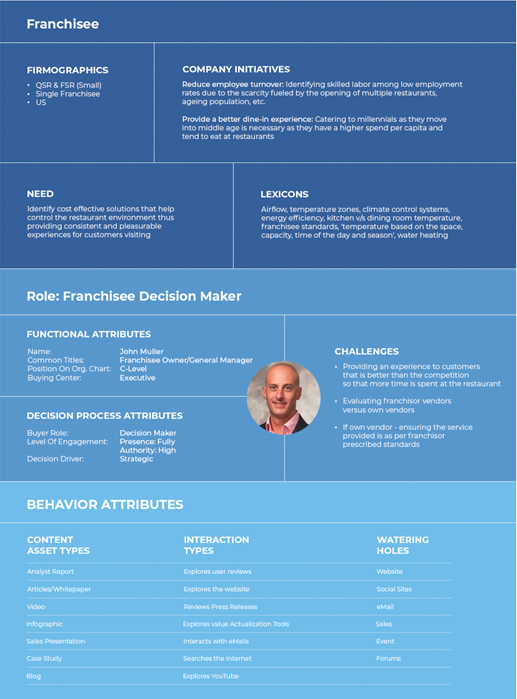
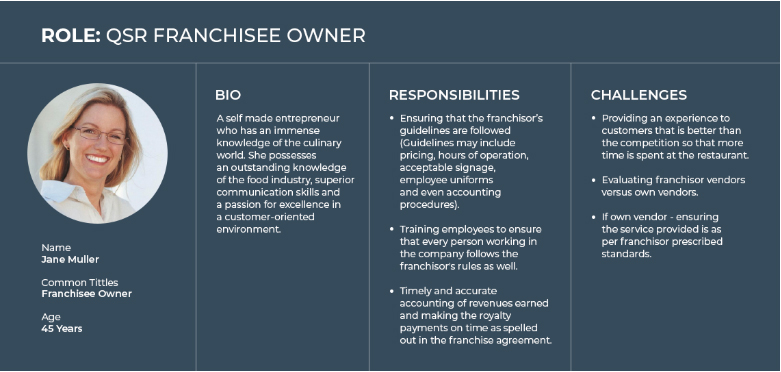
    While choosing from the above list is a challenge, one cannot dismiss the fact that getting these to work together is also a sizeable exercise. Especially when there is no common language of communication or data exchange across these platforms/tools. To give an example, assume you use a marketing automation platform. A simple nurture program setup will need you to define certain parameters as inputs to the design process. These are elements like product information, communication strategy, digital assets, target persona etc. Let’s take “Target Persona” as an example. A typical campaign can have anywhere from one to more personas. To make things much easier, let’s just take one persona. Say a Franchisee owner.

    The process of defining the target persona has no pre-defined templates. Each agency, or marketer, or for that matter, each presentation uses a different template for this. It may typically look like this.

    Sirius Decisions, a thought leader in the B2B marketing space, has created a template for Persona that lists 10 key attributes. So if we were to revisit the persona definition, it would look like this

    Sharing Defined Persona With Stakeholders

    This information about your target persona needs to be shared with your search marketing program – essentially if you are setting up a display campaign – the above will need to be configured when you select audiences in either the Google network or Linkedin or Facebook. Now all 3 have varying definitions of the audience. So the agency/marketer will need to map persona to what the networks provide. Now, these are the big 3 – try doing that with other publisher networks.

    What if, there was a common definition or listing of persona that all parties could refer to? A publicly available list that one can use, contribute and refer to. So all you have to do was input a predefined persona into a field in the above platforms. In today’s world with technology like blockchain, implementing this is not a big challenge from a tech perspective, it’s more of an acceptance challenge with the relevant stakeholders.

    This was just the persona, as you go deeper, there are other pieces of information required. E.g Budget – which can be further split by Geo, the day of the week, time of the day, and mapped to the persona. Another set of information can be related to targeting, response tracking and thresholds, measurement standards – e.g how to measure lead velocity – and the list goes on. What if, all these were standardized? Wishful thinking?

    At Position2, we are putting together broad level frameworks that can help standardize these. The approach is to work closely with industry bodies to collaborate and build consensus. So when designing your solution integrating each of the over 5,000 tools can potentially be a simple plug and play!

    Do you have ideas or suggestions, feel free to connect with us. You can put in your comments below or email vinod@position2.com

  • Are You Directing Your Visitors To The Right Channel?

    A visitor today can be your prospect tomorrow with personalization!

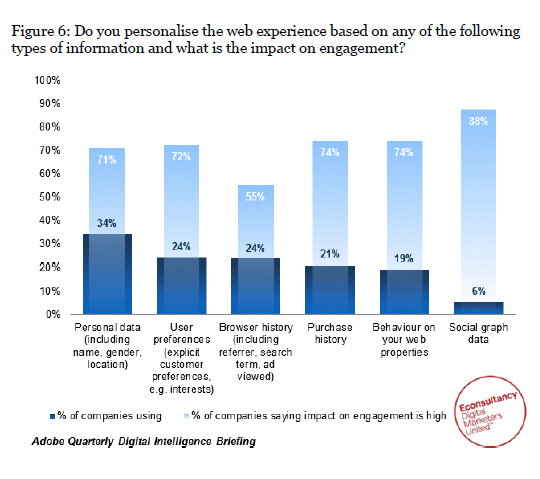
    The importance of knowing your visitors, be it unknown, and their behavior is now a priority across industries, organizations, and individuals. It doesn’t matter if they are personal (visitors at home), professional (clients) or online visitors (web visitors). They are always important and expect that special and personalized attention.

    Attention to visitors on personal and professional front has always been there but what about your online visitors? Who are they? What is their line of business: B2B, or B2C? Do you give them that personal attention and experience as well? Do they get what they want, when they visit your website? Are you giving them your personalized messaging so they feel unique and important? Are you directing them through the right channel by understanding their intent and interests?

    These are some of the many questions that need to be addressed. The more the marketers are aware about their web visitors’ needs, behavior, persona and demographics, the easier it is to educate or engage with them to make a personalized buyer journey.

    So, what’s this web personalization in digital marketing all about?

    To answer – It’s all about personalization and not just personalization but Real Time Personalization (RTP) and that’s the digital mantra and strategy for today’s marketers.

    Welcome to the world of Real Time Personalization – that creates a unique and personalized experience for your web visitors. Real time personalization gives organizations the power to create individualized experience for their website visitors, based upon various factors such as search terms, demographics and industry. This experience helps to boost their movement through the sales funnel.

    “If the user experience is good, the reputation of the website will be even better”

    Real Time Personalization uses behavioral data collected from web visitors. Using this, marketers can segment and modify messaging and content in real time to boost engagement with prospects.

    Marketers are catching on!

    According to Forrester Research, 92% of marketers say their interest in personalization has increased and 83% say it is critical to their company’s success.

    There are numerous ways to implement real-time personalization. Let’s take a look at few of them:

    • In-depth identification of buyer personas
    • Developing content that appeals to each type of buyer persona
    • Using big data processes to understand who the visitor is, and what they are looking for
    • Building a site that responds to the broad categories the visitor falls into (such as “region” or the “source” they arrived from)
    • Using machine learning techniques to customize, as per the individual
    • Customization beyond the website

    Impact on Return on Investment (RoI)

    With real-time personalization, marketers can now concentrate on being found, and establish relationships with buyers. With so much valuable information about visitors, marketers can understand their audience better, present much more relevant content and hence drive more sales.

    By Swet Kshitiz

  • 2016 is the Tipping Point for Mobile!


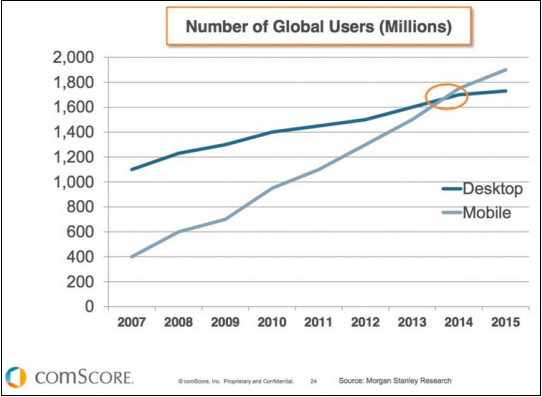
    Our use of mobile is overtaking usage of desktop at an ever-increasing rate. As predicted, technology is becoming more sophisticated, and our audience’s demands are changing. According to Emarketer, US mobile will account for 72 per cent of digital ad spend by 2019, boosted by ever-improving mobile coverage and the advent of new technologies.

    There are two key factors at play here. More people than ever are using mobile devices. Additionally, each one of us owns more devices than ever, with smartphones and wearables in use alongside tablets. These trends point to a smarter world where our reliance on desktop computers is shrinking. The increase in the usage of Smartphones and tablets will eventually replace our laptops. In addition, the next wave of mobile computing – including the Internet of Things, and wearables – is pushing mobile further and further ahead.

    Your audience is now mobile

    We now spend more time on our mobile devices than we do on other media, including desktop. As far back as 2008, analysts predicted the trend away from desktop usage, and we’re seeing that come to fruition now. Mary Meeker was bang on the money: in 2014, everything changed.

    mobile marketingImage Source

    Despite the forewarnings of big change ahead, a chasm has appeared between user trends and marketers’ focus. For example, mobile ad spend still lags behind mobile media consumption by a considerable margin. This presents an opportunity, and an untapped audience: one you’d be crazy to ignore.

    Consider also the sheer scale of adoption, and the trends that have brought us to this point. There are now 3.65 billion unique global mobile users. A massive 1.91 billion of these users have smartphones, and this number is set to rise to 2 billion by 2017. By 2018, smartphone owners will represent half the world’s mobile users.

    It’s not about the volume of people in isolation. The devices themselves are capable of more functions, and this provides us with another layer of opportunity. For example, there’s an increasing trend towards spoken commands and interactivity, beyond the keyboard and the touchscreen. This is something which Apple pioneered with Siri, and Microsoft has pursued with Cortana. Personal assistants offer hands-free convenience, but they can also aid operation of home automation devices and leverage the Internet of Things to give us much more timely updates about the world around us.

    New sensors in mobile devices are integrating them more deeply into our lives. NFC payments are also picking up pace, mainly thanks to Apple finally getting on board with Apple Pay, although Android Pay and Samsung Pay are key alternatives for non-iOS users. According to Gartner, half of consumers will be paying using phones or wearables by 2018.

    This new trend in payment is interesting for marketers, because it ties the payment process more tightly with the device. Right now, we can tap to pay in retail stores; this may soon evolve so we can tap an IoT-connected appliance to purchase an upgrade, or book a service for our car using NFC. Achieving a conversion on mobile may look very different by the end of 2016.

    Step up now! 

    From web search and video through payments and voice control, mobile is a transforming force in the marketplace. 2016 is the age of mobile, and all of this technology comes together. Connection speeds are fast enough to continually stream data, and wearable devices are earning their place for the first time. IoT devices are now entering home, workplaces and factories worldwide.

    If you want to achieve projected revenues, you’re going to have to take things up a gear, and place renewed effort into mobile this year. All you need is the right strategy to align these new opportunities with your campaigns. Your customers are changing platforms and getting smarter. Are you ready to change your strategy? Watch out this space to get smarter on Mobile Marketing. 


  • Video for Marketing is the Way to GO in 2016!

    Social platforms are increasingly moving towards the use of video content. Facebook caused controversy when it introduced auto-playing videos, but now, we all expect to see them in our streams.

    Twitter has championed video with Vine, and we’re seeing more videos pop up in Pinterest. MeVee is the newest player in real time social streaming, up against Meerkat and Periscope.

    ReelSEO found that 96 per cent of surveyed B2B marketing stakeholders are engaged in video content marketing. Cisco estimates that, by 2019, 80 per cent of the world’s internet traffic will be video. If you’re a marketing professional, you have two clear choices: get on board, or get left behind.

    The impact of video on marketing

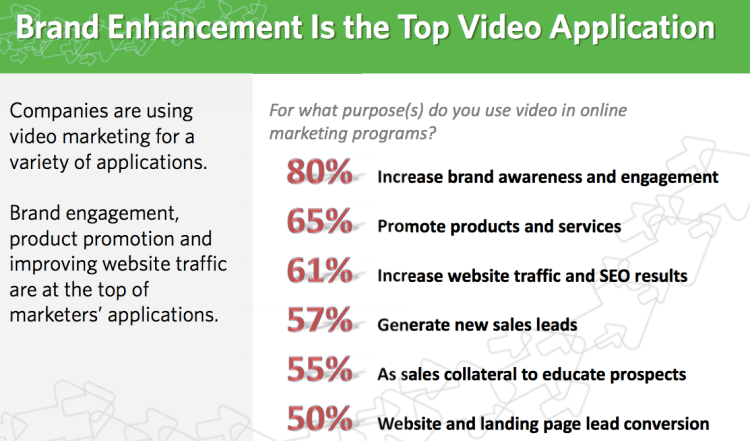
    Content marketing is a dynamic landscape, and goes far beyond blogging and tweets. Video is way to generate leads, but it’s also a very useful way of creating two-way conversations, which is the essence of successful social campaigns.

    video marketing stats

    Image Source

    In a survey of 350 B2B marketing professionals, 73 per cent said video has a positive impact on ROI and results. 41 per cent said they planned to increase their spend.

    Respondents are using video for a range of approaches, including website and email marketing and brand awareness. Research suggests that you can boost email open rates by 19 per cent, simply by using the word ‘video’ in the subject line. ReelSEO also found that 75 per cent of respondents are optimizing video to boost SEO.

    The game changers

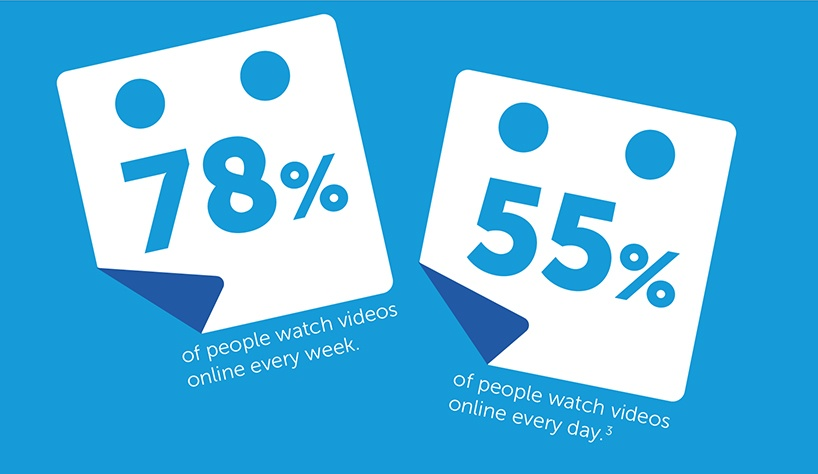
    The figures that support the use of video are truly staggering. 78 per cent of people watch videos online every week, and more than 65 of viewers watch more than three quarters of a video.

    video marketing- people watching videos

    Image Source

    To leverage these big audiences, you’ll need to identify and overcome barriers to adoption, and allocate the right budget and resource. You must devise ways to measure the ROI of your videos, whether they are used on social platforms, or deployed as ads.  And authenticity is key, so if you don’t have in-house video producers, you’ll need to recruit or outsource immediately.

    Changing landscapes

    Cisco says that video consumption will increase over the next 4 years, driven by streaming services and the increasing number of fast internet connections. Soon, half the world’s population will have internet access, and each individual will have several connected devices that are video-ready.

    The IAB says that half of our daily consumption of digital media takes place on smartphones and tablets, and Ericsson confirms that video traffic will grow 55% per year, for the next 5 years.

    We’re also going to see 4K video improving engagement with super-crisp clarity and exceptional quality. The faster our connections are, the more we’ll be able to enjoy this new high standard in video.

    Video is here to stay

    Mobile and social have evolved to a point where the use of video is everywhere. 81 per cent of businesses now feature video on their website.

    To stay relevant and engage your audience, you’re going to have to increase your use of video, using it to underpin inbound marketing and boost communication with your audience. You simply can’t ignore video any longer.

    2016 is an exciting year for marketing; all of the tools you need for video marketing are out there to be exploited. We’ll continue to update you throughout the year as the use of video marketing explodes.

  • Top Trends That Will Dominate Digital in 2016

    We’ve already looked at our takeaways for 2015, and the trends that dominated the digital marketing space over the last 12 months. Now, it’s time to look ahead at what 2016 will bring for us all.

    If you want to stay ahead, you’ll need to adapt your strategy. There’s more focus on video than ever, and the Internet of Things is going to present some vital new opportunities.

    6 Trends For 2016

    Digital marketing is changing, and the coming year will shake up your plan. Here are our six key predictions for digital marketing in the coming year.

    1. Video, Video and More Video

    If you aren’t already using video to boost your online marketing, 2016 is the year that you’ll simply have to embrace it. According to Cisco, online video users are expected to double in 2016, providing an audience of 1.5 billion people. Video is particularly critical to capture the youth market, with a huge number of young consumers now favouring video over all other content.

    Social media sites are already tapping into this trend: Vine, Periscope, YouTube, Snapchat, Twitter and Instagram are all key platforms for video. As with written content, the key here is quality content that can stand up against slick competition. To compete, you’ll need a top-notch production team that can deliver accurate, branded messaging, while building a fully-engaged following across all the platforms you use.

    Online video now accounts for 50 per cent of all mobile traffic, according to Bytemobile, and that will increase to 74 per cent by 2017. This increasing focus on mobile plays out in two more of our key predictions, and we’ll look at these next.

    2. Desktop is Dying

    Video isn’t the only way that mobile is taking over, and marketers can’t afford to ignore the march towards mobile usage.

    In 2016, we’re going to see this trend continue, to the point where the desktop is going to be pretty much dominated by mobile. E-commerce on mobile devices is going to account for more than 24 per cent of total ecommerce revenue, and mobile ad spend will top $100 billion globally.

    Our collective use of social media backs up this trend. For every marketer that scales down its Facebook spend, there’s another pumping more money into Instagram. It’s this shift towards hand-held, pocketable content that will leave desktop firmly in second place.

    3. Digital Ad Spend is Exploding

    Online video advertising revenue is set to reach almost $5 billion in 2016, a huge increase from our 2013 spend of $2.8 billion. TV advertising revenue is set to decline.

    The visibility of video is increasing, and that’s leading to a massive increase in video advertising views. In December 2013, ad views on video platform topped 35 billion, which is a 100 per cent increase, year on year.

    As digital ad spend increases, we’ll see digital marketers looking at new ways to eliminate fraud and ad blocking. As we become more sophisticated at using native ads, we’ll see an uplift in efficiency. As a result, ROI will naturally increase – although there’s work to be done to improve users’ trust before that can happen.

    4. Consumers Will Expect Hyper-Personalization

    In 2016, consumers are going to expect a personal connection. Digital marketers need to embrace this thirst for one to one contact, and develop personal campaigns with joined-up, personalized campaigns.

    Personalization extends to every corner of your marketing spreadsheet, from PPC ads through to social messaging. Customer Match will be key for AdWords campaigns, while apps mobile will be instrumental in driving loyalty programs. For the best results, channels need to be joined to create a single customer view.

    Treating people like individuals marks a sea change for digital marketers, and will require analytics in a depth we’ve never seen before. Hyper-personalization is a perfect blend of big data and extreme refinement: if you can carve accurate customer profiles from your data silos, you’ll improve your chances of speaking directly to the people who will spend.

    5. Wearable Tech Has Come of Age

    Wearable technology has gone from being a niche interest to a mainstream consumer product, with smart watches and fitness bands leading the market. In 2014, wearable device shipments are set to reach 19 million units, with worldwide spending on wearables hitting $1.4 billion in 2016.

    The increase through 2016 will be even more marked, with wearable shipments hitting 111.9 million by 2018. That means we’re going to have more and more data about what people do, what they buy, and where those transactions take place.

    We’ll also see increased investment in the Internet of Things, both in the home and in the workplace, and that’s going to take marketers on an exciting new journey. While wearables tell us about people, the IoT will tell us about their homes, health and habits, giving us opportunities to optimize every step of their journey.

    6. Marketing Automation

    As our access to data is expanded, and our focus on data quality improves, marketers are going to be increasingly reliant on marketing automation. This technology allows us to tap into consumer habits, react quickly to trends and make contact with our audience more efficiently.

    Marketing automation is a key cost saving measure, and two of the world’s biggest think tanks back this up; Gartner estimates 15 per cent savings on creative production, and Forrester research suggests that automation yields 50 per cent more sales-ready leads, at 33 per cent lower cost.

    2016: Time to Expand Your Horizons

    Content may still be king, but you’ll need to transform your campaigns to stay relevant. That means expanding the scope of content you offer, broadening your reach, and looking for opportunities in new and interactive technologies. Video and the Internet of Things will be key drivers of change, and the insight we have into audiences will multiply. In 2016, marketers are going to need to equip themselves accordingly, embracing and analyzing huge amounts of data to improve the way they connect with individuals.

  • Digital Marketing: Key Takeaways From 2015


    This year has seen digital come into its own as a core part of marketing activity. Brands are increasingly ploughing their budgets into digital, and we’re likely to see budgets increase further. There are a number of reasons why digital is essential, and we’ve gathered some of the key trends here.

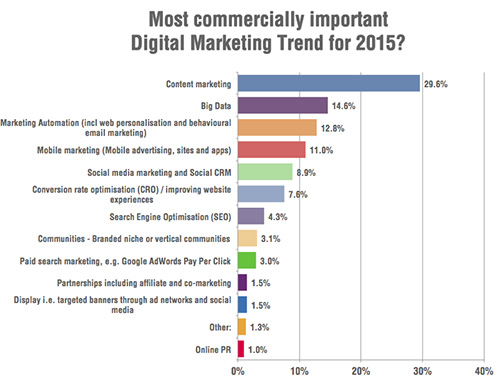
    Digital-marketing-trends-2015

    The shape of things to come: Content Marketing took up a big chunk of responses, more than Big Data and Marketing Automation combined.

    Content marketing and personalization

    According to Hubspot, content marketing generates three times as many leads as traditional marketing methods, but it costs 62 per cent less. Providing you’re efficient, and you have a strong sense of your audience, a shift to video is going to pay dividends.

    Video is evolving to incorporate streaming media, and customers are expecting content that is tailored specifically to them. The key concept here is authenticity; you’re going to need to push beyond cookie-cutter content, and prove that yours is a brand to be trusted. While 73% of B2B marketers already use content marketing, we’re going to see an increase in investment in services like YouTube, and an emerging use of game-changing apps like Periscope.

    Marketing automation

    Digital allows you to put your data to work, and once your processes have been transformed, you’ll see huge efficiency gains.

    For a great example of automation in action, check out Marketo Ad Bridge. It serves up ads to people based on their habits, across a range of social media channels, helping you to avoid the scattergun approach that can make digital ads less effective.

    Mobile SEO

    A decade ago, anyone could make a website that displayed on a desktop computer. Now, we’re using a variety of devices to search and browse the web, from tiny wristwatch wearables to huge tablet devices.

    If you want to compete, you must have a mobile-friendly, responsive website, and it has to be optimised for use on a smartphone. A massive 60 per cent of all internet traffic in the US now originates from mobile devices; about half of internet traffic comes from mobile apps. If you still have a separate mobile website that offers a poor user experience, 2016 is the year you’ll ditch it for good.

    Social media

    Social media is an ever-evolving marketing tool, and if 2015 taught us anything, it’s that we can’t afford to stand still. Google+ has recently redesigned its interface to make the platform more appealing for its users.

    Marketers are learning to maintain focus on key social media sites, but to keep others in the frame and maintain an energised approach to their campaigns. You never know when a service like Google+ will reinvent itself with a new, killer feature, and that will be the key moment when the really responsive marketers will gain an advantage.

    Look to the future

    In digital marketing, constant evolution is the key to staying ahead of the curve. In 2016, we’re going to need to rethink and reimagine our digital marketing strategies to take customers on new, enhanced journeys. Social media is going to continue to gather pace, and the scope of digital is going to increase even further. Stay tuned to the Position2 blog to hear the first news on trends in 2016.

    Happy Holidays from Team Position2!