Author: Todd Mintz

  • How to Market Your Multi-Location Business with Facebook Ads

    Introduction

    Use Facebook Ads to market your multi-location business on social media effectively. By utilizing Facebook Business Manager and location pages, you can increase traffic to your website, drive sales, and reach your target audience. This blog post covers the importance of demographic analysis, geographical distribution, interests, and behaviors to create a successful ad campaign. Topics such as setting objectives, budgeting, targeting, custom audiences/lookalike audiences, ad formats, and Facebook Pixel are discussed. With this guide, you can leverage Facebook Ads and location pages to promote your business and engage with your target audience.

    Multi Location

    Understanding Your Target Audience For Multiple Businesses

    The target audience’s interests and needs in each location should be considered to have a successful Facebook ad campaign. Use location targeting and Facebook’s Lookalike Audiences to expand reach. Analyze ad performance with Facebook’s analytics tools and experiment with ad formats and messaging—preview ad performance using simple steps to find what resonates best with each target audience. Use your Facebook account to leverage these tools for the most effective campaign.

    Demographic Analysis

    For small & large businesses with multiple physical locations, understanding your target audience’s demographics is critical to effective Facebook ad campaigns. Marketers can utilize Facebook Ads Manager to access detailed insights on age, gender, location, interests, and behaviors. Marketers can increase engagement rates and ROI by tailoring ad creative and messaging to each location’s demographic profile. This approach helps small & large businesses make the most of their Facebook ads.

    Geographical Distribution

    To optimize Facebook advertising for multi-location businesses, use Facebook’s location targeting options to reach specific regions or zip codes where your target audience is located. Analyze Facebook Insights data to optimize each location’s ad strategy and budget allocation. Exclude areas where your business cannot serve customers effectively. Precise geographic targeting tools in Facebook ad accounts can improve campaign effectiveness and ROI.

    Interests and Behaviors

    To create a successful ad campaign for your multi-location business, it’s essential to understand the interests and behaviors of your target audience. By targeting users based on their hobbies or favorite brands, you can create ad content that resonates with them. Additionally, targeting users based on behaviors such as frequent travelers or online shoppers can help you reach the right audience. Understanding these critical aspects of your target audience will improve your overall Facebook advertising strategy and increase engagement rates for your multi-location business.

    Designing your Facebook Ad Campaign

    Crafting a successful Facebook ad campaign requires defining your target audience by demographics, interests, and location. Once identified, create compelling ad copy and visuals. Use location targeting to reach customers near your business. Choose the right call-to-action for conversions. Continually test ad formats and targeting options to optimize performance. Monitor and analyze ad data to make informed decisions. Allocate your ad budget effectively for multi-location businesses.

    To optimize your Facebook ad campaign, assign page roles and access levels to admins in the drop-down menu. This ensures the right people have the necessary permissions to manage and monitor your ads. You can delegate tasks and streamline your ad campaign management process by giving specific page roles.

    Setting your Advertising Objective

    Setting a relevant advertising objective is essential to create a fruitful Facebook Ad campaign for your multi-location business. Align it with your marketing goals and target audience. Pick the apt ad format and targeting options, using a cover photo, company logo, and personal profile to enhance brand awareness, website traffic, and leads or conversions. Continuously monitor and adjust the campaign to optimize performance based on the objective.

    Choosing the Correct Format for your Ad (image, video, carousel, etc.)

    Selecting the correct format from various options can be daunting when creating a Facebook ad. Images are great for showcasing products, videos can tell a story or provide demonstrations, and carousel ads are ideal for displaying multiple products. For e-commerce businesses, collection ads are perfect as they allow users to browse and buy products without leaving the facebook. Keep campaign goals and target audience preferences in mind. Also, ensure your profile picture and images have the correct pixel size per Facebook’s templates.

    Crafting Compelling Ad Copy

    Writing compelling Facebook Ad copy is essential for success. Be concise and attention-grabbing, and communicate your business value. Use persuasive language to entice your audience to take action. Incorporate social proof, such as testimonials or reviews, to build trust. Experiment with different variations and monitor their performance to optimize effectiveness.

    Selecting Appropriate Images and Videos

    Choose eye-catching and relevant visuals for your multi-location business’s Facebook ads. High-quality, consistent visuals build credibility and trust with potential customers. Authentic images help convey authenticity and differentiate you from competitors. Align your visuals with campaign goals and target audience to increase conversions.

    Choosing the Right Call-To-Action

    Picking the right call-to-action (CTA) in Facebook Ads is crucial. A clear and persuasive CTA guides your audience to the desired action, boosting conversions. Aligning CTA with ad messaging and business goals is crucial. Testing various CTAs can help find the most effective one for better results.

    Facebook Marketing in 2023

    • Facebook’s family of services (Facebook, WhatsApp, Instagram, and Messenger) boasts a whopping 2.45 billion-plus worldwide active users.
    • An estimated 79 percent of the U.S. population is on Facebook—74 percent of that log in every day, and two out of three consumers visit a Local Business Page at least once per week.
    • For 53.2% of internet users ages 16-24, social media is their primary source of brand research. And 66% of all Facebook users check out a local business Page at least once weekly.

    How To Manage Facebook Business Page
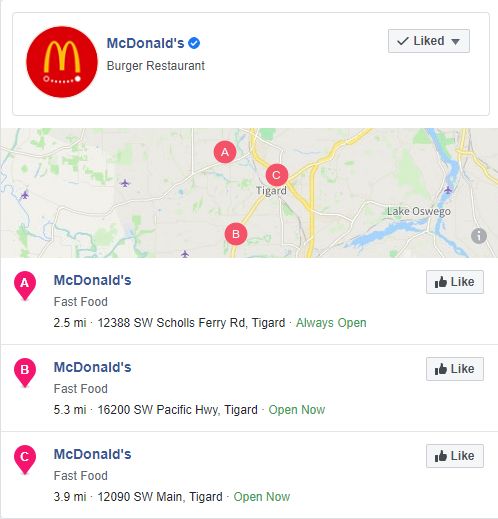
    How To Manage Facebook Business Page

    Every business is a prospective Facebook advertiser, and multi-location businesses are no exception. However, special care must be taken in the Facebook Ads campaign setup to prevent location overlap and overreach. This post will review the campaign setup process for an advertiser targeting a local marketplace with multiple locations. Note that we will not talk through every possible campaign setting here. Facebook campaigns can get wonderfully complex, and advanced campaign setup is beyond the scope of this article.

    Campaign Choice
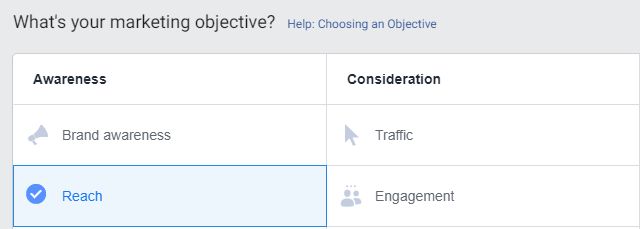
    How to Market Your Multi-Location Business on Facebook with Facebook Ads

    When entering the Facebook Ads UI, an advertiser is faced with quite a few campaign setup choices. People in charge of a Multi-Location Facebook Ads Setup should choose 1 of these 4 marketing paths.

    1. “Reach” Ads will show the ads to as many people as possible within the given budget. This should be the default choice for less-experienced Facebook Advertisers.

    2. If it is a priority to get people to the website instead of having the visitor act within the Facebook Universe, “Traffic” would be the choice.

    3. “Engagement” will sacrifice some reach for commentary and feedback on the ad itself. Suppose your business is comfortable with engaging potential customers (as well as some trolls) on Facebook. In that case, this might also be a good choice since if your ads generate more than expected Facebook Engagement, their frequency in the auction will increase.

    4. “Brand Awareness” will sacrifice some reach to target people that Facebook thinks to have an enhanced interest in your advertising.

    Campaign Budget

    Start small and realize you must create a separate campaign for each location. Once you set your budget, you will be asked to choose a “Campaign Bid Strategy,” We recommend “Lowest Cost,” which is the optimal choice for most people reading this article.

    Facebook Page

    Every location that you plan to advertise separately needs its own Facebook Page. No exceptions. If, for some reason, you have not created a Facebook Page for each business location that you plan to market, please do so ASAP. Each Campaign created will be for one unique location (though it is perfectly OK to have nearly identical campaigns for each location you are marketing).

    Location Targeting

    You should know roughly how far your customers will visit each business location. Is it 3 Miles? 10 Miles? 50 Miles? For some businesses, putting the location in the circle and choosing a radius for the circle is all you would need to do for location targeting.
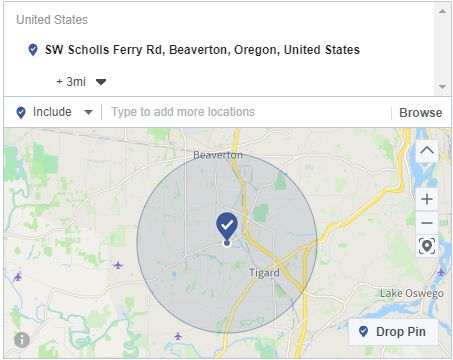
    Location Targeting

    However, with multiple locations, what can quickly happen is that the circles will overlap. You will have multiple locations serving ads to the same people, which wastes money and might cause consumer confusion. Instead of doing radius circles, targeting your locations at the Zip Code, City, or Metro Area level might be more efficient.

    Demographic Targeting

    Adding some extremely basic demographic targeting will help narrow the size of your target audience and increase your ad’s relevance.
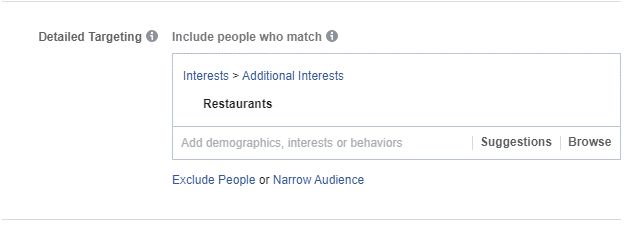
    Demographic Targeting

    What does your business sell or offer? Drop those terms into the detailed targeting box to see what matches Facebook comes up with. Add those as part of your Detailed Targeting to increase the relevance of your targeted audience and decrease the amount of money you spend on people that likely have no interest in your business.

    Custom Audiences / Lookalike Audiences

    Here is one targeting wrinkles that could be highly effective. Have you developed an in-house email list for your business? If yes, you can target those email addresses tied to Facebook Accounts in conjunction with your geographical targeting or on its own.

    Even but also be a good choice since your ads like ” Audience” from your in-house email list will allow you to target people who are demographically like the people on your in-house list.

    Facebook Lookalike Audiences are exceptionally large and will allow you to target 1-10% of the country’s population. For our purposes here, you should stick to 1%, which will still leave you a massive list. However, when you apply your geographic and demographic overlays to the Similar Audience, you will be left with many people who should be interested in your business that also reside in your local area and who you don’t know about.

    We have found that companies who have developed comprehensive in-house email lists have done exceptionally well in Facebook Ads because Similar Audiences are so influential for their marketing efforts.

    Ad Format

    Facebook Campaign Ads consist of images and text. Sure, we could use videos or immersive screen experiences, but investing in these assets does not make sense if you are running multi-location brick-and-mortar businesses. For each location, upload a high-quality representative image for use in your Facebook Ads, which is quite adequate.
    Ad Format

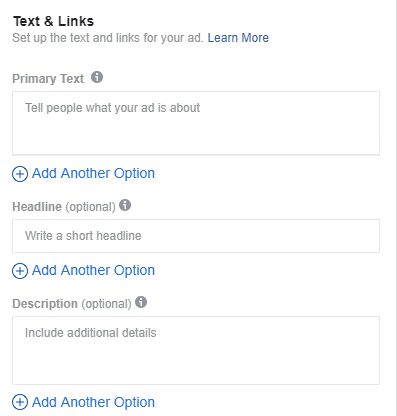
    For your ad text, these are the 3 fields you must focus on. The “Primary Text” appears above the ad image and is what people will focus on when they see your ad in the feed. Here is where you let people know what service your business performs and why somebody should consider stopping by. Be succinct in what you write here. A few sentences are fine but keep them short and snappy.

    The Headline is “Optional,” but you should not treat it that way. Put your Business CTA here, or mention your Business Name again (since it will also appear at the top of the ad).

    The Description is “Optional,” but you should use this space to share salient information such as hours open or a promotion that you might be running.

    You can also add a Call to Action button to your ad; we strongly recommend that. “Learn More” or “Contact Us” are the two choices that make the most sense for multi-location businesses.

    Facebook Pixel

    Ensure your webmaster has properly implemented the Facebook Pixel on your website(s). It will not only give you unbelievably valuable information about the people who have visited your website, but it will allow you to retarget these people in the future.

    Conclusion

    The Facebook Ads UI can be very intimidating for somebody who has never seen it before and has no experience with Paid Advertising. However, for the uninitiated, the following general advice should help you adjust to this new process.

    1) Start Small. Keep your budgets low while you are learning. Spending just $5-$10 daily is OK until you understand the process better.

    2) Start Nearby. Facebook will almost always spend the entire budget you are giving it. So, when you start, focus on the audience closest to each location. Some people may drive 30 minutes to your place of business. Most will not, however. Generate your learnings with people close to your location.

    3) Start Simple. Your first Facebook Campaign is not where you launch a multi-step multimedia ad experience. Plenty of advertisers do well with a single-sentence message, a simple CTA, and a particular image. Stick to that until you have become comfortable with the platform and are comfortable with the results from your ad investments-Location Businesses with Facebook Ads

    FAQs on Multi-Location Businesses with Facebook Ads

    How can I measure the success of my Facebook Ad campaigns for multiple locations?

    To measure the success of your Facebook Ad campaigns for multiple locations, you can start by setting specific goals and KPIs for each location. Then, use Facebook Ads Manager to track metrics such as reach, engagement, conversions, and ROI for each location.

    What are the best types of Facebook Ads for a multi-location business?

    For a multi-location business, the best types of Facebook Ads are local awareness ads, which can be customized for each location and targeted to users in specific geographic areas. Carousel ads are also effective, as they can showcase multiple locations in one ad.

    How do I ensure my Facebook Ad campaigns are consistent across multiple locations?

    To ensure consistency in Facebook Ad campaigns across multiple locations, you should use the same ad creative, targeting, and messaging across all campaigns. Utilize Facebook’s ad sets feature to create unique campaigns for each location, but ensure they have the same overall message and branding.

    How do I optimize my Facebook Ad campaigns for maximum ROI for my multi-location business?

    To optimize your Facebook Ad campaigns for maximum ROI for your multi-location business, you should start by defining your target audience and creating location-specific campaigns. Use relevant images and videos, compelling ad copy, and clear calls to action. Use Facebook’s targeting options to reach the right people and monitor your campaigns regularly to make data-driven adjustments to improve performance.

    Can I use Facebook Ads to promote multiple locations at once, or do I need separate campaigns for each location?

    You can use Facebook Ads to promote multiple locations by creating a single campaign with multiple ad sets, each targeting a different location. However, it’s essential to customize your ad creative and messaging for each location to ensure relevance and effectiveness. Alternatively, you can create separate campaigns for each location to have more control over targeting and budget allocation.
  • Google Ads For Fintech Companies

    Fintech is its own unique niche in Paid Search and has aspects that straddle the line between diverse campaign setups. Fintech campaigns can be lead generation, and some are B2B, B2SMB, or B2C. They can be broadly focused, and some are narrowly focused. However, within all these different permutations, commonalities exist across the various choices, and it is these commonalities that I would like to focus on in this piece.

    One product or product group per Google Ads account

    Focusing on one product is the ideal account structure for ease of use. Although we have seen multiple product lines per account—while it’s certainly viable—such a setup increases the chances of errors occurring. One product group should have a unified targeting setup and one set of conversion events that are being targeted. Within this one account, at the campaign level, you can then create your unique segmentation (with real-world attributes like geography or campaign-type elements like campaign type).

    Define campaign objectives

    Each initiative will have a conversion funnel of some sort. Some funnel steps will be tied to Google Ads, and some will be offline. Some offline elements (like source-to-close tracking) can be imported back to Google Ads as long as they happen within 30 days of the initial click. Some cannot. One of the decisions that needs to be made is which funnel stage Google will optimize towards.

    We have optimized towards “top of funnel,” “middle of funnel” and “bottom of funnel.” As a rule of thumb, we recommend optimizing to the lowest funnel stage possible where 50+ conversions happen within the first 30 days (the more, the better). There are Fintech products where leads take much longer than 30 days to close. In that situation, it’s important that mid-funnel conversions are “built-in” to the process to best inform Google. These mid-funnel conversions don’t need to take place on the website, they can be something like a successful client call (which will be noted by the Account executive / Sales Rep in the CRM) or a proposal creation.

    Source to close tracking

    Source to close tracking is what enables Google Ads to track each funnel step. If you haven’t implemented it yet, here’s how you set it up:

    • Tag each landing page URL. You can use auto-tagging or appending gclid={gclid} to it. When the visitor lands on the landing page, a unique gclid is assigned to that visitor.
    • The gclid information needs to be passed into your CRM where it gets tied to a unique prospect record.
    • When a prospect passes certain stages in the funnel, the CRM is updated with that information, and each relevant funnel stage conversion is passed back to Google.
    • Google sets the funnel stages being targeted for conversions to “Primary” (with the remaining conversion types set to “Secondary”). Thus, one can create a bidding strategy targeting these primary conversions.

    Profitable optimization

    There are two types of bidding strategies for Google Ads that are typically put into play for Fintech firms. The first is deciding how much the company is willing to pay for a “funnel conversion.” Once that is decided, then a Target CPA bidding strategy is set up, telling Google to get as many leads as possible within the client budget for that Target CPA.

    The second type involves targeted leads that could have variable values that get passed back into Google Ads. In this case, the company can bid for a certain Target ROAS (Return on Ad Spend). In this scenario, one decides how much they are willing to pay for an “average” conversion and sets up the bidding strategy to target a 1 ROAS – where the revenue earned equals the amount spent in Google Ads.

    Keyword optimization

    I’m pretty certain that anyone reading this article works at a company that has run Google Ads in some form. Campaigns have been set up with keywords in them that map to the company’s offering, even if they are not set up in an optimal fashion. My strongest recommendation for doing keyword research involves reviewing the search queries that Google served against (which differs from the keywords that the account is bidding on).

    If you are currently tracking conversions, first examine the queries that generated conversions for you. If their Target CPA is acceptable, that is a term you should specifically target (if you are not targeting it already). If the Target CPA is too high, you might want to either exclude it or bid much more conservatively in the future. You should focus on terms that have generated conversions for you but are not currently present in your setup. Those should be added to your campaign. Similarly, if you have spent an sizable amount of money on queries that have not converted for you, they should be excluded from your campaign.

    Once you have your keyword list, you should consider the match types you are using. Google is telling people that you can bid on broad match only or if you insist on using other match types, you can put them all in the same campaign. I’ve yet to see any instance with my Fintech clients where broad match terms performed as well as exact match terms – although I have seen similar performance to phrase match terms. For now, we recommend segmenting campaigns by match type (I recognize that future evidence might change that view).

    I recommend doing separate Exact Match, Phrase Match, and Broad Match Campaigns, with the exact match terms negated in the phrase match campaigns and the phrase match terms negated in the broad match campaigns. With rare exceptions, I would bid on all targeted terms in all match types, though I would be incredibly careful in setting a tight bidding target for Broad Match.

    Ad copywriting

    Every Fintech company we have worked with has a mandatory ad approval process…some more extensive than others. We’ve identified 4 core rules to help you get the most out of your ad copy and creative assets.

    • The first rule of Google Ads copywriting is understanding what the internal ad reviewers are going to accept and what they are going to reject.
    • The second rule is because approval processes can be slow, ensure you get a large amount of ad headlines and ad description lines approved in each go around, to allow for testing and tweaking.
    • The third rule is to make sure you utilize the maximum number of ad headlines and description line alternatives available to you for each ad type. Yes, some of your ad text will be better than others but giving Google the maximum number of choices to work with will increase the likelihood of getting the prospect to enter your funnel. For Google Display Network Ads and Discovery Ads, utilize the maximum number of image assets and (if possible) video assets that the ad type allows. If certain ad text performs poorly, Google will let you know, and you can make a substitution at that time.
    • The fourth rule is to ensure that your core targeted keywords appear in your ad text variants. If a prospect sees the term that they are searching for appear in your ad text, your ability to earn the prospect a visit goes up.

    Landing pages

    Landing pages are critically important for the success of Paid Search. In an ideal world, Fintech companies should follow the same best practices as other industries, like:

    • Utilize specific landing pages for Paid Search that follow best practices
    • Eliminating extraneous page navigation
    • No redundant marketing copy – like one would find on an SEO-focused landing page
    • Quick load times, especially on mobile, etc.

    Not every client has given us the ability to influence their landing page experience. Much of the time, we have been limited to working with the website landing page that is designed to serve all marketing, and have been created and approved without any input from our team. The pages may perform, but any change/update processes are slow or non-existent.

    One workaround (if available) is to use a program like Optimizely to run Landing page tests that allow page variance without making changes to the page itself. While these page tests undoubtedly need to get approved by the client, at least there is not an engineering hurdle that must be overcome for testing purposes.

    Fintech companies should be focused on making funnel entry and conversion as seamless as possible. We have seen large Fintech firms lose sight of some of these issues, and if they are a well-known brand, sometimes a sub-optimal funnel experience can be overcome. However, if a big brand can act nimbly like a small brand, the larger brand’s scope and scale can add a huge amount of revenue to the effort.

    Compliance

    Fintech is an industry that is heavily regulated and can have extensive compliance procedures that need to be followed. It’s not an industry where someone can create an ad and immediately roll it out live – without approval and oversight.

    Every aspect of the Google Ads Experience that is seen by the public must be reviewed and approved. Each client we have worked with has done compliance a little differently. Compliance review can range from “one person reviewing the ads in an Excel Spreadsheet” to very formal meetings involving multiple stakeholders including the legal department going over every variant of ad text plus all visual campaign elements.

    It’s important for the Google Ads stakeholders to get intimately familiar with what their compliance team will and will not approve to get new ads into the marketplace in a timely manner.

    Compliance rejection and revision can add weeks to the timeline. Disclosures are important. Some disclosures must go in the ad text itself which will reduce the available ad space for the “advertising.” Videos require asterisks appended to the advertising text with small legal print at the bottom of the video. Landing pages are full of required disclosures. The Google Ads team will not know what disclosures need to be added to the various parts of the campaigns, but they absolutely need to know the cases where disclosure is required and flag it for the appropriate compliance team to decide.

    In support of their brand values, it’s not uncommon for Fintech companies to restrict where they are comfortable having their ads shown. Twitter and TikTok are “over the line” for many brands. They may also require internal (within Google Ads) or external (e.g., DoubleVerify) content screening systems that keep the ads from showing on the same page as “questionable content.” Within Google, we have produced a list of Topics that we block automatically for Fintech clients are specifically in the areas of politics, news, live video, and children-focused websites.

    Sales assisted

    For Fintechs, any Google Ads initiative involving a contact/meeting with Sales adds a human element that must be actioned in the same methodical manner as the automated parts of the sales funnel. Google’s algorithm can’t factor in somebody not updating the CRM in a timely manner.

    If the CRM is not updated, to Google, it means that no activity has taken place. Funnel “breaks” are not understood as “breaks”, Google perceives them as periods of no sales activity which push Google to change its bidding strategy to account for the lack of sales activity. We worked with one sales-assisted client (not in Fintech) who had their entire Paid Search initiative crash and burn because they couldn’t methodically get Google the information it needed to bid appropriately even though the sales team took the initiatives that “should” have pushed the leads down the funnel towards a successful close.

    If the Sales team is diligent about entering the data, those nuances only known by the sales team can be effectively communicated to Google and acted upon for the benefit of the business. For example, a business opportunity that is worth $100K but only has a 40% chance of closing can be pushed back to Google as having a value of $40K. Businesses can use any schema they wish to value the leads, but the key is communicating the information as quickly as possible. Since CRM updates to Google Ads are usually automated and happen (at least) daily, all the Sales team needs to do is to update the CRM with the correct information and the automation does the rest.

    Closing

    Fintech is a unique Google Ads niche. It’s heavily regulated, so certain aspects of marketing creativity and out-of-the-box implementations are not available for those account managers. However, it’s also a very profitable niche that has the ability to scale given the depth of the marketplace.

    Position2 has deep, high-value Google Ads experience for all shapes and sizes of Fintech clients. Our Fintech client experience can be applied to any new client engagement.

  • Digital Attribution Modeling in 2023-24

    In today’s tech-savvy marketing environment, there’s a prominent digital topic to delve into – how to trace the digital steps leading to an online purchase. Among the multiple strategies available, three principal models of attribution emerge: First-Click, Last-Click, and Data-Driven.

    First-Click Attribution

    Imagine, that you’re walking by a café where the combination of coffee aroma and classic jazz lures you into the establishment. This model can be likened to remembering the alluring mix of smell and sound that lured you into the business. It zeroes in on the initial draw.

    Pros:

    The First-Click method emphasizes the inaugural impression. By focusing on the primary channels, businesses discern what originally piqued the customer’s curiosity. It’s direct and unambiguous, presenting a lucid view of the onset of the customer’s journey.

    Cons:

    On the downside, it’s analogous to valuing only the combination of coffee aroma and classic jazz while disregarding the overall ambiance or quality of service. This method completely ignores the ensuing interactions that culminate in a sale.

    Last-Click Attribution

    Picture being in that café, wanting to make a purchase but not being clear on what you wanted. Then, you see the sign: “Today’s Special: A Triple Espresso for the price of a Double Espresso”. You see the sign and immediately order the special. This method cherishes that concluding impression.

    Pros:

    The Last-Click strategy hones in on the ultimate persuasion. It elucidates what finally swayed the customer towards a purchase. Numerous digital platforms prefer this model due to its simplicity in chronicling the final interaction.

    Cons:

    Yet, this method might bypass the complete array of experiences that shaped the mood. It stands the risk of downplaying earlier influential interactions (coffee aroma, classic jazz) in the purchasing process. The person wouldn’t have entered the café but for the initial alluring stimuli.

    Data-Driven Attribution

    Think of this as an in-depth analysis of each aspect of your interaction with the cafe, grasping the relative contribution of each stimulus to your overall experience. It advocates a comprehensive understanding.

    Pros:

    The Data-Driven technique is exhaustive. It leverages algorithms and machine learning to ascertain the weight of every interaction. By examining the whole journey, enterprises obtain a refined perspective on the strengths and weaknesses of their approach.

    Cons:

    However, immersing oneself in such granularity necessitates proficiency. This method requires ample data and sophisticated tools for interpretation. For some, this could be an overwhelming endeavor, akin to analyzing every beat rather than simply relishing the rhythm.

    Comparing The Methods:

    Basics:

    First-Click and Last-Click:

    These methods epitomize simplicity. They furnish precise insights, reminiscent of closely inspecting a photograph to discern a singular detail. One reveals the journey’s commencement, the other its conclusion. They are like prismatic lenses, each illuminating a unique phase of the journey.

    Data-Driven:

    Conversely, the Data-Driven method offers an encompassing viewpoint. Analogous to admiring a sweeping vista, this method narrates a complete story. It sketches an expansive illustration, delineating the complex interplay of interactions throughout the purchase process.

    Best For:

    First-Click:

    Tailored for those who value first impressions, this method resonates with businesses that want to amplify their initial allure. If a brand’s strength lies in captivating audiences right off the bat, this method provides the insights they crave. It’s perfect for companies aiming to enhance their welcoming gestures, making their entry points more enticing.

    Last-Click:

    On the other hand, the Last-Click is for those who recognize the power of parting shots. It’s custom-made for entities that wish to understand and fine-tune their final persuasions, those moments that transform considerations into conversions. For those who believe in the significance of the last word, this model offers a deep dive.

    Data-Driven:

    As for the Data-Driven method, it’s not just a call but a siren song for organizations flush with data. It beckons those ready to embark on an intricate journey of exploration, eager to chart the terrains of their customer’s journey. It’s ideal for businesses that yearn to uncover the subtle and nuanced interplay of engagements, revealing the overt and covert influences on a customer’s decision-making process.

    In conclusion, the digital marketing landscape of 2023-24 pushes businesses toward a strategic choice among the First-Click, Last-Click, or Data-Driven attribution models. Each offers insights tailored to different business objectives and customer touchpoints. To optimize strategies and foster meaningful customer relationships, organizations must align their model choice with their unique strengths and goals.

  • Diverse Website Tactics For B2B Online Lead Generation

    As the digital world keeps growing, it’s super important to have different types of content on a B2B website to attract potential customers. Cool blog posts, eye-catching videos, and interesting podcasts are just a few ways we can grab the attention of different people, get them thinking, and influence their decisions.

    Businesses must understand how important this mix is to connect with customers along the buying journey. The goal is to deliver content so appealing that, in the words of the musician Gil-Scott Heron, “You will not be able to stay home, brother. You will not be able to plug in, turn on, and cop out.”

    Companies don’t want their prospects to just get information; they want to get them thinking, feeling and inspired enough to want to learn more about them. Even when facing obstacles in creating content, they should see fresh content as an opportunity to improve, grow, and surprise their audience with something new and exciting. In this blog post, we’ll outline the different types of website content for lead generation and share some guidance on which audience members will likely be drawn to (or pushed away) from it.

    Blog Posts and Thought Leadership

    Imagine potential consumers stumbling upon your blog while browsing for answers or strategies to address their dilemmas. Reading your blog, they unravel valuable perspectives, eventually arriving at your offer, which might read, “Contact us and learn more” or “Book a complimentary consultation”. Intrigued by your enlightening content, they click on it, offering their contact information, thus transforming into promising leads.

    Positives: Erecting barriers on blog content enables you to collect data from curious parties willing to exchange their personal details for the value your content provides.

    Drawbacks: Generally, blogs remain freely accessible, thus placing restrictions could dissuade potential visitors, diminishing the influx of readers, and consequently denting your optimization strategies.

    Works best with: Prospects just beginning their buying voyage, probing for information or strategies about your field or service offerings.

    Works worst with: Individuals who have journeyed further in their purchase exploration, craving detailed, specific knowledge or a direct interaction with a salesperson.

    For consumers already journeying within the funnel, blog posts serve as platforms to present comprehensive perspectives on your field or service offerings, thereby cementing your professional acumen. These posts could spotlight unique benefits offered, countering prevalent apprehensions or hurdles hindering a consumer’s progression down the purchasing path.

    Case Studies

    Exhibit your successes through detailed case studies. These narratives present potential consumers with tangible evidence of your service’s efficacy. Case studies with compelling attributes usually feature a client reminiscent of the prospective consumer.

    Imagine a potential consumer seeking specific validation of your professional competencies. They peruse a case study demonstrating how your service propelled a similar enterprise toward success. Impressed by the account, they complete the request form for additional details, converting into a promising lead.

    Positives: These case studies constitute invaluable content pieces, exemplifying your firm’s capabilities. Restricting access to such content can usher in quality leads since those ready to share their information often find themselves further along the buying cycle.

    Drawbacks: Erecting barriers around case studies can curtail the population of potential consumers viewing these successful narratives. Certain potential leads might feel reluctant to divulge their information merely to peruse your case studies.

    Works best with: Individuals considering your services, desiring to witness examples of your work and its consequential impact.

    Works worst with: Individuals not yet prepared to make commitments, or those beginning to understand their challenges.

    Case studies prove your service’s efficacy, documenting successful engagements with prior clients. They sketch a possible scenario that potential consumers could encounter, hence alleviating uncertainty and enabling potential consumers to feel comfortable progressing to the subsequent stage.

    E-books and White Papers

    Propose comprehensive guides or research narratives pertinent to your profession to engage leads. For this high-value content, seek visitors’ contact details, effectively converting curiosity into prospective collaboration.

    Visualize an engaged consumer yearning for deeper knowledge about an industry-related subject. This individual stumbles upon your e-book or whitepaper, entering their contact details to facilitate a download. This exchange transforms a casual visitor into a potential lead.

    Positives: E-books and whitepapers, owing to their detail-oriented and invaluable nature, frequently serve as gated content designed to engage lead generation. Individuals usually exhibit a greater willingness to share their contact details in exchange for such high-value content.

    Drawbacks: Some visitors might find the extra step of entering their details off-putting, limiting the reach of your resourceful content.

    Works best with: Individuals hunting for exhaustive information about an industry-related topic. These individuals could be anywhere in their purchase journey but are ready to invest time in comprehending their predicament or your resolution.

    Works worst with: Individuals seeking concise, digestible information or those not ready to share their contact information to access the offered content.

    These resources offer detailed information about complex subjects pertinent to your profession or service offerings. For individuals within the funnel, these resources further enlighten them, fortifying their trust in your venture, and prompting serious contemplation about your services.

    Webinars or Podcasts

    Webinars or audio broadcasts offer an engaging platform to demonstrate proficiency, fostering personal connections, and permitting interactivity through query-response sessions.

    Visualize an individual hunting for expert insights stumbling upon your webinar or audio broadcast. This individual commits to a live session or subscribes to your channel, offering their email. This interaction transforms casual engagement into a potential business lead.

    Positives: Webinars and audio broadcasts, replete with information, demand a significant time commitment. Providing access to them in exchange for contact details can lead to acquiring high-quality business leads.

    Drawbacks: Restricting access might diminish the audience base for your webinars or audio broadcasts. Some individuals might show reluctance in sharing contact information, for uncertain content quality.

    Works best with: Individuals seeking an understanding of business-related topics, preferring an interactive, engaging format. They might be traversing deeper into their buying journey.

    Works worst with: Individuals who prefer digesting content at their leisure or those hesitant to invest considerable time in a webinar or audio broadcast.

    Utilize these platforms to explore subjects of interest to your prospects. This could encompass demonstrations of your product or service, expert discourse, query-response sessions, or conversations on industry evolutions. Such formats aid in cultivating relationships with prospects, underscoring your proficiency, and adding a personal touch to your brand.

    Newsletters

    Periodic communiqués keep your audience abreast of recent developments within your enterprise, shifts in industry trends, or additional services being offered. Urge visitors to sign up, promising exclusive perspectives or discounts.

    Consider a potential client browsing your digital platform, noticing your sign-up form promising industry perspectives or exclusive offers. They subscribe, effectively transforming into a business lead.

    Positives: Inherently, newsletters are exclusive content because they necessitate an email for transmission. This can assist you in establishing a regular, engaged audience.

    Drawbacks: The obligation to enroll might dissuade some visitors. Moreover, if your content doesn’t offer continual value, subscribers might opt out, potentially impacting your relationship with your email provider.

    Works best with: Captivated consumers, those interested in your brand or industry, who find value in regular insights.

    Works worst with: Prospects chiefly pursuing information exhibit less interest, eschewing consistent updates.

    Videos

    A well-constructed video elucidates your services in a captivating and engaging style. Content can range from instructional pieces, behind-the-scenes glimpses of your enterprise, testimonials from satisfied customers, or demonstrations of your service.

    Picture a prospective client engaging with your visual presentation on your digital platform, exploring your services, client testimonials, or industry insights. They perceive high value and decide to probe further, offering their contact details through a form attached in the presentation description or embedded on the website.

    Positives: High-definition, instructive presentations might justify exclusivity, particularly if they extend expert advice, thorough tutorials, or detailed service demonstrations. Visitors willing to part with their information for access are very likely intrigued, yielding high-quality leads.

    Drawbacks: Presentations often augment brand awareness and visibility; hence exclusivity might impede their reach. Furthermore, many users anticipate visual content to be openly accessible.

    Works best with: Prospects who relish visual and auditory content, desiring a more captivating medium to comprehend your services. They could be at any phase of the decision-making journey.

    Works worst with: Prospects who favor text-based content that they can absorb at their leisure.

    In conclusion

    Having a mix of different content on your website is critical for creating connections with potential customers. It’s like having a party with various types of entertainment – some guests might enjoy music, some might like magic tricks, and others might prefer a good conversation. It’s all about making sure there’s something for everyone. This concept reminds us of something the musician Tom Waits once said:

    “I like beautiful melodies telling me terrible things.” In other words, it’s not just about making something; it’s about creating a feeling, sparking a thought, or starting a discussion. By continuously working on content and aiming to keep things fresh and interesting, you hope to build a lively, involved community around your brand.

  • Using ChatGPT To Write Google Ad Copy

    Over the last couple of months, we’ve seen people utilizing ChatGPT for all types of marketing functions – keyword research, SEO, copywriting… etc.

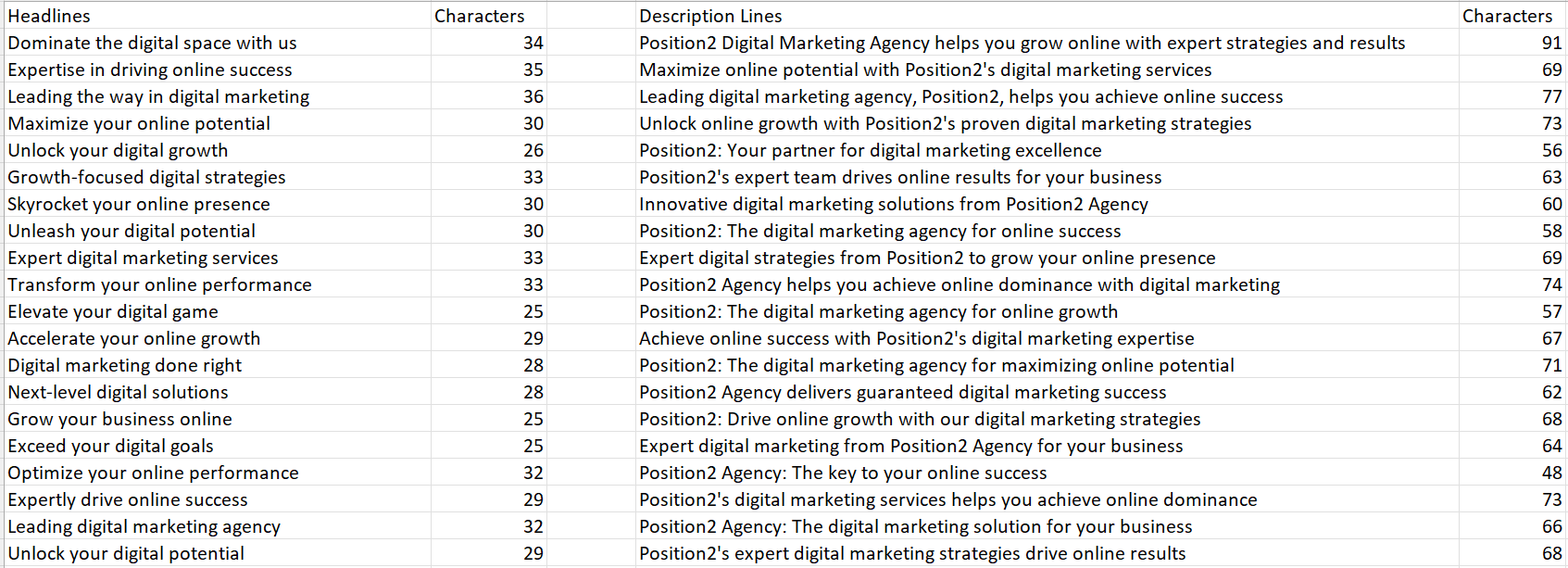
    I asked ChatGPT to write ad copy, advertising Position2, with headlines of 30 characters (or less) and descriptions of 90 characters (or less).

    Here’s what I got back:

    ChatGPT Results

    Now, there are a few immediate problems that are quick to spot:

    • Character limits aren’t always followed (I specifically asked ChatGPT not to use our Brand in the headlines because I couldn’t get any ads under 30 characters). Because I believe that our Brand would be mandatory in the first headline, I would have to create that Headline 1 (H1) manually and pin it, leaving the ChatGPT input for Headlines 2 & 3 (H2 and H3).
    • A few awkward constructs exist (e.g. Position2 Agency) that need to be fixed.
    • The range of descriptors is narrow (digital, business, marketing, strategies, success, growth, results, expertise etc.)

    Overall, these ads don’t suck. They’re better than many copy writers I’ve worked with. Even more important, I can bring all this ad text up to an acceptable standard in less than 10 minutes.

    Of the 20 ad headlines, forgetting about the character limit issue that needs to be addressed, the only headline that seems awkward is “Expertly Drive Online Success”…and this is easily fixed by removing “Expertly”.

    While many of the ad description lines are average (as currently constructed), all of them are workable with some simple and quick editing. For example, I modified the example below:

    From ChatGPT: Expert digital marketing from Position2 Agency for your business

    After my edit: Position2: Digital Marketing Expertise For Your Business

    What ChatGPT does very well here is staying within its “lanes” of knowledge. It’s clear that it only knows Position2 at a very superficial level, but it doesn’t stray from its limited knowledge of us. The challenge of ad copy is to present the same type of information in enough different ways to populate the maximum number of allowable ad copy variants for Responsive Search Ads (15 headlines, 4 description lines).

    Google Ads offers ad copy suggestions when setting up certain campaigns that are generally on point and usable. What Google doesn’t currently do is take their ad copy suggestions and roll out multiple variants of them which should be easy to do given the ease with which ChatGPT can. I suspect that Google will move in this direction by allowing “external factors” to be brought into its ad copy creation algorithm.

    When I write ad copy for clients, my first step is to scan the relevant pages for content that is easily adaptable to the Google Ads medium. I will sometimes copy and paste the content from the website and sometimes, but I’ll have to tweak it a bit. I’ll then take what I’ve culled from the website and manually create multiple textual variants.

    These secondary “ad riffs” are what ChatGPT does really well. Their entire ad output shown here are just variations on a singular theme and we would want our Paid Search Ads to aggressively hit on that theme.

    With a little bit of human oversight, ChatGPT can contribute to any ad copy creation scenario, though it’s a long way from being a singular solution.

  • The Value of A View Thru Conversion

    We’re long past the days of focusing on single-channel data in evaluating B2B Marketing Efforts. B2B sales funnels are long and complex, requiring many touchpoints. While Google Paid Search is clearly mandatory for any serious marketing effort, in 2023, it’s not nearly enough. People are spending time on many different platforms and any boundaries between “work-related” activities and “non-work” activities have long since dissolved. Smart marketers are making sure that their messaging is present on each of these platforms where prospects are spending their time, no matter their current behavior on them. For example, I am compelled to watch work-related ads to get additional “credit” when I play Madden on my tablet, and I both accept and embrace the tradeoff.

    It’s well-established that Google Search Advertising focuses on click-based metrics while Google Display Advertising and YouTube Advertising focuses on view-thru conversions instead of click-based conversions (with some exceptions). Brands have become much smarter about the value of view-thru conversions and with the widespread adoption of data-driven attribution, brands can not only see a view-thru conversion “number” in their campaigns but the relative value of them can be weighted algorithmically to see their impact on the Google Search investment.

    I am still sometimes seeing view-thru conversion “resistance” when non-Google channels are considered. Sure, many verticals can make sales or generate leads on Facebook, LinkedIn, Reddit + others. However, with the B2B clients I’ve worked with, I’m frequently challenged to generate comparable click-thru CPA’s on these other channels compared to Google and it’s frequently difficult to get budget to push on these other channels due to that fact. Conceptually, clients do know that these channels give ancillary marketing value but the data to support these efforts can be lacking.

    However, view-thru conversions can be captured and measured with the various non-Google pixels. For many clients, I would suggest that the relatively small handful of click conversions can be safely ignored as not-being determinative of the campaign success level. Focus on the volume and CPA of the view-thru conversions and realize that you’ll likely see significant latency in the view-thru data (since B2B sales cycles are long). We have found that the percentages of LinkedIn / Reddit / Facebook view-thrus compared to total Google Search Conversions can be quite sizeable (which doesn’t even consider their view-thru impact on Organic or Direct conversions which are also substantial). Advanced data science can give more precise answers to the channel specific impact, but basic view-thru CPA data will give directional indications of success.

    If you’re viewing non-Google platforms as contributory channels more than direct response channels, you should change up your marketing messaging in recognition of this fact. While you probably could use your direct response Google-themed marketing in other channels with some success, that would be suboptimal. Try to use different messaging and assets so not to give the sense that a particular ad is stalking a prospect around the Internet. You can focus more on Branding and less on Direct Response in these other channels. Realize that some people will have already seen your message on Google properties, but many have not. Many will click your ad (or view it) and then do a subsequent Google Search to learn more about your offering and they’re far more likely to convert from the Google Search than from the initial non-Google exposure. Were it not for the initial exposure to your ad, they would have never gone to Google in the first place. While many Google Searches are driven by direct user intent, many others are triggered by seeing something while web-surfing and investigating the offering more closely due to that trigger. Without seeing that other ad, the trigger might not have happened until much later, if at all.

    In closing, the confluence of multi-channel marketing for B2B is greater than ever and it’s becoming more feasible to weigh relative channel contribution in deciding upon an optimal marketing mix. It is necessary to understand user behavior to properly evaluate marketing channels and channels that don’t offer the same level of Direct Response as Google Search should not be discriminated against because they contributed views and not clicks to the user journey.

  • How to use the valuation rules to improve your Google ads performance

    Google’s new Valuation Rules are the most impactful addition to the Google Ads arsenal since the launch of Retargeting. However, I’ve yet to see anyone write about this topic and I’m not entirely sure why. Hopefully, I can explain how extremely valuable this addition to the Google Ads arsenal is.

    In recent years, Google Ads has become more audience-driven, and less keyword-driven. Marketers know that they can look for audiences that are relevant (or not) to their product/service offering – bidding them up or down (or excluding them entirely).

    When I audit accounts from other agencies, I frequently see such setups that are implemented because they “feel” right but it’s often difficult to determine any factual underpinning for these choices. This kind of setup becomes irrelevant when you employ Smart Bidding Strategies. If your audience bidding strategies only change the bids – you’re still using a manual bidding strategy – which means you’re not delivering optimum performance for your clients.

    If you’re running an eCommerce Google Ads Account, you definitely need to run Target ROAS Campaigns to maximize sales performance. That type of campaign allows Google Ads fully automate and manage your bids in any shopping campaign.

    For any Lead Generation Account (B2B or B2C), we recommend implementing Source to Close Tracking – assigning relative values for each funnel stage, utilizing your CRM to capture the updated lead status, and passing back to Google relative values representative of how likely the lead is to close.

    So… how can you fully utilize Google Valuation Rules to help your client’s Google Ads performance?

    Google has about 900 In-Market / Affinity audiences that can be added to any Search Campaigns in Observation Mode – you need to do this for each of your Search Campaigns.

    How do you get started?

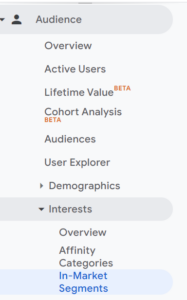
    First, go to your Google Analytics instance and look for the following interest categories: Affinity categories and In-Market segments (refer to the image below)

    Affinity categories and In-Market segments

    Next, do a long lookback and download the complete list of audiences available to you. After a little bit of format manipulation, upload the complete audience list in observation mode to Google Ads (with no bid adjustments) to each Search Campaign in Google Ads Editor (excluding Performance Max where this tactic is not permitted).

    It’ll take from 2 to 12 weeks while Google Ads compiles enough data on all of the audiences in your campaigns – allowing statistically significant differentiations between the audiences to become apparent.

    We’re making an assumption that you, the reader already know how to run a Target ROAS Bidding Strategy for your clients – maybe you’ve achieved some success with it. Here’s how we can make Target ROAS even more effective.

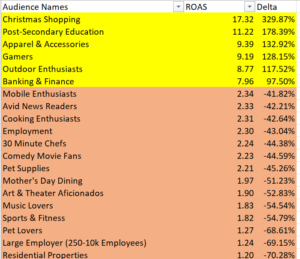
    Within those 900+ audiences, Google has been tracking on your behalf – a series of outlier audiences that will perform either much better or much worse than the account average. In the image below – you’ll see sample data from an account that has an account-wide ROAS of 4, but as you can see from the image there is a subset of audiences where the ROAS diverges greatly from the average:

    Subset of Audiences

    Target ROAS is working well for this account, but there is still a group of audiences that are either being underrepresented (with higher-than-average ROAS) or overrepresented (with lower-than-average ROAS) in the traffic that Google is sending over.

    How can we optimize for these outlier audiences?

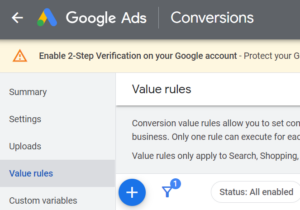
    Go to the Conversions Tab and click on “Value Rules”.

    Value Rules

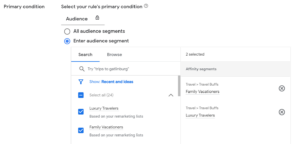
    Add the relevant audience segments:

    Rlevant Audience Segments

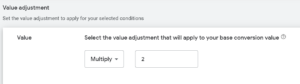
    You need to choose a value adjustment. For these audience segments, the top audiences have achieved a ROAS of 2x the Account Average. So it’s logical to 2x the value associated with conversions in these audiences.

    Taking an action like that will help ‘seed’ Google’s algorithm to be more aggressive in bidding for future people who are part of these “favored” audiences. Conversely, the audiences that have generated a much lower ROAS than the account average – you can reduce the multiple to as low as .5x.

    Base Conversation Value

    As this is scaled and over time, Google will be more aggressive in pushing bids higher for people in “profitable” audiences and lower for people in “less profitable” audiences which will make your Target ROAS Bidding strategy much more efficient. Depending on the account, I review audience data every 2-4 weeks and adjust these numbers because audience performance isn’t consistent over time.

    You can also run a similar strategy with Geographical Segments.

    The U.S. contains 210 distinct DMAs (Designated Market Areas) – you can run a similar setup comparing ROAS data at the DMA level, making the same types of adjustments as you can with Google’s Audiences.

    Personally, I’ve found that using Google’s Audiences as my Value Rules foundation is more impactful to my clients than just using DMAs, your situation might vary. I hope you found this helpful – feel free to leave comments below!

  • Tips & tricks for location-based paid search – one marketer’s perspective

    I’ve managed all types of paid search campaigns (Google Ads)… from eCommerce to Consumer Lead Gen, but I had never managed a campaign for a multi-location business before I joined Position2.

    Over the last few years, multi-location PPC has quickly become one of our “in-house specialties” that we offer our clients.

    In this post, I’ll share some tips and tricks that I’ve learned over the last few years that’ll benefit those who are managing marketing efforts in a multi-location business.

    Hours of Operation

    Save your budget for when you have staff to answer the phone – be mindful and turn your campaigns off when your office is closed.

    Call Tracking

    Third-party call tracking is mandatory to measure results from phone calls. CallRail is one of our favorite providers of choice. It’s incredibly powerful, reasonably priced, and user-friendly in both setup/execution.

    You’ll be tracking two types of calls: People who call your extensions right from the search results page and people who visit your site and then call from there. We recommend your business set up full source-to-close tracking where all inbound calls (and all form fills, if relevant) get recorded in your CRM and are tied to a unique GCLID tag.

    These “leads” will be tracked through the funnel and data from each stage gets pushed back into Google Ads. When the leads “close”, those closes will also be pushed into Google. When your CRM shares data with Google, it trains the algorithm to find prospects that are more likely to become leads and closed sales.

    We know that not every business is set up to do full source to close tracking, however, if your company can at least track all inbound leads and tie them to paid search it will generate an accurate cost per lead and the investment in a call-tracking solution will be justified.

    Performance Max / Smart Campaigns

    For each office location, we typically run unique Branded and Non-Branded Search Campaigns along with an office-specific Performance Max Campaign. We don’t recommend creating Performance Max Campaigns to cover multiple offices because it can lead to an increased likelihood of showing an inaccurate office location to a prospect. Office ads overlapping each other can happen but that is fairly normal and not a negative.

    Display Campaigns

    Although generating direct lead volume is never guaranteed, Google Display Network Traffic is affordable and if targeted aggressively within a small local area you can attain great brand recognition that will help generate interest from other marketing channels. We recommend that you allocate between 5-10% of each locale’s marketing budget for Google Ads on the Google Display Network.

    Response time

    During business hours, your prospective customers expect quick responses to their inquiries (or within a reasonable time during off-hours). Not responding promptly, could drive those prospects to choose a competitor. We’re recommending you set and commit to a service level agreement (SLA) for all inquiries – and ensure it’s executed in every communication/engagement. It will help prevent a loss of down-funnel revenue.

    We hope you found these tips useful, we think Google Ads is an essential tool for keeping your multi-location businesses visible and profitable. Following these steps, will help your business will get more business.

  • Issues that Need to Be Considered in an International PPC Campaign Setup

    Having done Paid Search with a B2B focus for quite some time now, I have frequently been tasked with “globalizing” US/Canada-focused accounts. On the one hand, Google makes it easy to internationalize campaigns that are just targeting a couple of countries. On the other hand, it would be extremely naive to target countries such as Romania and Algeria in the same campaign as the US unless there is a compelling business reason to do so (and there generally is not). In this post, I am going to share some tips and tricks in a typical global campaign setup that might help you expand your campaign reach in an efficient and profitable manner.

    Country Segmentation

    The first step in internalization is to focus on the primary English-speaking countries and segment them in a logical fashion. I will always do a separate campaign for the US and Canada. I will combine UK and Ireland and Australia and New Zealand. Sometimes, I might also segment out South Africa, Hong Kong, and Singapore, since they are also primarily English-speaking countries.

    Then, I focus on logical segmentations in countries where English is not the primarily spoken language. I might combine all of the EU countries together or get more granular than that if the situation warrants (e.g., Germany/Austria/Switzerland, Norway/Sweden/Finland, Netherlands/Belgium/Luxembourg, etc.). I might combine the primary Asian countries together if I do not have a strong Asian focus (e.g., Japan/South Korea/Taiwan). I might combine countries by language (e.g., all the Central and South American countries that primarily speak Spanish). While each country will have both cultural and linguistic differences that will make combining them an imperfect science, for the purposes of an American company looking to quickly expand its marketing and sales footprint, this degree of segmentation will work.

    Non-Translated Sites

    Many clients resist marketing to countries where the primary language is not English, because they believe that a high percentage of the people will not understand the website well enough for it to be actionable. My experience is that almost everybody tasked with looking at your website for the purposes of making a business purchase will know English at least at the “second language level”. For the few that do not know any English, Google Translate will allow a basic understanding of your site. One benefit of marketing to non-English countries is the much lower cost per lead, which makes the leads more profitable when tracked all the way to closed sale.

    If you are committed to making a major push into a non-English-speaking country, it will be advantageous to have at least one paid search landing page in the native language, even if it is not feasible to translate the entire site. Google uses a variety of settings to determine which language(s) a user speaks/understands. Even if Google sees the searcher as having English fluency, when you create an advertising experience in their native language, Google will likely favor it and you might achieve a competitive advantage over an advertiser with an English-only experience.

    Translated Ads

    Knowing that it frequently takes time and effort to create a non-English landing page experience, I will often suggest that in the interim, it makes sense to start with non-English ads for non-English speakers that send them to English landing pages. Many have questioned that technique as being weird or incongruous. However, I have worked with this technique for 10 years now, and it has worked extremely well for every client I have tried it with. People who live in non-English companies are extremely used to going between English and non-English during their workday, so they won’t be thrown when your non-English ad takes them to an English landing page.

    What is also awesome is that if you are working with a Google Partner Agency, your Google rep will get your ads translated into any language for free if you commit to running Google Ads Campaigns. My experience is that the quality of the translations is generally quite good. Also, companies like Gengo will translate your Google Ads for a very reasonable cost.

    Payment Issues

    This is an under-the-radar issue for marketing overseas that many paid search managers do not necessarily think about. In the US, people assume that both people and businesses have easy access to a credit card. For consumer goods, we have a variety of payment options (e.g., PayPal, Amazon Pay, Google Pay and Apple Pay) that most merchants accept. However, in some countries, people do things quite differently. Visa and Master Card might be accepted outside of the US, but many people do not have access to these cards. In certain countries, bank drafts are more prevalent than credit cards. Also, the payment processor that a business works with has a huge impact on both where it is feasible to market to (and generate sales from) and how much it might cost to process payments from that location. If a business makes it too difficult to purchase from them, the non-US visitor will make their purchase elsewhere.

    Also, businesses must be aware of currency exchange rates as well as the cost of doing such an exchange. The functionality to accept payment in Pound Sterling, Euros or other “important” local currencies can be a huge selling point to people in those markets. I have worked with many clients who had no problem generating leads worldwide but had difficulties closing the leads. If you don’t make it easy for people to pay for the products/services in a way they are accustomed to, you will have difficulties running your business in these countries.

    In closing, if a company is able to service clients and customers worldwide, Google has made marketing to them much easier. While we cannot assume that prospects in Europe and Asia will view or value your offering in the same manner as people in the US, we can assume that these prospects are quite adept at evaluating US offerings from their “outsider” viewpoint and are also quite able to switch quickly between English and their native tongue while surfing the web for work. Targeting outside the US can frequently lead to increased sales at lower CPAs and higher profitability. So, if you are able to serve people worldwide, now is a good time to begin marketing internationally.

  • How To Run Google Ads for FreemiTitleum Clients

    My paid marketing career has had a strong B2B focus and, within the subset of B2B clients, I have worked extensively with Freemium Business Models. While the basics of lead generation B2B paid marketing will apply here, there are some unique and interesting considerations that paid search managers need to be aware of to maximize the success of the campaigns.

    Paid Latency

    In my experience, 85+% of B2B free conversions happen within 24 hours of the first visit to the site. Also, an exceedingly small percentage of people bypass the free conversion entirely and go “Direct to Paid.” Everyone else signs up for free and “kick the tires” for a while to see if the free version works for them, if they wish to upgrade to Paid to get “full” functionality, or if they want to stop using the product altogether.

    Where Is Paid Latency Found?

    In the Tools & Settings Menu of Google Ads, click on “Attribution” and then, on the left margin, click “Path Metrics.” I would set the Lookback Window to 90 days (and hopefully, you have at least 90 days of accurate conversion data). Then, check to see what the Paid Conversion Latency is for your account. In my experience, 30-45 days is a common average (even if the Free Conversion Latency is only 1-3 days).

    Tactics to Optimize for Paid Conversions for the Freemium Model

    1) Upsell Retargeting. It is important to keep free users focused on the value of upgrading. If they are using the product, they are likely getting different types of cues to upgrade. You are likely messaging them in product, and they are also likely bumping up against the ceilings of their free account as they perform unique and diverse tasks within the product. However, my experience tells me that that’s not nearly enough of an upgrade push. I like to map out the various content assets on the website and figure out which pieces have some tangential relevance to the upsell decision. I would then add these assets, along with a relevant responsive display ad that speaks to the value of remarketing, to a campaign that targets the free user audience. The objective is for each visitor to see a random cycle of these content ads daily for at least 90 days (for it is likely that if they do not upsell during that period, they will not buy). If you have relevant 30 second or less video ads, I would also add them to the responsive display ads and also do upsell retargeting campaigns on YouTube (though I’d push the bulk of my retargeting budget into GDN). This tactic should generate a voluminous number of view-thru conversions (people who saw the ad but didn’t click on it and then converted later). If you examine Google Analytics, you are likely to see plenty of assisted conversions from this tactic.

    2) Adding “Mid-Funnel” Conversions. Your free users are going to be a diverse group. There will be all kinds of reasons – demographic, firmographic, geographic, and others – that some free users will be much more valuable monetarily to the business than others. Within the product, the more valuable users might take actions (such as ones that hit up against the various freemium limit caps) that are also indicative of future upsell activity. Take one or more of these actions and pass that activity back to Google Ads so that Google’s algorithm can learn what types of users will be more likely to get further down the funnel (if not all the way to paid conversions).

    3) Optimizing Towards These Mid-Funnel Conversions. Early in 2019, Google introduced “Selective Optimization” which, at the Campaign Level, allowed optimization towards any listed conversion type (or combination of conversion types) in the account. Previously, all Google accounts needed to optimize towards only one conversion type, which was a huge disadvantage for Freemium companies for they had to choose whether to optimize for the free conversion or the paid conversion. Now, they can choose to optimize towards either, both (with paid conversions given much greater weight), or any mid-funnel milestone that your data shows is a precursor to a prospect being more likely to convert to paid. What I’ve seen with many clients is that there might not be enough paid volume to optimize purely for paid and that the volume and that optimize towards free conversions doesn’t allow the business to isolate and promote the free users who have the characteristics of paid users. The introduction of a mid-funnel “milestone” conversion allows the ability to optimize partially down-funnel while giving the business a conversion type with sufficient volume for optimization purposes.

    4) How To Choose a Freemium Mid-Funnel Conversion for Selective Optimization. Freemium models that have a limit of some sort have an easy choice here. The action of hitting that free limit should be a mid-funnel conversion choice, for these people will be much more likely to convert to paid (they will need to if they wish to go beyond the freemium ceiling). An audience created from this mid-funnel conversion type will be incredibly effective for prospecting purposes. Another idea that we are implementing with a current agency client is to segment out business email addresses from personal email addresses. Data shows that prospects with business email addresses are not only much more likely to convert but will convert at a much higher LTV. By making this segmentation immediately after the free conversion occurs and then passing back the business-email-only audience back into Google Ads for targeting purposes, our client can immediately spend their dollars targeting a much higher ROAS audience.

    5) Attribution of LTV Throughout the Funnel. Ideally, a B2B business that’s generated a solid volume of sales has figured out what the lifetime value (LTV) is for each type of sale generated (which also might be further segmented by geography or other factors). Once the paid conversion occurs, the LTV value should then be pushed back into Google Ads for optimization purposes. However, it is generally suboptimal for B2B to attribute 100% of the LTV value back to the paid conversion type, because such a tactic tends to shrink the funnel size and discourages funnel diversity that ultimately leads to a larger number of future sales. Instead, LTV should be proportionally attributed to each conversion type in the funnel. A rule of thumb that I have used is that the “free conversion” generates 10% of total LTV for Google to optimize towards. A “mid-funnel conversion” could get 30% of the total LTV, leaving 60% of the LTV for the actual paid conversion. Note that these percentages are subject to change and should be based upon your actual free/id-funnel/aid conversion rates. They also can be tweaked as an optimization technique. Do not confuse these LTV numbers with actual revenue…the LTV is just an artificial construct based upon the sales reality that is used proportionally to generate an optimum number of targeted paid leads for paid marketing purposes. Moving a portion of the LTV up-funnel widens the top of the funnel in such a manner so that more people convert to Paid in a manner that generates more revenue and profit than just targeting paid conversions.

    In closing, Google’s paid marketing has evolved greatly over the last 18 months for B2B marketers. With some foresight and some assists from your CRM/back-end data system, you can optimize your paid marketing efforts so that you’ll get more qualified people into your paid sales funnel and ultimately close a higher volume of them.