Author: Taryn Talley

  • Why is it important to optimize your landing pages?

    Let’s start off by quickly defining what a landing page is

    A landing page is designed for a specific conversion goal and they’re temporary page(s) that are not part of your website architecture. Consider them a standalone destination for customers or prospects that are tied to a specific marketing campaign(s).

    Your website is the comprehensive online presence for your brand – it’s considered owned media and isn’t dependent on individual marketing campaigns. It’s an asset that your team manages, updates and optimizes depending on new features, products, and services for your company.

    The need for optimization of your landing pages

    It’s important to look at the performance of your campaign landing pages and make the necessary changes or enhancements so they can continue to drive conversions for the marketing campaigns they support. These are some of the methods that our team works through to optimize our clients’ landing pages.

    • Alignment with campaign goals

      Make sure that your landing page content and messaging are still aligned with the goals of the marketing campaign this alignment will improve the chances of conversion.

    • User-friendly and responsive

      It almost goes without saying that your landing pages need to be intuitive and user-friendly. Reducing friction makes it easier for visitors to navigate, interact with content, and take the desired action. This means that the pages need to be consistent regardless of the device your visitor or prospect is using.

      We recommend a responsive page that adjusts the layout, font sizes, and images to fit the screen, eliminating the need for users to zoom in or scroll horizontally. A positive user experience leads to higher engagement and increased chances of conversion.

    • Clear and concise content

      Since your landing page is tied to a marketing campaign and not your website – the content needs to be simple and relevant to the campaign objective. Having a strong headline that grabs attention and content that clearly communicates the value proposition of your offer. Content should be compelling and relevant to your target audience.

      Informative and relevant content establishes credibility and builds trust with the audience. When the message is clear, visitors are more likely to stay on the page and engage, increasing the chances of conversion.

    • Call-to-Action

      Your call-to-action (CTA) should clearly communicate the action that the visitor is expected to do. A clear CTA on the landing page sets the right expectation and has a direct impact on conversion.

    • A/B testing

      Test, test, test … we recommend testing different elements of your landing page to optimize its performance. Test different headlines, CTAs, form placements, colors, or layouts. A/B testing allows you to gather data and insights on what resonates best with your audience, enabling you to make data-driven improvements.

    • Forms

      If your landing page has a form fill – identify the information that your campaign or Marketers are prioritizing – keeping your forms as simple and streamlined as possible. Long and complicated forms can deter visitors from converting – consider using progressive profiling to gather additional information over time.

    • Testimonials

      Consider adding customer reviews, badges, or other positive 3rd party content that can support your value proposition. You’ve got their attention – make the most of the opportunity.

    • Integration with your marketing automation system

      Leverage your marketing automation system by integrating your landing page with that platform. You can set up lead tracking, nurture campaigns, and personalized follow-ups to engage with your leads effectively.

    • Load speed

      By its nature, a landing page needs to load quickly. Using compressed images, and minimizing server requests will help in improving load speed.

    • Analytics and tracking

      As with any marketing initiative, prioritize data-driven revisions to your landing page and make the right modifications to drive conversion.

    So… what’s a good conversion rate for a landing page?

    As Hubspot shared last year, the average conversion rate for landing pages is 5.89% across all industries. A good conversion (across all industries) rate is around 10%.

    There are multiple factors that can influence the conversion rate, some of these include:

    • Campaign goals and objectives – and how well they’re executed
    • The type of content (video, images, content)
    • The type of CTA included on the page
    • Content/message relevance to the audience
    • Channels driving traffic to the landing page
    • Your target list or audience targeting

    We hope this article has helped highlight some of the tactics that can help boost conversion rates on your marketing landing pages. It’s more important than ever to work with the right agency team to get the very most out of your campaign landing pages – if you’re not getting what you need from your current agency – please reach out to our team at Position2.
  • What the launch of Google’s ‘Apprentice Bard’ reminds us and how to fix it.

    It’s been more than a few weeks since Google’s Bard returned an incorrect output during a demonstration of its capabilities. That doesn’t mean that tools like this have no place being integrated into society – it means there is still some work to be done to realize its potential.

    These systems are classified as weak (or narrow) AI. They work as well as the data input or learning model. What we are seeing with some of these tools is that if the data isn’t updated or exists – these tools return incorrect answers.

    When you look at the FAQs for Microsoft’s AI-driven search engine Bing, Microsoft clearly acknowledges this – they state “Use your own judgment and double check the facts before making decisions or taking action based on Bing’s responses.” Recently, Microsoft’s AI-powered search has had its own issues where the AI took on a personality that was somewhat alarming to users of the system. Microsoft responded by limiting the number of queries that can happen in a day.

    As Big Tech embraces and integrates AI-powered search, we think of the famous quote ‘with great power, comes great responsibility.’ Google and other search providers are where they are today because of the ease of use, level of accuracy, and relevance of results. So we know accuracy and relevance matter.

    That’s not to say that the big search engines are pillars of accuracy, but it’s one thing to search and find the wrong results – it’s another for an AI to generate and provide incorrect information in order to always have an answer.

    We won’t go into a detailed technical discussion on how ChatGPT and Bard are built, but we can say that ChatGPT and the large language model it was based on, GPT3.5, is different than Bard and its associated large language model roots, LaMDA. ChatGPT is a pre-trained model versus Bard which is a supervised learning model. The difference is that Bard’s responses are more human-like and ChatGPT’s knowledge base goes back to 2021 as they state on their website.

    Some of the challenges with these models are:

    • Data issues: Preprocessing, missing values, data not available
    • Issues with testing – not selecting a wider representation of data in testing
    • Issues with the model – underfitting or overfitting a model
    • Lack of governance

    These challenges are not insurmountable, but it’s up to the team developing these models to have a structure that addresses some of these potential challenges and issues.

    This technology is ever-evolving, and Google and Microsoft will continue to innovate, update and improve on current offerings – it’s in their business interests. These companies are investing heavily in conversational AI, and as a result, users can expect more conversational responses from search engines – instead of just straightforward search results. Google’s CEO, Sundar Pichai, stated that these models will be available in the coming weeks or months and serve as a “companion to search.”
    Conversational AIs aren’t exactly new, we’ve been using them for years… don’t believe us? When was the last time you asked Siri, Alexa, or Google Assistant to change a song or answer a question?

    In conclusion, these conversational AIs are here (to stay), and they have the potential to make a huge impact on existing technology, processes, and user activities that will improve results and provide a more ‘human’ experience. We are excited to see what the future holds.

  • Position² Supports Choice and Joins Agencies for Reproductive Rights

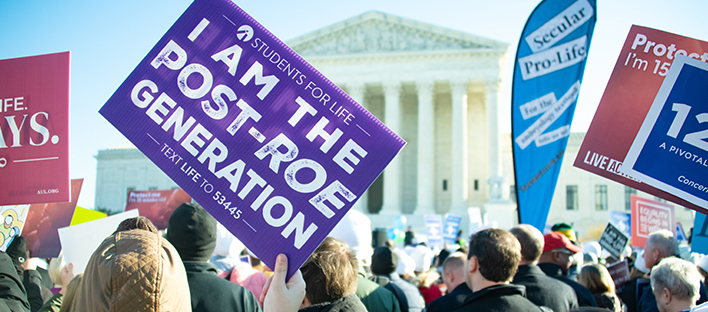
    Last week was an emotional, difficult week for many Americans. The Supreme Court threw out 50 years of precedent and declared that there’s no constitutional right to an abortion – effectively overturning Roe v. Wade.

    We want to center around what this means to millions of Americans who just lost the ability to safely access reproductive healthcare. There are multiple reasons for a person to seek out an abortion – it’s a personal healthcare decision that we honor and respect. We also believe that no government has the right to restrict access to a health service like abortion.

    Position2 Supports Choice and Joins Agencies for Reproductive Rights

    In the aftermath of the decision, there are 26 U.S. states that are expected to immediately ban or restrict abortion – out of those – 13 states have trigger laws on the books that were passed expecting Roe v Wade to be overturned.

    Those 13 states are Arkansas, Idaho, Kentucky, Louisiana, Mississippi, Missouri, North Dakota, Oklahoma, South Dakota, Tennessee, Texas, Utah, and Wyoming.

    Let us be clear, banning or restricting abortion does not stop abortions – it makes those abortions horribly unsafe.

    That said, Position2 has joined as a member of Agencies for Reproductive Rights — a coalition of 35+ agencies that believe in a person’s right to choose. We have pledged to support reproductive rights by providing the financial benefit of covering necessary travel expenses for any employee residing in a state that has outlawed abortion, allowing them to seek safe healthcare in the closest state that recognizes their liberty to choose.

    We stand with our employees and millions of Americans in this fight.