Author: Team Position Squared

  • Google Authorship Axed but Author Rank Endures

    Google authorship

    It was heralded as a radical idea that was going to change online content marketing forever. Google patented Agent Ranking/Author Ranking way back in 2007. At that time, the idea was to give due credit to writers/authors for the content that they generated by tagging their identities to their content when it showed up in the results page. The goal was simple and if it had been successfully accomplished, online content would have had an added layer of credibility.

    Google’s enthusiasm is understandable. After all, its mission is to organize the world’s information and make it universally accessible and useful.

    But for Google things did not pan out the way they had expected. Surprisingly it offered a rather cumbersome option for authors to add their identities to their content. Latest statistics reveal that a majority of the authors made no effort to attach their names to their content. Thus, the very purpose of Author Ranking was defeated due to authors’ aversion to ‘publicity’. Ironically, while real authors didn’t use this feature, there was a proliferation of fake ‘authors’ attaching their names to content they never wrote.

    This setback did not faze Google. It’s a research based organization at heart and views failures as stepping stones to success. The company tests and evaluates every product, innovation or change. After rigorous testing anything that does not meet the company’s expectation or does not provide enough user value is ruthlessly terminated. It’s this very discipline that keeps Google at the top of its game even after so many years.

    In keeping with the company norms, Google finally had to pull the plug on Author Ranking and call it a day. But that does not mean the search engine giant will not be researching talented authors and make this a leading factor in deciding Page Ranking going forward. It has more than one ways to do it. Google Knowledge Vault is a good case in point and so is the schema markup. It keeps a tab on authors and sees to it that content from tried and tested authors is always valued better than greenhorn writers who are yet to earn their stripes.

    What it Means for Content Marketing

    Where once the content was followed by the name of the author and a picture in search engine results, the page will now look more lackluster. This doesn’t have to deter content writers and marketers since according to latest research from Google the Authorship snippets in any case offered very little value to searchers and there was no radical change in ‘click behavior’ on results page.

    The search engine will rely on Author Rank nonetheless to reward quality content. There is schema.org which is a collaboration of major players in the field of online search. Schema is a microdata that helps search engines to better parse and interpret content on the web in order to better rank it in the results page.

    Quality content deserves recognition and reward. Google Author Ranking was a wonderful initiative and something that deserved to do much better. Position2 engaged with a financial services company and recommended Author Ranking that helped them get their content a far higher ranking in the search engine results page.

    We believe that the current avatar of Author Rank will continue to help in ranking authors as per their credibility though it will remain inconspicuous to the lay user. Having recognized the need to provide search engine rankings based on author credibility, Google is unlikely to give up on this. While Google has officially pulled back this offering, it’s probably a strategic retreat for them to work on it away from the public eye.

    Giving up on a juicy research problem is just not the Google way!


  • Facebook “Like” Button goes Mobile

    Facebook has come up with yet another update wherein the ubiquitous “Like” button will now be available for Android and iOS mobile apps too. This has got the digital marketers quite excited since now they can analyze user engagement via mobile apps. The mobile users can directly “Like” the app’s Facebook page or any other object within the app and share it on the social networking site.

    Today more and more people are using mobile gadgets like smart phones, tablets and phablets (phone + tablet) as their primary device for browsing the Internet. In the world of mobile devices the apps rule supreme. So any marketing strategy that does not take into consideration this vital factor is doomed to fail. The Facebook “Like” button going mobile in order to garner the attention of the growing clan of app users is a well-timed update from the social media giant.

    The “Like” button works flawlessly with the user’s Facebook account no matter what device he/she is using to log into the account. This makes liking any piece of content in the native app effortless. Facebook has issued some guidelines for digital marketers in order to make the most of the Like button on mobile apps. They are as follows:

    • Research when exactly to show the Like button.
    • Position it strategically to get the best outcome.
    • Have a riveting Facebook page.

    As a digital market you have data of a whole new segment of consumers using mobile apps, at your disposal. Using the “Like” button you can find out which is the form factor that your customers are most comfortable with and how it converts into more marketing leads. This can give you an accurate picture about which platform is the most profitable. Thus you can pursue a digital marketing strategy taking cue from this new found knowledge.

    Mobile marketing will upend the digital marketing world for good. So you have to be always nimble and on the lookout for new opportunities and threats alike. You need to have a team of technologists with an intuition of future technology, business executives with an eye on the revenues working together seamlessly. Their efforts can then come to fruition using market intelligence apprising you about imminent business prospects.

    It was but imperative on the part of Facebook to bring an update like this since the majority of Facebook users are youngsters. So keeping in sync with the mobile centric demographics that Facebook has, it had to bring its desktop features and capabilities on to the mobile bandwagon thus benefiting publishers and developers on this burgeoning platform.

    So how do you think this new update from Facebook, is going to augment your digital marketing campaign going forward?

  • Take Your Mobile App Marketing Campaigns to the Next Level with Deep Linking

    What separates a successful mobile app from an unsuccessful one? Design, ease of use, demand, effectiveness, etc. all play their part.

    The truth is, however, that effective marketing can make a huge difference between an app that is a commercial success and one that gets lost amongst the ever burgeoning crowd of daily released apps.

    In addition to putting some marketing effort behind you app’s promotion, it’s incredible how many app developers and marketers aren’t aware of capabilities of mobile app such as what mobile deep linking is, never mind how to use it to benefit their marketing campaigns.

    Let’s take a quick look at a few steps you can take to significantly enhance the success of your app through smarter marketing with deep links.

    What is Mobile App Deep Linking?

    Mobile app deep links in search results allows users to click links to view specific content within your app, or download your app, depending on if they have your app installed. If a person doesn’t have your app installed and clicks on a deep link, they will automatically be directed to your app’s page in the App Store so they can download your app before proceeding to your deep link landing page within an app.

    If a person doesn’t have the app installed and clicks on a deep link, they will automatically be directed to the app’s page in the App Store so the user can download the app before proceeding to the deep link destination. Deep linking helps simplify the conversion friction by shortening the users’ flow to the piece of content, product or promo they are interested in which convince user to a buyer.
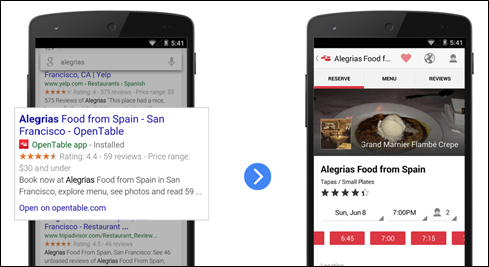
    Mobile App Deep Linking

    Image source

    How deep link works?

    Allowing your mobile app to be launched via a link is a necessary first step to making it accessible from the web. This enables promotional efforts (email, social posts, ads, etc.) to lead users directly into your mobile app which is typically a better and more seamless experience for your customers.

    If your mobile app is already set up to handle a URI, you are ready to create optimized links that detect if the app is present on a user’s device and then takes them to the mobile app content they are looking for!

    What is URI?

    In short, a URI is really just a link. The most common kind is a web link (http://www.google.com) which when clicked instructs the browser to render a web page. A mobile app URI is another type of link that allows a user to launch an app—not just a browser—when clicked; for example, youtube:dQw4w9WgXcQ will bring up a video in the YouTube app if it is installed. On both iOS and Android, any mobile app can indicate that it handles URIs, and for this reason, URIs are an ideal mechanism by which mobile apps can be launched from the web.

    Benefit from deep linking?

    For apps such as shopping, travel, hotel booking, music and news the ability to send users to a specific product, offer or promo page can have tremendous effect over conversion rates and ultimately revenues. For example, if deep linking is enabled, the user can be navigated directly to a certain hotel booking page for which he has seen an advertisement instead of the app’s home page.

    Does deep linking works only for users that have the app already installed? Not true.

    Deep linking benefits both pre-installed and new users. There are programs that can carry forward the saved request. If the user doesn’t have the app installed, he/she is sent to the App store and, upon opening the app after the installation, is directly taken to the deep linked page for the user requested content.

    Even though deep linking is only used as a re-engagement mechanism to bring users back inside the app, it has an enormous potential to drive conversions and ROI.

    Why Mobile Deep Linking Important?

    Deep linking helps every mobile app which has multiple screens, products or sections to offer for the interested customer. This means that instead of making every user open your app’s main screen and then manually navigate, deep links can take them directly to the desired page.

    There are a number of reasons why mobile deep linking is incredibly important.

    Deep linking:

    • Allows you to highlight areas of your app which do not get lot traffic. With deep links you can easily point to specific areas of you app that you want to highlight and “refresh.”
    • Allows you to enhance the flow of your app, encouraging users to engage and view specific content. This could be anything from media content to new subsequent products offered by yourself or affiliates.
    • It also allows you to exponentially increase the revenue. By encouraging visitors to engage with, and view other sections within your app, you will be able to align ads with the most relevant content, significantly increasing the conversion rate.
    • Allows your app to be more discoverable. Since Google now indexes deep links within apps, more of your content can be found from user queries with the search engine.
    • Helps drive re-engagement. For example, a retail company can notify existing customers about the current promotion and drive interested users directly to the product page. It’s time to think beyond the install and start driving value post download!
    • Improves the experience of your cross channel marketing campaigns. You can use a deep link for the destination of your promotions across email, social, third parties and your website.
    • Removes several layers in the conversion funnel. When users don’t have to navigate through your app to get to the offer or intended destination, you’ll likely lose fewer users through the conversion funnel.
    • Helps you understand cross-channel measurement. With the ability to track and measure user experience with deep links, marketers will have a better understanding of how mobile fits into the buying path and the gain insight into the full impact of mobile in their marketing strategy.

    Effective Way of Optimizing Mobile App Deep Linking

    Google also provided a list of best practices to consider when adding deep links to your app:

    • Identify the URI of the section to be linked is most critical – Publishers must specify app deep links for their homepages, or else the links won’t show up.
    • App deep links should only be included for canonical web URLs.
    • Not all website URLs in a Sitemap need to have a corresponding app deep link. Do not include app deep links that aren’t supported by your app.
    • If you are a news site and use News Sitemaps, be sure to include your deep link annotations in the News Sitemaps, as well as your general Sitemaps.
    • Don’t provide annotations for deep links that execute native ARM code. This enables app indexing to work for all platforms.
    • Make sure the back button behavior of your app leads directly back to the search results page.

     Mobile deep linking the future

    Mobile web use has been declining, while mobile app use continues to spike, now occupying 86% of the average US mobile consumer’s time. If deep links weren’t a part of your mobile engagement strategy before, it’s time to consider adding them. As mobile app use rises, deep links gain traction. Right now, they make for better app discovery, engagement and conversion with richer opportunities. In the future, when deep links are adopted at scale, they will make navigating between apps similar to how we navigate between web browsers, with more fluid pathways.

    Blog contributed by Rajkumar Raju, Assistant Manager-SEO, Position2 Inc.
  • Facebook Launches Atlas

    Facebook has officially launched the Atlas advertising platform which is purportedly going to give the giants of the industry like Google a run for their money. Facebook calls this “people-based marketing” since the social media giant will not be utilizing cookies to track people and to learn more about their browsing habits. It will be using the login credentials of its over 1.3 billion users, the biggest database of any Internet company in the world! Hence, Facebook can track a user on mobile devices too since they are not relying on cookies here (cookies don’t work on mobile devices). It is going to be a paradigm shift as far as advertising is concerned and this has got the digital advertising agencies quite frenzied.

    Facebook can even track its users offline. If a Facebook user goes about shopping in a mall and enters an email id in the shop registry and that shop is on Facebook, then the social networking giant can map that id to the actual user. It can then easily find out whether that person saw a particular ad or not! This helps marketers to reach real people across devices, platforms and publishers. So the cross-device impediment that they used to face until now has been removed. They can now target, serve and measure the performance of their ads across devices.

    All this leads to better optimized ads that can help the digital marketers get better ROI on their media budget. When a company like Facebook has so much user information the natural proclivity is to tie that data to analytics and an ad server and start targeting users in hitherto unheard ways. “That’s Marketing Nirvana”, said one digital advertising CEO; how true! Marketers will now be able to successfully serve ads to people based on their demographic data like age, gender, socio-economic status, et al. They can even measure how effective their ad campaigns have been at targeting the right customer group. Instagram, as a publisher is already plugging into the Atlas ad server in order to examine and authenticate ad impressions, according to a Facebook Atlas Update. Looks like there is a lot to come in the days ahead.

    So, is this the start of a new era of holistic advertising?

    What do you think?

  • Guidelines for App Store Optimization (ASO)


    App store optimization

    Image source: www.searchenginejournal.com

    Over the last few years, the mobile app space has grown into a multi-billion dollar industry. Research estimates 1.2 billion mobile app users in 2012 alone, and that number is expected to grow 29.8% each year. The app industry is broken down by 2 major players (Android and Apple iOS). In terms of OS platform share, comScore (a leading digital research firm) released the following numbers for OS platform market share as of August, 2013:

    • Android: 51.6%
    • Apple: 40.7%
    • Blackberry: 4.8%
    • Microsoft: 3.0%
    • Symbian: 0.4%

    What is ASO?

    App store Optimization (ASO) is the first step to succeed in mobile app marketing.It is the process of improving the visibility of a mobile app (iPhone, Andriod, Windows Phone) in the app store (iTunes or Google Play) and generate extra downloads or sales.

    Why is ASO Important?

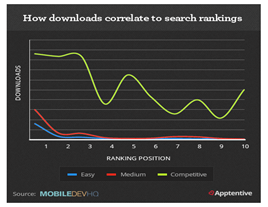
    63% of people discover apps via search, according to research firms Nielson and Forrester, so high visibility in app store search results is a key to success.

    Best practices to optimize your app page.

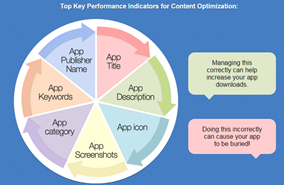
    Content Optimization

    Image source

    App Name/App Title: Tell users about your app.

    Include keywords in your title. Based on the top 25 ranking positions, it was calculated that an app which includes keyword in its title is ranked 10.3% higher than the ones that do not have keywords.

    App Description: Describe everything about your app.

    Focus on convincing the reader and portraying the best picture about the app – here is how it’s done:

    • Get the first 3 lines very right
    • Insert main features and benefits list
    • Include social proof (awards, blog/users reviews)
    • Localize description

    App Icon: Make a first impression.

    Make sure your icon or logo clearly and creatively expresses your app.

    • Don’t include words
    • Don’t standard gloss
    • Simple is good. Simple is clear.
    • Stand out from the crowd
    • Icon/App consistency

    App Screen Shots: Show off your best features.

    Display some eye-catching screenshots of your app in action.

    • Give clear and detailed screenshots of your app and highlight all the best parts of your app with multiple screen shots
    • The App Store allows you to upload five screenshots of your app. Be sure to use every single one!
    • You can add some simple text or additional graphics to your screenshots to drive home the benefits of your app

    App Category: Where does your app fit in?

    Make sure you categorize your app appropriately. A lot of searchers jump straight into specific categories if they are looking for something. Apple also allows a secondary category in the event your app fits into two categories, but always treat the primary app as your most important category.

    App Keywords: What are users looking for?

    The Keyword Field in iOS is a 100 character field which you can use to tell iTunes search for which keywords you should show up

    • Focus on relevancy, search volume, and difficulty
    • Don’t use multiple word phrases; break out to individual words
    • Don’t repeat keywords that are already in your title
    • Separate your keywords by commas but do not use spaces – you should use “keyword1, keyword2? instead of “keyword1, keyword2
    • Use ASO Tools
    • In Google Play, the app description has to be optimized

    App Publisher Name: Who’s making your app?

    The publisher name can also include keywords and you might even want to publish under several subdivisions of your company. “Badabing Financial Apps” and “Badabing Navigation Systems” would help you rank for those respective search terms.

    Off-Page Optimization

    Off Page Optimization

    Image source

    App Reviews – People always download apps that have positive reviews. Sometimes reviews reveal a great deal of information about the app that may convert into download.

    App Rating – Every app has a rating. People download an app that has a high percentage of ratings. Developing a great app automatically drive great and higher ratings.

    Social/ Articles/Blogs

    Post latest app features on social network to engage with consumers and new users. Keep writing about your app on various blogs. It may cover real life experiences or a basic description of app.

    To reap the rewards of ASO, you need to invest time and effort. If you do, you’ll have a consistent channel driving traffic to your app.

    Contributed by Nitin Revankar, SEO Analyst, Position2 Inc.

  • What is Programmatic Buying [Infographic]

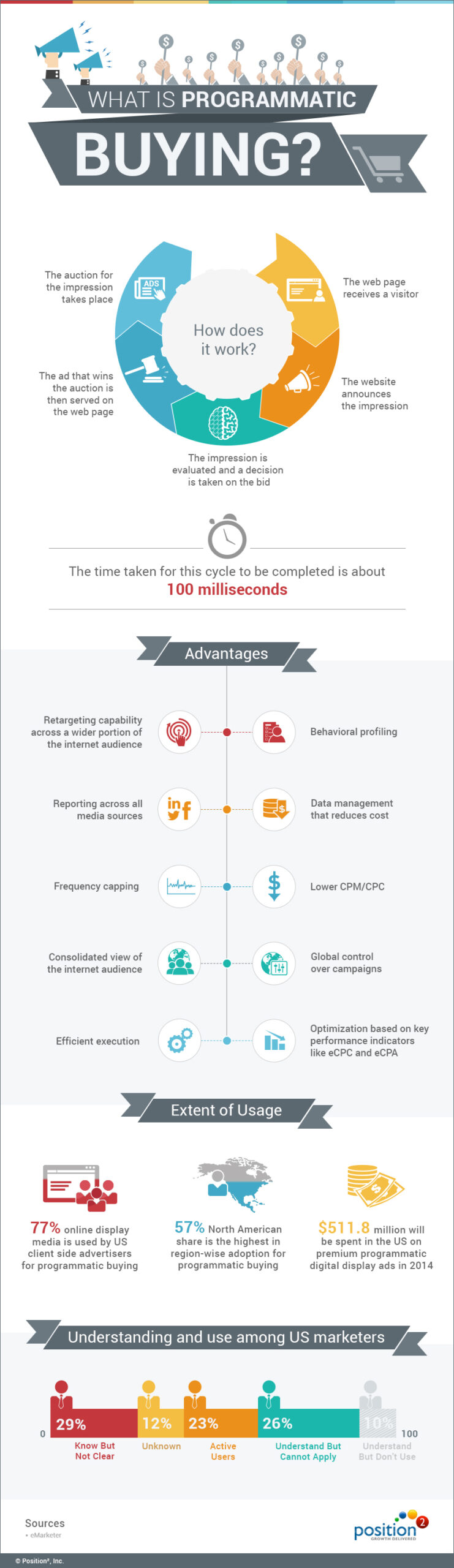
    Programmatic buying is all the rage today among digital marketers and rightly so. This automation of online display ad inventory has brought in new buzzwords in digital marketing parlance like ‘programmatic reserved’, ‘programmatic premium’, ‘programmatic guaranteed’ and ‘programmatic direct’. All this goes to show the kind of attention programmatic buying is receiving from digital advertisers. It is a heady cocktail of high market value reserved ads that has caught the fancy of premium advertising agencies worldwide and offered directly to them by the respective publishers. All this is done with absolute credibility and efficacy and in real-time through programmatic buying. Check out this visually impactful, data driven infographic to get a better idea.

    Programmatic buying

  • Google Incorporates ‘Structured Snippets’ into Search Results

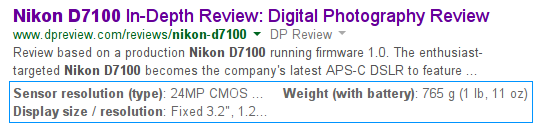
    The Search Engine giant has come up with yet another initiative to offer online searchers a more insightful and hopefully a better experience every time they search via Google. This time it has been named ‘Structured Snippets’ which is kind of self-explanatory. These snippets of information will be displayed for select search terms as facts and data points appearing right below individual search results. To better understand this view the visual example below.

    Structured Snippets

    Fig. shows the search result for Nikon D7100 with the camera core specs tagged as structured snippets.

    Now these structured Snippets that are tagged at the bottom of the original text are not clickable. They merely serve as additional pieces of information helping users to make better decisions without having to follow any links. According to Google, these snippets of information are directly a result of its collaboration with the WebTables research teams. The structured snippets work by extracting information from data tables on a website and then vetting it with an algorithm. This algorithm will test the data for quality, accuracy and relevancy to the search result below which it will be displayed thus authenticating its efficacy. Up to four bits of information can appear under each individual search result, according to an announcement from Google.

    Digital marketers can now take comfort in the fact that their organic search results will have an additional real estate which will cover their pivotal data and facts without any extra effort from their side. Thus, companies purveying goods and services online need to have the key features about their products in their websites so as to assist Google in successfully extracting it. Your readily verifiable objective facts and figures are what will be going into these structured snippets text. All this will give your users a more compelling reason to click your website since now they have a prior knowledge about what you are intending to sell, in terms of hard data.

    So what is your opinion about this new feature from Google, as a digital marketer?


  • Hummingbird Update, B2B Advertising, and much more…| Best of the Week

    This week’s hot news, events and videos from the online marketing and social media world.
    surviving-the-post-hummingbird-era
    From the Position² Blog This Week:
    Surviving the post-Hummingbird era
    The Hummingbird update from Google has taken us one step closer to the ‘Semantic Web’. Read this incisive blog to get a clear understanding of what it means to SEO in particular and digital marketing in general. Makes for a compelling read.
    Top Stories this Week: Social Media
    Top Stories this Week: SEO, PPC and Digital Media
    content-marketin-michael-norton Best of the Week Video
    Daniel Burstein of MECLABS speaks to Michael Norton of Harvard Business School in this Marketing Sherpa video. Michael sheds light on how we might be able to appreciate a thing better when we can visualize the effort that goes into its making.
    White Paper: Increase Visibility for Your Content by 4x
    Today’s traditional SEO is inadequate: Ignite your search results by accelerating visibility in more places than ever before.Download this White Paper and learn:

    • SEO, why the way we know it is not enough
    • Introducing and implementing Enterprise Visibility Accelerator (EVA)
    • Using multi-channel tracking tools for effective monitoring
    • How EVA benefits businesses.

    Download the complimentary EVA White Paper now

    Know more about Enterprise Visibilty Accelerator(EVA)
    If you are reading this blog post via a RSS reader, please click here to subscribe.
  • Surviving the post-Hummingbird era

    Google officially released the Humming bird update almost a year ago on Sep 26, 2013 & we at Position2 had shared our thoughts then. This update was perceived not to be a worrisome algorithm update. But, this can make SEO’s scratch their heads as the approach towards website optimization changes after Humming bird.

    Humming Bird update

    So what does this update mean to Marketers?

    It is estimated that Humming bird affected 90% of search queries & made SEO practices more strict & difficult too. With Humming bird – the underlying layers of the search algorithm have undergone a change and are now more in sync with semantics. This stresses the need to move on from a keyword-focus SEO strategy to landing page level, context based approach while optimizing a site for natural search. Content on site should sound like an answer to relevant search query raised by users.

    Search crawlers are now capable of identifying & listing technical aspects of a website that co-relate with Search rankings. Most important amongst them are Page load time, 302 re-directs, and keyword stuffed metas. Overall on-page factors will remain the most important aspect to focus on while catering to a post-Humming bird era website.

    Although Humming bird may not be as impactful as a Penguin or a Panda; the overall effect lies in the manner in which focus will now shift from keyword-rich content to semantic type of content.

    We see the following impact from Humming Bird:

    Search engines will evolve to be smart engines

    • Paradigm shift in focus : rather than ranking for a query, try to provide the “best” answer for that query
    • Comparison based semantic searches will be served with results from comparison sites: Eg: if the search query goes as “flipkart v/s snapdeal” – Search engines will list review sites, comparison websites & aggregators on top
    • Location based search results will be future – Geo enhancements as part of Search results is already underway – These will also meet Google Pigeon algorithm update guidelines

    Having said about the implications, let us now look at some best-practices & useful considerations for survival in a post-Humming bird era:

    Technical:

    • Ensure that the website in focus is up-to-date with the latest technologies such as responsive web design, hreflang for international landing pages.
    • Define your website architecture and place content in a neat, easy-to-access manner – not only for Search engines but for users too. Remember search engines now cater to consumer behavior
    • Follow best practices of on-page optimization such as on-page Schema Markup, Social Media tags such as Twitter cards, OGP etc.

    Content:

    • Target keywords which are more likely to be used by users (don’t ignore long tail) – as all these contribute in the “semantic” world
    • Have meaningful, grammatical error-free content which resonates to users search intent
    • Create content to answer the 5 W’s of your product/service – Who, What, When, Why, Where?

    Position2’s PoV:

    Our SEO focus has always been on improving the overall health & diagnostics of the site as part of optimization & also delivering the best user-experience on the website. Our thorough audits evaluates close to 40 technical parameters crucial for SEO. In addition, we also provide QC checklists & guidelines for enhancing website architecture.

    In addition to the technical aspect, our detailed, well-researched content calendars are in place catering to primary & long-tail keywords to ensure that there are regular content refreshes happening on the site. We also stress on having an optimized presence on social media to boost organic search presence.

    As Google has aptly named this algorithm to be “precise and fast” like the Humming bird itself, expectations are that sites need to perform to answer precise search queries & of course need to fast!

    Put in your comments and share your thoughts on the Humming Bird experience and how it changed the way you approached SEO.

    Contributed by Chetan Rajasekaraiah, Senior SEO Specialist, SEO Team

    Image source

  • Predictive Analytics, B2B Video Marketing, Brand Strategy and much more…| Best of the Week

    This week’s hot news, events and videos from the online marketing and social media world.
    Understanding Predictive Analytics
    From the Position² Blog This Week:
    Understanding Predictive Analytics
    Today marketers need to know about the future of business with a fair degree of accuracy. That is when they turn to predictive analytics which studies current data, detects patterns and predicts possible future trends. Read this interesting blog to know more about this exciting branch of advanced analytics.
    Top Stories this Week: Social Media
    Top Stories this Week: SEO, PPC and Digital Media
    Best Of Week Video Best of the Week Video
    Watch this Webinar moderated by Rick Siegfried that gives you tips on how to optimize your ad campaigns and landing pages using personalized targeting & analytics.
    White Paper: Increase Visibility for Your Content by 4x
    Today’s traditional SEO is inadequate: Ignite your search results by accelerating visibility in more places than ever before.Download this White Paper and learn:


    • SEO, why the way we know it is not enough
    • Introducing and implementing Enterprise Visibility Accelerator (EVA)
    • Using multi-channel tracking tools for effective monitoring
    • How EVA benefits businesses.

    Download the complimentary EVA White Paper now

    Know more about Enterprise Visibilty Accelerator(EVA)
    If you are reading this blog post via a RSS reader, please click here to subscribe.