Tag: Targeting

  • Defining the Concept of Programmatic Buying

    Programmatic buying is gaining increasing traction lately. Recent research shows that programmatic ad buying is going to increase in the coming years Programmatic buying
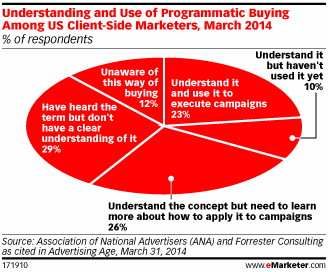
    Many marketers are showing a lot of interest in programmatic buying. They are seeing it as a useful tool and want to know more about it.

    What is Programmatic buying?

    It is a system that allows buyers to purchase online display inventory from multiple sources such as, ad networks, ad exchanges and a few direct publishers.

    Programmatic Buying is different from the traditional form of media buying that is done by individuals. This software driven approach to media buying comes with a host of benefits from speed to versatility to effectiveness that makes it attractive to marketers.

    Programmatic Buying Process

    Here’s a graphic that depicts the process of programmatic buying:
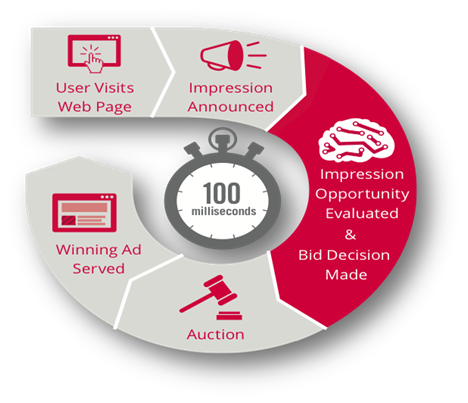
    Programmatic buying process

    Source: Ogilvy grow (a Demand Side Platform or DSP)

    The entire cycle of ‘bid-call-response’ illustrated above happens in real time and is completed within a timeframe of 100 milliseconds.

    Advantages of Programmatic Buying

    • Single Platform Execution – programmatic buying is a one stop solution to bid on online display inventory across multiple marketplaces
    • Enhanced real-time targeting capabilities for optimization – programmatic buying allows you to implement numerous strategies such as:
      • Behavioral targeting: you can utilize first party data captured on your website (IP address, cookie pool, user demographics) and third party data segments bought from Data Management Platforms (DMPs) like Bluekai and Lotame that will let you maximize campaign reach
      • Audience or affinity group targeting: you can buy specific, appropriate audience groups and not irrelevant audience on websites. With audience analysis and segmentation, you can ensure increased reach with effective utilization of your spend
      • Keyword contextual targeting: your ad will be featured on web pages that include specific, contextual keywords related to your campaign
      • White-listing: you can create and use a white list of sites that have shown impressive performance in previous campaigns
      • Re-targeting: you can re-target audience segments that have visited your site but did not take up any further action. This strategy is mostly used to engage your audience better and help them progress along the buying funnel
      • SEM re-marketing: this tactic allows you to re-market to audience segments that are using campaign specific keywords on search engines
      • Lookalike audience targeting: you can target audience groups with characteristics similar to customers who have completed the sales cycle
      • Process transparency: The entire process is transparent, which includes real-time reporting, allowing you to have full access to all imperative metrics related to the promotional activity
    • Programmatic buying provides the capability to post edits on the DSP, which is mirrored across the campaign’s reach in real time. Programmatic buying’s artificial intelligence based approach without human weaknesses (subjectivity, inconsistency etc.) makes it sound like the best of both worlds

    Its early days and the jury is still out.

    What do you think about the capabilities of programmatic buying? Do you think it will help marketers run better performing campaigns and derive more ROI?

    Technical contribution by Kishore Kangokar, Group Head- Media, Position2 Inc.

     

  • Geo-targeting – 7 Tips to Consider

    It’s a common scenario today for brands to have customers in many countries. But, targeting these customers and engaging them is a challenge, owing to their varying preferences and requirements.

    This is where geo-targeting steps in…

    Targeting customers by location is called Geo-targeting. It’s an important aspect of online marketing especially for brands targeting customers in different geographical locations.

    Geo-targeting helps brands address customers using their preferred language and target them with region-specific offers. This increases customers’ brand affinity, engagement and conversions. Google AdWords provides a variety of options and features for geo-targeting.

    However, there are certain important factors you need to consider while planning geo-targeting campaigns:

    1. Your site’s domain

    Some brands have Top Level Domains (TLD) specific to the country they want to provide information for. A ‘.co.uk’ site is specific to the UK and ‘.co.jp’ is specific to Japan. Country specific TLDs make it easy for Google to understand who you are targeting with your information and lets it rank your website appropriately in location specific search results.

    However, with a generic TLD like .com or .org, your website may not appear correctly in search results because Google doesn’t know which location you are targeting. If no information has been entered in the Webmaster tools, Google will look at multiple signals like the IP address, location information on your page, links to your page and any other relevant information from Google Places and pick your website’s country domain. These may not yield you the best results. With generic TLDs, it’s best to give Google the requisite information to improve search ranking for specific locations.

    2. Choose the right geographical areas

    This sounds like a no-brainer, but it’s surprising how often this is missed. Select geographical areas for your campaigns based on your product availability. If your product is available in certain regions of a country, picking those areas will increase the chances of better ad ROI. With Google AdWords, you can achieve precision targeting by postal code targeting.

    3. Optimize By Exclusion

    Optimize your effectiveness by leaving out areas that are delivering low responses. You can get back to these areas with a revised strategy. After the first run of your campaign, you may notice that your ads have low ROI in certain areas or your products may not have a market in some regions due to geographical factors. You can optimize your ROI by cutting out non-performing areas. Concentrate more on the areas that are generating the highest number of clicks. You can also try bidding less on the areas that have low traction.

    4. Include mobile devices

    If most of your target audience is on their mobile devices for considerable amounts of time, you should geo-target your mobile audience also. If you are using Google AdWords call extensions and tracing a significant part of your conversions through calls, geo-targeting on mobile devices will be even more beneficial for your business.

    People use mobile devices when they are on the go and would be looking for deals that are nearby. Geo-targeting mobile users is highly beneficial because, you can then target them with not only offers in establishments they are close to, you can also roll out geo-specific offers.

    5. Use the appropriate languages and currency

    Matching your web pages’ language with the main languages of the region is a major aspect of geo targeting that influences traffic and engagement. Provide content in different languages and use a drop down menu that allows users to select the language/region they are accessing the site from. This is an effective way to ensure users can consume content easily. Another way to make your site easy to use is to build it so that it reads the user’s IP address and displays content in the main language of that region.

    You also need to focus on the currencies that your site uses to process transactions. Offer the right currency depending on the geographical area the user is browsing from. You can also offer currency options and leave the choice up to customers.

    6. Offer coupons and deals

    The marketing strategy for each market is different. So, it’s important to sync your offers and deals with the visitor’s geographical area. You can either track users’ IP addresses or you can provide menus for users to select from before providing region-wise offers. Localized offers and deals are more relevant to visitors as they cater to specific market requirements and can therefore help in driving conversions.

    7. Run tests

    Everything may not go as planned so it’s best to run tests to see if your effectiveness is indeed going up or whether you need to tweak any part of your strategy. Different people react differently to changes, even minor ones and it’s best to use this as an opportunity to improvise further.

    Do you have anything to add to this? Let us know in your comments!

  • LinkedIn Expands its Ad Network across the Web

    LinkedIn Expands its Ad Network across the Web

    Following in the footsteps of Twitter and Facebook, LinkedIn is testing advertising outside its platform.

    LinkedIn has kicked off a pilot project that lets marketers to post ads over the web using its data repository. The participants of this pilot program include GroupM’s programmatic focused agency Xaxis and marketing technology and data specialist company Dstillery.

    LinkedIn is also opening up its own ad inventory through programmatic channels. Marketers can now target specific audience groups on LinkedIn through a ‘private exchange’.

    LinkedIn’s entry into the programmatic ad buying market is new and will take some time to strengthen its hold in the domain.

    The digital marketing industry is leaning heavily towards programmatic buying lately. Being a social platform better suited for business professionals, if launched as a full time capability, LinkedIn’s expanding ad network can prove to be a blessing for marketers, B2B in particular. When targeting business professionals, LinkedIn is a top platform and if this pilot project is launched, targeting will become more precise and effective.

    Will this move help LinkedIn gain reputation as a top targeting platform and lead to increased revenues?