Tag: Social Media

  • The Benefits Of Facebook’s Custom Audience Remarketing

    Using Facebook’s Custom Audiences from your website, you can create an audience representing any group of customers or prospective customers that express interest in your product on your website. Later, you can reach these people with targeted Facebook Ads. For example, you could run a campaign to reach out to those who visited your site and viewed a product page, but have not made a purchase.

    Now you can deliver highly relevant ads based on the interest that visitors had in your products. This allows you to target current customers who have viewed a particular product or service page, potential customers who have not yet registered, or re-engage with recent website visitors by delivering highly relevant messages to them.

    Custom Audience from your website can be used to:

    • Remarket to people using your website
    • Make your existing ads more efficient by excluding audiences of people who have already converted
    • Create lookalike audiences of people who look like the people browsing your website

    Why should you track your customers?

    By tracking how each potential customer progresses along the buyer’s journey (e.g., which checkpoints a customer has completed), advertisers can more effectively influence people who have expressed interest in their products. For example, using the Facebook pixel, an advertiser could capture intent based on the activity of people who are viewing pages about a loyalty program, browsing a particular product page, or filling out a preferences form. Later, the advertiser could serve relevant ads to these people to encourage them to convert.

    How to set up Custom Audiences

    Custom Audiences from your website requires use of the Facebook pixel, which is a small piece of JavaScript code placed on every page of your website. The Facebook pixel is used to capture intent information about how people are using your website, and it sends back reports containing general information about the browsing session, a hashed version of the Facebook ID, and the URL being viewed.

    Advertisers can also send Custom Data back to Facebook that contains additional information about the browsing session. For example, when a viewer adds a product into her wish list, an advertiser can optionally send Custom Data to Facebook about this event, including information about the product. This product information then becomes available for use in Audience rules via the Facebook API.

    Now that you have those tracking pixels on your website, you’ll begin capturing your visitors so that you’re able to remarket to them at your leisure. This means that your ads will appear in their Facebook News Feed after they’ve visited your site.

    Using Custom Audience can lead to heightened brand recall, greater engagement, and a higher conversion rate.


  • How Marketers Can Leverage Social Media To Engage Their Audience

    This week’s hot news, events and videos from the online marketing and social media world.

    From the Position2 Blog This Week:

    Top Stories of the week

    White Paper: The Rapidly Changing World of SEO

    Get a head start in your quest for search engine optimization through this insightful white paper.

    Download this White Paper to know:

    • How important SEO is & why it should concern you
    • Various ways in which you can deploy SEO
    • How to combine Social Media with SEO
    • SEO best practices and a road map to getting there

    Download the complimentary SEO White Paper now

    Search-Engine-Optimization-White-Paper-position2

    If you are reading this blog post via a RSS reader, please click here to subscribe.

  • Which Social Media Sites are B2B Buyers Using?

    Social media has had a huge influence on the way we live and work. For marketers, social media has allowed brands to start conversations practically in real time. It allows any business to engage with its audience in ways that were simply not possible 10 years ago. The ripple effect is felt across both B2C and B2B marketing.

    The social landscape is continuously evolving, and different platforms offer different—and changing—opportunities. But regardless of which platforms brands choose to use in their campaigns, social media will be one of the most affordable and effective methods at their disposal.

    Whatever the size of your business, you can tap into its potential and achieve impressive results—and social media’s influence on B2B purchases should not be underestimated.

    Who’s on social media in 2016?

    Social networks attract users of all ages, from all demographics across the globe.

    The number of young adults on social media has increased massively over the last decade. In 2005, around 12 per cent of this age group used social channels. Today, the figure is 90 per cent. When we talk about ‘young adults’, we’re essentially talking about tomorrow’s IT leaders. While some of these individuals are graduates, many are already making important brand decisions.

    The figures are significant for older internet users too. In the US, around two-thirds of the adult population uses one or more social networking sites, compared to 5 per cent 10 years ago.

    This cross-generational change has sent shock-waves through practically every sector. We all get our breaking news from Twitter, share memories on Instagram, and keep in touch with family through Facebook. In order to communicate with customers and service users, businesses have had to modernize their approach and get involved in this socially connected world.

    Why businesses must take note of social media

    Facebook is arguably the world’s best-known social network, with more than 1.4 billion active monthly users. 70 per cent of marketers use Facebook to generate more customers, and success is particularly pronounced in B2C marketing campaigns.

    Let’s not forget LinkedIn, which is responsible for more than 80 per cent of social media leads in business. Twitter is used by just over one-third of marketers, while Pinterest and Instagram have 20 million and 150 million active monthly users respectively, and offer great potential in the creative sectors, from home wares to fashion and beyond.

    So, what do businesses actually stand to gain?

    Increased brand awareness

    Social media is important in keeping a brand top-of-mind for a consumer. 37 per cent of internet users follow their favorite brands on social media, while 30 per cent use social networks when researching a purchase.

    Better consumer targeting

    Social media opens up two-way conversations, and gives you insight into the things your customers care about.

    Enhanced customer service

    Your customers are increasingly savvy, and they expect a great experience when they shop with you. Social media lets them get in touch directly, and that provides opportunities to offer rapid responses to support enquiries.

    Timely feedback

    Need to judge the reaction to a new campaign idea? Want to roll out a trial product and gauge the response? With social media, you have a direct connection to your audience.

    More leads

    Social media is a cornerstone of any inbound marketing campaign. Having a presence on key social channels lets you publish content, get your brand noticed, and create more leads.

    Increased sales

    There’s no magic formula for increasing sales through social media, but if you improve awareness, targeting and customer service, increased sales will follow.

    Social media is a fantastic tool for B2B marketing; 54 per cent of B2B marketers are already using it to generate new leads. As we head towards 2017, it’s estimated that US marketers will spend more than $100 billion on social media advertising.

    Ignore the trends at your peril

    We’ve reached a stage where the impact of social media can’t be denied. Since the mid-2000s, it has been a growing influence in the way we all live, work and shop. For businesses, it’s critical to have an active presence on social media, and to take interactions with customers seriously in order to drive profits and sales.

    Looking specifically at buyers in the IT sector, we know that 86 per cent use social media when making a purchase decision. These buyers tend to be the young adults that are also using social media for fun.

    We also know where these influential decision-makers tend to hang out:

    • 83 per cent research on LinkedIn
    • 80 per cent check out Twitter
    • 80 per cent look at Facebook business Pages
    • 61 per cent review YouTube videos
    • 39 per cent use Google+

    Social media is critical, not just because of the research angle, but because so many of these buyers will not contact a supplier until they’re more than half way to a decision.

    Social media can’t do your marketing for you, but it’s one of the key ways to reach the end of the marketing funnel. As such, marketers ignore it at their peril, and the consequences of neglecting social media could have a tangible impact on a business’ bottom line.

  • Another Ace Up Our Sleeve: p2webadmin At The SCM Marathon

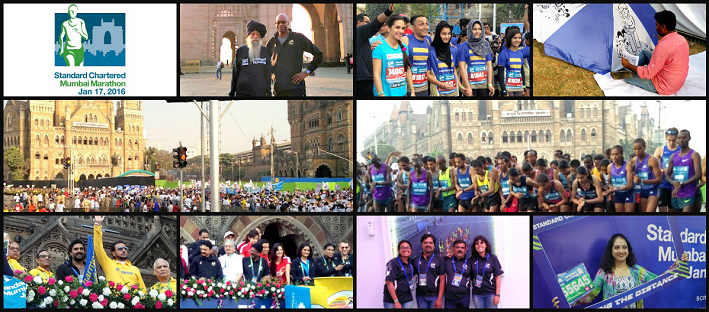
    The 13th annual Standard Chartered Mumbai Marathon was held on 17th January 2016. Procam International—India’s leading marathon organizer—handled the logistics behind this global Top 10 marathon that’s getting bigger every year. It was a privilege for Team Position2 to be associated with SCMM 2016—developing its official website, as well as handling overall social media management for this global event.

    SCMM_position2_cover

    For us, preparations started nearly seven months prior to Race Day. From designing and developing a cutting-edge website to managing social media platforms, we put in an extraordinary effort into promoting the event and encouraging runners to register. Come Race Day, several team members travelled to Mumbai and covered the race, with continuous support from our Bengaluru office.

    SCMM 2016 broke several records in terms of race results and social media interactions:

    • Over 40K runners participated, with significantly higher international participation compared to previous years
    • Three course records were set in the Men’s categories—two in the International Elite, and one in the Indian Elite
    • Over 210 Million Rupees was raised for various charities
    • The overall reach of the Marathon’s hashtag #SCMM stood at 1.22M people on Race Day
    • There were over 103K engagements and 7.59K mentions of #SCMM on social media on Race Day alone
    • The hashtag #SCMM2016 was trending at the #1 position in India and Mumbai, with #SCMM trending in Mumbai and Bengaluru as well Vidya-position2-at-scmm

    This was Team Position2’s third engagement with SCMM, and working together with Procam, this 13th edition of the marathon turned out to be a massive success! Having earlier worked with Procam on other big events such as the Airtel Delhi Half Marathon, the TCS World 10K Bengaluru, and the Tata Steel Kolkata 25K, we expected SCMM 2016 to eclipse them all, and it certainly did!

    If that wasn’t enough, Team Position2 runner Vidya successfully completed the Women’s Half Marathon to cap what turned out to be an exhilarating day for us, and every participant.

    SCMM 2016 rewrote the record books for an event of its kind. As our focus shifts to the next big race, p2webadmin looks forward to once again playing a key role behind the scenes, unforgettably inspired by the runner’s mantra of desire, determination and dedication.

  • Digital Marketing: Key Takeaways From 2015


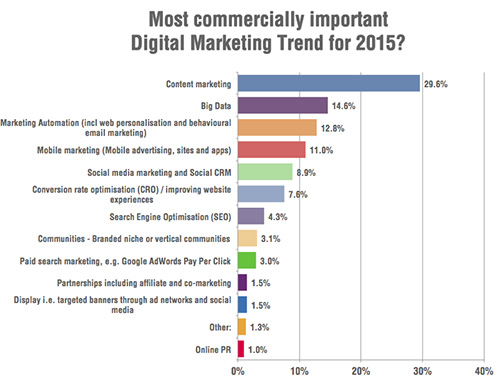
    This year has seen digital come into its own as a core part of marketing activity. Brands are increasingly ploughing their budgets into digital, and we’re likely to see budgets increase further. There are a number of reasons why digital is essential, and we’ve gathered some of the key trends here.

    Digital-marketing-trends-2015

    The shape of things to come: Content Marketing took up a big chunk of responses, more than Big Data and Marketing Automation combined.

    Content marketing and personalization

    According to Hubspot, content marketing generates three times as many leads as traditional marketing methods, but it costs 62 per cent less. Providing you’re efficient, and you have a strong sense of your audience, a shift to video is going to pay dividends.

    Video is evolving to incorporate streaming media, and customers are expecting content that is tailored specifically to them. The key concept here is authenticity; you’re going to need to push beyond cookie-cutter content, and prove that yours is a brand to be trusted. While 73% of B2B marketers already use content marketing, we’re going to see an increase in investment in services like YouTube, and an emerging use of game-changing apps like Periscope.

    Marketing automation

    Digital allows you to put your data to work, and once your processes have been transformed, you’ll see huge efficiency gains.

    For a great example of automation in action, check out Marketo Ad Bridge. It serves up ads to people based on their habits, across a range of social media channels, helping you to avoid the scattergun approach that can make digital ads less effective.

    Mobile SEO

    A decade ago, anyone could make a website that displayed on a desktop computer. Now, we’re using a variety of devices to search and browse the web, from tiny wristwatch wearables to huge tablet devices.

    If you want to compete, you must have a mobile-friendly, responsive website, and it has to be optimised for use on a smartphone. A massive 60 per cent of all internet traffic in the US now originates from mobile devices; about half of internet traffic comes from mobile apps. If you still have a separate mobile website that offers a poor user experience, 2016 is the year you’ll ditch it for good.

    Social media

    Social media is an ever-evolving marketing tool, and if 2015 taught us anything, it’s that we can’t afford to stand still. Google+ has recently redesigned its interface to make the platform more appealing for its users.

    Marketers are learning to maintain focus on key social media sites, but to keep others in the frame and maintain an energised approach to their campaigns. You never know when a service like Google+ will reinvent itself with a new, killer feature, and that will be the key moment when the really responsive marketers will gain an advantage.

    Look to the future

    In digital marketing, constant evolution is the key to staying ahead of the curve. In 2016, we’re going to need to rethink and reimagine our digital marketing strategies to take customers on new, enhanced journeys. Social media is going to continue to gather pace, and the scope of digital is going to increase even further. Stay tuned to the Position2 blog to hear the first news on trends in 2016.

    Happy Holidays from Team Position2!

  • Snapchat Story Explorer Offers New Perspectives on Events


    Snapchat continues to gain ground in the social space, taking on its more established rivals and becoming more than just a photo sharing app. Its newest feature, Story Explorer, is a small but significant new feature that the company hopes will become popular with its relatively young user base.

    Story Explorer builds on Stories, Snapchat’s collective news story tool. When a user uploads a snap of a live Story, all other snaps related to that Story taken by other users are linked with it. Story Explorer allows a user to swipe up to see different perspectives on the same event, so they can get all the information they need with just a few taps.

    Making the switch

    Snapchat has one considerable advantage over Twitter: it relies on big, beautiful pictures and videos, rather than reams of text, hashtags and links. That makes Story Explorer a compelling prospect, particularly when you consider the demographics of its target market and they way they tend to consume news.

    The Story Explorer tool is obviously targeted at people who like to use Snapchat to share photos of public events such as sports fixtures and concerts. This lets everyone build a hive of information around a theme in real time. It could also be used to find out more about a breaking news story by linking uploads from multiple Snapchat users, the kind of thing that made Twitter popular with news junkies.

    It looks like the Story Explorer feature can’t be entirely automated yet; human curators need to select stories that genuinely overlap, while weeding out the inevitable sub-par content. Over time, Snapchat may find a way to use location and image scanning techniques to automatically link Stories together without as much reliance on curators. This will help Snapchat compete with Instagram and Twitter to become a social source of breaking news.

    The changing audience

    It’s strange to think that Snapchat had something of a seedy reputation only a few years ago. Content sent between users disappeared 10 seconds after being opened, which made Snapchat the ideal platform for sharing content you probably wouldn’t want your mom to see.

    At the height of the controversy, the FBI warned that Snapchat was being used by pedophiles, which only served to reinforce its unsavory reputation.

    Now, with Story Explorer, the app is trying to shed its reputation for ‘sexting’ and become a source for serious news.

    Story Explorer is live now in New York and Los Angeles, and will be rolled out to other cities in due course. It’s a small step in the right direction for the fast growing platform, and signals the beginning of a new era of improved and easier to find public content.

  • Google+ Offers A New Design In A Relaunch


    It’s no secret that Google+ has been struggling as it tries to connect with users. It has been a difficult few years as Google tried to compete with other social media platforms like Facebook and Reddit. With its recent redesign and the addition of a few new features, Google hopes to boost the platform’s user base in several different ways. Here are some changes you might see the next time you log into your Google+ account.

    Communities

    Many users had asked Google to add a “Communities” feature, to allows users to connect with others based on their interests and hobbies. Whatever your interests may be, the new design makes it much easier to meet people who share those interests. Over 1.2 million users have started using the new Communities feature every day since its introduction—a major change from the somewhat isolating feel of Google+’s “Circles.” The overall Google+ community has always been its strongest point, and this new feature allows a greater sense of connection.

    Collections

    Also geared toward users’ interests and ways to connect with others, the Collections feature of Google+’s new design allows users to find content based on topics that they might be interested in. This is a great feature that social platforms like Facebook and Twitter do not offer—users are solely reliant on what their friends and connections post rather than what they might be inclined to read. The Collections feature is supposed to resemble Pinterest in the way that groups of users can post on a specific topic and share it with the public or with just friends. It’s an easy way to group content and to make it easier to find while providing a social experience.

    Google hopes to create a different kind of social platform unlike what users might currently be using. While over 2.2 billion people have a Google+ account, fewer than ten percent of users have ever posted anything on the site. Many Android phone users (or those with YouTube accounts) were required to sign up to continue using the services, though the platform was rarely used for what it was actually built for. A new homepage design now allows you to not only see what your friends have posted, but also some posts that you might be interested in.

    With a new design, Google executives hope to start over with a clean slate. Wrobleski writes, “While this is an exciting new beginning for us, we’re definitely not done yet.”

    By not trying to do the same things as Facebook and Twitter, but rather by adding community-oriented features similar to Pinterest and Reddit, users are more likely to appreciate the benefits of Google+’s design and what it has to offer. This makes the Google+ relaunch one that may offer more of what users are looking for, in a different kind of social platform.

  • Working the Local Side of SEO

    In a recent blog post we showed how working local SEO made for some big benefits for a custom shoe manufacturer. But there’s more to cover re: what to focus on when optimizing for local search.

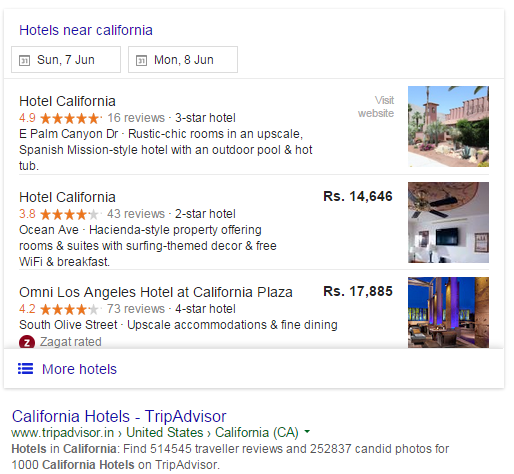
    The past few years have seen big changes in Local SEO on Google, and not just Google Local morphing into My Business.  Google has consistently endeavored to improve the quality of search results and as a consequence they are now more informative, providing details about what people say about a particular place, the working hours, the ratings assigned by other users – all of this driven by Googles algorithm updates. The Pigeon update, in particular, has had the biggest impact on the way optimization for local search works.

    To turbocharge local SEO, focus on the following:

    1. Search queries
    2. Social media
    3. Web Directories
    4. Websites & News sites

    Search Queries

    The Penguin update introduced the use of geolocation, breaking up cities and regions into geographical entities. As a consequence, the way target keywords are used changes. Emphasis now needs to be on targeting neighborhood related searches rather than city wide search queries.

    Your job: research neighborhood related search terms and incorporate them into your strategy.

    local seo search

    Social Media

    Google search-Position2 blogTo reach target audiences quickly watch out for neighborhood related groups on Facebook. Consider all social channels as optimum for content syndication.
    Your job: build a network of businesses and residents from the neighborhood. If everyone in the “neighborhood” shares content (yours, theirs), visibility on Search results rises.

    Web Directories

    Limit yourself to TOP directories only. That’s the rule of thumb in this case. The old days of just building links for SEO are history. The focus is now on syndicating content and providing users with rich information. So post on quality sites rather than each and every directory.

    Your job: leverage directories like Yelp, Trip Advisor, Urban Spoon, depending on the kind of industry you cater to.

    Related Websites and News sites

    Do not ignore local news websites. They come up on search with location based search queries. Maintain a presence on these websites and continually update your press releases (they double as fresh content).

    Investigate industry specific forums, aggregator sites where lots of local businesses list, and maintain a presence to continually  spread the word.

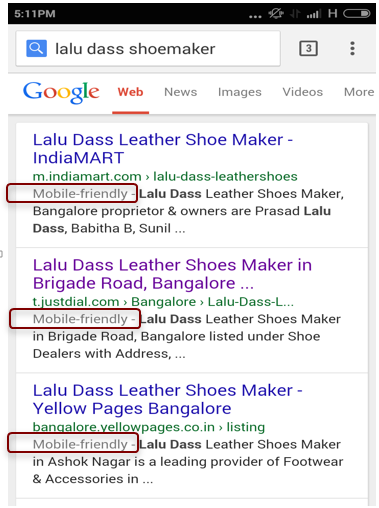
    The majority of local search queries originate from mobile devices. These are users on the move, in your neighborhood. If your website isn’t maxed out with mobile friendliness you are all but wasting your time.

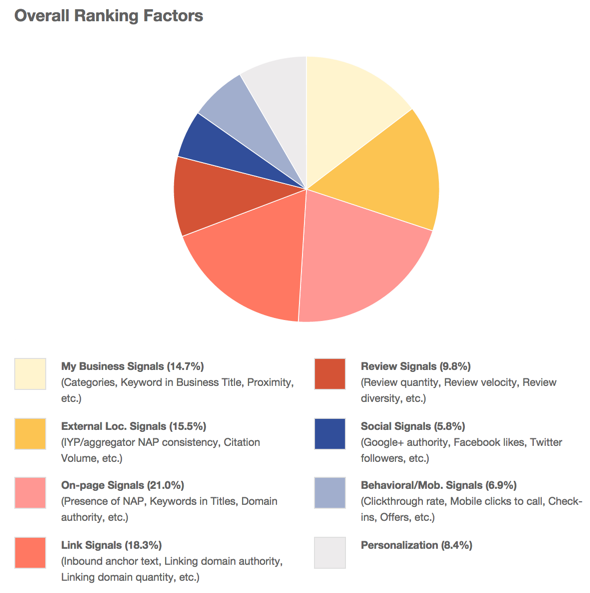
    Your job: read about the ranking factors for Local SEO clearly explained in this report from Moz. The winning combination in Local SEO includes website, Local Business, Social Media and user-generated content.

    seo-overall ranking factors

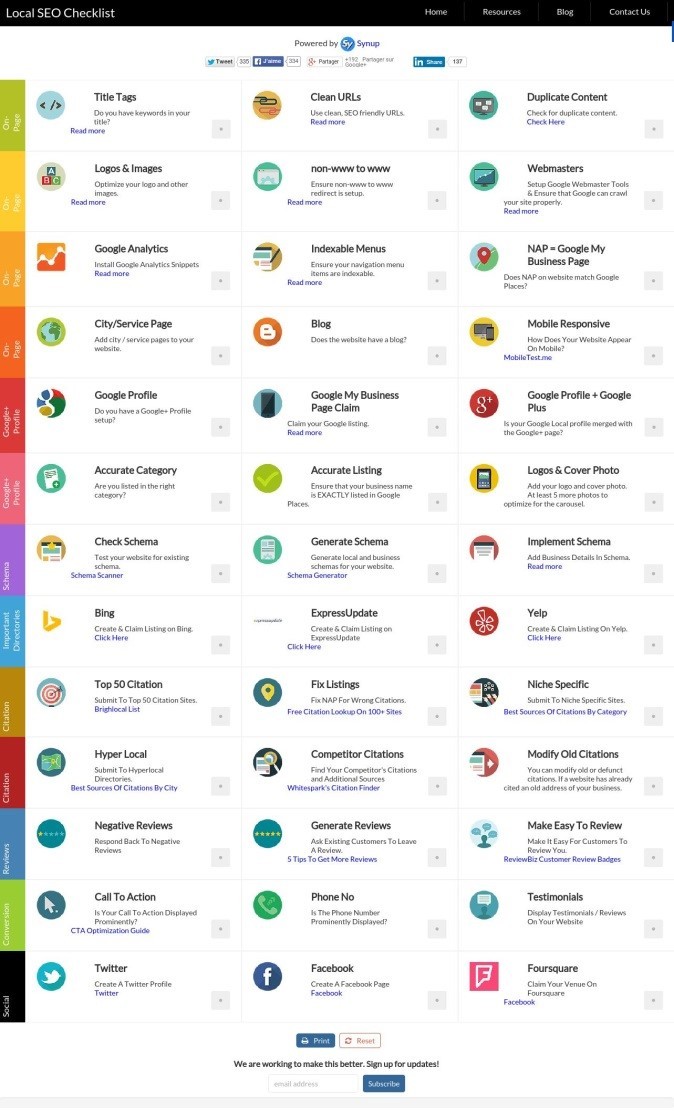
    Another good resource — www.localseochecklist.org  —  has some nice insights into where you should concentrate while optimizing for local search.

    local seo checklist

    If you are B2C marketer and have seen beneficial changes over the last couple of months, share details in the comments section below.

  • Mobile World Congress 2015 – Mobile Advertising

    For the first time the Mobile World Congress (MWC), which just wound up in Barcelona in early March, anointed mobile marketing and advertising as a standalone entity. Talks were given that highlighted the finest work in mobile advertising. And a lot of new trends and technologies that will have a major impact on the mobile landscape took center stage.

    Mobile Marketer’s Takeaway

    Some of the important points for the mobile marketer to consider:

    1. The rise of social media
    2. The inevitable fragmentation of social attention
    3. How cross-channel attribution demands more attention
    4. The emphasis on data-driven creativity

    1. The Rise of Social Media

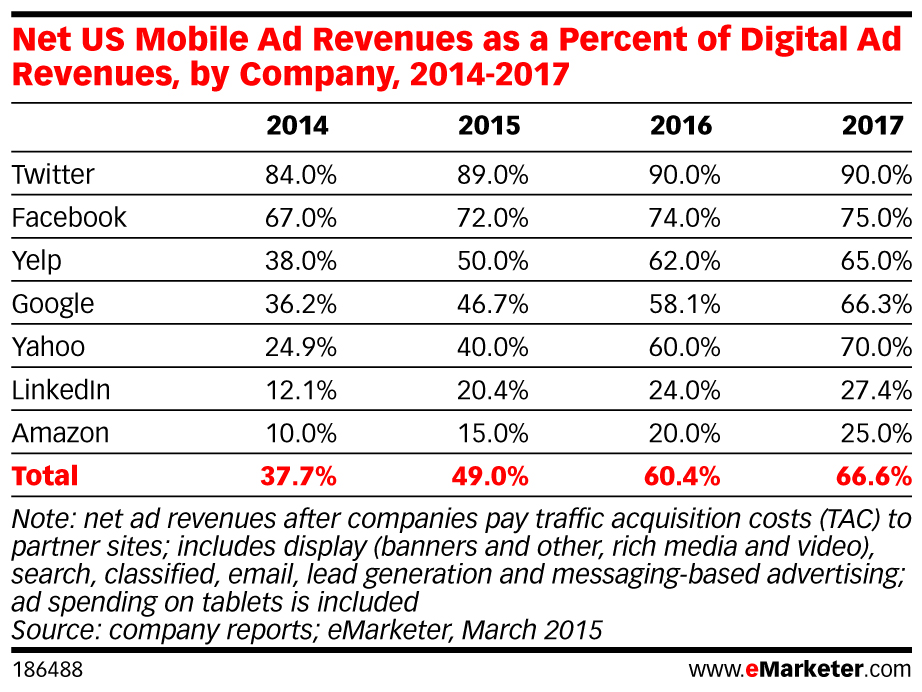
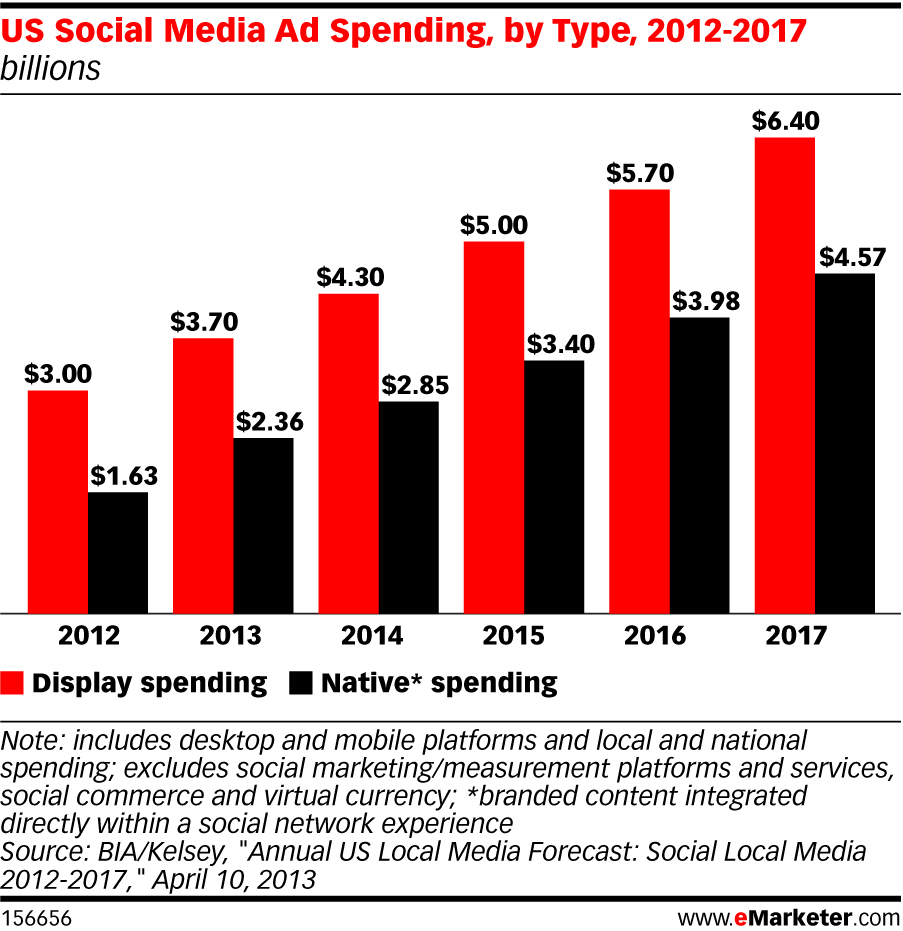
    In a world where more people own cell phones than toothbrushes, most major social platforms have transitioned to the mobile platform. Mobile ads now account for 69% of advertising revenue for Facebook. Tools like Facebook Atlas emerge. It targets people across multiple devices to support people-based marketing campaigns. It’s a customer tracking tool that does not rely on cookies and finds a lot of use in mobile advertising. This is a radical shift that paves the way for a holistic mobile marketing experience.

    US-Social-Media-Ad-Spending-2012-2017

    2. The inevitable fragmentation of social attention

    The breakneck speed at which the social landscape expands and proliferates has given rise to dedicated messaging apps. As a consequence, dark social (which is social sharing that can’t be tracked using web analytics, because sharers are sending content off the social platform via email or IM, for example),  may account for as much as 70% of social sharing on the Internet today. This is a challenge Mobile marketers need to size up and understand. Truly knowing what users are talking on social platforms supports better targeting.

    Net-US-Mobile-Ad-Revenues-as-a-Percent_of-Digital-Ad-Revenues-by-Company-2014-2017

    3. Cross-channel attribution

    Cross-channel attribution uses advanced analytics to track various marketing touch points across channels. US adults have an average of three connected devices and they all offer crumbs of data from the channels. Consumers today easily switch between devices. They might browse and add a product to the shopping cart on a smartphone. When they switch to their desktop they expect the same shopping cart with all the history to be carried across, seamlessly.

    It’s imperative that brands and companies ensure a fluid online journey that is commensurate with what the customer needs. That is the only way for digital marketers to aid conversions, establish customer satisfaction, and ascertain return visits.

    4. Data Driven Creativity

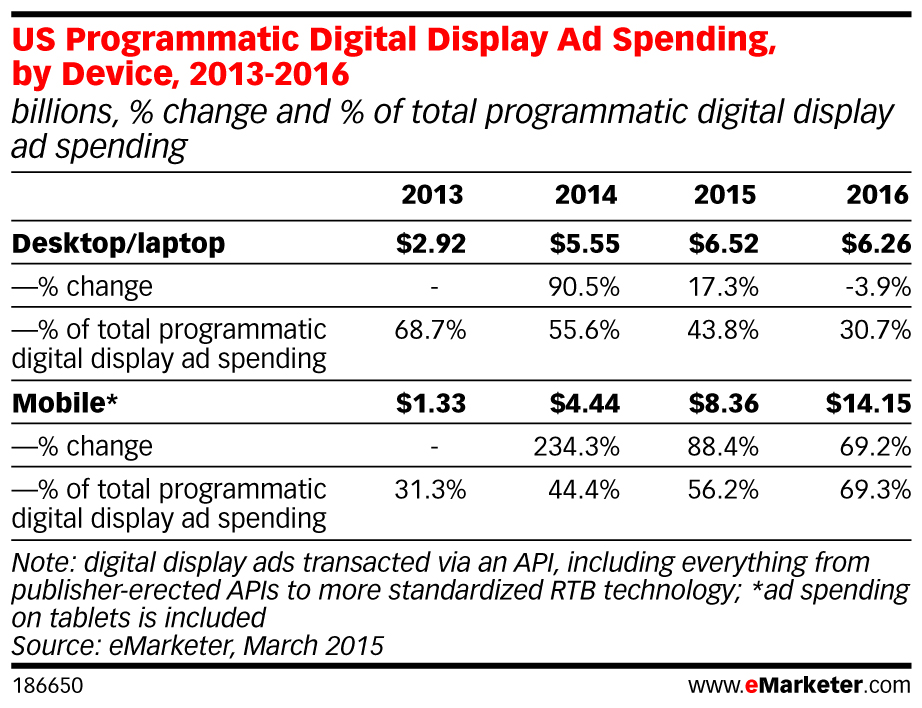
    Data-driven creativity meets programmatic buying to deliver a 360 degree customer experience. It’s the new world of the buying and selling of media in an automated, data-driven way.

     US-Programmatic-Digital-Display-Ad-Spending-by-Device-2013-2016

    It makes it possible to deliver personalized ad messaging on a massive scale, an experience that is in sync with the customer’s needs, thus ensuring a deeper brand engagement.

    Share your thoughts on the just concluded Mobile World Congress 2015!

    Contact Position² to deploy a ‘mobile first’ marketing strategy for your B2B brand now!

  • Content Marketing Trends in 2015

    Over 35,000,000 distinct units of content were shared on a daily basis in 2014.  As staggering as that may seem, 2015 promises to  be even bigger. Now’s the time to look at the content trends likely to appear in 2015, and plot your marketing course accordingly.

    content-marketing-trends-2015

    Current Marketing Trend

    Social Media Marketing and Blogs on Top

    Today most marketers promote their content on social media sites, and for good reason. Clicks, shares, and views from social media sites are five times more likely to be shared.

    The Prediction: This year we’ll see content marketing efforts push beyond social media and spill over into webinars, case studies and other relevant content platforms. These efforts deliver more value, brand awareness, backlinks and discussions than just a simple social share.

    1. Businesses will finally get involved in content creation

    Nearly all marketers now factor content marketing into their overall marketing plan, and 45% of B2B marketers report having a content strategy in place. They understand how social media and content marketing line up with each other. They understand that content marketing is all about story-telling. Make this the year you generate high quality engaging  multimedia content. Customers respond to visual content and remember it better.

    For help planning a content strategy for your business, see the links below:

    1. Content marketing targets engagement and brand awareness

    According to the Content Marketing Association, brand awareness and engagement are the leading marketing goals for 2015. To build better brand awareness develop regular posting schedules, speak with a consistent voice and share the kind of content with groups that functions like free publicity.

    In 2015 expect to see a deeper focus on brand awareness and engagement as content marketing assumes a more natural approach.

    1. Get ready for the content marketing visualizations boom

    Neil Patel of Crazy Egg and KISSmetrics says that content marketers should be ready for visualizations in 2015 and move beyond basic infographics. Neil suggests that 3D infographics or animated infographics work to your advantage, adding a “wow” effect that generates more shares and likes.

    To learn more about infographics check content marketing infographics for 2015

    1. Calculating content marketing ROI

    In 2015 you’ll see content gaining more traction in terms of lead generation, and lay a new groundwork for the future of content marketing. Content marketing platforms will become fully integrated with customer records and customer relationship management.

    For tips on how to improve digital marketing ROI see tips to improve digital marketing ROI

    1. Smart marketers prefer thought leadership

    Don’t just present content. Add value. From shares and tweets to blog posts to whitepapers, have a well-defined plan to engage with the consumer. Always ask the question,”Will our clients and prospects find this content valuable?”

    1. Content marketers wake up to email marketing

    There was a time when you could offer a company newsletter via email and that was enough to build and grow your list. Email marketing has been used as a distribution channel for existing content such as blog posts, and to promote paid products and content to subscribers. All that has to change.

    In 2015 marketers need to get really smart about the kinds of email marketing content they want to produce and develop engaging ways to promote it.

    1. Conquering content on mobile

    In 2015 there is no longer any debate about mobile. Everyone will be investing in the space. So it is essential for content marketers to develop mobile-friendly content for customers. The health of their brand depends on it. It’s a problem that needs adressing. While 41% of respondents confirm that up to half of their subscribers open emails on mobile devices, only 42% of vendors admit they rarely employ a mobile-friendly design in their communications.

    There’s a big disconnect between what marketers know they need to do, and what they’re actually doing. Look for that to change in 2015 because it’s a change or die situation.

    2015 to-dos

    • Make responsive connections with your prospects
    • Build brand awareness
    • Increase commitment

    What ups and downs or trends do you predict for content marketing in 2015? Please Share your insights below!

    Contact Position² to establish a B2B content marketing strategy now! Happy Blogging!!!