Tag: Social Media Marketing

  • Instagram Chases Snapchat Success With Explore Tab


    When Instagram was acquired by Facebook, users rightfully feared that the app was doomed to become a dumping ground of ads and sponsorships. But so far the Instagram ads have been included in a mindful way, and the user experience has remained consistent to its origins.

    Then came the threat of looping video. Even though Instagram’s core user base embraces the app primarily as a way to share snapshots, video is here to stay. Instagram sees it as a way to enhance a more interactive, social experience. And, more to the point, it’s the way to take a clear swipe at two of its biggest channel competitors, Snapchat and Twitter.

    Explore Instagram With Video

    Instagram has just upgraded Explore, its video channel.  There’s now a stream of hashtag-triggered continually updated and curated content. We saw the first of it with Explore’s one-off event for the recent Halloween weekend.

    The new Explore parallels Twitter’s Moments feature. In the case of the Halloween event, videos were hand-picked for their quality, much like the tweets shown in Moments, which are contributed by selected users. The curated feature ran for 24-hours, a current events window specific to the Halloween weekend. Users who wanted to contribute to the theme used a topical hashtag to be considered for inclusion.

    The experiment is over, but the videos can still be viewed.

    Why Experiment With Explore?

    Snapchat managed to reinvent itself over the last couple of years. Its Live Stories video feed is an obvious inspiration for Instagram’s Explore. The primary difference between the two is timeliness. Snapchat comes and goes. Instagram’s video content potential will have greater appeal to people serious about the timeline of unfolding events. Imagine Instagram Explore in use in Cairo at Tahir Square back in 2011, or on the streets in the US during the Occupy events.

    Instagram also tweaked the best features of Twitter’s Moments, most notably using curated content. They are able to filter much of the “noise” that could otherwise clog the channel. All three apps share a common goal of giving people greater opportunities to contribute personal points of view.

    Explore didn’t display any advertising on its Halloween experiment. But given Instagram’s need to monetize, it’s likely we’ll see sponsored videos soon enough. With 400 million active users every month, Instagram’s user base is now significantly higher than Twitter’s. The potential for a brand to reach a broad and targeted audience is overwhelming.

    Watch Out, Snapchat

    The curated Halloween content in Explore only displayed for US users. But it suggests that Explore could change the way we look for “news” online. Social news has been rightfully criticized for a lack of accuracy.  Instagram’s decision to curate Explore content may prevent such abuses. It also puts the company in a position to censor and shape unfolding events according to its own interests, a slippery slope.

    The more Instagram can maintain user enthusiasm for its app, the more potential it has to make money. The tough part will be financing 24/7/365 curation on a global scale. The Halloween videos were fun, but the real test will be Instagram’s ability to respond quickly to a breaking story and capture the zeitgeist of a trending event. And that’s only if the company decides to roll out the feature long term. We’re still waiting for Instagram to make the announcement.

  • SEO: It Gets Personal

    Google launched Personal Search in early 2005, initiating a new search paradigm that didn’t depend on the user being signed on or not. Going forward, search results would be weighted on the user’s search history, not just keywords. Algorithm updates followed, one after the other, like the Venice update in 2012 and the introduction of Google Now in 2012. At this juncture it’s safe to say Personalization is more than a major factor among many. It will dominate Search in the near future.

    SEO

    Image Source

    Most Internet users don’t have a clue that their Search results are being personalized. Where Personalization initially made use of context and relevancy, localization now heavily influences the behavior of Search. Google’s algorithmic changes to Search over the years have locked in Personalization. With the Humming Bird update in 2013, we saw how search results could be tailored to individual needs by judging and understanding the entire context of search terms, not just individual words.

    Eric Schmidt, CEO of Google, has said, ”Google search will continue to become more personalized, getting away from the ‘10 link’ approach that we see in search results today.”

    How Does Personalization Affect SEO?

    1. Web-pages/websites focused only on keywords and intended only at improving links will no longer gain prominence
    2. User-centric content with a high “like” factor and greater probability of being shared among users will elevate in search results
    3. Branding will be significant enough that businesses need to build brands and not just websites
    4. Relevancy of content underscored by proper social relevance, asset optimization and syndication is vital

    Factors that affect the personalization of search results

    1. Users’ location

    Google — or any other search engine — knows exactly where a search query originates. With logged in users add age, sex, places travelled recently, et al. to the list of retrievable personal data. The increased use of smartphones has substantially increased the personal data flow into Google’s servers.

    1. Search & Web History

    User’s behavior on the web, the type of search queries made, the websites visited can be mapped to the kind of search results a user experiences on Google.  Google collects data about logged in users to understand the kinds of websites a user favors and browses. Another key factor is the user’s profile on Google+. Likes and ratings to web-pages, product reviews, etc. all factor into the search results. And so do links a user likes that get pushed to people in his Google+ circles who then make a Google search.

    Position2′s PoV

    Three things you can do to win at the Personalization game

    1. Relevant & Fresh Content

    Don’t just write for Search engines. Make your site content relevant to users. Fulfill a need. Continually update web pages to cater to users’ search behaviors.

    1. Social Sharing

    Regularize social posting and sharing activity. Utilize all social channels, but focus on Google+, Google Local and YouTube.

    1. Focus on Content Syndication

    Users reliably click on videos, infographics, and other rich-media assets much more than they click on editorial-heavy web-pages. So leverage your rich-media assets for content distribution.

    The Personalization of Search: that’s the future of SEO. Let us know what you think.

  • Twitter Offers Mobile Ads Beyond its Site and LinkedIn Shuts Polling in Groups

    Twitter’s Mobile App Install and Engagement Ads

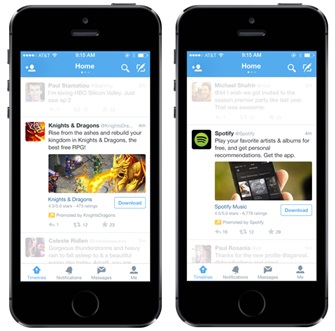
    Post its acquisition of MoPub in 2013, Twitter is expanding its reach by selling ads in mobile apps beyond Twitter. According to Twitter’s blog, “For marketers, this means a rich, native ad unit that combines the best of Twitter Cards and Promoted Tweets. Users can easily install and engage with apps, directly from the Twitter timeline.”

    Through MoPub exchange, you can purchase ads that power mobile app installs and engagement. These apps appear on Twitter as well as thousands of apps on MoPub’s network. Currently in private beta, these ads will be available for purchase in Twitter’s ad auction. You can apply other targeting parameters offered by Twitter for these ads.
    Twitter’s Mobile App Install and Engagement Ads
    You can also participate in real-time bidding to buy mobile app installs and engagement ads programmatically through MoPub within Twitter’s ad system. The ads will appear in the form of banners, interstitials, videos and also in native formats.

    A few brands like Spotify, HotelTonight, Kabam, Deezer, SeatGeek, GREE and GetTaxi have already tested this feature in beta.

    Mobile app installs and engagement ads will work on both, Android and iOS.

    MoPub reaches more than 1 billion unique devices, which is a huge bonus for advertisers in terms of reach. With Twitter being a lead source of engagement, a wide reach can help brands in enriching user experience more.

    LinkedIn Group Polling is Shutting Down

    LinkedIn is closing the Polling feature in Groups. The announcement on its Help Center claims that this update is part of LinkedIn’s bid to build a better product suite.

    As an alternative, brands can continue to engage with fans by:

    • Posting questions to get the Group’s response
    • Sharing an update or
    • Participating in conversations directly on the LinkedIn homepage

    Though this update may not interfere with brand engagement on LinkedIn Groups overtly, it does make a difference where brands will no longer be able to engage through an organized ‘questionnaire’ format that LinkedIn Polling offered.

    Do let us know your opinion on these updates…

    Image Source: Twitter

  • Getting the Most Engagement for Your Tweets

    As a top social platform, Twitter is a strong contender for the attention of brands. A wide user base coupled with a powerful ad interface beckons with fans on Twitter. A recent study by Simply Measured showed that:

    • 92% brands covered in the study tweet at least once every day
    • Top brands scored an average of 20% growth in Twitter followers in Q4, 2013

    Judging by the amount of content posted by brands, we can gauge the current levels of engagement. A new study by Twitter identifies what drives engagement for verified accounts:

    • Photos received 35% more re-tweets
    • Videos led to a 28% boost in re-tweets
    • Quotes came third with 19% re-tweets
    • Statistics led to a 17% increase in re-tweets
    • Hashtags gathered 16% re-tweets

    Of course, these figures vary based on the industry, but as mentioned in our earlier blog posts, visuals and videos are powerful marketing tools that build engagement.

    However…there are more ways of improving engagement on Twitter.

    With the growing trend of using multiple media simultaneously, you can cross link TV with Twitter using the latter’s TV ad targeting feature. You can craft compelling stories through your tweets to get consumers interested like Google and Nike have.

    Curated content not just creates relevance, but also puts your individual stamp on it. At the end of the day, it’s all about providing great content.

    The most effective way of creating engagement may be through the simplest thing. If you want engagement, ask for it through a powerful call to action. Ask people to follow you, download your content, retweet or even ask for replies.

    To engage consumers you need to engage them on their interests, values or just capture their imagination. Sometimes that means doing the obvious and at other times, being creative. It starts by knowing your audience. Go ahead and try it – fortune favors the brave.

    What are your strategies for getting more engagement on Twitter?

    Image Source: Binkd

  • Developing Website User Personas, Peer Content Marketing Tips and much more…| Best of the Week

    This week’s hot news, events and videos from the online marketing and social media world.
    Checklist to Develop User Personas for Your Website
    From the Position² Blog This Week:
    Checklist to Develop User Personas for Your Website
    A thorough understanding of users is indispensable when developing a website that delivers a customized message to every visitor. Read through this blog post to know the questions you need to ask in order to build user personas for your website.
    Top Stories this Week: Social Media
    Top Stories this Week: SEO, PPC and Digital Media
    Best of the Week Video Best of the Week Video
    Check out this video where Moz’s Rand Fishkin gives tips on how you can boost your mobile SEO to help your business.
    White Paper: Increase Visibility for Your Content by 4x
    Today’s traditional SEO is inadequate: Ignite your search results by accelerating visibility in more places than ever before.Download this White Paper and learn:

    • SEO, why the way we know it is not enough
    • Introducing and implementing Enterprise Visibility Accelerator (EVA)
    • Using multi-channel tracking tools for effective monitoring
    • How EVA benefits businesses.

    Download the complimentary EVA White Paper now

    Know more about Enterprise Visibilty Accelerator(EVA)
    Position2 Google India YouTube Channel Position2 Google India YouTube Channel
    We at Position2 are proud to be associated with Google India for their new
    YouTube channel
    If you are reading this blog post via a RSS reader, please click here to subscribe.