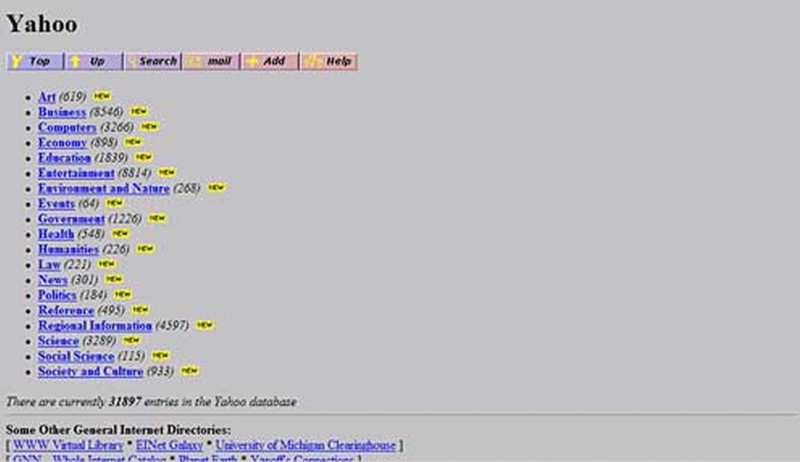
What is schema.org?
Schema.org markup assists search engines like Google, Yahoo!, Bing and Yandex to take in the information present on the web pages and provide richer results, which makes it easier for users to find the right web pages.
Here are some benefits of schema markup:
- Higher click-through rates
- Lower bounce rate
- Increase in long tail conversions
Recommendations for B2B websites
B2B marketers can leverage schema.org markup for corporations, products, ratings, reviews, authors, events, locations, videos, etc. Sites that implement structured markup can see an increase in click-through rates. The following list shows some of the recommended schema.org elements with examples:
1. Product
Schema.org markup helps search engines like Google, Yahoo! and Bing gather information about products that companies offer. With the product schema employed, the following rich snippet shows what would appear in search results:
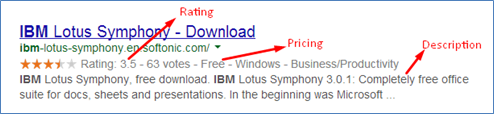
Search query: IBM
The rich snippet will provide all the basic information for the product (description, reviews, offers and price), which will help customers determine whether the page is worth visiting.
For more information, click here.
2. Video
An increasing number of companies are featuring videos on their websites as part of their marketing strategy. Video and the surrounding content can be marked up by setting the schema type to ‘VideoObject’ for the page.
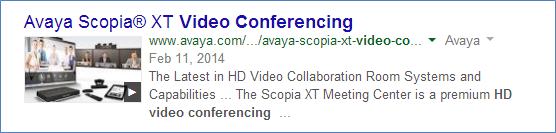
Search query: HD video conference
Schema.org has markups for the following elements: description, ratings, headlines, audio, awards, copyright, creator, publish date, creation date, genre, publisher, reviews, video quality, thumbnails and version. For videos, defining as many elements as possible will drive in more relevant traffic.
For more information, click here.
3. Organization
There are different types that come under the organization schema.org markup like ‘airline’, ‘corporation’, ‘EducationalOrganization’, ‘GovernmentOrganization’, ‘LocalBusiness’, ‘NGO’, ‘PerformingGroup’ and ‘SportsTeam’.
Within the above types, ‘corporation’ and ‘LocalBusiness’ schema.org markup have more relevance for B2B websites.
a) Corporation Markup
Here we can include the logo (image), company name, global navigation (SiteNavigationElement) and phone number (telephone). You can place the company name inside an h1 tag and mark it up with the ‘name’ markup. Global navigation can help search engines understand your page hierarchy better. In order to do that, we need to declare that the links are for navigation.
Just using the markup doesn’t guarantee that your logo will be used. It only helps suggest this to Google, which takes the final decision. However, this markup is a strong signal to Google algorithms to show this image over others. For example, when Google is showing Knowledge Graph on the right hand side based on users’ queries.
For more information, click here.
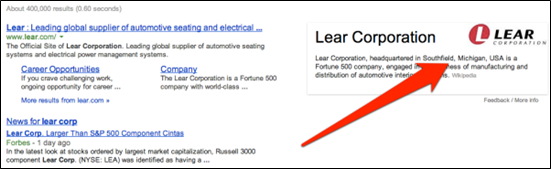
Image Source: Search engine land
b) LocalBusiness Markup
This schema.org object provides information on an organization’s specific office locations, thereby supporting local listings where geographical intent might be a clue in search relevance.
Local business markup is relevant as the dealer and distribution information is of significant value for businesses. It also provides the organization’s headquarters and regional offices’ geographical location supporting local listings.
The Google SERP displays the address of the business that has been marked up on the website (LocalBusiness) with additional information like reviews, ratings, etc.
For more information on this, click here.
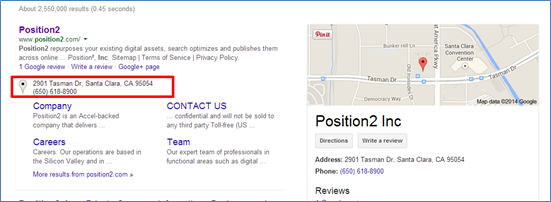
Search query: Position2 Inc
In the case of B2B marketers, they should consider implementing this markup in the following locations:
- Organization’s headquarters’ address information
- Regional office locations
- Address information of regional dealers, distributors and resellers
4. Events
Any event (concerts, shows, theatre, lectures, conferences, webinars, etc.) that is happening at a certain time and at a certain location can use this markup. Repeated events may be structured as separate event objects.
The event schema lets you be really specific about the type of event you are describing. For ex: BusinessEvent. The information that is visible on the snippet, such as the name and location of the event, also needs to be clearly defined. Since this feature isn’t designed for advertising, your event name should not contain any promotional elements such as the price of the event, a call to purchase, an indication of a sale or temporary discount.
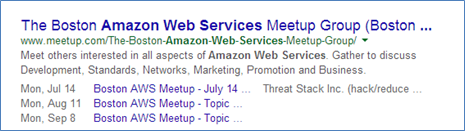
Search query: Amazon Web Services
5. Person
Under the ‘Person’ (CFO, CMO, CEO) schema, you can interpret most pieces of personal information about employee pages. You can start off by marking up their names and job titles with “name” and “jobTitle”. You can also mark up headshots and descriptions with “image” and “description”. You can also define several other fields including ‘birthdate’, ‘awards’, ‘address’, ‘email’, ‘fax’, ‘phone’, ‘children’, ‘spouses’, ‘company’, ‘nationality’, ‘gender’ and many more.
For more information on this, click here.
Google Authorship
By connecting authors’ names on the website to their Google+ profiles through the ‘rel=Author’ tag, Google is able to categorize a person’s written content better, possibly leading to greater exposure, traffic and ‘AuthorRank’ (especially if the person is an expert in the local community or industry).
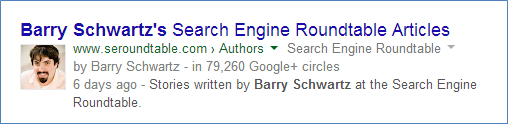
Search query: Barry Schwartz
6. Mobile and Software App Listings
You can add authenticity and trust to your mobile apps using schema markup. Here is a screenshot of the ‘SQL Server Database App’:
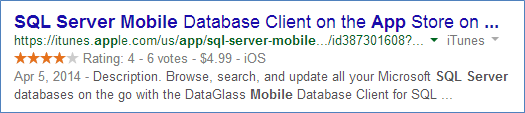
Search query: SQL Server mobile
This works for software applications as well. When users search for apps, Google uses the information that is marked up on the website of the page to display your app details better in search results. We recommended that properties like ‘aggregateRating’, ‘offers’, ‘operatingSystems’ and ‘softwareApplicationCategory’ be integrated into the code for better display results.
7. Others
a) Careers/Job
Job posting schema markup provides a list that describes a job opening in a certain organization. This makes it easier for search engines to index jobs.
For more information on this, click here.
b) Breadcrumbs
This is a set of links (breadcrumbs) that can help a user understand and navigate your site’s hierarchy. Google can identify the breadcrumb information in the body of a web page and use it to understand and present the information on the pages in the search results.
For more information on this, click here.
c) Offers
‘Offer’ markup is an extension to ‘product’ schema markup, which provides a specific structure markup to support product information meant for sale.
For more information on this, click here.
Personalization of Google SERP’s
Having semantic markup does not guarantee Google will display rich snippets in the SERP’s. It’s up to Google to decide whether rich snippets would be useful or not. Also, based on the user’s search intent, the best experience/results are provided for the users search query.
Conclusion
Remember that everything you mark will be clearly seen by search engines. So it is important to mark only relevant information that you need the search engines to index.
Using the rich snippets testing tool, you can check your markup and make sure that Google can extract the structured data from your page. This tool will display the markup found on a specific web page, as well as a preview of how that page might appear in Google search results.
Do you have anything to add to this post? Drop your comments below!
Contributed by Susanna Varghese, Junior SEO Analyst