Tag: Predictive Analytics

  • Making The Most Of Marketing Databases


    Among B2B marketers some will call Big Data the “next hype” while others will simply revere it for being a demigod of the digital world. One thing is for sure: before too long terms like ‘predictive analysis’ will litter casual conversation around the office water cooler.

    Organizations have caught on and are bolstering their Big Data spending in a bid to gain better insights into trends and to make informed decisions within the passing moment.

    We’ve already noticed some growing pains, the downside of “data excess”. With so much consumer intelligence at our disposal why is it that companies fail to tap the potential of data collected in real time, and act on it?

    Put simply, their databases are hold them back. Companies far too often focus across all information and fail to make the most of relevant information. Effective data analysis promises priceless insight into customer behavior, patterns and product sets. Understanding the patterns helps you eliminate potential failures while creating unparalleled consumer experience. Combine that with real-time marketing data and the doors to targeted consumer engagement swing wide open.

    Imagine running like a well-oiled machine the data-driven digital marketing for a leading fitness equipment company. You have collected data on consumers’ exercise patterns and timings. By analyzing the data, it becomes clear that the targeted consumer begins his day at 5 am, checking his mail first thing. So you now have the opportunity to send personalized offers at the most personalized time dialed in to his fitness levels and delivered via his preferred device. Bingo!

    While this strategy may seem like the holy grail of digital marketing, rest assured that none of it is possible without an effective database.  Choose an area where data can help you make a difference rather than get lost in the sea of data. There is always time to re-evaluate and decide on collecting more or less data. Hoping Big Data fades away like a fad of the day is a business strategy you want to avoid.

  • How Marketing Automation Can Transform Your Business


    If you haven’t looked at marketing automation technology recently, you may not recognize the place. There are now over 215 marketing automation solutions on the market and the rate of marketing automation solution and innovation adoption shows no sign of slackening. The question for marketers isn’t so much will marketing automation technology have an impact on your business as it is which trend is the best fit?

    Consider these statistics:

    • 91% of users believe that marketing automation is “very important” to the overall success of their marketing across channels. Marketo
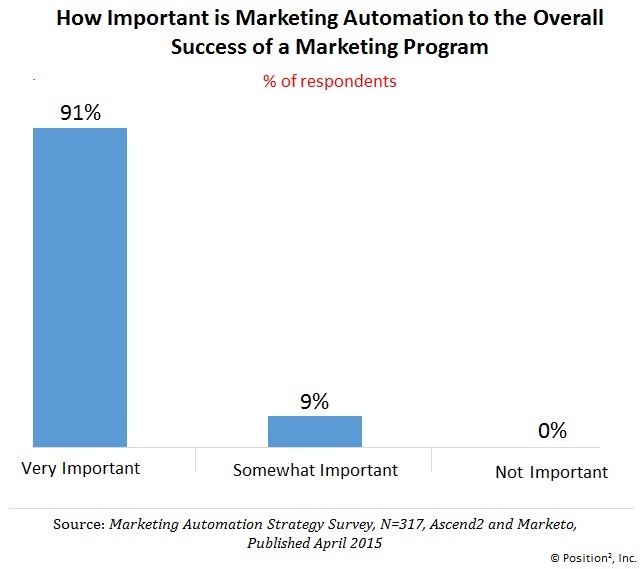
    Importance of Marketing Automation to the Overall Success of a Marketing Program


    • 41% of marketers say that marketing automation is “Very effective/effective” at creating a cohesive customer journey. Salesforce
    • 85% of B2B marketers felt they were not using their marketing automation software to their full potential last year. SiriusDecisions
    • Nurtured leads make 47% larger purchases than those who were not nurtured. HubSpot
    • Companies using marketing automation generate twice as many leads as those using just email software. AutoPilot
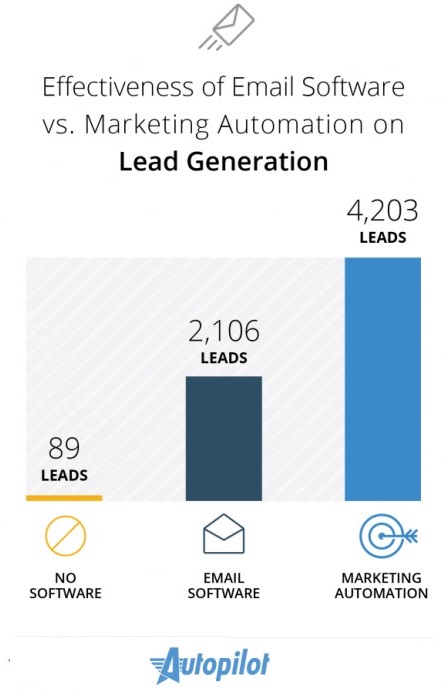
    effectiveness of email software -vs-marketing-automation-on-lead-generation

    Not all solutions are the same. Learn the basics of marketing automation, then choose your route.

    Predictive Analytics

    In “The Hype Cycle for Business Intelligence and Analytics, 2013” Gartner reported that predictive analytics was poised to reach mainstream adoption in 0-2 years, or about right now. Here in 2015 we believe that insight-oriented diagnostic analytics and foresight-oriented predictive analytics will ensure marketer success.

    Robust, predictive models help marketers eliminate guess work based on trends they identified using data. Eliminate guess work by answering questions like these:

    • What is the optimum frequency of sending emails in a lead nurturing sequence?
    • Which content (blogs, infographic, whitepapers, videos, etc.) should you send to a certain lead persona?
    • Do you need to revisit your personas? Lead scoring?
    • How should you score a lead from a particular marketing channel?

    Data driven decisions help marketers launch and execute winning campaigns.

    Let us know the best practices you follow when using data driven decisions.

    Multi-channel Marketing

    Multi-channel Marketing is the ability to interact and engage potential consumers across platforms in real-time — website, Facebook, etc. Marketing automation tools make it possible to personalize this interaction, the ultimate expression of “reach out and touch someone”.

    Here’s an example. A company sells laptop computers for home and office use and Karen, a prospect, visits their website, adds a mainstream laptop with a high end graphics card to her cart, gets as far as billing and shipping details, but does not complete the order.

    In a situation like this multi-channel marketing could:

    1. Send Karen a personalized email urging her to complete her order. The email would show the details of Karen’s cart, her shipping and billing details and a link she can click to complete her order
    2. Leverage Facebook so Karen sees an ad — “Karen, are you looking for a new laptop?” — when she logs on. This comes from an integration of the marketing automation platform with Facebook for retargeting.
    3. Send, after a day of Karen not responding, a personalized email from Sales Support Executive Brian asking if he can help with any questions Karen may have?
    4. Automatically activate after a few days a separate email nurture or Facebook retargeting campaign

    This sequence of events can be customized based on the persona “Karen” is associated with in the marketing automation platform.

    While highly effective, multi – channel nurturing is woefully underutilized. Here are some of the challenges marketers face when it comes to developing and executing these campaigns.
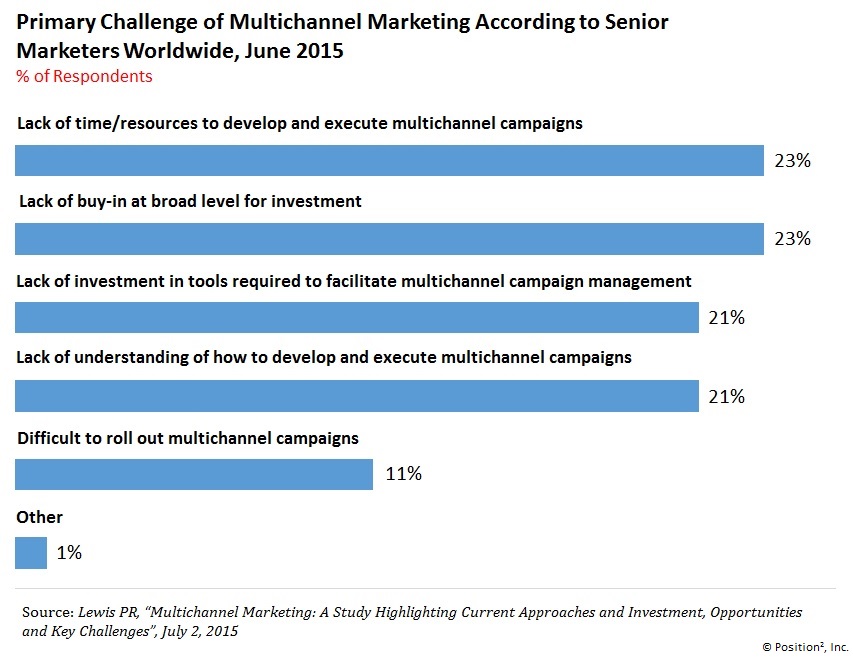
    primary-challenge-of-multichannel-marketing-how-marketing-automation-can-transform-your-business

    Multichannel marketing makes it virtually impossible to lose a customer due to their distraction or a technical glitch just before a purchase. This is a powerful concept that helps marketers target the right personas with personalized content at every step of their buyer’s journey.

    Do you think this trend will help you improve conversions and target your prospects better?

    Marketing Qualified Leads

    Lead Quality. It’s typically where sales and marketing have their falling out.

    • What is the rate of acceptance of your Marketing Qualified Leads into Sales Accepted Leads?
    • Are sales and marketing on the same page when it comes to defining a “Qualified Lead”?

    When implemented correctly marketing automation platforms change the ways sales and marketing teams perceive each other. Well-structured, well-documented lead scoring for various personas, channels, etc. help bring marketing and sales to the same conversation.

    A constructive dialogue between the teams ensures “qualified” leads are converted, there is no leakage and leads that are not “sales ready” go back for a tailor made nurture andr future qualification.

    Are you plagued with disconnect between your sales and marketing teams when it comes to lead qualification?

    All our data points in one direction – marketing automation is becoming smarter, more personalized, and more accessible. It’s going way beyond the basic batch-and-blast email tool of yore.

    Use the comment box below and let us know your thoughts on how marketing automation can transform business.

  • Predictive Analytics, B2B Video Marketing, Brand Strategy and much more…| Best of the Week

    This week’s hot news, events and videos from the online marketing and social media world.
    Understanding Predictive Analytics
    From the Position² Blog This Week:
    Understanding Predictive Analytics
    Today marketers need to know about the future of business with a fair degree of accuracy. That is when they turn to predictive analytics which studies current data, detects patterns and predicts possible future trends. Read this interesting blog to know more about this exciting branch of advanced analytics.
    Top Stories this Week: Social Media
    Top Stories this Week: SEO, PPC and Digital Media
    Best Of Week Video Best of the Week Video
    Watch this Webinar moderated by Rick Siegfried that gives you tips on how to optimize your ad campaigns and landing pages using personalized targeting & analytics.
    White Paper: Increase Visibility for Your Content by 4x
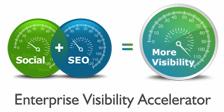
    Today’s traditional SEO is inadequate: Ignite your search results by accelerating visibility in more places than ever before.Download this White Paper and learn:


    • SEO, why the way we know it is not enough
    • Introducing and implementing Enterprise Visibility Accelerator (EVA)
    • Using multi-channel tracking tools for effective monitoring
    • How EVA benefits businesses.

    Download the complimentary EVA White Paper now

    Know more about Enterprise Visibilty Accelerator(EVA)
    If you are reading this blog post via a RSS reader, please click here to subscribe.
  • Understanding Predictive Analytics

    Understanding Predictive Analytics

    Everything that happens in the digital world can be recorded and converted into data. Whether you’re visiting a website, buying something online or tweeting about something, it’s all data. Not surprisingly, with the sheer volume of online activity, brands are flooded with data.

    The levels of brand and customer interaction are ever increasing especially with customers active on various communication channels. Brands are building their online presence and interacting with customers on multiple platforms resulting in cross channel marketing.

    In order to keep their eyes and ears open on all relevant platforms, brands are employing social media analytical tools that are also bringing in increasing amounts of customer data. In order to ensure proper utilization of all this data, along with the current need for personalization, you also need to consider implementing a system that will assist in understanding future customer behavior.

    While brands are dealing with incredibly large amounts of data, the good news is that this data can be used to powerfully direct marketing activities with a high degree of effectiveness.

    Enter predictive analytics.

    Predictive analytics is a form of advanced analytics studies current data, detects patterns and predicts possible future trends.

    It helps you make the best use of the behavioral data available by predicting what customers or prospects will do and the best option you can provide them. For example, if data suggests that whenever a particular baseball team loses, sales of beer goes up amongst its fans, the brand can make special offers as soon it knows that the team is doing badly. The brand can make its offer depending on what it wants to achieve – it can ask consumers to try a new variety of beer or try and get consumers to switch brands etc.

    Predictive analytics helps bridge the gap between what you think your customers want and what they actually want. Their current behavior patterns show where they are headed so you can offer your brand when they are primed and ready.

    Predictive analytics points out the instances that are most likely to convert into actual sales in the near future. For example, if data indicates that 1 year after buying a smart phone, customers buy a tablet, then it pays to be ready to be the first brand to offer a tablet a year after the customer has bought a smart phone.

    Instances of Predictive Analytics Application

    Predictive analytics can be used in many ways. If data shows that men increase their investment in life insurance after they turn 30, it’s a good idea to target customers with life insurance as soon as they celebrate their 30th birthday.

    Predictive analytics also helps you predict what products customers would like bundled together. Life insurance and health care for example or even Deep Purple and Pink Floyd albums.

    In online targeting, predictive analytics can help identify which prospect is most likely to react to which ad and which particular offer. An important benefit of predictive analytics is that it helps identify which customers are likely to churn and what’s the best way to stop them.

    If your company is a large corporation with a huge database of customers, it is tough to manually identify opportunities for cross selling and up selling. Predictive analytics can help by tracking customer behavior when they show interest about other products/services, studying their behavior patterns and predicting future conversions.

    However, you need to be mindful of the fact that when you draw data from social media, you will end up with thousands or more mentions. To know the ones that are relevant, you need to build a relevant search terms and keywords database that ensure you focus only on the mentions that are important.

    Have you implemented predictive analytics? What is your opinion about it?

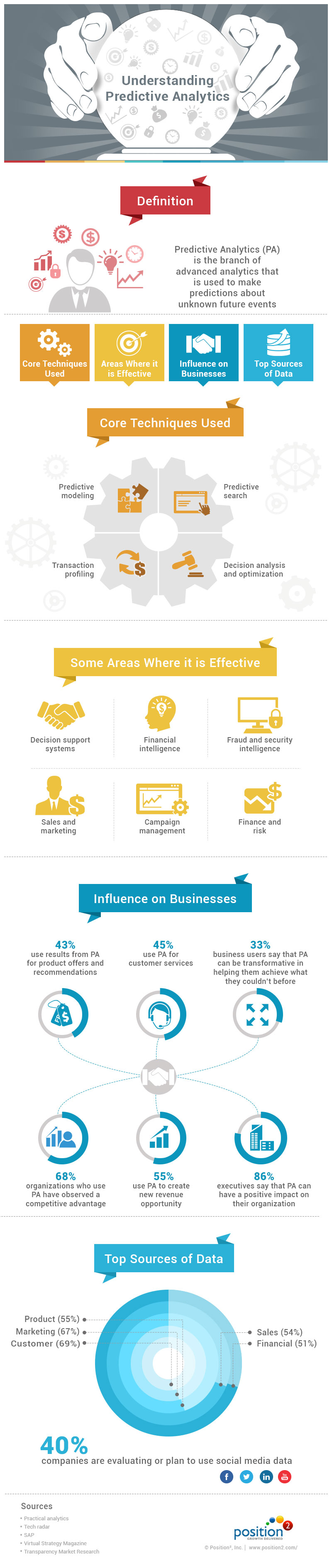
  • Understanding Predictive Analytics- [Infographic]

    Predictive analytics has been gaining momentum as a tool that supports business objectives with respect to sales, marketing, customer support and finance. Check out this infographic to know more about the field of predictive analytics and its role in businesses.

    Understanding Predictive Analytics